Updated
Scotland’s cities get the headlines, but much of the country’s character sits in its small towns: harbour villages with pantiled roofs, planned fishing settlements laid out by 18th-century improvers, and abbey towns that grew up around a ruined church.
This guide picks ten of the most rewarding, spread from the Borders to the Black Isle. We have left out Skye, Wester Ross and the far north coast, which have their own guides on the site, and concentrated on places that work as a base for a night or two rather than a quick photo stop.
Scotland’s small towns at a glance
- Best for: slow road trips, coastal walks, castles and abbeys, seafood by the harbour.
- Easiest without a car: Pitlochry, Dunkeld, Plockton and Melrose, all on or near a railway line.
- When to go: May to September for long days and full opening; April and October are quieter, but some sights close for winter.
- Good pairings: Culross and Falkland in a day from Edinburgh; Dunkeld and Pitlochry on the A9; Tobermory with Oban.
- Book ahead: accommodation in July and August, ferries to Mull, and any event weekend.
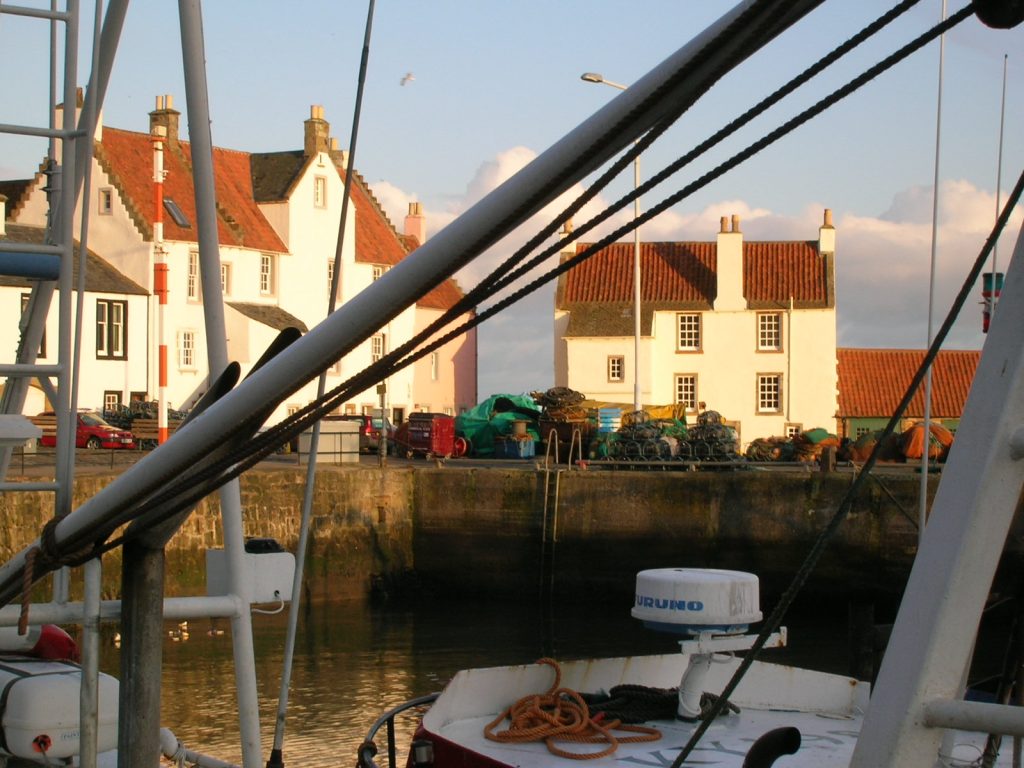
1. Pittenweem and Crail, East Neuk of Fife
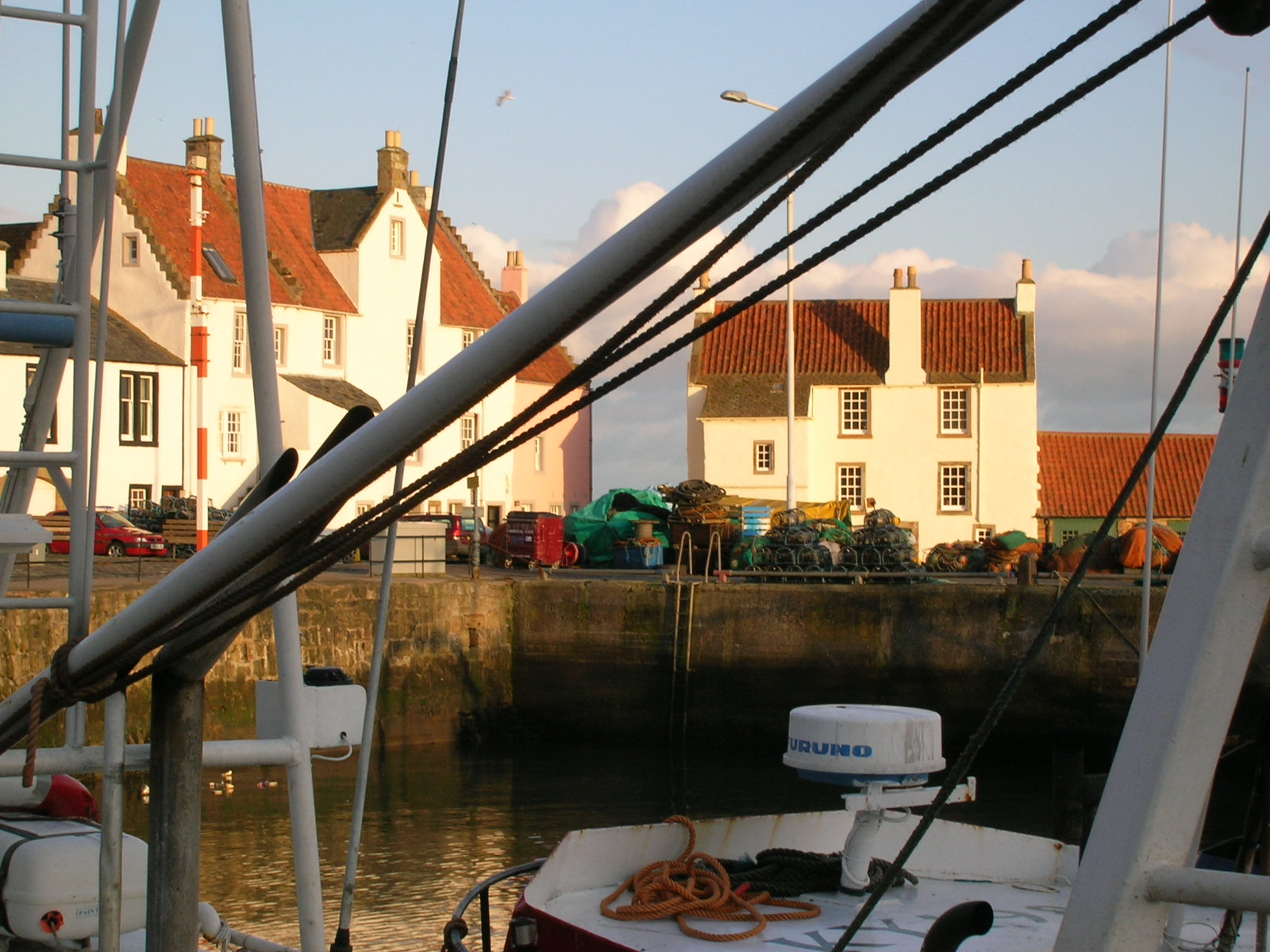
The East Neuk is the south-eastern corner of Fife, a string of fishing villages along the Firth of Forth with red pantile roofs, crow-stepped gables and stone harbours.
Pittenweem is still a working port, with boats tied up and a fish market on the quay. Its name is usually taken to mean “place of the cave”, after St Fillan’s Cave on Cove Wynd, a small shrine linked to a 7th-century missionary. Every August the Pittenweem Arts Festival turns cottages and halls across the village into exhibition spaces. Crail, at the eastern end, is quieter. Its tiny walled harbour, reached down a steep lane, is one of the most painted scenes in Fife.
In between, Anstruther has the Scottish Fisheries Museum and a reputation for fish and chips, and from April to September boats sail from its harbour to the Isle of May, where puffins nest in early summer. The Fife Coastal Path links all five villages.
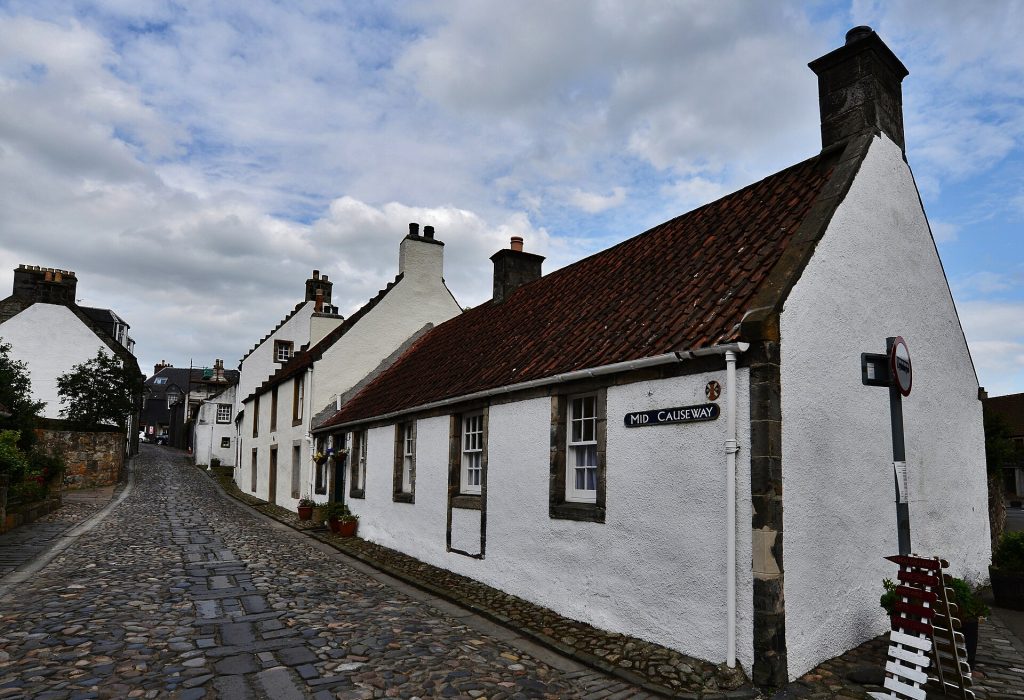
2. Culross
Culross, on the north shore of the Forth west of the bridges, is often described as the most complete surviving example in Scotland of a burgh from the 17th and 18th centuries. Its prosperity came from coal and salt, and much of it is thanks to Sir George Bruce, a merchant who sank a pioneering coal mine that ran out under the firth.
His house, now called Culross Palace, is the ochre-coloured building near the shore, with painted wooden ceilings inside and a terraced garden behind. The National Trust for Scotland has looked after the village since the 1930s and still owns many of the cottages. Walk up the cobbled Back Causeway to the ruined abbey at the top of the hill for a view over the Forth. Culross stood in for the village of Cranesmuir in the television series Outlander, so expect company on summer weekends.
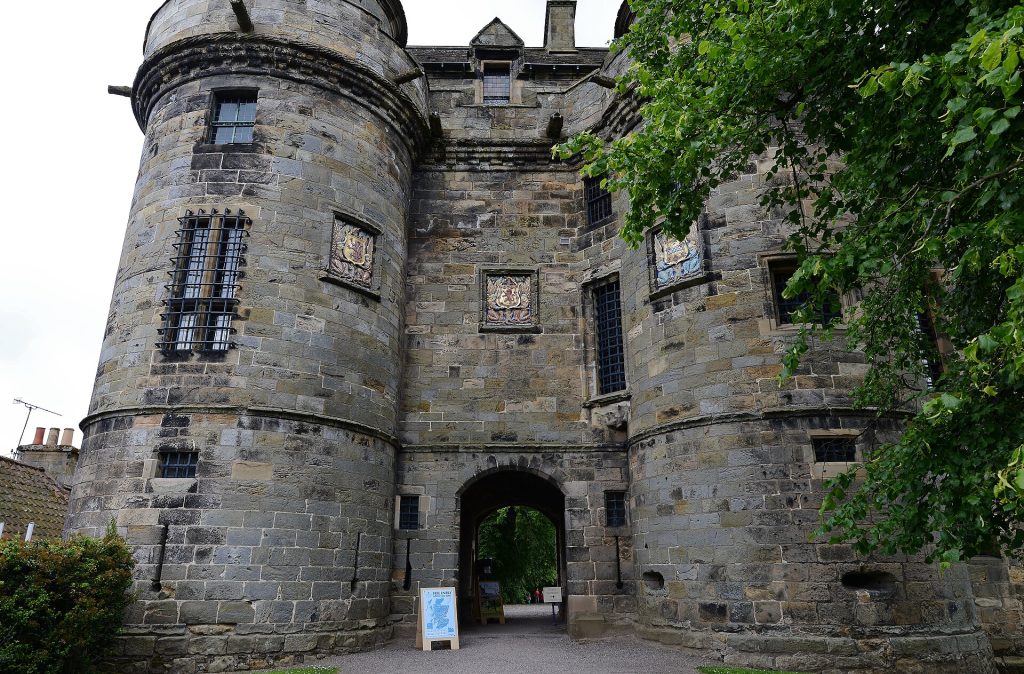
3. Falkland
Falkland sits at the foot of the Lomond Hills in the middle of Fife, a small royal burgh that grew around a hunting palace of the Stuart kings. Falkland Palace, run by the National Trust for Scotland, has a gatehouse with twin towers and courtyard façades often cited as an early example of Renaissance architecture in Scotland.
In the gardens is a real tennis court built for James V between 1539 and 1541, generally described as the oldest surviving court of its kind and still played on by a local club. For a walk, the path up East Lomond starts close to the village and gives a wide view over Fife on a clear day.
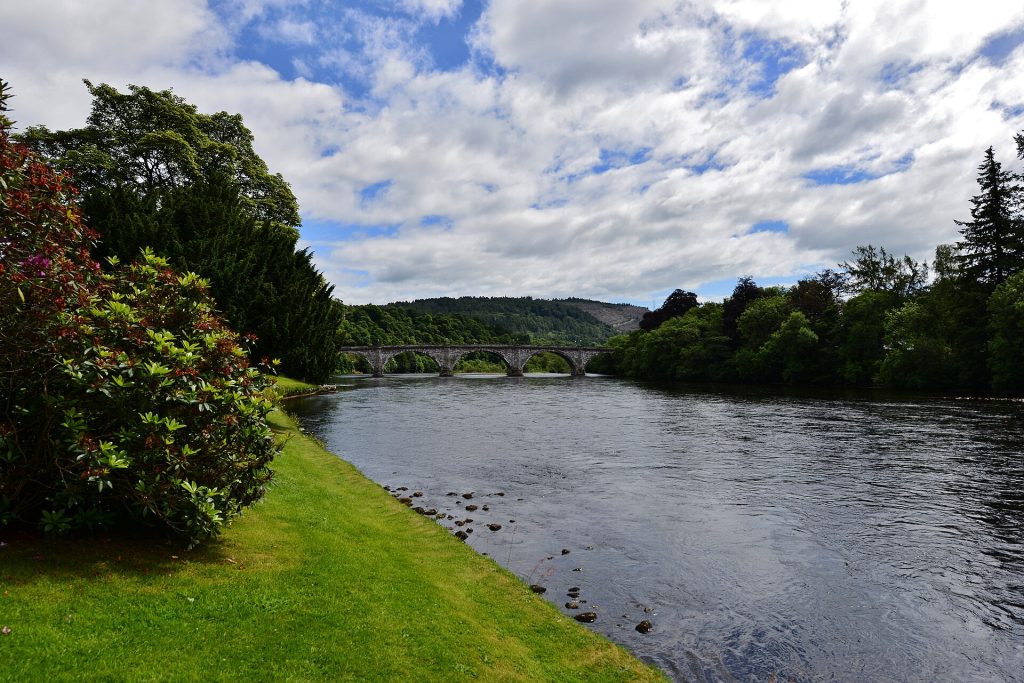
4. Dunkeld
Dunkeld is the first proper stop on the A9 north of Perth, and it rewards a slow wander. The cathedral stands on a lawn beside the River Tay; its nave has been roofless since the early 17th century, while the choir is still used as the parish church. On Cathedral Street and the High Street, the National Trust for Scotland owns a group of restored 18th-century houses known as the Little Houses.
Thomas Telford’s seven-arched bridge, completed in 1809, links Dunkeld with Birnam across the river. A mile or so west is the Hermitage, a woodland walk along the River Braan with some of Britain’s tallest trees and a Georgian folly, Ossian’s Hall, built to overlook the Black Linn Falls.
5. Pitlochry
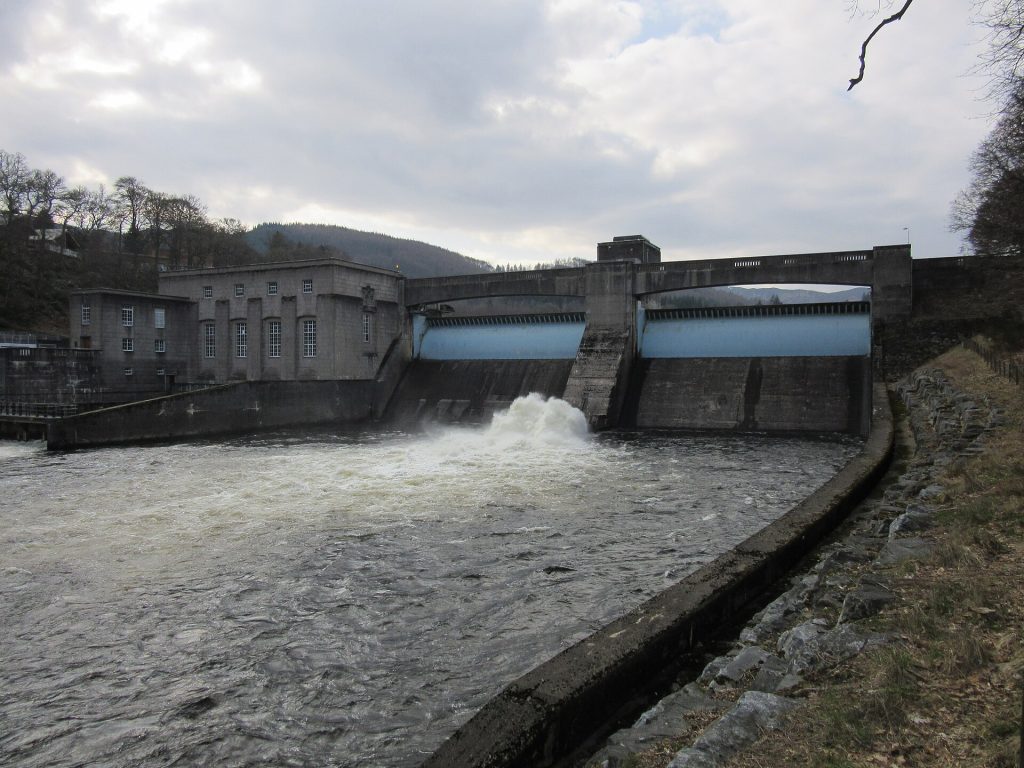
Pitlochry is bigger and busier than the others here, a Victorian resort town of stone hotels and tweed shops that became popular once the Highland railway arrived. It is the easiest base in Highland Perthshire, with a station on the line between Perth and Inverness.
The hydroelectric dam on the River Tummel is worth the short walk from the centre: its fish ladder lets salmon climb past the dam, and a viewing window shows them in season. Pitlochry Festival Theatre, which began in a tent in 1951, now runs a repertory season in its riverside building, so you can see several productions in a few days. Edradour, often called Scotland’s smallest distillery, is nearby, though its visitor arrangements have changed in recent years, so check before going.
6. Plockton
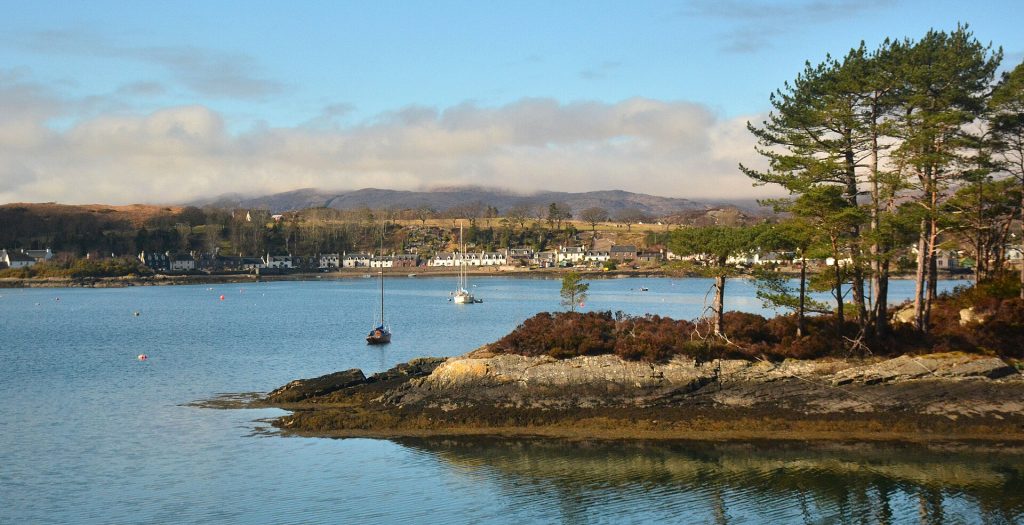
Plockton is a planned village of the late 18th or early 19th century on a sheltered bay off Loch Carron, in Lochalsh, about half an hour’s drive from the Skye Bridge. A single curve of cottages faces the water, with wooded hills behind and small islands in the bay. The mild, sheltered climate lets New Zealand cabbage trees grow along Harbour Street, which locals and guidebooks happily call palm trees.
Take a short seal-watching boat trip, walk out to the Coral Beach north of the village, eat seafood at one of the small restaurants and watch the light change over the loch. Plockton has a station on the Kyle line from Inverness, one of the most scenic rail journeys in Britain. The village was the setting for the BBC series Hamish Macbeth in the 1990s.
7. Tobermory
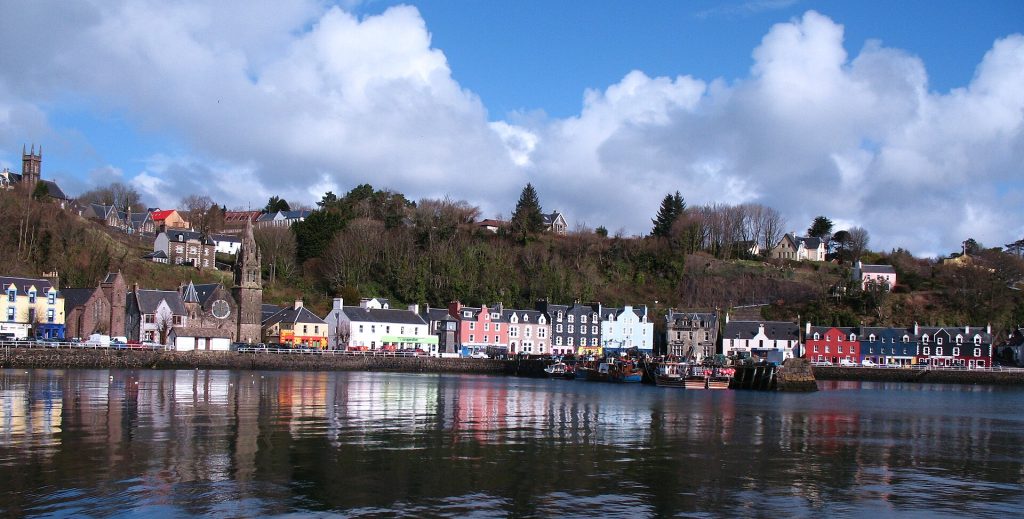
Tobermory, the main town on the Isle of Mull, was founded in 1788 by the British Fisheries Society as a planned fishing port. Its line of brightly painted houses along Main Street is one of the best-known views in the Hebrides, and younger visitors may recognise it from the children’s programme Balamory.
Tobermory Distillery dates from the 1790s and sits at the end of the harbour front. A woodland path leads north from the town to the Rubha nan Gall lighthouse, and boat trips from the pier head out to look for seabirds, seals, and in summer, minke whales and basking sharks. Most visitors reach Mull on the CalMac ferry from Oban to Craignure, then drive or take the bus north to Tobermory.
8. Cromarty
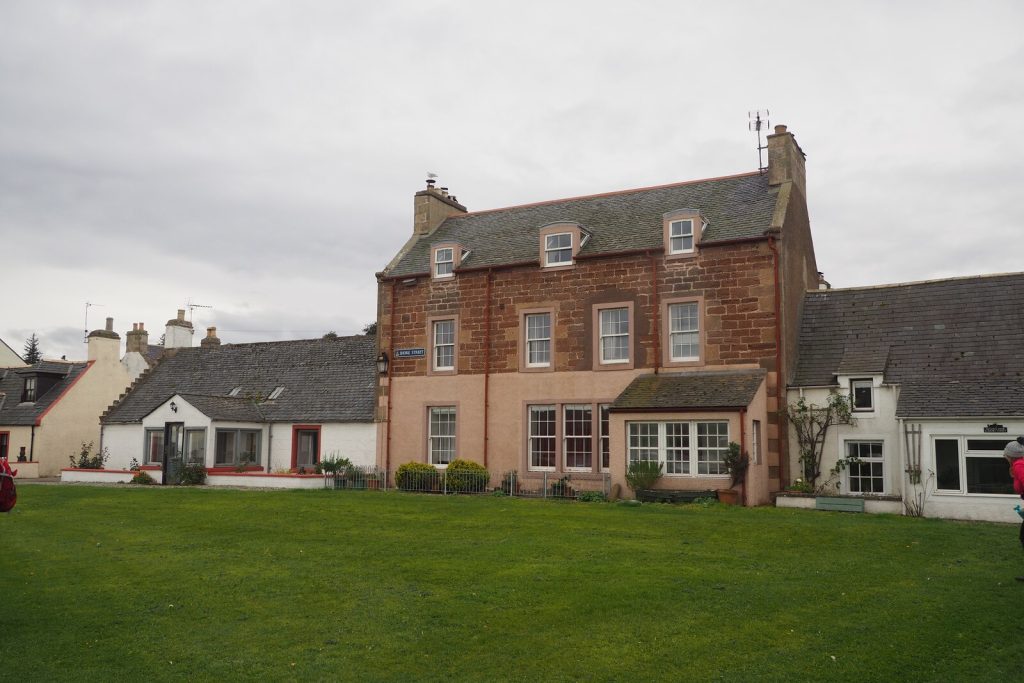
At the tip of the Black Isle, north of Inverness, Cromarty is a remarkably well-preserved small town of Georgian and Victorian streets, built on trade in hemp, fish and grain.
The thatched cottage where the geologist and writer Hugh Miller was born is cared for by the National Trust for Scotland, alongside a museum in the Georgian house next door. Walk up the wooded path to the South Sutor headland for views across the mouth of the Cromarty Firth, where oil rigs are often moored. In summer a tiny car ferry crosses to Nigg. Chanonry Point, a short drive south, is a well-known spot for watching dolphins from the shore, especially around a rising tide.
9. Kirkcudbright
Kirkcudbright, in Dumfries and Galloway, is known as the Artists’ Town. From the 1880s, painters associated with the Glasgow Boys, led by E. A. Hornel, settled here for the light and the old streets, and artists have been drawn to it ever since. Hornel’s home, Broughton House, is run by the National Trust for Scotland, with his paintings inside and a Japanese-influenced garden running down to the river; it closes over winter.
A short walk away is MacLellan’s Castle, a roofless 16th-century tower house by the harbour. The town’s gallery shows work by the artists’ colony. Kirkcudbright is well placed for the Galloway coast and the Galloway Forest Park, but there is no railway, so a car is the practical choice.
10. Melrose
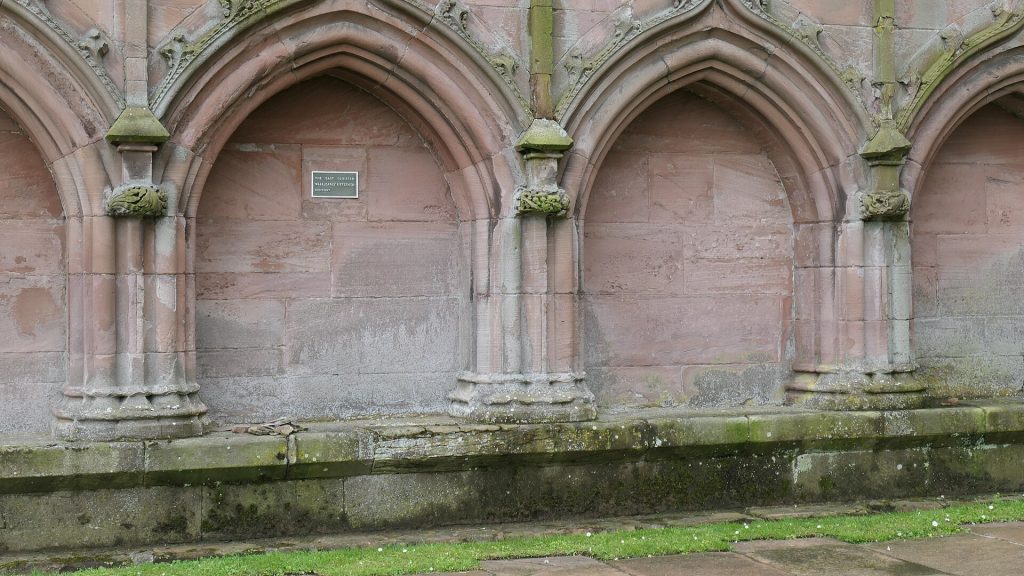
Melrose, in the Scottish Borders, is a small market town below the triple summit of the Eildon Hills. Its centrepiece is Melrose Abbey, founded by David I in 1136 as the first Cistercian monastery in Scotland. The red sandstone ruins are rich in carved detail, and a casket believed to contain the heart of Robert the Bruce is buried in the grounds, marked by a memorial stone.
The Eildon Hills give a satisfying half-day walk straight from the centre. Rugby sevens was invented here in 1883, and the Melrose Sevens tournament is still held each April. Sir Walter Scott’s house, Abbotsford, is a few minutes away by car, and the Borders Railway from Edinburgh ends at Tweedbank, a short bus ride or walk from the town.
Practical tips for visiting
Getting around
A car gives the most freedom, especially for Kirkcudbright and Cromarty. Without one, combine trains and local buses: the Highland main line serves Dunkeld and Pitlochry, the Kyle line serves Plockton, and the Borders Railway gets you close to Melrose. The East Neuk villages are linked by a regular bus along the coast. Check current timetables, as rural services can be sparse on Sundays and in winter.
Where to stay
Expect inns, guesthouses and self-catering cottages rather than large hotels. Pitlochry has the widest choice; Plockton, Culross and Crail have very little, so book well ahead or stay in a neighbouring village.
Seasons and opening
Many National Trust for Scotland and Historic Environment Scotland properties close or cut back their opening between autumn and spring, and some cafés and boat trips stop for winter. Midges can be a nuisance in the west Highlands from late spring to late summer, so pack repellent for Plockton and Mull.
Plan your trip to Scotland
- Tickets and tours in Scotland: tickets and tours on Tiqets · activities on Klook
- Arriving by plane: pre-book an airport transfer with Welcome Pickups
- Road trip: compare car hire on Localrent
- Mobile data: get a travel eSIM from Airalo
Some of these are affiliate links: if you book through them we may earn a small commission, at no extra cost to you.
Planning a bigger trip? See our guide to the 25 best places to visit in Europe, from city breaks to fjords.
Keep exploring
- Scotland’s Historic Landscapes: 8 Places Where History Meets Scenery
- 10 Charming Towns in Slovenia to Visit After Bled and Piran
- The Quaintest Small Towns in Europe: 10 Charming Places to Visit
Frequently asked questions
What is the prettiest village in Scotland?
There is no official answer, but Culross, Plockton, Crail and Tobermory are the names that come up most often.
Which small Scottish towns can I visit without a car?
Pitlochry, Dunkeld and Plockton all have railway stations, and Melrose is a short hop from Tweedbank on the Borders Railway. The East Neuk villages are linked by bus, and Tobermory can be reached by ferry from Oban and a bus on Mull.
Which small towns are close to Edinburgh?
Culross and Falkland are both within about an hour’s drive and can be combined in a day. The East Neuk is about an hour and a half away, better as an overnight trip.
Photos: Tony Grist, Public domain, via Wikimedia Commons; Michael Garlick, CC BY-SA 2.0, via Wikimedia Commons; HARTLEPOOLMARINA2014, CC BY-SA 4.0, via Wikimedia Commons; HARTLEPOOLMARINA2014, CC BY-SA 3.0, via Wikimedia Commons; Euan Nelson, CC BY-SA 2.0, via Wikimedia Commons; Mike McBey, CC BY 2.0, via Wikimedia Commons; Gordon Hatton, CC BY-SA 2.0, via Wikimedia Commons; Jennifer Petrie, CC BY-SA 2.0, via Wikimedia Commons; WeeHolly, CC BY-SA 4.0, via Wikimedia Commons.