Updated
Cumbria, in the far north-west of England, holds the country’s highest mountains, its longest and deepest lakes, and a coastline and Roman frontier that most visitors never see. At its heart is the Lake District National Park, designated in 1951 and listed by UNESCO as a World Heritage Site in 2017. Covering 2,362 square kilometres, it is the largest national park in England and Wales.
The challenge is not finding beauty but choosing where to go. The southern lakes around Windermere are easy to reach and busy in summer; the western valleys are wilder and quieter; and the north of the county adds Carlisle and Hadrian’s Wall. This guide takes each area in turn, then covers where to stay, how to get around and when to visit.
- Best for: fell walking, lake cruises, literary history and slow touring.
- When to go: May, June and September for longer days and fewer crowds; October for autumn colour.
- Getting there: trains on the West Coast Main Line stop at Oxenholme, Penrith and Carlisle, with a branch line to Windermere.
- How long: a long weekend covers the southern lakes; a week lets you add the western valleys and the north.
- Bring: waterproofs whatever the forecast. Cumbria is one of the wettest parts of England, which is why it is so green.
Windermere and Bowness
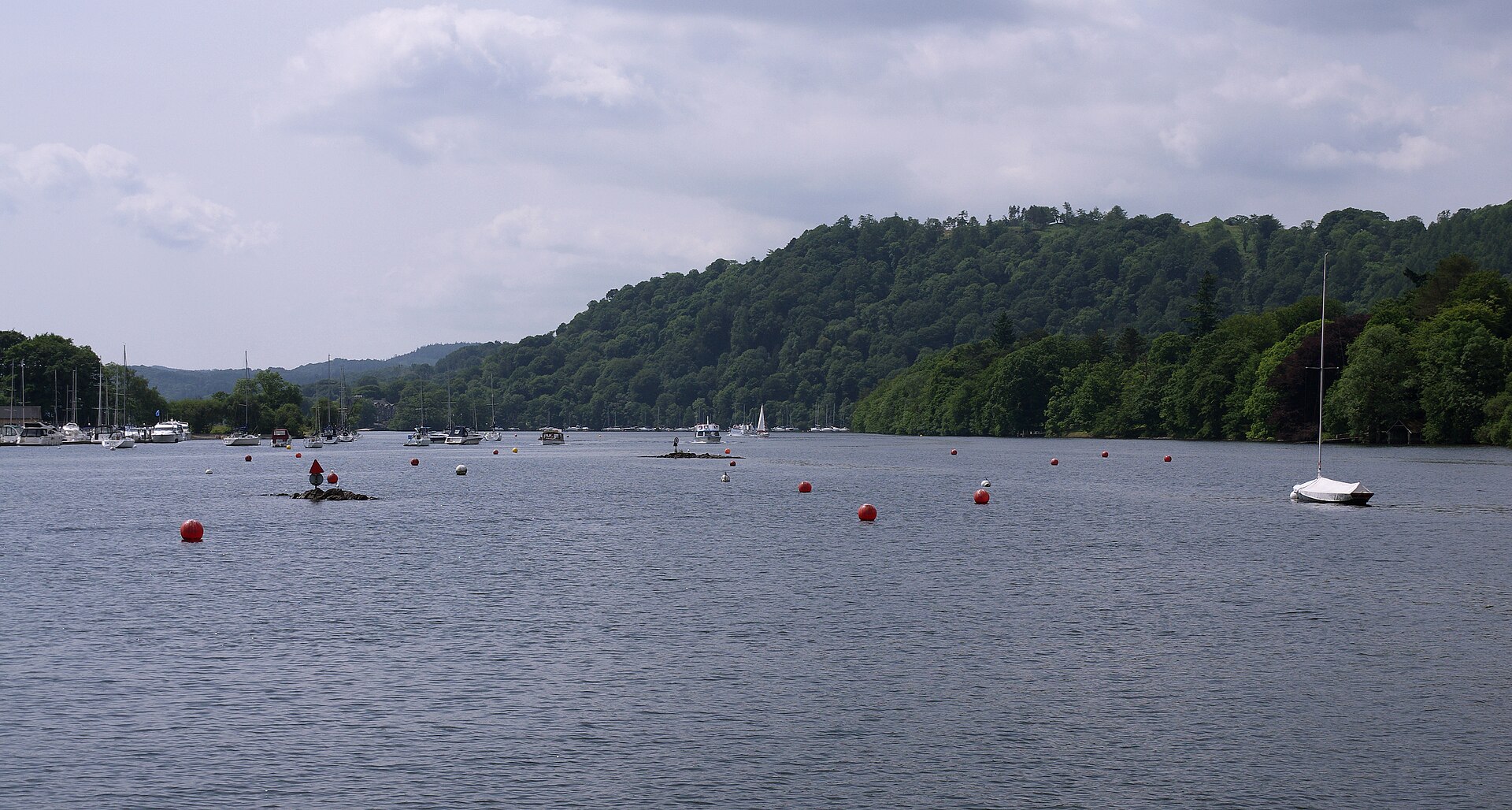
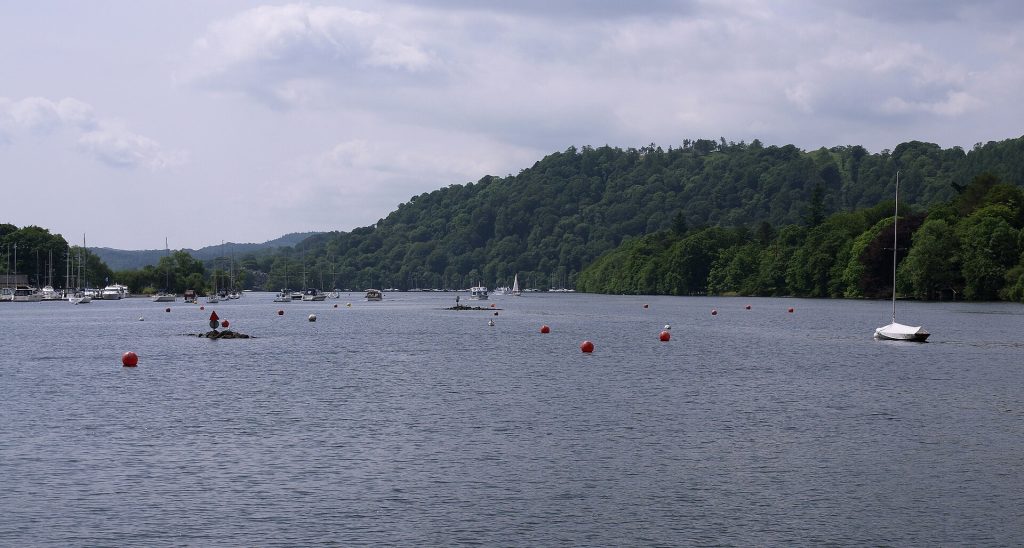
Windermere is the longest lake in England at about 18 kilometres (11 miles), and the twin towns of Windermere and Bowness-on-Windermere are where most first-time visitors start. The railway reached Windermere in 1847, and Victorian holidaymakers have been arriving ever since. Bowness, on the shore, is the busier of the two, with piers, boat hire and The World of Beatrix Potter attraction.
The best introduction is from the water. Lake cruises run between Lakeside in the south, Bowness and Waterhead near Ambleside, and a car ferry crosses the middle of the lake towards Hawkshead and Hill Top. For a view without much effort, walk up Orrest Head from opposite Windermere station. It was the first fell Alfred Wainwright climbed, and from the top you can pick out the Langdale Pikes, the Coniston fells and the full length of the lake. The main path is surfaced and suitable for pushchairs.
Ambleside, Grasmere and Wordsworth country
Ambleside sits at the northern tip of Windermere and is the most practical base for walkers in the central Lakes, with outdoor gear shops, cafés and pubs. Stock Ghyll Force, a waterfall in woodland a short walk from the town centre, makes an easy first outing, and the famous Bridge House, built over Stock Beck, is a photo stop on the main street.
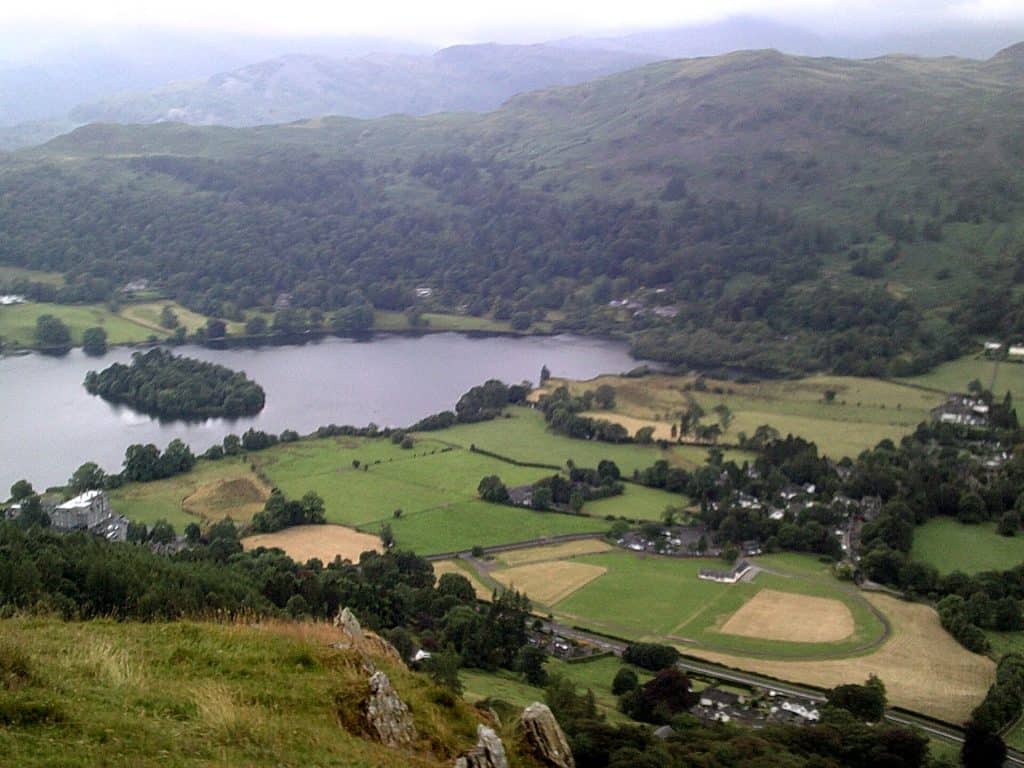
A few miles north is Grasmere, closely tied to William Wordsworth. He and his sister Dorothy lived at Dove Cottage from December 1799 to May 1808, and it was here that he wrote much of his best-known poetry. The cottage is run by the Wordsworth Trust, with a museum of manuscripts and paintings next door. Wordsworth is buried in the churchyard of St Oswald’s, and the village gingerbread shop is a fixture of most visits. For walkers, the loop around Grasmere and Rydal Water is one of the most rewarding low-level routes in the park.
Keswick and Derwentwater
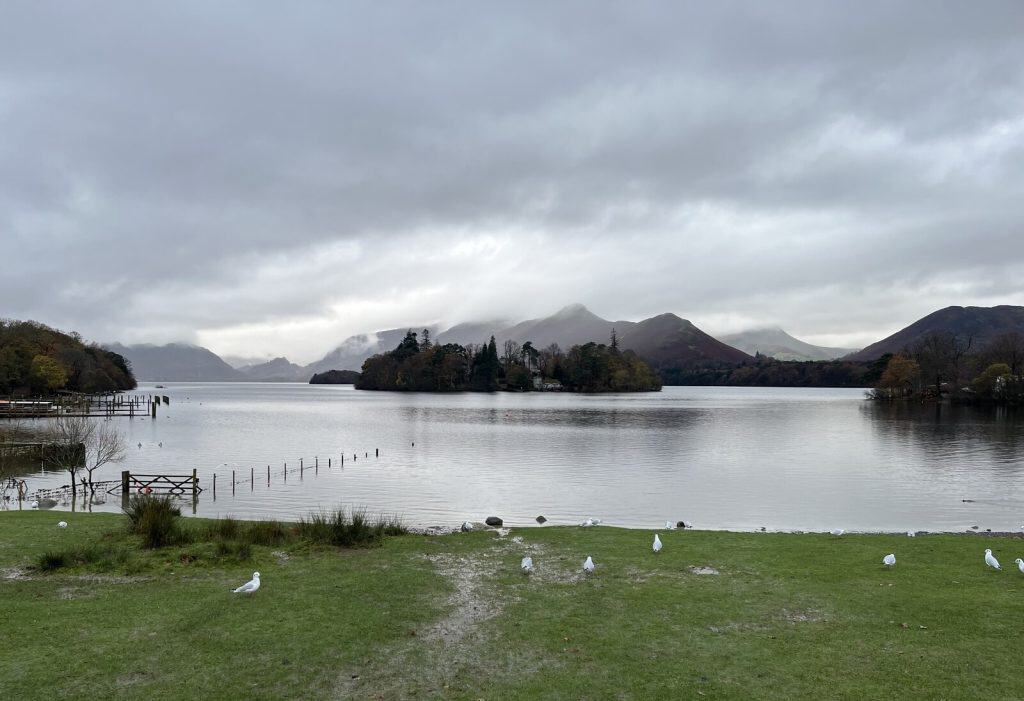
Keswick is the main town of the northern Lakes, a slate-grey market town ringed by big fells: Skiddaw to the north, Blencathra to the east and Catbells across the water. Derwentwater, just south of the town, is dotted with wooded islands, and a launch service circles the lake, letting you hop off at jetties for walks.
Catbells is one of the most popular family fell walks in the Lake District, short and steep with superb views. A mile and a half east of Keswick, Castlerigg Stone Circle stands on a plateau with a full ring of mountains around it; it is free to visit and is one of the earliest stone circles in Britain. Drive or take the bus south through Borrowdale for crags, oak woods and the dramatic road over Honister Pass.
Ullswater
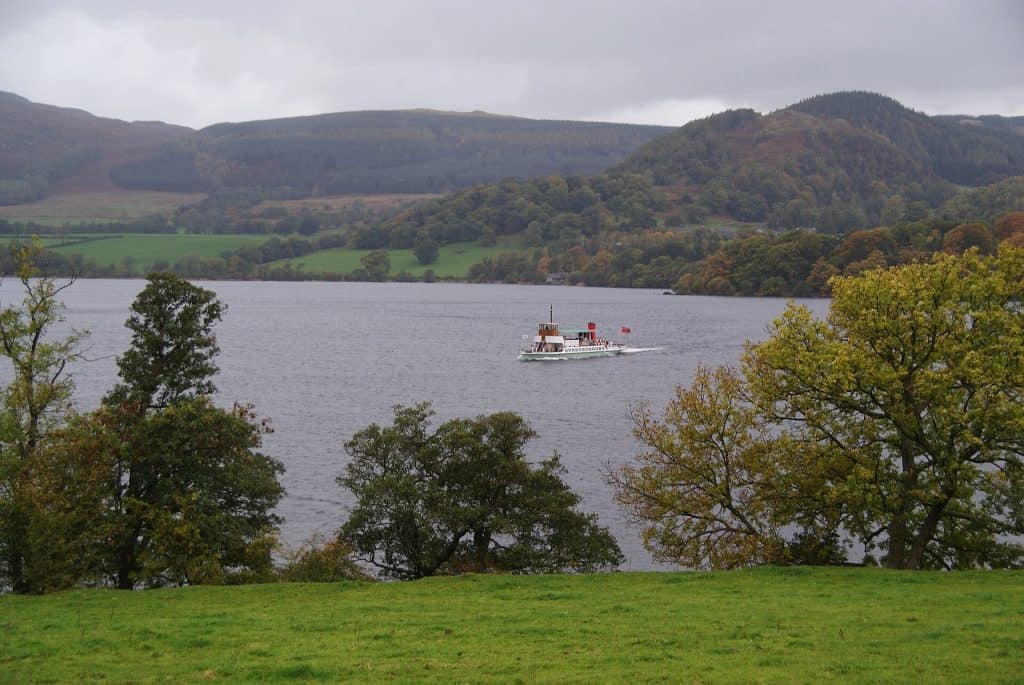
Ullswater, in the north-east of the park, is a long, winding lake that many regulars rate as the most beautiful of all. Heritage boats known as the Ullswater Steamers link Glenridding, Howtown and Pooley Bridge, and the walk back from Howtown to Glenridding along the eastern shore is a classic way to combine boat and path.
Above the western shore, Aira Force is a waterfall in a wooded ravine cared for by the National Trust, with stone bridges and paths. Nearby is Glencoyne Bay, where Dorothy Wordsworth recorded the wild daffodils that inspired her brother’s famous poem. Experienced walkers use Glenridding as the starting point for Helvellyn, England’s third highest mountain, via the narrow ridge of Striding Edge, which should be avoided in winter conditions without the right skills and equipment.
Coniston and Hawkshead
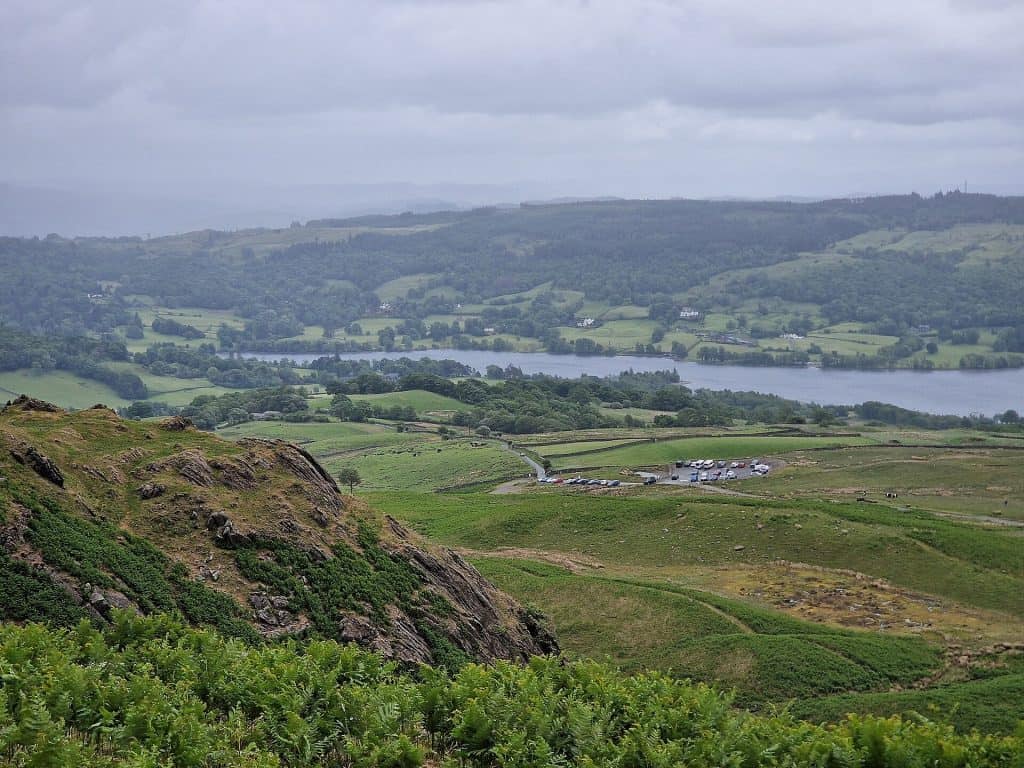
West of Windermere, the quieter landscape around Coniston Water and Hawkshead mixes lakes, woodland and old mining country. Brantwood, the former home of the Victorian writer and critic John Ruskin, stands on the eastern shore of Coniston Water and can be visited along with its gardens. Launches cross the lake in season, and boats can be hired at Coniston village.
Hawkshead is a small village of whitewashed houses and lanes, best explored on foot. Close by, the National Trust looks after Hill Top in Near Sawrey, the farmhouse Beatrix Potter bought with early earnings from her books; timed tickets are needed in busy periods. Grizedale Forest, between the two lakes, has waymarked walking and mountain biking trails and outdoor sculpture.
Wasdale and the western fells
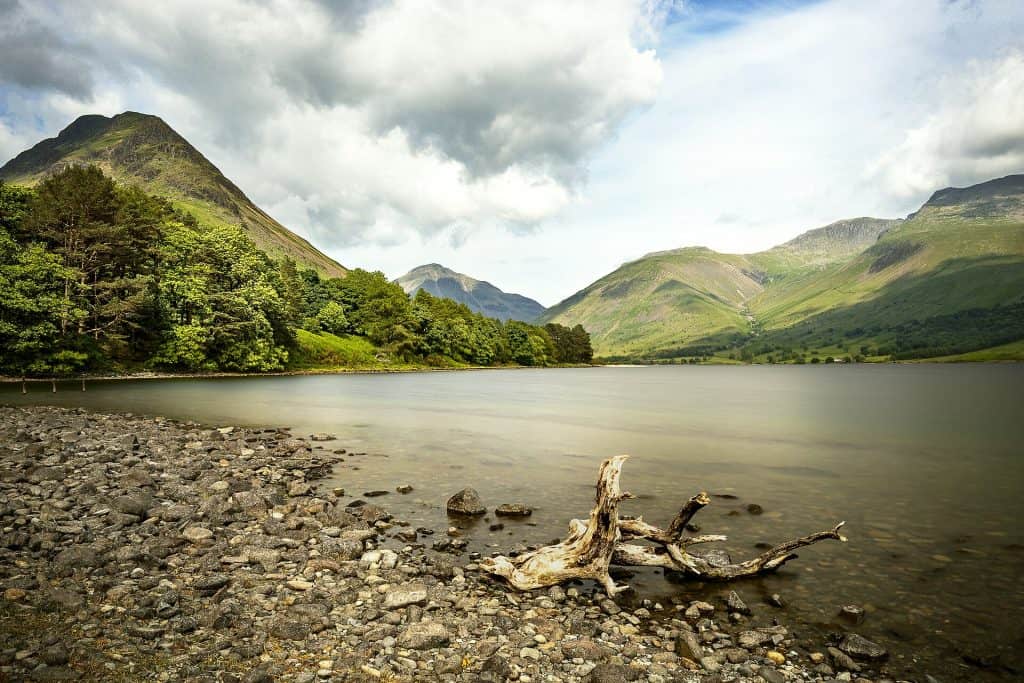
For raw mountain scenery, head to Wasdale on the western side of the park. Wastwater is England’s deepest lake at 79 metres, and its eastern shore is a wall of scree dropping straight into the water. At the head of the valley rise Great Gable and Scafell Pike, at 978 metres the highest mountain in England.
The standard route up Scafell Pike from Wasdale Head is popular but serious: it is steep, rocky and often in cloud, so go with a map and compass, proper boots and a good forecast. From the south, the road over Wrynose and Hardknott passes is one of the steepest in England, with the ruins of a Roman fort on the western side of Hardknott. Drive it only in dry conditions and with a car you trust in low gear.
The Cumbrian coast and Eskdale
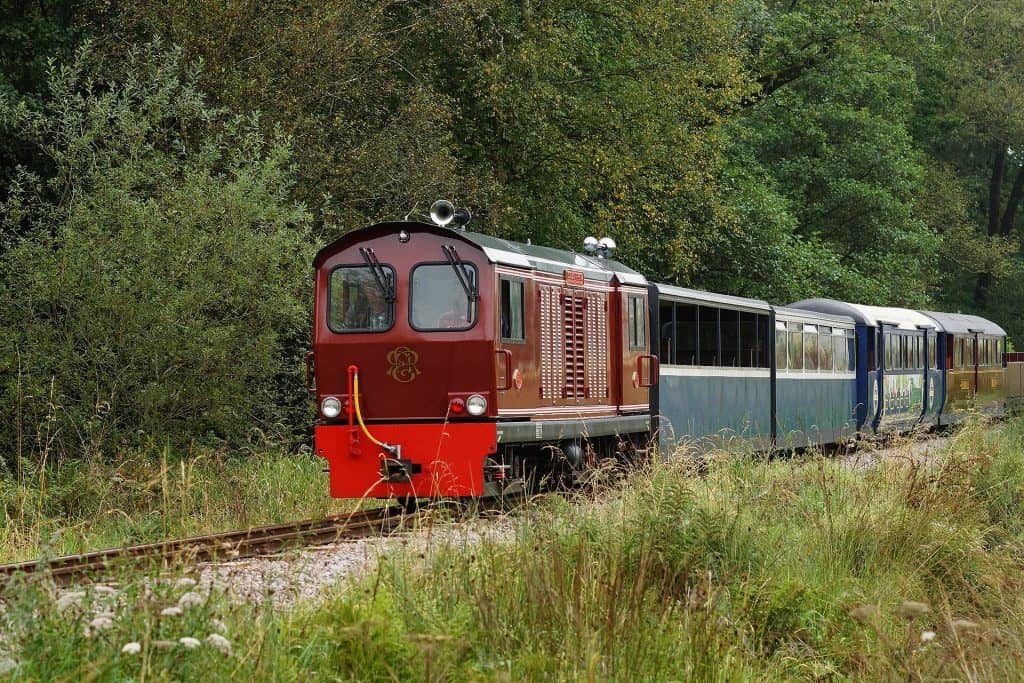
Cumbria’s long Irish Sea coastline is largely overlooked. At Ravenglass, the narrow-gauge Ravenglass and Eskdale Railway, known locally as La’al Ratty, runs for about 7 miles into Eskdale, ending at Dalegarth near the village of Boot. Its Ravenglass station is next to the mainline station on the Cumbrian Coast Line, so you can arrive without a car.
Further north, St Bees has red sandstone cliffs and is the traditional starting point of Wainwright’s Coast to Coast walk. Whitehaven, a Georgian harbour town, and the Solway coast with its views to Scotland are worth a detour if you are driving between the Lakes and Carlisle.
Carlisle and Hadrian’s Wall
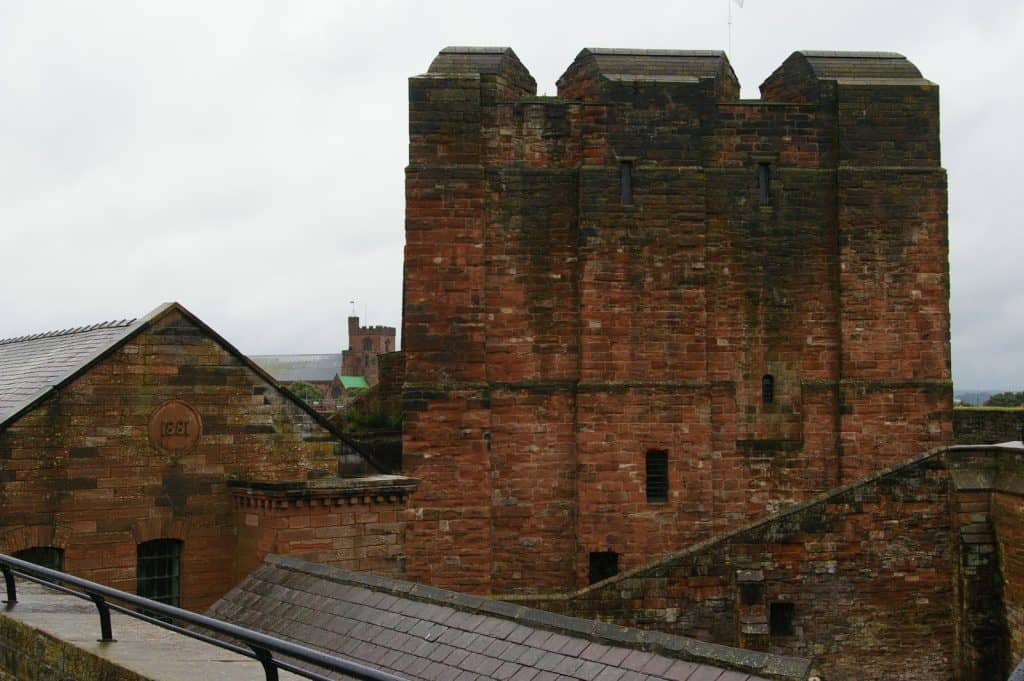
Carlisle is Cumbria’s only city and has a long history as a border stronghold. Carlisle Castle, begun in 1092 and now cared for by English Heritage, held Mary, Queen of Scots for a few months in 1568, and also houses a military museum. The red sandstone cathedral and the Tullie House museum, with strong Roman collections, are a short walk away.
Hadrian’s Wall, part of a UNESCO World Heritage Site, runs through the north of the county. The best-preserved stretches in Cumbria are a little east of Carlisle around Birdoswald Roman Fort, and the Hadrian’s Wall Path national trail follows the line of the wall across northern England.
Where to stay
- Windermere or Bowness: the widest choice of hotels and the best transport links; busy in school holidays.
- Ambleside or Grasmere: central for walking, with good bus links north and south.
- Keswick: the best base for the northern fells, Borrowdale and Ullswater.
- Coniston, Hawkshead or Wasdale: quieter, with inns and campsites rather than big hotels.
- Kendal or Penrith: practical market towns on the edge of the park, often better value.
Getting there and getting around
By rail, the West Coast Main Line has direct trains from London Euston and Glasgow to Oxenholme Lake District, Penrith and Carlisle. From Oxenholme, the Lakes Line branches through Kendal to Windermere. On the coast, the Cumbrian Coast Line links Carlisle, Whitehaven, Ravenglass and Barrow-in-Furness.
Within the park, Stagecoach buses connect the main towns, including the long-running 555 between Kendal, Windermere, Ambleside, Grasmere and Keswick. Lake boats on Windermere, Ullswater, Derwentwater and Coniston double as transport for walkers. A car makes the western valleys much easier, but parking in honeypot spots fills early in summer, so arrive before 9am or use the bus.
When to go
Late spring and early autumn are the sweet spots, with long days, fresh green or bronze fells and fewer people than July and August. Winter brings snow on the high tops and very short days; the valleys and towns stay open and are lovely in crisp weather, but mountain walking then demands winter skills. Rain is possible in any month, so plan a flexible mix of fell days and indoor sights.
Plan your trip to Lake District
- Tickets and tours in Lake District: tickets and tours on Tiqets · activities on Klook
- Arriving by plane: pre-book an airport transfer with Welcome Pickups
- Road trip: compare car hire on Localrent
- Mobile data: get a travel eSIM from Airalo
Some of these are affiliate links: if you book through them we may earn a small commission, at no extra cost to you.
Planning a bigger trip? See our guide to the 25 best places to visit in Europe, from city breaks to fjords.
Keep exploring
- Best Castles in England to Visit: 10 Top Picks and Who Runs Them
- England in Autumn: 9 Scenic Places for Colour, Deer and Dark Skies
- Historic Villages and Small Towns in England: 10 Full of Character
Frequently asked questions
Is the Lake District the same as Cumbria?
No. The Lake District National Park lies entirely within Cumbria, but the county also includes Carlisle, the Eden Valley, the Cumbrian coast and part of the Yorkshire Dales National Park.
What is the best base for a first visit to the Lake District?
Ambleside or Keswick. Both have shops, places to eat, bus links and walks straight from town, and they sit between the most popular lakes.
Can you visit the Lake District without a car?
Yes. Take the train to Windermere or Penrith, then use buses and lake boats. Windermere, Ambleside, Grasmere, Keswick and Ullswater are all well connected; the remote western valleys are harder.
Photos: mattbuck (category), CC BY-SA 3.0, via Wikimedia Commons; Peter S, CC BY-SA 2.0, via Wikimedia Commons; RKL, CC BY-SA 2.0, via Wikimedia Commons; Bill Boaden, CC BY-SA 2.0, via Wikimedia Commons; Amakuru, CC BY 4.0, via Wikimedia Commons; James Johnstone from Ecclefechan, Scotland, CC BY 2.0, via Wikimedia Commons; Peter Trimming, CC BY-SA 2.0, via Wikimedia Commons; Christopher Hilton, CC BY-SA 2.0, via Wikimedia Commons.