Updated
Vienna did not invent coffee, but it invented a particular way of drinking it. In a traditional Viennese coffee house you order one cup, read the papers, write a letter or argue with a friend, and nobody asks you to leave.
This guide explains how the ritual works, what to order and what the cakes are, then links a set of historic cafés in a walk through the old town and along the Ringstrasse. Even institutions renovate and change hands, so each café named here was checked for recent evidence that it is open.
Vienna’s coffee houses at a glance
- Best for: slow mornings, wet afternoons, people who like to read and anyone curious about the city’s literary history.
- The walk: about 4 km from Café Landtmann on the Ring to Café Sperl in the 6th district, with plenty of reasons to stop.
- When to go: weekday mornings are calmest; the best-known cafés have queues at weekends and in December.
- What to order first: a Melange and a slice of Apfelstrudel, then branch out.
How the coffee house became an institution
Vienna’s first licensed coffee houses opened in the 1680s. A popular legend credits Georg Franz Kolschitzky, who supposedly found sacks of beans left behind by the Ottoman army after the siege of 1683, but historians treat that story with caution. Cafés really took off in the 19th century, as warm, lit, newspaper-stocked living rooms for a city of cramped flats. The writer Stefan Zweig called the coffee house a kind of democratic club, open to anyone for the price of a cup.
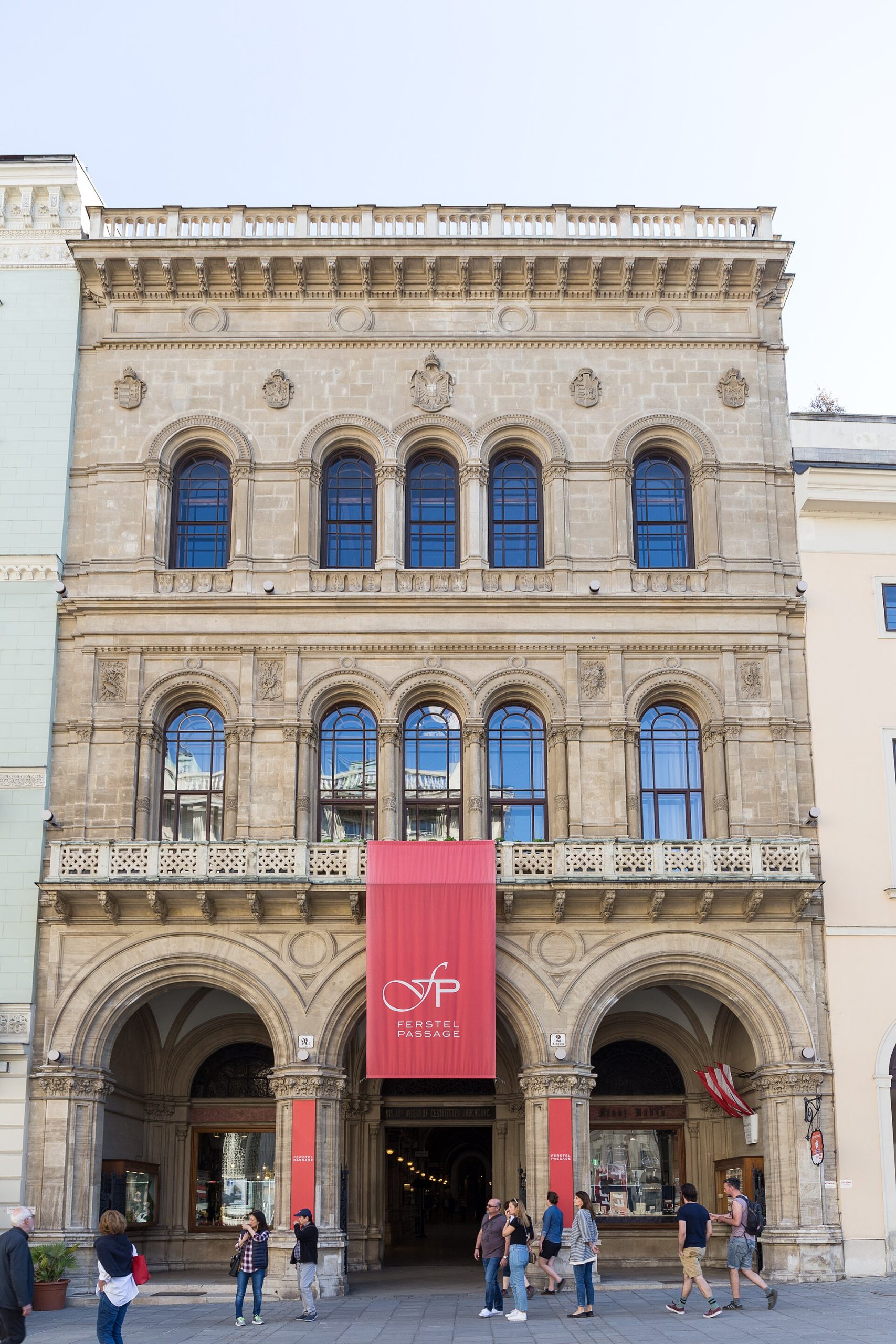
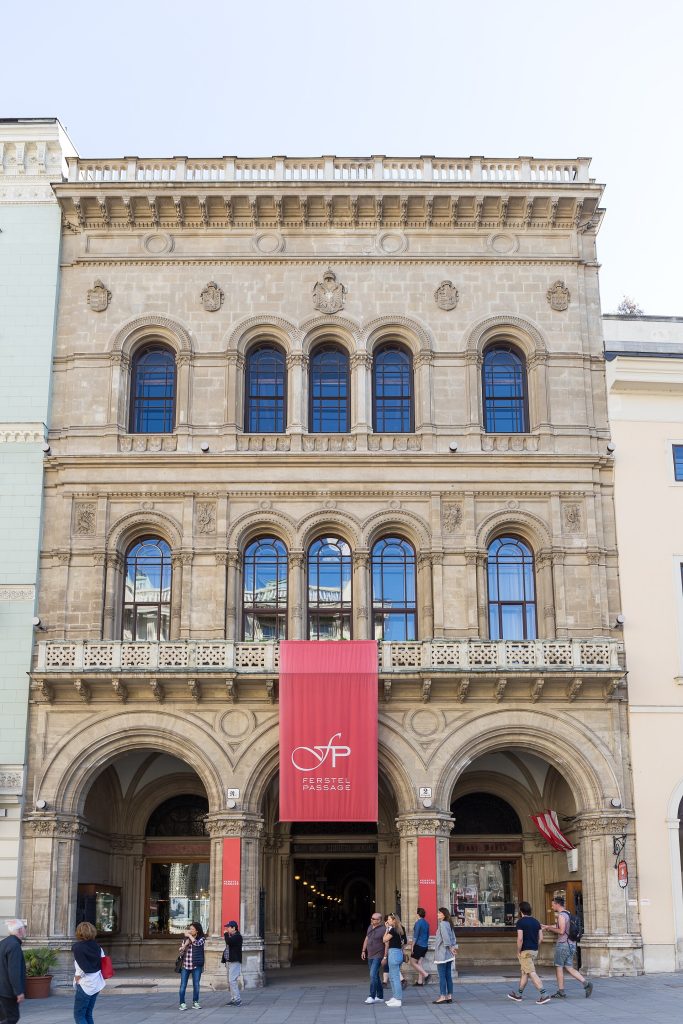
By 1900 certain cafés had become literary addresses. Café Griensteidl on Michaelerplatz, opened in 1847, was the meeting place of the Young Vienna writers, among them Arthur Schnitzler and Hugo von Hofmannsthal. When its building was demolished in 1897, Karl Kraus mocked the group in a satirical essay, Die demolirte Literatur, and most of them simply moved round the corner to Café Central in the Palais Ferstel. The original Griensteidl is long gone, and a later café that revived the name has also closed.
In 2011 Viennese coffee house culture was added to Austria’s national inventory of intangible cultural heritage, kept by the Austrian Commission for UNESCO. It covers the social practice, not any single café.
Coffee house etiquette
- Seat yourself in most traditional cafés, unless a sign or a waiter at the door says otherwise. Café Sacher and some of the busiest places manage a queue.
- The glass of water arrives with your coffee, usually on a small metal tray. It is free, and in many cafés it is quietly refilled if you stay a long time.
- Newspapers hang on wooden holders near the door or on a stand. Take one to your table and return it when you leave.
- Lingering is the point. One coffee buys you a table for as long as you want it. Nobody will bring the bill until you ask.
- The waiter is a professional with a reputation for gruff formality. Traditionally he is addressed as “Herr Ober”. Catch his eye rather than waving.
- Paying happens at the table. Say “Zahlen, bitte” when you are ready. Rounding up the bill is the usual way to tip, and some older cafés still prefer cash.
What to order: the Viennese coffee menu
Asking for “a coffee” in Vienna will get you a puzzled look. Menus list a dozen or more drinks, and recipes vary slightly from café to café, but these are the core terms.
- Kleiner or Großer Schwarzer: a single or double mocca, much like an espresso.
- Kleiner or Großer Brauner: the same, with a little milk or cream served on the side so you can add it yourself.
- Verlängerter: a Schwarzer lengthened with hot water, giving a milder, larger cup. Ask for it “braun” if you want milk with it.
- Melange: the city’s signature, a mocca with steamed milk and a cap of foam.
- Einspänner: strong black coffee served in a glass with a thick layer of whipped cream on top.
- Franziskaner: a Melange topped with whipped cream instead of milk foam.
Most cafés also serve hot chocolate, tea, beer and wine and simple hot dishes, so a café can stand in for lunch.
The cakes: Sachertorte and Apfelstrudel
Sachertorte
The Sachertorte is a dense chocolate sponge with a thin layer of apricot jam under a glossy chocolate glaze, served with unsweetened whipped cream. Tradition credits Franz Sacher, a young apprentice in the kitchen of Prince Metternich, with creating it in 1832. His son Eduard refined the recipe and later founded the Hotel Sacher, which opened in 1876.
Eduard had also worked at Demel, and for years both businesses claimed the authentic cake. The dispute ended in the 1960s. The hotel now sells the “Original Sacher-Torte”, while Demel sells its version as the “Eduard-Sacher-Torte”. Which is better is a matter of taste: the hotel’s has jam in the middle as well as under the glaze, Demel’s only under the glaze.
Apfelstrudel
Apfelstrudel is the other constant. The dough is kneaded, rested and then stretched by hand over a cloth until it is almost transparent, before being rolled around sliced apples, raisins, cinnamon and buttery breadcrumbs. Vienna’s oldest surviving strudel recipe, from the late 17th century, is held at the Wienbibliothek in the city hall. Order it warm, with whipped cream or vanilla sauce. Topfenstrudel, made with soft curd cheese, is the other classic.
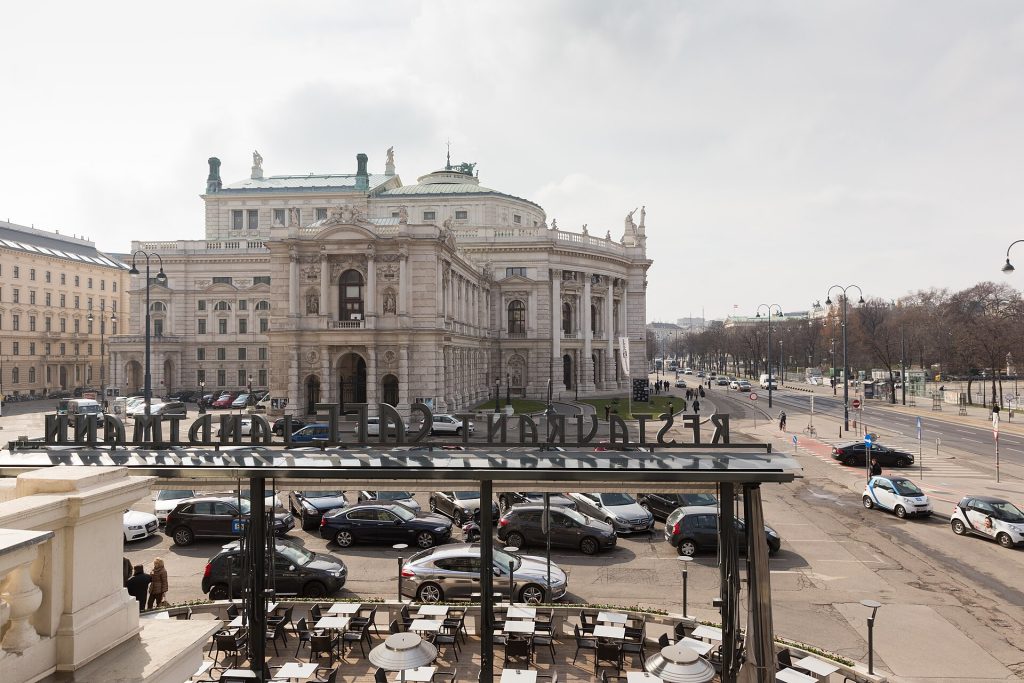
A coffee house walk, part one: the Ring to Dorotheergasse
This route links the historic cafés in a loose line from north-west to south. Sit down in two or three and look in at the rest; trying to drink a coffee in every one is a recipe for a sleepless night.
1. Café Landtmann
Start on the Universitätsring beside the Burgtheater. Franz Landtmann opened his café here in 1873, while the Ringstrasse was still being built around it, and Sigmund Freud became a regular. The long covered terrace faces the Rathaus park.
2. Herrengasse and Michaelerplatz
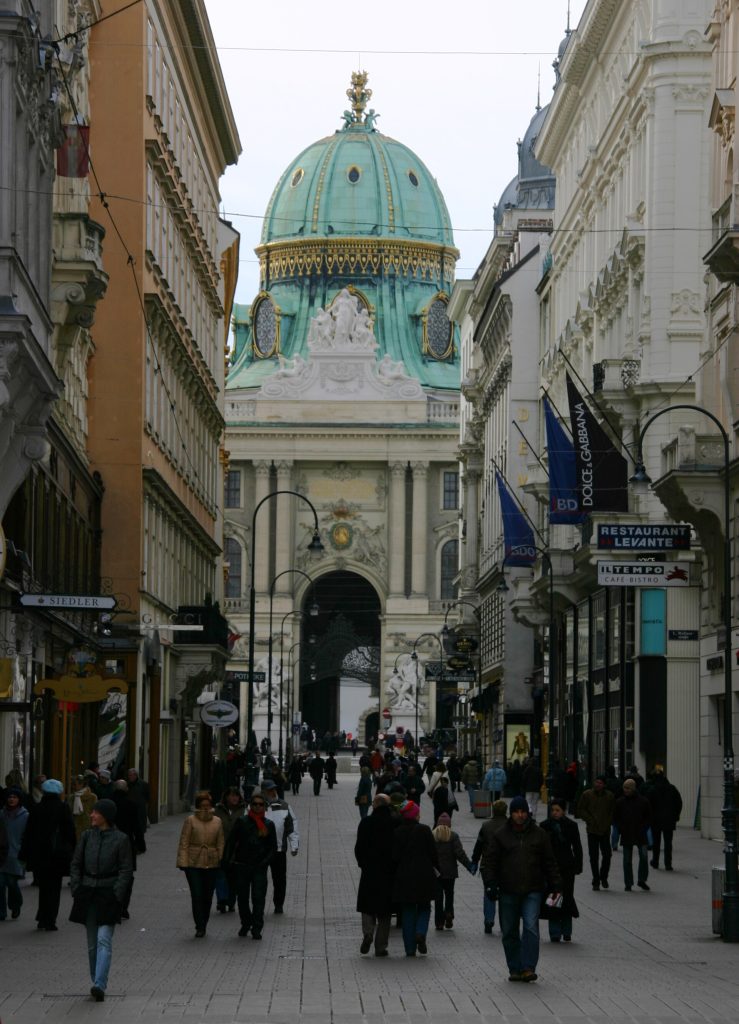
Walk about ten minutes through the Volksgarten or along Löwelstrasse to Herrengasse. Café Central, opened in 1876 in the Palais Ferstel, is the most famous of all the literary cafés, but it closed in 2026 for a full renovation, so check whether it has reopened before you plan around it. Check its status before you go; while the work continues, a temporary café called DECENTRAL operates on the Freyung nearby. At the end of Herrengasse, Michaelerplatz is where Griensteidl stood, opposite the green dome of the Michaelertor.
3. Demel
Turn into Kohlmarkt. Demel, at number 14, began life in 1786 as a confectioner’s on Michaelerplatz founded by Ludwig Dehne, and took its name from Christoph Demel, who bought the business in 1857 and moved it here. It held the title of court confectioner, still painted above the door. Inside, you can watch the pastry kitchen through glass.
4. Café Bräunerhof
A few minutes east, in Stallburggasse, the Bräunerhof is the plain, bookish counterpoint to Demel. The writer Thomas Bernhard, who lived in the building, sat here almost daily and complained about almost everything. The café went through insolvency in 2025 and reopened in June 2026 under new owners after a careful renovation of its listed interior.
5. Café Hawelka
Dorotheergasse runs south from the Graben. Leopold and Josefine Hawelka took over the small, smoke-darkened café at number 6 in 1939, and after the war it became the haunt of painters, writers and students. The family’s Buchteln, baked yeast buns filled with jam, are the thing to order here. A few travel guides have reported a renovation closure; the café’s own site lists only its separate roastery shop across the lane as closed, but confirm before you make a special trip.
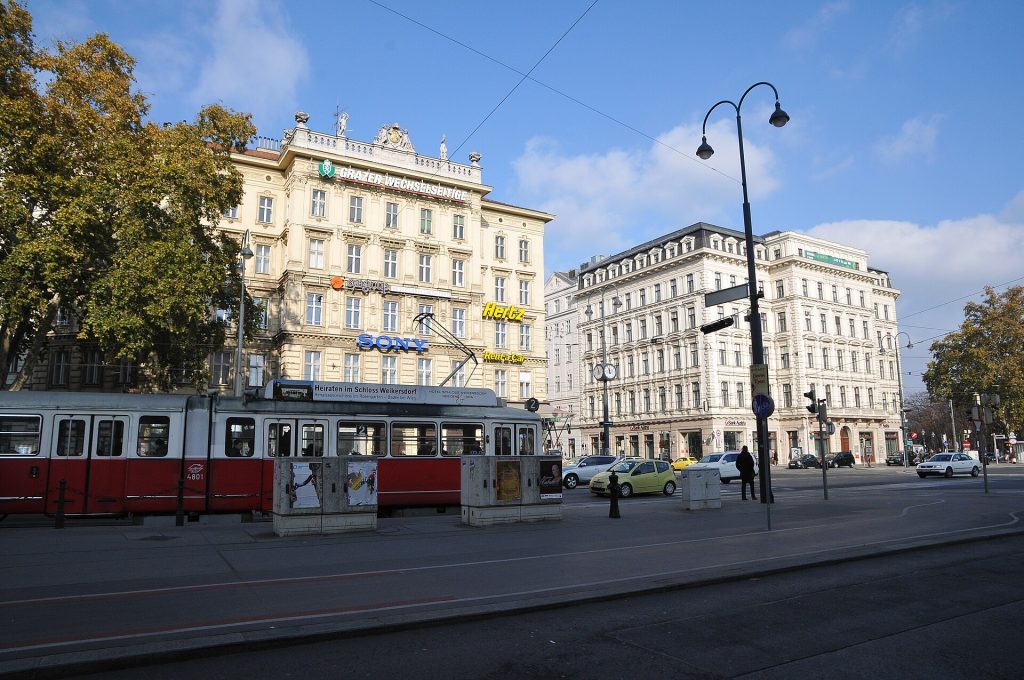
Part two: the Opera, the Ring and Café Sperl
6. Café Sacher
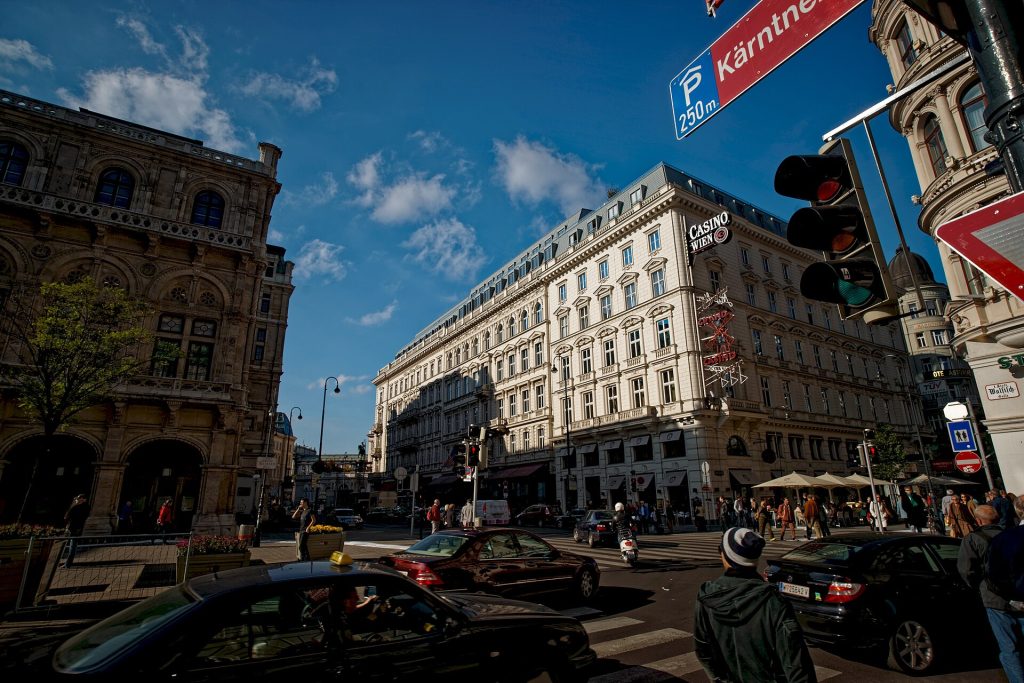
From Dorotheergasse, walk south past the Albertina to Philharmonikerstrasse, behind the State Opera. Café Sacher occupies the ground floor of the Hotel Sacher, all red damask and chandeliers. It is the busiest stop on the route, so book ahead or come early.
7. Café Schwarzenberg
Ten minutes east along the Kärntner Ring, Café Schwarzenberg opened in 1861 and is usually described as the oldest surviving café on the Ringstrasse, which once had dozens. Its terrace looks across to Schwarzenbergplatz.
8. Café Sperl
Finish with a 15 to 20 minute walk past Karlsplatz and along the top of the Naschmarkt into Gumpendorfer Strasse. Café Sperl, at number 11, has been a coffee house since 1880. Its billiard tables, worn banquettes and tall windows look much as they did a century ago, and it has appeared in films and television, including the 1995 film Before Sunrise.
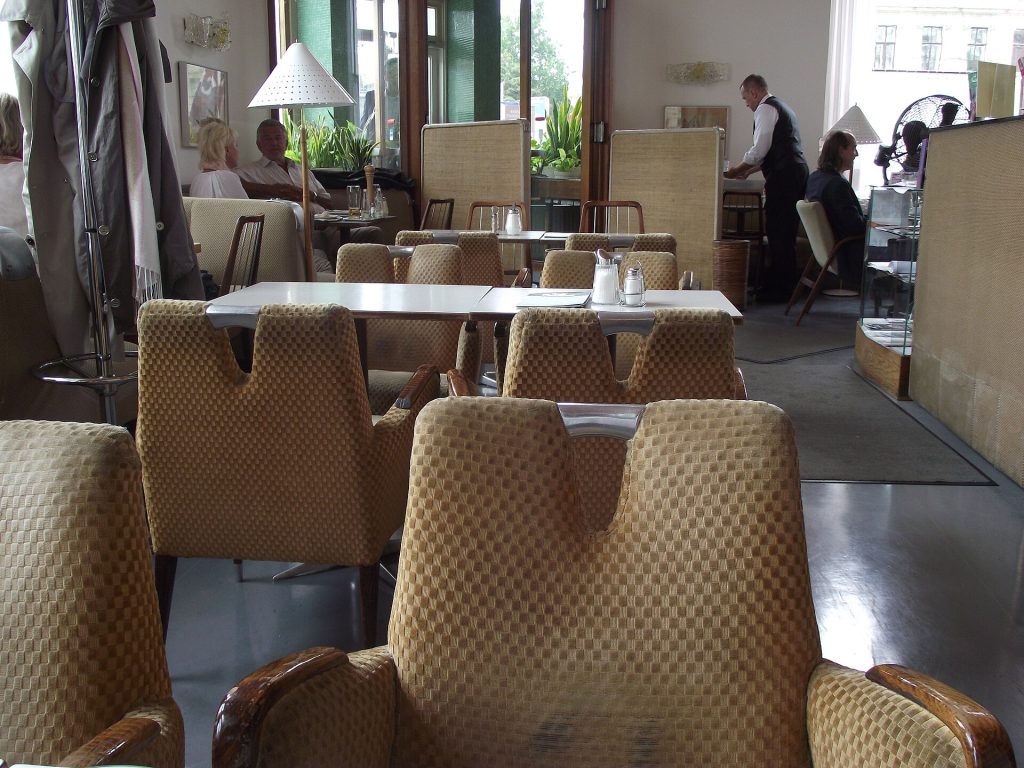
If you have more time: Café Prückel
On the opposite side of the old town, Café Prückel stands on the Stubenring near the Stadtpark and the Museum of Applied Arts. It opened in the early 20th century, but its interior was remodelled in the 1950s by the architect Oswald Haerdtl, and it is the best place in the city to see a mid-century coffee house, with pastel colours and big windows onto the Ring. It changed hands in 2024 and was restored without losing its character.
Practical tips
- Getting there: the walk starts near the Rathaus and Schottentor U2 and tram stops, and ends near Kettenbrückengasse and Museumsquartier U-Bahn stations.
- Timing: go mid-morning or mid-afternoon on a weekday. Lunchtime and Sunday afternoons are busiest.
- Check before you go: opening days vary, several cafés shorten hours in summer, and renovations happen, so look at each café’s website on the day.
- Payment: most cafés take cards now, but carry some cash for the older ones.
Plan your trip to Vienna
- Tickets and tours in Vienna: tickets and tours on Tiqets · activities on Klook
- Arriving by plane: pre-book an airport transfer with Welcome Pickups
- Road trip: compare car hire on Localrent
- Mobile data: get a travel eSIM from Airalo
Some of these are affiliate links: if you book through them we may earn a small commission, at no extra cost to you.
Planning a bigger trip? See our guide to the 25 best places to visit in Europe, from city breaks to fjords.
Keep exploring
- Vienna Christmas Markets Guide: the Best Markets and How to Visit
- Vienna Landmarks: 12 Sights Worth Your Time (and How to See Them)
- Europe’s Most Beautiful Glasshouses: 9 Historic Palm Houses to Visit
Frequently asked questions
Is Café Central open?
Café Central closed in 2026 for a full renovation; check its current status before you go. Check its official website for the current status. Café Landtmann and Café Sperl make good alternatives.
Do you tip in Vienna’s coffee houses?
Yes. Round up the bill, or add around 5 to 10 percent, and tell the waiter the total when you pay rather than leaving coins on the table.
Which café has the original Sachertorte?
The Hotel Sacher holds the right to the name “Original Sacher-Torte” and serves it at Café Sacher. Demel sells its own version as the “Eduard-Sacher-Torte”.
Photos: Pymouss, CC BY-SA 4.0, via Wikimedia Commons; Gerd Eichmann, CC BY-SA 4.0, via Wikimedia Commons; Txllxt TxllxT, CC BY-SA 4.0, via Wikimedia Commons; Hubertl, CC BY-SA 4.0, via Wikimedia Commons; böhringer friedrich, CC BY-SA 3.0 at, via Wikimedia Commons; Fred Romero from Paris, France, CC BY 2.0, via Wikimedia Commons.