Updated · Facts and prices checked against official sources
Vienna takes Advent seriously. From early November the city fills with wooden huts, strings of lights and the smell of punch and roasting chestnuts, and by the middle of the month more than a dozen Christmas markets are trading across the centre.
This guide covers the Vienna Christmas markets worth your time, what to eat and drink, an evening route that links several of them on foot, and how to get around.
- Season: the first markets open in early November, most open in mid-November, and the majority close on 23 December. A few stay open to 26 December, New Year’s Eve or early January.
- Best for: a festive city break, food lovers and anyone who prefers crafts to mass-produced souvenirs.
- When to go: weekday evenings are the most atmospheric without the heaviest crowds. Late afternoon, just as the lights come on, is ideal.
- How long: two or three evenings cover the main markets, with daytime left for museums and coffee houses.
- Getting there: trains from Vienna Airport reach the city in under half an hour, and Wien Hauptbahnhof has direct links to many European cities.
1. Wiener Christkindlmarkt on Rathausplatz
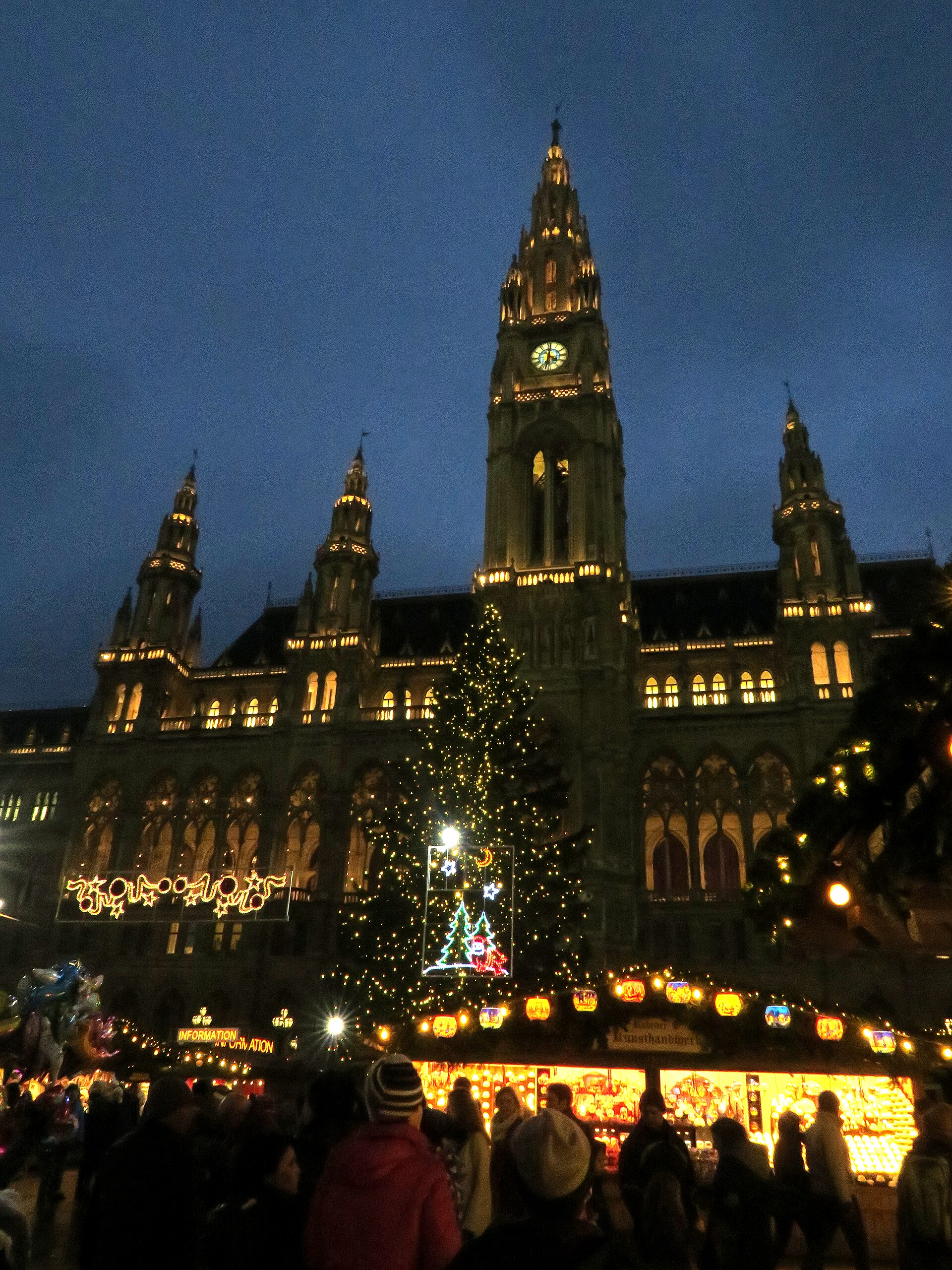
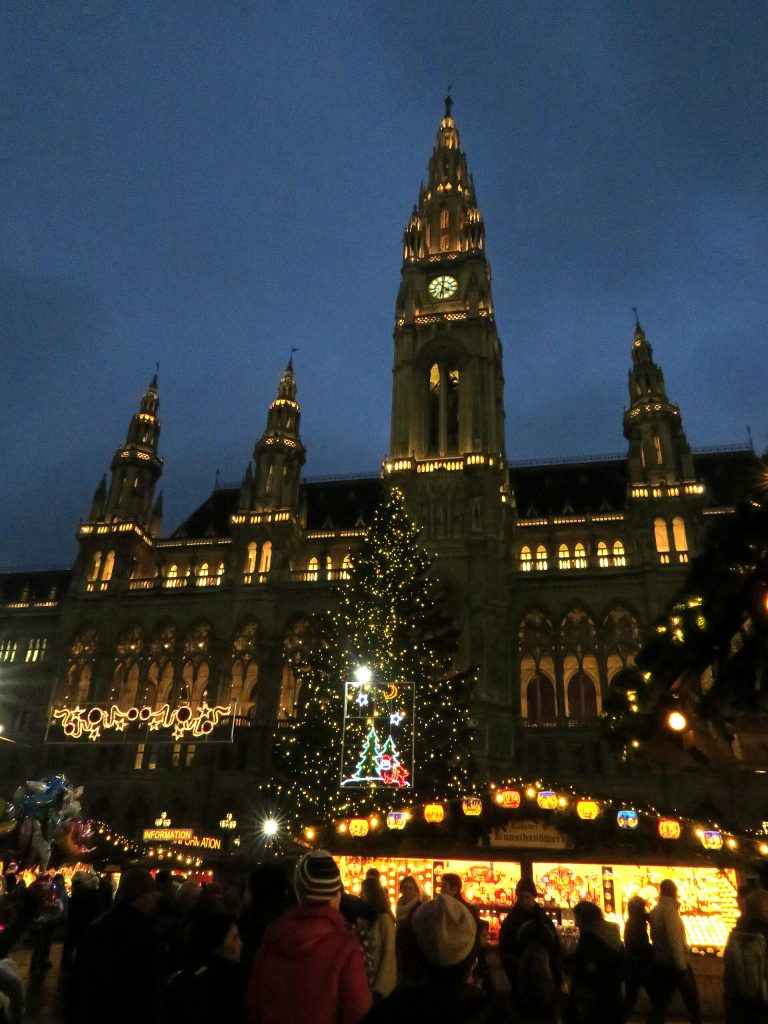
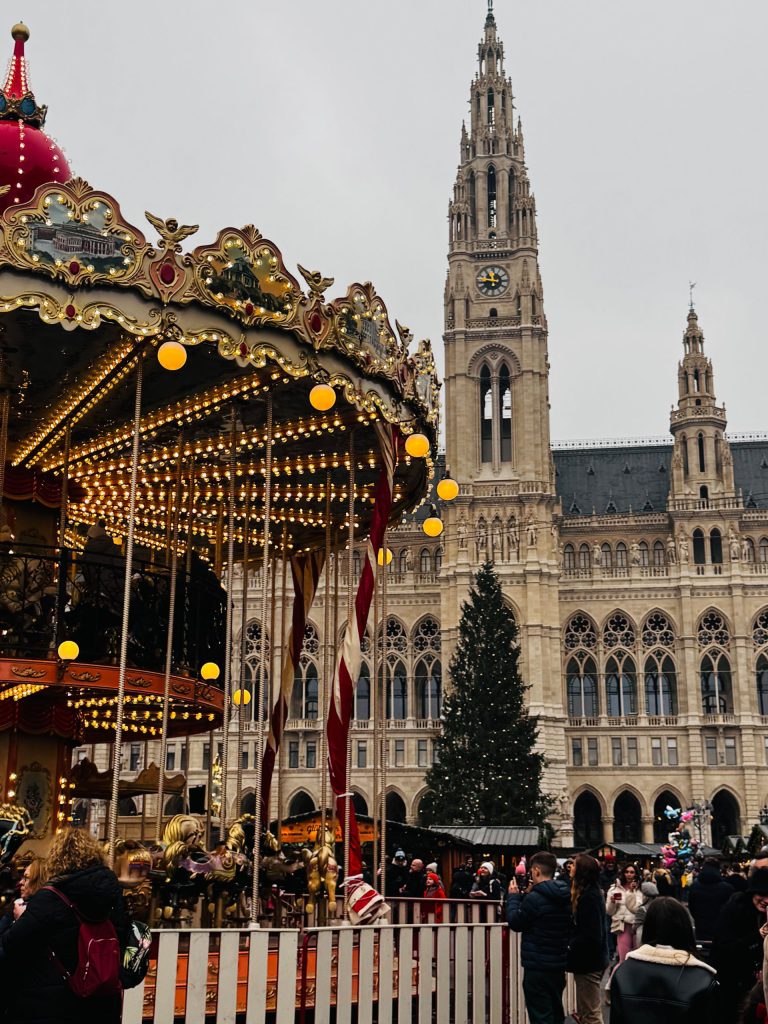
The largest and best-known of the Vienna Christmas markets fills the square in front of the neo-Gothic City Hall, the Rathaus. Rows of stalls sell decorations, candles, gingerbread and hot drinks, and the trees in the adjoining Rathauspark are hung with lights and illuminated decorations. A large Christmas tree stands in front of the building, donated each year by one of Austria’s federal states. The market has been held here since 1975.
It is a good first stop for families, with activities for children and an ice rink alongside the market. For 2026, Vienna Tourism lists the market from 13 November to 26 December, and the ice rink into early January 2027. Weekend evenings get very crowded, so come on a weekday if you can.
Nearest stops: U2 Rathaus, or trams 1, 2, D and 71 to Rathausplatz/Burgtheater on the Ringstrasse.
2. Schönbrunn Palace
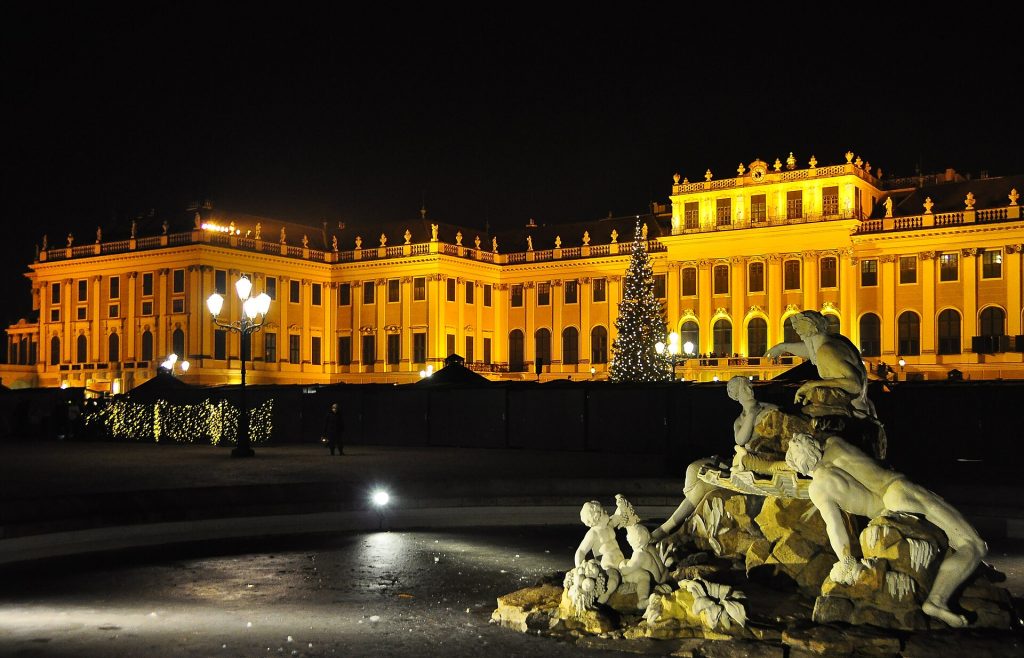
The market in the main courtyard of Schönbrunn, the former summer residence of the Habsburgs, has the grandest backdrop in the city. The stalls lean towards quality crafts and food, the palace façade is lit up at dusk, and there is a varied programme of music, including choirs and brass ensembles. Entry to the market itself is free; you only pay if you visit the palace.
It also has one of the longest seasons. For 2026 it is listed from 6 November 2026 to 6 January 2027, continuing after Christmas as a New Year market. That makes it the obvious choice if you are in Vienna between Christmas and Epiphany, when most other markets have closed.
Nearest stop: U4 Schönbrunn, then a short walk through the gates.
3. Belvedere
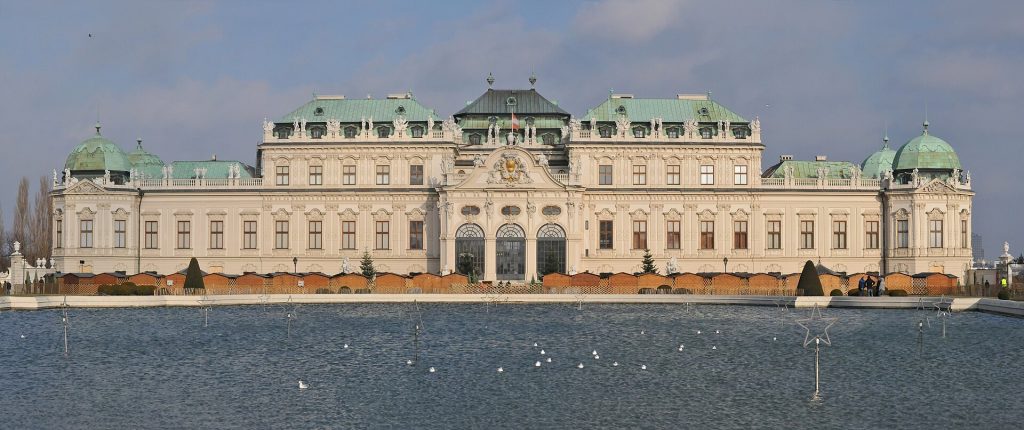
The K&K Christmas market sets up in front of the Upper Belvedere, the Baroque palace that houses Klimt’s The Kiss. It is smaller and calmer than Rathausplatz, with a mix of crafts, food and drink stalls and the palace reflected in the pond behind. Combine it with a daytime visit to the gallery and stay on for the lights.
For 2026 it is listed from 20 November to 31 December, so it is another option for the days after Christmas.
Nearest stop: tram D to Schloss Belvedere, or a 15-minute walk from Wien Hauptbahnhof.
4. Spittelberg
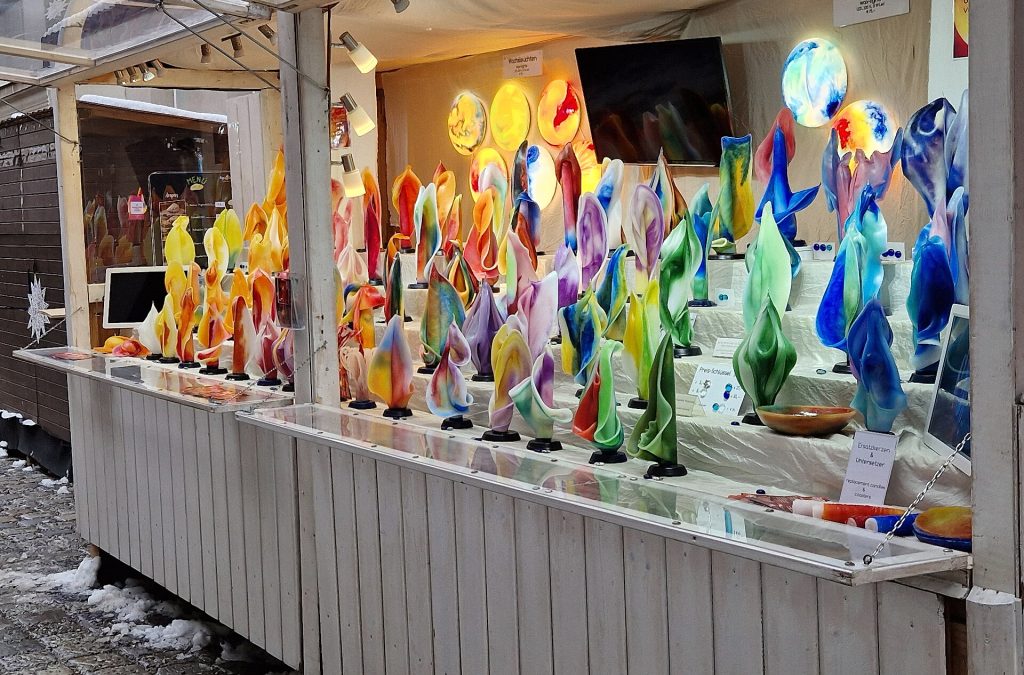
For many Viennese, this is the favourite. Stalls run along the narrow cobbled lanes of Spittelberg in the 7th district, between restored 18th and 19th-century houses that now hold galleries, bars and restaurants. The emphasis is on handicrafts, ceramics, textiles and art, with plenty of sustainable and organic products, and the market is run as an eco-event.
It gets busy after work, when locals meet for a punch. For 2026 it runs from 13 November to 23 December, opening later on weekdays than at weekends, so plan an evening visit from Monday to Friday.
Nearest stops: U2 or U3 Volkstheater, or U3 Neubaugasse.
5. Art Advent on Karlsplatz
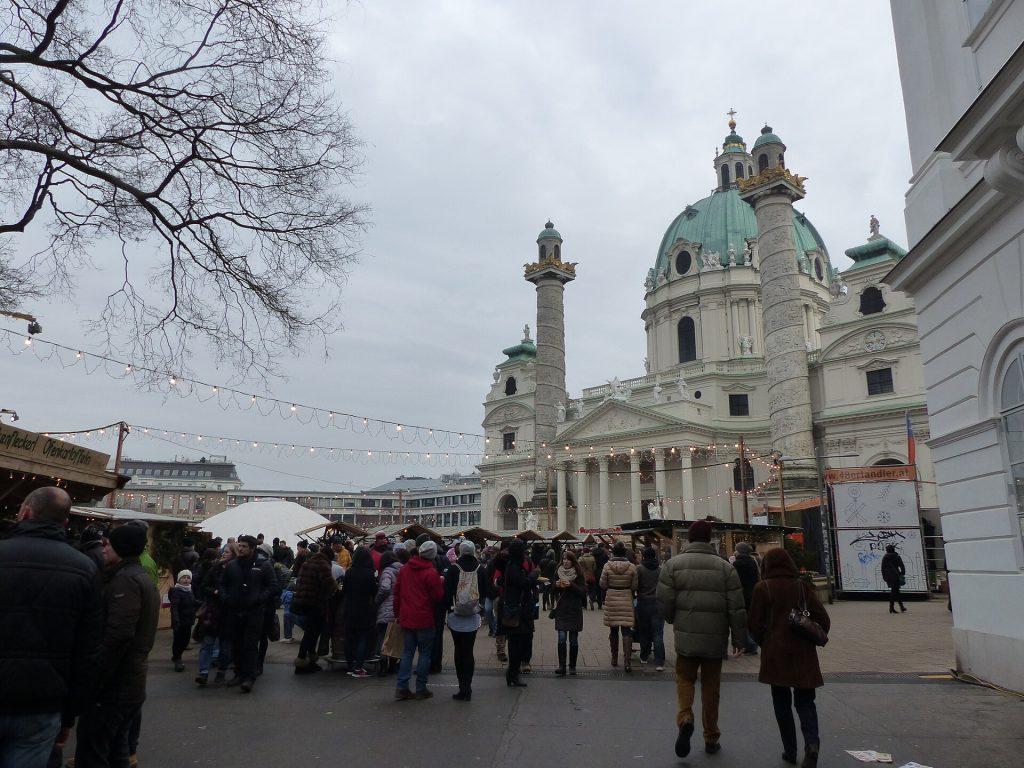
The market on Karlsplatz, in front of the Baroque Karlskirche, is the place to buy gifts that were actually made by the person selling them. Exhibitors are selected by a jury and only original handmade work is accepted, so expect jewellery, glass, wood, ceramics and prints rather than generic decorations. Food and drink stalls focus on organic produce, and the area for children, with straw underfoot, is popular with young families.
For 2026 it runs from 13 November to 23 December.
Nearest stop: Karlsplatz (U1, U2 and U4), one of the main hubs of the network.
6. Am Hof and Freyung
These two neighbouring squares in the old town, a few minutes apart, hold two traditional markets. Am Hof, one of the largest squares in the Innere Stadt, is known for good-quality crafts and for choral and brass music in the evenings. Around the corner, the Altwiener Christkindlmarkt on Freyung keeps an old-fashioned feel, with decorations, glassware and nativity figures on a square overlooked by the Schottenkirche.
For 2026, Am Hof runs from 13 November to 23 December and the Freyung market from 14 November to 23 December. Both are compact and easy to combine in under an hour.
Nearest stop: U3 Herrengasse.
7. Stephansplatz and Maria-Theresien-Platz
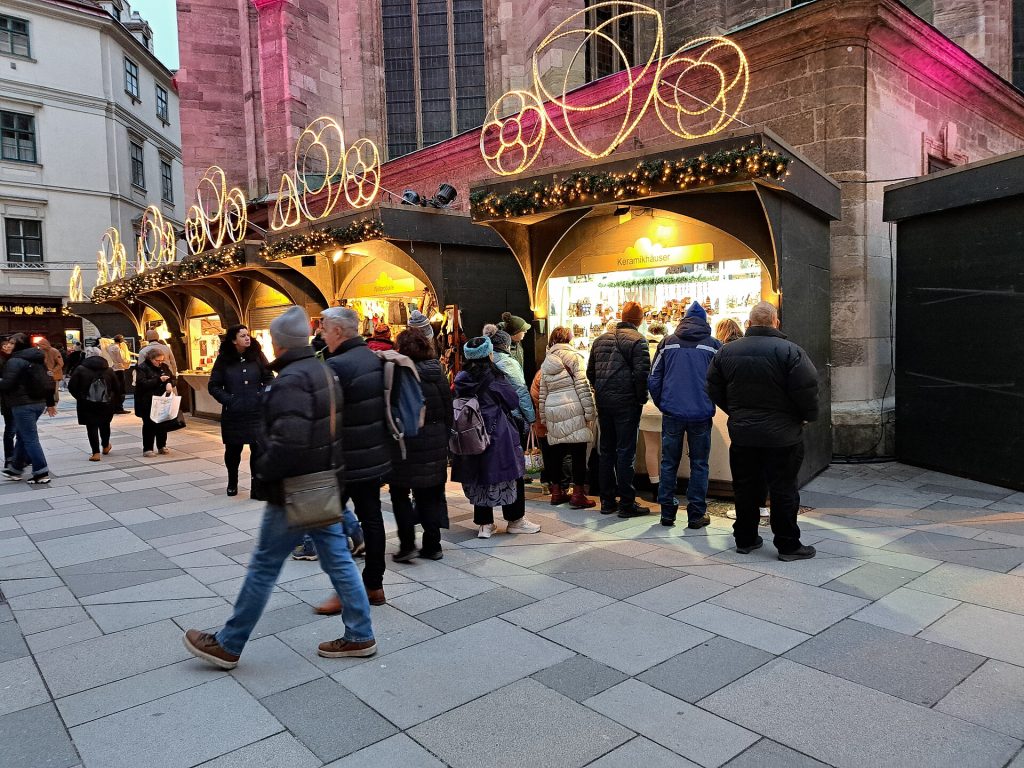
The Christmas village on Stephansplatz, in the shadow of St Stephen’s Cathedral, has around 40 stalls and is the most convenient market for a quick visit between sights. For 2026 it is listed from 6 November to 26 December.
Between the Kunsthistorisches Museum and the Naturhistorisches Museum, the Christmas village on Maria-Theresien-Platz is a good choice if you are visiting either museum. It is roomy, with plenty of food stalls and the Empress Maria Theresa monument at its centre. For 2026 it is listed from 20 November to 26 December.
Nearest stops: U1 or U3 Stephansplatz for the cathedral; U2 Museumsquartier or U2 and U3 Volkstheater for Maria-Theresien-Platz.
What to eat and drink
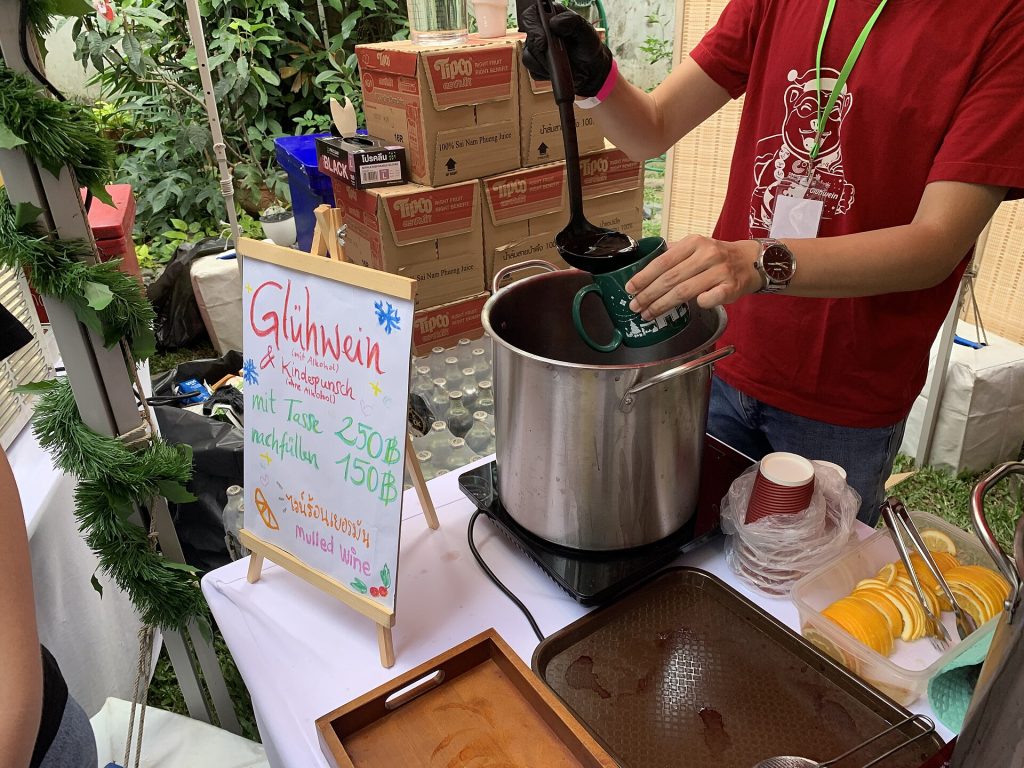
Hot drinks are the centre of every market, and in Vienna punch is just as popular as mulled wine.
- Punsch: a hot punch made with fruit juice, spices and often rum, in flavours such as orange or berry. Many stalls also offer a non-alcoholic Kinderpunsch.
- Glühwein: hot mulled wine with cinnamon, cloves and citrus, usually red but sometimes white.
- Maroni and Bratkartoffeln: roasted chestnuts and potato slices from the street-side ovens that appear across Vienna each winter.
- Langos: a deep-fried flatbread, usually rubbed with garlic, which has become a market staple.
- Kaiserschmarrn and Kiachl: a torn, caramelised pancake with fruit compote, and fried dough served sweet or savoury.
- Lebkuchen and Vanillekipferl: spiced gingerbread and crescent-shaped vanilla biscuits, both good to take home.
How the mug deposit works: hot drinks are served in ceramic mugs, and you pay a small deposit on top of the drink. Return the mug to a drinks stall at the same market and you get the deposit back; keep it and it becomes a souvenir. Each market has its own design, often changed every year, which is why some visitors collect them. Mugs from one market usually cannot be returned at another, and smaller stalls may prefer cash, so carry some coins.
A suggested evening route
This walk links five markets in the old town and Ringstrasse area in roughly three to four hours with stops. It works best on a weekday, starting around dusk.
- Karlsplatz: start at Art Advent while it is still light enough to see the crafts properly.
- Stephansplatz: walk north along Kärntner Strasse, about 15 minutes, for a first punch beside the cathedral.
- Am Hof and Freyung: continue through Graben and Bognergasse to Am Hof, then on to Freyung, about 10 minutes in all.
- Rathausplatz: walk west along Schottengasse and across the Ringstrasse to City Hall, around 10 minutes, to see the lit-up park at its best.
- Spittelberg: finish with a 15-minute walk past the Parliament and Volkstheater into the lanes of Spittelberg for dinner in one of the local restaurants.
Keep Schönbrunn and the Belvedere for separate visits, ideally combined with the palace or gallery during the day.
Getting around
Vienna’s public transport makes market hopping easy. The U-Bahn, a dense tram network and buses run late into the evening, and the trams along the Ringstrasse pass several markets. A single ticket covers U-Bahn, tram and bus within the city, and 24, 48 and 72-hour passes save buying tickets each time.
Most central markets are within walking distance of each other, so use public transport mainly for Schönbrunn, the Belvedere and getting back to your hotel.
Practical tips
- Check this year’s dates: the dates in this guide are those listed by Vienna Tourism for 2026. Opening times vary by market and day, and on 24 December most markets close early or do not open at all, so check before setting out.
- Dress warmly: evening temperatures in December are often around freezing. Wear warm shoes, as you will be standing on cold stone for hours.
- Go early in the season: late November and early December are quieter than the last two weekends before Christmas, when coach groups arrive from across Europe.
- Book a hotel early: Advent weekends are among the busiest of the year in Vienna, so reserve accommodation well in advance.
- Look beyond the markets: the Christmas lights on Graben, Kohlmarkt and Rotenturmstrasse are worth a walk of their own, and Advent concerts take place in churches across the city.
Plan your trip to Vienna
- Where to stay: tickets and tours on Tiqets · activities on Klook
- Tours and tickets: tickets and tours on Tiqets · activities on Klook
- Arriving by plane: pre-book an airport transfer with Welcome Pickups
- Road trip: compare car hire on Localrent
- Mobile data: get a travel eSIM from Airalo
Some of these are affiliate links: if you book through them we may earn a small commission, at no extra cost to you.
Planning a bigger trip? See our guide to the 25 best places to visit in Europe, from city breaks to fjords.
Keep exploring
- Vienna Coffee House Walk: Historic Cafés, Etiquette and What to Order
- Vienna Landmarks: 12 Sights Worth Your Time (and How to See Them)
Frequently asked questions
When do the Vienna Christmas markets open in 2026?
The first markets, at Schönbrunn and Stephansplatz, open on 6 November 2026. Most others, including Rathausplatz, Spittelberg, Am Hof and Karlsplatz, open on 13 or 14 November, and the Belvedere and Maria-Theresien-Platz markets follow on 20 November.
Are any Vienna Christmas markets open after Christmas?
Yes. Rathausplatz, Stephansplatz and Maria-Theresien-Platz are listed until 26 December, the Belvedere until 31 December, and Schönbrunn continues as a New Year market until 6 January 2027. Most other markets close on 23 December.
Which is the best Christmas market in Vienna?
Rathausplatz is the biggest and most festive, Schönbrunn has the most impressive setting, and Spittelberg and Art Advent on Karlsplatz are best for crafts and a more local atmosphere. With a few evenings, you can easily visit all four.
Photos: Burkhard Mücke, CC BY-SA 4.0, via Wikimedia Commons; Fotoalfred, CC BY-SA 4.0, via Wikimedia Commons; böhringer friedrich, CC BY-SA 3.0 at, via Wikimedia Commons; Geolina163, CC BY-SA 4.0, via Wikimedia Commons; Elekes Andor, CC BY-SA 4.0, via Wikimedia Commons; Photo via Pexels; Bybbisch94, CC BY 4.0, via Wikimedia Commons; Chainwit., CC BY 4.0, via Wikimedia Commons.