Updated
Alberobello is a small town in the Itria Valley of Puglia, about 65 km south-east of Bari, and it holds the densest concentration of trulli anywhere: whitewashed, round-walled houses topped with cone-shaped roofs of grey limestone. Two whole districts are made of them, and together they have been a UNESCO World Heritage Site since 1996.
The town is compact enough to see in half a day, but it rewards an early start and a slower pace. Most visitors walk straight into the busy souvenir streets of Rione Monti and leave by lunchtime. If you also cross to the quieter residential quarter, climb to a viewpoint and stay for the evening light, you will see a very different place.
Alberobello at a glance
- Best for: architecture, photography, families with young children, and a base for exploring the Itria Valley.
- Time needed: three to four hours for the highlights; one night if you want quiet streets at dawn and dusk.
- When to go: April to June and September to October for mild weather; arrive before 10am from May to October to beat the tour coaches.
- Getting there: Ferrovie del Sud Est trains from Bari take roughly 1 hour 20 minutes; by car it is about an hour.
- Don’t miss: Rione Aia Piccola, the Trullo Sovrano and the view over Rione Monti from the Belvedere Santa Lucia.
Why the trulli look the way they do
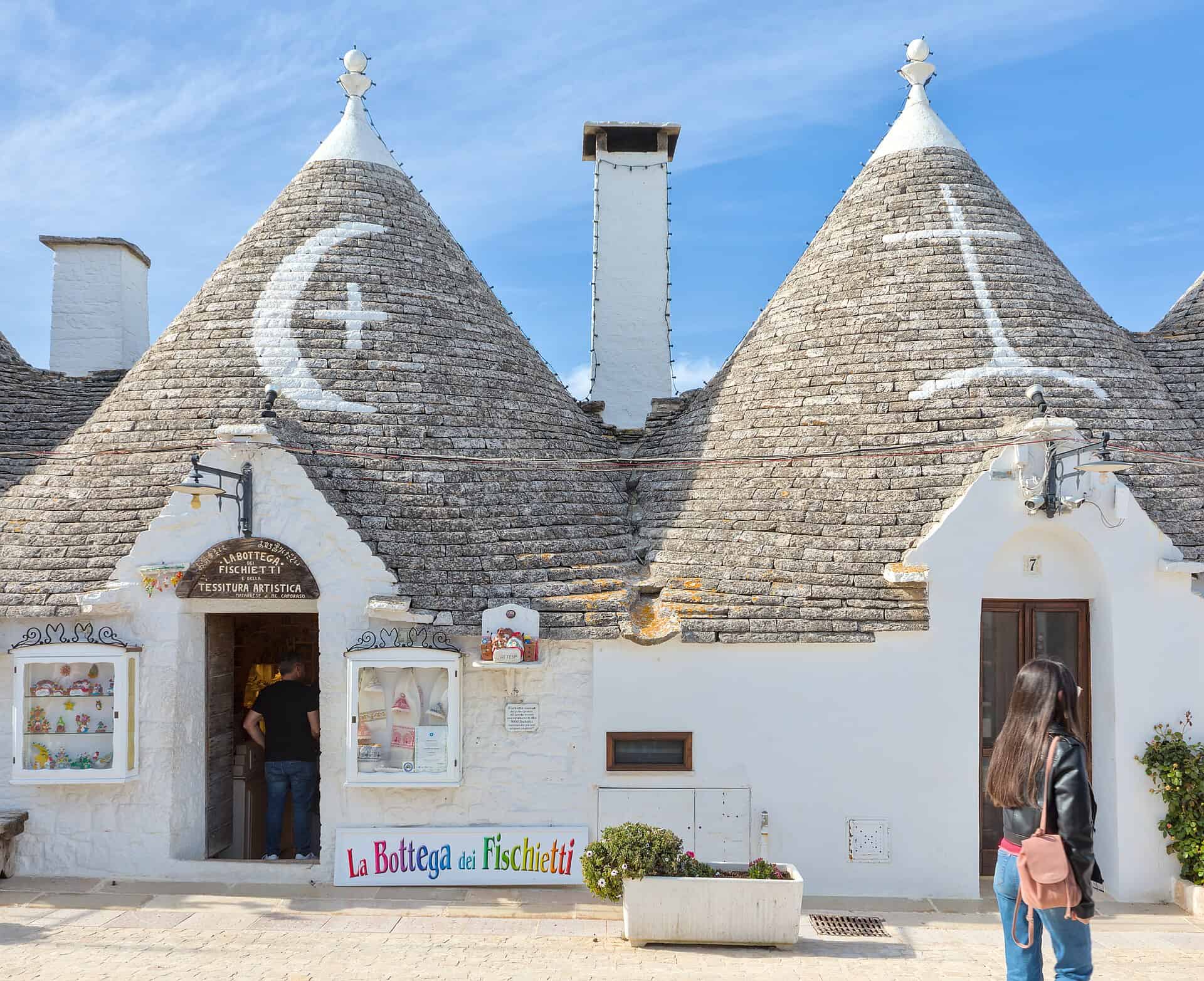
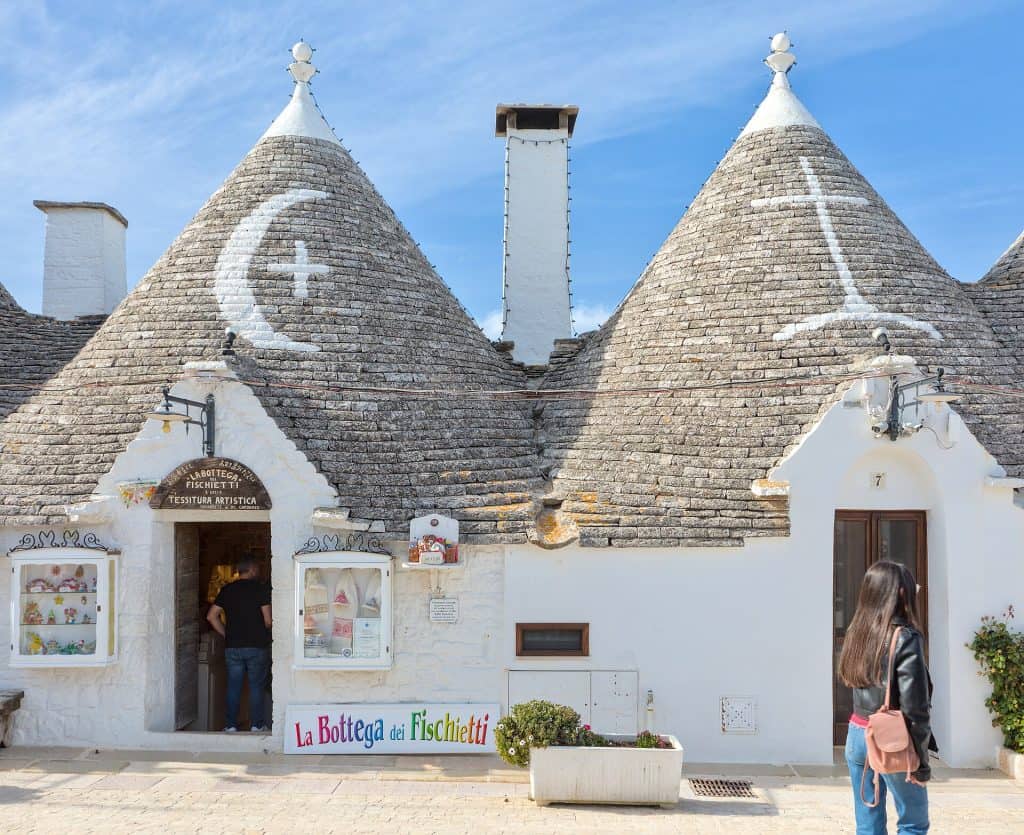
A trullo is built without mortar. Roughly shaped limestone blocks are laid in rings, each slightly smaller than the one below, until the corbelled dome closes at the top. The outer layer of thin stone slabs, called chiancarelle, sheds rain, and a decorative pinnacle caps the cone. Walls are thick and whitewashed, which keeps the interiors cool in summer.
The surviving trulli in Alberobello date from as early as the mid-14th century, though most of what you see is much later. The best-known explanation for the dry-stone method involves taxes: the local Counts of Conversano are said to have required houses that could be dismantled quickly, so that the settlement could avoid duties owed on permanent towns to the Kingdom of Naples. Historians treat the story with some caution, but it is the one every guide will tell you.
Look up at the roofs as you walk. Many are painted with white symbols, some religious, some astrological, and some of uncertain meaning. They are part of what UNESCO describes as an exceptional example of a vernacular building tradition that is still lived in today.
Rione Monti, the postcard quarter
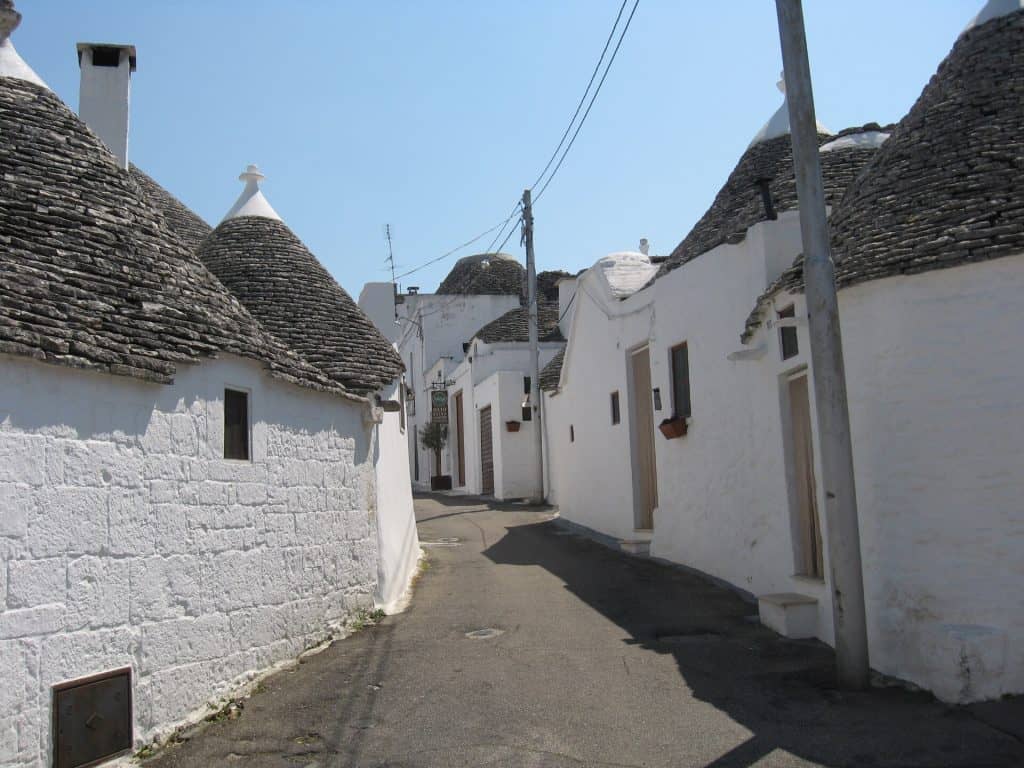
Rione Monti is the district you have seen in photographs. UNESCO counts 1,030 trulli here, spread over a slope south of the town centre, and almost every one on the main lanes is now a shop, café, B&B or small museum. Via Monte San Michele and Via Monte Pertica are the two main streets climbing the hill.
It is undeniably commercial, with linen, ceramics, olive oil and local liqueurs on sale at every door. The shopkeepers are used to visitors and will often invite you to step inside and see a trullo interior, sometimes with access to a roof terrace. There is no obligation, but tourism keeps these buildings maintained, so buying something you like is a fair exchange.
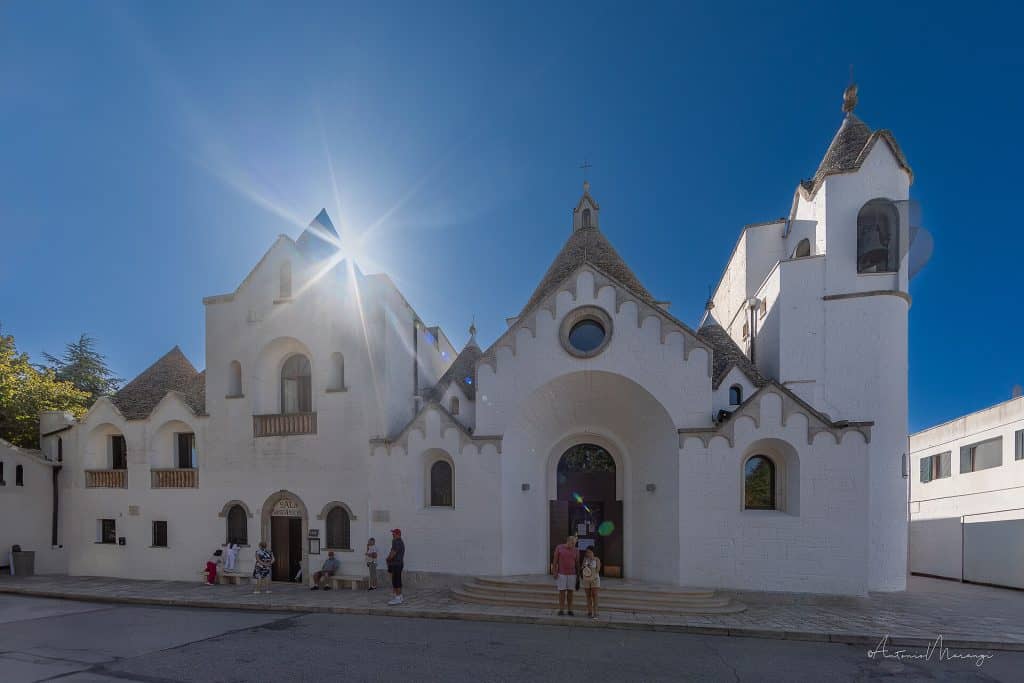
At the top of Via Monte Pertica stands the Church of Sant’Antonio, built in 1927 with a trullo-shaped dome. It is the natural end point of a walk through the quarter, and the lanes behind it are noticeably quieter than the ones below.
Rione Aia Piccola, where people still live
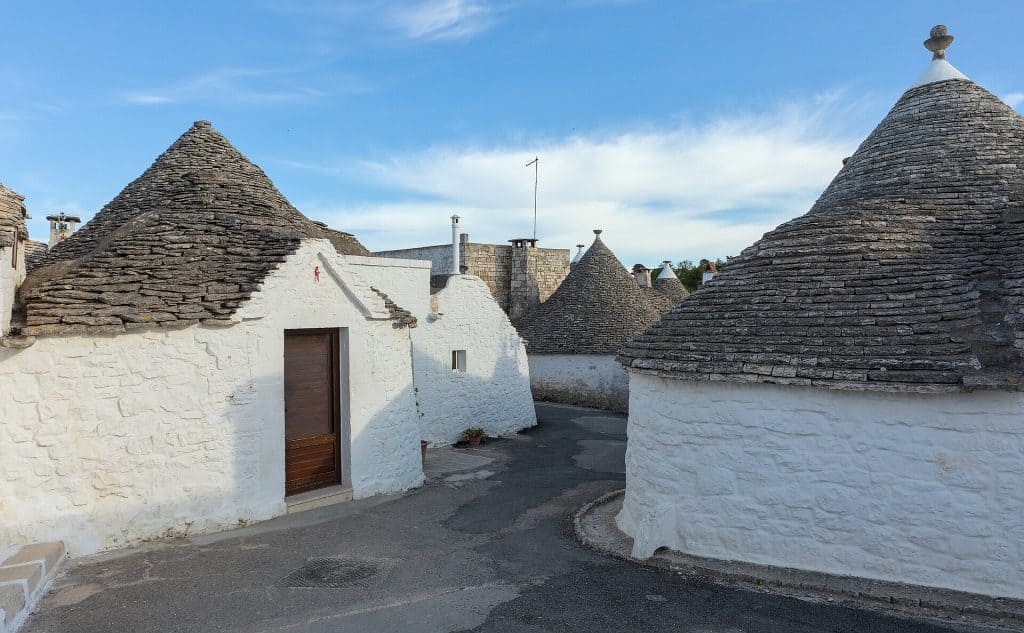
Across the main road from Rione Monti, Aia Piccola has around 590 trulli and far fewer shops. Many of the houses are still family homes, with potted geraniums on the steps and washing on the line. The lanes are narrow and the atmosphere is calm even in high summer.
Our pick is to walk here after Monti, without a map. The views are more intimate, with clusters of cones stacked closely along the slope, and you get a clearer sense of how the town worked before tourism. Keep your voice down and respect private doorways; these are residents’ homes, not exhibits.
The small museum at Casa Pezzolla, a complex of connected trulli, explains local life and building methods and is a useful stop if the weather turns.
The Trullo Sovrano and the town centre
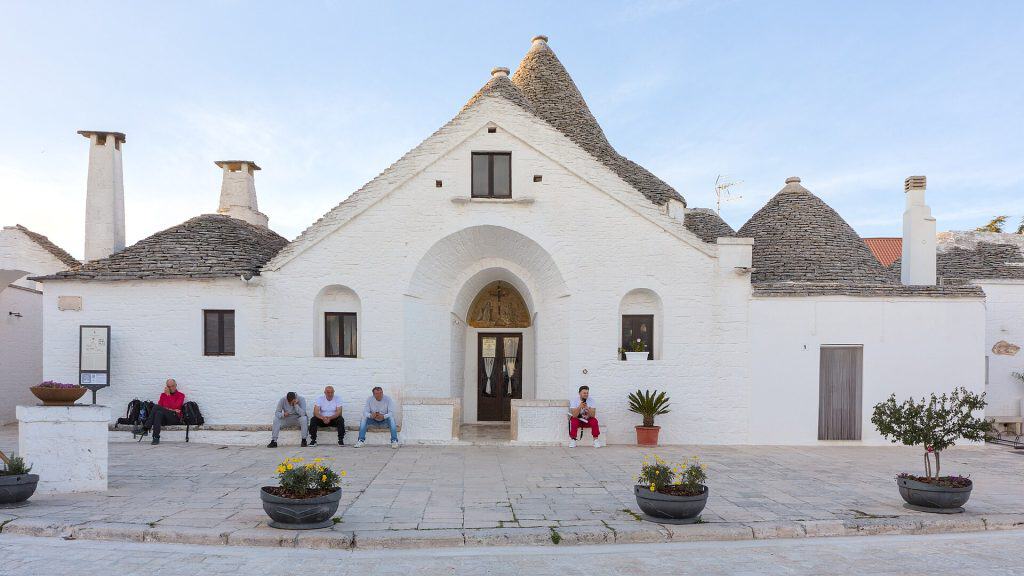
The Trullo Sovrano, a few minutes north of the main square near the Basilica of Santi Medici Cosma e Damiano, is the largest trullo in Alberobello and a rare two-storey example. Its central cone rises about 14 metres. It took its current form in the 18th century and was declared a national monument in 1923.
Inside, the rooms are furnished as a well-off household would have had them, with period furniture, textiles and household tools, and a staircase to the upper floor. It is a short visit, usually under half an hour, and opening times vary by season.
The surrounding centre, around Piazza del Popolo, is a conventional Puglian town of stone houses, bars and pastry shops. It is a good place for a coffee and a pastry away from the trulli crowds.
The best viewpoints
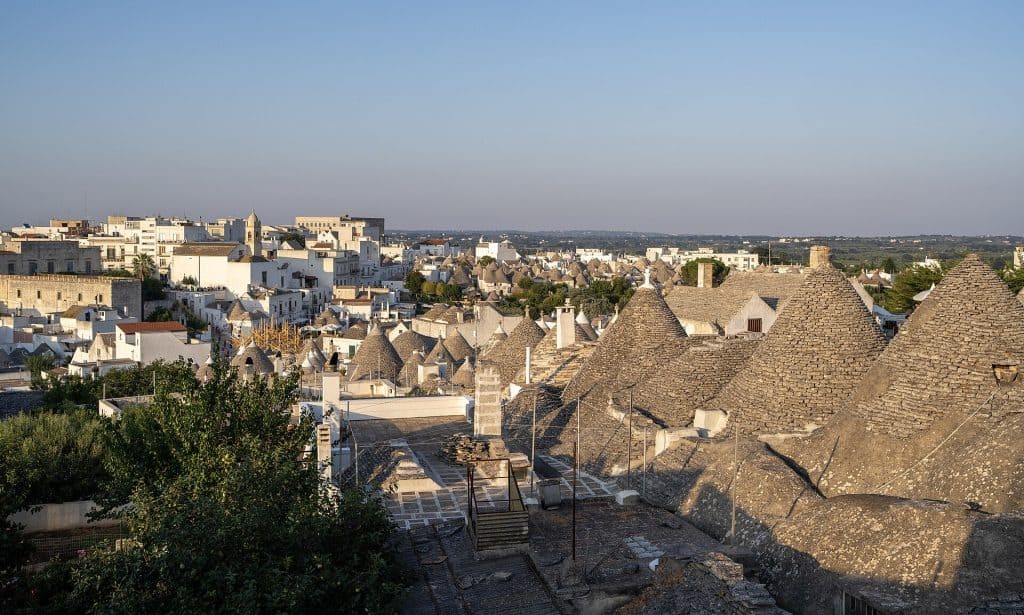
The classic panorama is from the Belvedere Santa Lucia, a terrace beside the Church of Santa Lucia, a short uphill walk from Piazza del Popolo. It faces Rione Monti directly, so you see hundreds of cones layered down the hill. Go early in the morning for soft light or after sunset, when the trulli are lit up.
For a closer view, several shops in Monti offer access to their roof terraces. They are usually free if you browse first, and they show the roof construction at arm’s length. Upper terraces in Aia Piccola give a similar, less crowded angle.
A half-day walking route
- Belvedere Santa Lucia for the overview, ideally before 9.30am.
- Rione Monti: walk up Via Monte San Michele, then cut across to Via Monte Pertica.
- Church of Sant’Antonio at the top, then explore the quieter lanes around it.
- Down to Largo Martellotta and across the road into Rione Aia Piccola.
- Casa Pezzolla if you want background on how people lived.
- Trullo Sovrano via Piazza del Popolo, then lunch in the town centre.
The whole loop is under 3 km on foot, but the lanes are sloping and paved with uneven stone. Wear flat shoes and bring water in summer. A guided walking tour is worth booking if you want the history and the meaning of the roof symbols explained properly.
Where to stay
Sleeping in a trullo is the main reason to stay overnight. Many in both districts have been converted into B&Bs and self-catering apartments, often with a single domed room and a small kitchen. They stay cool in summer but can feel damp in winter, and ceilings slope sharply at the edges, so check the listing if you are tall or travelling with luggage that needs space.
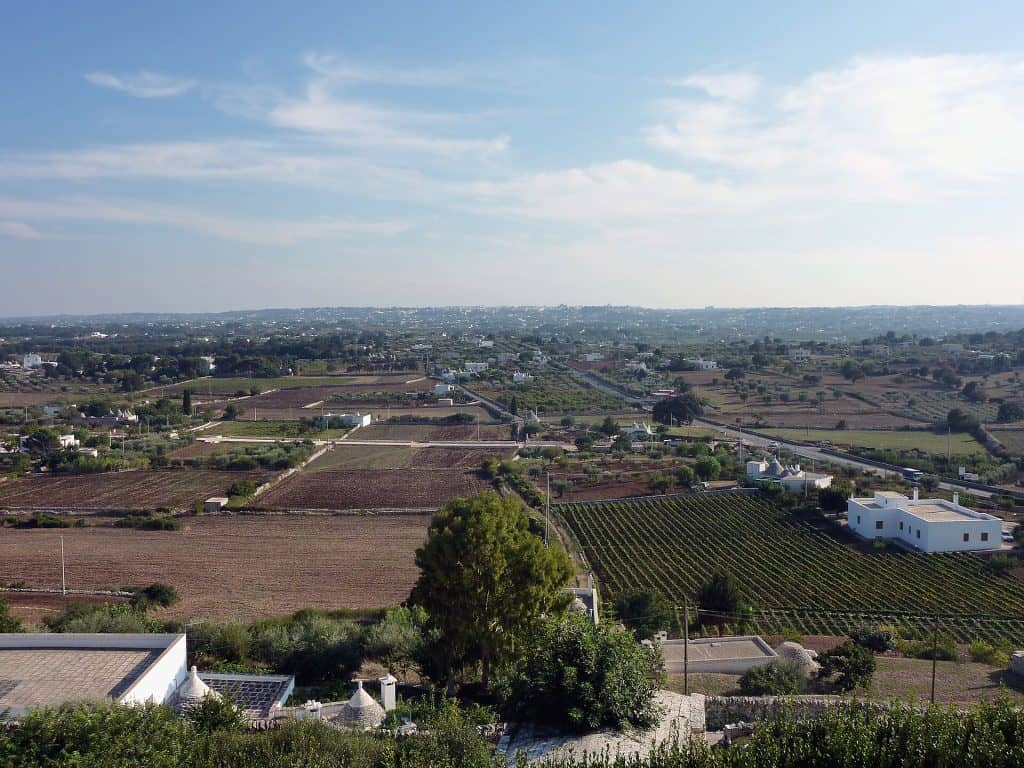
Staying in town means you have the lanes to yourself after the day visitors leave. Alternatively, a countryside masseria or a rural trullo in the Itria Valley gives you more space and a pool, though you will need a car. Alberobello also works well as a base for Locorotondo, Martina Franca and Cisternino, all a short drive away.
Getting there and around
- By train: Ferrovie del Sud Est (FSE) runs from its own station at Bari Centrale, next to the main Trenitalia station. The journey takes about 1 hour 20 minutes to 1 hour 30 minutes. Some services may be replaced by buses, so check the timetable on the day. Alberobello station is a short walk from the trulli.
- By car: allow around an hour from Bari. Park in the paid car parks on the edge of the centre, for example near Largo Martellotta at the foot of Rione Monti.
- Airports: Bari is the closest; Brindisi is also within reach by car.
- On foot: everything in town is walkable. The trulli districts are largely pedestrianised.
When to go and practical tips
Spring and early autumn are the most pleasant months. July and August are hot and very busy, especially at weekends. Winter is quiet, and some shops and B&Bs close, but the town is still lived in and the light can be lovely.
- Arrive before 10am or after 4pm to avoid the peak of the coach tours.
- Stay for dusk if you can; the illuminated trulli are one of the best sights in Puglia.
- Buy local olive oil, taralli and handmade linen; ask where products are made if authenticity matters to you.
- Check current opening times for the Trullo Sovrano and Casa Pezzolla before you go.
Plan your trip
- Tickets and tours in Alberobello: tickets and tours on Tiqets · activities on Klook
- Arriving by plane: pre-book an airport transfer with Welcome Pickups
- Road trip: compare car hire on Localrent
- Mobile data: get a travel eSIM from Airalo
Some of these are affiliate links: if you book through them we may earn a small commission, at no extra cost to you.
Planning a bigger trip? See our guide to the 25 best places to visit in Europe, from city breaks to fjords.
Keep exploring
- Alberobello Travel Guide: Trulli, Day Trips and Where to Stay
- Best Beaches in Puglia: 10 Coves and Sandy Bays, Coast by Coast
Frequently asked questions
Is Alberobello worth visiting?
Yes. It is busy, but nowhere else has whole neighbourhoods of trulli still standing and lived in. Go early, include Aia Piccola and you will avoid the worst of the crowds.
How long do you need in Alberobello?
Three to four hours covers both districts, a viewpoint and the Trullo Sovrano. Stay one night if you want to see the town quiet at dawn and lit up after dark.
Can you stay in a trullo?
Yes. Many trulli in Alberobello and the surrounding Itria Valley are rented as B&Bs or holiday homes. Book early for spring and summer weekends.
Photos: Benjamin Smith, CC BY-SA 4.0, via Wikimedia Commons; Istvánka, CC BY-SA 3.0, via Wikimedia Commons; FalantoTaras, CC BY 4.0, via Wikimedia Commons; ANTONIO MARANGI, CC BY-SA 4.0, via Wikimedia Commons; Adbar, CC BY-SA 3.0, via Wikimedia Commons.