Updated
For some skiers, the groomed piste is just the way to the good stuff. Europe has a handful of places where the mountain, not the resort, sets the rules: lifts that drop you onto glaciers with no marked runs at all, steep faces where the world’s best freeriders compete, and Arctic peaks you climb on skins before skiing down to the sea.
This guide picks eight of the most adventurous ski areas in Europe for freeride, off-piste and ski touring, with what makes each one special, who it suits and how to approach it safely. None of them is the place for a first trip off the piste without a guide, and the safety section at the end matters as much as the list.
Adventurous skiing at a glance
- Best for: strong, confident skiers and snowboarders ready to ski variable snow and steep terrain.
- When to go: January to March in the Alps for powder; March to May in Arctic Scandinavia for long days and spring snow.
- Essential kit: avalanche transceiver, shovel and probe, and the training to use them.
- Hire a guide: an IFMGA (UIAGM) mountain guide or a qualified local freeride guide, especially on your first days somewhere new.
- Insurance: make sure your policy covers off-piste skiing and mountain rescue.
1. La Grave, France
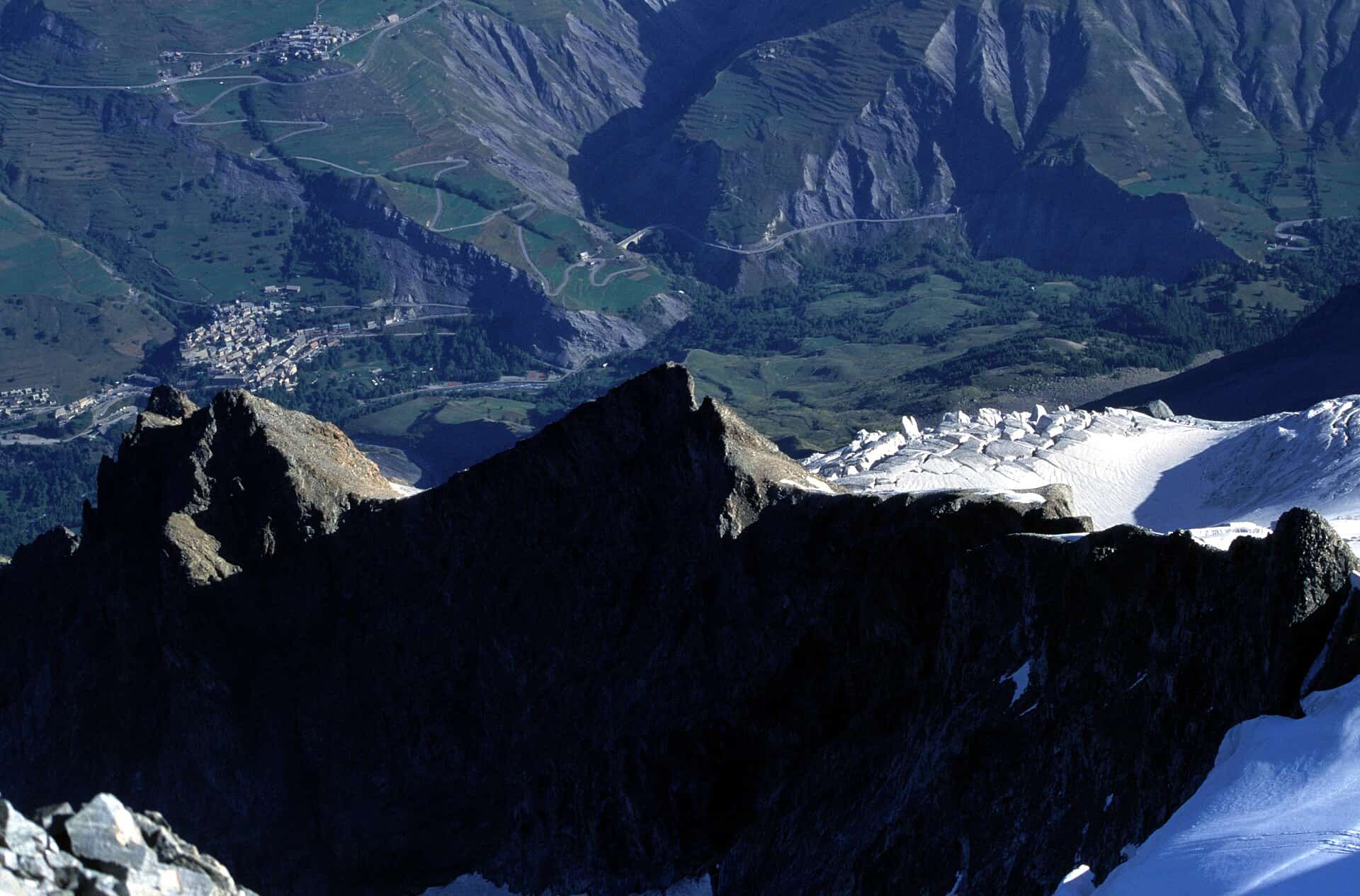
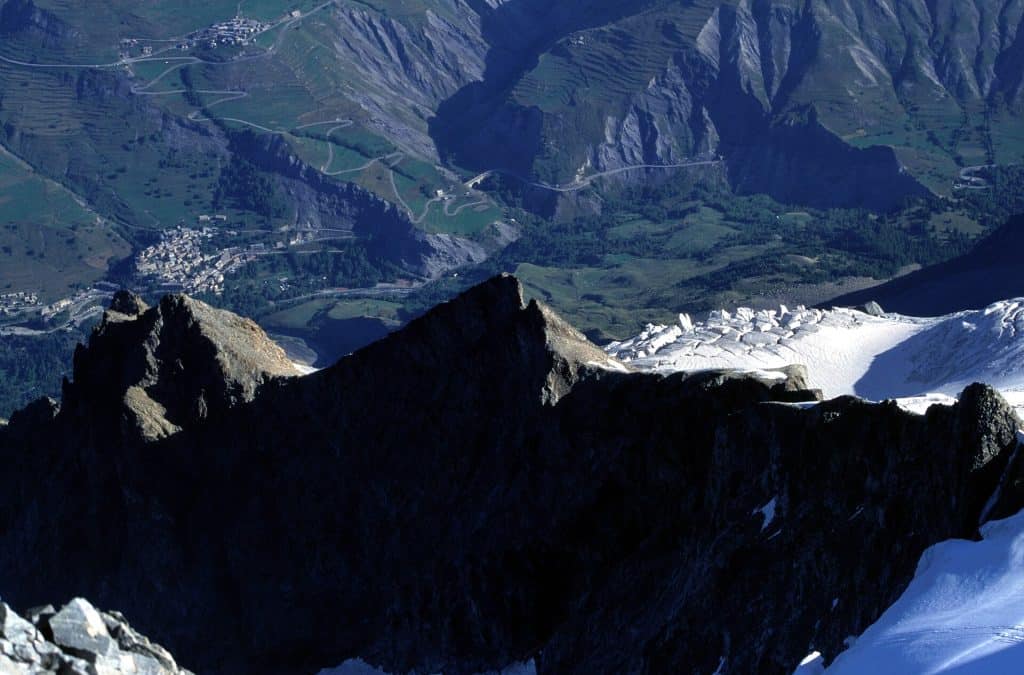
La Grave is the purest freeride destination in the Alps. The small village in the Hautes-Alpes, on the road between Grenoble and Briançon, sits beneath La Meije (3,982 m), one of the great peaks of the Écrins. Its lift rises to around 3,200 m and gives access to roughly 2,150 m of vertical, but there are no groomed pistes on the main face, only off-piste routes through the Vallons de la Meije, with couloirs, cliffs and glaciers.
The area is patrolled, but there is no formal avalanche control, and the terrain includes crevasses and cliff bands. A guide is strongly advised, and many visitors book one for every day. The lift system has been under redevelopment in recent years, so check the current status and season dates before you plan a trip.
2. Engelberg, Switzerland
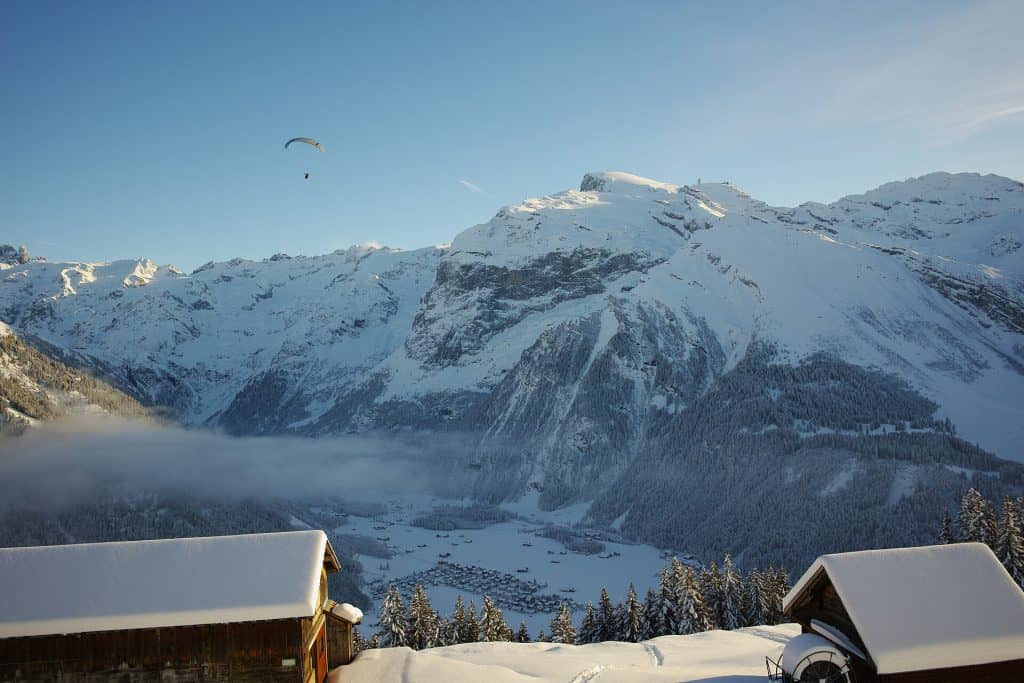
Engelberg combines easy access with serious terrain. The town, built around a Benedictine abbey founded in 1122, is the terminus of an hourly train line from Lucerne, and its lifts climb to Klein Titlis at 3,028 m, just below the 3,238 m summit of Titlis. The final stage is the Rotair, the world’s first rotating cable car.
The real draw for freeriders is the off-piste. Long, high glacier descents run from the Titlis area towards Trübsee, and the Laub, a huge, open face below the Laubersgrat ridge, is one of the classic big lines of central Switzerland. Engelberg is also known for a long season thanks to its glacier. Conditions change fast at this altitude, so go with a guide until you know the terrain.
3. Verbier, Switzerland
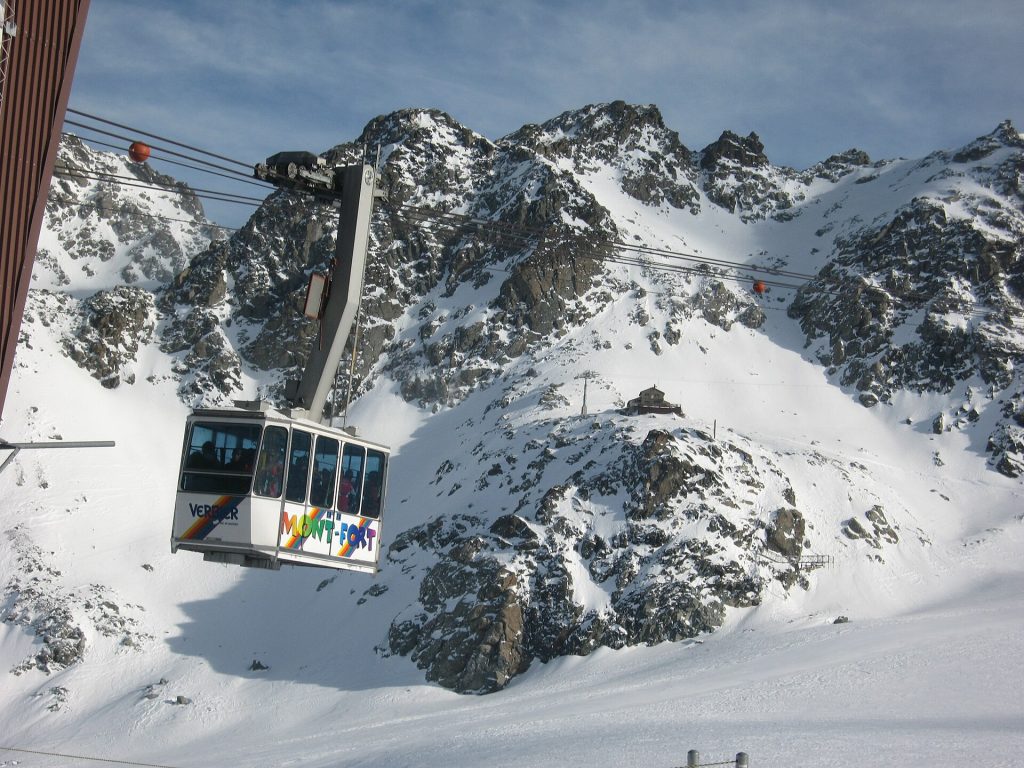
Verbier is the freeride capital of Switzerland, and the annual home of Xtreme Verbier, the final of the Freeride World Tour, on the Bec des Rosses (3,222 m). The resort forms the western end of the 4 Vallées area, which also includes Nendaz, Veysonnaz, La Tzoumaz and Thyon, and the lifts top out at Mont Fort (3,330 m), with views as far as the Matterhorn and Mont Blanc.
The off-piste is extensive and easily reached: the mogul fields of Tortin, long descents from Mont Fort and endless variations off the main lifts. That easy access is also a hazard, because accidents often happen close to the pistes. Verbier is a busy, lively resort with plenty of guiding outfits. Get there by train from Martigny to Le Châble, then take the gondola up.
4. Alagna Valsesia, Italy
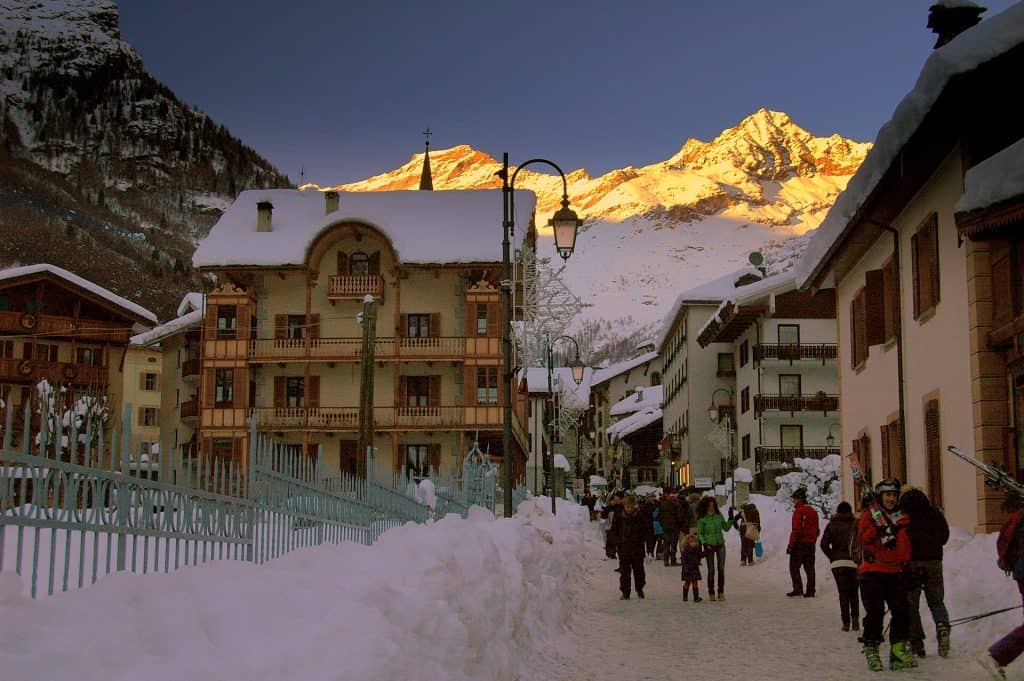
Alagna, at the head of the Valsesia in Piedmont, is often called the freeride capital of the Alps. It is part of the Monterosa Ski area, which links three valleys with Gressoney and Champoluc, but the lift system is modest. What matters here is the steep, deep terrain below Monte Rosa, the second highest massif in the Alps.
From the top lifts around 3,000 m and above, long off-piste descents drop into side valleys, including the Balma route down the Bors valley, while couloirs off the Passo dei Salati are for experts. Heli-skiing is also offered in the Monte Rosa area, as Italy permits it under local rules. The village itself is charming, with traditional wooden Walser houses left by the German-speaking settlers who arrived in the Middle Ages.
5. Andermatt, Switzerland
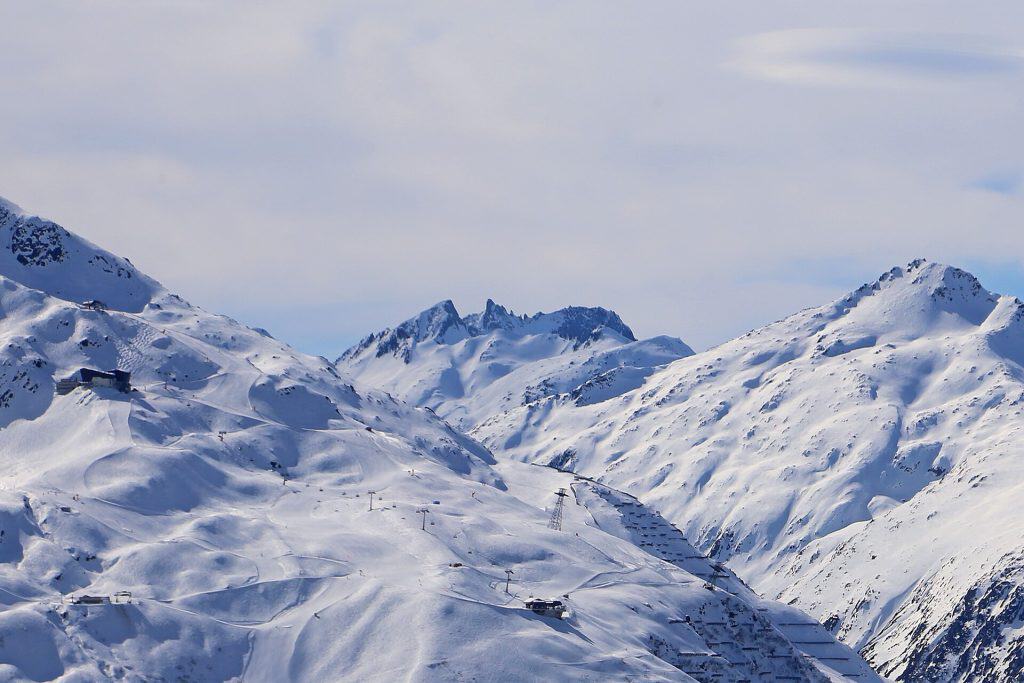
Andermatt sits in a high valley at the crossroads of the Swiss Alps, close to the Gotthard, Furka and Oberalp passes, and it is famous for deep snow. The Gemsstock, its local mountain, rises to 2,961 m directly above the village, and its north-facing slopes hold cold, light powder long after storms. The off-piste on the Gemsstock is steep and committing, with big bowls and couloirs, and the lift ride up takes only minutes.
The wider SkiArena Andermatt-Sedrun connects to Sedrun and Disentis over the Oberalp Pass, with gentler terrain for mixed groups. Andermatt is on the Matterhorn Gotthard Bahn railway, so it is easy to reach without a car. The village has grown quickly in recent years, but the Gemsstock still feels like a freerider’s mountain.
6. Fieberbrunn, Austria
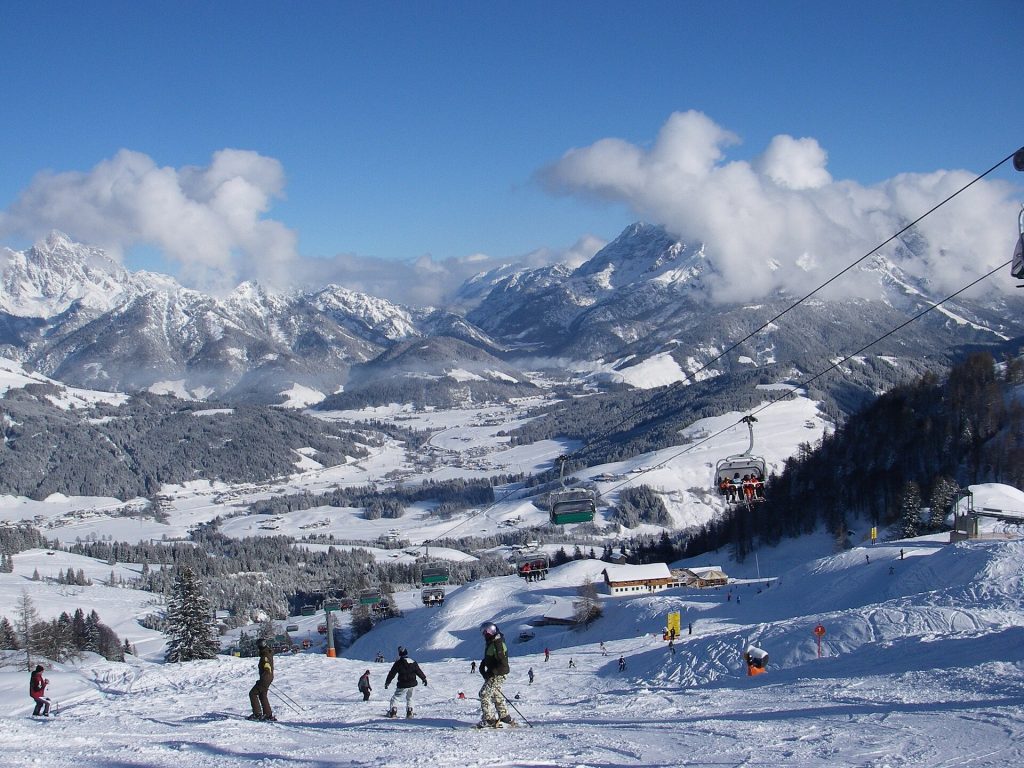
Fieberbrunn, in the Pillerseetal valley of Tyrol, is a relaxed village with a big reputation among freeriders. It has hosted big-mountain events since 2006 and is a regular stop on the Freeride World Tour, held on the steep faces of the Wildseeloder. The resort is linked to the large Skicircus area of Saalbach, Hinterglemm and Leogang, so there is plenty of piste skiing too.
Fieberbrunn is known for receiving more snow than many neighbouring resorts, and it has well-run freeride information points and guiding services. It is a good place to build off-piste skills before tackling the high Alps, with relatively accessible terrain between the trees and open slopes. Salzburg and Innsbruck airports are both within reasonable reach.
7. Riksgränsen, Sweden
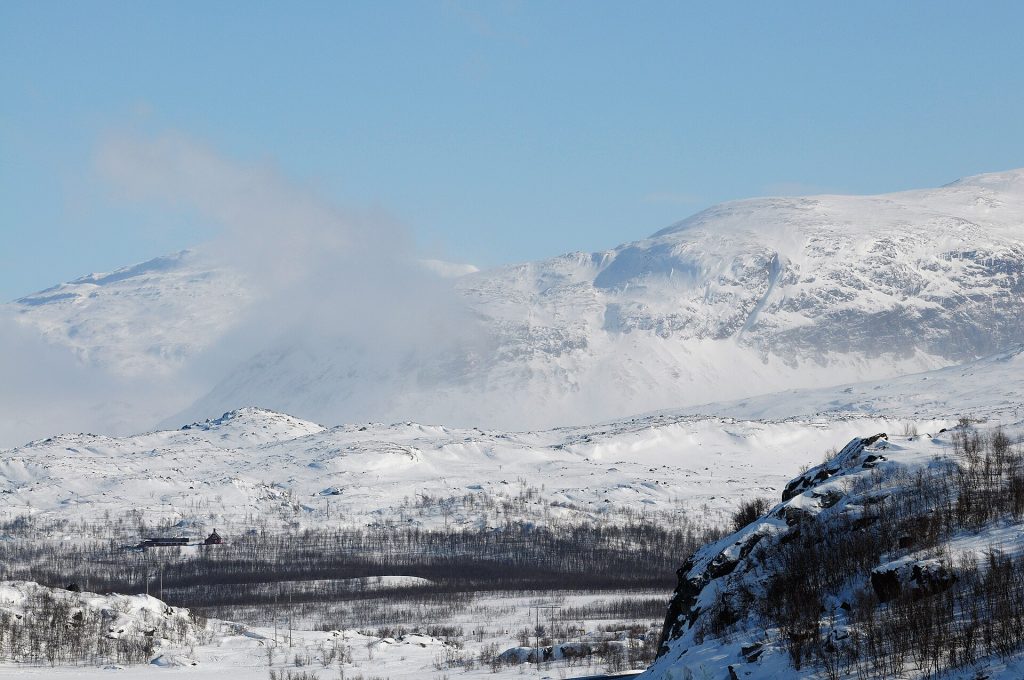
Riksgränsen is one of Europe’s most unusual ski areas. It lies about 200 km north of the Arctic Circle, right on the Norwegian border, and its season runs from February to June, the reverse of most resorts. From late May, the lifts run under the midnight sun, so you can ski at midnight in full daylight.
The lift system is small, but it is a springboard for off-piste and ski touring in the surrounding mountains, with views down towards the Norwegian fjords. The resort grew up around the railway, which has run here since 1902 and continues to Narvik, so you can arrive by train. Spring snow here can be excellent, though wind and fast-changing weather are part of the experience.
8. Lyngen Alps, Norway
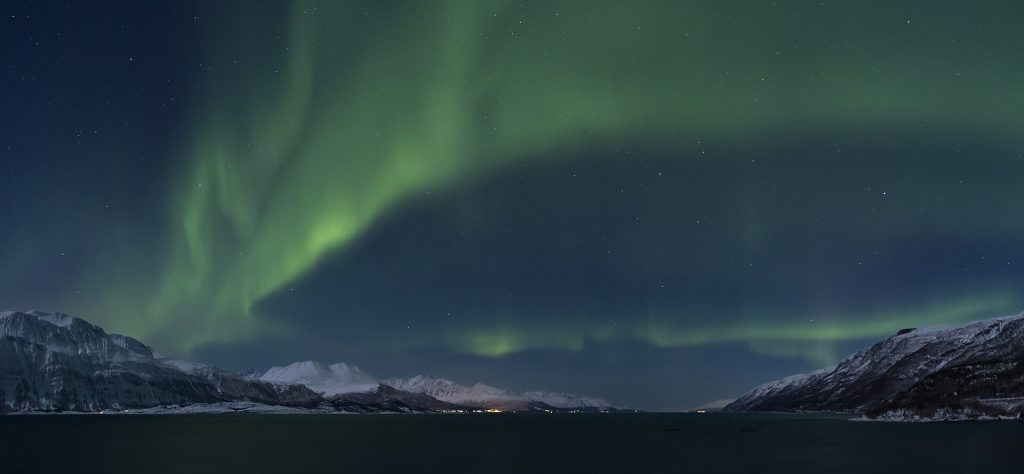
The Lyngen Alps are where adventurous skiing gets back to basics. There are no lifts: you climb with skins on your skis, then ski down, often from summit to sea level. The range runs for about 90 km along the western shore of the Lyngen fjord, east of Tromsø, with sharp peaks, around 140 glaciers and its highest point at Jiehkkevárri (around 1,834 m).
The heights sound modest next to the Alps, but starting from the shoreline means long descents with the fjord below you. The main touring season is in spring, when the days are long and the snow is often stable, and some trips use boats to reach different peaks each day. You need to be fit and competent on skins. Fly to Tromsø and join a guided group, or base yourself in one of the lodges along the fjord.
Avalanche safety basics
Off-piste terrain is not controlled or patrolled in the way pistes are, and most avalanche accidents involving skiers are triggered by the victims or their own group. Before you leave the piste:
- Read the avalanche bulletin. Each country publishes daily forecasts using the European avalanche danger scale from 1 (low) to 5 (very high). Many fatal accidents happen at level 3, “considerable”, which can sound reassuring but is not.
- Carry the kit and know how to use it. Every member of the group needs a transceiver, shovel and probe. An airbag pack adds protection but is no substitute. Practise searching before you need to.
- Hire a guide. A qualified mountain guide knows the terrain, the snowpack history and the safe lines on the day. On glaciers, they also manage crevasse risk.
- Take a course. A one or two-day avalanche awareness course is the best investment you can make in off-piste skiing.
- Move one at a time. On steep slopes, ski one by one and regroup in safe spots out of the line of any possible slide.
- Respect closures. Follow local rules, closed areas and wildlife protection zones, which protect animals during the hardest months.
Planning a freeride trip
- Timing: in the Alps, January to March brings the best chance of powder. The Arctic is best from March onwards, when daylight returns.
- Fitness: off-piste skiing is much more tiring than pistes. Arrive fit and build up through the week.
- Equipment: wider freeride skis or a powder board make a big difference; many resorts rent them.
- Insurance: check your policy explicitly covers off-piste skiing, ski touring and helicopter rescue.
- Flexible plans: conditions decide everything. Book flexible accommodation if you can, and accept that some days will be spent on the piste.
Plan your trip
- France: tickets and tours on Tiqets · activities on Klook
- Switzerland: tickets and tours on Tiqets · activities on Klook
- Italy: tickets and tours on Tiqets · activities on Klook
- Arriving by plane: pre-book an airport transfer with Welcome Pickups
- Road trip: compare car hire on Localrent
- Mobile data: get a travel eSIM from Airalo
Some of these are affiliate links: if you book through them we may earn a small commission, at no extra cost to you.
Planning a bigger trip? See our guide to the 25 best places to visit in Europe, from city breaks to fjords.
Keep exploring
- Winter for Non-Skiers: 7 Snowy Activities in Europe Without Skis
- Best European Cities for a Rainy Day: 10 and What to Do in Each
- Top European Ski Resorts: 9 of the Best for a Winter Trip
Frequently asked questions
What is the best ski resort in Europe for off-piste?
For pure freeride, La Grave stands apart, with no groomed runs on its main face. Verbier and Engelberg offer a mix of easy access and serious terrain, and Alagna is known for steep, deep descents below Monte Rosa.
Is off-piste skiing legal in Europe?
Yes, in most Alpine countries you can ski off-piste at your own risk, outside closed areas and wildlife protection zones. Rules on heli-skiing differ: it is banned in France but permitted in parts of Italy and Switzerland.
Do I need a guide to ski off-piste?
Not by law in most places, but it is strongly recommended unless you have avalanche training and local knowledge. In glaciated terrain such as La Grave or Engelberg, a guide is close to essential.
Photos: Pmau, CC BY-SA 4.0, via Wikimedia Commons; Gestumblindi, CC BY 3.0, via Wikimedia Commons; User:VasilievVV, Public domain, via Wikimedia Commons; Massimo Beltrame, CC BY-SA 4.0, via Wikimedia Commons; W. Bulach, CC BY-SA 4.0, via Wikimedia Commons; Jean & Nathalie, CC BY 2.0, via Wikimedia Commons; Johannes Jansson, CC BY 2.5 dk, via Wikimedia Commons; Ximonic (Simo Räsänen), CC BY-SA 3.0, via Wikimedia Commons.