Updated
Monaco covers barely two square kilometres, yet it packs in a medieval clifftop town, a Belle Époque casino quarter, a working harbour, a reclaimed-land district and a public beach, all stacked up a steep slope between the Alps and the sea. It is a sovereign city-state, not part of France, though you cross into it without noticing.
This guide explains how the five main districts fit together, which sights are worth your time, what has changed recently, when the big events take over and where to sleep. For a cheap day out from Nice, see our separate budget guide.
Monaco at a glance
- Best for: a long weekend of gardens, harbour walks, museums and Riviera grandeur, with the option of a big sporting event.
- How long: one day covers the highlights; two or three days let you see every district at an easy pace.
- When to go: April to June and September to October for warm weather; check the events calendar first, as prices and crowds change dramatically.
- Getting there: regional TER trains from Nice-Ville reach Monaco-Monte-Carlo station in roughly 20 to 25 minutes.
- Getting around: on foot, helped by a network of free public lifts and escalators, plus local buses.
Monaco-Ville: the Rock
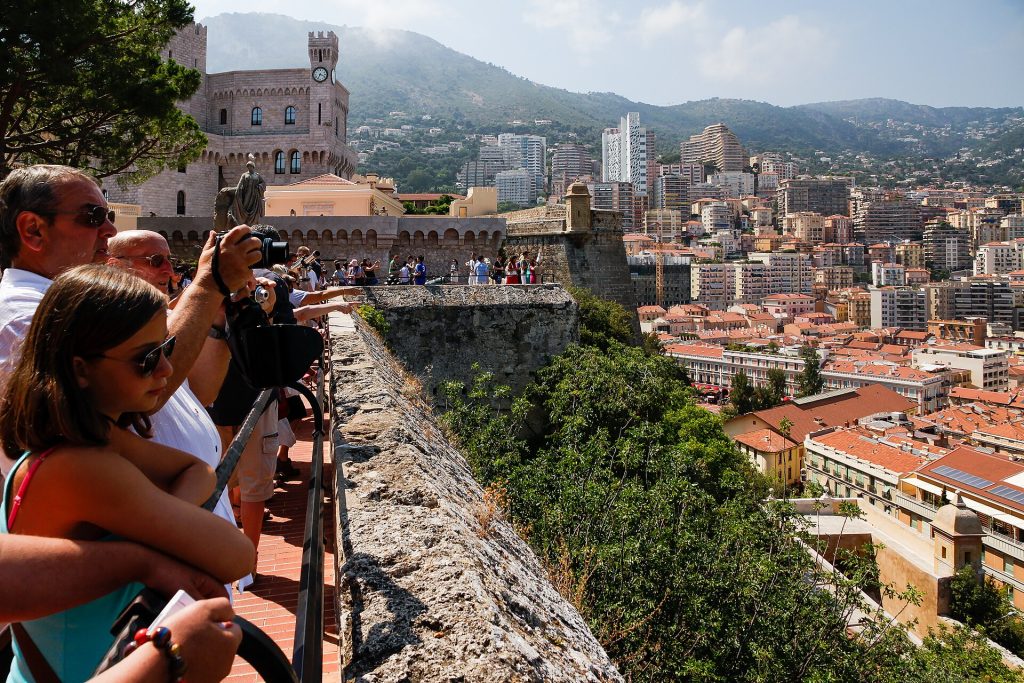
The old town sits on a long, flat-topped headland, Le Rocher, about 60 metres above the sea. Its narrow lanes are lined with ochre and pink houses, small chapels and restaurants. Visitors arrive on foot via the ramp from Place d’Armes, by public lift from Fontvieille, or by local bus.
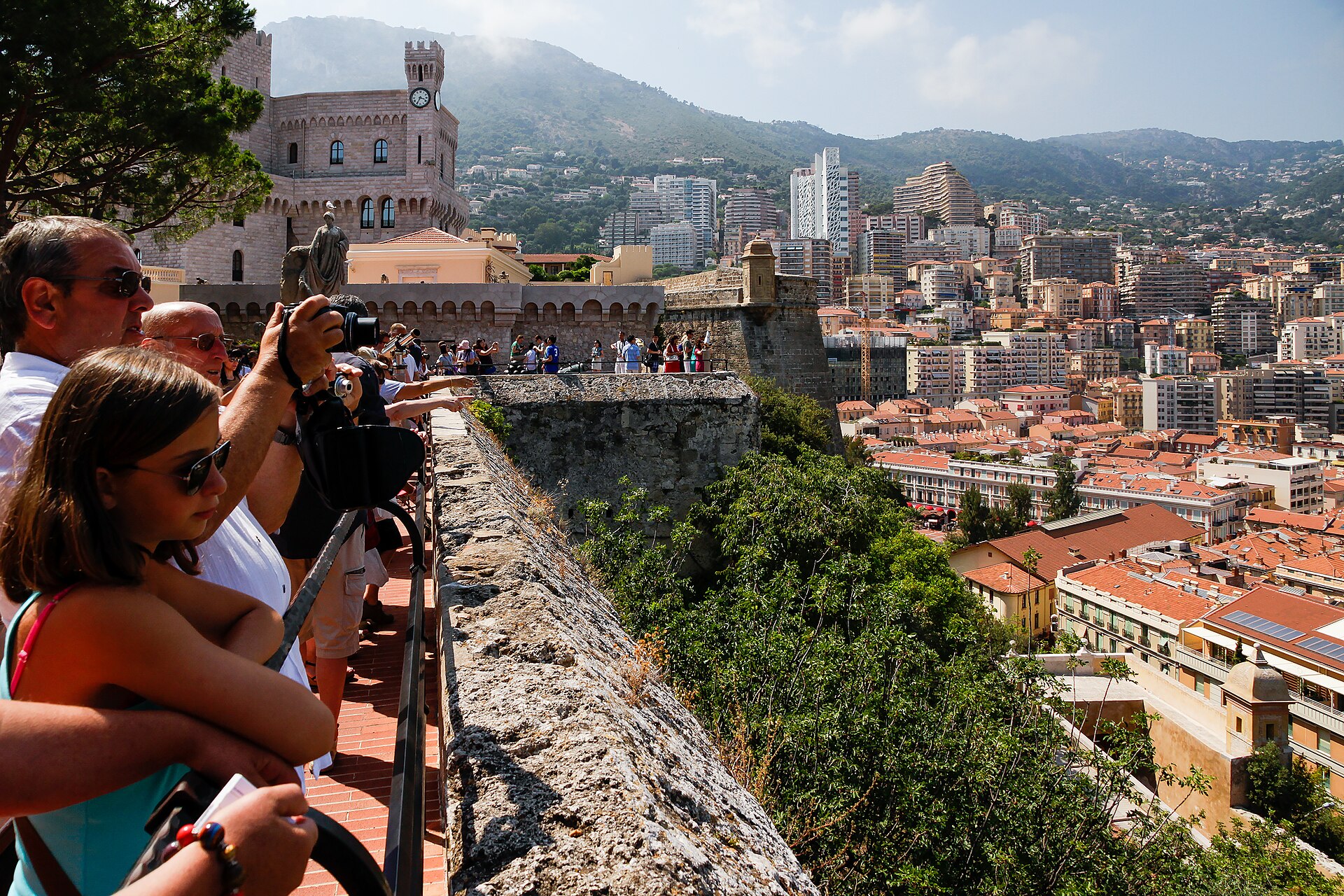
The Prince’s Palace stands on the western end, on a site first fortified by Genoa in 1191. The changing of the guard takes place daily at 11.55 on the palace square, carried out by the Compagnie des Carabiniers du Prince, who switch between white summer and dark winter uniforms. The ceremony is short, so arrive around 20 minutes early for a place along the rope. The State Apartments open to paying visitors for part of the year. From the square’s parapet you look straight down onto Fontvieille on one side and Port Hercule on the other, the best free view in the principality.
A few minutes east, the white stone cathedral holds the tombs of past princes, and the shady Saint-Martin gardens run along the southern cliffs towards the museum below.
The Oceanographic Museum
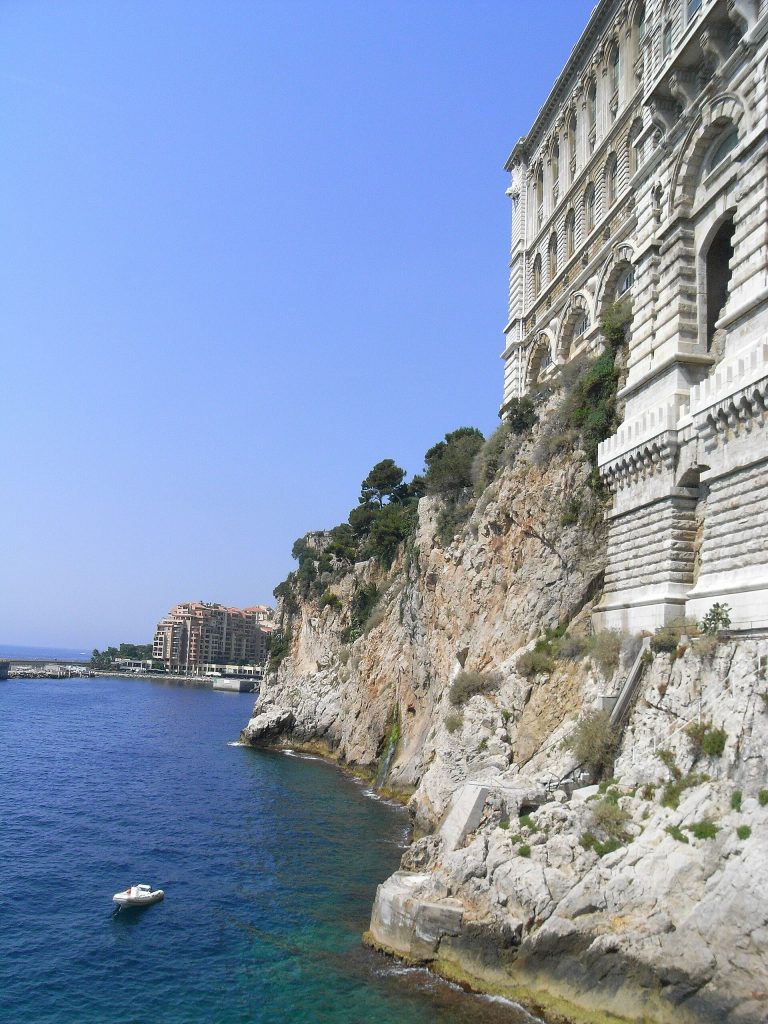
Built straight into the cliff on the seaward side of the Rock, the Oceanographic Museum was opened in 1910 by Prince Albert I, a pioneering marine scientist. Its monumental facade drops some 85 metres to the waterline. Downstairs are aquariums of Mediterranean and tropical species, including a shark lagoon; upstairs covers ocean exploration. Leave time for the rooftop terrace, which looks east over the harbour to Monte-Carlo and the Italian coast. Book online in summer.
La Condamine and Port Hercule
La Condamine is the low-lying district wrapped around Port Hercule, the deep natural harbour between the Rock and Monte-Carlo. It is the most everyday part of Monaco, with bakeries, a pedestrian shopping street (Rue Princesse Caroline) and the covered Marché de la Condamine on Place d’Armes, with a morning produce market outside and a food hall within.
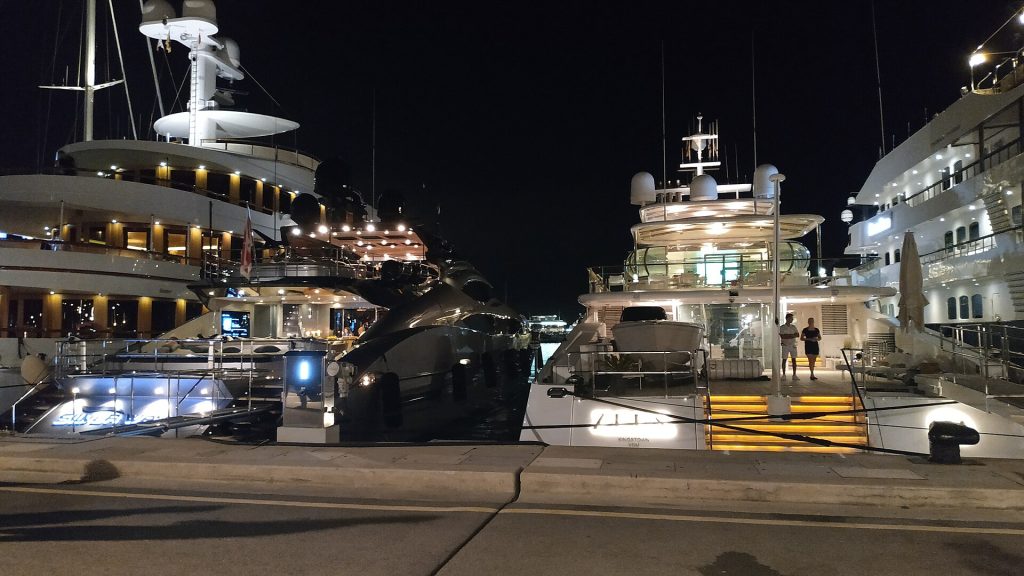
Large private yachts line the quays, and a small solar-powered ferry crosses the harbour, saving a walk around the basin. At the head of the harbour, Sainte-Dévote is a small church tucked into a ravine below the railway station, dedicated to Monaco’s patron saint.
Monte-Carlo and Casino Square
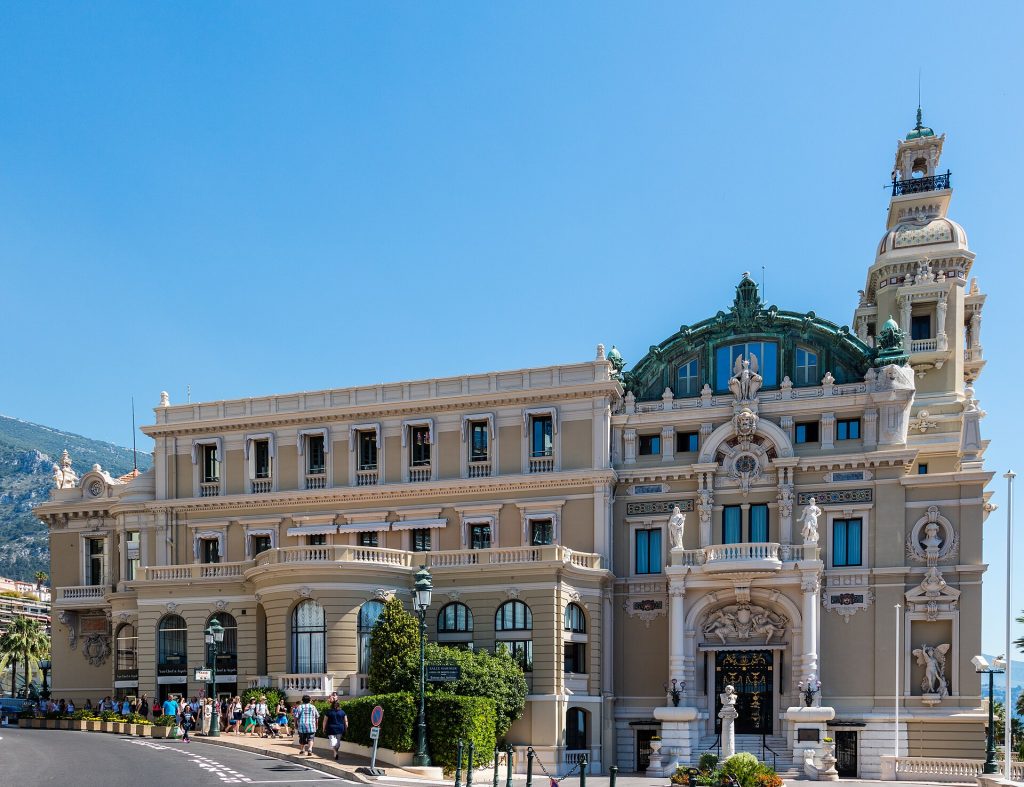
Monte-Carlo, on the hill east of the harbour, was developed in the 1860s around a gambling house intended to rescue the principality’s finances. Its centrepiece, Place du Casino, is a sloping square with formal gardens, the grand Hôtel de Paris on one side, the Café de Paris on the other and the ornate casino at the top. Charles Garnier, architect of the Paris Opéra, designed the casino’s opera house, the Salle Garnier, which still stages the Opéra de Monte-Carlo season.
The casino runs paid daytime visits of its gilded rooms, usually in the morning before gaming starts. Visitors must be 18 or over and show a passport or national ID card. Monégasque citizens are not permitted to gamble there. The terraces behind the casino look out over the sea.
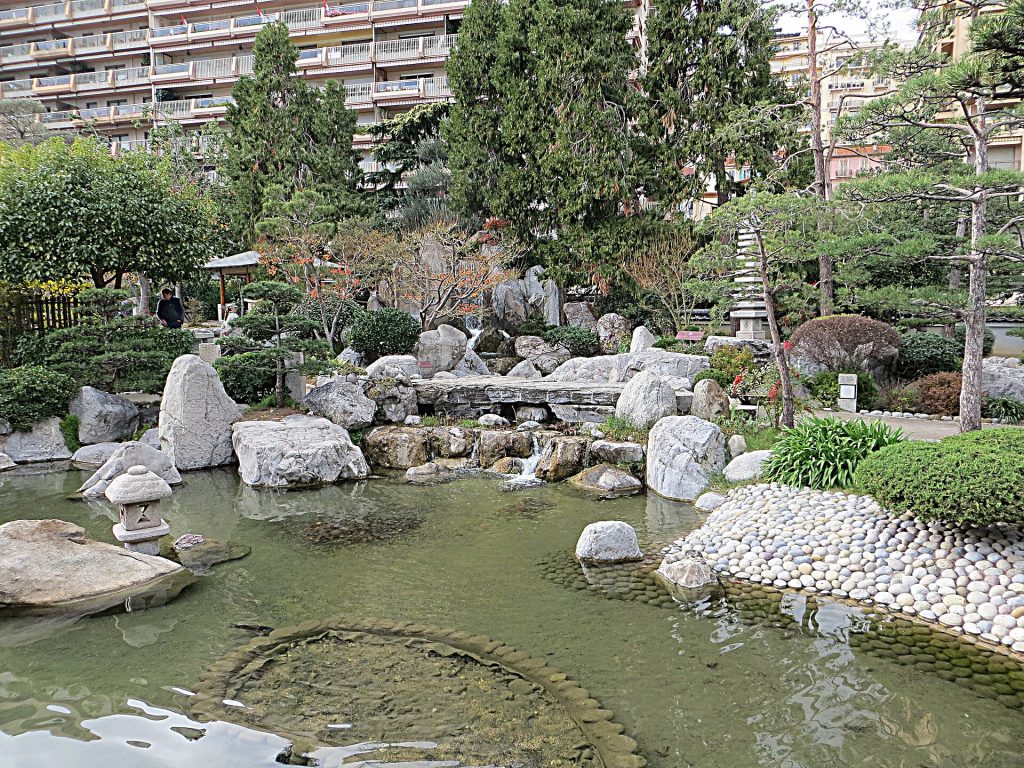
The Japanese Garden
Downhill from the casino, on Avenue Princesse Grace beside the Grimaldi Forum, the Japanese Garden is one of the calmest places in Monaco. It was designed by the Japanese landscape architect Yasuo Beppu and opened in the 1990s on about 7,000 square metres of seafront land. Paths circle a koi pond with a waterfall, stone lanterns, clipped pines and a tea house built from wood prepared in Japan. Entry is free, and picnics are not allowed.
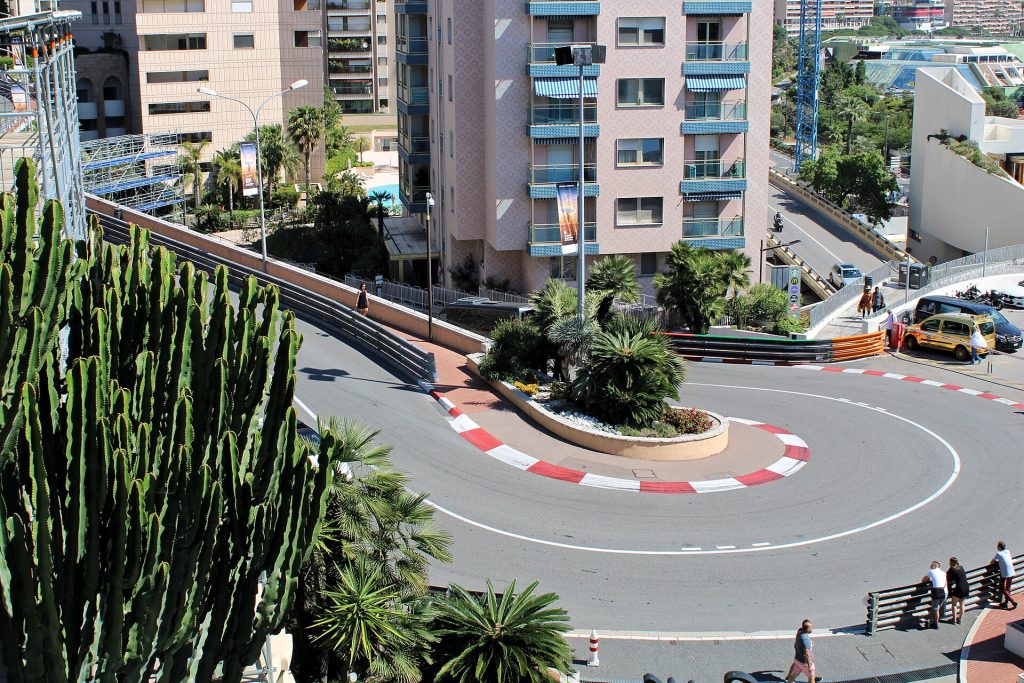
Walking the Grand Prix circuit
The Circuit de Monaco is made of ordinary public roads, so you can walk the whole 3.337 km lap at any time outside race weeks. It is the shortest track on the Formula 1 calendar and has hosted a Grand Prix since 1929. Start on the harbourfront at Boulevard Albert Ier, near the start line, and follow the cars’ route:
- Turn right at Sainte-Dévote and climb Avenue d’Ostende, the long uphill drag called Beau Rivage.
- Swing left past the casino on Casino Square, then drop down to Mirabeau.
- Take the famously slow hairpin below the Fairmont hotel and head for the sea at Portier.
- Walk through the tunnel under the hotel (there is a pavement), then out to the harbour chicane.
- Follow the quays past Tabac and the swimming pool to La Rascasse and back to the start.
Allow about an hour at a stroll.
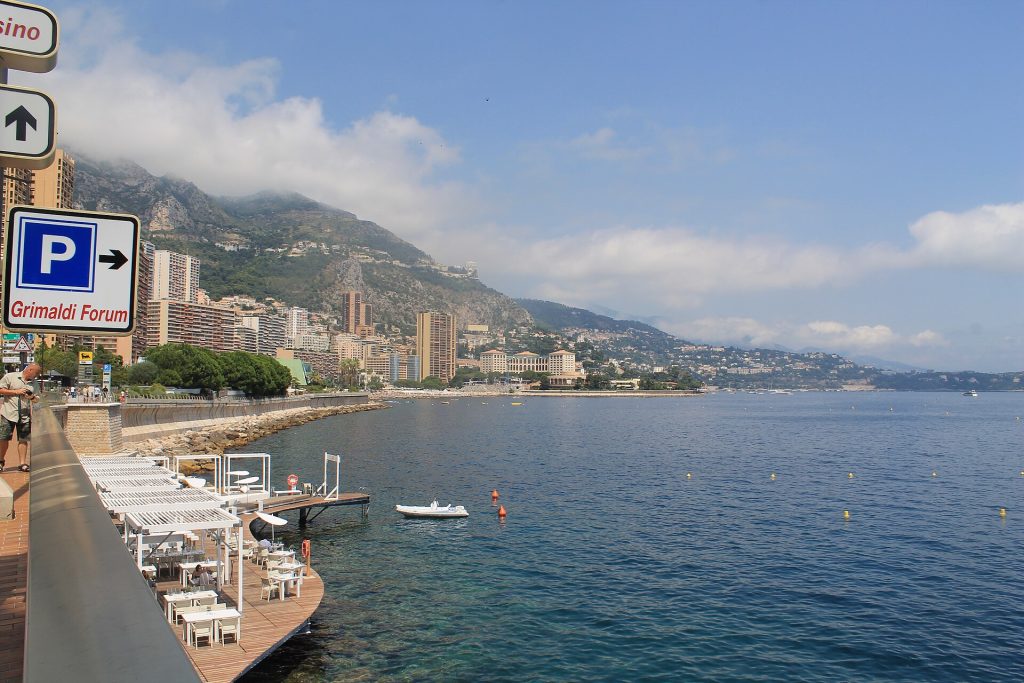
Larvotto and the new Mareterra district
Larvotto is the eastern end of Monaco, a strip of apartment towers and the principality’s main public beach. The beach and its promenade reopened in July 2021 after a full redevelopment, with new breakwaters, a wider stretch of sand, restaurants and a seafront walkway. Public sections are free, with private beach clubs alongside.
Just west of the beach, beside the Grimaldi Forum, is Mareterra, a six-hectare extension built out into the sea and inaugurated in December 2024. It is mostly upmarket housing, but around half of it is public space, including a park and a seafront promenade of roughly 500 metres that carries the coastal walk on towards Portier.
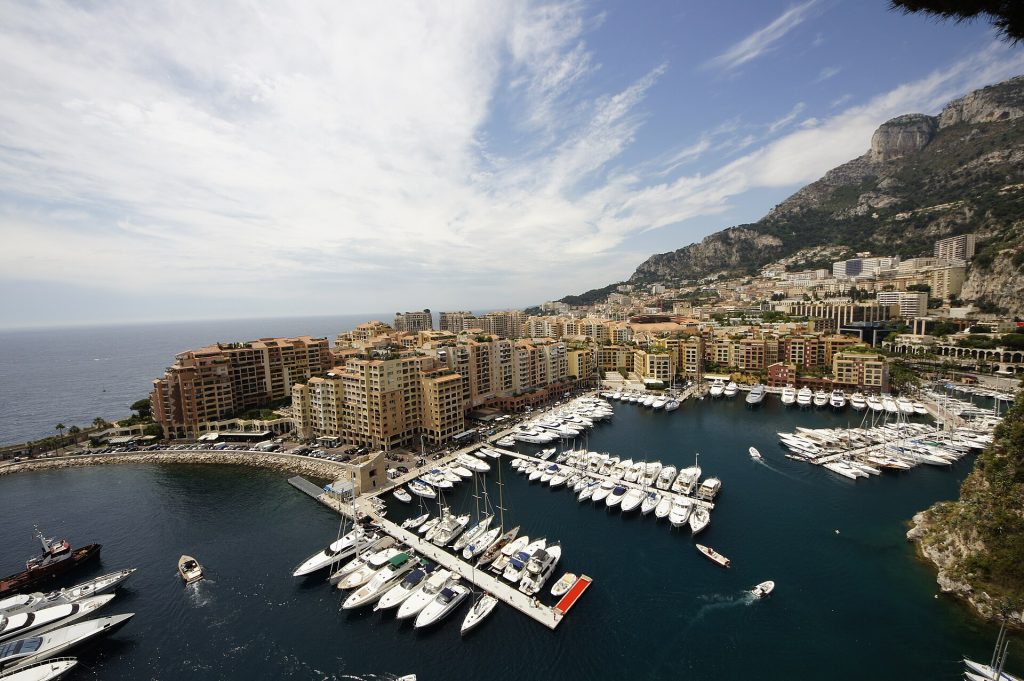
Fontvieille
West of the Rock, Fontvieille was built largely on land reclaimed from the sea in the 1970s and 1980s. It is flat, residential and relaxed, with a small marina, the Louis II stadium and the Princess Grace Rose Garden. Marina restaurants are quieter than those on the main harbour, and a public lift climbs to the Rock.
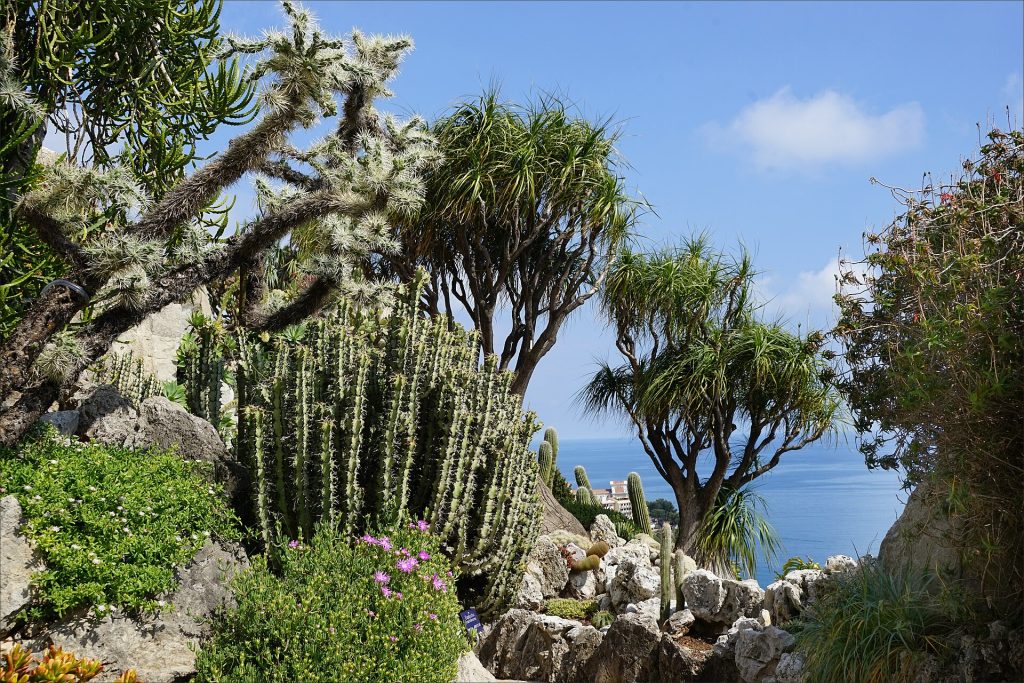
The Exotic Garden, reopened
High on the cliffs above Fontvieille, the Jardin Exotique was closed from 2020 for a major renovation and reopened to the public on 30 March 2026. Its terraces of cacti, aloes and other succulents cling to an almost vertical rock face, with paths and viewpoints looking down over the whole principality. The garden also gives access to a cave with stalactites and the neighbouring museum of prehistoric anthropology; check on arrival which parts are open, as access to the cave can be limited.
Events calendar
A few headline events push up hotel prices across the Riviera and close roads for days, so plan around them either way.
- Rolex Monte-Carlo Masters (April): an ATP Masters 1000 tournament on clay. It is played at the Monte-Carlo Country Club, which is actually just across the border in Roquebrune-Cap-Martin, France, a short bus ride east.
- Formula 1 Monaco Grand Prix (late May or June): traditionally held in late May, though recent editions have moved into early June, so check the year’s calendar. Barriers go up weeks before.
- Historic Grand Prix (some years, spring): classic racing cars on the same circuit, usually a few weeks before Formula 1. Check whether it runs in your year.
- Monaco Yacht Show (late September): a trade show of superyachts moored in Port Hercule, usually held over four days in the second half of September.
Where to stay in and around Monaco
- Monte-Carlo: the grand hotels around Casino Square and along the seafront. Highest prices.
- La Condamine and Fontvieille: a handful of smaller and business hotels, flatter streets and easier access to the station.
- Beausoleil: a French town directly above Monte-Carlo; the boundary runs along ordinary streets, so you can walk down to the casino in about ten minutes. Rates are usually lower, but expect steps and steep lanes.
- Cap-d’Ail: a quiet French resort just west of Fontvieille with its own TER station and a coastal footpath into Monaco.
- Nice or Menton: the best value and the widest choice, both on the same railway line.
Getting there and around
The simplest approach is the TER regional train on the Nice to Ventimiglia line. Trains from Nice-Ville stop at Monaco-Monte-Carlo, a station built largely inside the hillside: follow the signs carefully, as its long tunnels lead to exits on different levels, including one near Sainte-Dévote on the harbour side and others higher up towards Monte-Carlo. Nice Côte d’Azur is the nearest airport.
Inside Monaco, walking is the norm. The free public lifts and escalators, shown on the tourist office map, connect the steep levels, and the local bus network links the Rock, the station, Monte-Carlo and the Exotic Garden.
Dress codes and local rules
- In town: walking around bare-chested, barefoot or in swimwear away from the beach is not allowed. Keep a shirt and shoes handy.
- Casino: smart clothes for the gaming rooms. Shorts and flip-flops are not accepted there, and a jacket is expected in the evening in the private rooms.
- Churches and the palace: cover shoulders and knees in the cathedral and keep voices down.
- ID: there are no routine border checks with France, but carry a passport or national ID card; you need it at the casino.
Plan your trip to Monaco
- Tickets and tours in Monaco: tickets and tours on Tiqets · activities on Klook
- Arriving by plane: pre-book an airport transfer with Welcome Pickups
- Road trip: compare car hire on Localrent
- Mobile data: get a travel eSIM from Airalo
Some of these are affiliate links: if you book through them we may earn a small commission, at no extra cost to you.
Planning a bigger trip? See our guide to the 25 best places to visit in Europe, from city breaks to fjords.
Keep exploring
- Monaco Marvels: A Glamorous Escape on a Budget from Nice
- The Coolest Neighbourhoods in Europe: 10 City Districts With Character
- Vienna Landmarks: 12 Sights Worth Your Time (and How to See Them)
Frequently asked questions
How many days do you need in Monaco?
One full day is enough for the palace, the Oceanographic Museum, the harbour and the casino. Two days let you add the Exotic Garden, the Japanese Garden, a walk round the circuit and time at Larvotto.
Is the Exotic Garden in Monaco open again?
Yes. The Jardin Exotique reopened on 30 March 2026 after a renovation that began in 2020. Check which parts, such as the cave, are accessible on the day.
Can you walk the Monaco Grand Prix track?
Yes. The circuit uses public roads, so you can walk the full lap, including the tunnel, whenever the race infrastructure is not in place. It takes about an hour.
Photos: Ximonic (Simo Räsänen), CC BY-SA 4.0, via Wikimedia Commons; ALLIOT Brigitte, CC BY-SA 4.0, via Wikimedia Commons; Renek78, CC BY-SA 4.0, via Wikimedia Commons; Diego Delso, CC BY-SA 4.0, via Wikimedia Commons; Mister No, CC BY 3.0, via Wikimedia Commons; Alexander Migl, CC BY-SA 4.0, via Wikimedia Commons; Kev22, CC BY-SA 4.0, via Wikimedia Commons; Niels Mickers, CC BY 3.0 nl, via Wikimedia Commons; Jean-Pierre Dalbéra from Paris, France, CC BY 2.0, via Wikimedia Commons.