Updated · Facts and prices checked against official sources
Monaco is the second-smallest country in the world, a strip of steep coastline about two square kilometres in size squeezed between the mountains and the Mediterranean. It is famous for the casino, the Grand Prix and superyachts, and it is undeniably expensive. Yet the principality is also surprisingly easy to visit on a modest budget, because many of its best sights are free and it sits only a short train ride from Nice.
This guide covers what to see, how the districts fit together, and how to do Monaco as a day trip from Nice without spending much more than your train fare and lunch. It also includes a few spots just over the border in France, where the views back over Monaco are the best of all.
- Best for: a day trip from Nice, architecture and gardens, and seeing the glamour without paying for it.
- When to go: spring and autumn for mild weather and fewer crowds; avoid Grand Prix weekend unless you are going for the race.
- Getting there: regional trains from Nice take around 20 to 25 minutes; buses run along the coast road.
- How long: one full day covers the main sights; stay overnight in Nice or Menton for better value.
- Currency: the euro. There are no border checks with France, but carry your passport or ID card.
Monaco at a glance: the districts
It helps to know the layout before you arrive. Monaco-Ville, also called Le Rocher (the Rock), is the old town on a headland, with the palace, cathedral and Oceanographic Museum. Below it to the east, La Condamine wraps around Port Hercule, the main harbour, and has the market and everyday shops. Further east, Monte-Carlo climbs the hill around the casino and the grand hotels, with Larvotto and its beach beyond. To the west of the Rock, Fontvieille is a newer district built partly on land reclaimed from the sea.
Everything is walkable, but the hills are steep. Monaco has a network of free public lifts and escalators linking the levels, marked on the free tourist map, and these save a great deal of climbing.
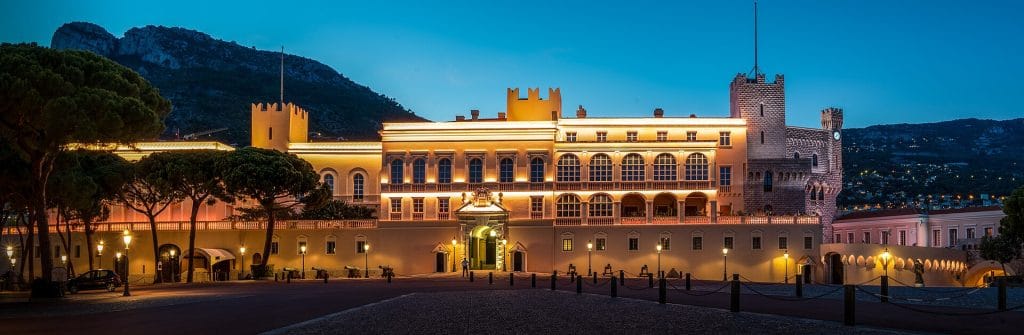
1. The Prince’s Palace and the old town
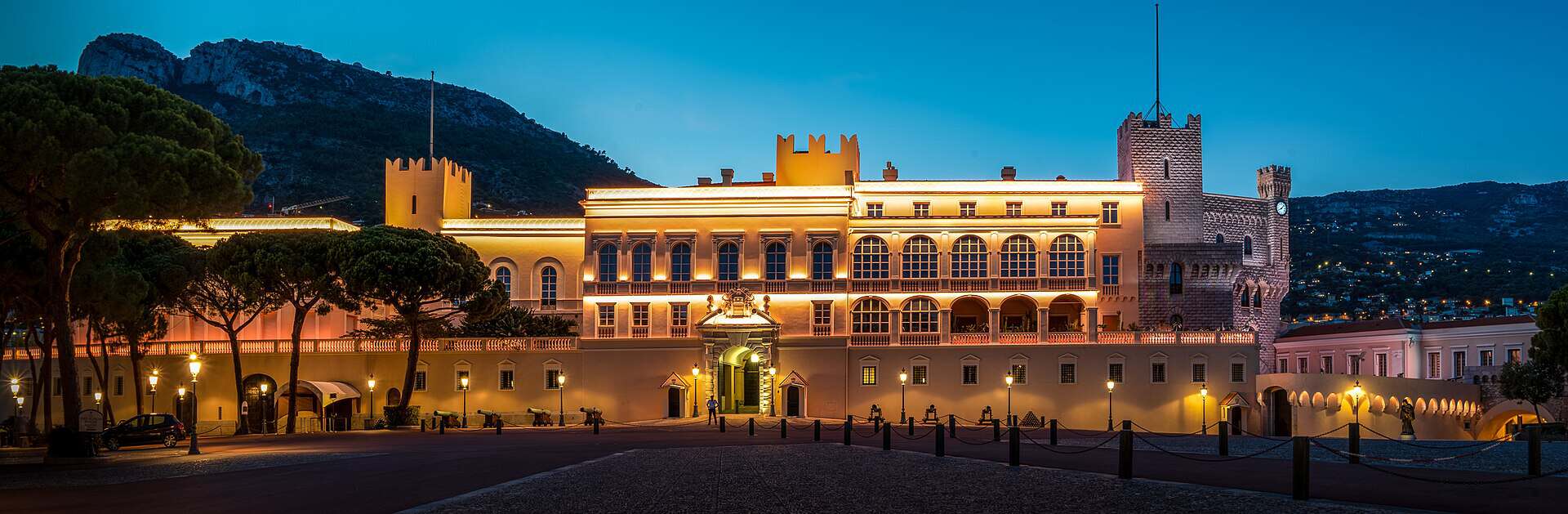
The Prince’s Palace began as a Genoese fortress in 1191, and the Grimaldi family has ruled from it since 1297. It is still the working residence of the Prince. The State Apartments, with their frescoes and Throne Room, open to visitors in summer for a fee, but the main free attraction is outside: the changing of the guard on the palace square, held daily at 11.55. Arrive by about 11.30 to get a good spot, and stay for the views over the harbour and Fontvieille from the square’s edge.
Behind the palace, Monaco-Ville is a small grid of pastel lanes with souvenir shops, cafés and the Chapel of Mercy. Walking up from La Condamine takes about 15 minutes by the ramped path from Place d’Armes, or you can take a local bus to the top.
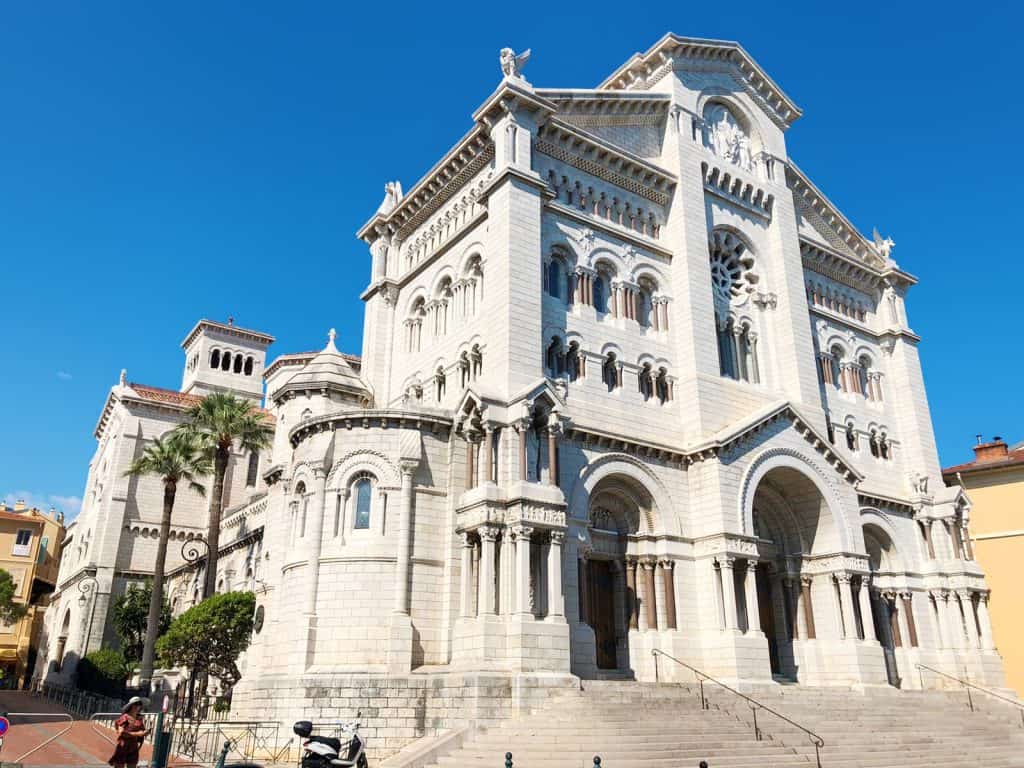
2. Monaco Cathedral
The white stone cathedral, built in the late 19th century in a Romanesque-Byzantine style, is free to enter. Its main draw for many visitors is the simple tomb of Princess Grace, the former actress Grace Kelly, behind the altar, near that of her husband Prince Rainier III. Earlier princes of Monaco are buried here too. Dress respectfully and keep voices down, as it is a working church.
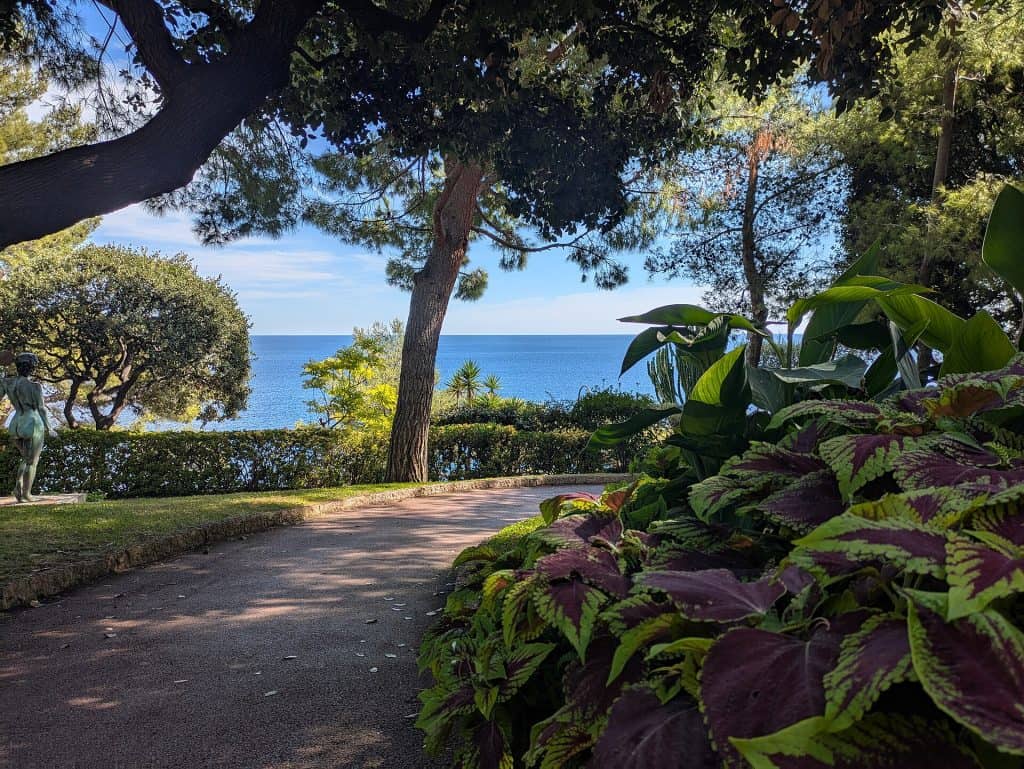
3. The Saint-Martin Gardens
Laid out along the southern cliffs of the Rock, the Jardins Saint-Martin are one of the most pleasant free spots in Monaco. Shaded paths wind between pines, agaves and Mediterranean plants, with benches looking straight down to the sea. There is a statue of Prince Albert I, the explorer prince, facing the water. This is the ideal place for a picnic lunch, and much cooler than the streets on a hot day.
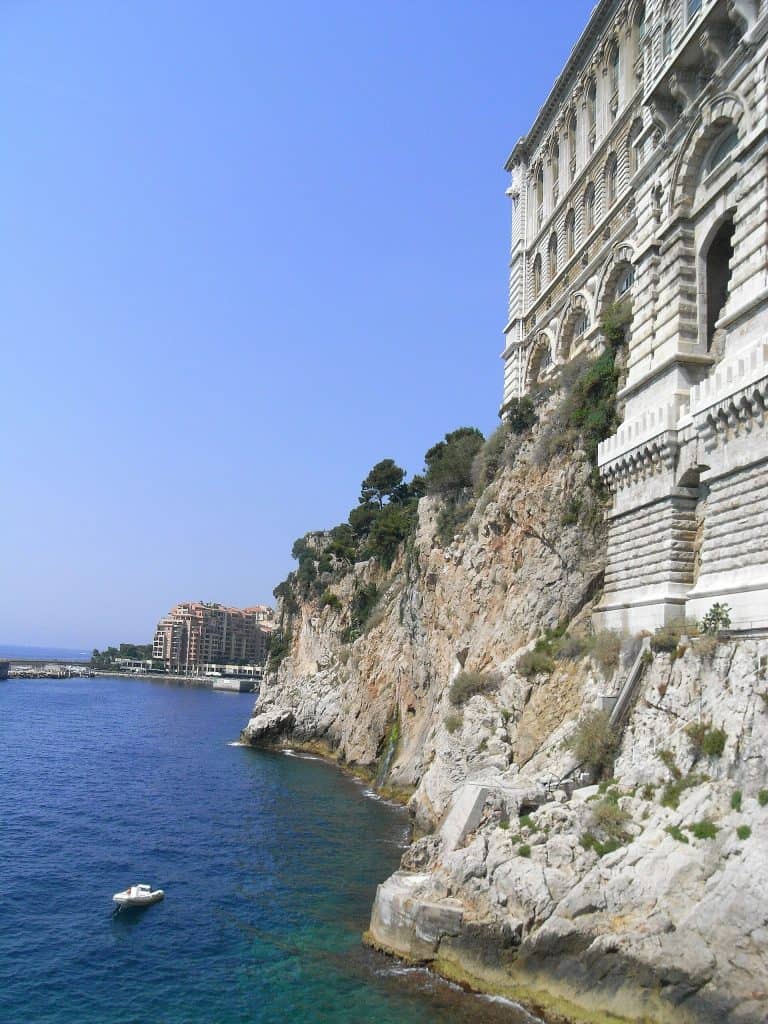
4. The Oceanographic Museum
If you pay for one attraction in Monaco, make it this one. Inaugurated in 1910 by Prince Albert I, the museum is built into the cliff face, its monumental facade rising straight out of the sea. Jacques-Yves Cousteau was its director from 1957 to 1988. Inside are aquariums of Mediterranean and tropical sea life, a shark lagoon and collections from the prince’s oceanographic voyages, and the rooftop terrace has one of the best views on the coast. Buying online can save time at the ticket desk.
5. Port Hercule and La Condamine
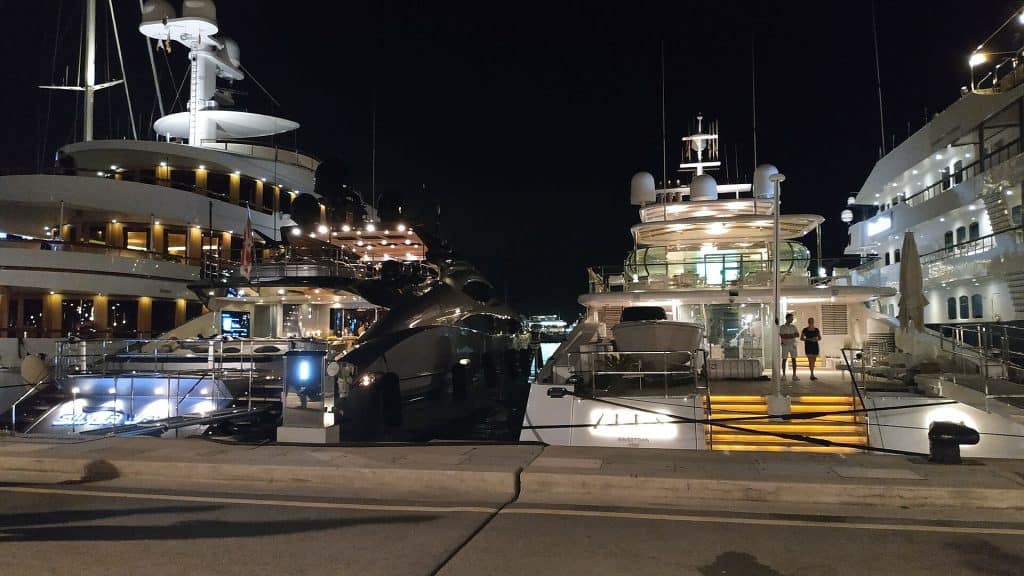
Walking around Port Hercule is free and endlessly entertaining, with superyachts moored along the quays and the Grand Prix circuit running beside the harbour. In summer an open-air swimming pool operates on the quayside.
La Condamine is also where budget travellers should eat. The Marché de la Condamine on Place d’Armes has an outdoor produce market in the mornings and an indoor food hall with stalls selling local dishes at prices well below the Monte-Carlo restaurants. Try barbajuan, Monaco’s national snack, a fried pastry filled with chard, ricotta and herbs, and socca, the chickpea pancake of the Riviera.
6. Monte-Carlo: the casino and the opera
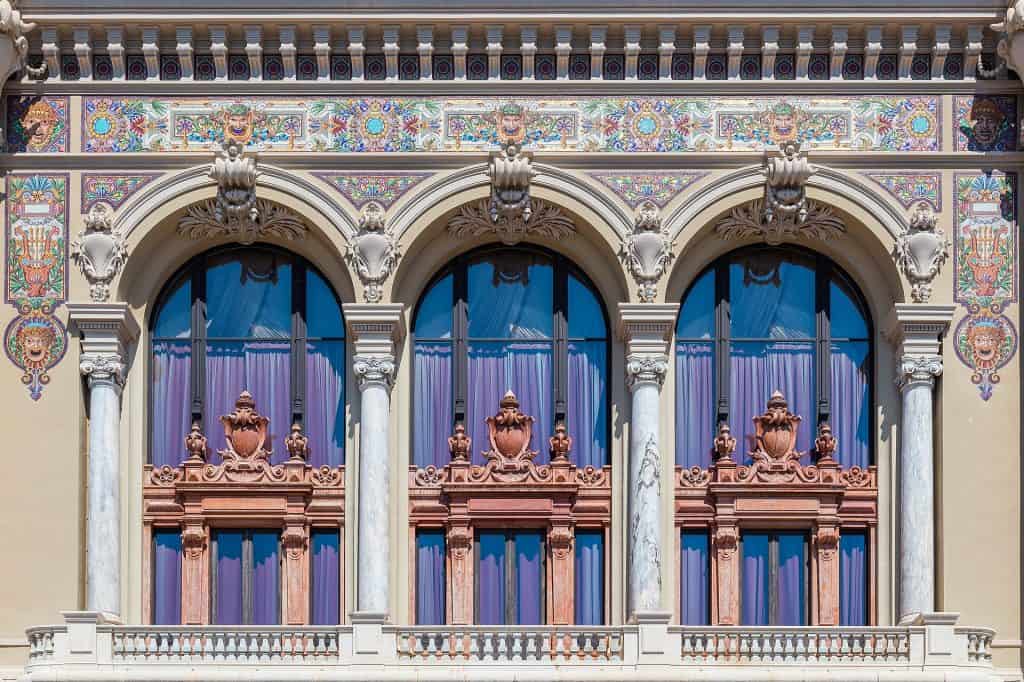
Place du Casino is the classic Monaco scene: manicured gardens, luxury cars parked outside the Hôtel de Paris, and the ornate casino itself. The building dates from the 1860s and was enlarged in 1878 to 1879 with work by Charles Garnier, architect of the Paris Opéra, who also designed the Salle Garnier, home of the Opéra de Monte-Carlo, within the same complex.
You do not need to gamble to look inside. The casino offers paid daytime visits of the main rooms before gaming begins in the afternoon. Visitors must be 18 or over and show ID, and a smart dress code applies to the gaming rooms, particularly in the evening. Monégasque citizens are not allowed to gamble there. The Café de Paris opposite is a famous place for people-watching, but you will pay for the view, so a coffee on a side street is the budget alternative.
A short walk downhill towards the sea, the Japanese Garden beside the Grimaldi Forum is free, carefully tended and very calm, with a pond, waterfall and tea house.
7. Fontvieille and the Princess Grace Rose Garden
On the far side of the Rock, Fontvieille Park contains the Princess Grace Rose Garden, created by Prince Rainier III in memory of his wife. Thousands of rose bushes of hundreds of varieties grow here, at their best from May to June, and entry is free. It is a quiet, flat area and a good contrast to the steep old town. Fontvieille’s marina is also less showy and has cheaper cafés than the main port.
8. Larvotto Beach
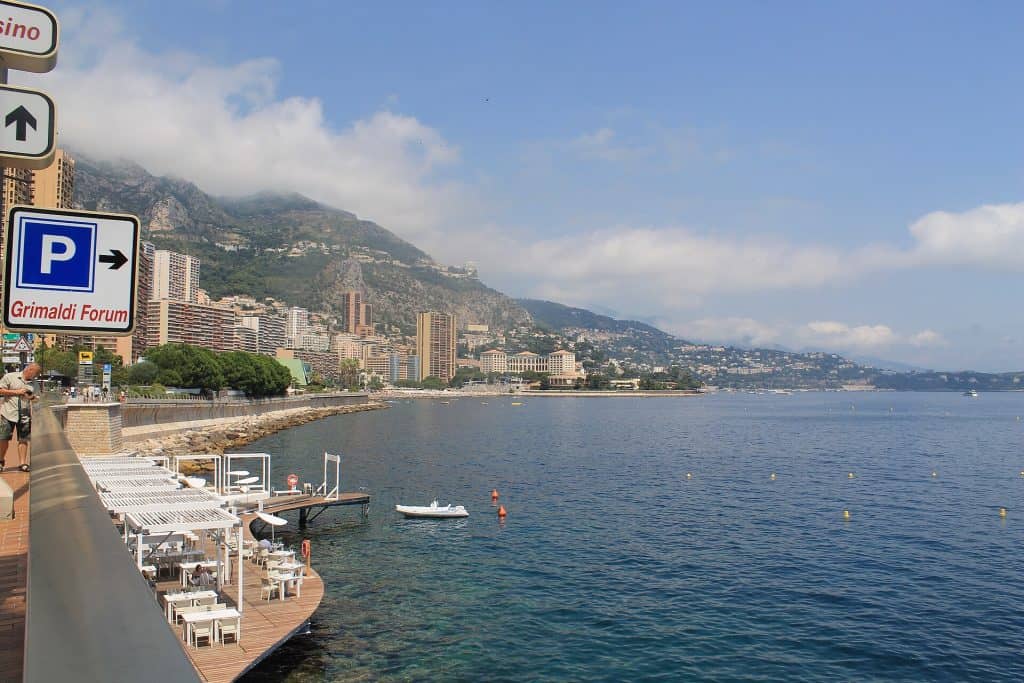
Monaco’s main public beach is at Larvotto, on the eastern side of the principality. The public sections are free, with a seafront promenade and a calm stretch of water sheltered by breakwaters. Private beach clubs rent loungers alongside if you want them, but there is no need: bring a towel and a picnic. It gets busy in July and August, so go in the morning.
9. Tête de Chien and La Turbie
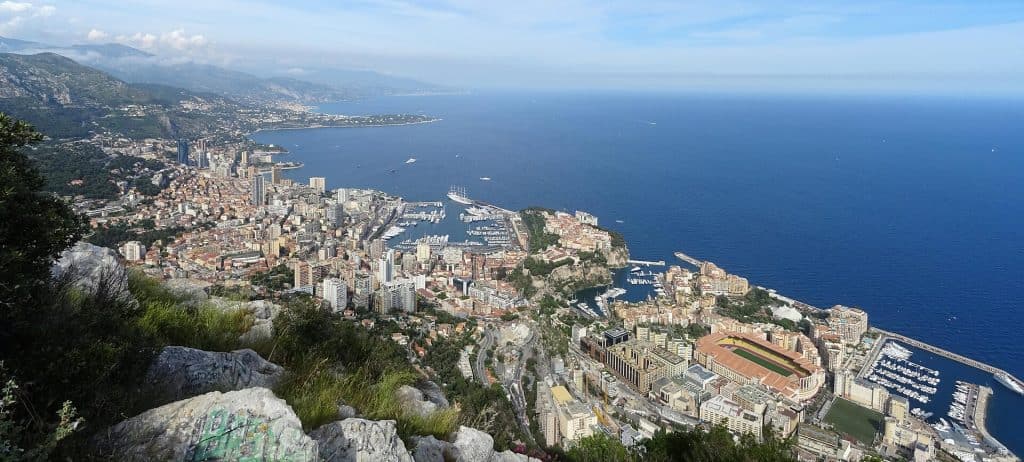
The best views of Monaco are from above it, in France. Tête de Chien is a rocky headland high above the principality, near the village of La Turbie, with a panorama over the whole of Monaco, Cap Martin and, on clear days, the Italian coast. Nearby in La Turbie, the Trophy of Augustus is a Roman monument built to mark the emperor’s victory over the Alpine tribes. Buses run up to La Turbie from Monaco and Nice; check current timetables before you go, as services are less frequent than on the coast.
How to visit Monaco on a budget from Nice
- Stay in Nice. Hotels in Nice, or in Menton to the east, are far cheaper than in Monaco, and both are on the same train line.
- Take the train. Regional TER trains from Nice-Ville to Monaco-Monte-Carlo run frequently and take around 20 to 25 minutes. The station is underground, so allow a few minutes to walk through its tunnels to the exit you want.
- Or take the bus. Regional buses follow the coast road from Nice to Monaco. They are slower than the train but very cheap, and the sea views are excellent. Check current line numbers, as routes have been renumbered in recent years.
- Use the free lifts. The public lifts and escalators connect the levels at no cost; Monaco’s local buses are inexpensive if you need them.
- Picnic. Buy lunch at the Marché de la Condamine or a supermarket and eat in the Saint-Martin Gardens or on Larvotto beach.
- Choose one paid sight. The Oceanographic Museum is the best value; everything else on a classic day out can be free.
- Combine with Èze. The hilltop village of Èze lies between Nice and Monaco, and Èze-sur-Mer station is on the same train line.
A budget day in Monaco
- Morning: train from Nice, walk up to the Rock for the changing of the guard at 11.55, then the cathedral.
- Lunch: picnic in the Saint-Martin Gardens, or the food hall at the Marché de la Condamine.
- Early afternoon: the Oceanographic Museum and its rooftop terrace.
- Late afternoon: walk around Port Hercule to Place du Casino and the Japanese Garden.
- Evening: a swim at Larvotto in summer, then the train back to Nice.
Practical tips
- Grand Prix: the Formula 1 race is held in late May or early June. Prices rise sharply, roads close and some sights are hard to reach while the circuit is being built and dismantled.
- Exotic Garden: the Jardin Exotique, a well-known cactus garden on the cliffs above Fontvieille, has been closed for a long renovation. Check whether it has reopened before you plan around it.
- Dress: casual clothes are fine around town, but cover up away from the beach, and wear smart clothes for the casino or the opera.
- Phones: Monaco has its own country code, and some mobile plans treat it differently from France, so check your roaming terms.
Plan your trip to Monaco
- Where to stay: tickets and tours on Tiqets · activities on Klook
- Tours and tickets: tickets and tours on Tiqets · activities on Klook
- Arriving by plane: pre-book an airport transfer with Welcome Pickups
- Road trip: compare car hire on Localrent
- Mobile data: get a travel eSIM from Airalo
Some of these are affiliate links: if you book through them we may earn a small commission, at no extra cost to you.
Planning a bigger trip? See our guide to the 25 best places to visit in Europe, from city breaks to fjords.
Keep exploring
- Monaco Travel Guide: Districts, Sights, Events and Where to Stay
- Europe’s Best Canal Towns: 8 Alternatives to Venice and Amsterdam
- One Day in Venice: A Practical Route for Day-Trippers
Frequently asked questions
Can you visit Monaco as a day trip from Nice?
Yes. Trains take around 20 to 25 minutes, and one day is enough to see the palace, cathedral, gardens, Oceanographic Museum, port and casino.
Do you need a passport to go to Monaco?
There are no border checks between France and Monaco, but you should carry a valid passport or national ID card, and you need ID to enter the casino.
Can you go into the Monte-Carlo Casino without gambling?
Yes. The casino runs paid daytime visits of its main rooms. You must be 18 or over and show ID, and a dress code applies.
Photos: Pierre Blaché from Paris, France, CC0, via Wikimedia Commons; Rundvald, CC BY-SA 4.0, via Wikimedia Commons; Mx. Granger, CC0, via Wikimedia Commons; ALLIOT Brigitte, CC BY-SA 4.0, via Wikimedia Commons; Renek78, CC BY-SA 4.0, via Wikimedia Commons; Diego Delso, CC BY-SA 4.0, via Wikimedia Commons; Kev22, CC BY-SA 4.0, via Wikimedia Commons; Andrea Einaudi from Cuneo, Italy, CC0, via Wikimedia Commons.