Updated
Porto is a compact city, which makes it one of the easiest places in Europe to see properly in a few days. The historic centre tumbles down a steep hillside to the Douro, and almost everything first-time visitors come for, from tiled churches and port wine cellars to the iron arch of the Dom Luís I Bridge, sits within a half-hour walk of the riverfront. The catch is the gradient. Distances look short on a map, then turn out to involve a lot of stairs.
This itinerary covers two full days in the centre and Vila Nova de Gaia, plus a third day either by the Atlantic or out in the Douro Valley. It works in either order, and each day is planned to save the steepest climbs for when your legs are fresh.
- Best for: a long weekend, food and wine lovers, and anyone who likes exploring on foot.
- When to go: May, June and September for warm days without peak crowds. Midsummer is busy, and winter is mild but often wet.
- How long: two days for the centre and the port lodges, three if you want the coast or a Douro Valley trip.
- Getting there: metro line E runs from the airport to the centre in around half an hour; trains from Lisbon arrive at Campanhã station.
- Bring: comfortable shoes with good grip, as the granite cobbles get slippery in rain.
Day 1 morning: São Bento station and the cathedral
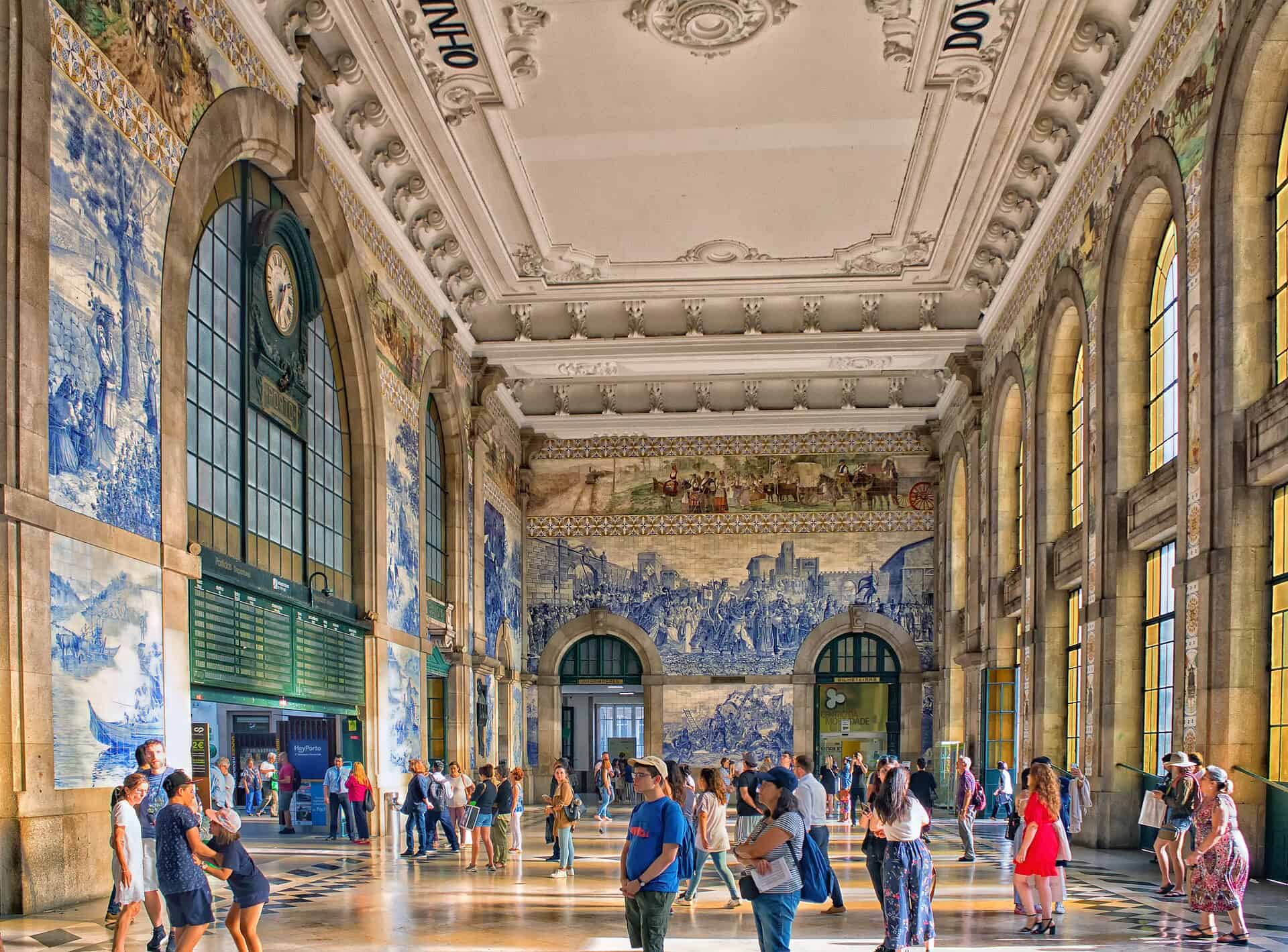
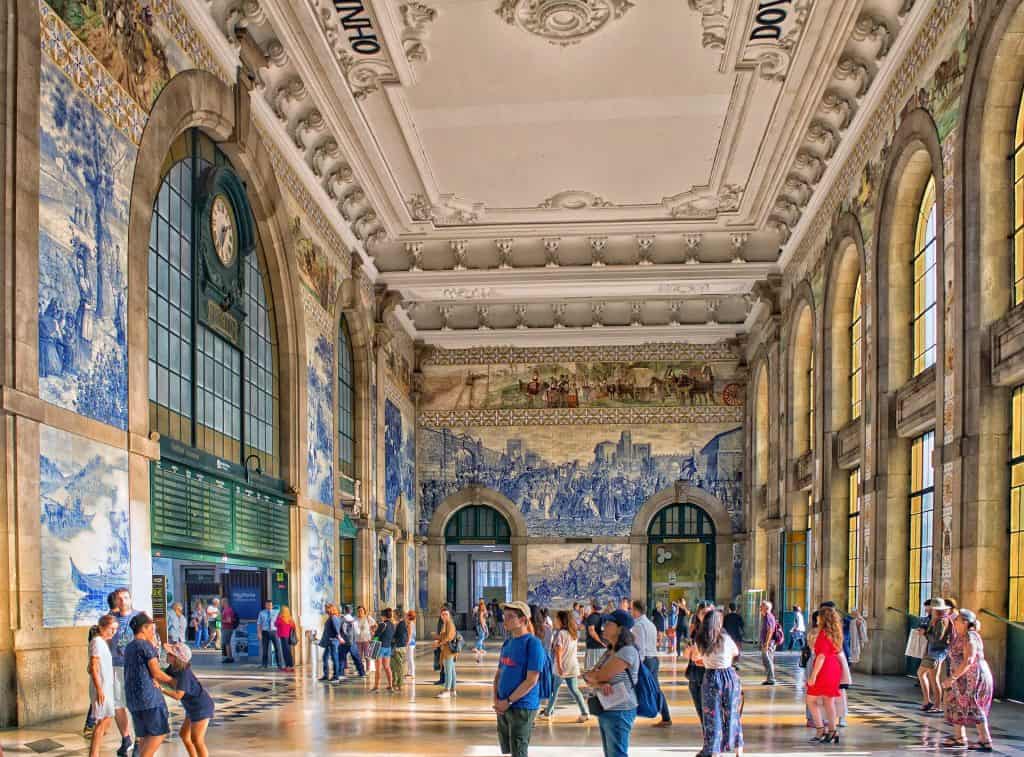
Start at São Bento, a working railway station that doubles as one of Porto’s great sights. The entrance hall is lined with around 20,000 blue and white azulejo tiles painted by Jorge Colaço between 1905 and 1916, showing battles, royal processions and scenes of country life. It is free to walk in, and early morning is the quietest time.
From the station it is a short, steep walk up to the Sé, Porto’s cathedral. Begun in the 12th century as a fortress-like Romanesque church, it was reworked over the following centuries, so you will see a Gothic cloister lined with tiles and a richly decorated Baroque interior. Even if you skip the inside, the terrace in front gives one of the best views over the rooftops of the old town towards the river.
Day 1 afternoon: Ribeira, the Bolsa and São Francisco
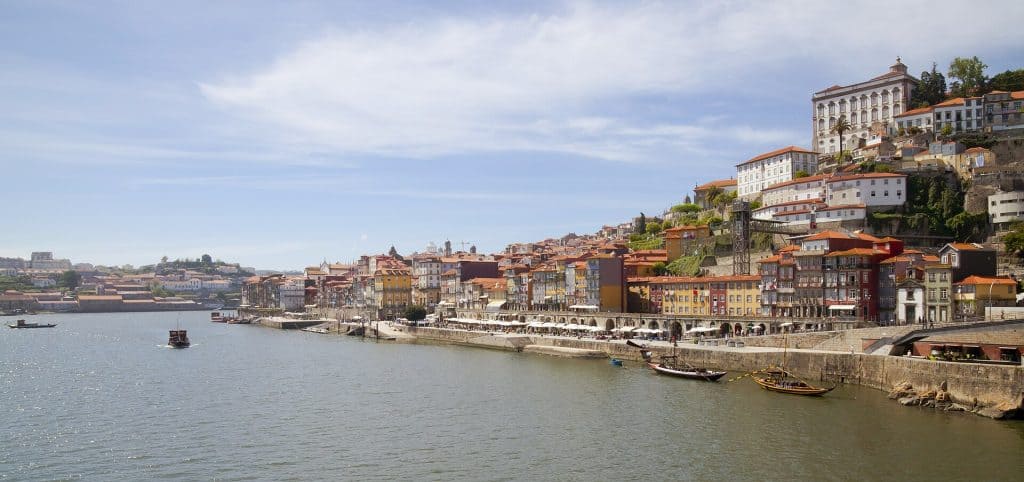
Follow the lanes downhill from the cathedral into the Ribeira district, the old riverside quarter of narrow, colourful houses with laundry strung across the balconies. It is the heart of the historic centre, which has been a UNESCO World Heritage Site since 1996. The waterfront is lined with restaurants, so for lunch look one or two streets back from the river for better value.
Two sights sit side by side just above the waterfront. The Palácio da Bolsa, the 19th-century stock exchange, is visited by guided tour and is worth it for the Arab Room, a lavish hall inspired by the Alhambra. Next door, the Church of São Francisco looks plain and Gothic from outside, but the interior is almost entirely covered in gilded Baroque woodcarving. It is no longer used for regular services, and the ticket includes the catacombs beneath it.
Day 1 evening: the Dom Luís I Bridge and Serra do Pilar
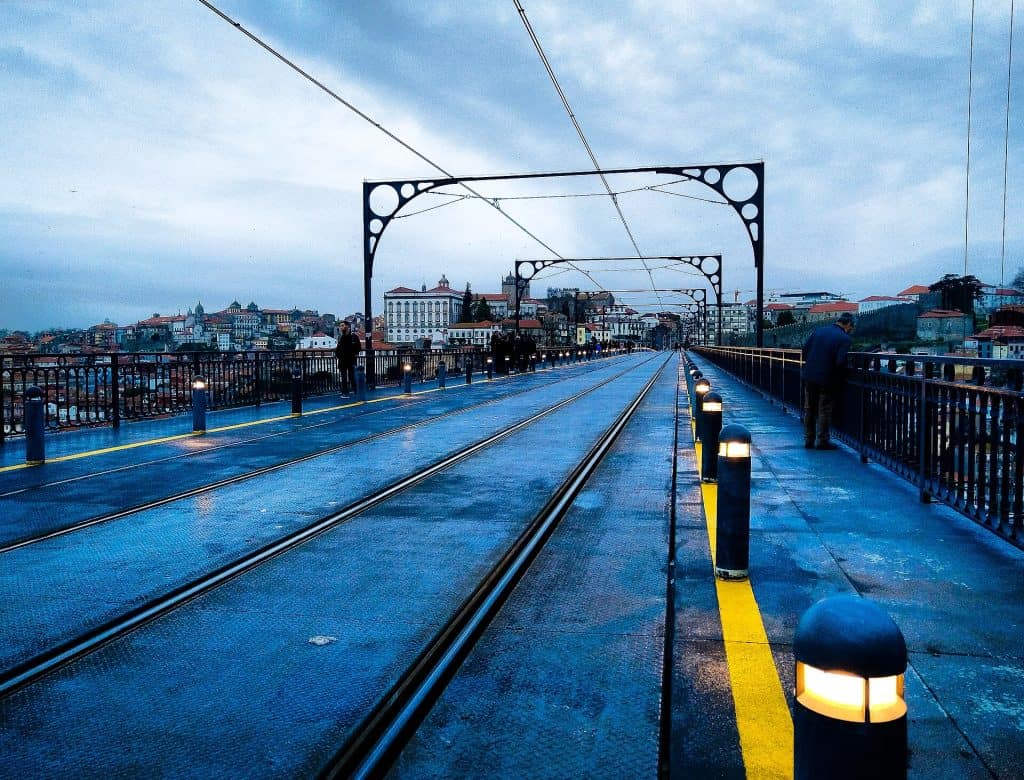
Finish the day by crossing the river on the upper deck of the Dom Luís I Bridge, which opened in 1886 and was designed by Théophile Seyrig, a former partner of Gustave Eiffel. The top level is shared by pedestrians and metro line D, the lower level by cars and pedestrians. If you would rather not climb from Ribeira, the Guindais funicular saves most of the ascent.
On the Gaia side, the terrace of the Monastery of Serra do Pilar and the Jardim do Morro below it are Porto’s favourite sunset spots, looking straight back across the river at the old town. Expect company on summer evenings.
Day 2 morning: Clérigos, Livraria Lello and Bolhão market
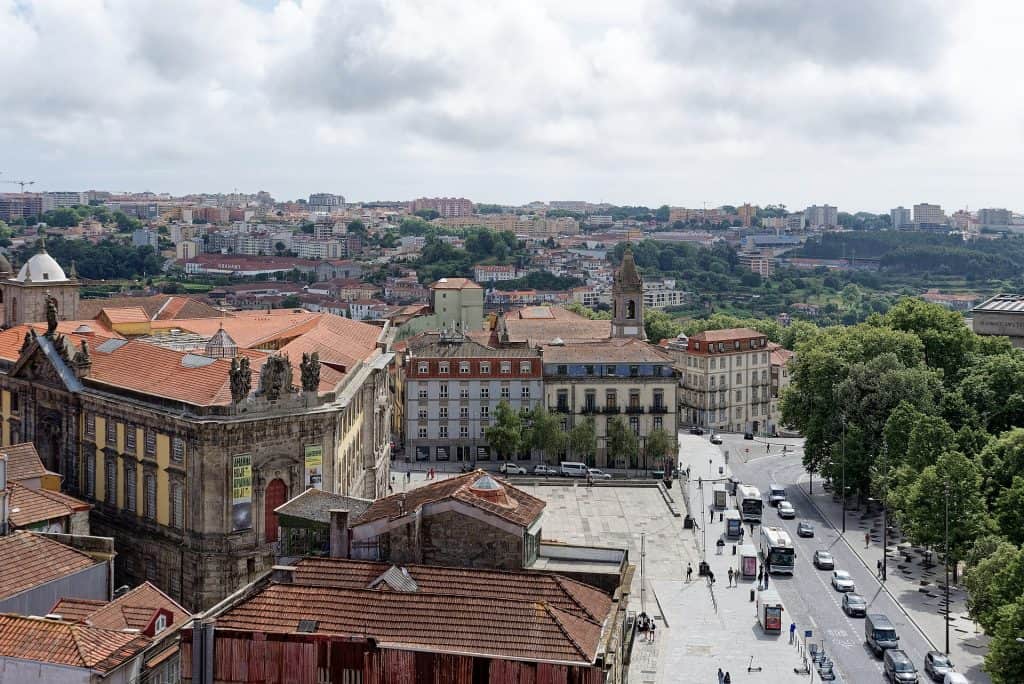
The Clérigos Tower, designed by the Italian-born architect Nicolau Nasoni and finished in 1763, rises about 75 metres over the city. Climbing its 240 steps earns you a full panorama of Porto and the Douro. Book a time slot in summer, when the stairs get crowded.
A few minutes away, Livraria Lello is the neo-Gothic bookshop famous for its red curving staircase. Entry is by ticket, best bought online for a set time, and the price can be put towards a book. Arrive at opening or late in the day to avoid the longest wait.
Walk east to the Mercado do Bolhão, the city’s 19th-century market hall, which reopened in 2022 after a long restoration. Stalls sell fish, cheese, cured meats and flowers, and there are small counters for lunch. Afterwards stroll along Rua de Santa Catarina, Porto’s main shopping street, to the Capela das Almas, whose exterior is covered in blue and white tiles.
Day 2 afternoon: port lodges in Gaia and a river cruise
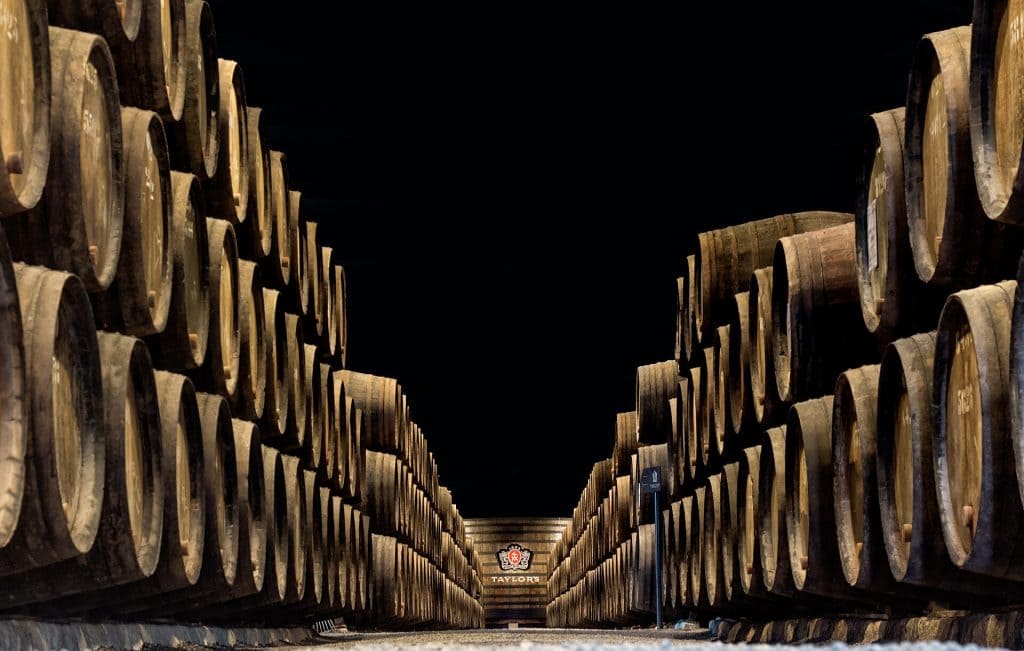
Port wine is made in the Douro Valley but has traditionally been aged and shipped from Vila Nova de Gaia, across the river from Porto. The big names, including Taylor’s, Graham’s, Sandeman and Cálem, offer cellar tours that end with a tasting. Book ahead, particularly at weekends, and compare what each tasting includes: some offer white, ruby and tawny side by side, others older vintages. Graham’s and Taylor’s sit higher up the hill and both have views over the river.
Late afternoon is a good time for a Six Bridges river cruise from either bank. Most take around 50 minutes and pass under the bridges between Porto and Gaia, which is the easiest way to appreciate the city’s setting. The Gaia cable car is another option, gliding along the riverfront up to the top of the bridge.
Day 3: Serralves, Foz and Matosinhos
Spend the third day on the city’s Atlantic side. In the morning, visit Serralves, a large park and arts foundation with a pink Art Deco villa, formal gardens, a treetop walkway and a contemporary art museum designed by Álvaro Siza. You could easily spend three hours here.
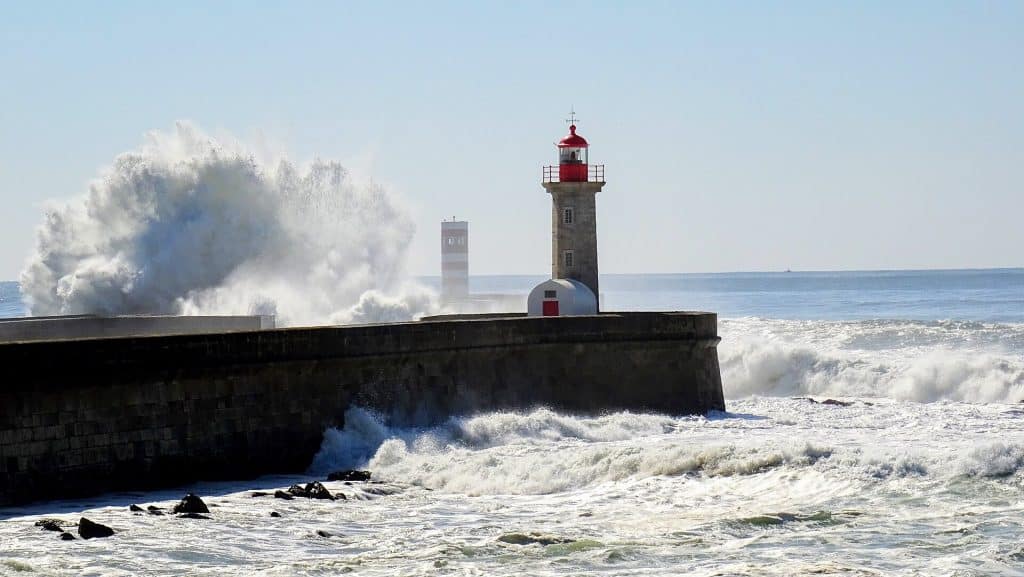
From Serralves it is a short bus ride or a long walk down to Foz do Douro, where the river meets the sea. The waterfront promenade runs past small beaches, rocky coves and the Felgueiras lighthouse at the end of a breakwater. Historic tram line 1 runs between the centre and Foz along the river, a slow but scenic way back.
For dinner, continue north to Matosinhos, a fishing town that runs straight on from Porto’s northern edge, where restaurants on and around Rua Heróis de França grill fresh fish and seafood over charcoal on the pavement.
Alternative day 3: a Douro Valley day trip
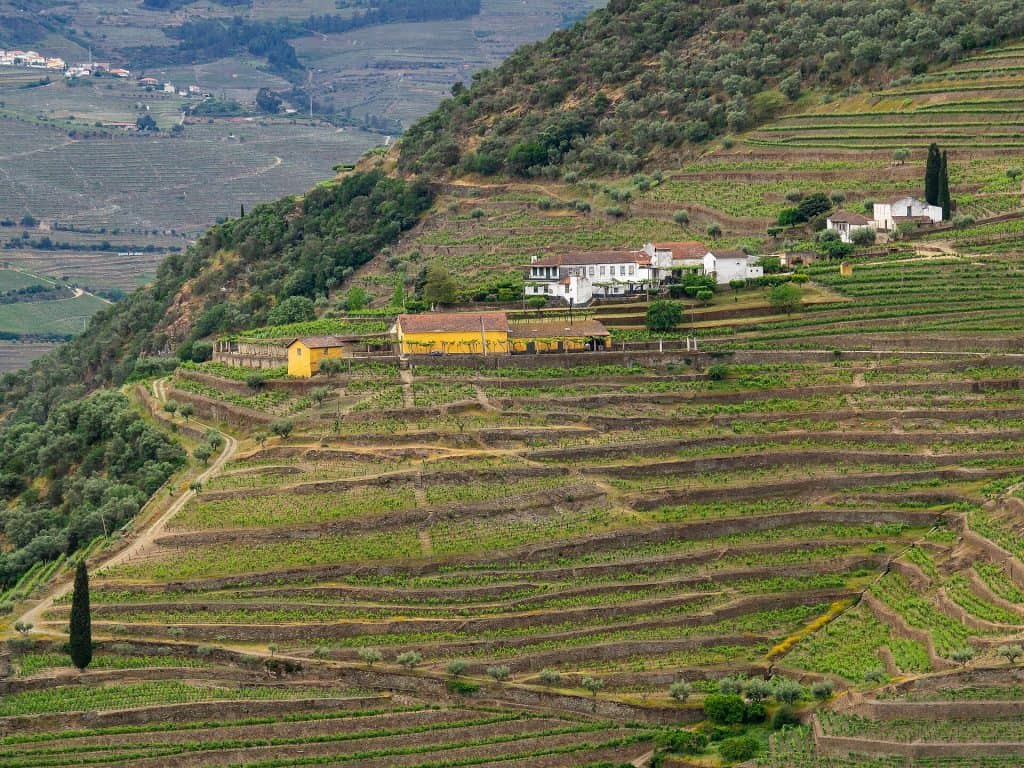
If wine is a priority, swap the coast for the Douro Valley, whose terraced vineyards are also on the UNESCO list. Trains from São Bento follow the river to Peso da Régua and Pinhão, with the most scenic stretch in the second half of the journey, where the line runs right beside the water. The trip to Pinhão takes roughly two and a half hours each way, so leave early.
Once there, you can visit a quinta for a tasting, take a short boat trip on the river or simply eat lunch looking over the vines. Organised tours by minibus cover more estates in a day, but the train gives you more control over your time. Harvest season, from roughly mid-September to early October, is the liveliest time in the valley.
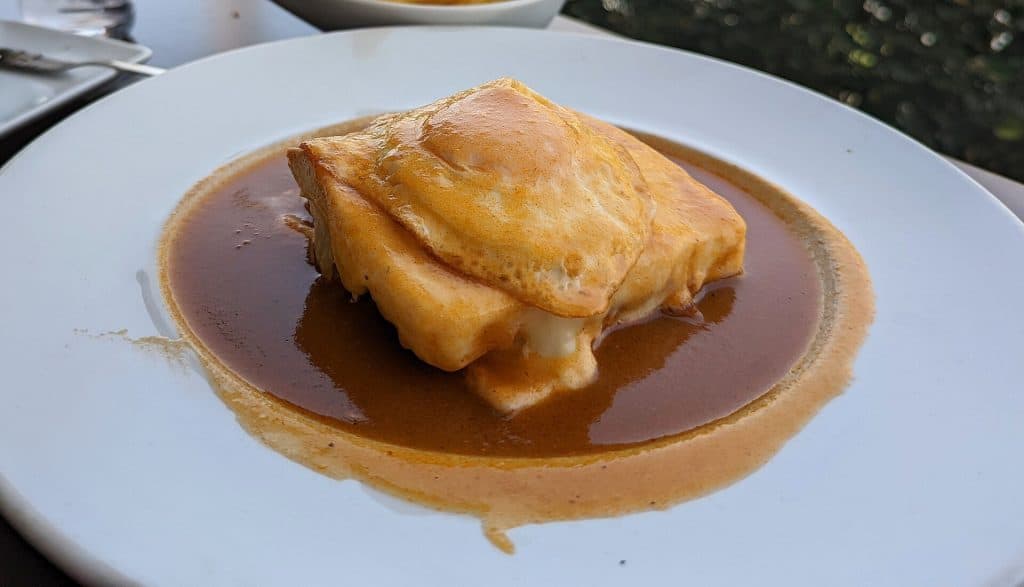
What to eat and drink in Porto
- Francesinha: a heavy layered sandwich of meats under melted cheese and a beer and tomato sauce, usually with chips. One is plenty.
- Tripas à moda do Porto: a tripe and bean stew that gave locals their nickname, tripeiros.
- Bifana: a simple pork sandwich, best eaten standing at a counter.
- Grilled fish: sardines in summer, plus sea bass and bream all year, especially in Matosinhos.
- Port and vinho verde: port after dinner, and a cold glass of vinho verde, the light white wine of northern Portugal, with seafood.
Where to stay in Porto
For a short trip, stay central. Ribeira and the streets around the cathedral put you closest to the river, but they are steep and lively at night. Baixa, the area around Avenida dos Aliados and Clérigos, is flatter, well connected by metro and full of cafés. Vila Nova de Gaia has good views back over Porto and quieter nights, while Boavista and Foz suit travellers who prefer a residential feel near the coast.
Getting around and practical tips
- Walk the centre: almost everything in this itinerary is walkable, but plan routes downhill where possible and use the Guindais funicular or metro for the climbs.
- Use the Andante card: a rechargeable Andante card works on the metro, most buses and suburban trains, and saves buying single tickets each time.
- Book the busy sights: Livraria Lello, the Clérigos Tower and port lodge tours all sell out at peak times.
- Pack for the weather: Porto is cooler and wetter than Lisbon, and Atlantic mist can roll in even in summer. Bring a light layer for the evenings.
- Eat late, but not too late: lunch runs roughly from 12.30 to 3pm and dinner from 7.30pm, and many smaller places close on Sundays or Mondays.
Plan your trip to Porto
- Tickets and tours in Porto: tickets and tours on Tiqets · activities on Klook
- Arriving by plane: pre-book an airport transfer with Welcome Pickups
- Road trip: compare car hire on Localrent
- Mobile data: get a travel eSIM from Airalo
Some of these are affiliate links: if you book through them we may earn a small commission, at no extra cost to you.
Planning a bigger trip? See our guide to the 25 best places to visit in Europe, from city breaks to fjords.
Keep exploring
- Portofino Travel Guide: Things to Do, Walks and Day Trips
- Portugal’s Schist Villages: 5 to Visit and How to Plan Your Trip
- Algarve by Area: Which Part of the Algarve to Choose and Where to Stay
Frequently asked questions
Are two days enough for Porto?
Two days is enough for the historic centre, the port lodges in Gaia and a river cruise. A third day lets you add the coast at Foz and Matosinhos or a day trip to the Douro Valley.
Is Porto walkable?
Yes, the centre is compact and best explored on foot, but it is very hilly. Comfortable shoes and the occasional metro or funicular ride make a big difference.
Do you need to book port wine tastings in advance?
It is wise, especially at weekends and in summer. Most lodges in Vila Nova de Gaia sell timed tours and tastings online.
Photos: Ray in Manila, CC BY 2.0, via Wikimedia Commons; Diego Delso, CC BY-SA 3.0, via Wikimedia Commons; Jedesto, CC BY-SA 4.0, via Wikimedia Commons; Jakub Hałun, CC BY 4.0, via Wikimedia Commons; Pveverdingen, CC BY-SA 4.0, via Wikimedia Commons; bvi4092, CC BY 2.0, via Wikimedia Commons; TheRealDapperDan, CC BY-SA 4.0, via Wikimedia Commons.