Updated
Some places look like they were drawn for a winter storybook: half-timbered houses under fresh snow, a castle above a frozen river, a market square that smells of mulled wine and roasted almonds. Europe has dozens of them, but the best are small enough to walk end to end in an afternoon, and lively enough in December to fill a long weekend.
This list focuses on towns rather than capitals, with one exception where the old centre feels like a village. Each entry covers what makes it special in winter, how likely snow is, and how to get there without a car.
Winter fairytale towns at a glance
- Best for: Christmas markets, snowy old towns, castles, Arctic winter experiences and Alpine villages.
- When to go: late November to 23 December for Advent markets; January to March for the most reliable snow in the far north and the Alps.
- Snow reality: it is likely in Rovaniemi, Zermatt and usually Tallinn; a bonus rather than a given in Rothenburg, Gengenbach, Český Krumlov and Bergen.
- Getting around: every town here can be reached by train, sometimes with a short bus or ferry link at the end.
- Book ahead: December weekends sell out early in small towns, so reserve rooms months in advance.
1. Rothenburg ob der Tauber, Germany
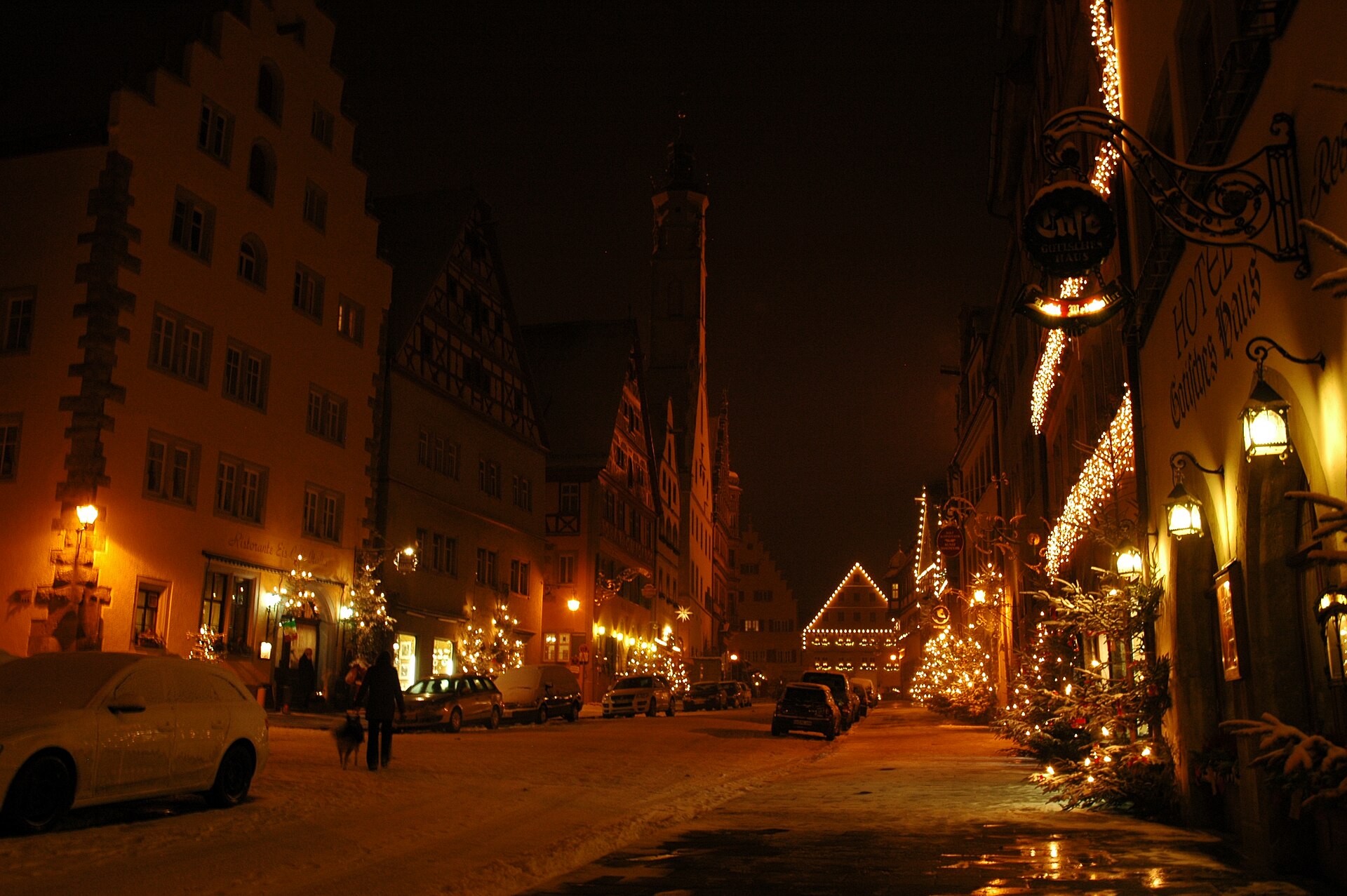
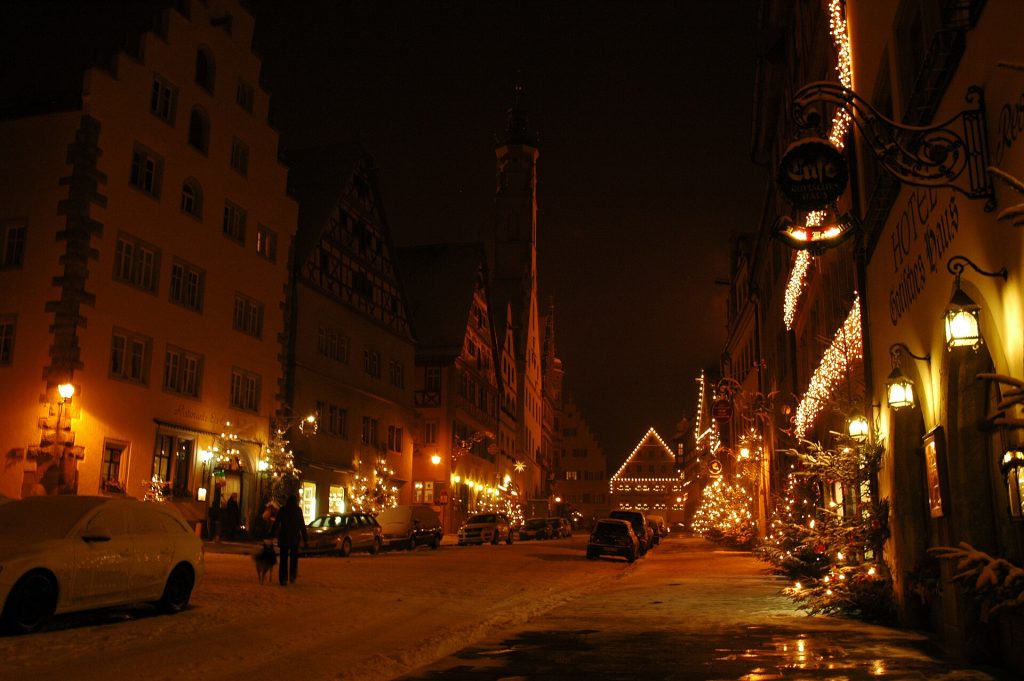
Rothenburg is the town most people picture when they imagine a German Christmas. It is one of only four towns in Germany that still have completely intact city walls, and inside them the lanes are lined with steep-roofed, half-timbered houses painted in soft reds and yellows. The best-known view is the Plönlein, a small fork in the road where a crooked yellow house sits between two gate towers.
In Advent the Reiterlesmarkt fills the market square and the streets around the town hall with stalls selling gingerbread, ornaments and Schneeballen, the local pastry rolled into balls and dusted with sugar. The town is also home to the German Christmas Museum, run by the Käthe Wohlfahrt company, whose Christmas shops stay open all year. Climb the Rödertor tower for views over the rooftops.
Stay overnight: the town is at its most atmospheric after dark, once the tour coaches have gone. Trains reach Rothenburg on a short branch line from Steinach.
2. Gengenbach, Black Forest, Germany
Gengenbach is a small town on the western edge of the Black Forest with a medieval centre of gabled houses, gate towers and cobbled lanes. Its claim to winter fame is the town hall. Every Advent, its 24 windows are turned into the doors of a giant Advent calendar, and the town bills it as the biggest in the world. Each evening in December another window is revealed, lit up with artwork, and a crowd gathers in the square below to watch.
The Christmas market around the square is pleasantly modest, with local food, crafts and room to stand with a warm drink. Gengenbach has its own station on the regional line from Offenburg, so it is easy to reach from Strasbourg, Freiburg or Karlsruhe.
3. Hallstatt, Austria
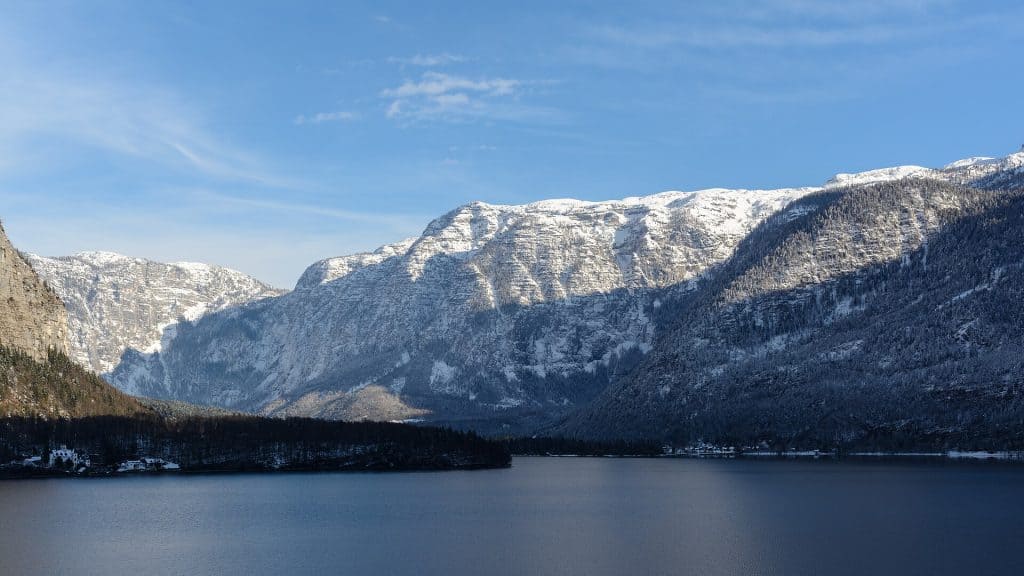
Hallstatt’s houses climb a narrow strip of land between a steep mountainside and the dark water of Lake Hallstatt, with a church spire at the water’s edge. It sits within the Hallstatt-Dachstein/Salzkammergut Cultural Landscape, a UNESCO World Heritage Site since 1997, and salt has been mined above the village since prehistoric times. The Hallstatt salt mine is described as the oldest working salt mine in the world.
Hallstatt has fewer than 800 residents and a well-known overtourism problem, and the authorities have cut the number of tour buses allowed each day. Stay the night and walk the lakeshore early or after dark. Check before you travel whether the salt mine tours and the funicular are running, as some attractions operate on reduced winter schedules.
The railway station is on the opposite shore of the lake, and a small ferry carries passengers across to the village, which makes for a memorable arrival. Snow is common in midwinter but not guaranteed at lake level.
4. Český Krumlov, Czech Republic
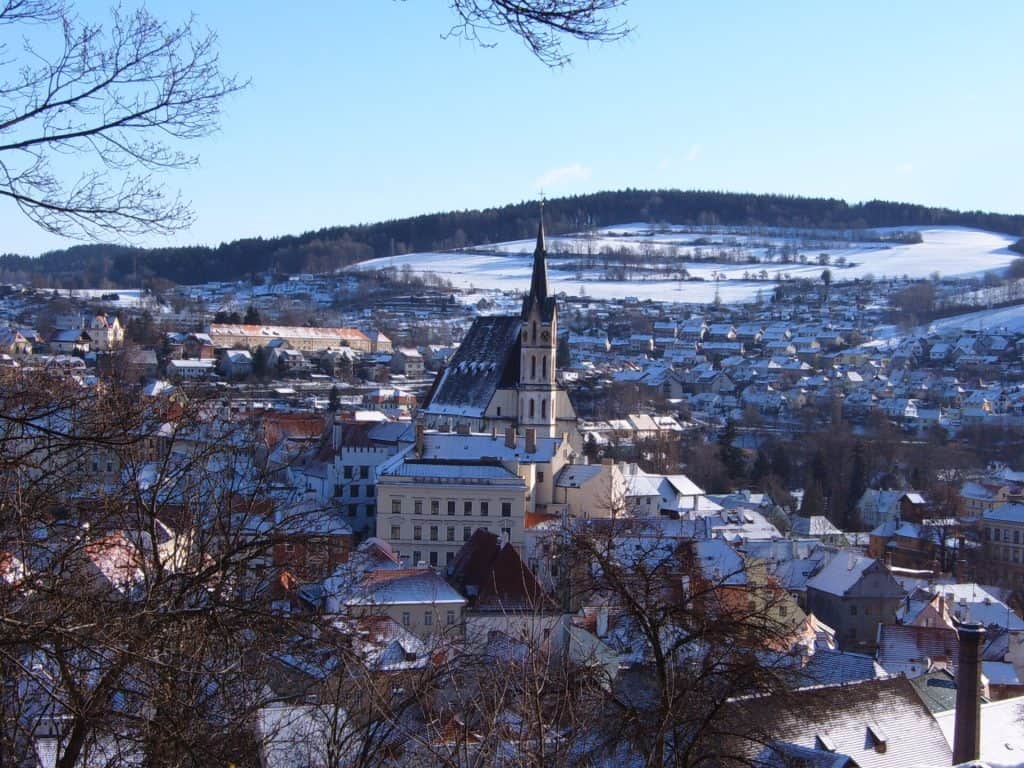
Český Krumlov wraps around a tight loop of the Vltava river in South Bohemia, 134 km south of Prague. Its historic centre and castle have been a UNESCO World Heritage Site since 1992. The castle is one of the largest in central Europe, a complex of around forty buildings and palaces covering seven hectares, with a painted Renaissance tower that is visible from almost every lane in town.
Look out for the castle’s bear moat, where bears have been kept in place of water, and the Baroque theatre, built in the 1680s and one of very few in the world to keep its original stage machinery. In Advent the main square holds a Christmas market with a tall tree, and the red roofs below the castle look their best under a dusting of snow. Buses and trains from Prague take around three hours.
5. Tallinn, Estonia
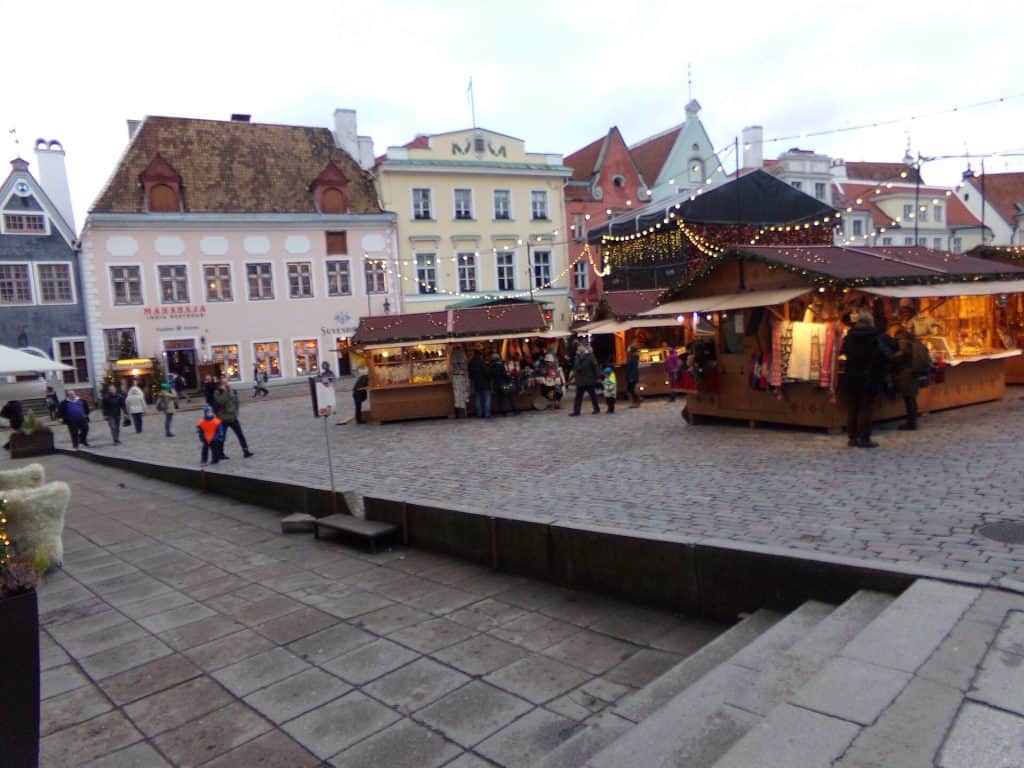
Tallinn is a capital city, but its medieval Old Town feels like a self-contained fairytale village of towers, merchants’ houses and cobbled lanes. The Old Town has been on the UNESCO World Heritage List since 1997, and much of its town wall and many towers survive. In December, Town Hall Square hosts a Christmas market with a tall tree and wooden stalls beneath the Gothic town hall.
Tallinn and Riga both claim a place in the history of the Christmas tree. Records show that in the 15th and early 16th centuries the Brotherhood of Blackheads, a merchants’ guild, put up a tree in their guild houses in both cities and later danced around it in the town square. For the best winter views, climb up to Toompea hill, where the viewing platforms look over the snowy roofs of the lower town towards the sea.
Ferries from Helsinki make Tallinn an easy addition to a Finnish trip.
6. Bergen, Norway
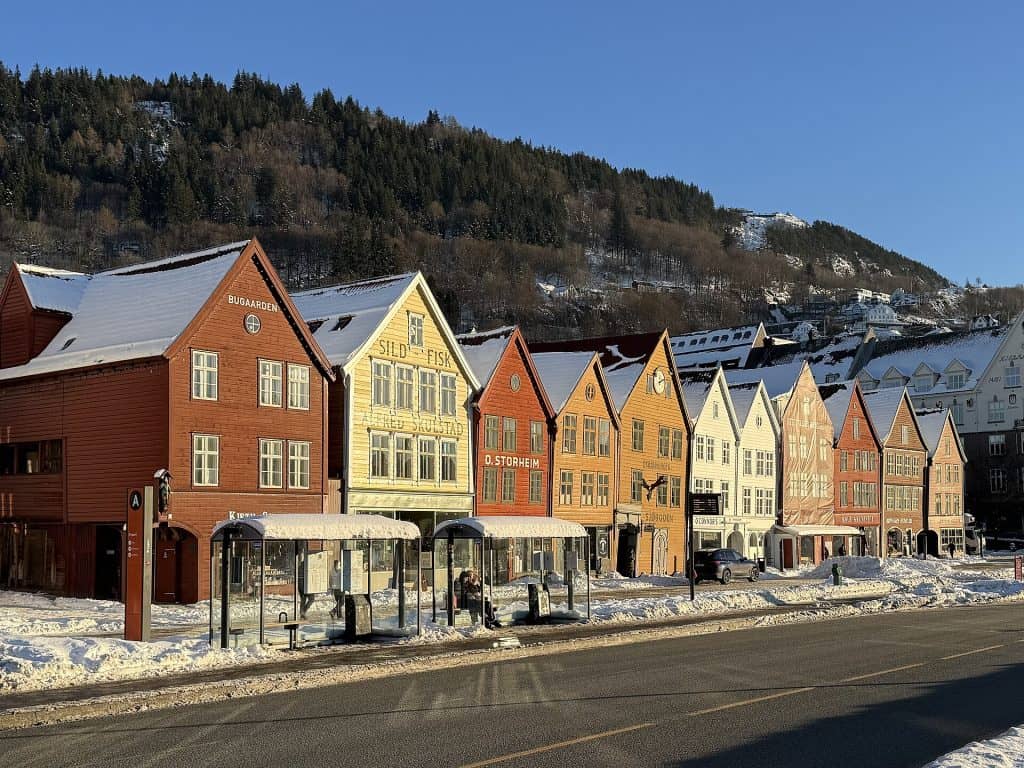
Bergen sits between seven hills on Norway’s west coast, and in winter its harbour, wooden houses and mountains feel like the setting for a Nordic folk tale. The row of colourful wooden warehouses at Bryggen, once the centre of the Hanseatic League’s trade in Norway, has been a UNESCO World Heritage Site since 1979.
Every Advent the city displays Pepperkakebyen, a miniature gingerbread town built by local children, families, schools and businesses, which is often described as one of the largest in the world. Take the Fløibanen funicular up Mount Fløyen for a view over the harbour lights. Bergen is one of Europe’s rainiest cities, so pack waterproofs and treat snow in town as a lucky extra.
The Bergen Railway from Oslo crosses the Hardangervidda mountain plateau in around seven hours, through deep snow in winter.
7. Rovaniemi, Finland
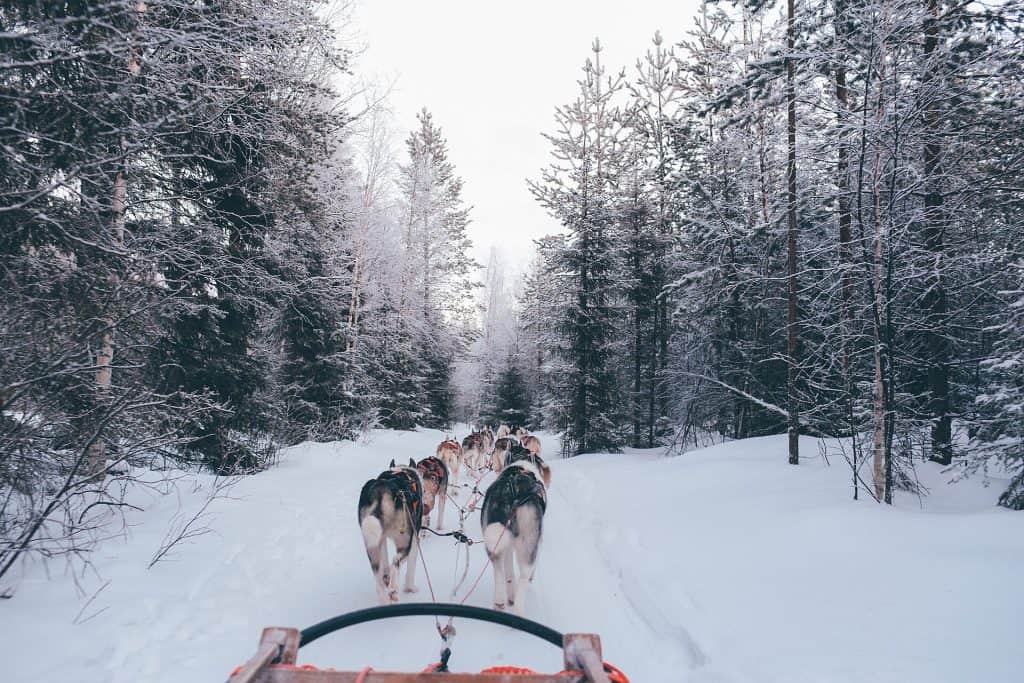
Rovaniemi, the capital of Finnish Lapland, is the place to go for guaranteed snow and the full Arctic winter. Most of the city was destroyed during the Second World War, and the rebuilt layout was planned with input from the architect Alvar Aalto, who laid out the main roads in the shape of a reindeer’s head and antlers.
The main attraction for families is Santa Claus Village, about 8 km northeast of the centre, which opened in 1985. It has Santa’s office, an official Finnish post office where you can send letters with a special postmark, and a painted line marking the Arctic Circle. Away from the village, try a reindeer or husky safari, ski on the Ounasvaara hill across the river, or visit the Arktikum science museum. On clear nights, head away from the city lights to look for the northern lights.
VR runs day and overnight trains from Helsinki, and the airport is just a few kilometres from the village. Temperatures can fall well below minus 20°C, so dress in proper layers.
8. Zermatt, Switzerland
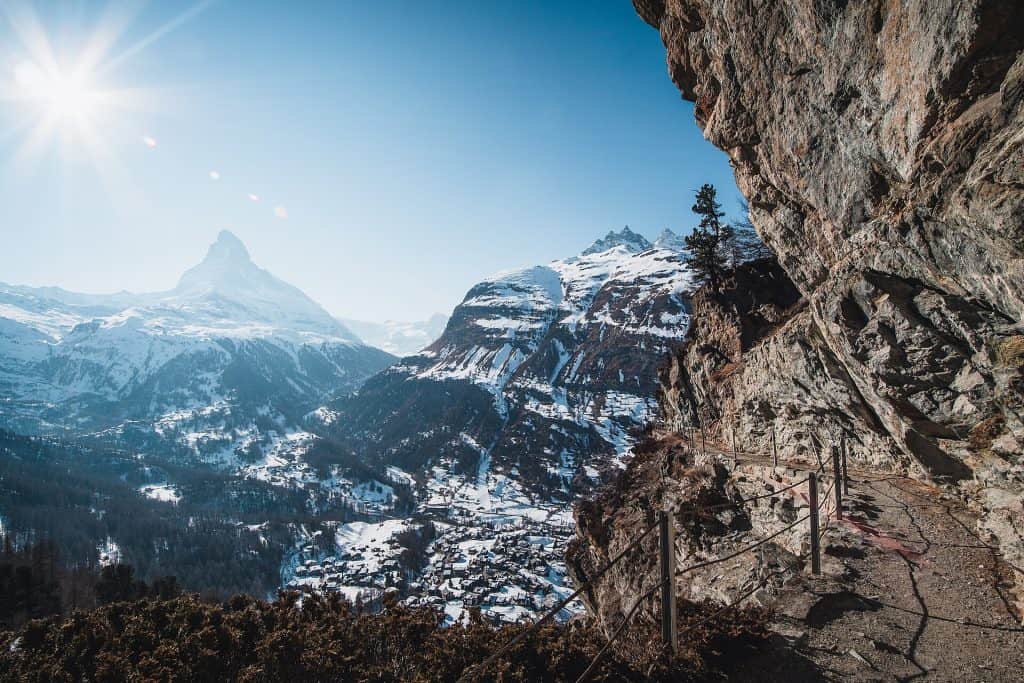
Zermatt is an Alpine village of dark timber chalets and church spires at the foot of the Matterhorn, which rises to 4,478 m. The whole village is closed to combustion-engine cars, so the streets are quiet apart from small electric taxis and the crunch of snow under boots.
Take the Gornergrat railway, a 29-minute rack railway ride up to 3,089 m and often described as the highest open-air railway in Europe, for close views of the Matterhorn and surrounding glaciers. Back in the village, walk to the old quarter of Hinterdorf to see the wooden barns on stone stilts. Zermatt’s season runs through winter and spring, and the village is reliably snowy from December to March.
Drivers leave cars in Täsch and take the shuttle train; trains also run directly from Visp and Brig. Christmas and New Year are the busiest weeks, so book early.
Planning your winter fairytale trip
When the markets run
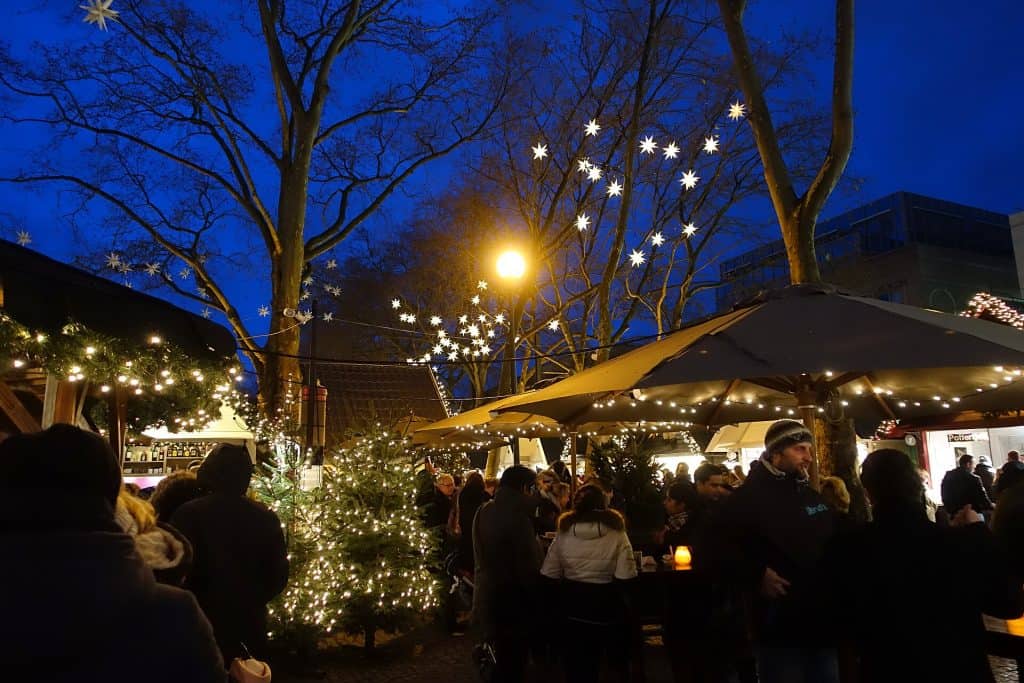
Most Christmas markets in Germany, Austria and the Czech Republic open in the last week of November or around the first Advent Sunday and close just before Christmas, often on 23 December. Some Nordic and Baltic markets run later, sometimes into early January. Dates change each year, so check the town’s tourist office before booking.
Snow and weather
Snow at lowland markets is never guaranteed. If a white landscape is the priority, aim for Lapland, the Alps or the Baltic in January and February. Pack waterproof boots with good grip, a hat, gloves and layers.
Daylight
The further north you go, the shorter the day. Tallinn and Bergen see only six or so hours of daylight around the winter solstice, and Rovaniemi even less. Plan outdoor sightseeing around midday and save museums, saunas and markets for the long evenings.
Getting there and around
Every town here has rail connections, which saves driving on snowy roads. Easy pairings are Rothenburg and Gengenbach, Hallstatt and Český Krumlov via Linz, or Tallinn and Rovaniemi via Helsinki.
Plan your trip
- Rothenburg: tickets and tours on Tiqets · activities on Klook
- Black Forest: tickets and tours on Tiqets · activities on Klook
- Hallstatt: tickets and tours on Tiqets · activities on Klook
- Arriving by plane: pre-book an airport transfer with Welcome Pickups
- Road trip: compare car hire on Localrent
- Mobile data: get a travel eSIM from Airalo
Some of these are affiliate links: if you book through them we may earn a small commission, at no extra cost to you.
Planning a bigger trip? See our guide to the 25 best places to visit in Europe, from city breaks to fjords.
Keep exploring
- Winter for Non-Skiers: 7 Snowy Activities in Europe Without Skis
- 7 Remote European Villages Where Long Winters Preserved the Past
- Winter Wonderlands in Europe: 7 Snowy Landscapes to See
Frequently asked questions
Which town in Europe looks most like a fairytale in winter?
For a classic Christmas card scene, Rothenburg ob der Tauber and Hallstatt are hard to beat. For guaranteed snow and an Arctic setting, choose Rovaniemi, and for a snowy Alpine village with a famous mountain, Zermatt.
When do Christmas markets open in Europe?
Most open in late November, around the first Sunday of Advent, and close on or just before 24 December. A few, especially in northern Europe, stay open until early January.
Where is snow most likely at Christmas in Europe?
Finnish and Swedish Lapland and high Alpine resorts such as Zermatt have the most reliable snow. Lower towns in central Europe sometimes get snow in December, but it often arrives later in January.
Photos: Rosty, CC BY-SA 3.0, via Wikimedia Commons; Uoaei1, CC BY-SA 4.0, via Wikimedia Commons; Basienka at Polish Wikipedia, CC BY-SA 3.0, via Wikimedia Commons; Ypsilon from Finland, CC0, via Wikimedia Commons; Svend-Eirik H. Pedersen, CC BY 4.0, via Wikimedia Commons; fox jia foxjeef, CC0, via Wikimedia Commons; Deralpinbergsteiger, CC BY-SA 4.0, via Wikimedia Commons; Daderot, CC0, via Wikimedia Commons.