Germany is where the Christmas market began, and it still does the format better than anywhere else: timber stalls in front of Gothic churches, mulled wine in the cold, gingerbread and carved nativity figures, brass bands on the town hall balcony. Almost every town has a market in Advent, which makes choosing harder than finding one. This guide picks out twelve of the best German Christmas markets, each with its own character, from the giant city markets of Nuremberg, Cologne and Dresden to the medieval lanes of Rothenburg and Esslingen.
Where an official source has published the 2026 dates, they are given below. Where it has not, the guide says so instead of guessing. Opening times shift at weekends and several markets close on Totensonntag (22 November 2026), so check the day you plan to go. Practical sections at the end cover choosing, a route and trains.
- Season: Mid-November to 24 December, with Berlin’s Gendarmenmarkt running to 31 December in 2026.
- Best for: Couples, families, food lovers and anyone happy to travel by train between historic cities.
- When to go: Weekday afternoons in the first two weeks of Advent are calmest; Saturdays in December are the busiest.
- How long: One evening per big-city market; three to five days covers a regional cluster comfortably.
- Getting there: Every market here is in a city centre and reachable by train and local public transport; driving into the old towns is rarely sensible in Advent.
1. Nuremberg Christkindlesmarkt
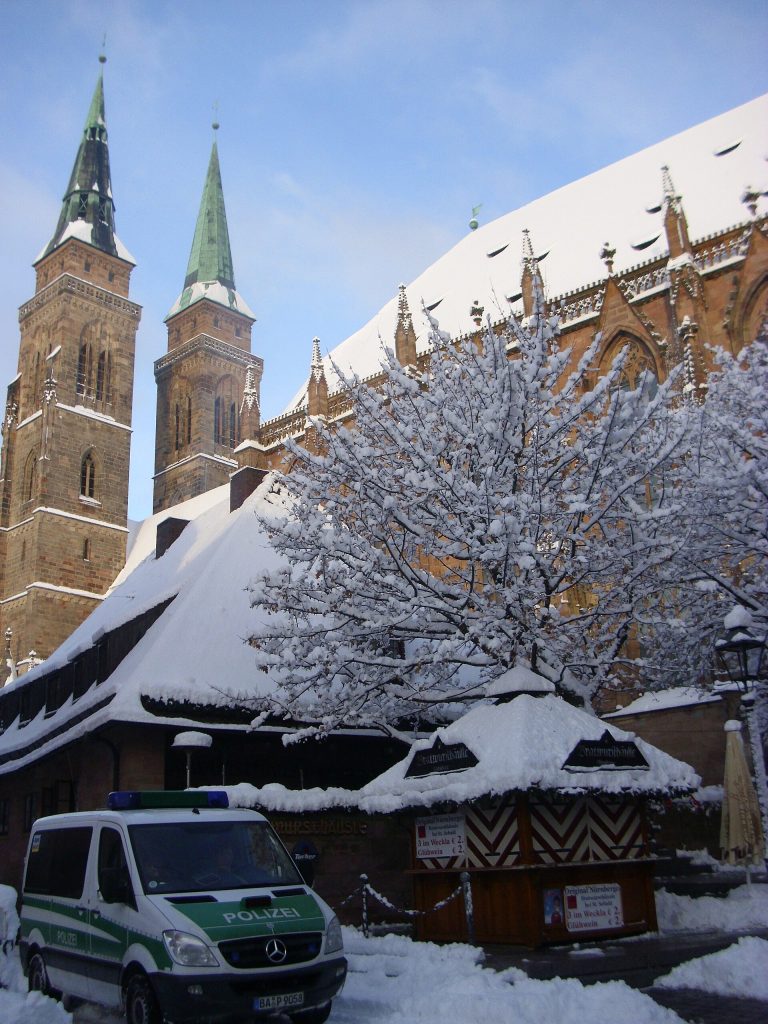
Nuremberg’s market is first recorded in 1678 and is probably the best-known in Germany. In 2026 it runs from 27 November to 24 December on the Hauptmarkt, framed by the Church of Our Lady, the Beautiful Fountain and a view of St Sebald. About 180 stalls with red-and-white striped canvas roofs sell Lebkuchen (gingerbread), fruit bread, prune figures, decorations and toys, alongside mulled wine and the city’s small grilled sausages. The Christkind, a young woman elected every two years, opens the market with her prologue at 5.30 pm on Friday 27 November. Opening hours are 10 am to 9 pm daily (10 pm on the opening night) and 10 am to 2 pm on 24 December. More than two million visitors are expected, so weekday mornings are best. The nearest U-Bahn stop is Lorenzkirche on the U1.
2. Munich Christkindlmarkt on Marienplatz
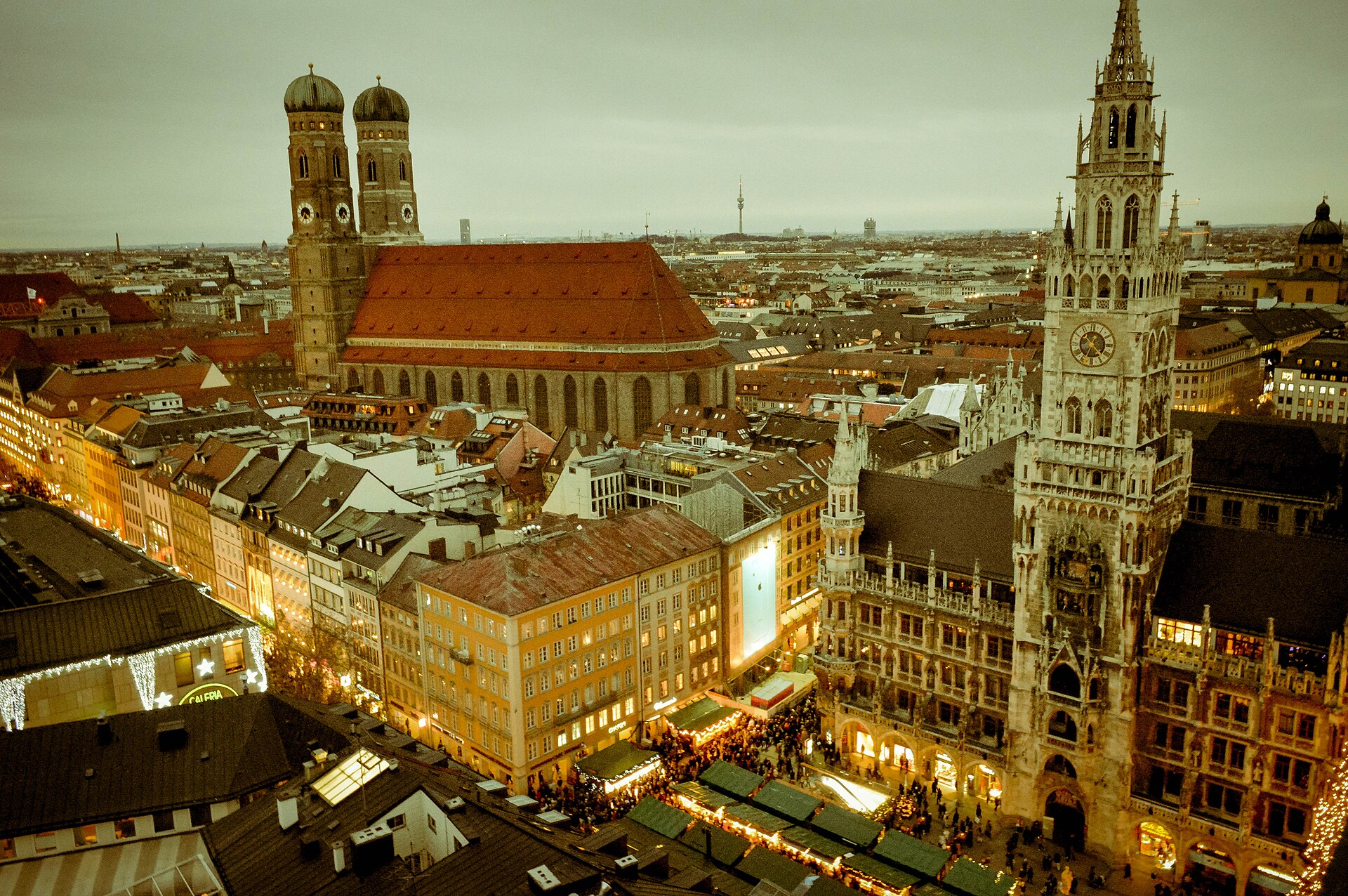
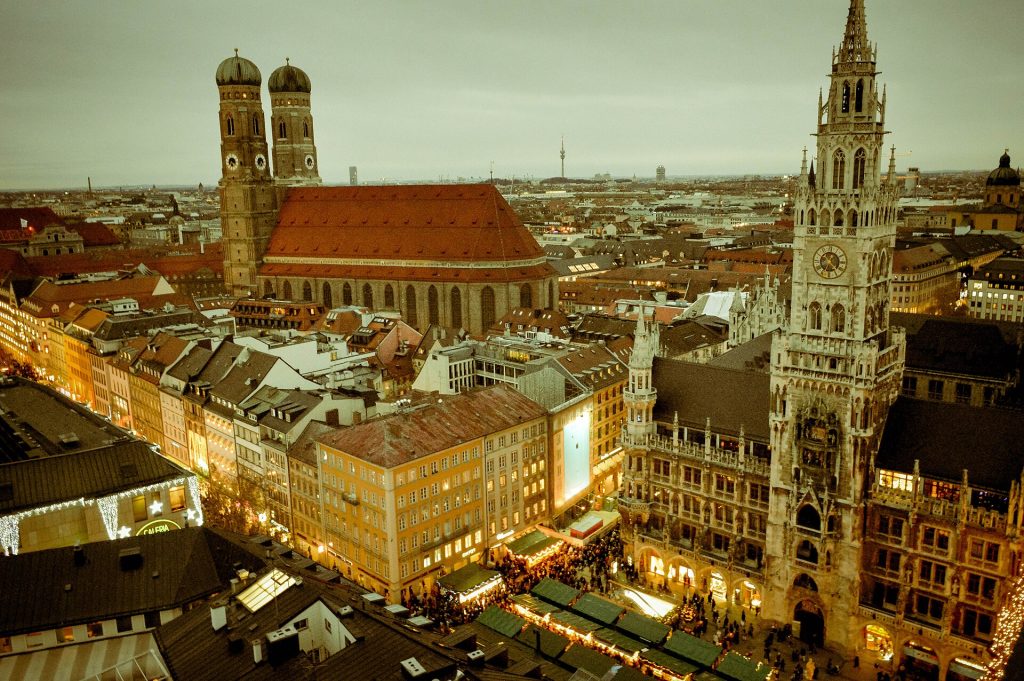
Munich’s main market fills Marienplatz in front of the neo-Gothic New Town Hall and spills into the surrounding streets with 138 stalls. In 2026 it opens earlier than usual, on Friday 20 November, with the tree lighting at 5 pm, and runs to 24 December. It is closed on Totensonntag, Sunday 22 November. Hours are 10 am to 9 pm Monday to Saturday, 8 pm on Sundays, and 10 am to 2 pm on Christmas Eve; on 27 November and 12 December stalls may stay open until 10 pm. From Sunday to Thursday, Advent music plays from the town hall balcony from about 5.15 pm. Do not miss the Kripperlmarkt in front of the Alter Peter church, which sells nativity scenes and figures. A Krampus run takes place on 13 December (3 to 5 pm). Marienplatz station is served by the U3, U6 and the S-Bahn.
3. Cologne: the market at the cathedral
Cologne has several Christmas markets, but the largest sits on Roncalliplatz directly beneath the twin spires of the cathedral. According to the city portal koeln.de, it runs from 16 November to 23 December 2026, with a rest day on Totensonntag (22 November). Hours are 11 am to 9 pm Sunday to Wednesday, 11 am to 10 pm on Thursday and Friday, and 10 am to 10 pm on Saturday. Up to 140 stalls surround a 25-metre fir tree, with a canopy of around 50,000 LEDs stretched over the square. Look for Kölsch Spekulatius biscuits and Domliqueur. A central stage hosts concerts, and children have puppet theatre and a historic carousel. Take Stadtbahn lines 5, 16 or 18 to Dom/Hauptbahnhof; the main railway station is next door, which makes Cologne an easy day trip. Note that sightseeing visits to the cathedral have required a paid ticket since 1 July 2026.
4. Dresden Striezelmarkt
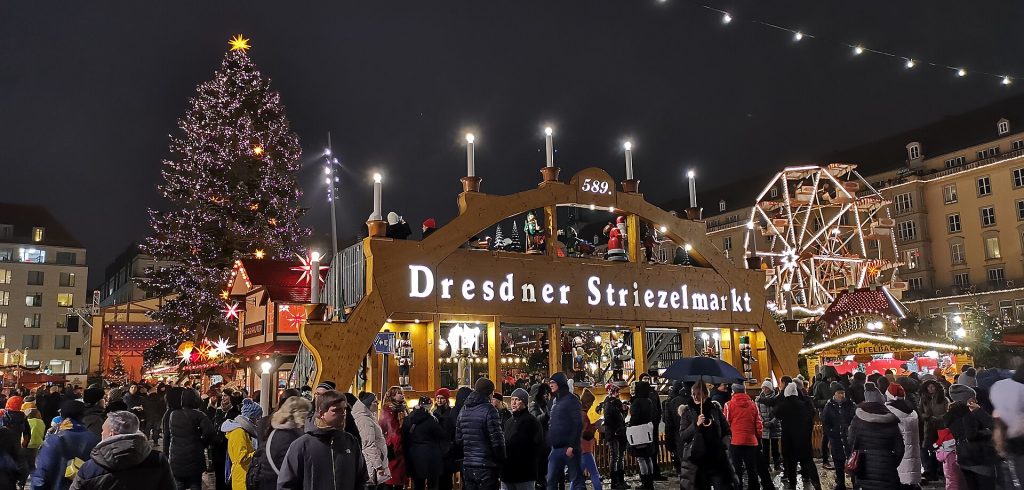
The Striezelmarkt on the Altmarkt is one of Germany’s oldest Christmas markets: the city’s official 2026 notice calls this year’s market the 592nd. It runs from Wednesday 25 November to Thursday 24 December 2026. The opening day runs from 4.30 pm to 9 pm, after which the market is open daily from 10 am to 9 pm, closing at 2 pm on Christmas Eve. The name comes from Striezel, an old word for the Dresden Christstollen, and the city holds an annual Stollen festival with a procession through the old town (check the official site for the 2026 date). The landmark is the Erzgebirge step pyramid, 14.62 metres tall, which entered the Guinness Book of Records in 1999 as the largest of its kind. Shop here for Ore Mountains woodcraft: nutcrackers, incense smokers and candle arches.
5. Frankfurt Christmas market on the Römerberg
Frankfurt’s market is one of the largest in Germany, documented since 1393 and spread over more than 230 stalls on the Römerberg, Paulsplatz, Mainkai and Friedrich-Stoltze-Platz, and on into the shopping streets around the Hauptwache. The heart is the Römerberg, with its half-timbered houses and the Römer town hall. It drew around 2.3 million visitors in 2025, according to the tourist board. Food to look for includes Bethmännchen (marzipan almond biscuits), Brenten and Quetschemännchen, plus chestnuts, waffles and potato fritters. On selected days the city’s church bells, 50 bells in ten churches, ring together in the Frankfurter Stadtgeläut, an unusual sound to hear from the square. Frankfurt Tourism had not published 2026 dates in the sources we checked: the market usually opens in the last full week of November and ends on 22 December, so check the official site before booking.
6. Berlin WeihnachtsZauber Gendarmenmarkt
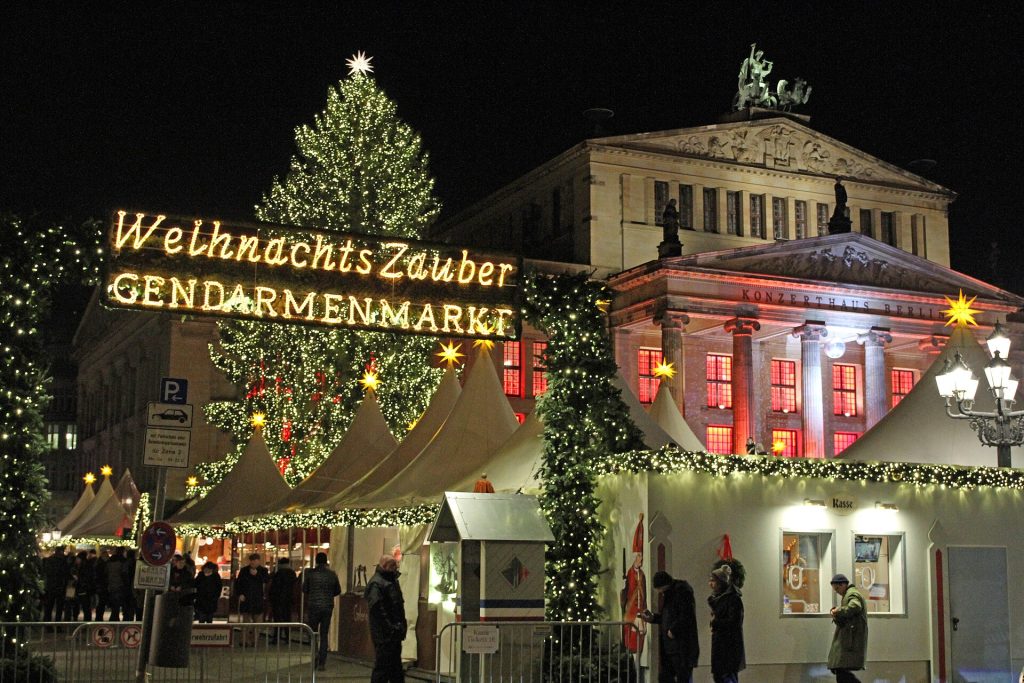
Berlin has dozens of markets, but the WeihnachtsZauber on Gendarmenmarkt is the classic, set between the French and German Cathedrals and the Konzerthaus. It runs from 23 November to 31 December 2026, so it is one of the few major markets you can still visit between Christmas and New Year. Hours are 11 am to 10 pm Sunday to Thursday, 11 am to 11 pm on Friday and Saturday, and 12 noon to 6 pm on Christmas Eve. Admission is €2, children under 12 enter free, and entry is free for everyone from Monday to Friday between 11 am and 2 pm, except on 24, 25, 26 and 31 December. A large tent hosts craftspeople at work, such as woodcarvers, comb makers and tailors, and there is a heated, covered dining area. The nearest U-Bahn stations are Hausvogteiplatz (U2) and Stadtmitte (U6, step-free).
7. Stuttgart Christmas market
Stuttgart’s is one of the largest markets in Europe, with about 300 stalls stretching from the New Palace and Königsbau past Schillerplatz, the Old Castle and the Collegiate Church to the Marktplatz. Its signature is the decorated stall roofs: stallholders compete to build elaborate scenes with figures, lights and miniature landscapes, and each year visitors and a jury choose the best. In 2026 the market runs from 25 November to 23 December and opens in the Renaissance courtyard of the Old Castle. Hours are 11 am to 9 pm Sunday to Thursday and 11 am to 10 pm on Friday and Saturday. Concerts take place in the Old Castle courtyard on almost every evening. Try Swabian Springerle, white anise biscuits pressed in carved wooden moulds, and Hutzelbrot, a dense dried-fruit bread. Families will find a miniature steam train.
8. Aachen Christmas market
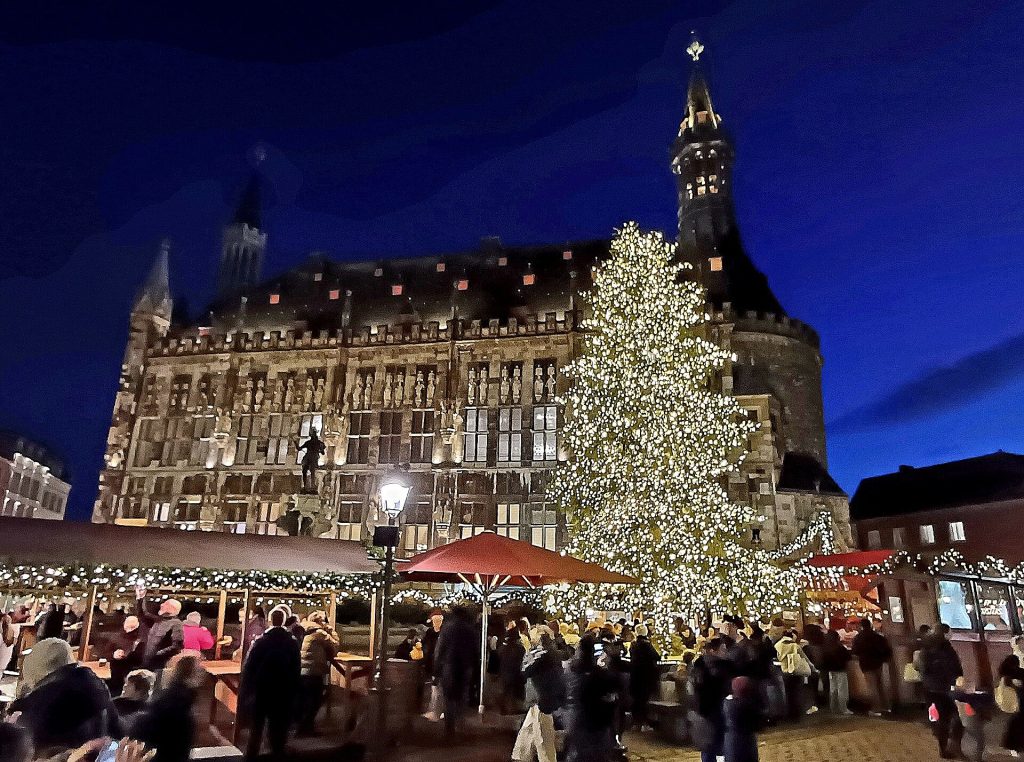
Aachen’s market spreads through the old town around the town hall and Charlemagne’s cathedral, one of Germany’s first UNESCO World Heritage Sites. The 2026 market runs from 20 November to 23 December, open daily from 11 am to 9 pm. The exceptions are Totensonntag (22 November), when it opens only from 6 pm to 9 pm; Saturday 12 December, a late night until 10 pm; and 23 December, when it closes at 8 pm. The local speciality is Aachener Printen, a hard, spiced gingerbread sold in endless variations, from plain to chocolate-coated. Aachen sits right on the Belgian and Dutch borders, so it combines well with Cologne, which is a short train ride away, or with a trip to Liège or Maastricht.
9. Rothenburg ob der Tauber Reiterlesmarkt
Rothenburg’s walled old town is the most picture-book setting in this list, and its Christmas market, the Reiterlesmarkt, is named after the “Reiterle”, a mythical horseman from pre-Christian folklore who appears in performances during the market. Bavaria’s tourist board lists the 2026 market from 20 November to 23 December. Stalls are spread across three squares, the Marktplatz, Kirchplatz and Grüner Markt, with crafts, brass and church concerts, and guided old-town walks. Try the white mulled wine. The Käthe Wohlfahrt Christmas Museum explains German Advent customs. Rothenburg is small and fills with day-trippers, so staying overnight lets you see the lanes empty in the evening and early morning. By train, take the RB 82 branch line from Steinach, which is on the Würzburg to Treuchtlingen line served by RB 80 trains via Ansbach.
10. Esslingen Medieval and Christmas Market
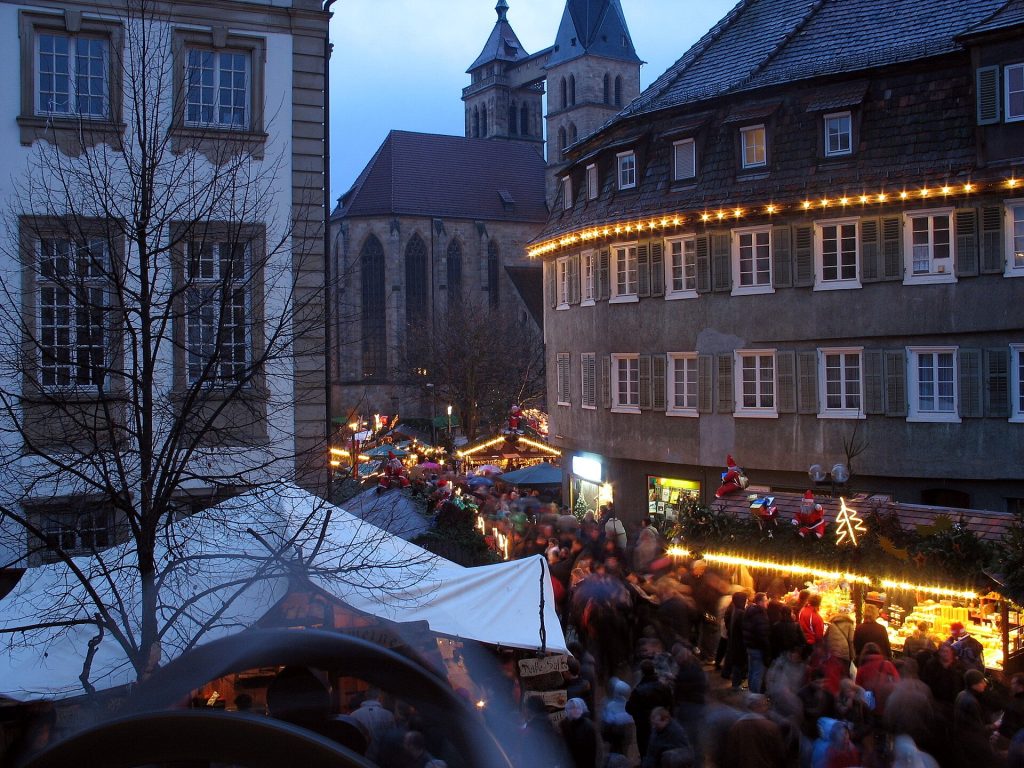
Esslingen, on the Neckar just east of Stuttgart, runs a Christmas market with a twist: half of it is a medieval market, with stallholders in period costume, blacksmiths, potters and leatherworkers, mead and fire performers, set among half-timbered houses. The other half is a conventional Christmas market with handmade decorations, wooden toys and glassblowing. Families come for the jugglers and hands-on activities such as candle dipping. The official 2026 dates had not been confirmed on the city’s tourism site when we checked; the market usually opens in late November and closes a few days before Christmas, so check esslingen-info.com before you go. Esslingen is a short regional train ride from Stuttgart Hauptbahnhof, so the two are easily combined in one day.
11. Heidelberg Christmas market
Heidelberg spreads its market across several squares in the old town, with the castle ruins lit up above. Local press lists Marktplatz, Karlsplatz, Bismarckplatz, Universitätsplatz, Kornmarkt and the Anatomiegarten, so a walk along the Hauptstraße links most of them. Karlsplatz has an ice rink with the castle as a backdrop, and Kornmarkt offers one of the best views up to the castle. The city recommends public transport, particularly at weekends and in the evenings. Families can have a photo taken with Santa at his house on the Marktplatz in return for a donation. Heidelberg’s market usually runs from late November to about 22 December; we did not find the 2026 dates on an official site, so check Heidelberg Marketing before you travel.
12. Lübeck Christmas market
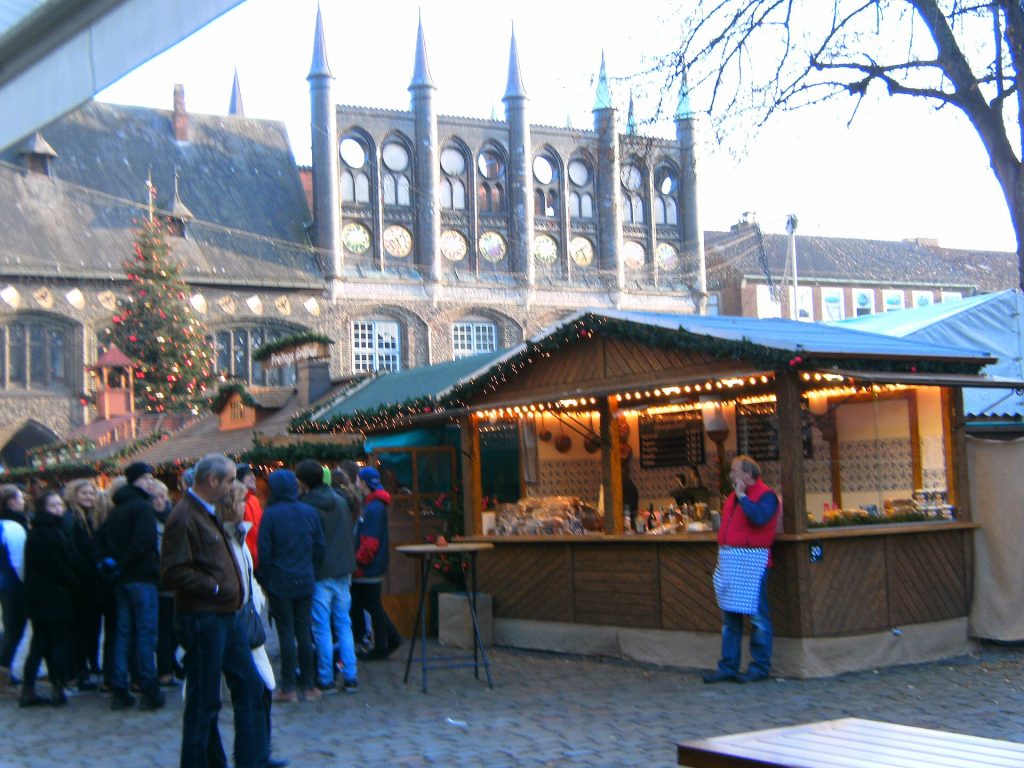
Lübeck calls itself the Christmas City of the North, and its Christmas markets go back to a first documented mention in 1648. The traditional market is around the town hall and on the Schrangen, with decorated fir trees, Christmas stars and fairy lights. Stalls sell tree decorations, toys and regional products, and you will find roasted almonds, Mutzen (small fried doughnuts), mulled wine and grilled sausages. Children can post wish lists in a Santa postbox. Lübeck is also famous for marzipan, so leave room for a café visit. The city’s marketing board had announced the 2026 market but we did not see official dates; check luebecker-weihnachtsmarkt.de. Lübeck is a good northern alternative to the big southern markets, with brick Gothic churches instead of half-timbering.
How to choose the right market
For the classic image, with Lebkuchen, striped stalls and a Gothic church, choose Nuremberg; it is the one to see if you only see one. For sheer scale and variety, Stuttgart and Frankfurt are the biggest in this list. Dresden is best for traditional wooden crafts and Stollen. Rothenburg and Esslingen suit travellers who want a small-town or medieval feel. Berlin is the practical choice if your dates fall after Christmas, since the Gendarmenmarkt stays open until 31 December. Families should look at Nuremberg’s Children’s Christmas on Hans-Sachs-Platz, Stuttgart’s miniature train and Esslingen’s medieval entertainment. If you are also considering Austria or France, compare with our guides to Vienna’s Christmas markets and Strasbourg, the “capital of Christmas”.
A suggested route: five days in Bavaria and Franconia
Day 1: arrive in Munich, explore Marienplatz and the Kripperlmarkt in the late afternoon, and stay for the balcony music. Day 2: morning in Munich, then a fast train north to Nuremberg for an evening at the Christkindlesmarkt. Day 3: Nuremberg by day, with the Children’s Christmas, the Sister Cities Market and the old town, then a second, quieter evening on the Hauptmarkt. Day 4: regional trains via Ansbach and Steinach to Rothenburg, staying overnight inside the walls. Day 5: early walk on the town walls, then back to Nuremberg or on to Würzburg for onward travel. In 2026, a Saturday start on 28 November catches Munich, Nuremberg and Rothenburg all open. In the south-west, Stuttgart, Esslingen and Heidelberg make an equally good three-day cluster; in the west, pair Cologne with Aachen.
Getting around by train
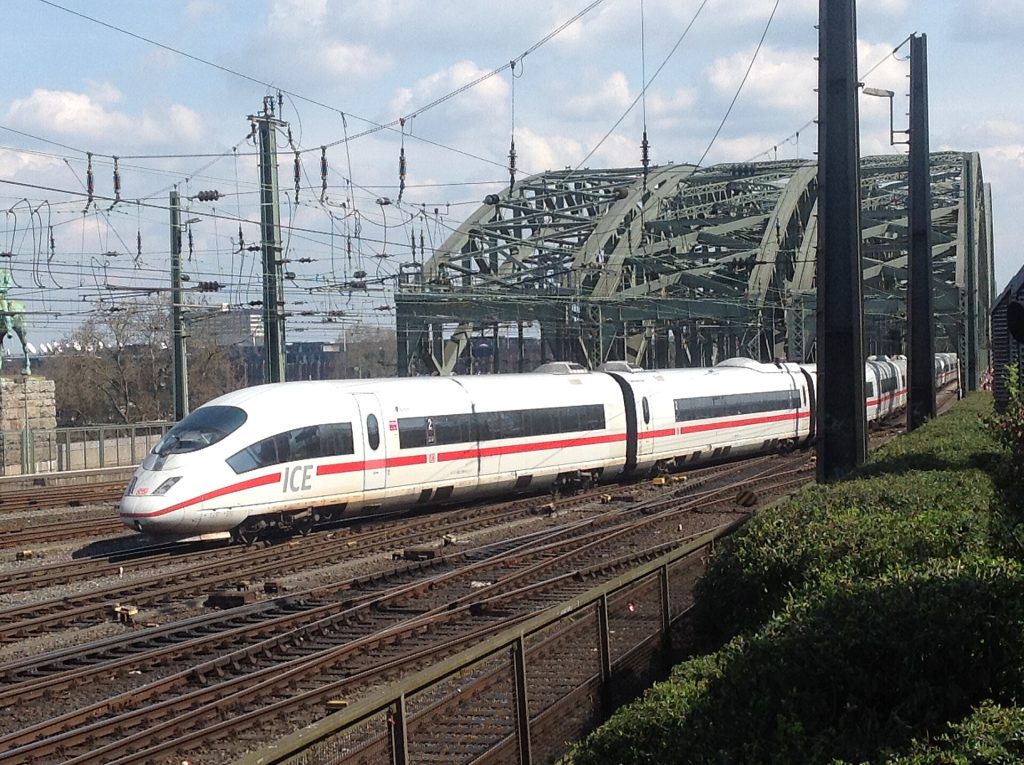
All twelve markets are in city or town centres with good rail links, and Deutsche Bahn’s long-distance ICE and IC trains link the big cities directly. Book early for Advent weekends and consider a seat reservation on Friday and Sunday afternoons. Smaller places need a regional connection: Rothenburg is reached on the RB 82 branch from Steinach, and Esslingen is on the busy regional network around Stuttgart. Once in the city, use local transport rather than a car: Nuremberg advises visitors not to arrive by car, Heidelberg recommends public transport, and Nuremberg’s U1 runs more trains on Advent weekends. Remember that several markets close or open late on Totensonntag, 22 November 2026, and that most close early on 24 December.
Plan your Christmas market trip
- Nuremberg: tickets and tours on Tiqets · activities on Klook
- Munich: tickets and tours on Tiqets · activities on Klook
- Cologne: tickets and tours on Tiqets · activities on Klook
- Dresden: tickets and tours on Tiqets · activities on Klook
- Berlin: tickets and tours on Tiqets · activities on Klook
- Arriving by plane: pre-book an airport transfer with Welcome Pickups
- Mobile data: get a travel eSIM from Airalo
Some of these are affiliate links: if you book through them we may earn a small commission, at no extra cost to you.
Frequently asked questions
When do German Christmas markets open in 2026?
Most open between mid and late November. Cologne’s cathedral market starts on 16 November, Munich and Aachen on 20 November, Berlin’s Gendarmenmarkt on 23 November, Dresden and Stuttgart on 25 November, and Nuremberg on 27 November. On Totensonntag, 22 November, Munich and Cologne’s cathedral market close and Aachen opens only in the evening.
Which is the best Christmas market in Germany?
There is no official ranking, but Nuremberg’s Christkindlesmarkt is the most famous and the best choice for a first visit. Dresden’s Striezelmarkt is one of the oldest, Stuttgart has the most elaborate stall decorations and Rothenburg the most picturesque small-town setting.
Are German Christmas markets open on Christmas Day?
Most are not. Nuremberg, Munich and Dresden close at 2 pm on 24 December, and Cologne, Stuttgart, Aachen and Rothenburg end on 23 December. Berlin’s WeihnachtsZauber Gendarmenmarkt is the exception in this guide: it stays open until 31 December 2026, with shorter hours on Christmas Eve.
Do you have to pay to enter a German Christmas market?
Almost all are free to enter. The WeihnachtsZauber Gendarmenmarkt in Berlin is the main exception in this list: it charges €2 in 2026, children under 12 go free, and entry is free for everyone on weekdays between 11 am and 2 pm, except on 24, 25, 26 and 31 December.
How many days do I need for a Christmas market trip to Germany?
One evening covers most single markets, but Nuremberg, Munich and Dresden reward a full day plus an evening. Three to five days lets you combine two or three cities in one region, such as Munich, Nuremberg and Rothenburg, by train without rushing.
Photos: Aarp65, CC BY-SA 3.0, via Wikimedia Commons; Ashwin Chandrasekaran, CC BY 2.0, via Wikimedia Commons; Z thomas, CC BY-SA 4.0, via Wikimedia Commons; Andreas Trojak, CC BY 2.0, via Wikimedia Commons; ArthurMcGill, CC BY-SA 4.0, via Wikimedia Commons; Andy Mendyk, CC BY-SA 3.0, via Wikimedia Commons; Roland.h.bueb, CC BY 3.0, via Wikimedia Commons; Andrew Bone from Weymouth, England, CC BY 2.0, via Wikimedia Commons.
Planning a bigger trip? See our guide to the 25 best places to visit in Europe, from city breaks to fjords.