Sarajevo packs more history into a short walk than almost any capital in Europe. In twenty minutes you pass an Ottoman bazaar, a mosque, a Catholic cathedral and an Orthodox church, then cross the bridge where the shot that started the First World War was fired. The city is also where Europe’s longest siege of a capital in modern times took place, from 1992 to 1996, and it is honest about that past without being defined by it.
This guide covers what to see in two or three days, how the cable car, trams and train work, what to eat, and how to fit Sarajevo into a wider trip with Mostar and the rest of the Balkans. Prices and timetables change often here, so the guide notes where you should check the operator before you travel.
- Best for: History, food, café culture and an affordable city break with mountains on the doorstep.
- When to go: May to June and September to October are warm without the August heat; the Sarajevo Film Festival fills the city in August.
- How long: Two full days for the city; add a third for the Tunnel Museum and Trebević, or a day trip to Mostar.
- Money: Convertible mark (KM, or BAM), fixed to the euro at 1.95583. Carry cash for small cafés, the Tunnel Museum and markets.
- Getting there: Sarajevo International Airport is about 12 km from the centre. Long-distance buses link the city with Belgrade, Zagreb, Dubrovnik and Podgorica, and a scenic train runs to Mostar.
1. Baščaršija: the old bazaar
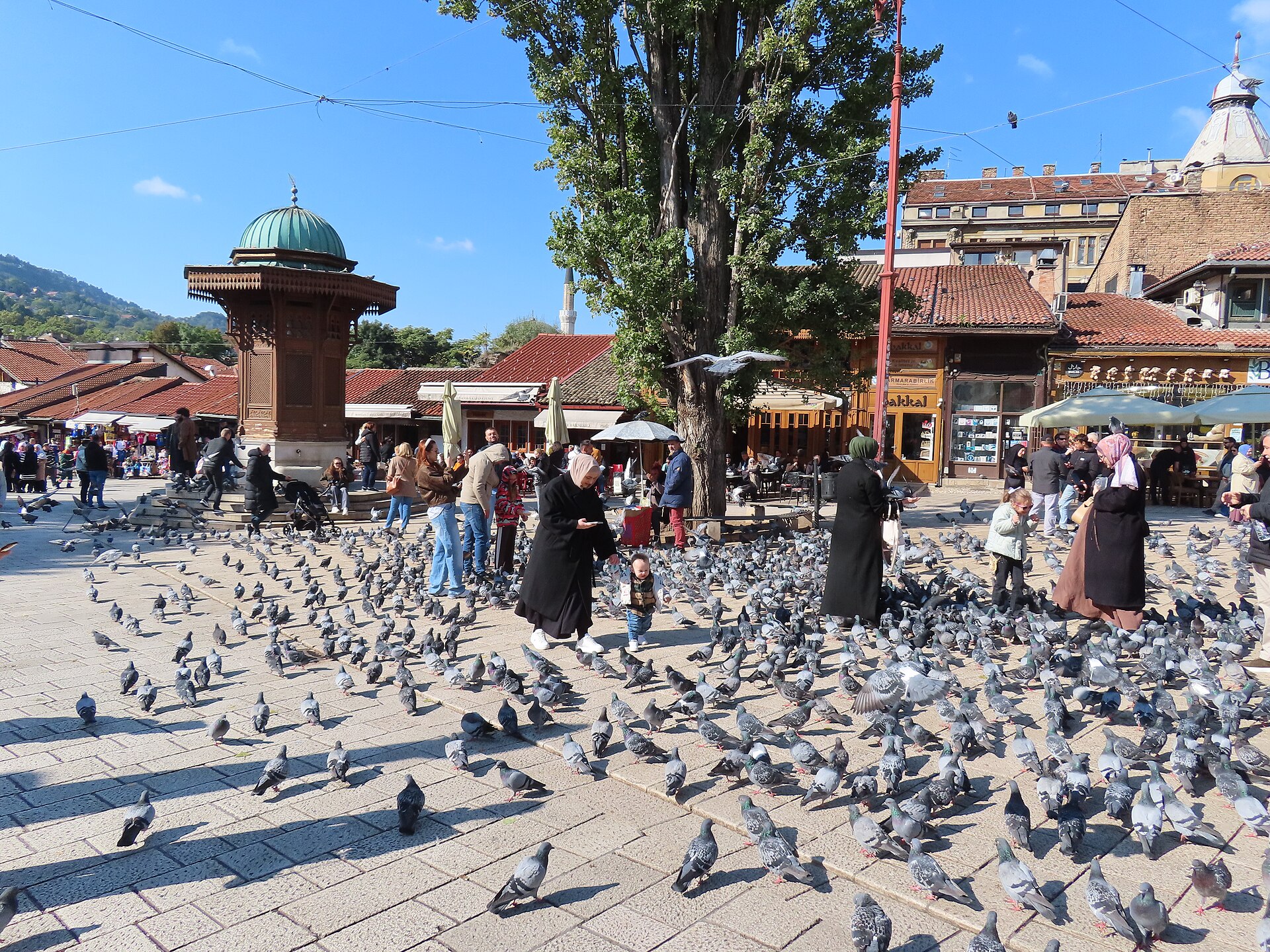
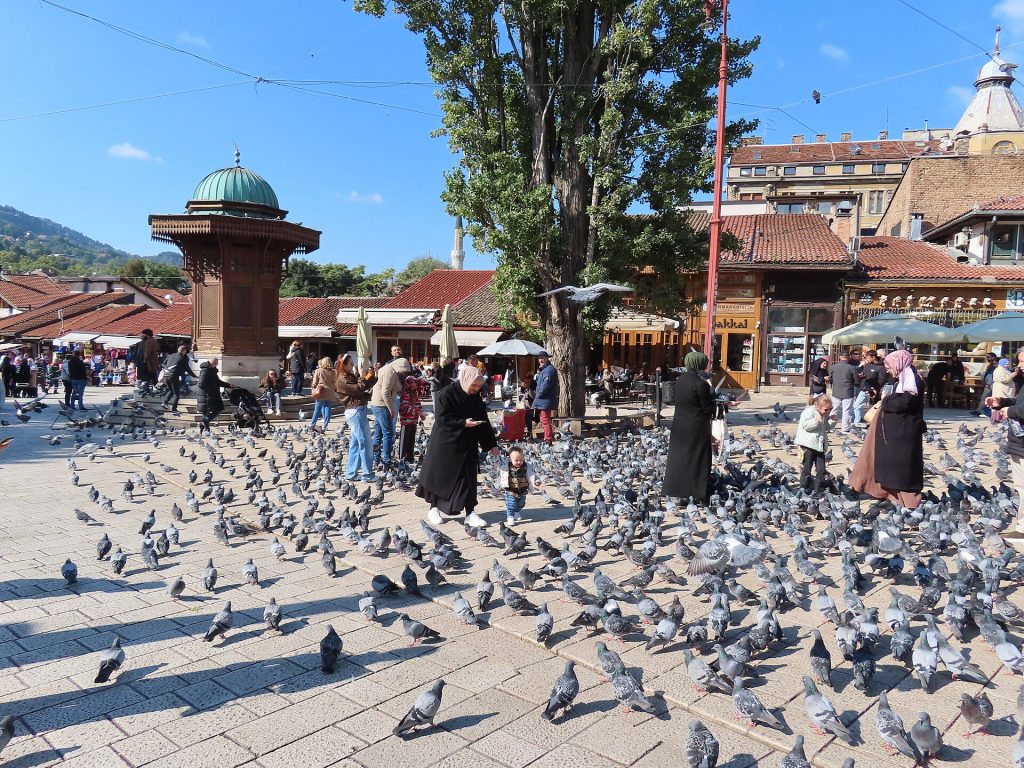
Baščaršija is Sarajevo’s Ottoman-era market quarter and the natural place to start. The wooden Sebilj fountain stands on the main square, and around it run lanes of low shops, each street once given to a single trade. Kazandžiluk is still the coppersmiths’ street, where you can hear craftsmen hammering coffee sets and trays. Morića Han, a restored caravanserai on Sarači street, shows how traders and their horses once stayed overnight. Come early in the morning to see the shops opening without the crowds, then return in the evening, when the ćevabdžinicas (grill houses) are full. Look for the line on the pavement of Ferhadija street marked “Sarajevo – Meeting of Cultures”: stand on it and you can face the Ottoman bazaar one way and the Austro-Hungarian city the other.
2. Gazi Husrev-beg Mosque and the old faiths of Sarajevo
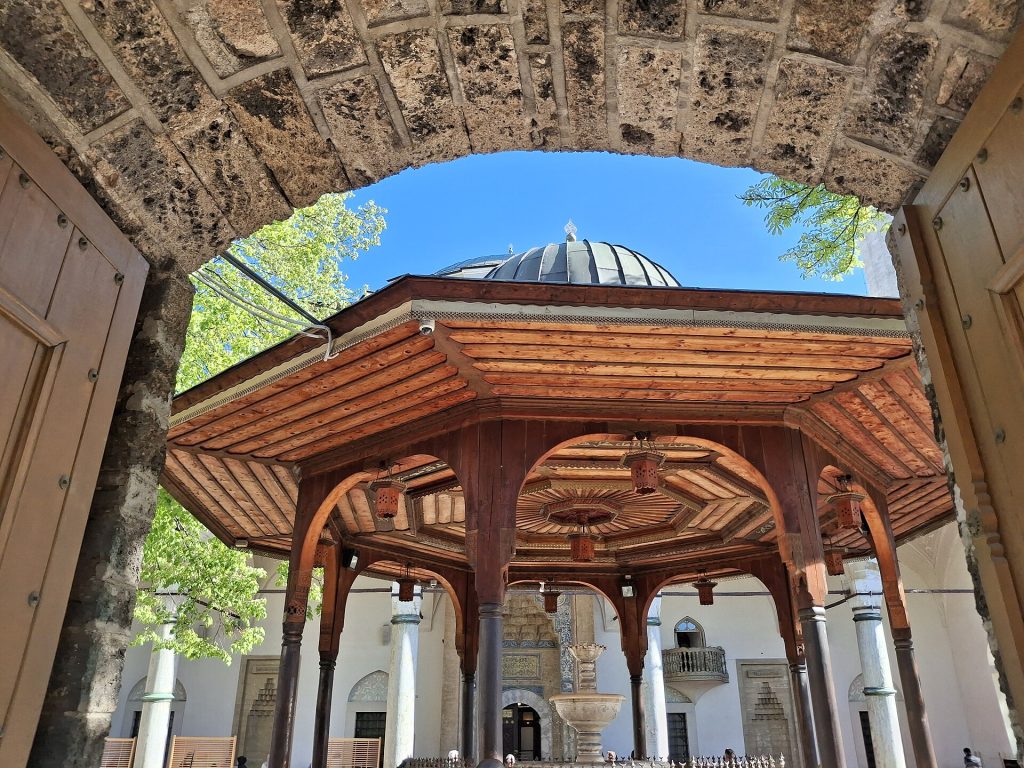
The Gazi Husrev-beg Mosque on Sarači street is the most important Ottoman building in Bosnia and Herzegovina, built in the 16th century with a courtyard fountain where visitors and worshippers mix. Non-Muslim visitors are welcome outside prayer times; there is a small entrance fee, and women should cover their shoulders and hair. Within a few minutes’ walk you can also visit the Catholic Cathedral of the Sacred Heart, the Old Orthodox Church on Mula Mustafe Bašeskije street and the Ashkenazi Synagogue. The Sarajevo Haggadah, a 14th-century illuminated Jewish manuscript, is kept at the National Museum and is one of the most valuable items in its collection. Visiting several of these in one morning is the clearest way to understand why Sarajevo has been called a small Jerusalem.
3. Latin Bridge and the Museum Sarajevo 1878–1918
On 28 June 1914 Gavrilo Princip shot Archduke Franz Ferdinand and his wife Sophie on the corner by the Latin Bridge, an event that led to the First World War. The small Museum Sarajevo 1878–1918, on the corner itself, covers the Austro-Hungarian period and the assassination in a couple of rooms, and takes 20 to 30 minutes. The bridge is one of the oldest crossings of the Miljacka river and is at its most photogenic in late afternoon light. From here, a ten-minute walk east along the river brings you to the City Hall.
4. City Hall (Vijećnica)
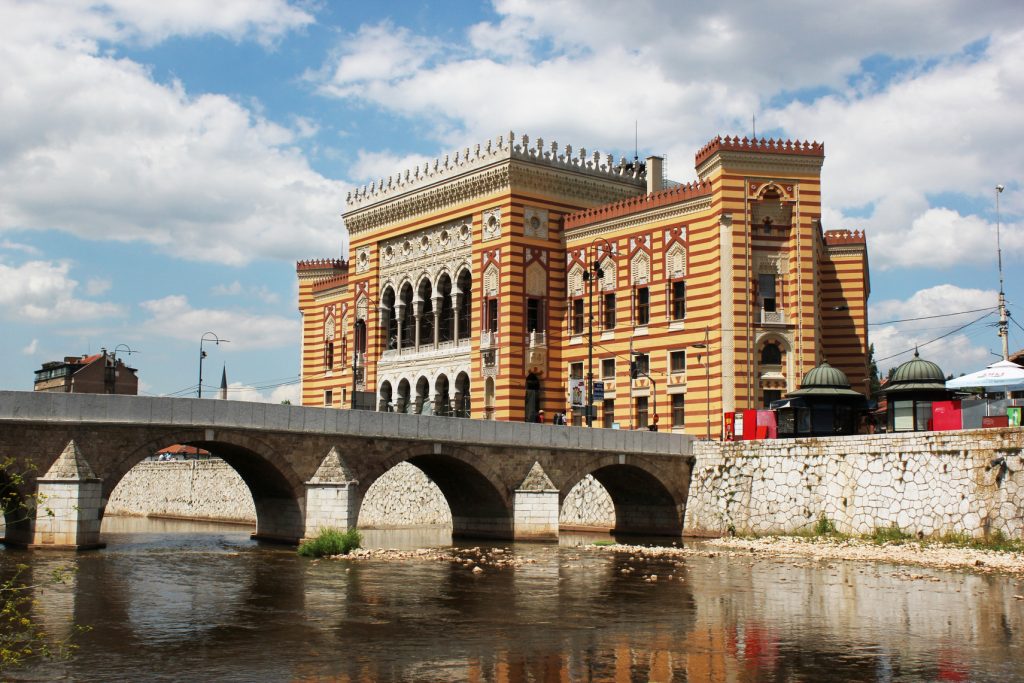
The striped neo-Moorish City Hall was built under Austro-Hungarian rule and later became the National and University Library. It was shelled and burned in August 1992, with most of its collection lost. After a long restoration it reopened in May 2014, and its painted central hall and stained-glass roof are now open to visitors, with an exhibition about the building and the war. It also hosts concerts and events, so check the programme. The view of the building from the opposite bank of the Miljacka, with the hills behind, is one of the classic images of the city.
5. The siege: Tunnel Museum, roses and memorials
From April 1992 to February 1996 Sarajevo was surrounded and shelled. The War Tunnel, dug under the airport runway in 1993, was the city’s main link to the outside world, used to bring in food, weapons and fuel. The Tunnel Museum in Butmir preserves a short section and the house where the entrance was hidden. It is outside the centre: take tram 3 to Ilidža and continue by taxi, or join a tour. Admission is paid in cash in KM, and opening hours are shorter in winter. In the centre, look for the “Sarajevo roses”, shell scars in the pavement filled with red resin, and visit the Memorial to the Children of Besieged Sarajevo in Veliki Park. The Gallery 11/07/95 near the cathedral documents the Srebrenica genocide. These are hard visits, so plan something lighter afterwards.
6. Trebević cable car and the Olympic bobsleigh track
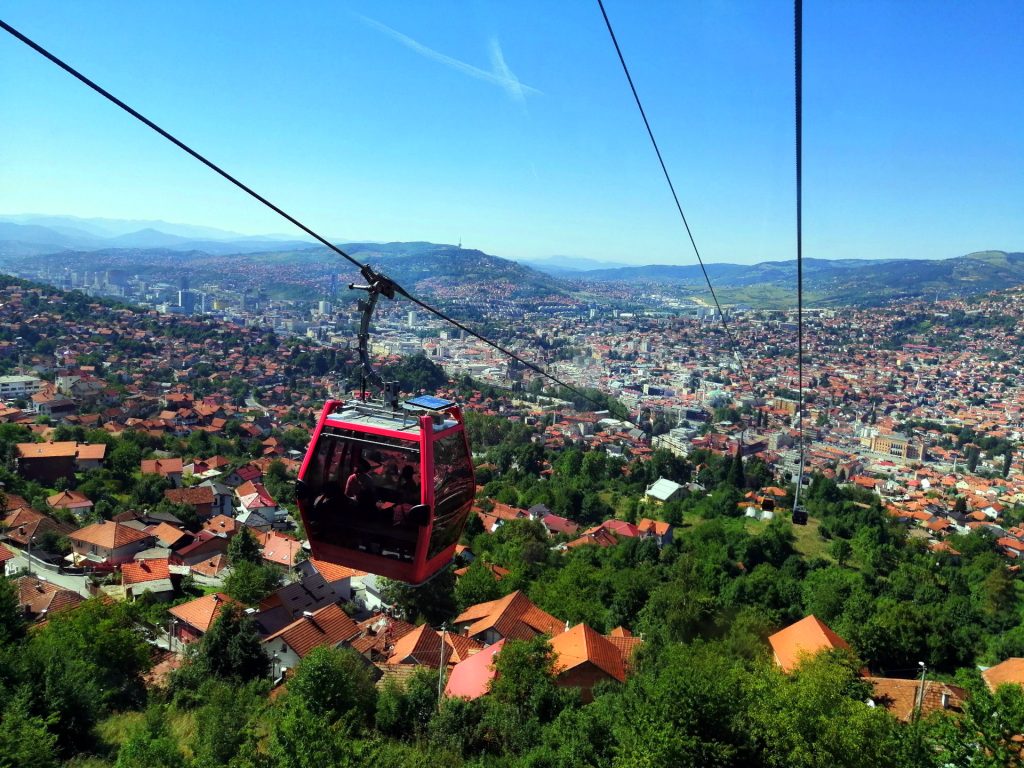
Sarajevo hosted the 1984 Winter Olympics, and Mount Trebević rises directly above the old town. The cable car, destroyed in the war, reopened in April 2018 and climbs from Bistrik to the mountain in a few minutes. The operator lists hours of 09:00 to 17:00, and 12:00 to 17:00 on Mondays; check zicara.ba for current hours and fares, as maintenance closures happen in spring and autumn. From the top station, a walk of about 15 minutes leads to the abandoned Olympic bobsleigh track, now covered in graffiti and popular with walkers. Bring a layer: the mountain is noticeably cooler than the city.
7. Viewpoints: Yellow Fortress and White Fortress
For sunset, walk up the steep lanes of Vratnik to the Yellow Fortress (Žuta tabija), a short climb from Baščaršija. It overlooks the whole valley, with minarets and red roofs below, and during Ramadan a cannon is fired here at sunset to mark the end of the fast. The White Fortress (Bijela tabija), a little higher, is quieter and has older Ottoman walls. Wear proper shoes; the cobbles are steep and slippery after rain. Many visitors combine both with a coffee on the way down in one of the small cafés in Vratnik.
What to eat and drink
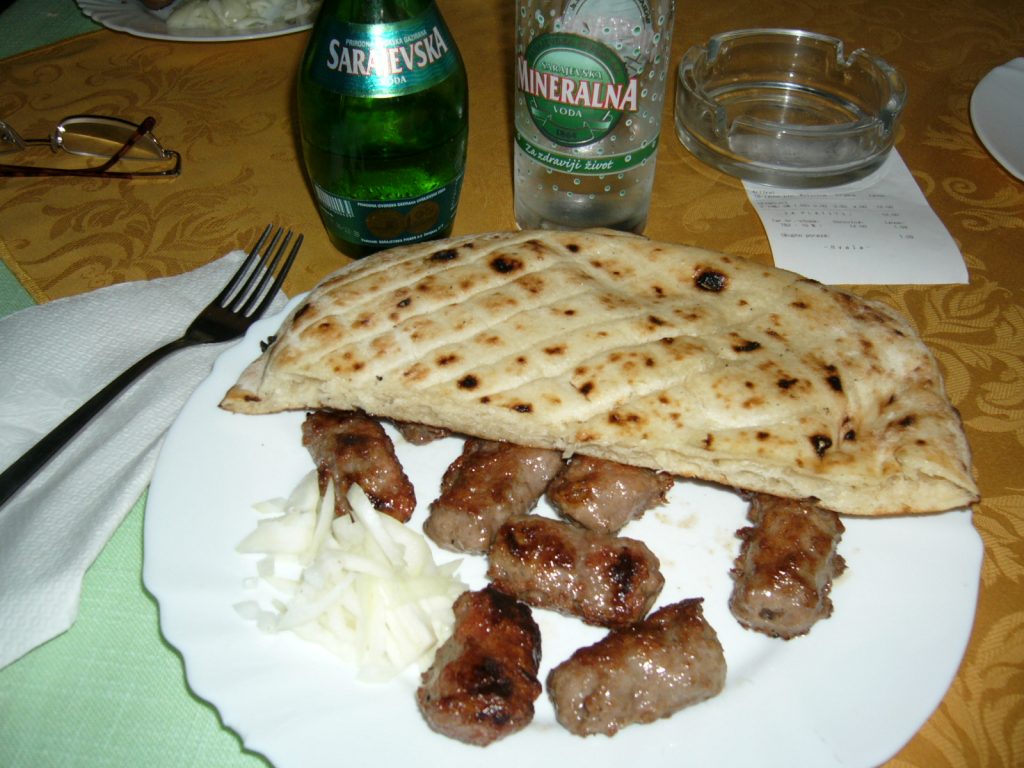
Ćevapi are the dish Sarajevo is known for: small grilled minced-meat rolls served in a soft flatbread (somun) with raw onion, ordered by the portion of five or ten. Try burek, a spiral of filo pastry filled with minced meat (cheese, spinach or potato versions are called sirnica, zeljanica and krompiruša). Klepe are small meat dumplings with yoghurt and garlic. For something sweet, look for tufahija, a poached apple stuffed with walnuts. Bosnian coffee is brewed in a copper džezva and served with a sugar cube and a piece of rahat lokum. Alcohol is widely available; Sarajevsko is the local beer, brewed in the city since 1864.
Getting around and day trips
The old town is walkable, and the tram runs along the river from Baščaršija west to Ilidža. Taxis are inexpensive; use a metered taxi or an app rather than drivers waiting outside the bus station. The train to Mostar is one of the most scenic rides in the region, following the Neretva valley through gorges and past Jablanica lake. The journey takes about two hours, tickets are bought at the station in KM, and seat reservations are not needed. A day trip to Mostar is possible, but staying one night lets you see the Old Bridge in the evening. From Mostar, Blagaj and its dervish house at the source of the Buna river are a short taxi ride away; see our Blagaj visitor guide.
A two-day route
Day 1: start at the Sebilj and Baščaršija, visit the Gazi Husrev-beg Mosque and Morića Han, walk Ferhadija to the cathedral, then the Latin Bridge and its museum. After lunch, see the City Hall, and climb to the Yellow Fortress for sunset. Day 2: take the cable car up Trebević in the morning and walk to the bobsleigh track, then spend the afternoon at the Tunnel Museum in Butmir, returning via Ilidža. Finish with dinner in Baščaršija. With a third day, take the train to Mostar.
Practical tips
Sarajevo is generally safe, but keep to marked paths in the hills: some areas outside the city still carry landmine risk, and warning signs should be taken seriously. Many small cafés and bakeries take only cash, and ATMs are easy to find. Dress modestly when visiting mosques. Smoking is still common in cafés, so ask for a non-smoking area if it matters to you. Bosnia and Herzegovina is not in the EU or Schengen; check entry rules for your nationality before travelling, especially if you are combining it with Croatia or Montenegro. For other ideas in the region, see our top travel destinations in the Balkans and Balkan road trip tips.
Plan your trip to Sarajevo
- Tickets and tours in Sarajevo: tickets and tours on Tiqets · activities on Klook
- Tickets and tours in Mostar: tickets and tours on Tiqets · activities on Klook
- Arriving by plane: pre-book an airport transfer with Welcome Pickups
- Mobile data: get a travel eSIM from Airalo
Some of these are affiliate links: if you book through them we may earn a small commission, at no extra cost to you.
Frequently asked questions
How many days do you need in Sarajevo?
Two full days cover the old town, the main museums, a fortress viewpoint and the Trebević cable car. Add a third day for the Tunnel Museum at a relaxed pace or a day trip to Mostar by train. Many travellers stay two nights in Sarajevo and one in Mostar as part of a longer Balkans route.
Is Sarajevo safe for tourists?
Sarajevo is generally considered safe for visitors, with normal city precautions against pickpockets in busy areas. The main specific risk is landmines in some rural areas outside the city: stay on marked paths and roads when hiking, and never enter areas marked with warning signs or tape.
What currency is used in Sarajevo?
Bosnia and Herzegovina uses the convertible mark (KM or BAM), fixed to the euro at 1.95583. Euros are sometimes accepted in tourist areas but at a poor rate, so withdraw marks from an ATM. Cash is needed for many small cafés, bakeries and some sights, including the Tunnel Museum.
How do you get from Sarajevo to Mostar?
The train takes about two hours and follows the Neretva valley, one of the most scenic routes in the region. Buy tickets at the station in convertible marks; no reservation is needed. Buses also run several times a day and take about two and a half hours.
Can you visit mosques in Sarajevo?
Yes. The Gazi Husrev-beg Mosque welcomes visitors outside prayer times for a small fee. Women should cover shoulders and hair, everyone should cover their knees, and shoes are removed before entering the prayer hall. Scarves are often available at the entrance.
Photos: Filip Maljković from Belgrade, Serbia, CC BY-SA 4.0, via Wikimedia Commons; Aleksandra Đuričić, CC BY-SA 4.0, via Wikimedia Commons; Julian Nyča, CC BY-SA 3.0, via Wikimedia Commons; MarinaSimic, CC BY-SA 4.0, via Wikimedia Commons; BiHVolim, CC BY-SA 4.0, via Wikimedia Commons.
Planning a bigger trip? See our guide to the 25 best places to visit in Europe, from city breaks to fjords.