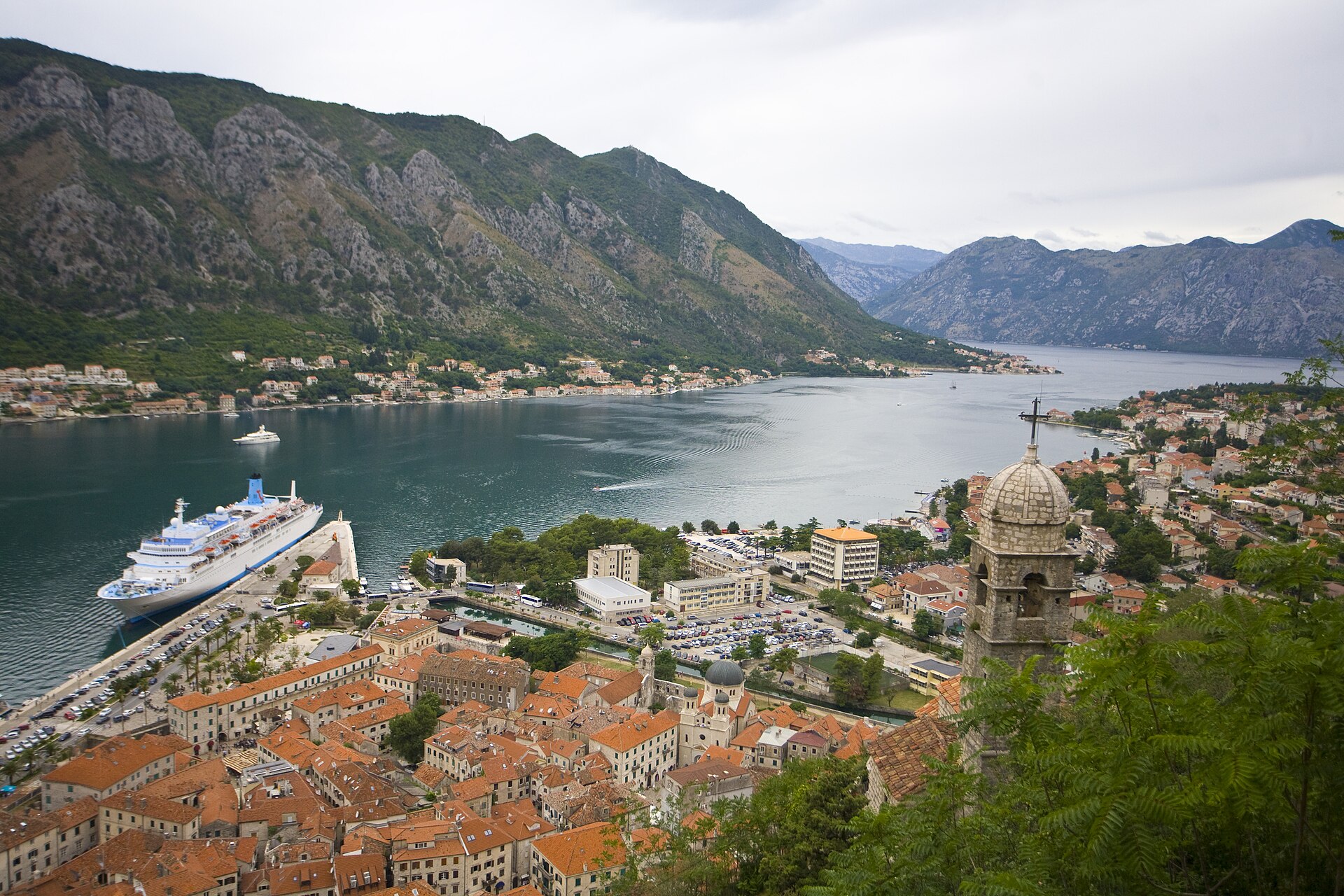
The Balkans are one of the best regions in Europe to travel without a car. Distances are short, buses link almost every town, and in two weeks you can cross six countries, from Belgrade’s fortress to Sarajevo’s bazaar, Mostar’s bridge, the Bay of Kotor, Lake Ohrid and Sofia. Each border brings a new currency, a new alphabet or a new cuisine, and costs stay well below Western Europe.
This route is planned around real public transport: which legs are by bus, where the train is worth taking, roughly how long each journey lasts, and how many nights to spend in each place. Timetables change by season and some routes run only a few times a day, so check departures a day or two ahead, especially outside summer.
- Route: Belgrade – Sarajevo – Mostar – Kotor – Tirana or Shkodër – Ohrid – Skopje – Sofia.
- How long: 14 days and 13 nights; add days in Kotor or Ohrid if you can.
- Best time: May to June and September to early October: warm, open and less crowded. July and August are hot inland and busy on the coast.
- Countries: Serbia, Bosnia and Herzegovina, Montenegro, Albania, North Macedonia and Bulgaria (with an optional stop in Croatia).
- Money: Five currencies across the six countries on the main route: Serbian dinar, convertible mark, euro (Montenegro and Bulgaria), Albanian lek and Macedonian denar.
The route at a glance
| Leg | How | Approx. time | Nights |
|---|---|---|---|
| Belgrade | Arrive by air or train | – | 2 |
| Belgrade → Sarajevo | Bus | 8.5–9 h | 2 |
| Sarajevo → Mostar | Train | about 2 h | 1 |
| Mostar → Kotor | Bus (direct, or via Dubrovnik) | 5–6 h | 2 |
| Kotor → Tirana | Bus | about 6 h | 1 |
| Tirana → Ohrid | Bus | about 2.5–3 h | 2 |
| Ohrid → Skopje | Bus | about 3 h | 1 |
| Skopje → Sofia | Bus | about 5 h | 2 |
Journey times are typical and can be longer at busy border crossings in summer. Buy bus tickets at the station the day before for long legs, or online through the operator or a regional booking site.
1. Belgrade (2 nights)
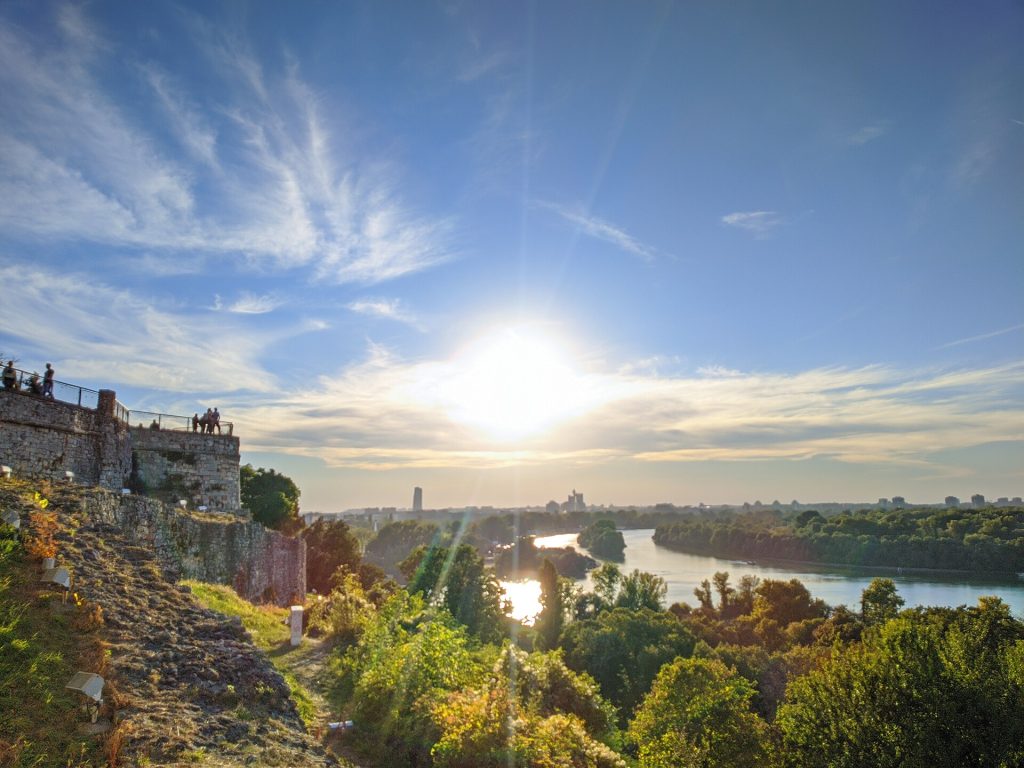
Start in Serbia’s capital, where the Sava meets the Danube. Walk through Kalemegdan Park to the fortress for the view over the rivers, then down Knez Mihailova, the main pedestrian street, to Republic Square. In the evening, head to Skadarlija, the old bohemian street of taverns and live music. On the second day, see the Church of Saint Sava, one of the largest Orthodox churches in the world, and the Museum of Yugoslavia, which includes the House of Flowers where Tito is buried. If you have time, the high-speed train to Novi Sad takes well under an hour and makes an easy half-day trip. For more of the country, see our best attractions in Serbia.
2. Sarajevo (2 nights)
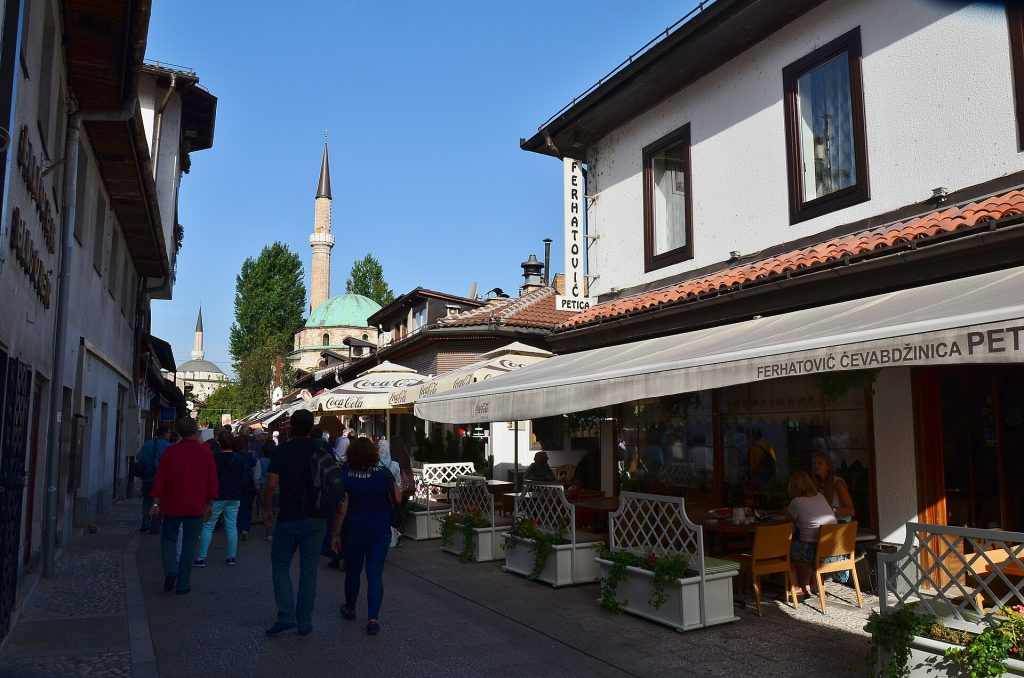
The bus from Belgrade to Sarajevo is the longest leg, at around eight and a half to nine hours through the hills of western Serbia and eastern Bosnia. Take a morning departure so you see the scenery. Sarajevo rewards two full days: the Ottoman bazaar of Baščaršija, the Gazi Husrev-beg Mosque, the Latin Bridge where Archduke Franz Ferdinand was assassinated in 1914, the restored City Hall and the cable car up Mount Trebević. The Tunnel Museum near the airport tells the story of the 1992–1996 siege. Try ćevapi in Baščaršija and coffee brewed in a copper pot.
3. Mostar (1 night)
Take the train from Sarajevo to Mostar, about two hours along the Neretva valley and one of the most scenic rail journeys in the region. Tickets are bought at the station in convertible marks, and there are no seat reservations. In Mostar, the Old Bridge, rebuilt after its destruction in 1993 and a UNESCO World Heritage Site, is the highlight; watch the divers in summer and walk across at night when the day-trippers have left. A short taxi ride takes you to Blagaj, where a dervish house sits at the source of the Buna river: see our Blagaj visitor guide.
4. Kotor (2 nights)
From Mostar, buses run to Kotor in Montenegro, either directly via Trebinje or by changing in Dubrovnik (about three hours from Mostar, then about two hours on to Kotor). The Dubrovnik option lets you add a night in Croatia’s walled city; see our Dubrovnik travel guide. Kotor’s old town sits at the end of a fjord-like bay under steep mountains. Climb the walls to the San Giovanni fortress early in the morning, before the heat and the cruise passengers, and take a boat or bus around the bay to Perast and the island church of Our Lady of the Rocks. For more of the bay, see our guide to the forts of the Bay of Kotor.
5. Tirana or Shkodër (1 night)
Getting from Montenegro to Lake Ohrid means crossing Albania. The bus from Kotor to Tirana takes about six hours; Shkodër, just over the border, is closer at about four hours and makes a calmer stop by its lake and Rozafa Castle. Tirana is lively and colourful, with Skanderbeg Square, the Bunk’Art museums in former Cold War bunkers, and the Blloku district for evening. From Shkodër, continue to Tirana by bus (about two hours) the next morning. For more of the country, see our Albania travel guide.
6. Ohrid (2 nights)
Buses from Tirana reach Ohrid in about two and a half to three hours, crossing into North Macedonia near Struga. Ohrid’s old town rises above one of the oldest lakes in the world, a UNESCO site for both nature and culture. See the Church of St John at Kaneo on its rock above the water, Samuel’s Fortress, Plaošnik and the Church of St Sophia, and in summer take a boat to the Monastery of St Naum near the southern tip of the lake. Ohrid is the place to slow down: a swim and a long dinner of lake fish are part of the plan.
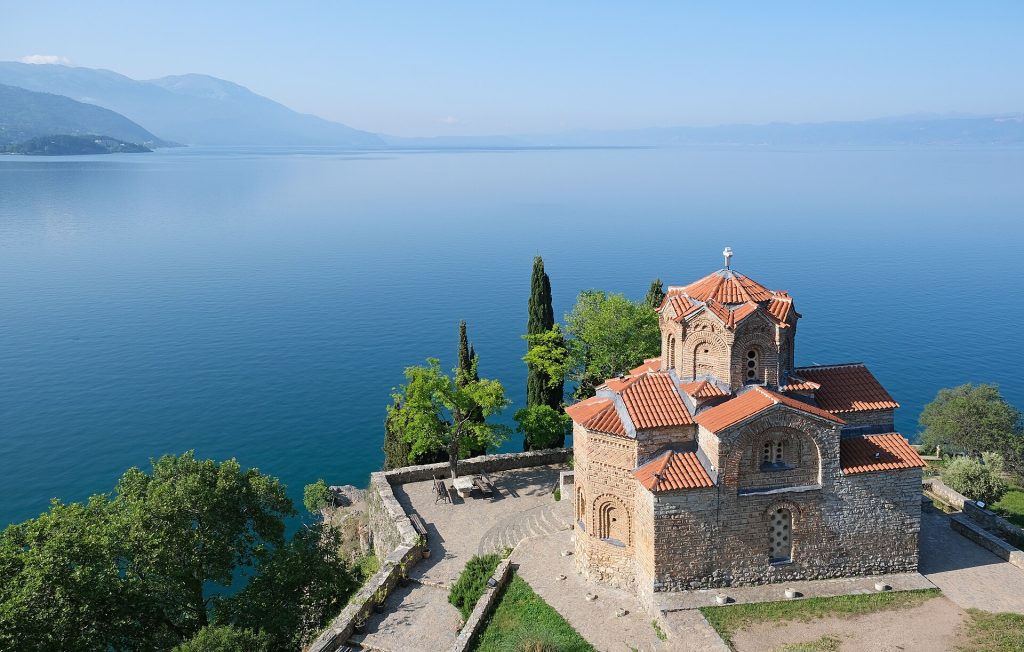
7. Skopje (1 night)
The bus to Skopje takes about three hours. North Macedonia’s capital is a city of contrasts: the Old Bazaar, one of the largest in the Balkans, with mosques, hammams and caravanserais, faces a centre filled with new statues and neoclassical façades built in the 2010s. Cross the Stone Bridge between the two, climb to Kale Fortress, and if you have a spare afternoon, take a taxi to Matka Canyon for a boat trip. See our Skopje Old Bazaar guide.
8. Sofia (2 nights)
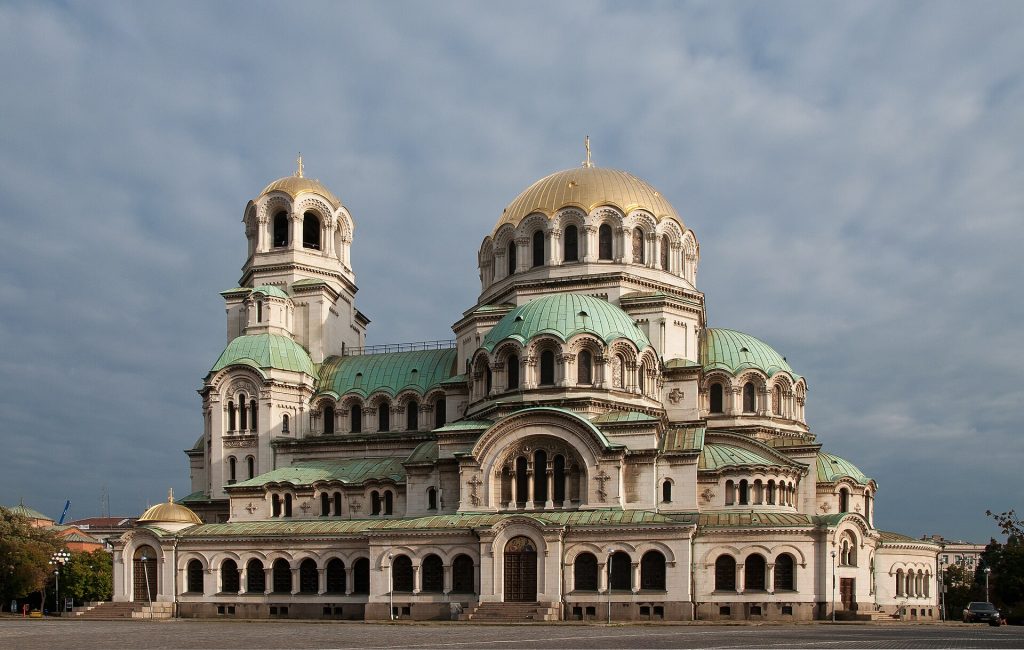
The last leg, Skopje to Sofia, takes about five hours by bus. Bulgaria’s capital has the gold-domed Alexander Nevsky Cathedral, Roman ruins exposed in the metro station at Serdika, and a relaxed café scene along Vitosha Boulevard. On the second day, take a day trip to Rila Monastery, Bulgaria’s most famous monastery and a UNESCO World Heritage Site, about two hours away by road. The monastery itself says there is currently no direct public bus, so most visitors go on an organised day tour or by car; the alternative is a bus to Blagoevgrad and a taxi from there. Bulgaria adopted the euro on 1 January 2026, so you finish the trip back in euros. Sofia airport has wide connections across Europe.
Borders, money and practical tips
Bus crossings are usually straightforward: the driver or a border officer collects passports, and you may need to get off for a check. Allow extra time at busy crossings in July and August. Croatia and Bulgaria are in the Schengen area and the EU; Serbia, Bosnia and Herzegovina, Montenegro, Albania and North Macedonia are not, so check entry rules for your nationality and how many days you can stay. If your route includes Croatia or Bulgaria, the EU’s Entry/Exit System, rolled out from October 2025, may mean extra registration at the border. Keep a little cash in each currency for bus station fees and luggage charges, which are often paid separately to the driver. Most bus stations accept only cash for tickets bought on the day. Download offline maps, as bus stations are not always central.
Where to stay on the route
In each stop, staying in or next to the old town saves time and taxi fares on short visits. In Belgrade, the area between Knez Mihailova and Skadarlija keeps you walking distance from the fortress. In Sarajevo, Baščaršija and the streets around Ferhadija are central, though the hills of Vratnik and Bistrik offer views and quieter nights in exchange for a climb. In Mostar, guesthouses near the Old Bridge are best for seeing it empty in the evening. Inside Kotor’s walls is car-free and atmospheric but noisy in summer, while Dobrota, a short walk along the bay, is calmer. In Ohrid, the old town hill has the views; in Skopje, the Old Bazaar side is cheaper and more characterful; and in Sofia, the centre around Vitosha Boulevard puts you near the cathedral and the metro. Book ahead for July and August, especially in Kotor, Mostar and Ohrid.
How to change the route
With more time, add a night in Dubrovnik, two in Budva or Perast, or the Albanian Riviera south of Tirana; see Albania in summer. With less time, skip Tirana by travelling Kotor to Ohrid in one long day, or fly between Belgrade and Sofia at the ends. Travelling in the other direction works just as well. If you would rather drive, read our Balkan road trip tips first: cross-border insurance and one-way rental fees matter more than the distances.
Plan your Balkans trip
- Tickets and tours in Belgrade: tickets and tours on Tiqets · activities on Klook
- Tickets and tours in Sarajevo: tickets and tours on Tiqets · activities on Klook
- Tickets and tours in Ohrid: tickets and tours on Tiqets · activities on Klook
- Tickets and tours in Sofia: tickets and tours on Tiqets · activities on Klook
- Arriving by plane: pre-book an airport transfer with Welcome Pickups
- Mobile data: get a travel eSIM from Airalo
Some of these are affiliate links: if you book through them we may earn a small commission, at no extra cost to you.
Frequently asked questions
Is two weeks enough for the Balkans?
Two weeks is enough for a strong first trip covering six countries, as in this route, with one to two nights in most places. It is a fast pace with several long bus days. If you prefer to slow down, cut one country, such as Albania or Bulgaria, and add nights in Kotor and Ohrid.
Can you travel the Balkans by train?
Only partly. The Sarajevo–Mostar line is the most useful and scenic for travellers, and Serbia has a fast train from Belgrade to Novi Sad and a long line to Bar on the Montenegrin coast. Most other routes in this itinerary are covered by bus, which is faster and more frequent.
Do you need cash in the Balkans?
Yes. Cards are widely accepted in cities, hotels and restaurants, but bus stations, small cafés, markets and some museums often take only cash. Montenegro and Bulgaria use the euro; Serbia, Bosnia and Herzegovina, Albania and North Macedonia have their own currencies, so withdraw a small amount in each country.
Is it safe to travel the Balkans by bus?
Generally yes. Long-distance buses are the main way locals travel between cities, and the main routes are well used. Keep valuables with you rather than in the luggage hold, buy tickets at official counters, and allow extra time for border checks in summer.
What is the best direction for this route?
Either works. Starting in Belgrade and finishing in Sofia, as here, ends the trip in an airport with good European connections. Reversing it suits travellers flying into Sofia. Check flight prices for both cities before deciding.
Photos: Imeao, CC0, via Wikimedia Commons; CeeGee, CC BY-SA 4.0, via Wikimedia Commons; miketnorton, CC BY 2.0, via Wikimedia Commons; kallerna, CC BY-SA 4.0, via Wikimedia Commons; Plamen Agov (user:MrPanyGoff), CC BY-SA 4.0, via Wikimedia Commons.
Planning a bigger trip? See our guide to the 25 best places to visit in Europe, from city breaks to fjords.