Updated
The most magnificent gardens in Europe were made to impress. Kings and cardinals used fountains, parterres and long avenues to show off their power, while English landowners reshaped whole valleys to look like paintings. Many of these gardens survive almost as they were designed, and walking them is one of the best ways to understand the palaces they belong to.
This list focuses on palace and historic gardens, formal and landscape, rather than botanical collections. It runs from the baroque grandeur of Versailles to the Moorish courtyards of the Generalife and the spring bulb fields of Keukenhof, with notes on when each looks its best and how to visit.
- Best for: garden lovers, history fans and anyone who prefers a long walk to a museum queue.
- When to go: April to June for most gardens; Keukenhof opens only in spring, from mid-March to mid-May.
- Fountains: at Versailles, Villa d’Este and Herrenhausen the water features are a highlight, so check fountain days and times.
- Tickets: book ahead for the Alhambra and Generalife, Keukenhof and Versailles in high season.
- Allow: half a day per garden, a full day for Versailles.
1. Gardens of Versailles, France
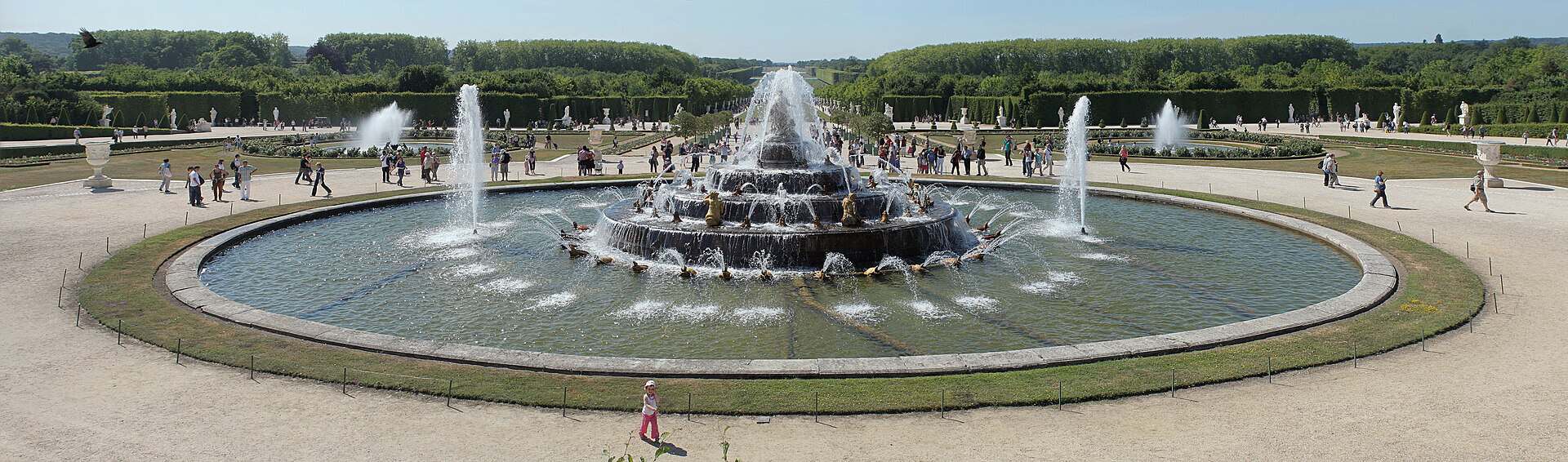
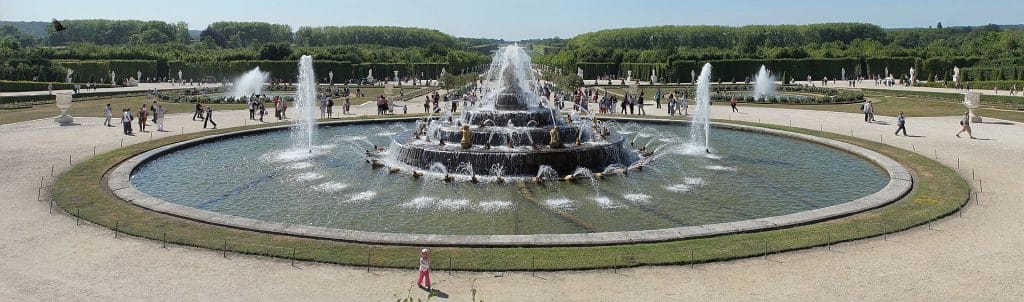
Versailles set the model for the formal garden across Europe. André Le Nôtre laid out the gardens for Louis XIV around a strict central axis, with terraces, parterres, sculpted fountains and the Grand Canal, about 1,500 metres long. The wider estate covers around 800 hectares, and château and gardens have been on the UNESCO list since 1979.
Start at the Latona Fountain below the palace, then follow the axis down to the canal, where rowing boats can be hired in season. Further out are the Grand and Petit Trianon and the Queen’s Hamlet, the rustic village built for Marie Antoinette in the 1780s. On fountain show days, held mainly at weekends from spring to autumn, the fountains play to music and a ticket is needed for the gardens. RER C trains from central Paris stop a short walk from the palace.
2. Château de Villandry, France
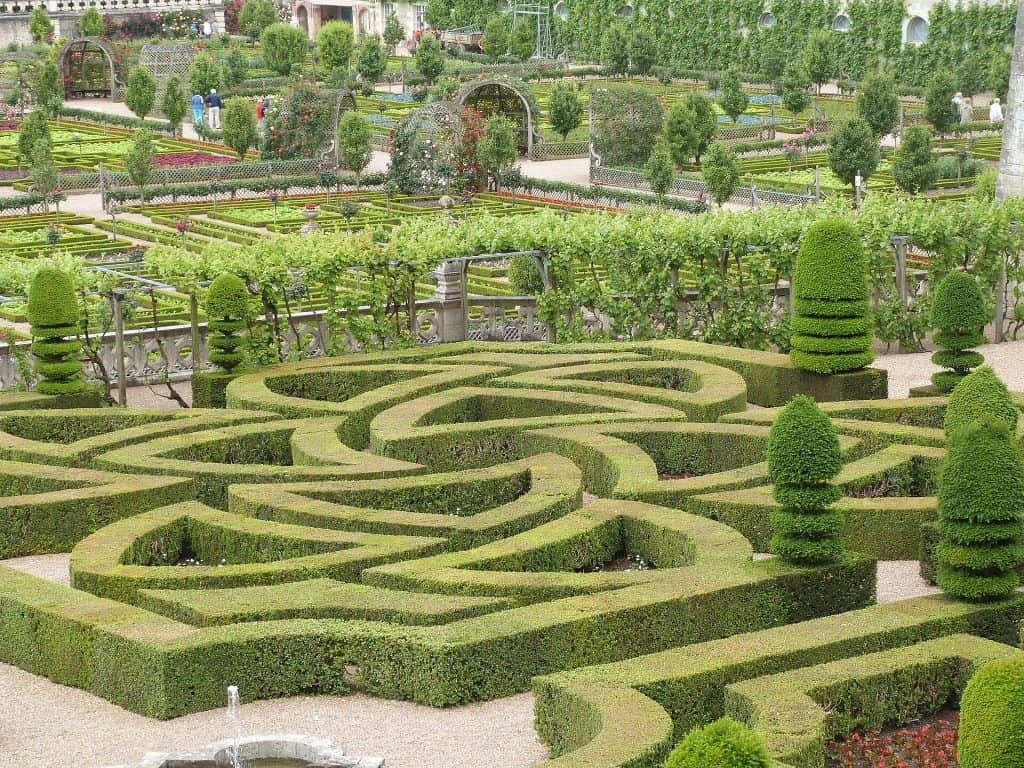
Villandry’s gardens are the most famous in the Loire Valley, and much of their charm is that they are relatively recent. The château was completed in 1536, but its gardens were lost over the centuries. Joachim Carvallo, who bought the estate in 1906, recreated them in a Renaissance spirit, and the château is part of the Loire Valley World Heritage Site, inscribed in 2000.
The best-known section is the ornamental kitchen garden, where vegetables and flowers are planted in nine geometric squares edged with low box hedges, and changed with the seasons. Above it lie the ornamental gardens and a water garden with a large formal pond. Villandry is about 15 km west of Tours, and it is easy to cycle there along the Loire.
3. Keukenhof, Netherlands
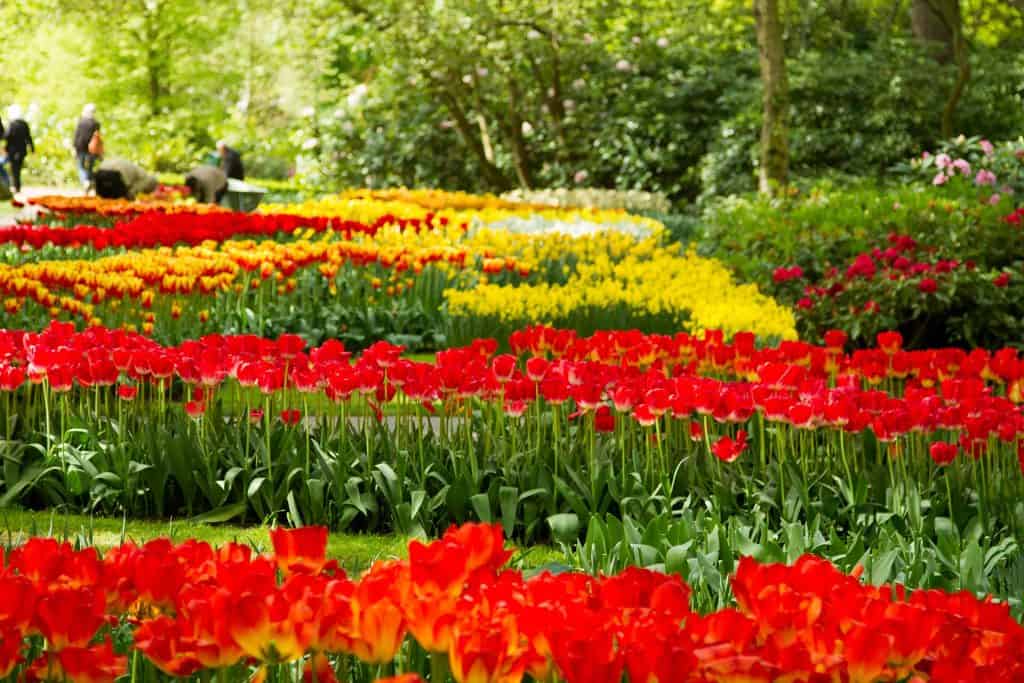
For about eight weeks each spring, Keukenhof in Lisse becomes one of the most photographed gardens in the world. Around seven million bulbs are planted every autumn across 32 hectares, flowering from mid-March to mid-May, with the peak usually in mid-April. The park opened to the public in 1950, but its layout goes back to 1857, when Jan David Zocher and his son redesigned the grounds of Keukenhof Castle as an English landscape park.
Combine the visit with a cycle ride through the surrounding bulb fields, where bikes can be hired near the entrance. Direct buses run from Schiphol Airport and from Leiden and Haarlem stations, and it is best to buy tickets online in advance.
4. Stourhead, England
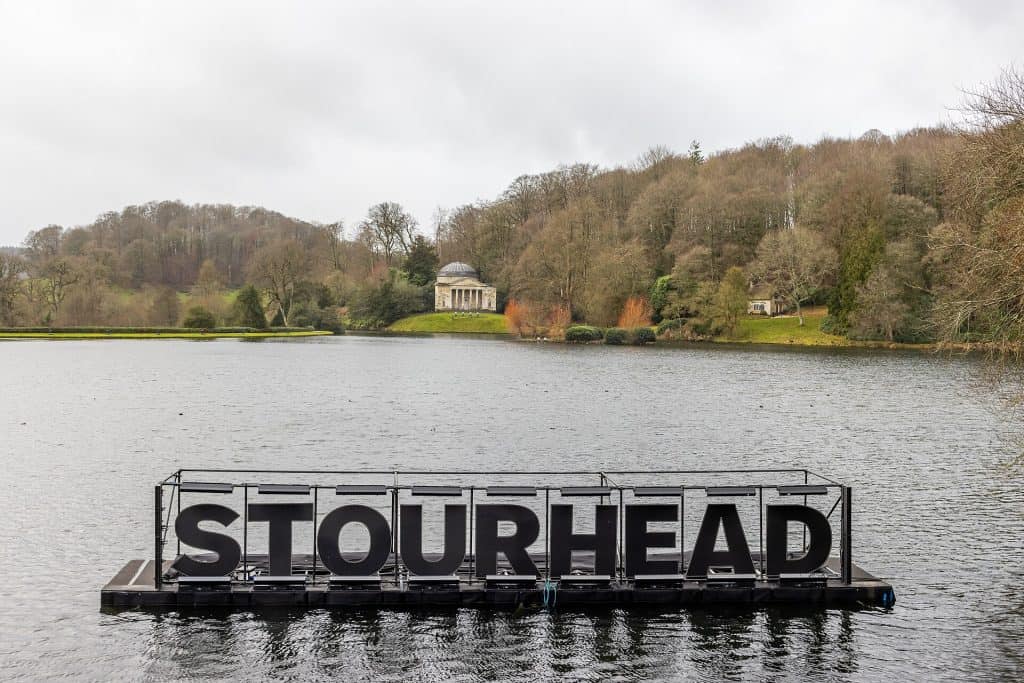
Stourhead in Wiltshire is the classic English landscape garden. The banker Henry Hoare II laid it out between 1741 and 1780 around an artificial lake, created by damming a stream at the source of the River Stour. A walk around the water is designed as a sequence of views, revealing temples, grottoes and bridges one by one, as if walking through a painting.
The domed Pantheon, by Henry Flitcroft, is the main focal point, while the Temple of Apollo, on the hill above, featured in the 2005 film of Pride and Prejudice. A five-arched Palladian bridge crosses one end of the lake. Stourhead is cared for by the National Trust and lies about 4 km from Mere. Visit in May for rhododendrons, or in October for autumn colour.
5. Schönbrunn Palace Gardens, Austria
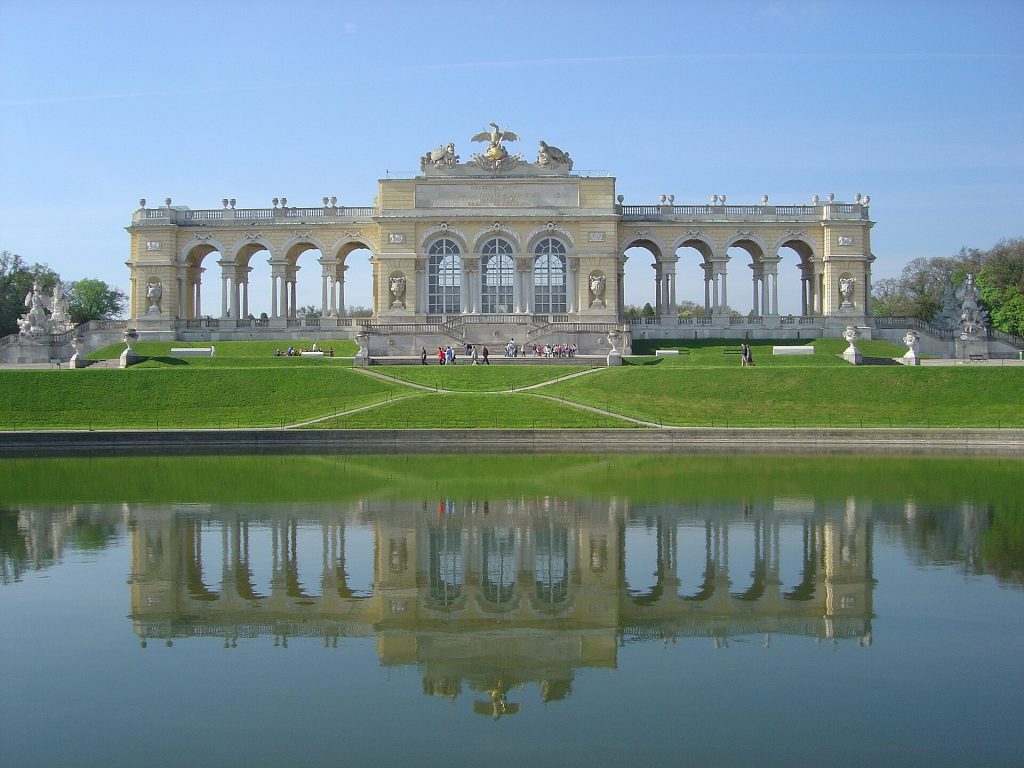
The gardens of Schönbrunn, the Habsburg summer palace in Vienna, form one of the finest baroque parks in Europe. Palace and gardens were added to the UNESCO list in 1996. The main axis runs from the palace across the Great Parterre to the Neptune Fountain, and up a hill to the Gloriette, a colonnaded pavilion finished in 1775.
Elsewhere in the park are the mock Roman Ruin of 1778, a maze, a large 19th-century Palm House and the zoo, often described as the oldest in the world. Most of the park is free to walk, while the maze, the Privy Garden and the Gloriette terrace are charged separately. Take the U4 underground to Schönbrunn, and climb to the Gloriette for the classic view back over the palace and city.
6. Generalife, Granada, Spain
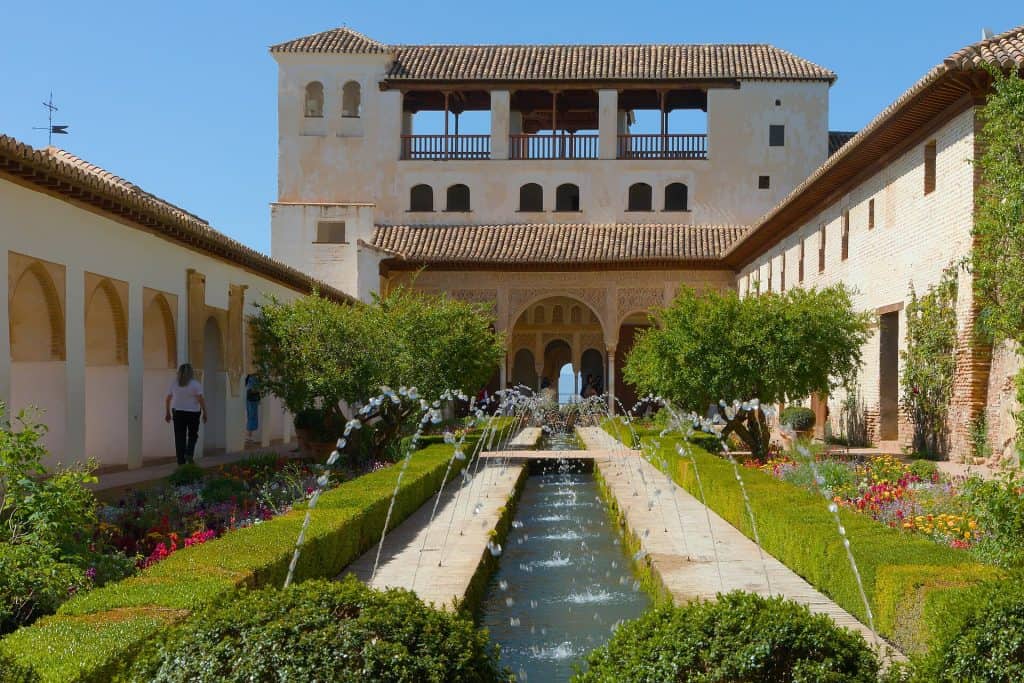
Above the Alhambra palaces, the Generalife was the summer retreat of the Nasrid rulers of Granada, most likely built at the end of the 13th century or the start of the 14th. It is part of the Alhambra, Generalife and Albayzín World Heritage Site, first inscribed in 1984.
The centrepiece is the Patio de la Acequia, a long courtyard divided by a narrow water channel lined with arching jets, flowerbeds and pavilions at each end. Don’t miss the Water Stairway, whose handrails are carved into channels of running water. Generalife entry is part of most Alhambra tickets, which sell out weeks ahead in spring and summer.
7. Villa d’Este, Tivoli, Italy
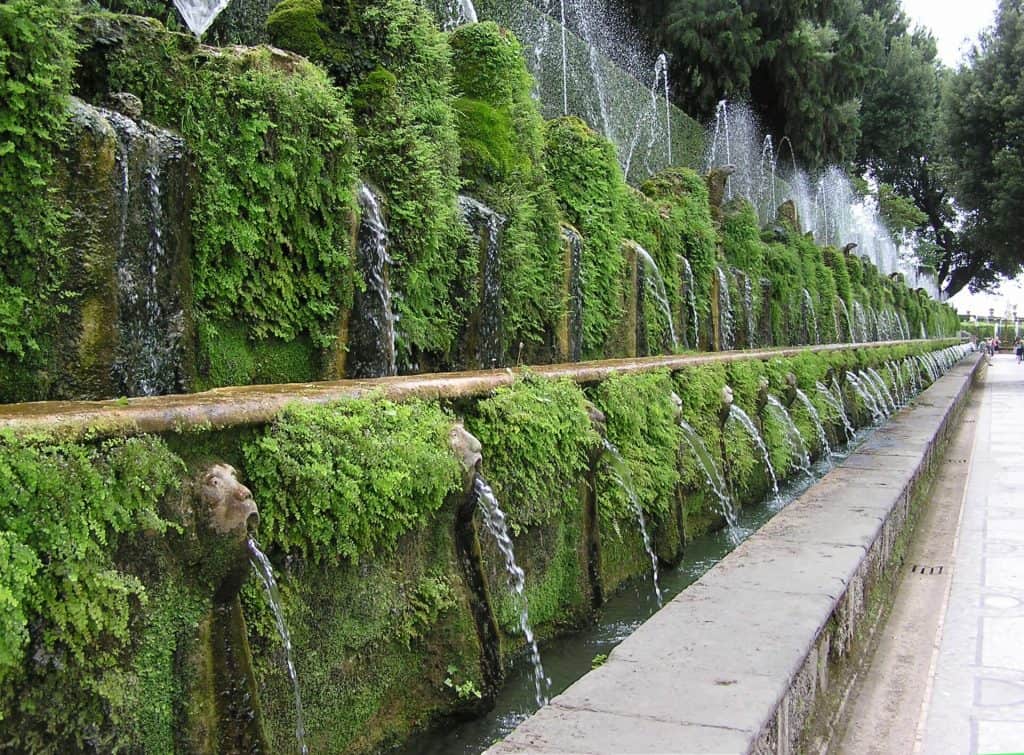
Cardinal Ippolito II d’Este created Villa d’Este in the 16th century, with a design by the scholar Pirro Ligorio, and it remains one of the greatest Renaissance water gardens. It has been a UNESCO World Heritage Site since 2001, and its terraces drop down a steep hillside below the villa.
The Avenue of the Hundred Fountains, built between 1566 and 1577, has nearly 300 spouts along three parallel channels. The Fountain of the Organ, whose water-powered organ was installed in 1571 and restored in 2003, plays at set times through the day. Tivoli is about 30 km east of Rome by train or bus, and Hadrian’s Villa, a short ride away, makes a strong combination for a day trip.
8. Powerscourt Gardens, Ireland
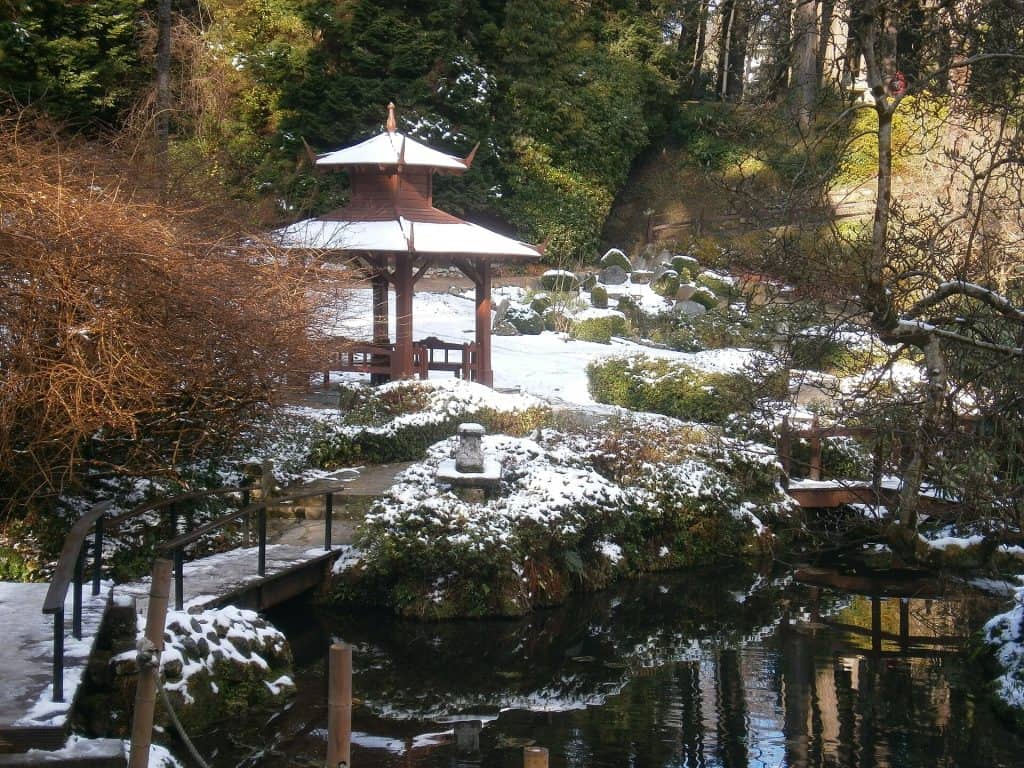
Powerscourt, near Enniskerry in County Wicklow, has a dramatic setting: broad Italianate terraces sweep down from the house to Triton Lake, with the cone of the Great Sugar Loaf mountain on the horizon. The present gardens took about 20 years to create and were completed in 1880, and they cover around 19 hectares.
Beyond the terraces, paths lead to a Japanese garden, a walled garden, a pets’ cemetery and the Pepperpot Tower, said to be modelled on a pepper pot from the family’s dining table. Powerscourt is about 20 km south of Dublin, reachable by bus or car. The separate Powerscourt Waterfall is around 7 km away by road, so drive between the two.
9. Sanssouci Park, Potsdam, Germany
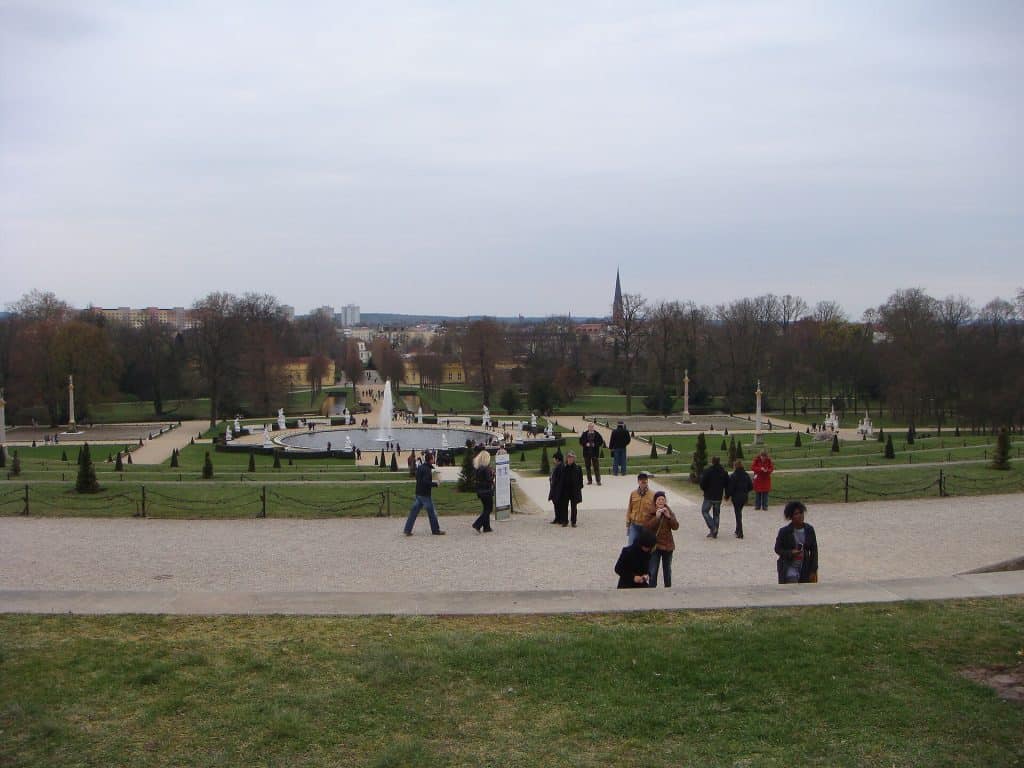
Frederick the Great built Sanssouci as his summer palace between 1745 and 1747, on top of a hillside he had turned into terraced vineyards. The terraces, lined with glazed niches for figs and vines, are still the park’s signature view. The Palaces and Parks of Potsdam and Berlin were added to the UNESCO list in 1990.
A main avenue about 2.5 km long runs through the park to the much larger New Palace, built in 1763 to 1769. On the way are the gilded Chinese House, fountains and statues. Frederick’s grave lies on the top terrace, where he was finally buried in 1991, and visitors often leave potatoes on it to thank him for promoting the crop in Prussia. Potsdam is about 30 minutes from central Berlin by regional train or S-Bahn.
10. Herrenhausen Gardens, Hanover, Germany
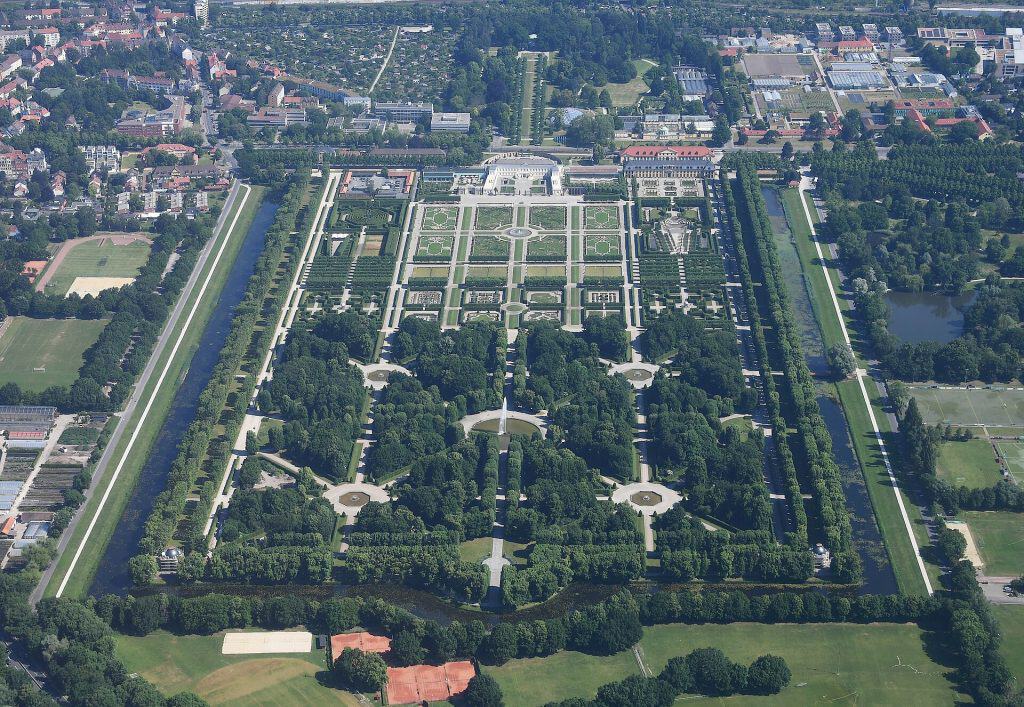
The Great Garden at Herrenhausen is one of the most important baroque gardens in Europe, about 50 hectares of geometric lawns, hedges, statues and canals. Its form owes much to Electress Sophia of Hanover, mother of King George I of Great Britain, who brought in the French gardener Martin Charbonnier in 1683 to expand it.
The Great Fountain can shoot water up to 80 metres high in good conditions, and one of the garden’s grottoes was transformed by the artist Niki de Saint Phalle between 2001 and 2003 with glass and mirror mosaics. Next door, the Berggarten is home to the botanical collections, while the Georgengarten is an English-style landscape park. The gardens are a short tram ride from central Hanover.
Planning your garden trip
When to go
Spring is the best season overall: Keukenhof peaks in April, while Powerscourt, Stourhead and the Generalife are at their best in May and June. Formal gardens such as Versailles, Schönbrunn and Herrenhausen keep their structure all year, and autumn colour is excellent at Stourhead and Sanssouci.
Getting there
Versailles, Schönbrunn, Sanssouci and Herrenhausen are all on city transport networks. Villa d’Este, Keukenhof and Powerscourt make easy day trips from Rome, Amsterdam and Dublin. Stourhead and Villandry are best with a car or bicycle.
Tips
- Check fountain schedules in advance; many water features run only at set times or seasons.
- Wear comfortable shoes, as distances in palace gardens are long and paths are often gravel.
Plan your trip
- France: tickets and tours on Tiqets · activities on Klook
- Netherlands: tickets and tours on Tiqets · activities on Klook
- England: tickets and tours on Tiqets · activities on Klook
- Arriving by plane: pre-book an airport transfer with Welcome Pickups
- Road trip: compare car hire on Localrent
- Mobile data: get a travel eSIM from Airalo
Some of these are affiliate links: if you book through them we may earn a small commission, at no extra cost to you.
Planning a bigger trip? See our guide to the 25 best places to visit in Europe, from city breaks to fjords.
Keep exploring
- Secret Gardens of Paris: 10 Quiet Green Corners Away from the Crowds
- 10 Gorgeous Botanical Gardens in Europe Worth a Visit
Frequently asked questions
What is the most famous garden in Europe?
The gardens of Versailles are probably the most famous, as they shaped formal garden design across the continent. Keukenhof is the best known for spring flowers.
When is the best time to visit Keukenhof?
Keukenhof opens for about eight weeks from mid-March to mid-May. Mid-April usually brings the most tulips in flower, but exact timing depends on the weather that year.
What is the difference between a formal garden and an English landscape garden?
A formal garden, such as Versailles or Herrenhausen, uses straight lines, symmetry and clipped hedges. An English landscape garden, such as Stourhead, imitates a natural landscape, with lakes, lawns, woods and buildings arranged as a series of views.
Photos: Coyau, CC BY-SA 3.0, via Wikimedia Commons; Thérèse Gaigé, CC BY-SA 4.0, via Wikimedia Commons; Willem van Valk, CC BY 2.0, via Wikimedia Commons; Photograph by Mike Peel (www.mikepeel.net)., CC BY-SA 4.0, via Wikimedia Commons; David Monniaux Copyright © 2005. French translation by Berrucomons using text from Witoki, CC BY-SA 3.0, via Wikimedia Commons; Benjamin Smith, CC BY-SA 4.0, via Wikimedia Commons; Adrian Pingstone (Arpingstone), Public domain, via Wikimedia Commons; Frabjousone, CC BY-SA 4.0, via Wikimedia Commons; Karen Mardahl, CC BY-SA 2.0, via Wikimedia Commons; Carsten Steger, CC BY-SA 4.0, via Wikimedia Commons.