Updated
Thessaloniki is Greece‘s second city and one of its most rewarding to explore on foot. Founded in 315 BC by the Macedonian king Cassander and named after his wife, it has layers of Roman, Byzantine and Ottoman history scattered between modern apartment blocks, plus a long seafront promenade and a food scene that many Greeks rate as the country’s best.
One day is enough to see the highlights if you plan the route well. This walk starts on the waterfront, works north through the Roman and Byzantine monuments and the markets, climbs to the old upper town for sunset and ends with dinner in Ladadika. Most of it is on foot, with one short bus or taxi ride up the hill.
Thessaloniki in one day at a glance
- Best for: history, Byzantine churches, food markets and an easygoing seafront city break.
- When to go: April to June and September to October; July and August are hot.
- Getting there: Thessaloniki Airport “Makedonia” is about 13 km from the centre, linked by round-the-clock buses.
- Getting around: walk the centre, use a bus or taxi for the upper town, and the metro for longer east to west trips.
- Walking distance: roughly 8 to 10 km for the full route, with one steep section.
- Don’t miss: bougatsa for breakfast and the sunset view from the city walls.
Morning: breakfast and the White Tower
Start the day the local way, with bougatsa: flaky filo pastry filled with custard cream (dusted with cinnamon and icing sugar) or with cheese or minced meat. Bakeries all over the centre sell it from early morning, along with koulouri, the sesame bread rings eaten on the go.
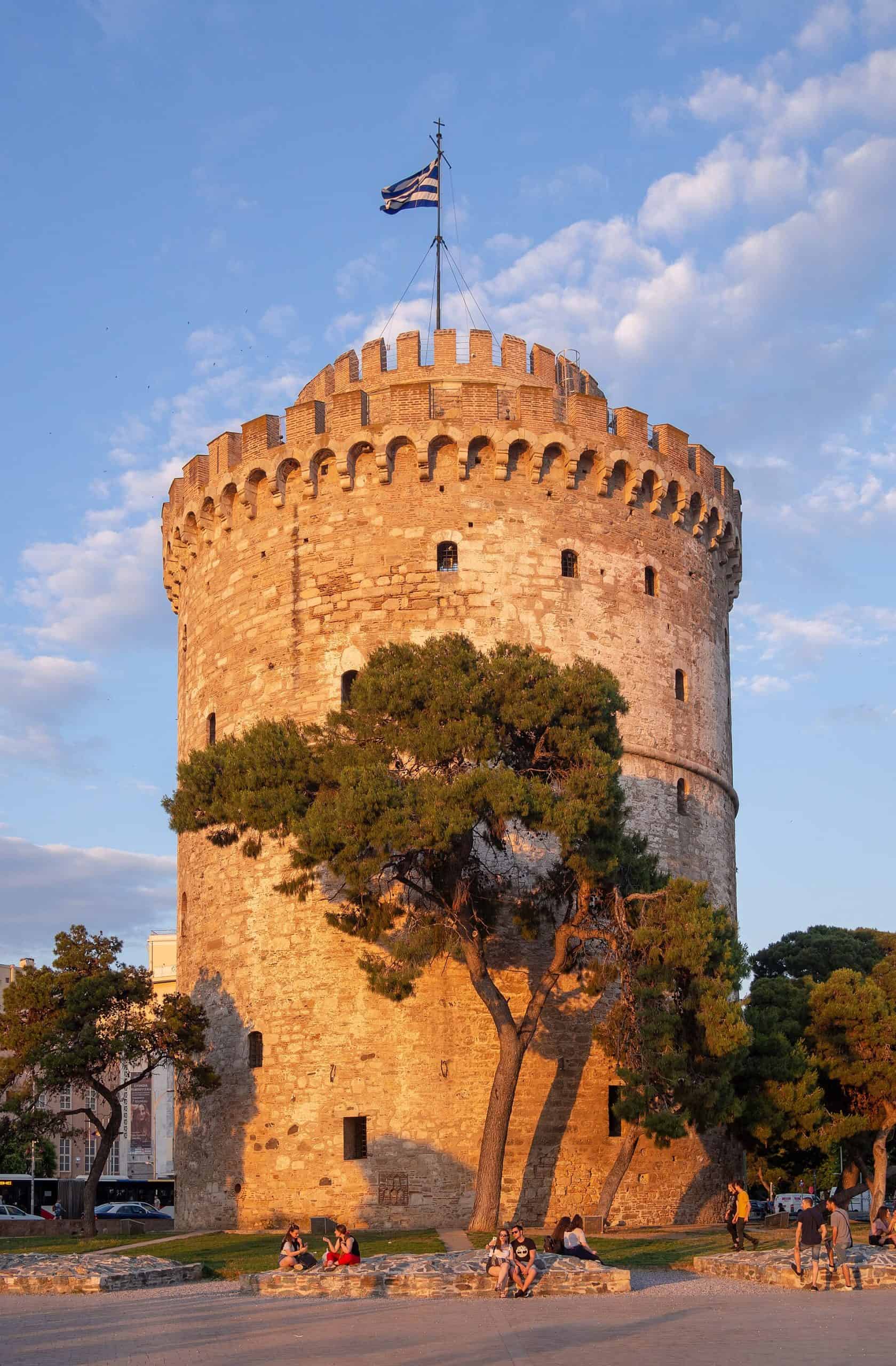
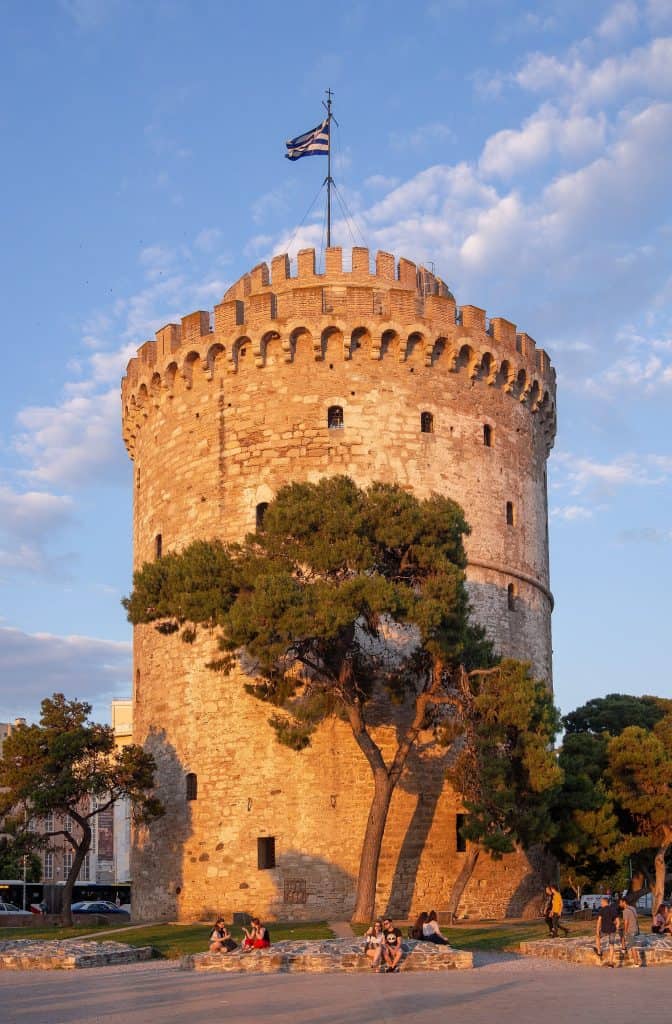
Then walk to the White Tower, the city’s symbol, on the seafront at the end of Nikis Avenue. The present tower was built by the Ottomans in the 15th century, after their capture of the city in 1430, and stands about 34 metres high. It served as a fortress and later a prison, and only took the name White Tower around 1890 after it was whitewashed. Today it is a museum on the history of Thessaloniki, run with the Museum of Byzantine Culture. The exhibition is brief, but the roof platform gives a fine view along the bay towards Mount Olympus on clear days.
If you have time before moving on, stroll 20 minutes east along the New Waterfront to see the Umbrellas, a tall sculpture of flying umbrellas by George Zongolopoulos that has become one of the most photographed spots in the city.
Late morning: the Arch of Galerius and the Rotunda
Walk inland up Pavlou Mela or Agias Sofias street to Egnatia, the main road that follows the line of the Roman Via Egnatia. Here stands the Arch of Galerius, known locally as Kamara, built around 298 to 299 AD to celebrate the emperor Galerius’s victory over the Sassanid Persians. The carved panels on its surviving piers show battle scenes and imperial ceremonies, and it is a natural meeting point for locals.
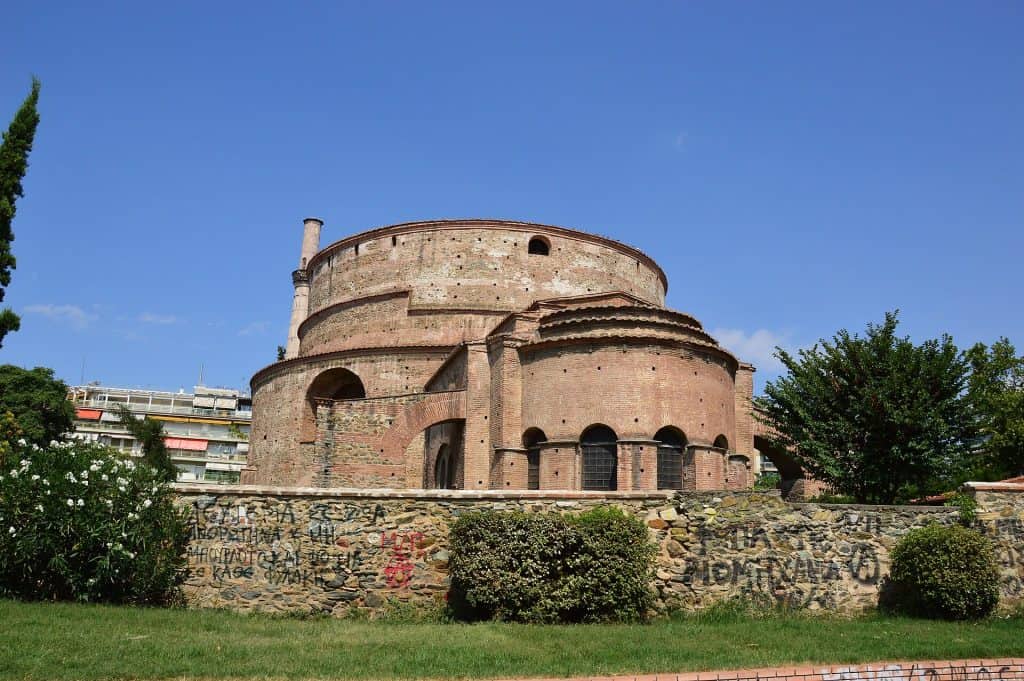
A short walk uphill from the arch is the Rotunda, a massive circular brick building put up around 306 AD, probably intended as Galerius’s mausoleum. It was turned into a church in the late fourth century, became a mosque in 1590 (the minaret still stands) and became a church again after 1912. Inside, fragments of early Christian mosaics survive high in the dome. The Rotunda is part of the Paleochristian and Byzantine Monuments of Thessaloniki, inscribed on the UNESCO World Heritage List in 1988.
On your way back down, look into Navarinou Square, where excavated remains of Galerius’s palace lie below street level.
Midday: Hagia Sophia and Aristotelous Square
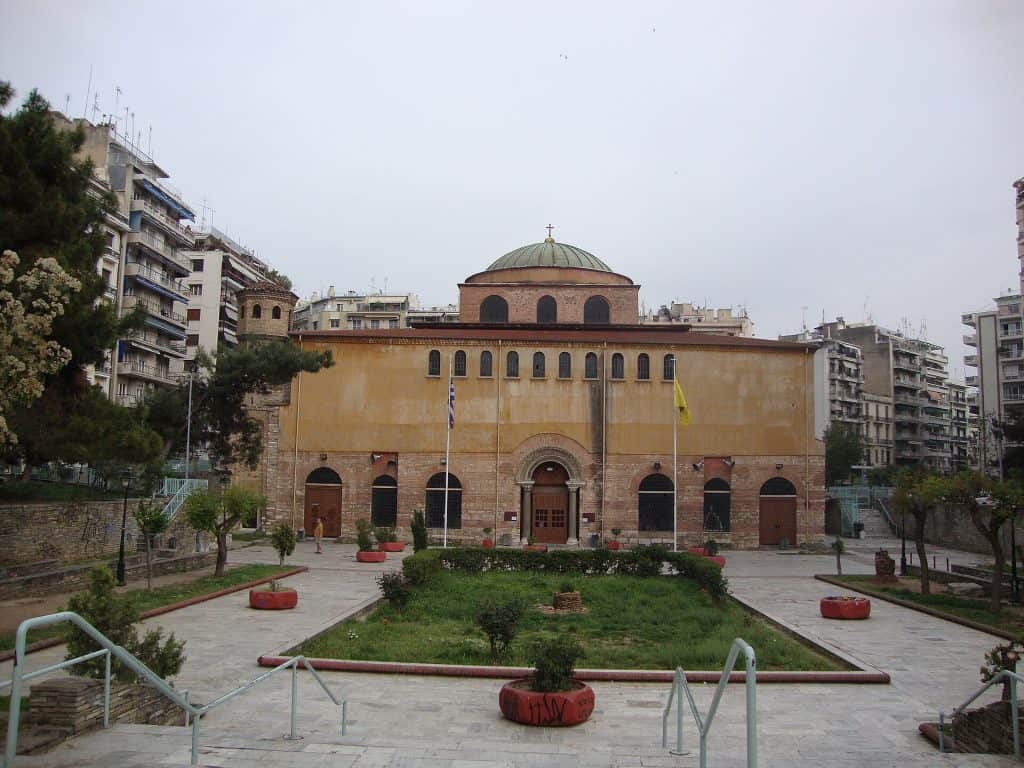
Continue west to Hagia Sophia, an 8th-century church set in a small park. It shares its name with the great church in Istanbul but is far smaller and more intimate. Look up at the dome mosaic of the Ascension, one of the finest surviving Byzantine mosaics in the city. Dress modestly, and avoid wandering around during services.
From there it is five minutes to Aristotelous Square, the grand open space that runs from Egnatia down to the sea. It was laid out to a plan by the French architect Ernest Hébrard after the Great Fire of 1917 destroyed much of the centre, which is why the buildings around it look so uniform. Grab a coffee here, or keep going for lunch in the markets.
Lunch: the Kapani and Modiano markets
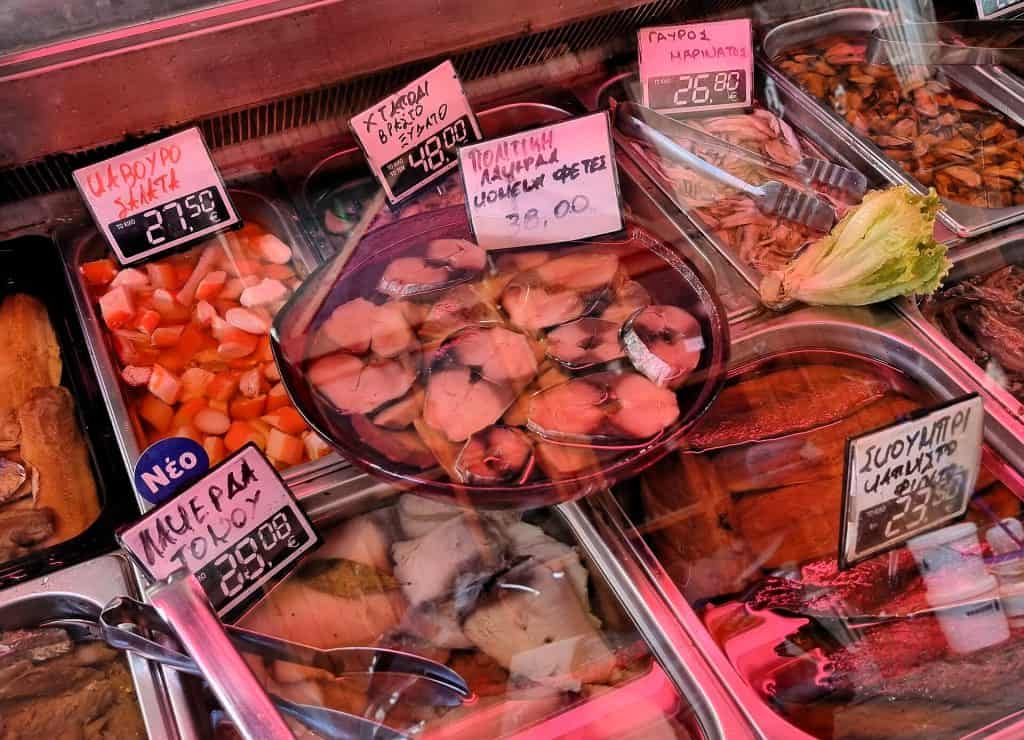
Just west of Aristotelous Square, between Egnatia and Ermou streets, are the city’s two traditional markets. Kapani (also called Vlali) is a warren of open stalls selling olives, cheese, fish, spices, herbs and sweets, while the covered Modiano market sits a block away. The surrounding lanes are full of small tavernas and ouzo bars serving meze at lunchtime.
Order a few plates to share: grilled sardines or mussels, peppers stuffed with cheese, aubergine dips and a Greek salad. Afterwards, walk east to Tsimiski street for a sweet from one of the city’s well-known pastry shops; trigona Panoramatos, cream-filled filo cones, are a local favourite.
Afternoon: the Roman Forum and Agios Dimitrios
Walk north across Egnatia to the Roman Forum (Ancient Agora), a large excavated square with a small odeon, or theatre, and cryptoporticos, the vaulted underground galleries that supported one side of the forum. You can see much of it from the railings above, or pay to walk through and visit the small site museum.
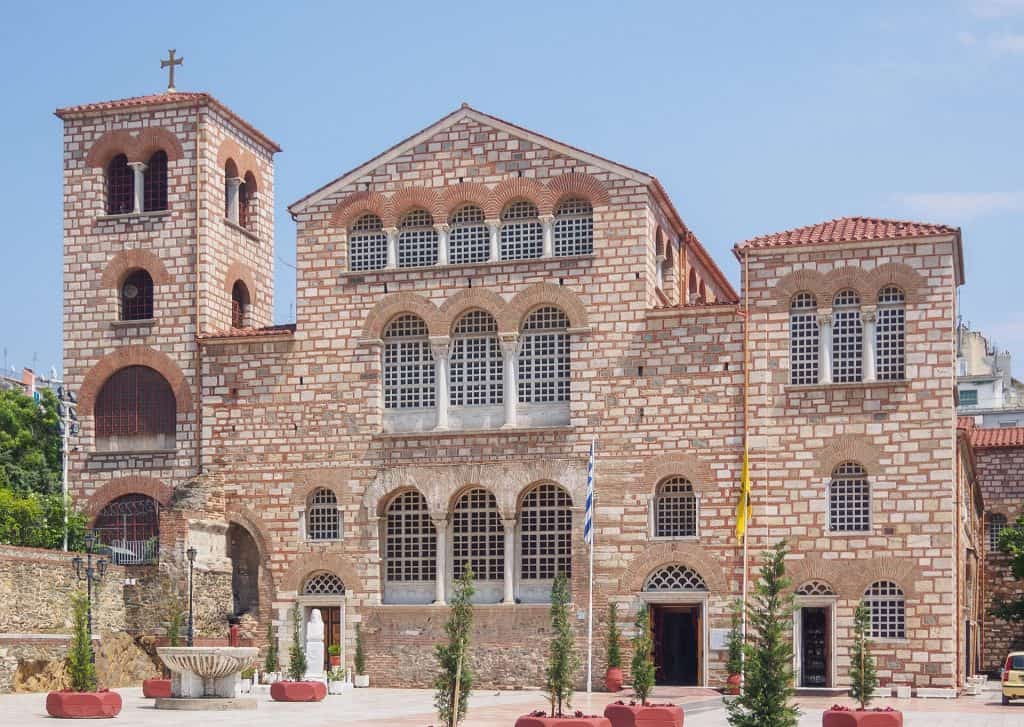
A few minutes further uphill is the Church of Agios Dimitrios, dedicated to the city’s patron saint. The basilica was badly damaged in the 1917 fire and reconsecrated in 1949 after long restoration, but it still holds rare early mosaics. Do not miss the crypt beneath the church, traditionally identified as the place where St Demetrius was martyred in 303 AD, and now an exhibition space. The feast of St Demetrius on 26 October is one of the biggest days in the city’s calendar.
Sunset: Ano Poli and the city walls
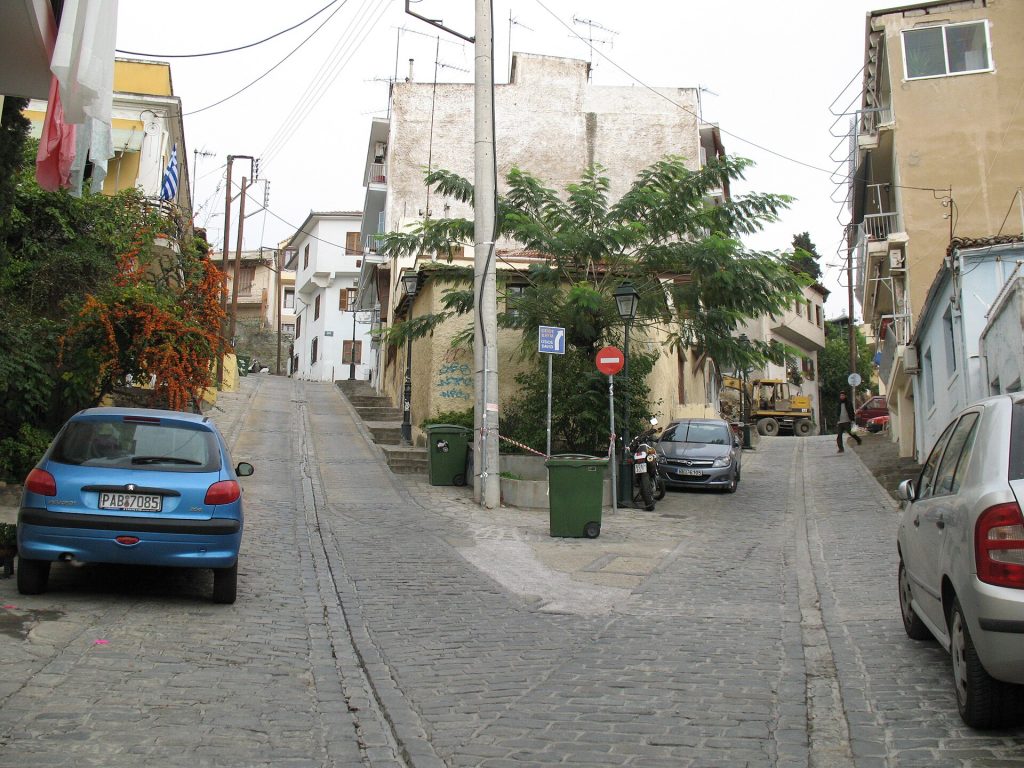
The upper town, Ano Poli, survived the 1917 fire and keeps the feel of old Thessaloniki: steep lanes, timber-framed houses with overhanging upper floors and cats asleep on the steps. Walking up from Agios Dimitrios takes 30 to 40 minutes uphill; a taxi or city bus is the easier option if you are tired.
Head for the Heptapyrgion (Yedi Kule), a Byzantine and Ottoman fortress at the top of the walls that was used as a prison until 1989. Then walk down along the walls to the Trigonion Tower, where locals gather at dusk for the classic view over the rooftops, the port and the Thermaic Gulf. On the way, look into the Vlatadon Monastery, still active and also part of the UNESCO listing.
Evening: dinner in Ladadika
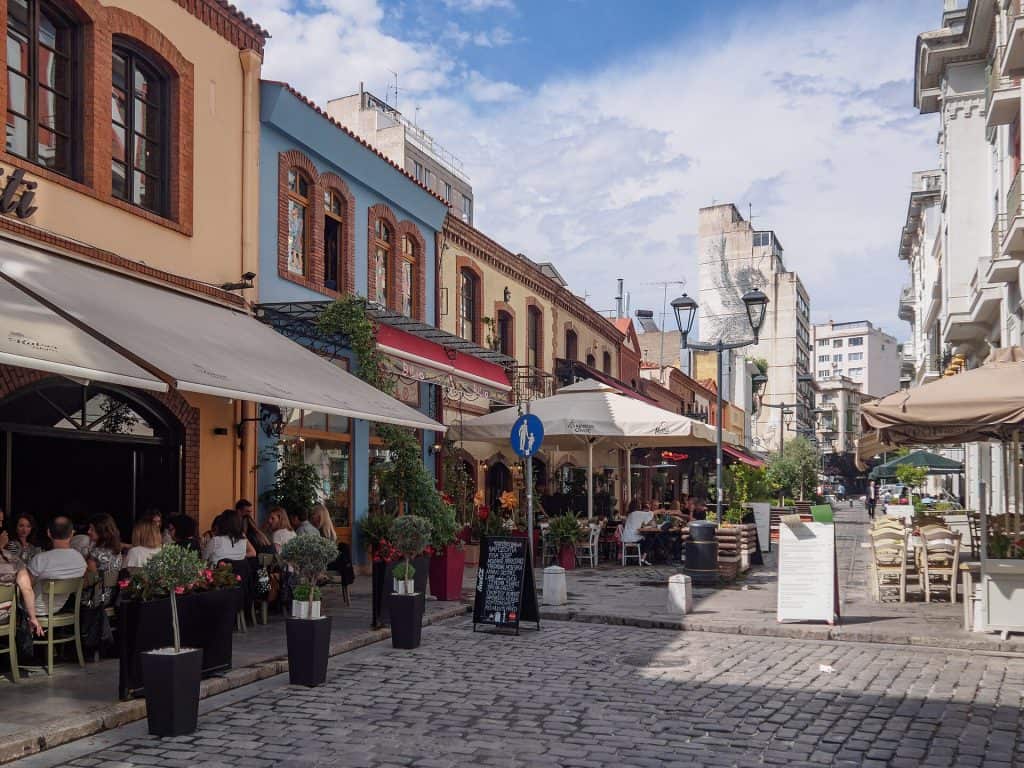
Come back down by taxi or on foot to Ladadika, near the port. The name comes from the olive oil merchants (ladi means oil) who traded here, and its restored warehouses now hold tavernas, meze restaurants and bars. It gets busy after 9pm, which is a normal dinner hour in Greece. The streets around Valaoritou and Syngrou, just east, are a younger, more relaxed bar area if you want a drink afterwards.
If you have more time
- Archaeological Museum of Thessaloniki: excellent Macedonian gold and the elaborate bronze Derveni Krater. Allow two hours.
- Museum of Byzantine Culture: next door, with icons, mosaics and frescoes clearly displayed.
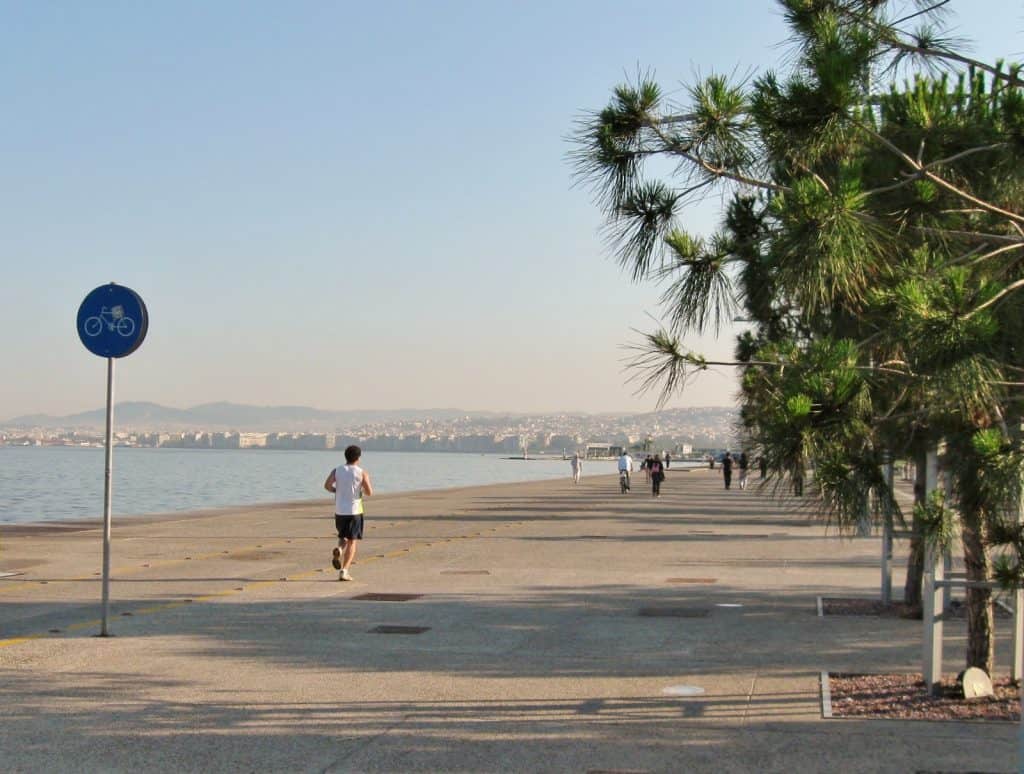
- The New Waterfront: a landscaped promenade with themed gardens, cycle paths and the Umbrellas sculpture.
- Vergina: the ancient Macedonian capital of Aigai, just over an hour’s drive away, with the royal tombs displayed in an underground museum.
- Halkidiki: the beaches of the Kassandra peninsula are within reach for a summer day trip.
Getting there and around
Thessaloniki Airport “Makedonia” lies about 13 km southeast of the centre. OASTH buses 01X (daytime) and 01N (night) run around the clock to the city centre and on to the main bus station; taxis wait outside arrivals. Trains from Athens arrive at the main railway station on the western edge of the centre.
The centre is flat and walkable along the seafront and Egnatia, but the upper town is steep. City buses cover most routes, and Thessaloniki’s metro, whose first line opened in November 2024, is handy for crossing the city east to west. Taxis are plentiful and reasonably priced for short trips.
When to go and practical tips
- Spring and autumn: the best weather for walking. Summer afternoons are hot, so do the uphill section late in the day.
- Events: the city fills up for the Thessaloniki International Fair in September and the film festival in autumn; book rooms early.
- Churches: cover shoulders and knees, and check opening times, which are shorter in the afternoons.
- Museums: many state museums and sites close one day a week or keep shorter winter hours, so check current times.
- Eating: lunch runs from about 2pm and dinner from 9pm. Many tavernas bring a free dessert or a shot with the bill.
Plan your trip to Thessaloniki
- Tickets and tours in Thessaloniki: tickets and tours on Tiqets · activities on Klook
- Arriving by plane: pre-book an airport transfer with Welcome Pickups
- Road trip: compare car hire on Localrent
- Mobile data: get a travel eSIM from Airalo
Some of these are affiliate links: if you book through them we may earn a small commission, at no extra cost to you.
Planning a bigger trip? See our guide to the 25 best places to visit in Europe, from city breaks to fjords.
Keep exploring
- Greece’s Classical Sites: A Practical Guide to Visiting
- Underrated Destinations in Greece: 8 Mainland Towns Worth the Trip
- Skopelos Travel Guide: Chora, Glossa, Beaches, Hikes and Ferries
Frequently asked questions
Is one day enough in Thessaloniki?
One day covers the main sights: the White Tower, the Rotunda, the Byzantine churches, the markets and the upper town. Two days give you time for the Archaeological Museum and the Museum of Byzantine Culture, and a third allows a trip to Vergina or the beaches of Halkidiki.
Is Thessaloniki walkable?
Yes. The seafront and the area between the White Tower, Aristotelous Square and the Rotunda are flat and compact. The only hard climb is up to Ano Poli, which you can do by taxi or bus and then walk down.
What food is Thessaloniki known for?
Bougatsa for breakfast, koulouri bread rings, meze and seafood in the markets, and rich pastries such as trigona Panoramatos. The city has a reputation as one of the best places to eat in Greece.
Photos: C messier, CC BY-SA 4.0, via Wikimedia Commons; Annatsach, CC BY-SA 4.0, via Wikimedia Commons; XeresNelro, CC BY-SA 4.0, via Wikimedia Commons; Maor X, CC BY 4.0, via Wikimedia Commons; C messier, edited by MenkinAlRire, CC BY-SA 4.0, via Wikimedia Commons; macrolepis, CC BY 3.0, via Wikimedia Commons; Andreas Wolf 01, CC BY-SA 4.0, via Wikimedia Commons.