Updated
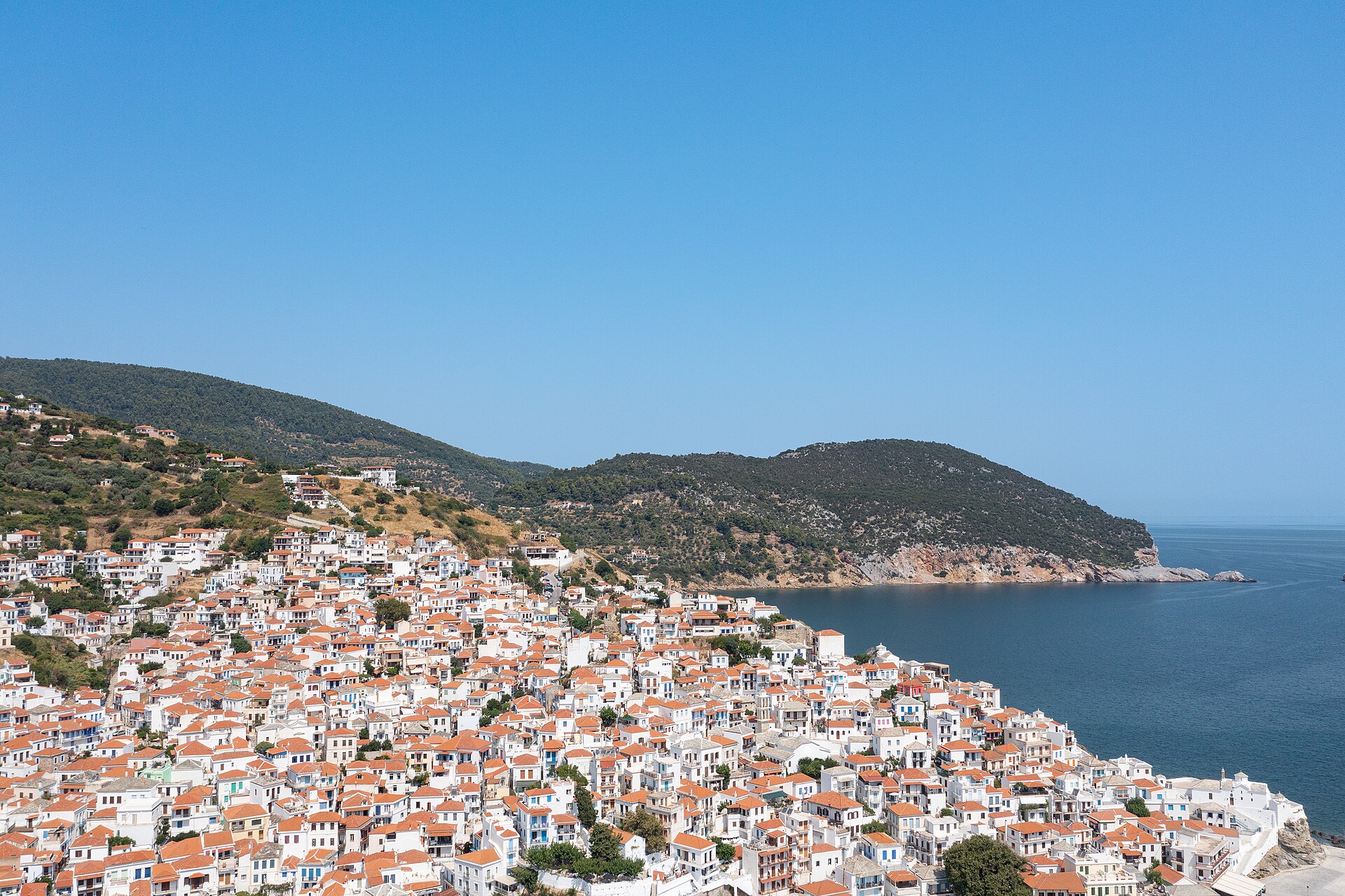
Skopelos sits in the Northern Sporades, between Skiathos and Alonissos, and it is the one most people picture when they think of these islands: pine forest running down to clear water, a harbour town of stacked white houses, and a tiny chapel on a rock that appeared in Mamma Mia. It has no airport, which keeps numbers lower than on many Greek islands, and most of the coast is still undeveloped.
This guide is for planning a stay of four days to a week: the two main settlements, the chapel, the beaches worth driving to, monastery walks, local food, ferries and a boat day to the Alonissos marine park.
Skopelos at a glance
- Best for: swimming from pine-backed pebble bays, gentle hiking, quiet villages and slow evenings by the harbour.
- How long: four or five days covers the main sights; a week lets you add a boat trip and a few long walks.
- When to go: late May, June and September for warm sea and fewer people; July and August are busiest.
- Getting there: fly to Skiathos and take a ferry, or sail from Volos or Agios Konstantinos on the mainland.
- Getting around: a hire car or scooter is the easiest option; a summer bus runs along the main road.
- Where to base yourself: Skopelos Town for restaurants and ferries, Glossa or Loutraki for a quieter stay near the chapel.
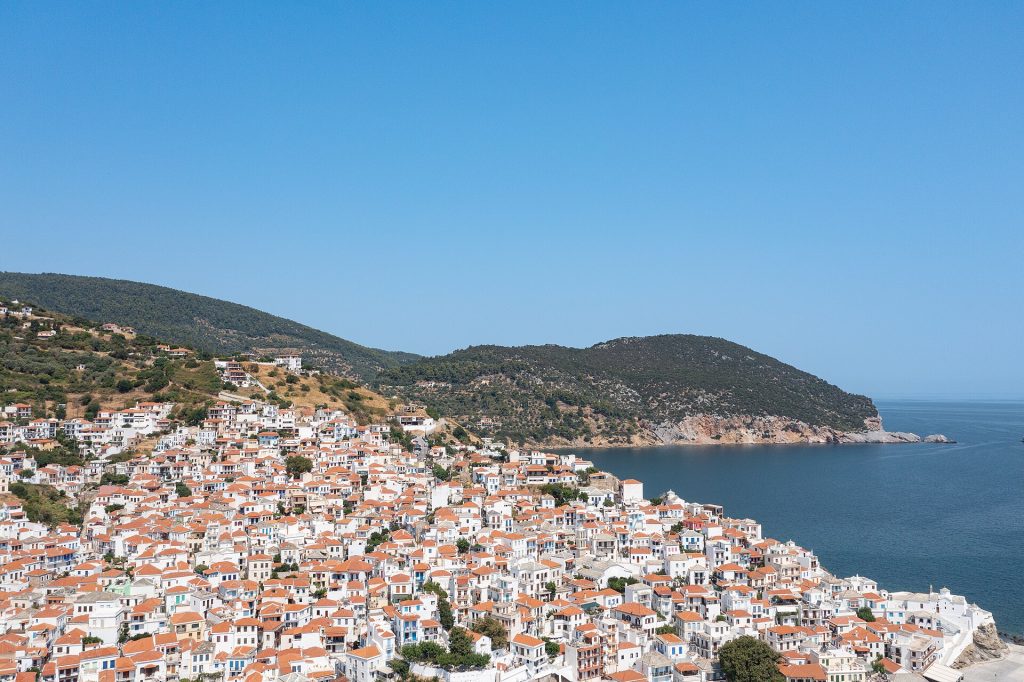
Skopelos Town (Chora)
The island’s capital climbs in an amphitheatre from the waterfront to the walls of the Kastro, a small fortress on the headland whose origins go back to the Venetian period in the 13th century, when the Ghisi family held the Sporades. Little more than the walls survives, but the walk up is the point. Stepped lanes wind between whitewashed houses with wooden balconies, grey slate or tiled roofs and painted doors, and the view from the top takes in the whole bay.
The town is known for its churches: local sources count more than a hundred churches and chapels in and around Chora, many of them family-owned and only opened on their saint’s day. Look out for Panagia Papameletiou and the chapels clustered below the castle. The Folklore Museum occupies an 18th-century mansion donated by the Nikolaidis family and shows how a well-off island household lived, with costumes, embroidery and furniture.
The harbour front fills up in the evening, but the better tavernas tend to sit a lane or two back.
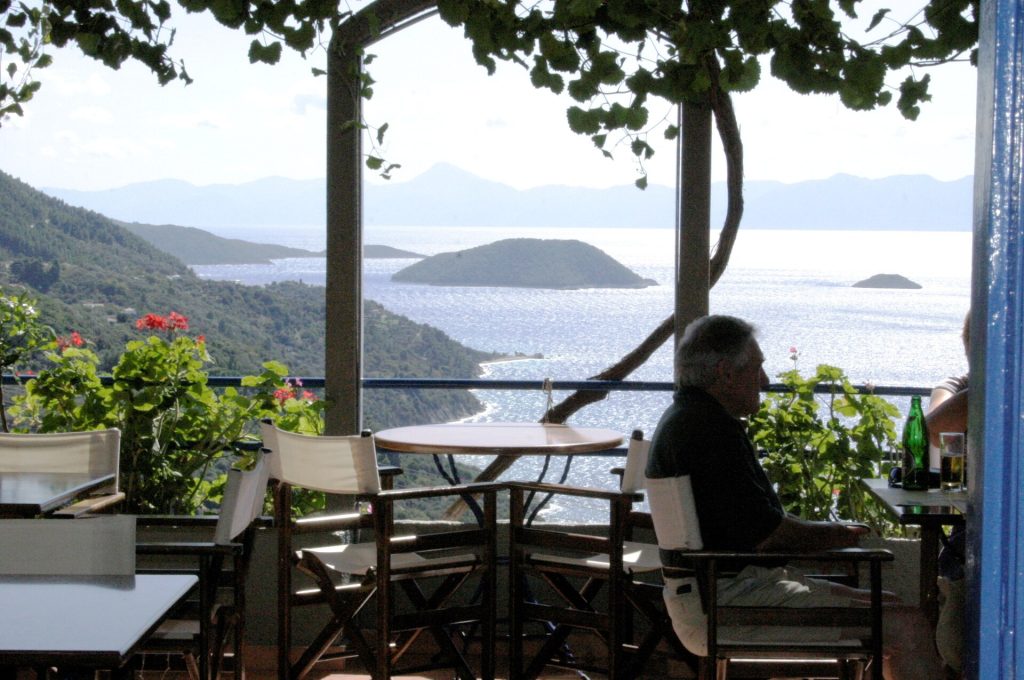
Glossa and Loutraki
At the opposite, north-western end of the island, about 45 minutes by road from Chora, Glossa is the second village of Skopelos. It spreads across a hillside a few hundred metres above the sea, and it feels more lived-in than touristy: traditional kafeneia, steep lanes without names, and views west towards Evia and the mainland. Several of the walking paths on this side start from the edge of the village.
Below it, Loutraki is the island’s second port. Many ferries and fast boats from Skiathos and Volos call here as well as at Chora, and ticket sites often list it as “Glossa”. It has a handful of fish tavernas and makes a quiet base near the chapel.
On the drive between the two ends of the island you pass Elios, also called Neo Klima, a village built after the 1965 earthquake to rehouse families from the damaged settlements above it.
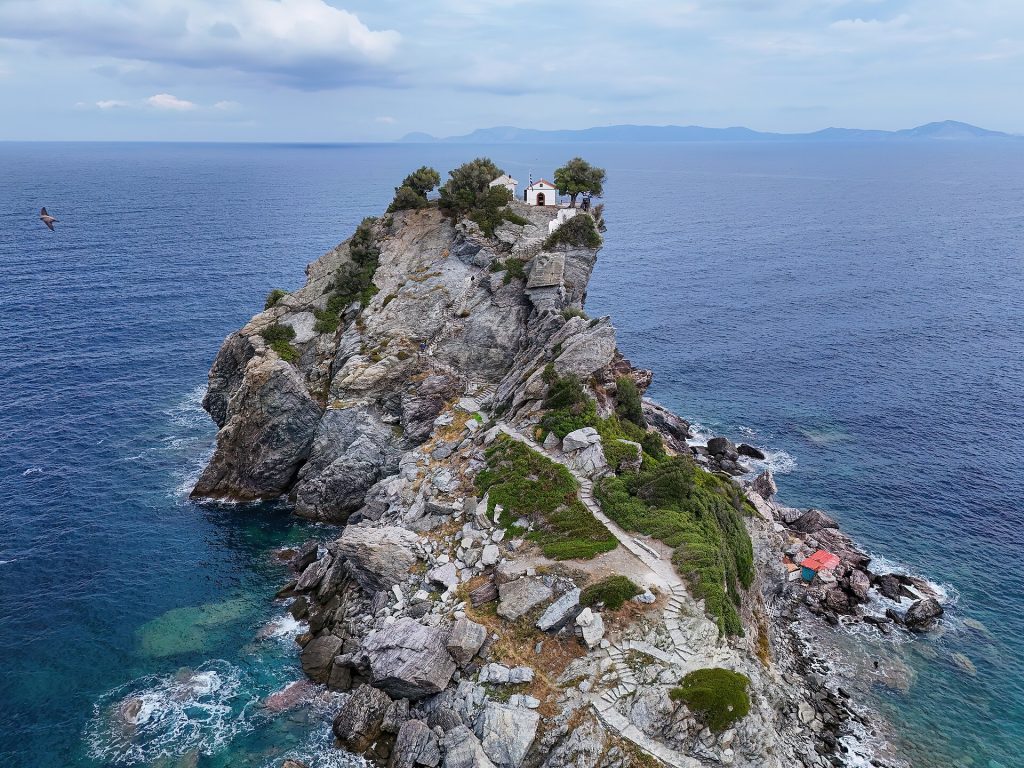
Agios Ioannis sto Kastri
The chapel of Agios Ioannis sits on top of a tall rock on the north coast, a short drive from Glossa. It is reached by a stairway cut into the rock, usually counted at a little over a hundred steps, with no railing on parts of the climb. At the top there is a small whitewashed church and a long view along the coast.
The chapel’s fame comes from Mamma Mia (2008): the exterior and the climb to it were used in the wedding scenes. The interior seen in the film was a much larger studio set built in England, so the real chapel inside is small and simple, with icons and candles. It remains a consecrated church, so cover shoulders and keep voices low.
Go early or late in the day: around midday the steps are hot and crowded, and the small parking area fills up.
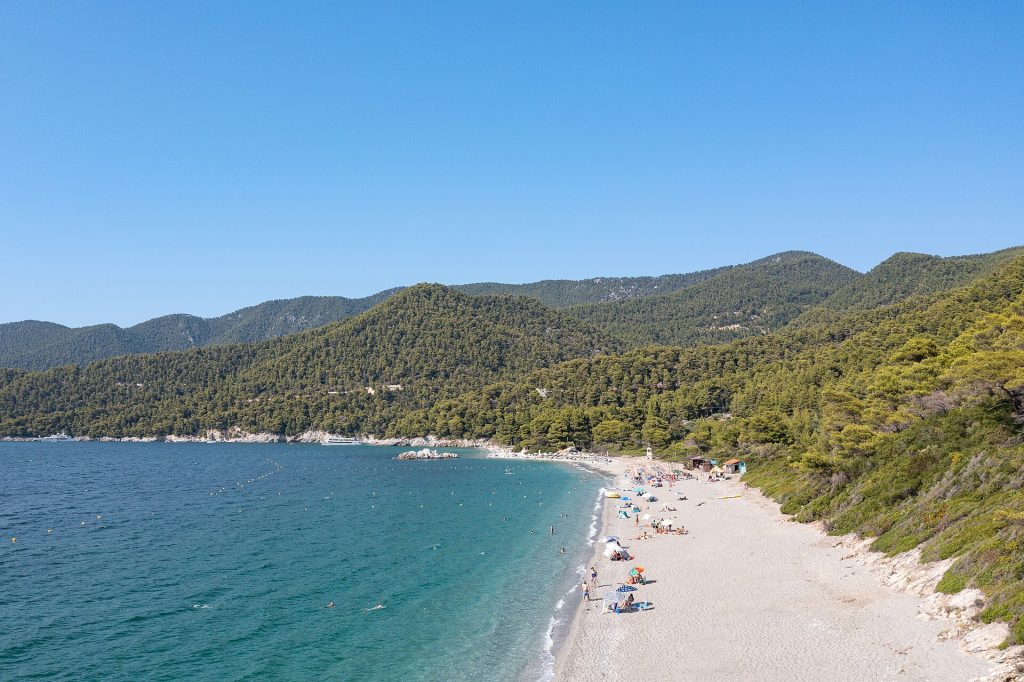
West coast beaches: Panormos, Milia and Kastani
The best-known beaches line the sheltered west coast along the main road between Chora and Glossa. Most are pebble or a mix of sand and small stones, with pines growing almost to the water. Water shoes help.
Panormos
A deep, sheltered bay with a small resort, a few tavernas and sunbed hire. The water usually stays calm, which suits families.
Milia
Often described as the longest beach on Skopelos, Milia stretches for several hundred metres of fine pebble and sand facing the small island of Dasia. It has a beach bar at one end and quieter stretches further along.
Kastani
A short way past Milia, this small, sandier cove was used for several beach and jetty scenes in Mamma Mia, including the “Does Your Mother Know” number. It is pretty and busy in high summer; arrive before late morning for space.
Limnonari, Hovolo and quieter bays
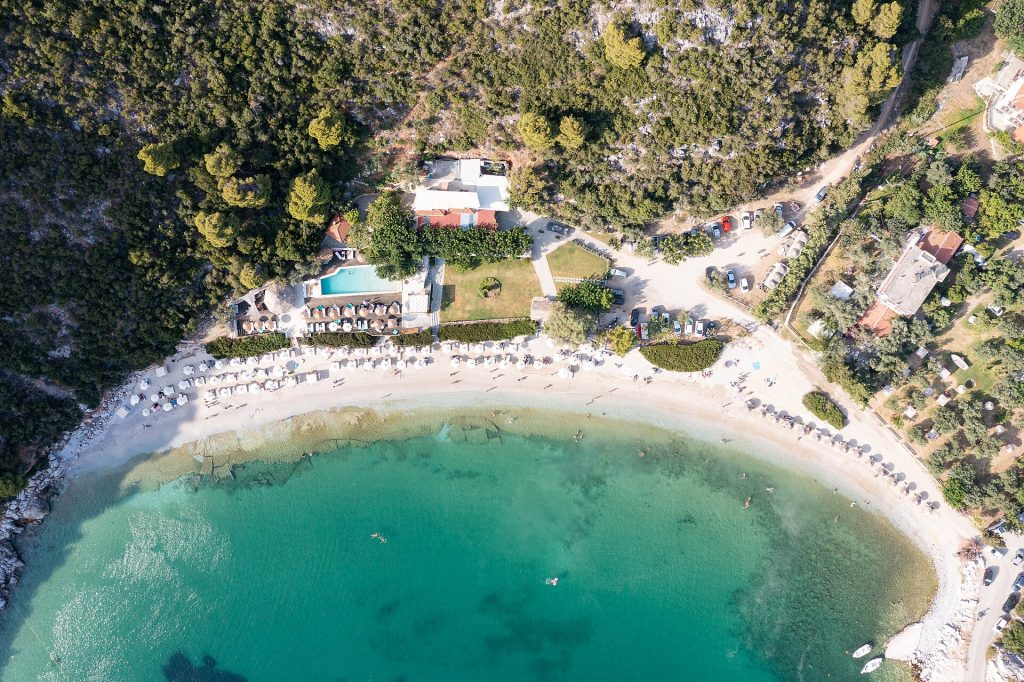
On the south coast, Limnonari is a sheltered bay with more sand than most Skopelos beaches, backed by wooded hills. It is reached by a rough road from the small harbour of Agnontas, and in summer small boats also run across.
Hovolo, near Elios, is different: a pebble beach below white cliffs and pine slopes, reached by a short walk down from the road. It tends to be quieter than the west coast bays.
Close to Chora, Stafylos is a small pebble beach a short drive or bus ride from town, and Velanio, a walk over the rocks from there, has long been used as a naturist beach.
The monasteries of Mount Palouki
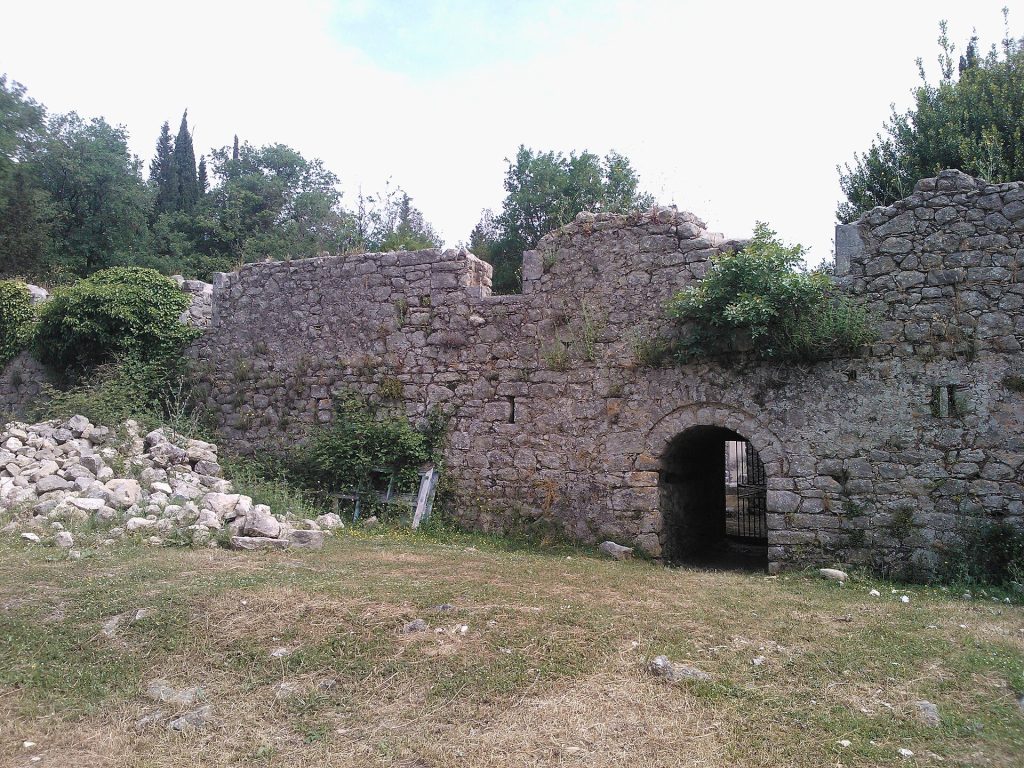
The hills east of Chora hold a group of monasteries linked by road and old footpaths. Evangelistria, founded in the early 18th century, looks almost like a fortress from below and has wide views over the town and bay. Timios Prodromos, a little further on, is a working convent; the nuns keep a small shop with icons and local products. Agia Varvara, one of the oldest, is known for its frescoes, while Metamorfosis lies on the hillside west of the others.
Visiting hours are limited, so check locally, and cover shoulders and knees. Agios Riginos, about 2 km outside Chora, honours the island’s patron saint and is one of the oldest religious sites on Skopelos.
Hiking on Skopelos
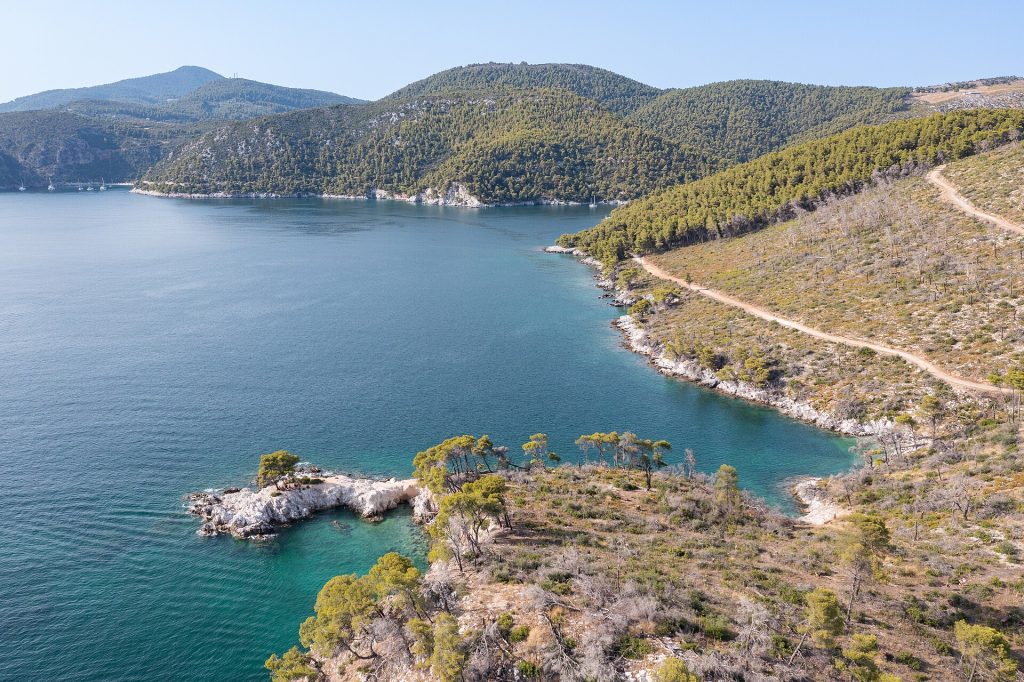
Skopelos is well suited to walking. Old mule tracks and forest roads through Aleppo pine and olive groves connect villages, monasteries and beaches. Spring, from April to early June, and autumn are the best seasons, when the paths are cooler and the hillsides are green.
- Palouki monasteries loop: a circular route of roughly 7 km from Chora linking Metamorfosis, Agia Varvara, Timios Prodromos and Evangelistria, about two and a half hours at an easy pace.
- Sendoukia and Delfi: a longer walk in the hills between Chora and Glossa to the Sendoukia, rock-cut tombs of uncertain date, with an extension towards the summit area of Delfi, at around 680 metres the highest ground on the island.
Waymarking varies from good to absent, so carry a downloaded map, plenty of water and sun protection. Avoid long walks in the heat of July and August.
What to eat: plums and cheese pie
Skopelos was once known for its plums, sent dried to markets around the eastern Mediterranean, and you can still see old brick drying ovens in the fields. Look for prunes, plum spoon sweets and the classic local dish of pork cooked with plums, which turns up on taverna menus across the island.
The other speciality is skopelitiki tyropita: thin pastry wrapped round a feta filling, coiled into a spiral and fried until crisp. It is sold by bakeries and tavernas, and Alonissos makes a similar pie and claims it too.
Day trip to Alonissos and the marine park
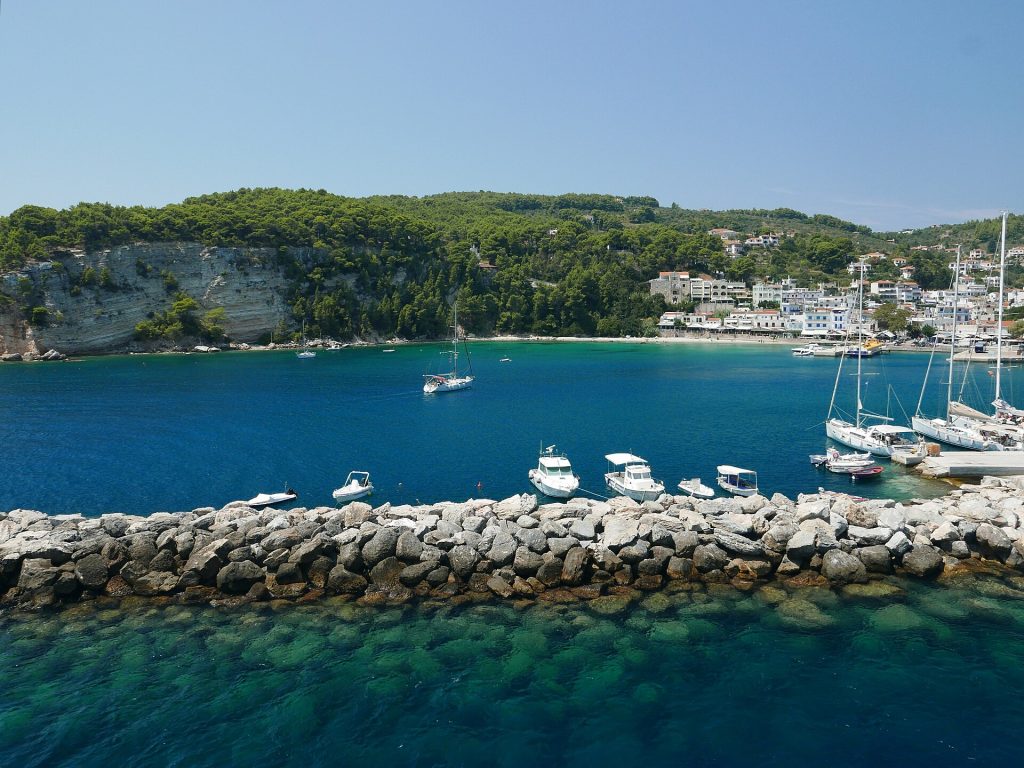
Alonissos, the next island east, is the gateway to the National Marine Park of Alonissos and the Northern Sporades, set up in 1992 to protect the Mediterranean monk seal and seabirds. From May to October, day boats leave Skopelos Town for Alonissos and the islets inside the park, often including Kyra Panagia and the coast of Peristera, with swimming stops along the way.
Seals are shy and rarely seen, but dolphins are a more common sight. A separate guide covers Alonissos itself.
Getting there and around
There is no airport on Skopelos. The quickest route for most visitors is to fly to Skiathos, which has international charter flights in summer and domestic flights from Athens, then take a ferry or fast boat. Crossings take from under an hour to about two hours depending on the vessel and which port it uses. From the mainland, ferries and fast boats run from Volos, roughly two to four hours, and from Agios Konstantinos, which is around two hours by bus from Athens.
Check which port your ticket uses, Skopelos Town or Loutraki (Glossa): the two are at opposite ends of the island. Timetables are thinner outside summer, so check current sailings before booking. On the island, a bus usually runs along the main road between Chora, the west coast beaches and Loutraki in season, but a hire car or scooter gives far more freedom; book ahead for July and August.
Practical tips
- Book early for August: rooms and hire cars sell out around the mid-August holiday.
- Carry some cash: cards are widely accepted in town, but small beach tavernas and kiosks may prefer cash.
- Fuel up in Chora: petrol stations are few once you leave town.
- Fire safety: the pine forests are vulnerable in summer; never light fires and follow any closure notices.
Plan your trip
- Tickets and tours in Skopelos: tickets and tours on Tiqets · activities on Klook
- Arriving by plane: pre-book an airport transfer with Welcome Pickups
- Road trip: compare car hire on Localrent
- Mobile data: get a travel eSIM from Airalo
Some of these are affiliate links: if you book through them we may earn a small commission, at no extra cost to you.
Frequently asked questions
Was Mamma Mia filmed on Skopelos?
Yes, much of the 2008 film was shot on Skopelos, including the chapel of Agios Ioannis sto Kastri near Glossa and Kastani beach. Some scenes were filmed on Skiathos and at Damouchari on the Pelion coast, and the chapel interior was a studio set.
How do you get to Skopelos from Athens?
Either fly from Athens to Skiathos and take a ferry, or take a bus to Agios Konstantinos and sail from there. Ferries from Volos are another option, especially with a car.
Is Skopelos better than Skiathos?
They suit different trips. Skiathos has the airport, sandier beaches and a livelier resort scene. Skopelos is greener, quieter and better for walking, with a more traditional main town. Many visitors combine both.
Planning a bigger trip? See our guide to the 25 best places to visit in Europe, from city breaks to fjords.
Photos: dronepicr, CC BY 2.0, via Wikimedia Commons; User: (WT-shared) StaNik at wts wikivoyage, Public domain, via Wikimedia Commons; Giles Laurent, CC BY-SA 4.0, via Wikimedia Commons; Upp75, CC BY-SA 4.0, via Wikimedia Commons; Alexander Manusevich, CC BY-SA 4.0, via Wikimedia Commons.