Updated
Budapest does winter well. From mid-November the centre fills with wooden huts, the smell of cinnamon and woodsmoke drifts across Pest, and the façade of St Stephen’s Basilica turns into a screen for nightly light shows. The city’s two big Budapest Christmas markets sit about ten minutes’ walk apart, which makes them easy to combine in a single evening.
The markets are only half the reason to come. Budapest sits on dozens of thermal springs, so you can spend a frosty afternoon in steaming outdoor water, then go skating in front of a fairytale castle and finish with a hot chimney cake by the Danube. This guide covers the markets first, then the best winter things to do once you have had your fill of mulled wine.
- Best for: a long weekend, couples, families with older children, and anyone who likes Christmas markets without long travel between them.
- When to go: mid-November to the end of December for the markets; the ice rink and baths keep going through January and February.
- How long: two or three days is enough for both main markets, a thermal bath and an evening by the river.
- Getting there: bus 100E runs from Liszt Ferenc Airport to Deák Ferenc tér in the centre, close to both main markets.
- Bring: warm layers, gloves and swimwear. Nights are often around freezing and the river wind bites.
Vörösmarty tér: Budapest’s classic Christmas fair
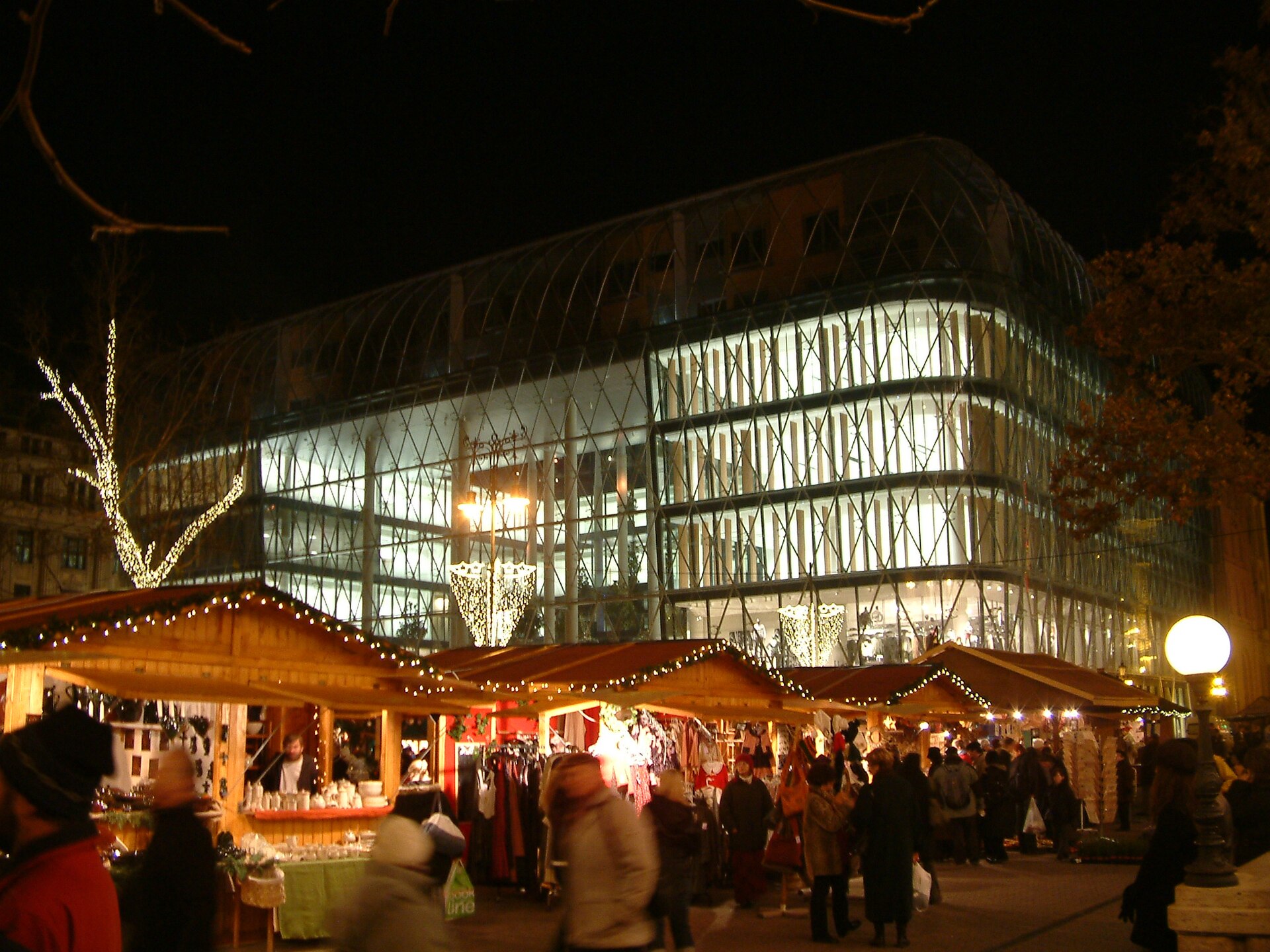
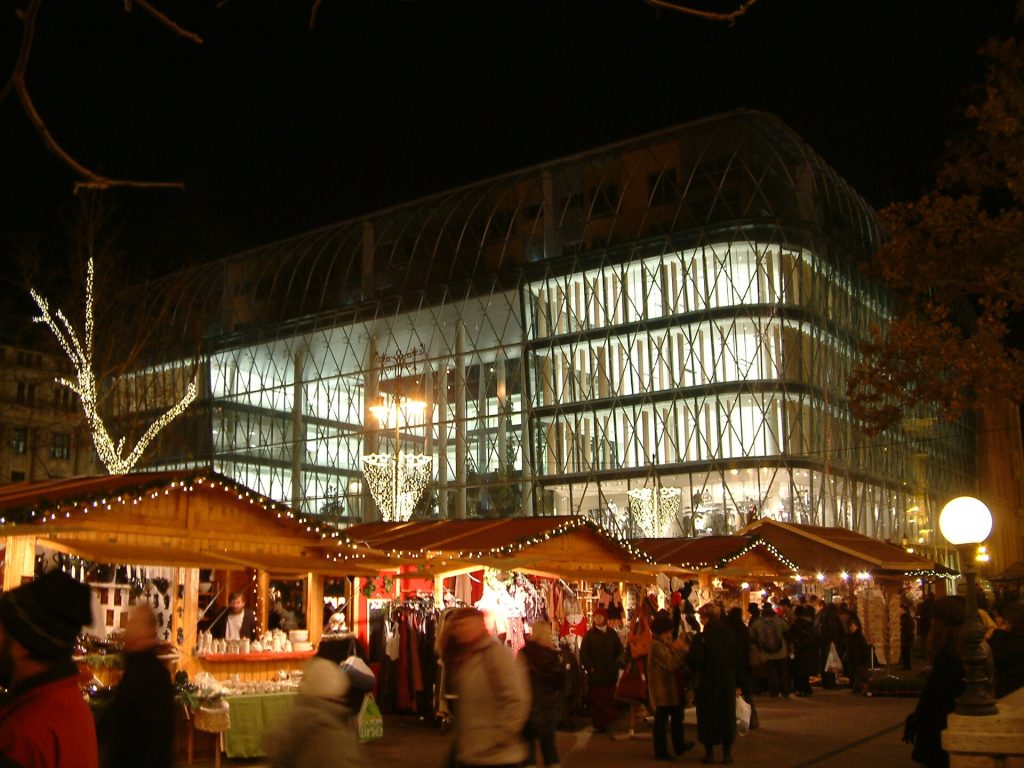
Vörösmarty tér, at the northern end of the pedestrian Váci utca, has hosted Budapest’s main Christmas fair for decades. It now runs under the name Vörösmarty Classic Xmas, and the organiser’s site gives the 2026 opening as 13 November, with the fair staying open until the New Year. Opening times change over the holidays, with short hours on Christmas Eve, so check the official site before planning a late visit.
This is the market to come to for crafts. The organisers place a strong emphasis on Hungarian makers, so alongside the usual baubles you will find handmade wooden and textile toys, felted goods, ceramics, leatherwork and traditional Christmas figures.
The food side of the square is busy from late afternoon. Expect stalls turning out kürtőskalács, lángos, sausages, stuffed cabbage and big pans of stew, plus plenty of forralt bor, the Hungarian mulled wine. There is also a small train for children. The square is framed by the Gerbeaud building, home to the city’s best-known café, which is a handy warm retreat when your hands go numb.
Advent Bazilika at St Stephen’s Basilica
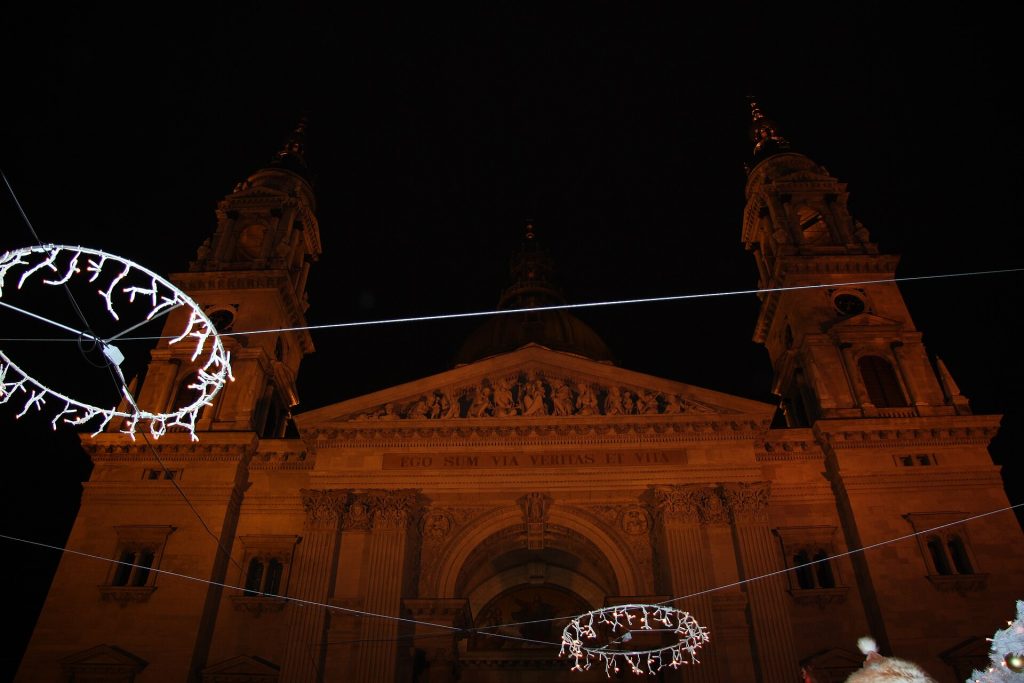
A few streets north, the Advent Bazilika market (often called the Advent Feast at the Basilica in English) fills Szent István tér in front of St Stephen’s Basilica. The official site gives the 2026 dates as 13 November 2026 to 1 January 2027, and this year marks the market’s 15th edition. It has repeatedly topped the European Best Destinations vote for the best Christmas market in Europe, so expect crowds, particularly at weekends.
The big draw is the light show. Every evening from 5.30pm, according to the organisers, the neo-Classical façade of the Basilica becomes the backdrop for a projected light display, sometimes preceded by a short concert. The show repeats through the evening, so if the square is packed for the first one, get some food and come back later.
The stalls here lean more towards food than at Vörösmarty tér, with dozens of Hungarian artisans in between. It is a good place to try hot Hungarian dishes such as goulash, and the decorated square with the Basilica behind it is one of the city’s classic festive photos. If the weather is clear, the Basilica’s dome terrace gives a panoramic view over the lit-up rooftops of Pest. Opening hours for the dome differ from the market’s, so check current times.
Other festive spots worth knowing
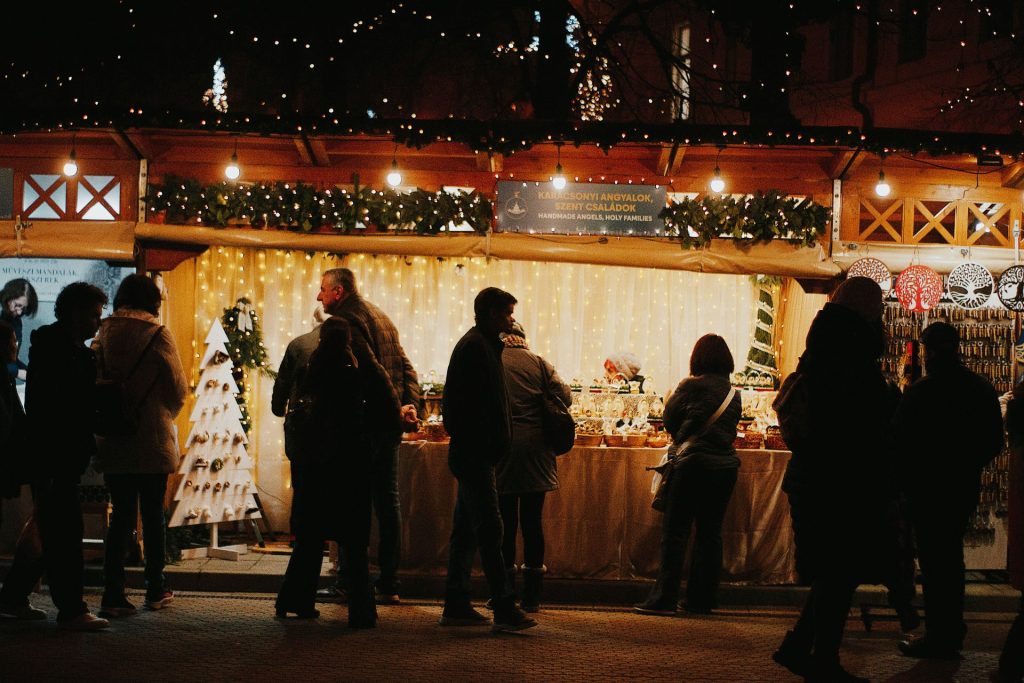
Smaller Christmas fairs appear around Budapest every year, in parks, district squares and outside some of the shopping centres, but their line-up changes from season to season. Budapest Info, the city’s official tourism service, publishes a list each November, and that is the best place to see what is on during your visit. On Andrássy út and around the centre, look out for the Christmas lights and the decorated trams that run on several lines during Advent.
For a less commercial taste of Hungarian Christmas food, the Great Market Hall at Fővám tér is a good alternative on a cold day. The ground floor is full of paprika, salami and pastries, and upstairs there are counters serving lángos and hearty lunches under a roof.
Thermal baths in winter
Soaking in hot spring water while the air is below freezing is one of the great Budapest experiences, and winter is when the baths make the most sense. Steam rolls off the pools and the crowds are smaller than in summer.
Széchenyi Bath
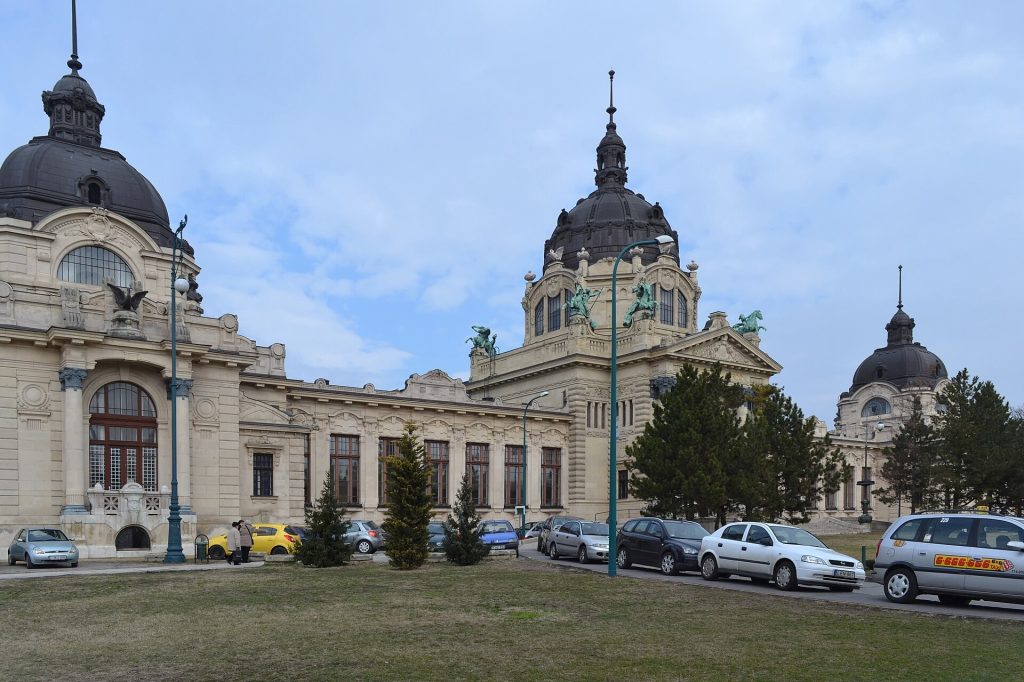
The yellow neo-Baroque Széchenyi Bath in City Park is the famous one, open every day of the year. Its outdoor pools, including a hot thermal pool, stay open in winter, and this is where you will see the classic scene of bathers playing chess in the steam. Note that since August 2025 the bath has not admitted children under 14, so families should look elsewhere. Book online and go early or late in the day to avoid the midday rush. Bring flip-flops and a towel or hire them there.
Rudas Bath
On the Buda bank at the foot of Gellért Hill, the Rudas combines a domed thermal hall dating from the Ottoman period with a modern wellness section and a rooftop panorama pool that looks out over the Danube. The rooftop pool at dusk, with the bridges lit up, is a fine way to end a winter day. The Rudas also opens for night bathing on Friday and Saturday nights, with tickets sold online only.
What about the Gellért Bath
The Art Nouveau Gellért Bath, long one of the city’s most photographed spas, closed on 1 October 2025 for a major renovation. It is not open during winter 2026, and official plans have pointed to a gradual reopening from late 2028 at the earliest, so do not build a trip around it. The Rudas, a short walk along the river, is the nearest alternative.
Skating at the City Park Ice Rink
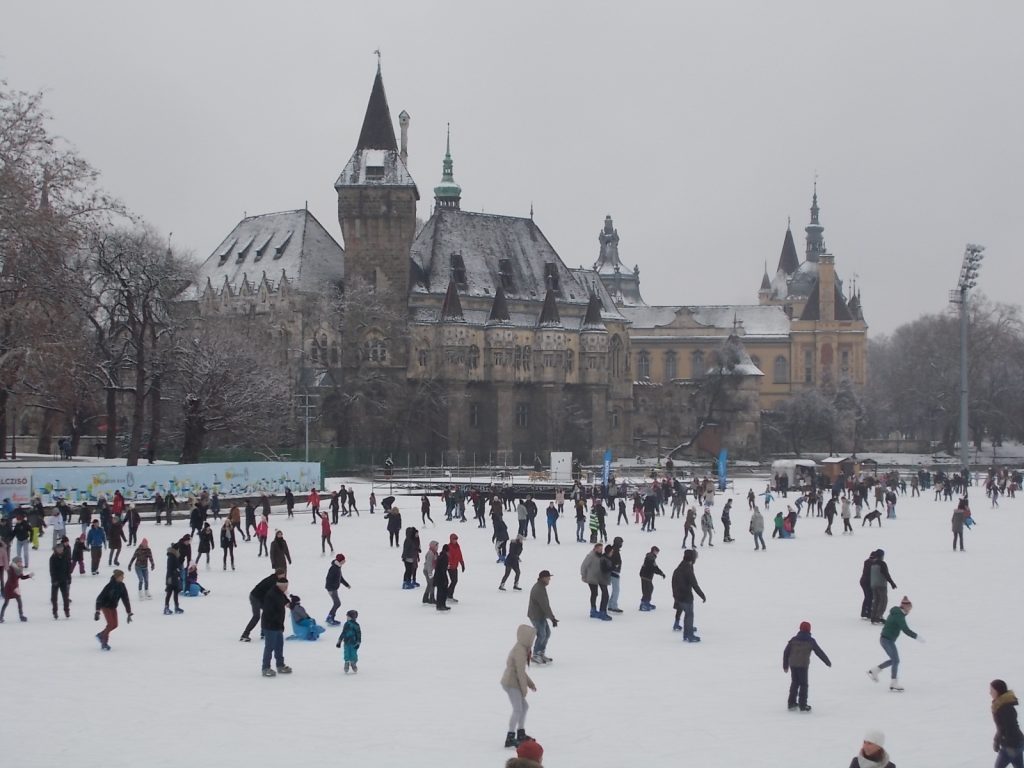
In winter the boating lake in City Park (Városliget) becomes the Városligeti Műjégpálya, one of the largest outdoor ice rinks in Europe. Vajdahunyad Castle rises on its island across the ice, the skating hall on the bank dates from the 1890s, and at night the whole scene is lit up. The rink plans to open its 2026 to 2027 season on 20 November, weather permitting, and usually stays open until around the end of February.
Skates can be hired on site, and tickets are sold online as well as at the rink. The rink is a short walk from Széchenyi Bath, so you can easily pair the two, skating first and then thawing out in the hot water.
Danube views on cold evenings
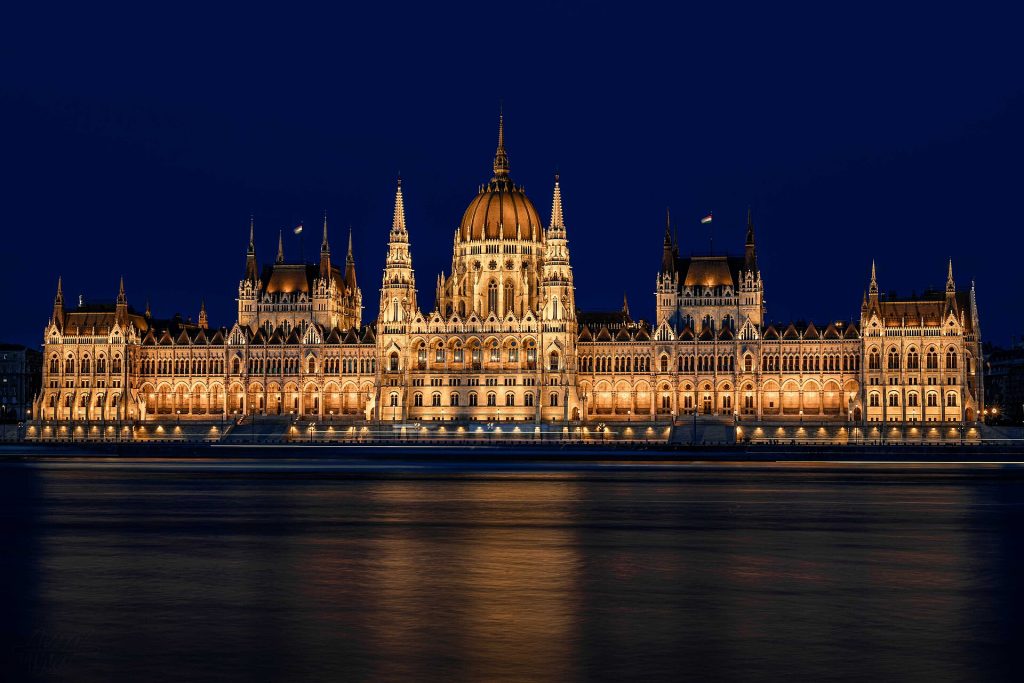
Winter darkness falls early, which is no bad thing in a city that looks its best lit up. The classic view is of the Parliament Building glowing on the Pest bank, seen from across the river at Batthyány tér or from the Fisherman’s Bastion on Castle Hill. From the Bastion terraces you look down over the Chain Bridge towards the Basilica dome, and on a crisp clear evening you can pick out both Christmas markets by their lights.
For a warm way to see the same views, take one of the evening river cruises that run through the winter. Most use boats with heated, glazed cabins and pass the Parliament, the Castle and the main bridges. Book ahead around Christmas and New Year. A cheaper option is tram 2, which runs along the Pest embankment past the Parliament, with the illuminated Buda side across the water.
Winter food and drink to try
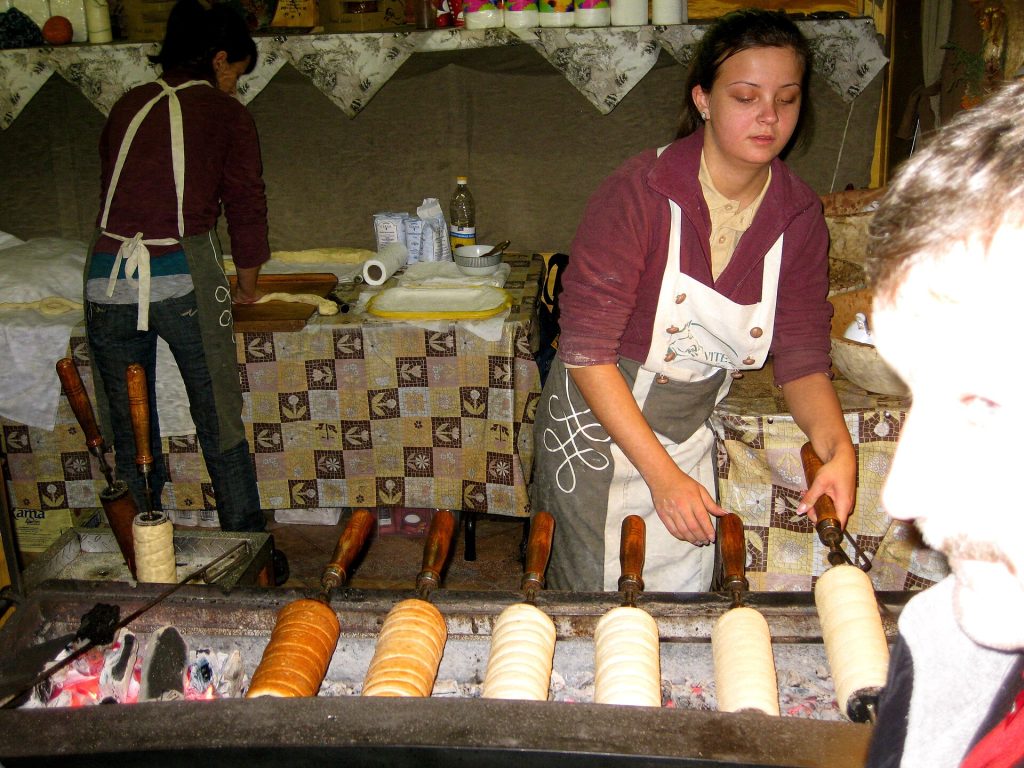
- Kürtőskalács (chimney cake): sweet dough wound around a spit, roasted over heat until caramelised, then rolled in sugar, cinnamon, walnuts or cocoa. Best eaten straight from the fire, when it pulls apart in a spiral.
- Lángos: deep-fried flatbread, traditionally rubbed with garlic and topped with sour cream and grated cheese. Filling enough to count as lunch.
- Forralt bor: Hungarian mulled wine, usually red and spiced with cinnamon and cloves. Many stalls also sell mulled fruit drinks and hot chocolate for non-drinkers.
- Töltött káposzta: cabbage leaves stuffed with minced pork and rice, slow-cooked with sauerkraut and served with sour cream. A Christmas staple in Hungarian homes.
- Bejgli: a rolled pastry filled with poppy seed or walnut, sold in bakeries and at the markets throughout Advent.
- Halászlé: a paprika-red fish soup that many Hungarian families eat on Christmas Eve, worth ordering in a traditional restaurant.
Practical tips for Budapest in winter
- Christmas Eve closures: 24 December is a family day in Hungary. Markets close early, many restaurants and shops shut in the afternoon, and public transport runs a reduced service in the evening. Plan dinner ahead.
- Book the baths and cruises: buy bath tickets and evening cruises online for weekends and the week between Christmas and New Year.
- Pay attention at the stalls: prices are usually shown per item or by weight; check which before ordering. Cards are widely accepted, but keep some forints for smaller stalls.
- Weekday visits: both main markets get very crowded on Friday and Saturday evenings. A weekday or an early visit is much calmer.
- Getting around: the centre is walkable, and metro line 1, the oldest underground line in continental Europe, runs under Andrássy út to City Park. Buy a travel pass for longer stays.
Plan your trip to Budapest
- Tickets and tours in Budapest: tickets and tours on Tiqets · activities on Klook
- Arriving by plane: pre-book an airport transfer with Welcome Pickups
- Road trip: compare car hire on Localrent
- Mobile data: get a travel eSIM from Airalo
Some of these are affiliate links: if you book through them we may earn a small commission, at no extra cost to you.
Planning a bigger trip? See our guide to the 25 best places to visit in Europe, from city breaks to fjords.
Keep exploring
Frequently asked questions
When do the Budapest Christmas markets open in 2026?
Both main markets open on 13 November 2026, according to their organisers. The Vörösmarty tér fair runs until New Year, and Advent Bazilika at St Stephen’s Basilica runs until 1 January 2027. Check the official sites for holiday opening times.
Is the Gellért Bath open in winter 2026?
No. The Gellért Bath closed on 1 October 2025 for a long renovation and is not expected to reopen for several years. Széchenyi and Rudas are both open in winter.
Which Budapest Christmas market is best?
Vörösmarty tér is better for handmade crafts and gifts, while Advent Bazilika is better for food, atmosphere and the light show on the Basilica façade. They are close enough to visit both in one evening.
Photos: Antissimo, CC BY-SA 3.0, via Wikimedia Commons; Karl Gruber, CC BY-SA 3.0 at, via Wikimedia Commons; Photo via Pexels; Slyronit, CC BY-SA 4.0, via Wikimedia Commons; Globetrotter19, CC BY-SA 3.0, via Wikimedia Commons; Aleksander Kracht-Winter, CC BY-SA 4.0, via Wikimedia Commons; Top Budapest, CC BY 2.0, via Wikimedia Commons.