Updated
Barcelona, Madrid, Seville and the Costa del Sol get most of Spain’s visitors, and for good reason. But drive an hour inland from almost any beach resort in the south and the crowds thin out fast. You’ll find Moorish fortresses with hardly anyone on the walls, Renaissance squares where locals still sit outside in the evening, towns where people live in caves, and some of the wildest coastline left in the Mediterranean.
These are nine of our favourite non-touristy places in southern and south-eastern Spain, from Valencia’s palm city to the mountains of Jaén. None of them is a secret exactly, but all of them see a fraction of the visitors they deserve.
Non-touristy Spain at a glance
- Best for history: Úbeda and Baeza, Cartagena and Antequera.
- Best for beaches: Cabo de Gata-Níjar Natural Park.
- Best for something unusual: the cave houses of Guadix and the palm groves of Elche.
- Best for hiking: the Sierra de Cazorla and El Torcal.
- When to go: spring and autumn. Inland Andalusia regularly passes 40°C in July and August.
1. Elche (Valencia region)
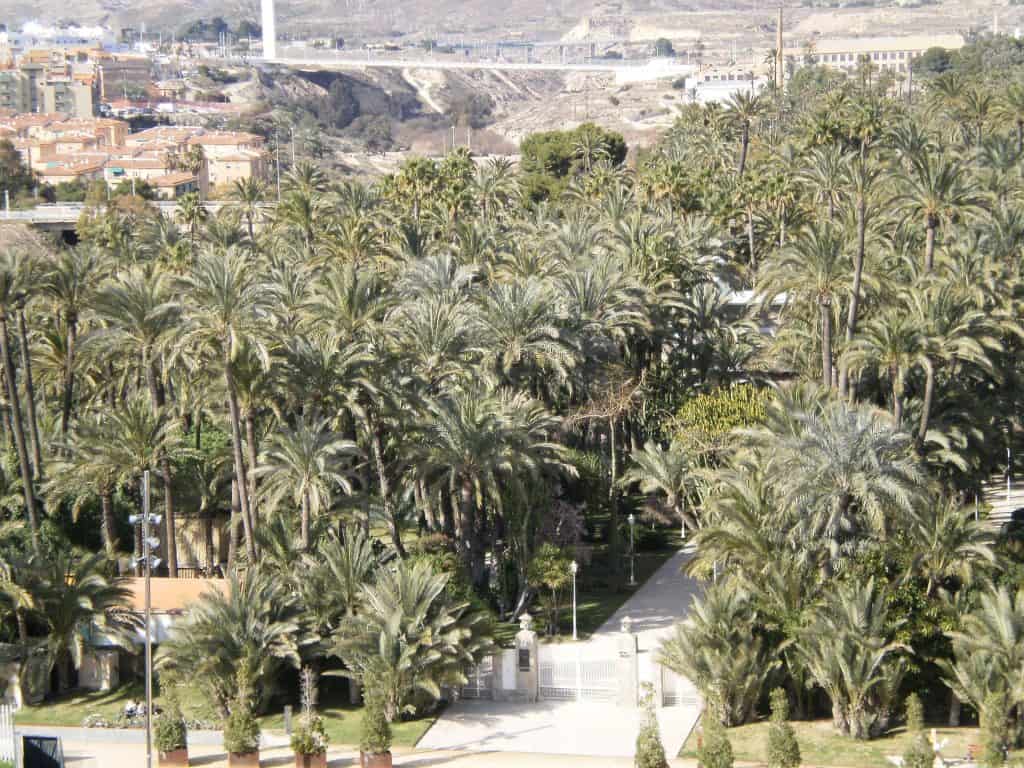
Most people land at Alicante-Elche airport and head straight for the coast, never seeing the town the airport is half named after. Elche is surrounded by the Palmeral, a huge network of date palm orchards first laid out with irrigation channels during the Moorish period. It’s been a UNESCO World Heritage Site since 2000 and is the largest palm grove in Europe.
The prettiest corner is the Huerto del Cura garden, home to the “Imperial Palm”, a single palm with several trunks branching from one base. The town also has a second UNESCO listing: the Misteri d’Elx, a sung medieval mystery play performed in the Basilica of Santa María every August. The famous Iberian bust known as the Lady of Elche was found nearby in 1897, though the original is now in Madrid.
Don’t miss: walking or cycling the signposted route through the palm groves, which is free and shady even in summer.
2. Almería
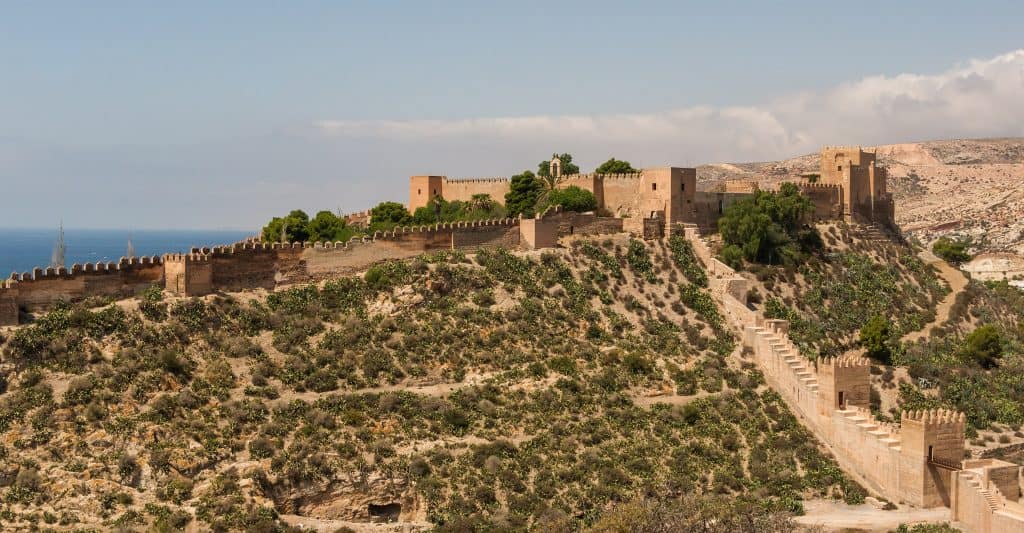
Almería is one of the sunniest cities in Europe and still one of the least visited provincial capitals in Andalusia. Its Alcazaba, a Moorish fortress begun in the 10th century under the Caliphate of Córdoba, stretches along a ridge above the old town, with walls running down the hill and views over the port. It’s one of the largest Muslim fortresses in Spain, and you’ll often have whole sections of it to yourself.
Like Granada and Jaén, Almería still serves a free tapa with every drink in most traditional bars, so an evening of moving from bar to bar is the way to eat here. Inland, the Tabernas desert was the backdrop for many 1960s spaghetti westerns, and some of the old film sets are now open to visitors.
3. Cabo de Gata-Níjar Natural Park
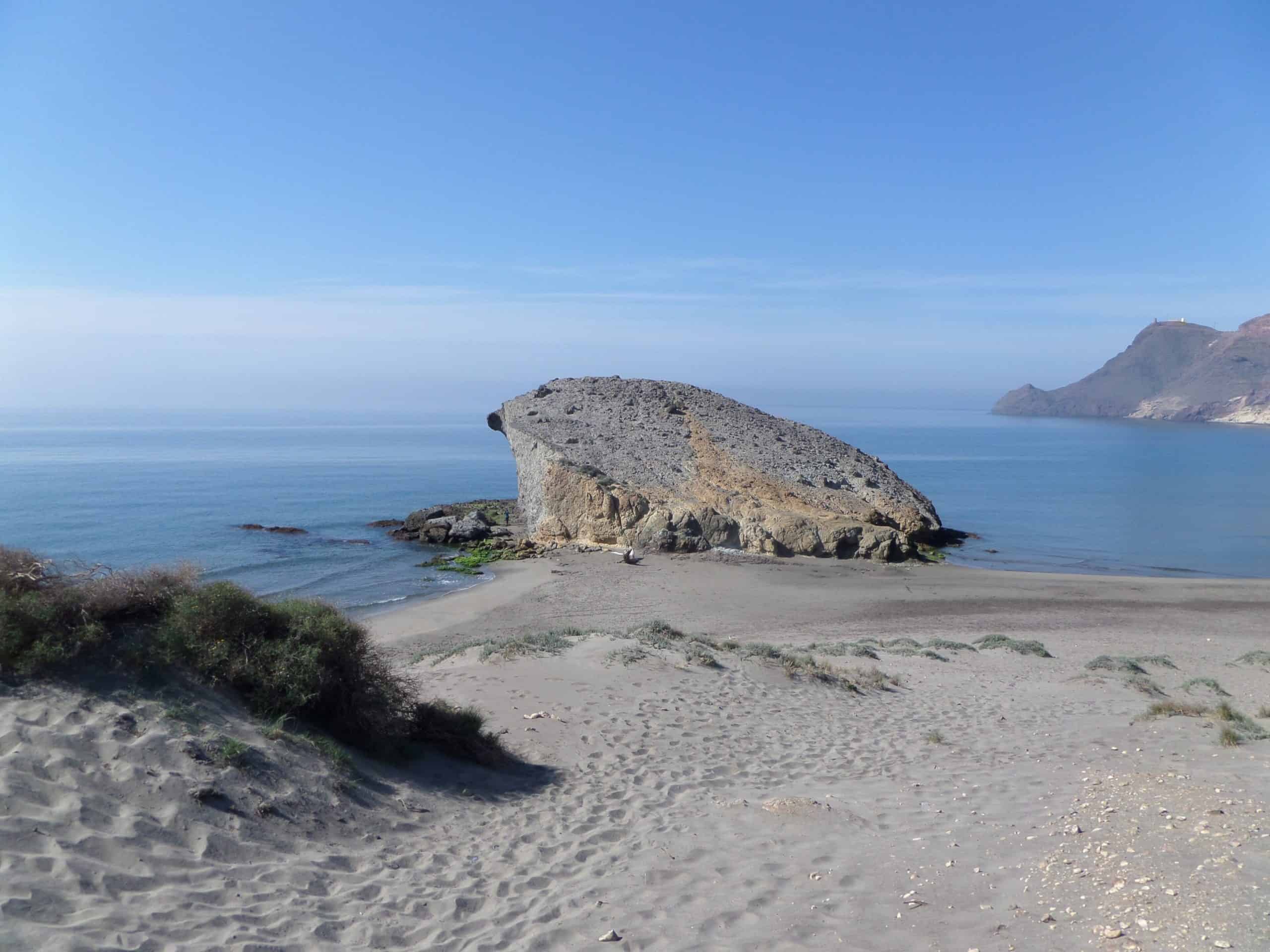
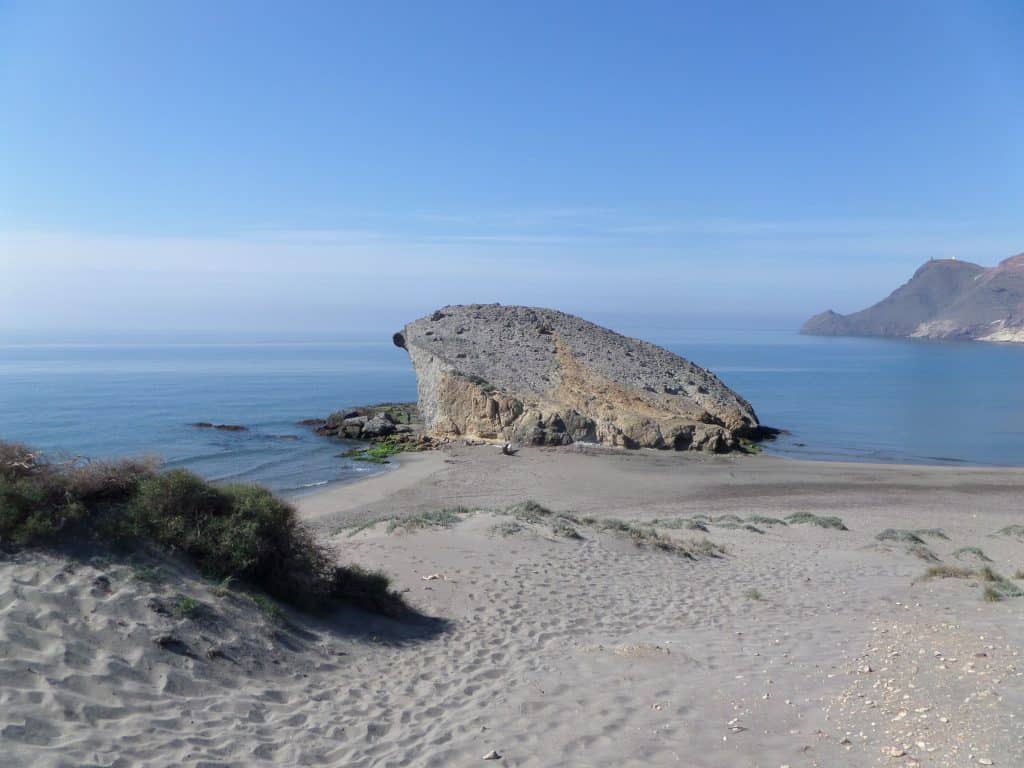
East of Almería, the Cabo de Gata-Níjar Natural Park protects one of the longest stretches of undeveloped coast on the Spanish Mediterranean. It’s a dry, volcanic landscape of dark cliffs, agave and sand dunes, with clear water and very little building. It’s also a UNESCO biosphere reserve and geopark.
The best beaches, Mónsul and Los Genoveses, are reached by a dirt road or on foot from the village of San José, and access by car is limited in summer, which keeps them quiet. Agua Amarga and Las Negras are relaxed little villages, and Rodalquilar has the ruins of an old gold mine. Inland, the town of Níjar is known for its pottery and colourful woven rugs called jarapas.
Tip: in July and August, take the shuttle bus from San José to Mónsul and Los Genoveses, or walk the coastal path early in the morning.
4. Cartagena (Murcia)
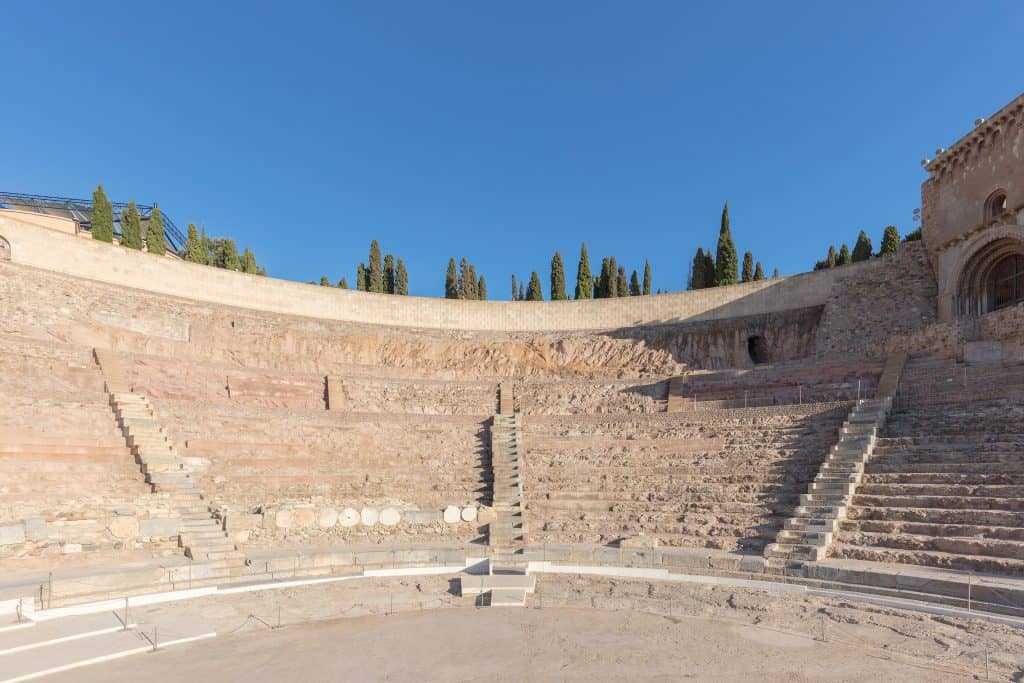
Founded by the Carthaginians, renamed by the Romans and fortified for centuries as a naval base, Cartagena has layers of history most visitors never suspect. Its highlight is the Roman Theatre, built in the reign of Augustus and seating around 6,000 people. It lay hidden under the old town until excavations began in 1988, and it opened to visitors in 2008 along with a museum designed by the architect Rafael Moneo.
The rest of the town has handsome early 20th-century Modernista buildings, a lift up to the Castillo de la Concepción, and a Naval Museum that houses the pioneering submarine built by the local inventor Isaac Peral in the 1880s. The beaches of the Mar Menor and the Calblanque Regional Park are a short drive away.
5. Guadix (Granada)
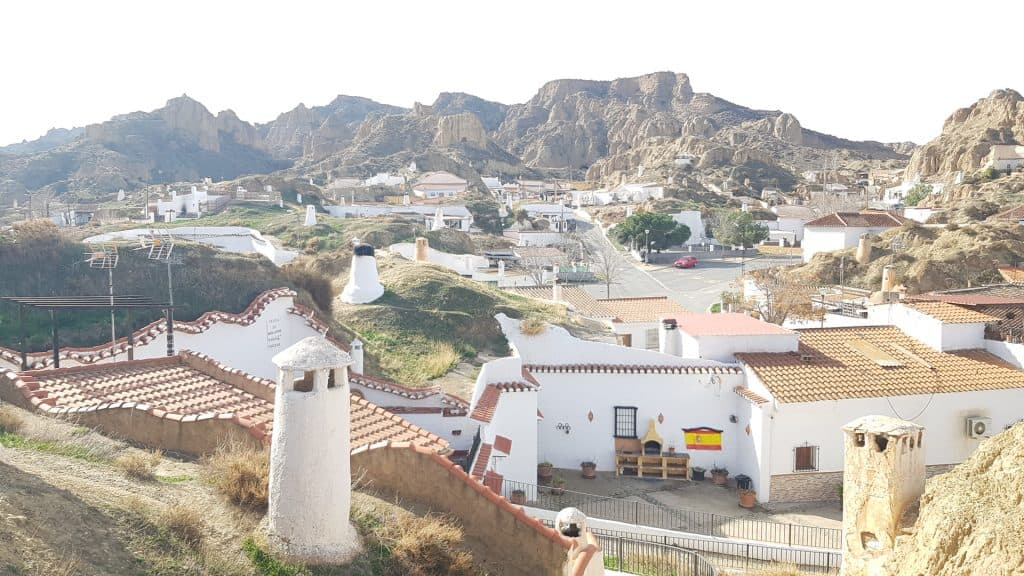
In Guadix, the giveaway is the white chimneys poking out of the ground. The town has around 2,000 cave houses, dug into the soft clay hills of its Barrio de las Cuevas, and many of them are still lived in. Caves stay at a steady, mild temperature all year, which makes a lot of sense in a place with hot summers and cold winters.
Visit the cave interpretation centre to see how a traditional cave home works, then walk up to the Mirador Padre Poveda for the view over the chimneys. Guadix also has a large cathedral and a Moorish fortress, and it’s under an hour from Granada. For a memorable night, book a stay in a cave hotel.
6. Iznájar (Córdoba)
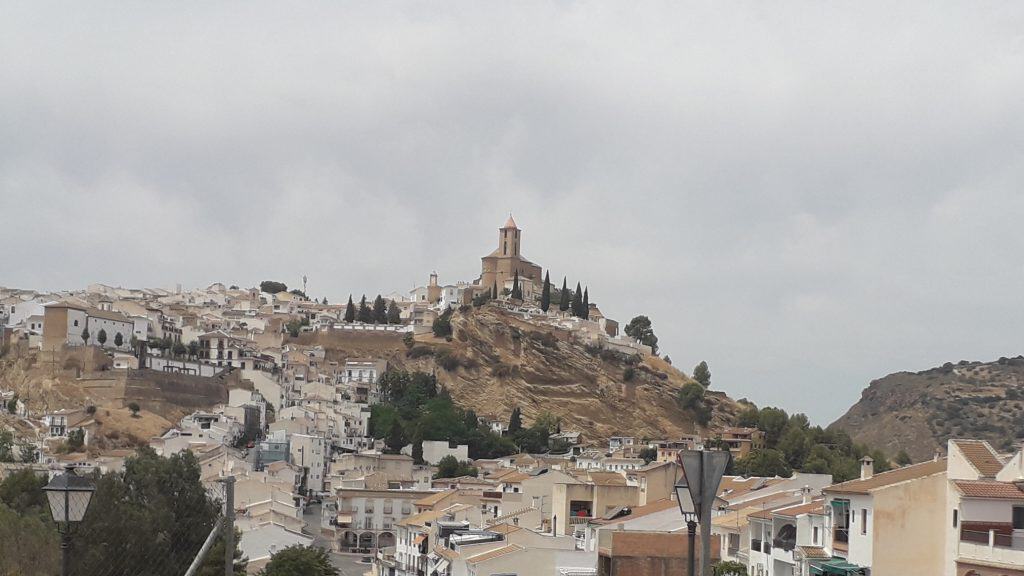
Iznájar is a classic Andalusian white village, piled up on a hill around a Moorish castle and the church of Santiago. What makes it special is the setting: the hill rises above the Iznájar reservoir, often called “the lake of Andalusia” and the largest in the region, with more than 100 km of shoreline.
Below the village, Valdearenas is an inland beach with sand and lifeguards in summer, where you can swim or rent kayaks and pedal boats. The surrounding Subbética area is olive country, with quiet villages such as Priego de Córdoba and Zuheros within easy reach.
7. Úbeda and Baeza (Jaén)
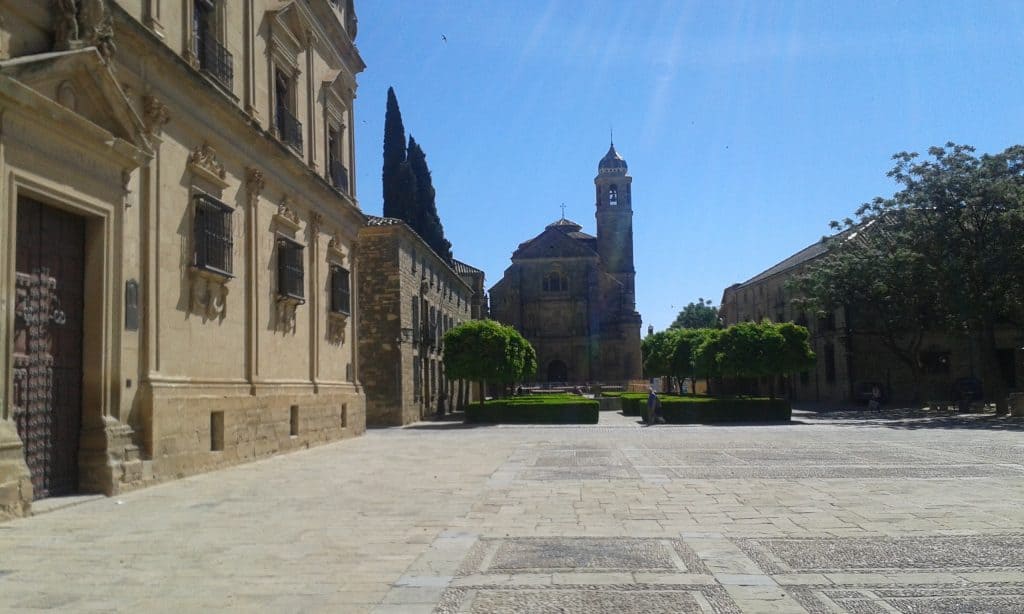
Surrounded by an ocean of olive trees, these two small towns ten kilometres apart are home to some of the finest Renaissance architecture in Spain. They were added to the UNESCO list together in 2003, largely thanks to the work of the 16th-century architect Andrés de Vandelvira.
In Úbeda, the Plaza Vázquez de Molina is lined with palaces and the Sacra Capilla del Salvador, and one of its palaces is now a parador hotel. Baeza is smaller and quieter, with a cathedral, an old university and honey-coloured streets that are lovely at dusk. Jaén province produces more olive oil than anywhere else in Spain, so book an oil tasting at a local mill.
8. Cazorla and its mountains (Jaén)
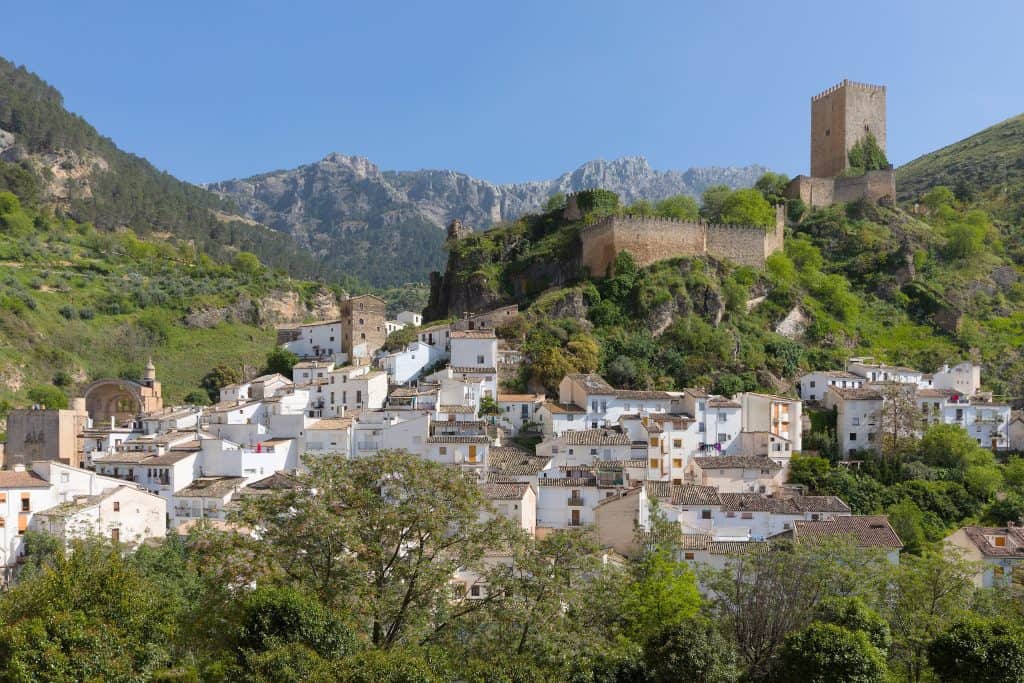
The town of Cazorla, with the ruined Castillo de la Yedra above its rooftops, is the gateway to the Sierras de Cazorla, Segura y Las Villas Natural Park, the largest protected natural area in Spain. It’s a landscape of pine forest, limestone peaks and deep river gorges, and the Guadalquivir river rises here before flowing to Córdoba and Seville.
The Río Borosa trail, which follows a gorge past waterfalls and through tunnels to mountain lakes, is one of the best walks in Andalusia. Look out for ibex, deer, mouflon and griffon vultures. Bring layers: it’s much cooler up here than on the coast.
9. Antequera (Málaga)
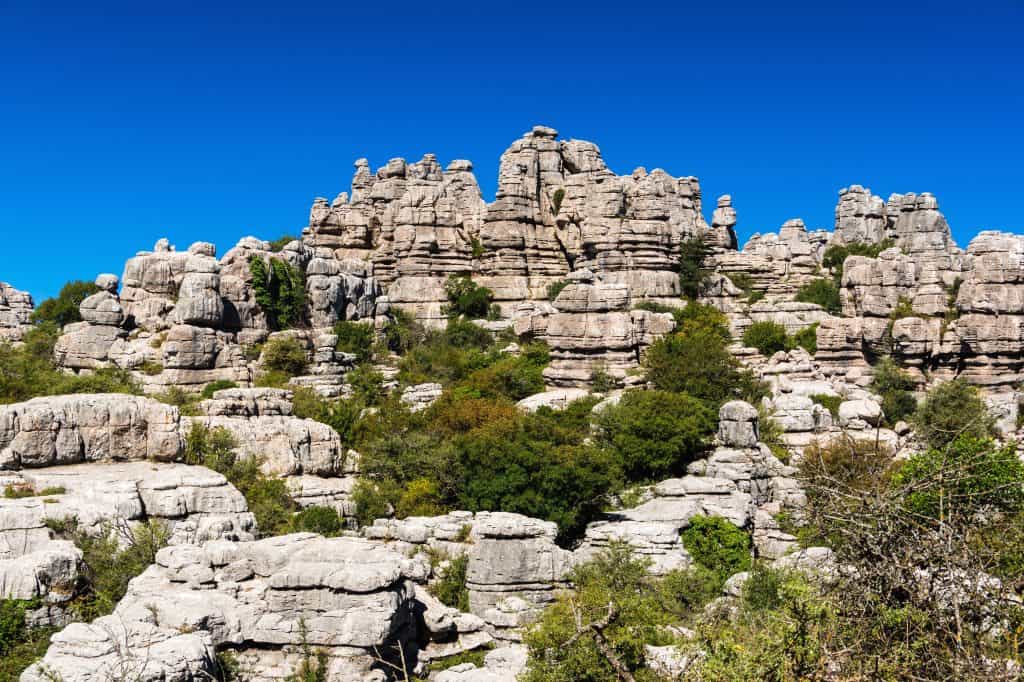
Antequera sits almost exactly in the middle of Andalusia, so it’s an easy stop between Málaga, Granada, Córdoba and Seville, yet most people drive straight past it. Just outside the town are the Dolmens of Menga and Viera, massive stone tombs built more than 5,000 years ago and listed by UNESCO in 2016 as part of the Antequera Dolmens Site.
The same listing includes El Torcal, a nature reserve of strange, stacked limestone rocks shaped by wind and rain, with short, well-marked walking trails. Back in town, there’s a Moorish Alcazaba and a lot of churches for such a small place. Order porra antequerana, the local thick cold tomato soup.
Getting around
- By car: the best way to reach most of these places. Roads are good, and inland Andalusia is easy driving.
- By train and bus: Elche, Almería, Cartagena, Guadix and Antequera have train stations. Úbeda, Baeza, Cazorla and Iznájar are reached by bus, with fewer services at weekends.
- Nearest airports: Alicante-Elche, Murcia, Almería, Granada and Málaga.
Plan your trip to Spain
- Tickets and tours in Spain: tickets and tours on Tiqets · activities on Klook
- Arriving by plane: pre-book an airport transfer with Welcome Pickups
- Road trip: compare car hire on Localrent
- Mobile data: get a travel eSIM from Airalo
Some of these are affiliate links: if you book through them we may earn a small commission, at no extra cost to you.
Planning a bigger trip? See our guide to the 25 best places to visit in Europe, from city breaks to fjords.
Keep exploring
- Andalusia Travel Guide: The Best Places to Visit in Southern Spain, for Seville, Granada and Córdoba.
- Spain’s Most Picturesque Rural Villages: 10 Quiet Pueblos to Visit, if you like small places.
- Travelling Spain Alone: A Practical Guide for Solo Travellers: practical tips for solo trips.
Frequently asked questions
Where can I go in Spain without tourists?
Inland Andalusia, Murcia and the interior of the Valencia region are much quieter than the coast. Jaén province, home to Úbeda, Baeza and Cazorla, is one of the least visited parts of southern Spain.
What is the most underrated city in Spain?
It’s a matter of taste, but Almería, Cartagena and Elche are often overlooked. Each has major historic sights and far fewer visitors than Seville or Granada.
When is the best time to visit southern Spain?
March to May and late September to November. Summer is very hot inland, and many beaches get busy in August.
Photos: CFiesta, CC BY-SA 3.0, via Wikimedia Commons; Superchilum, CC BY-SA 3.0, via Wikimedia Commons; Jebulon, CC0, via Wikimedia Commons; Diego Delso, CC BY-SA 4.0, via Wikimedia Commons; Elgaard, CC BY-SA 4.0, via Wikimedia Commons; Feranza, CC BY-SA 4.0, via Wikimedia Commons; Axel Cotón Gutiérrez, CC BY-SA 4.0, via Wikimedia Commons; Benjamin Smith, CC BY-SA 4.0, via Wikimedia Commons.