Updated
Most short visits to Brussels never leave the square kilometre around the Grand-Place, Manneken Pis and the Royal Galleries. That is a pity, because the city is really a patchwork of 19 municipalities and dozens of quarters, each with its own squares, markets and cafés.
This guide works through Brussels one neighbourhood at a time, with what to see in each, how to get there and how the areas link up. It assumes you have seen, or will see, the headline sights of the old centre.
Brussels neighbourhoods at a glance
- Best for a first wander: Sainte-Catherine and the Marolles, both walkable from the Grand-Place.
- Best for Art Nouveau: Saint-Gilles, Ixelles and the squares around Square Ambiorix.
- Best for food and drink: the Parvis de Saint-Gilles, Place du Châtelain and Place Flagey.
- Best on a sunny day: the Ixelles ponds, the Abbey of La Cambre gardens and Josaphat Park.
- Getting around: STIB metro, premetro, trams and buses, with contactless bank cards accepted.
1. Sainte-Catherine and the old quays
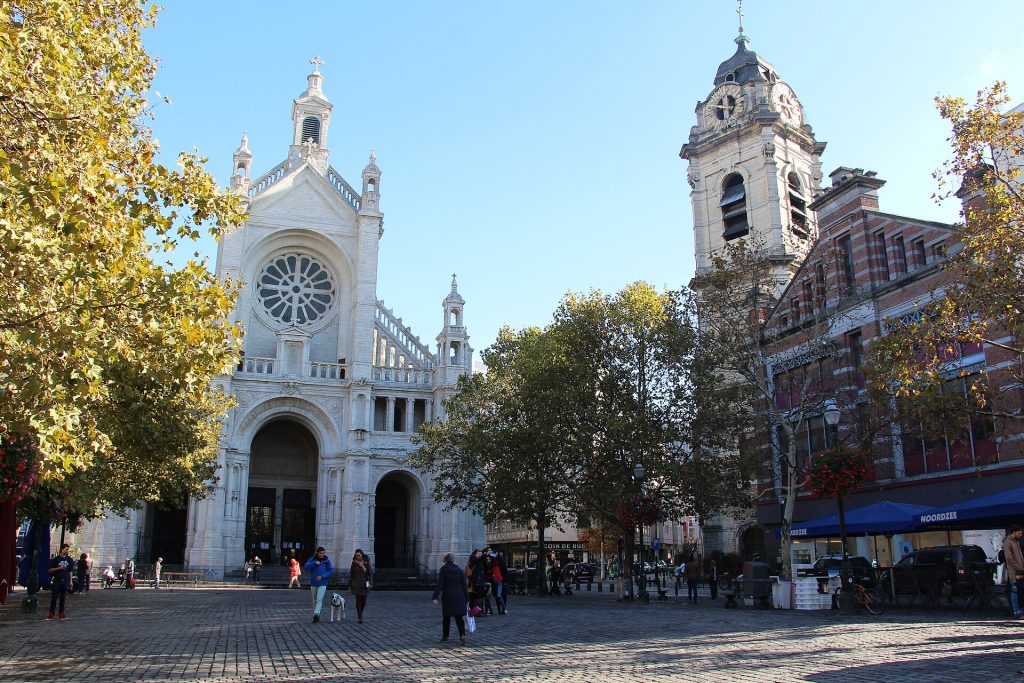
Five minutes north-west of the Grand-Place, Sainte-Catherine is where Brussels kept its inland port until the docks were filled in during the 19th century. The long open spaces called the Quai aux Briques and the Quai au Bois à Brûler follow the line of the old basins, and the area is still known for seafood restaurants.
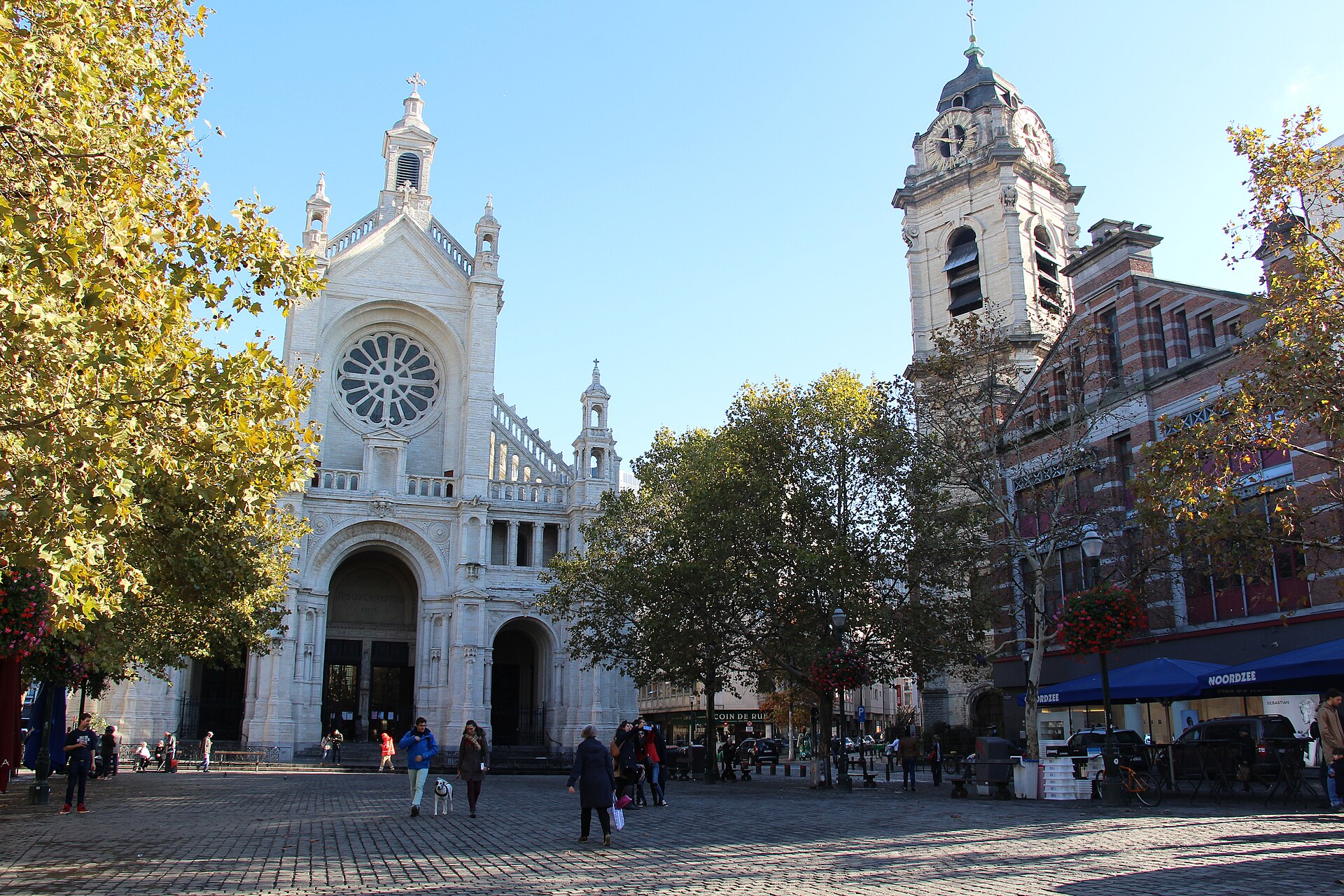
The church of Sainte-Catherine was designed by Joseph Poelaert and built between 1854 and 1874 on the site of a former port basin. The Baroque bell tower of the earlier church still stands on its own nearby. Rue Antoine Dansaert, running south-west from here, is the city’s main street for Belgian fashion designers and independent shops, and Place Saint-Géry nearby is full of bars.
For industrial architecture, carry on along the canal to Tour & Taxis, a vast former customs and freight complex whose Royal Depot warehouse and iron-roofed Gare Maritime now hold shops, food stalls, offices and events.
2. The Marolles
South of the centre, the Marolles has been a working-class district for centuries. Rue Haute and Rue Blaes run parallel through it, lined with antique and second-hand dealers and simple cafés. The flea market on the Place du Jeu de Balle, between the two streets, runs every morning; go early for the best finds.
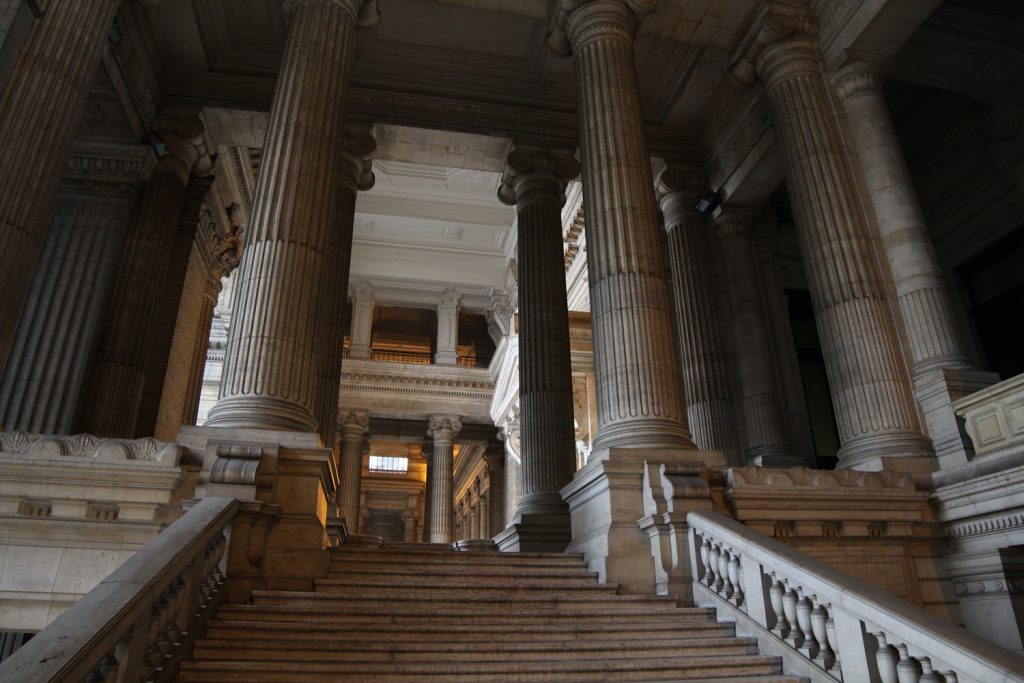
At the northern end, the Gothic church of Notre-Dame de la Chapelle is where Pieter Bruegel the Elder married in 1563 and was buried in 1569; a memorial to him is inside. Above the district looms the Palais de Justice. Designed by the same Joseph Poelaert and finished in 1883, it is often described as the largest building constructed in the 19th century. Parts of it have been under scaffolding for years during a long restoration, but the terrace on Place Poelaert gives one of the widest views over Brussels.
A free public lift links that terrace with the Marolles below, saving a steep climb, though it has had periods out of service. The Sablon is a ten-minute walk from the top.
3. Saint-Gilles
Saint-Gilles is a separate municipality with its own mayor and an almost village-like centre. The heart of it is the Parvis de Saint-Gilles, a sloping square in front of the parish church with a regular market and café terraces that spill across the cobbles in good weather. The Parvis de Saint-Gilles premetro stop is right underneath.
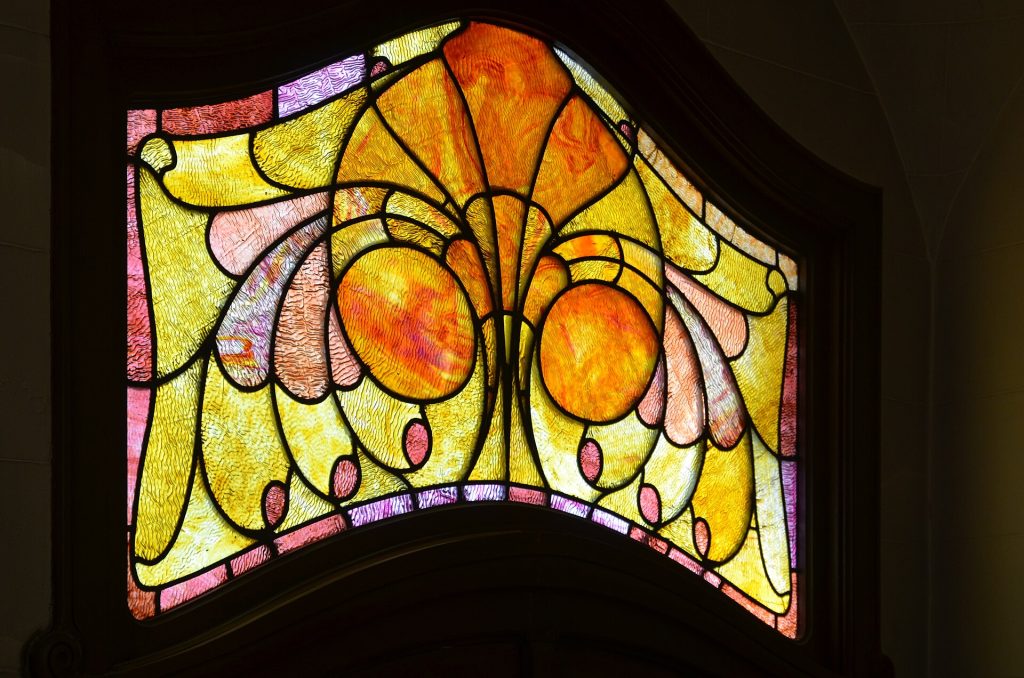
Ten minutes uphill, the turreted town hall on Place Van Meenen, completed in the early 1900s, looks like a French château. The surrounding streets are some of the best in Brussels for Art Nouveau facades. Two houses are open to visitors. The Horta Museum on Rue Américaine, Victor Horta’s own house and studio, is part of the UNESCO listing for his major town houses, inscribed in 2000; numbers are limited, so book ahead. The Hôtel Hannon, a corner house of 1903 to 1904 by Jules Brunfaut on Avenue Brugmann, is now a museum run by the commune.
On the northern edge of Saint-Gilles, the Porte de Hal is the last surviving gate of the city’s second medieval wall, a fortified tower now run as a museum.
4. Ixelles: Châtelain and Avenue Louise
Ixelles wraps around Avenue Louise, the city’s smartest shopping boulevard. The streets just east of it, around Place du Châtelain, are among the most pleasant residential quarters in the city. On Wednesday afternoons the square fills with a food market that becomes an after-work gathering.
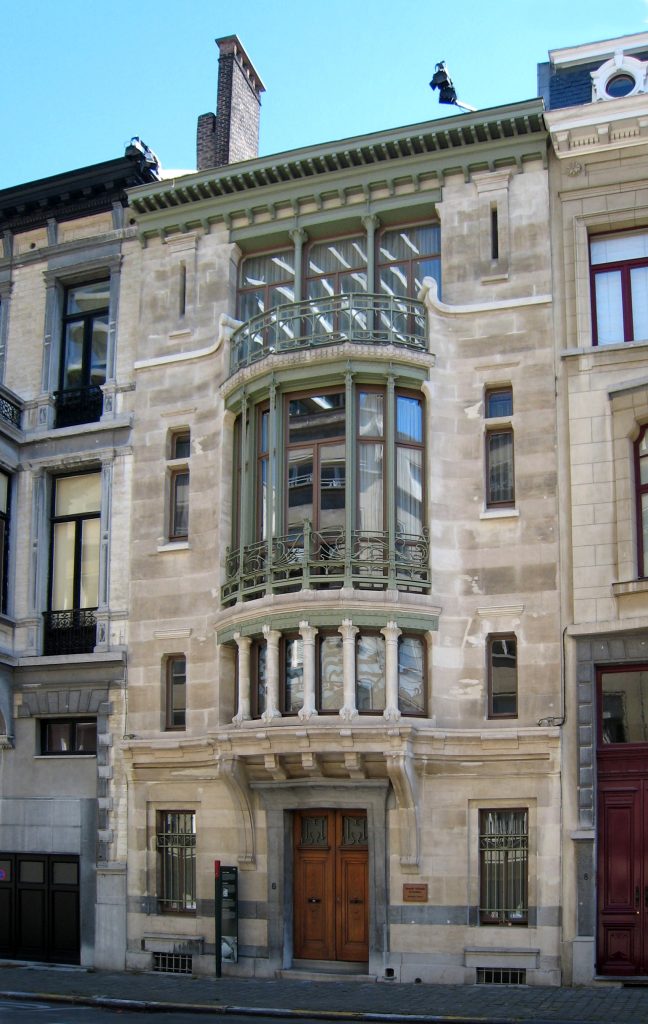
A few minutes away on Rue Paul-Émile Janson is the Hôtel Tassel, built by Horta in 1893 and often cited as one of the first true Art Nouveau buildings. It is part of the same UNESCO listing and is generally closed inside, but the facade is easy to admire from the street. Rue Defacqz and the surrounding blocks have further fine houses by Paul Hankar and others.
5. Flagey, the ponds and La Cambre
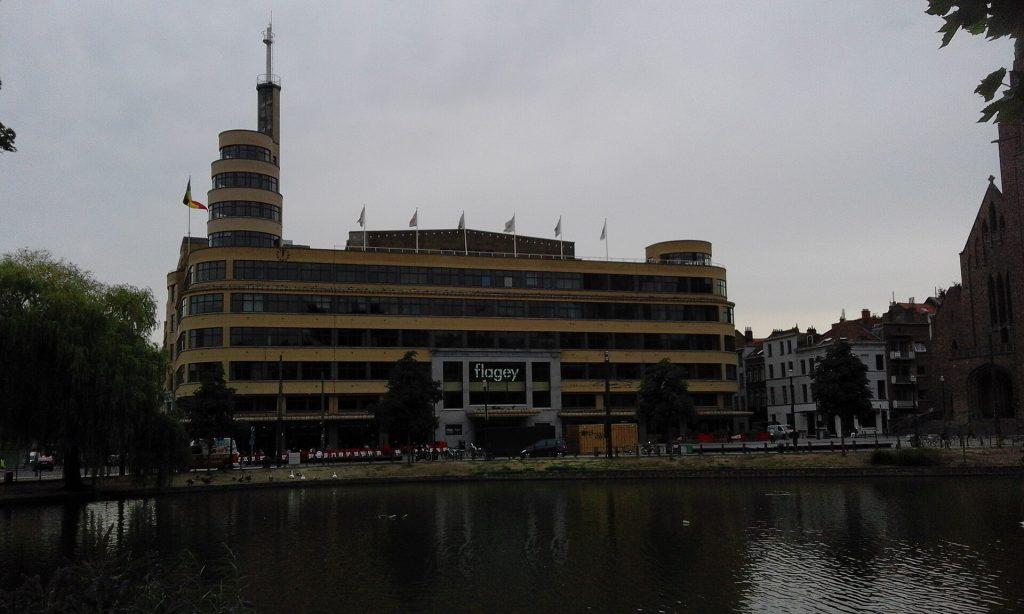
Place Flagey is dominated by the Flagey building, a cream-coloured streamlined block opened in 1938 as the headquarters of Belgian public radio. Locals call it the “packet boat” for its resemblance to an ocean liner. It now houses concert halls and film screenings, and the square in front is one of the liveliest in Ixelles.
Behind it, the two Ixelles ponds run south in a green, tree-lined strip. Follow them to the end and you reach the Abbey of La Cambre, a former Cistercian abbey whose terraced gardens step down the Maelbeek valley. The gardens are open to walk through. Continue south and you are in the Bois de la Cambre, a large wooded park with a lake and an island.
6. Matongé
Between Porte de Namur and the Chaussée de Wavre, Matongé is the centre of Congolese and wider African life in Brussels. It takes its name from a district of Kinshasa, and grew from the 1950s and 1960s around Congolese students and other new arrivals. Today it is a lively few blocks of hair salons, fabric and grocery shops, bars and restaurants serving Congolese and other African dishes. It is best in the early evening; respect people’s privacy and ask before photographing anyone.
7. The squares quarter and the European Quarter
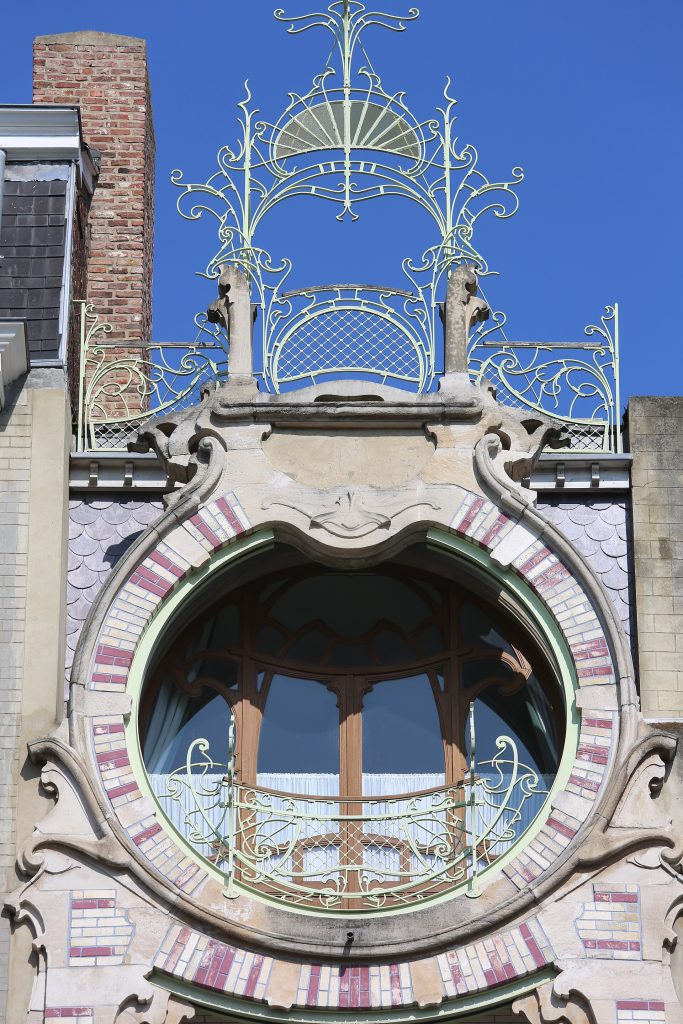
Just north-east of the EU buildings, Square Marie-Louise and Square Ambiorix form a chain of sloping gardens and ponds lined with grand townhouses. The most extraordinary is the Maison Saint-Cyr at Square Ambiorix 11, built by Gustave Strauven between 1901 and 1903 for a painter: a facade only a few metres wide, almost entirely made of curling ironwork and round windows. Horta’s Hôtel van Eetvelde, the third UNESCO-listed house, is a few steps away on Avenue Palmerston.
The European Quarter itself is mostly offices, but two free museums are worth a visit: the Parlamentarium and the House of European History in Parc Léopold. Place Jourdan, nearby, has one of the best-known friteries in the city, and the Parc du Cinquantenaire with its triumphal arcade and museums is a short walk east.
8. Schaerbeek
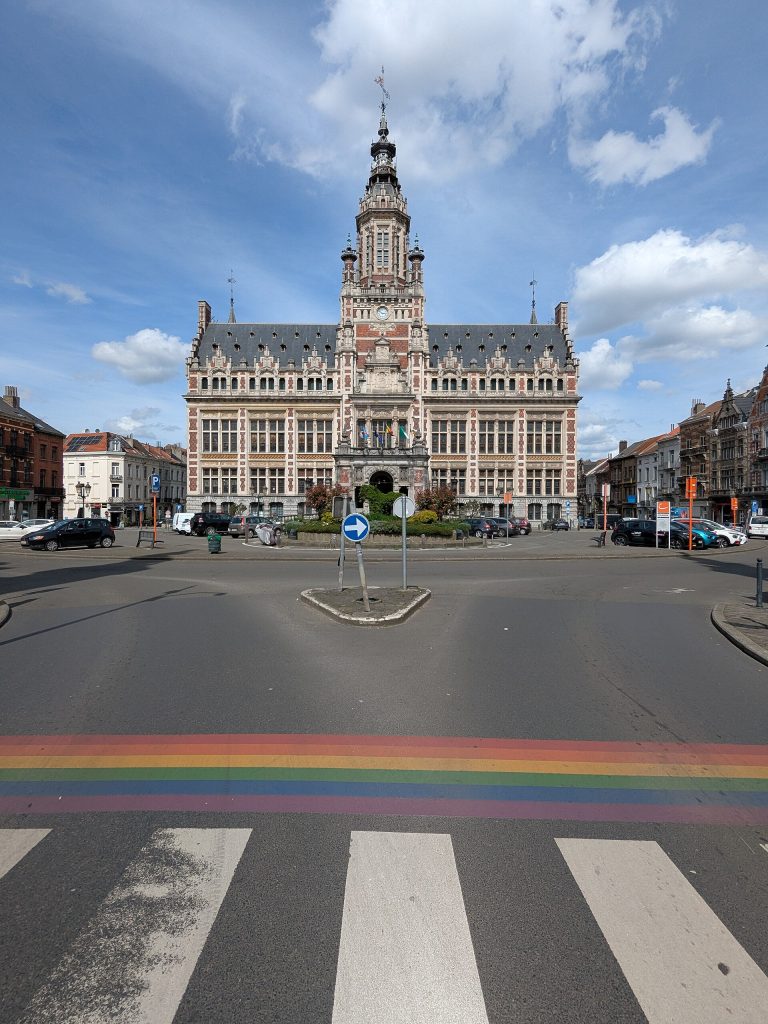
Schaerbeek, north of the centre, is a large and varied municipality that rewards a targeted visit. The Maison Autrique on the Chaussée de Haecht is Horta’s first house, completed in 1893 for his friend Eugène Autrique, now a museum. Place Colignon has the municipality’s ornate brick-and-stone town hall, rebuilt after a fire in 1911 and opened in 1919.
Josaphat Park, laid out in the early 1900s across about 20 hectares, is one of the prettiest parks in Brussels, with a string of ponds in a small valley. Near the church of Sainte-Marie, the Halles de Schaerbeek, a restored 19th-century iron market hall, is now a venue for theatre, dance and concerts.
9. Laeken and Heysel
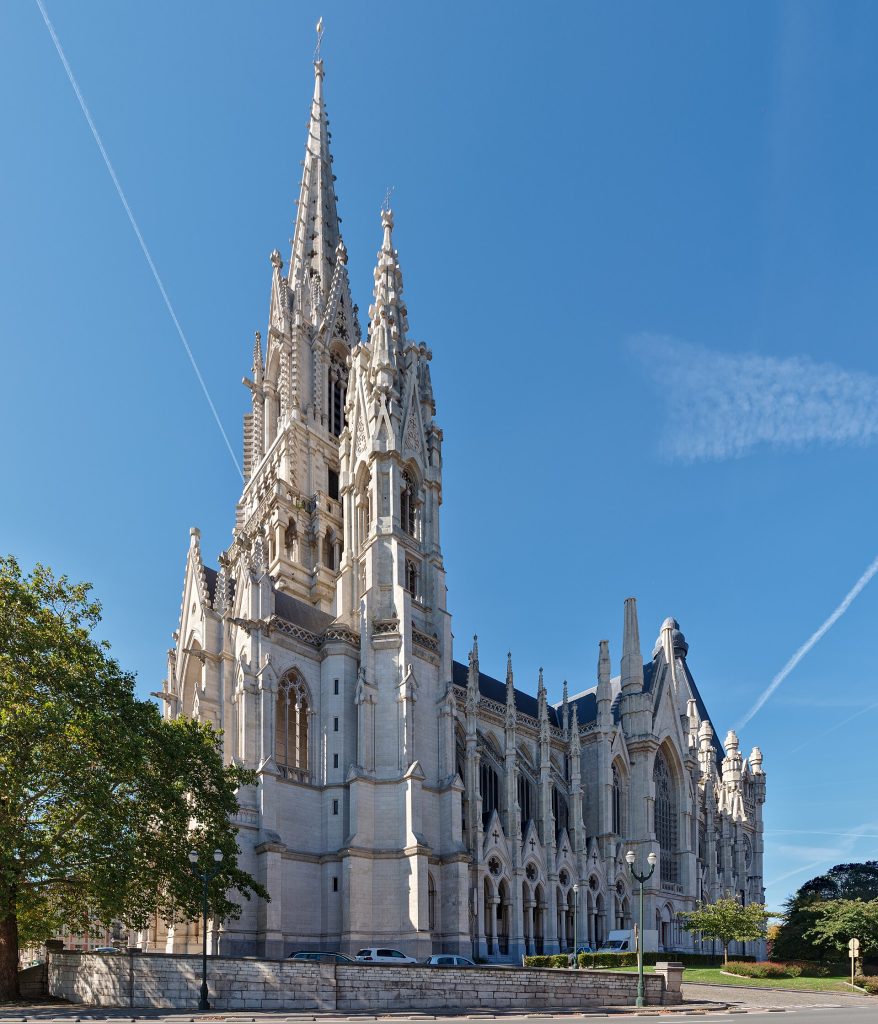
Laeken is the royal quarter, with the residence of the Belgian royal family set in a large park. The neo-Gothic Church of Our Lady of Laeken, designed by Poelaert as a memorial to Queen Louise-Marie and begun in 1854, holds the royal crypt where Belgium’s kings and queens are buried. The Royal Greenhouses of Laeken open only for a few weeks in spring; check dates and book well in advance.
The Atomium, built for the 1958 World’s Fair, stands on the Heysel plateau a short metro ride further north.
A three-day neighbourhood plan
- Day one: the Grand-Place early, then Sainte-Catherine for lunch, Dansaert in the afternoon and Saint-Géry in the evening.
- Day two: the Jeu de Balle flea market in the morning, the Palais de Justice terrace, then the Horta Museum (booked) and an evening on the Parvis de Saint-Gilles.
- Day three: the squares quarter and the European Quarter, then tram south to Flagey, the ponds and La Cambre, finishing in Matongé or on Place du Châtelain.
Getting around between neighbourhoods
The centre is compact, but Brussels is hilly: the lower town around the Grand-Place and Sainte-Catherine sits well below the Sablon, the Palais de Justice and Ixelles. Metro lines 1 and 5 cross the city east to west via Sainte-Catherine and Schuman, line 6 reaches Laeken and Heysel, and the north to south premetro serves Porte de Hal and the Parvis de Saint-Gilles. Trams are the easiest way to reach Flagey, the Ixelles ponds and Schaerbeek. Tap a contactless bank card at the gates or on board; there is no need to buy a separate ticket for single journeys.
Practical tips
- Book Art Nouveau visits: the Horta Museum, Maison Autrique and Hôtel Hannon all limit numbers or open on set days; check current times before you go.
- Mondays: many museums close, so use the day for markets, parks and street walks.
- Comic strip murals: many neighbourhoods have large painted walls; the tourist office has a route map.
- Food: look for frites from a neighbourhood friterie, and try lambic or gueuze, the spontaneously fermented beers of the Brussels area.
Plan your trip to Brussels
- Tickets and tours in Brussels: tickets and tours on Tiqets · activities on Klook
- Arriving by plane: pre-book an airport transfer with Welcome Pickups
- Road trip: compare car hire on Localrent
- Mobile data: get a travel eSIM from Airalo
Some of these are affiliate links: if you book through them we may earn a small commission, at no extra cost to you.
Planning a bigger trip? See our guide to the 25 best places to visit in Europe, from city breaks to fjords.
Keep exploring
- Fun Things to Do in Brussels, Belgium: 10 Ideas for Your Trip
- Local Barcelona: 7 Neighbourhood Experiences Away from the Crowds
- The Coolest Neighbourhoods in Europe: 10 City Districts With Character
Frequently asked questions
What is the best area to stay in Brussels?
For a first visit, stay in the old centre or Sainte-Catherine to walk to most sights. Saint-Gilles and Ixelles, around Châtelain or Flagey, suit travellers who prefer a residential feel with good restaurants and quick tram links.
Where can you see Art Nouveau in Brussels?
The Horta Museum in Saint-Gilles is the best interior. For facades, walk the streets around it, the Châtelain area and Rue Defacqz in Ixelles, the Ixelles ponds and Square Ambiorix. Maison Autrique in Schaerbeek and the Hôtel Hannon also open to visitors.
Is the Marolles worth visiting?
Yes. It is a short walk from the Grand-Place and offers the Jeu de Balle flea market, antiques shops on Rue Haute and Rue Blaes, Bruegel’s church and the view from the Palais de Justice terrace. Mornings are the best time.
Photos: Fred Romero from Paris, France, CC BY 2.0, via Wikimedia Commons; Franek Vetulani, CC BY-SA 4.0, via Wikimedia Commons; Jmh2o, CC BY-SA 4.0, via Wikimedia Commons; Karl Stas, CC BY-SA 3.0, via Wikimedia Commons; Guy Delsaut, CC BY-SA 4.0, via Wikimedia Commons; Thierry Demey, CC BY-SA 4.0, via Wikimedia Commons; Romainbehar, CC0, via Wikimedia Commons; Trougnouf (Benoit Brummer), CC BY 4.0, via Wikimedia Commons.