Updated · Facts and prices checked against official sources
Europe’s great cafés were built to impress. Bankers, insurance companies and ambitious confectioners spent fortunes on marble, mirrors and chandeliers, and writers, students and politicians moved in and stayed for hours over a single cup. Many have survived wars, nationalisation and long closures, and still serve anyone who walks in.
This list picks ten of the grandest, with a little history, what to order and how to dodge the queues. Two famous names come with a warning: Vienna’s Café Central has been closed for a major renovation in 2026, and Rome’s Antico Caffè Greco shut in 2025. Both are covered below.
Grand cafés of Europe at a glance
- Best for: a long, slow coffee in a historic room, cake, people-watching and a sense of a city’s past.
- When to go: on weekday mornings soon after opening, or mid-afternoon; queues build from late morning, especially at weekends.
- Booking: a few take reservations for tables; for most, you simply wait at the door to be seated.
- Etiquette: wait to be seated where there is a host, order at the table, and do not rush; lingering is part of the tradition.
1. Caffè Florian, Venice
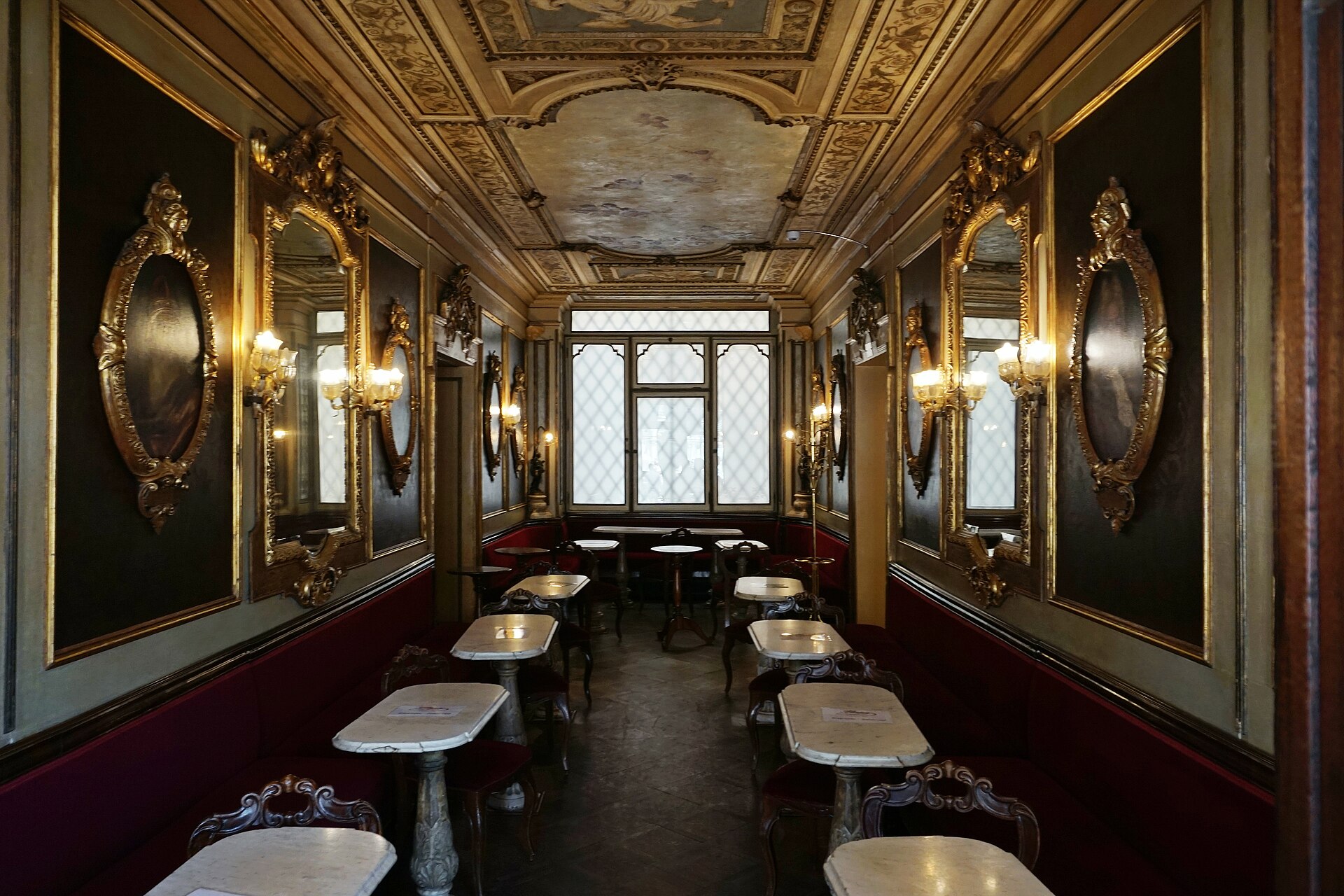
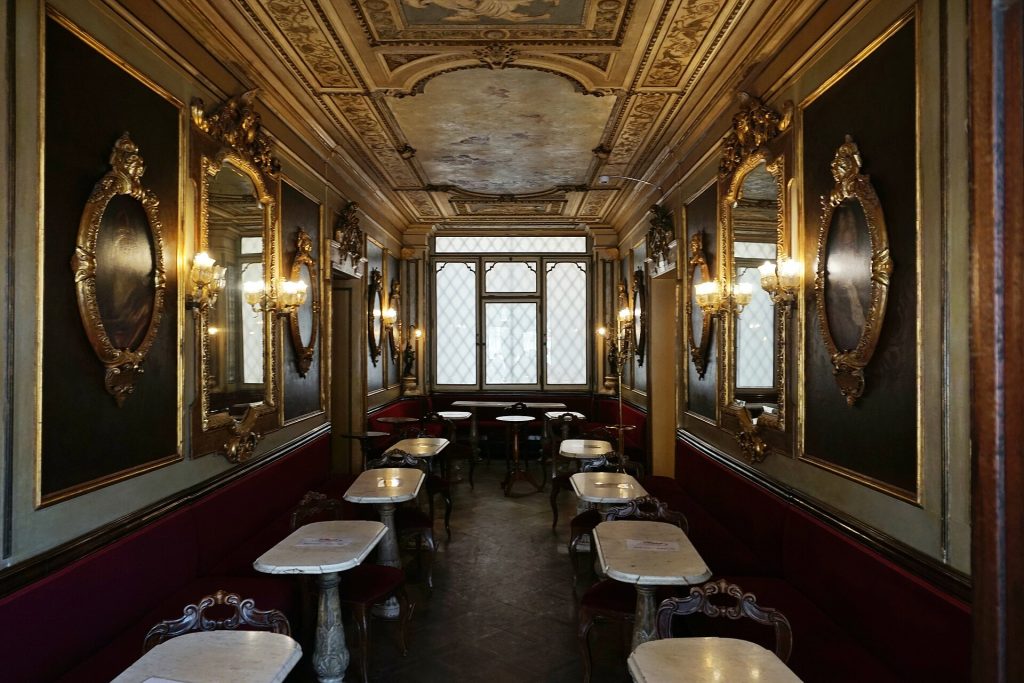
Florian opened on 29 December 1720 under the arcades of Piazza San Marco. Its founder, Floriano Francesconi, called it Alla Venezia Trionfante, but customers named it after him and the nickname stuck. It is generally described as the oldest café in Italy still in business, and in the 19th century it became a meeting place for Venetian patriots during the years of Austrian rule.
Inside, a row of small, intimate rooms with mirrors, velvet benches and marble tables runs along the arcade. Outside, a small orchestra plays on the piazza in season, and sitting at the outdoor tables while it plays adds a music surcharge to the bill. Standing at the bar inside is cheaper, and early morning is quietest.
2. New York Café, Budapest
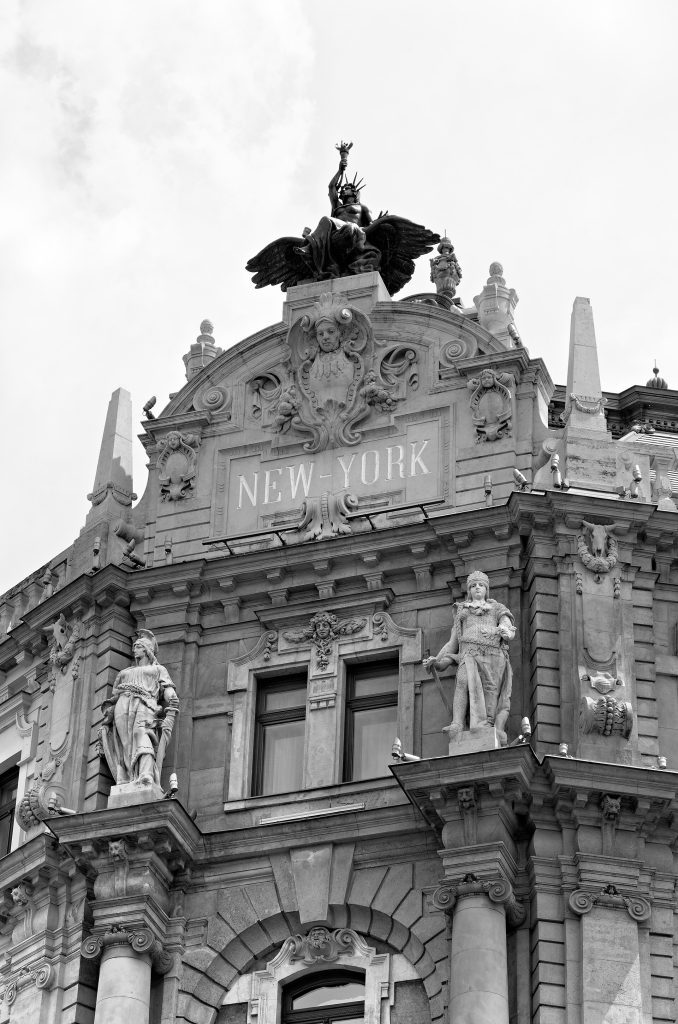
The New York Café is the most theatrical room on this list. It opened on 23 October 1894 on the ground floor of the Budapest headquarters of the New York Life Insurance Company, a corner palace on the Grand Boulevard designed by Alajos Hauszmann, Flóris Korb and Kálmán Giergl. Gilded twisted columns and chandeliers fill a double-height hall, and in the early 20th century it was the city’s great literary café.
The building was nationalised after the war and spent years in decline. A long restoration by an Italian hotel group ended in 2006, and the café reopened as part of the luxury hotel that now occupies the palace. Queues form outside most days, so arrive at opening time or book ahead.
3. Gerbeaud, Budapest
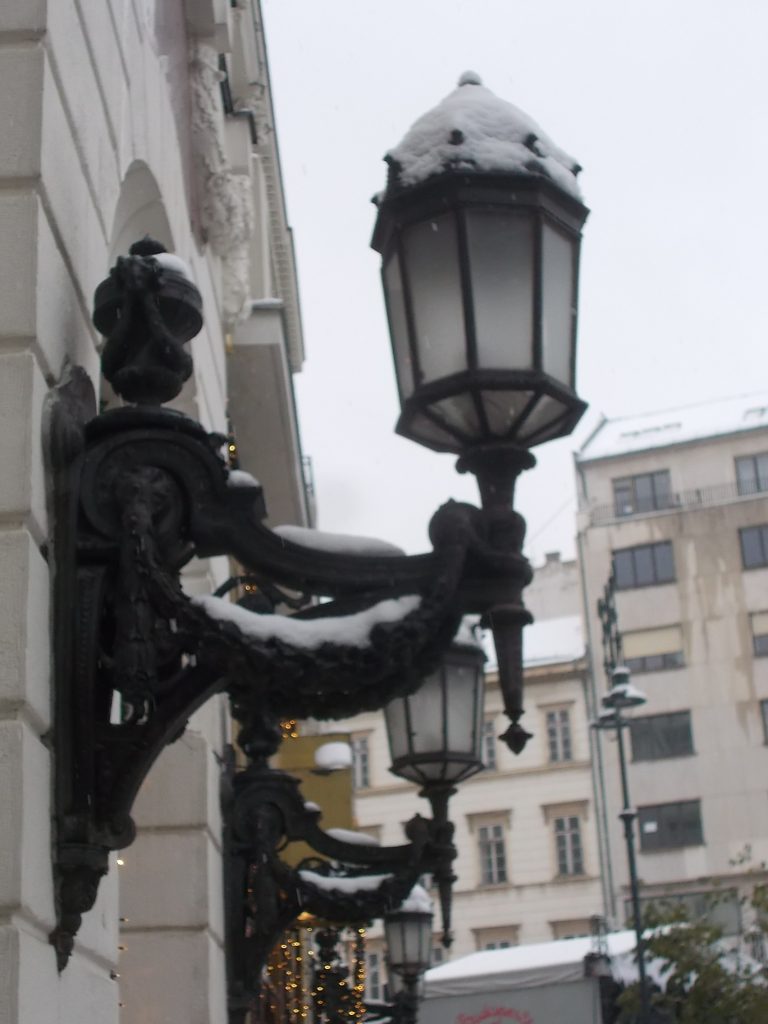
Budapest’s other great café began as a confectionery opened by Henrik Kugler in 1858. In 1870 he moved to Vörösmarty tér, then called Gizella Square, at the northern end of the Váci utca shopping street. Kugler had no heir, and in 1884 he brought in the Swiss confectioner Émile Gerbeaud, who expanded the business and whose name it later took. After nationalisation in 1948 it was called Vörösmarty, and the Gerbeaud name returned in the 1980s.
The salons are elegant rather than flamboyant: wood panelling, marble tables and chandeliers. Come for the cakes, not the coffee. The house speciality is the Gerbeaud slice, known locally as zserbó, layered with walnuts and apricot jam and topped with chocolate.
4. A Brasileira, Lisbon
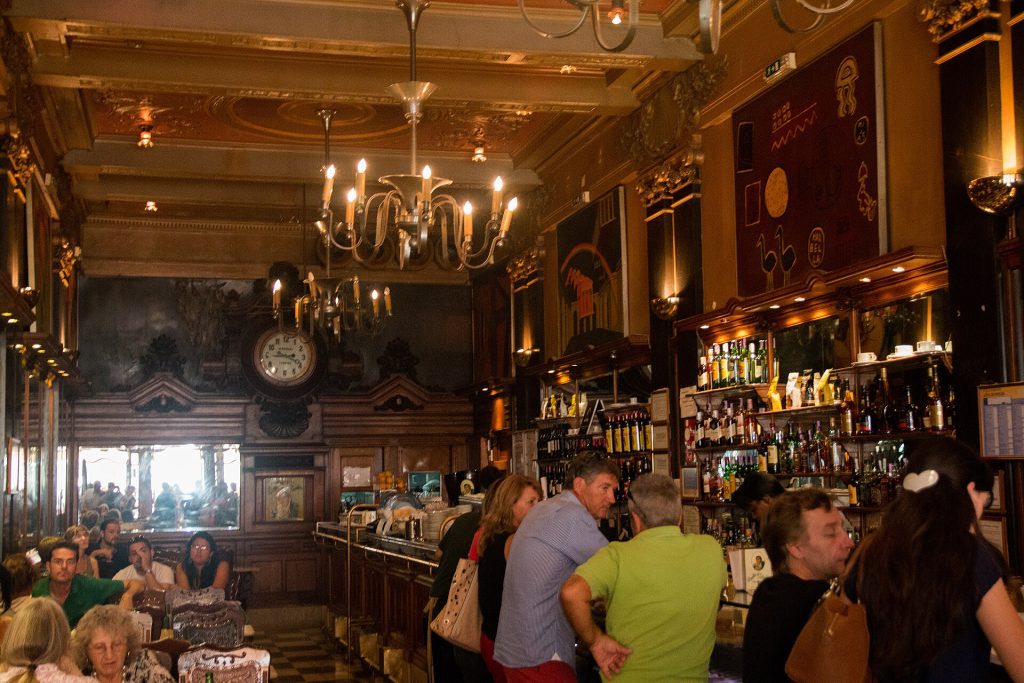
Adriano Telles, who had made his fortune in Brazil, opened A Brasileira on 19 November 1905 at No. 122 Rua Garrett, in a former shirt shop, to sell coffee from Brazil. It became the meeting place of Lisbon’s artists and writers in the Chiado, the city’s old literary quarter, and it is still one of the busiest cafés in the city.
The narrow interior is all dark wood, mirrors and brass, with a long counter at the front. Outside, a bronze of the poet Fernando Pessoa, unveiled in 1988, sits at a table on the terrace and draws a steady stream of photographers. For the local experience, skip the terrace and order a bica, Lisbon’s short black coffee, standing at the bar.
5. Café de Flore, Paris
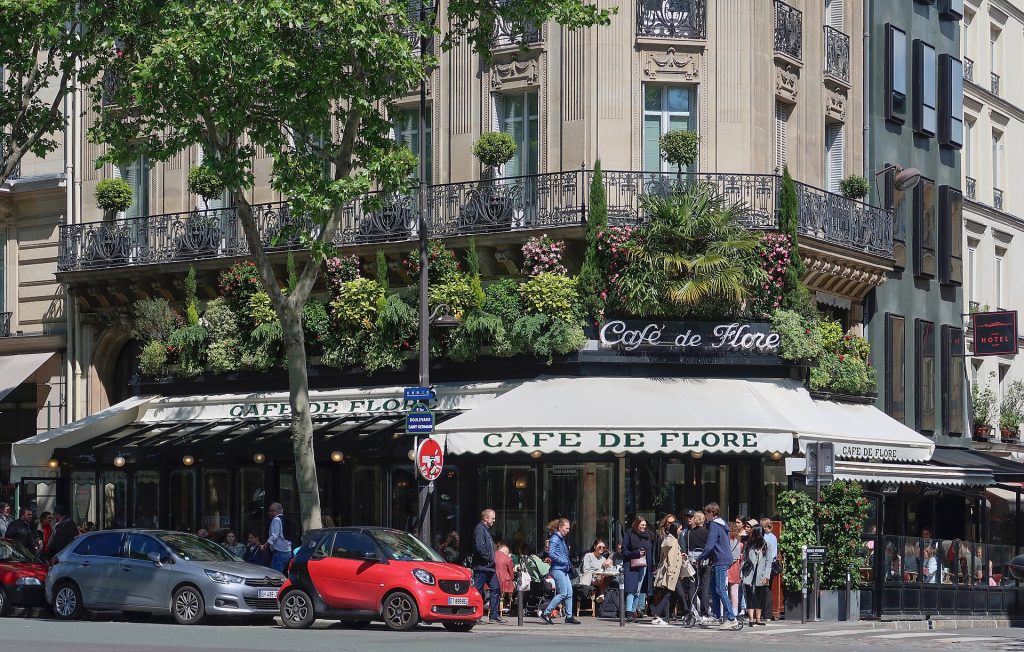
Café de Flore opened on the corner of Boulevard Saint-Germain and Rue Saint-Benoît in the 1880s; the exact year is disputed. It is grand in reputation more than in decoration, with Art Deco red benches, mahogany and mirrors, but few cafés anywhere carry as much literary history. Jean-Paul Sartre and Simone de Beauvoir worked here for hours at a time during the Second World War, and the Prix de Flore, a literary prize created in 1994, is still awarded here each year.
Its rival, Les Deux Magots, is a few steps away. Both are expensive; a morning coffee on the terrace is the calmest way to enjoy Flore, and the upstairs room is quieter.
6. Majestic Café, Porto
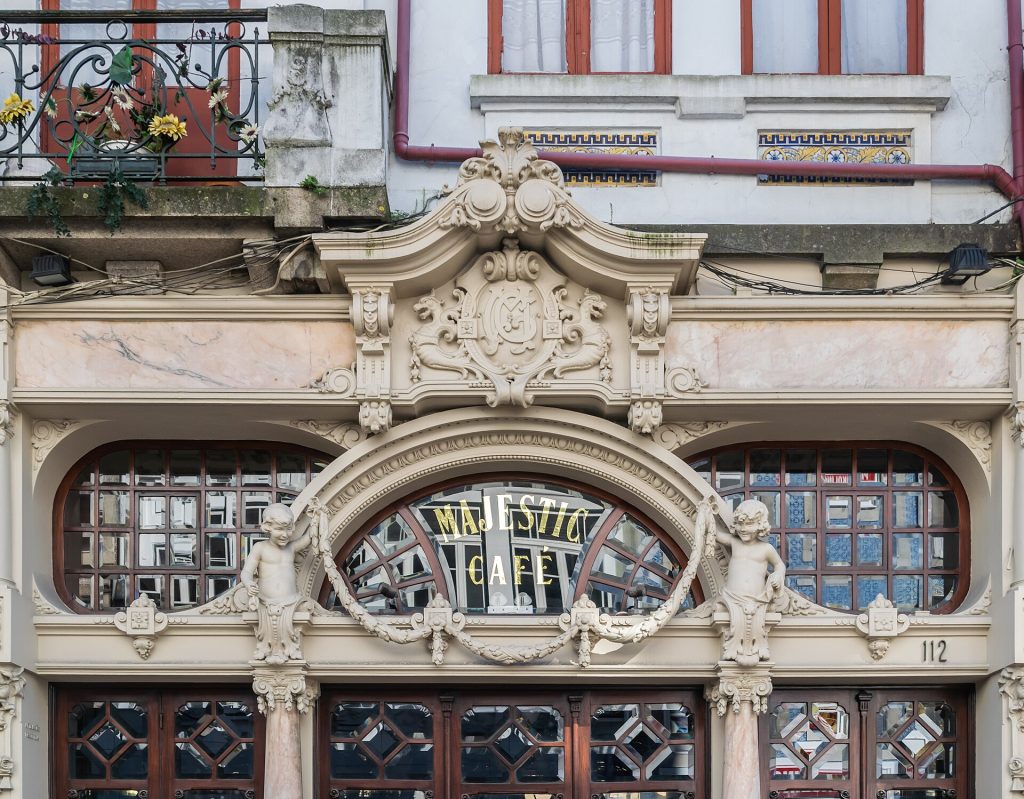
The Majestic opened in December 1921 as the Elite, on Rua de Santa Catarina, Porto’s main shopping street. Its ornate facade, leather chairs, mirrors and moulded plaster ceilings make it one of the best Art Nouveau interiors in Portugal, and it soon became a meeting place for the city’s artists and intellectuals. A winter garden at the back once connected the café to the next street.
After a period of decline in the late 20th century it was restored, and today it draws long queues. Arrive at opening time, or come late in the afternoon. Order coffee with a pastry, or try the French toast, a house favourite.
7. Caffè Pedrocchi, Padua
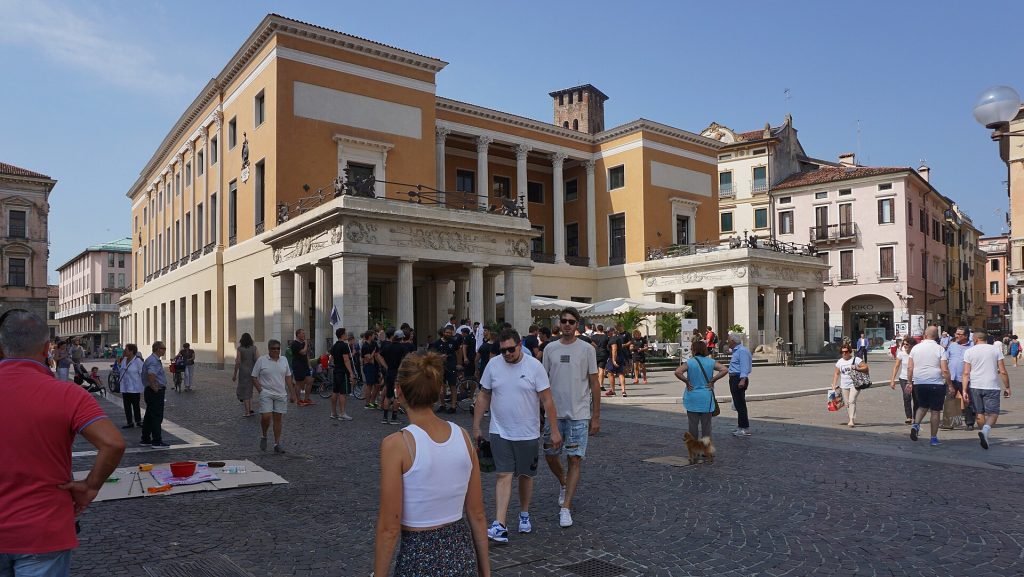
Antonio Pedrocchi wanted the finest café in Europe, and the Venetian architect Giuseppe Jappelli designed him a neoclassical building with columned loggias and a Gothic Revival wing. The ground floor opened on 9 June 1831. From then until 1916 it stayed open day and night, which earned it the name “the café without doors”. During the student uprising of 1848 it was at the centre of the fighting against Habsburg rule.
The ground-floor rooms are named after their colours, red, white and green, and are good places to sit with a coffee. Order the caffè Pedrocchi, the house speciality, an espresso with mint cream and cocoa. Upstairs, the Museum of the Risorgimento occupies rooms decorated in a range of historical styles. Padua is an easy day trip from Venice by train.
8. Café Slavia, Prague
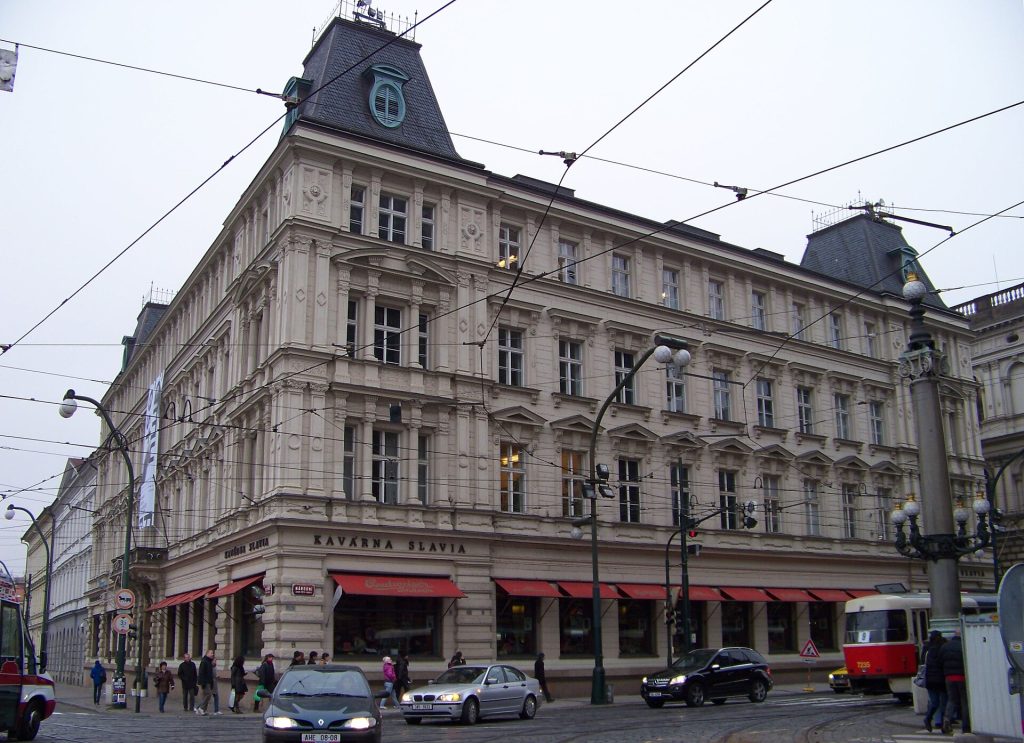
Café Slavia sits on the corner of Národní and the Smetana embankment, directly opposite the National Theatre, and it has served actors, writers and audiences since 1884. Under communism it was a gathering place for dissidents, including the playwright Václav Havel, who became Czechoslovakia’s president in 1989.
The interior is a long Art Deco room with large windows. Ask for a window table: the view runs across the Vltava to the castle on its hill. It is a natural stop before or after a performance.
9. Gran Caffè Gambrinus, Naples
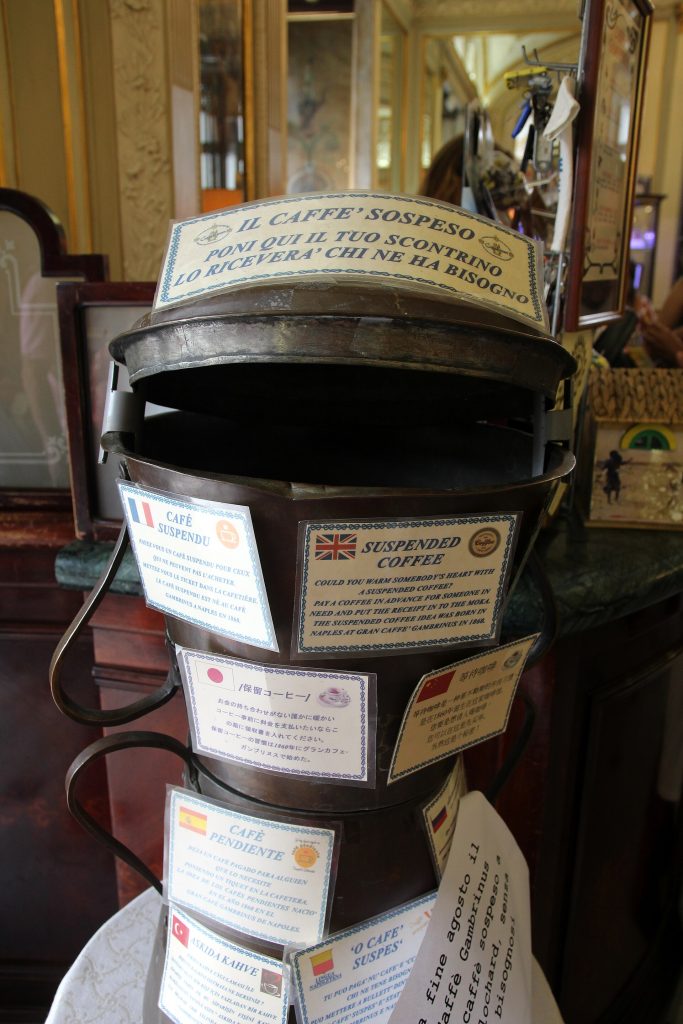
Gambrinus opened in 1860 on the corner of Piazza Trieste e Trento and Via Chiaia, steps from the Royal Palace and the Teatro di San Carlo. Its Belle Époque salons, with paintings, stucco and mirrors, were a meeting place for writers and journalists. It was closed by the Fascist authorities in 1938.
Today the front bar is one of the busiest in Naples. Order an espresso and a sfogliatella, the city’s shell-shaped ricotta pastry, at the counter. Gambrinus is closely linked with the Neapolitan custom of caffè sospeso, where a customer pays for an extra coffee to be given to someone who cannot afford one.
10. Café Central, Vienna
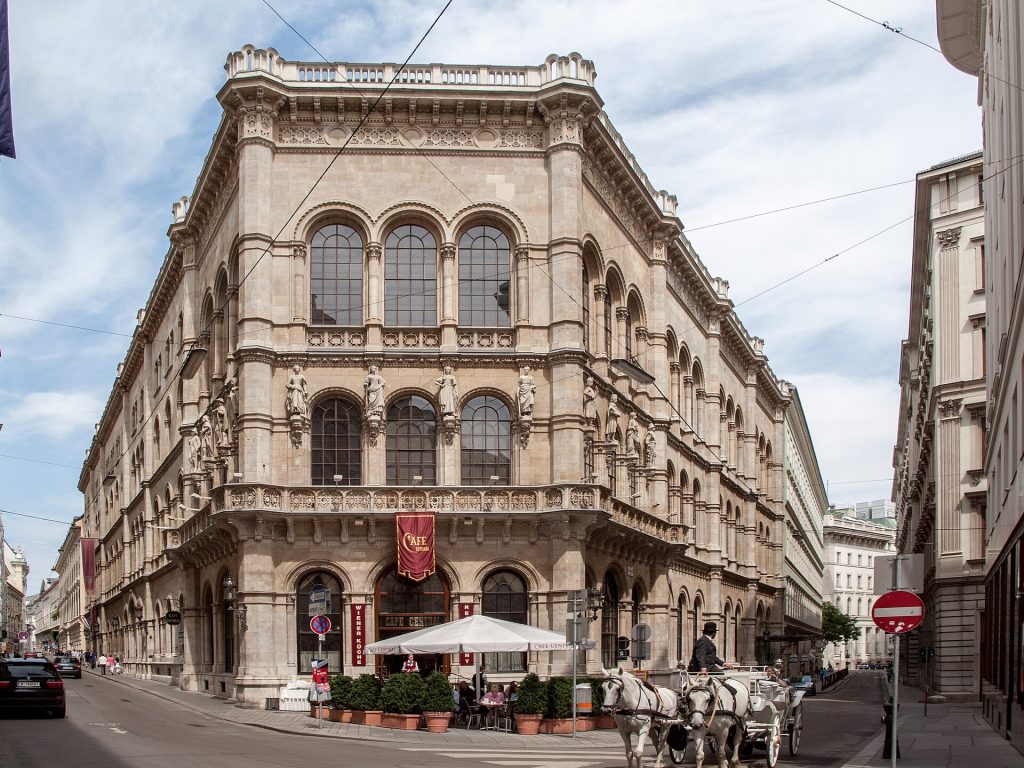
Café Central opened in 1876 on the ground floor of the Palais Ferstel, a former bank and stock exchange named after its architect, Heinrich von Ferstel. Its vaulted hall with tall columns became the archetypal Viennese literary café, and the philosophers of the Vienna Circle met here. It closed in 1943 and reopened decades later after the building was restored.
Check before you go: Café Central closed on 16 March 2026 for a full renovation, its first in about 40 years, with reopening planned for late 2026. Meanwhile a temporary café, DECENTRAL, is running on the Freyung nearby. Vienna has many alternatives in the same tradition, which is on Austria’s national list of intangible cultural heritage. Café Landtmann on the Ringstrasse, Café Sperl and Café Hawelka are all good places for a Melange and a slice of cake.
A note on Antico Caffè Greco, Rome
The Antico Caffè Greco on Via Condotti, near the Spanish Steps, opened in 1760 and was one of the most famous literary cafés in Europe. After a long rent dispute with the building’s owner, it was evicted and sealed in October 2025. The interiors are legally protected, and the owners have said they want a new operator to reopen it, but at the time of writing there is no confirmed date. If you are in Rome, check the latest news before planning a visit.
More grand cafés worth a detour
- Caffè San Marco, Trieste: opened in 1914, a large Secession-style café with a bookshop, long associated with Italo Svevo and James Joyce.
- Le Procope, Paris: often described as the oldest café in Paris, now a restaurant on Rue de l’Ancienne Comédie.
- Café Landtmann, Vienna: a classic Ringstrasse café beside the Burgtheater, a good substitute while Café Central is closed.
Tips for visiting grand cafés
- Beat the queue: arrive at opening time; the busiest cafés can have a wait of half an hour or more by late morning.
- Bar or table: in Italy and Portugal, standing at the counter is far cheaper than sitting down, and is what locals do.
- Music charges: some cafés add a surcharge to the bill when live music is playing.
- Opening times: hours change with the season, and some close on certain days, so check current times before you go.
Plan your trip
- Venice: tickets and tours on Tiqets · activities on Klook
- Budapest: tickets and tours on Tiqets · activities on Klook
- Lisbon: tickets and tours on Tiqets · activities on Klook
- Arriving by plane: pre-book an airport transfer with Welcome Pickups
- Road trip: compare car hire on Localrent
- Mobile data: get a travel eSIM from Airalo
Some of these are affiliate links: if you book through them we may earn a small commission, at no extra cost to you.
Planning a bigger trip? See our guide to the 25 best places to visit in Europe, from city breaks to fjords.
Keep exploring
- Vienna Coffee House Walk: Historic Cafés, Etiquette and What to Order
- Time Travel in Europe: 7 Towns Frozen in a Single Era
- 10 Beautiful Historic Libraries in Europe You Can Visit
Frequently asked questions
What is the oldest café in Europe?
There is no single agreed answer, as several cafés claim the title. Caffè Florian in Venice, open since 1720, is generally described as the oldest café in Italy still in business. Le Procope in Paris is older, but it now operates as a restaurant.
Do you need to book at the New York Café in Budapest?
It is not essential, but it helps. The café takes reservations, and booking saves you from the queue that forms at the entrance for much of the day. Without a booking, arrive at opening time.
Is Café Central in Vienna open?
Café Central closed in March 2026 for a full renovation, with reopening planned for late 2026. Check the café’s official website before you go. In the meantime a temporary café, DECENTRAL, is open on the Freyung nearby.
Photos: Armin Kleiner, CC BY-SA 4.0, via Wikimedia Commons; Yelkrokoyade, CC BY-SA 3.0, via Wikimedia Commons; Globetrotter19, CC BY-SA 3.0, via Wikimedia Commons; Daniel VILLAFRUELA., CC BY-SA 3.0, via Wikimedia Commons; Celette, CC BY-SA 4.0, via Wikimedia Commons; Krzysztof Golik, CC BY-SA 4.0, via Wikimedia Commons; ŠJů (cs:ŠJů), CC BY-SA 3.0, via Wikimedia Commons; Bex Walton, CC BY 2.0, via Wikimedia Commons; Thomas Ledl, CC BY-SA 3.0, via Wikimedia Commons.