Updated
A good sunset is mostly about geography: a clear horizon to the west, something worth looking at in the foreground, and a place to stand that is not a car park.
This list picks eight viewpoints where the setting does as much work as the sky, with the exact spot to stand, the months when the sun lines up best and how to get there and back. A short section at the end covers the famous names you probably know already.
Europe’s best sunset spots at a glance
- Best city viewpoints: Lycabettus Hill in Athens and the Miradouro de Santa Catarina in Lisbon.
- Best over the sea: the Zadar waterfront, the walls of Alghero and Little Venice on Mykonos.
- Best wild coast: Sa Foradada on the north-west coast of Mallorca.
- Best season: late spring to early autumn in the Mediterranean, when the sun sets over the sea at most of these spots and the evenings stay warm.
- Arrive: 45 minutes to an hour before sunset in summer; the best places on walls and steps fill first.
- Bring: a light layer, a torch or phone light, and a plan for getting back after dark.
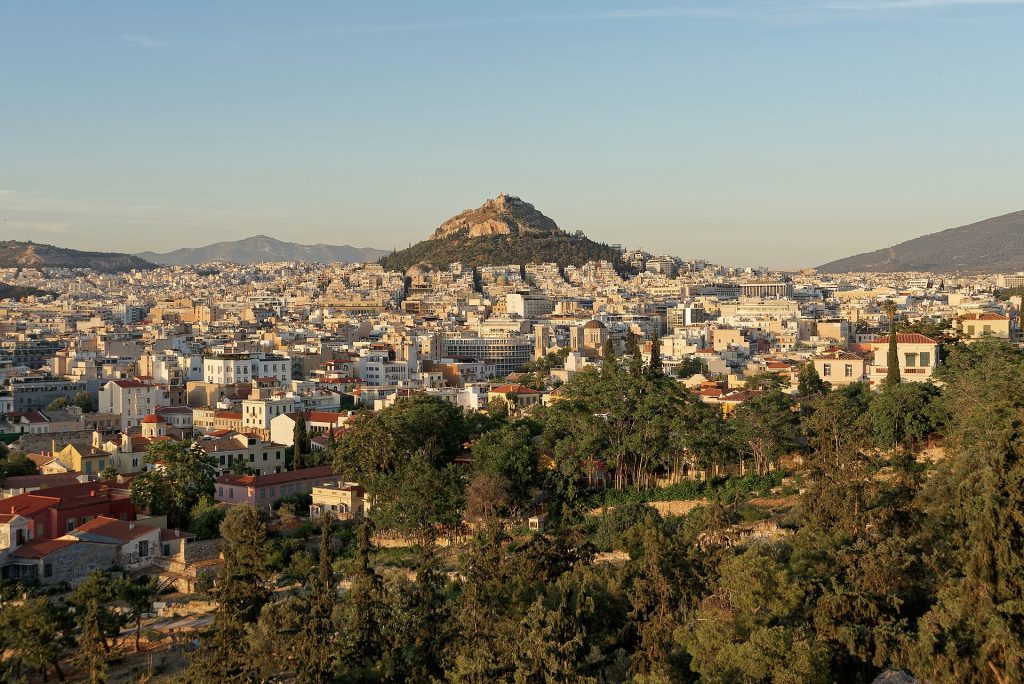
1. Lycabettus Hill, Athens, Greece
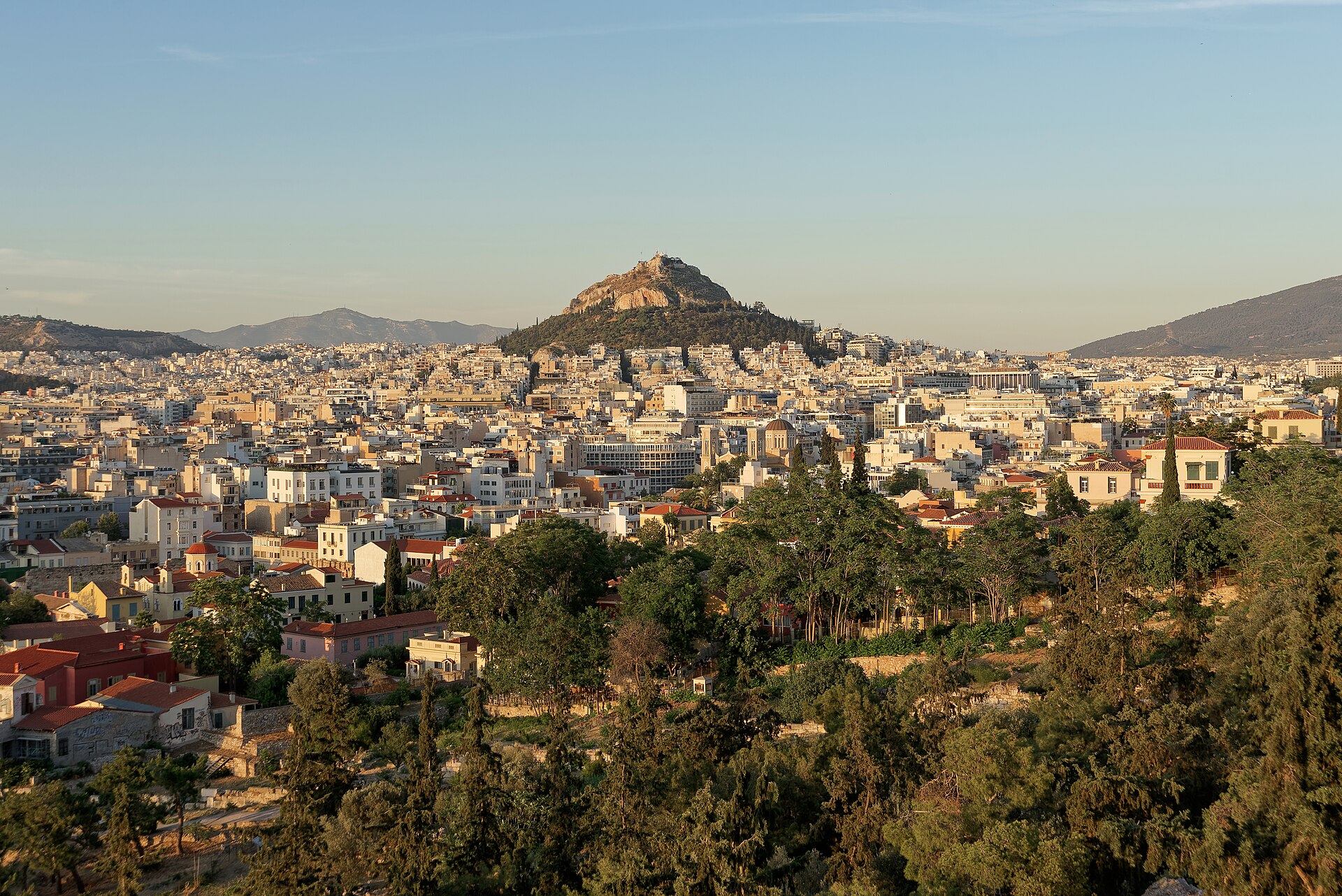
At about 277 metres, Lycabettus is the highest point in central Athens, and its summit looks west over the whole basin of the city. The Acropolis sits in the middle distance, with Piraeus and the Saronic Gulf behind, and on clear evenings the sun drops towards the islands and the hills of the Peloponnese. The whitewashed chapel of St George crowns the top.
The easy way up is the funicular from Aristippou Street in Kolonaki, which runs inside a tunnel and takes about three minutes; it opened in 1965. Or walk the path up through the pines from Kolonaki, a steady climb of roughly half an hour. Stand on the terrace west of the chapel and stay for the city lights; the railing goes fast on summer evenings.
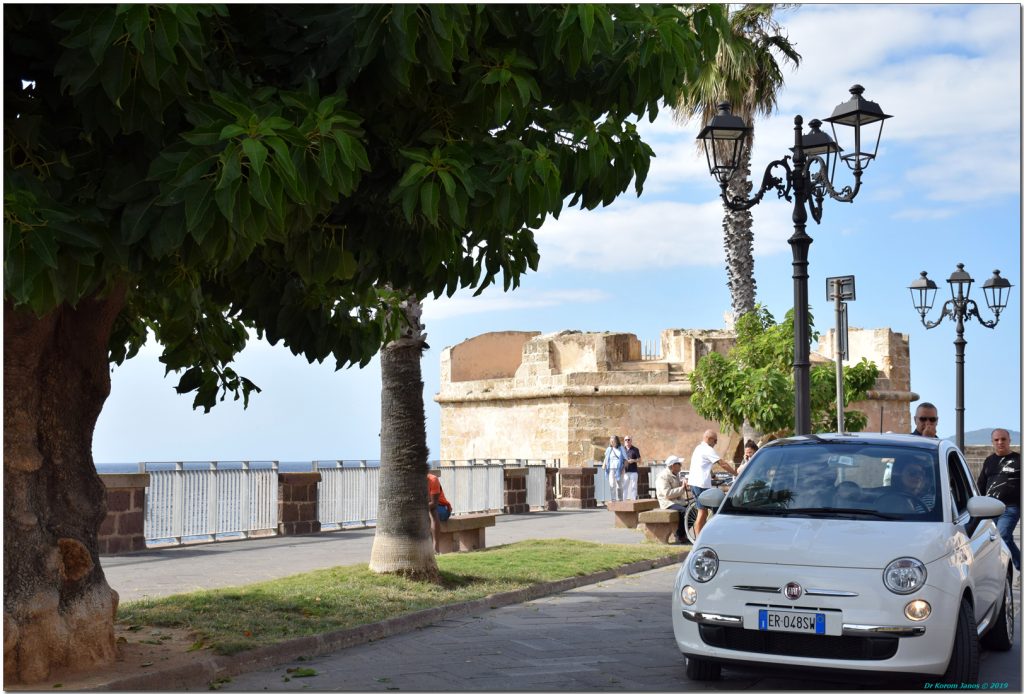
2. The sea walls of Alghero, Sardinia, Italy
Alghero is the most Catalan town in Italy: it was settled from Catalonia in the 14th century, a local form of Catalan is still spoken, and street names are signed in both languages. Its old town is wrapped in sea walls that face west across the bay, so the evening walk along the ramparts doubles as a sunset viewing platform.
The stretch to aim for is the Bastioni Marco Polo, on the western side of the old town, where cafés and restaurants line the walls. From here the headland of Capo Caccia, around 20 km away, turns into a dark silhouette at the far end of the bay as the sky changes colour. For a wilder version, drive out to Capo Caccia itself, where the cliffs drop straight into the sea, and leave enough light for the road back.
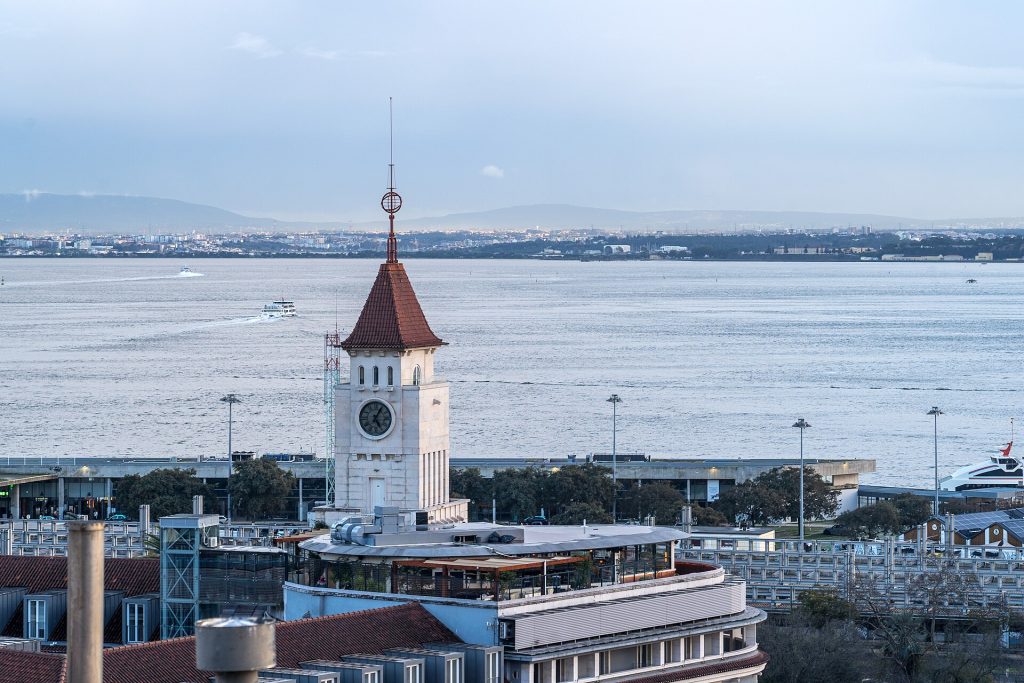
3. Miradouro de Santa Catarina, Lisbon, Portugal
Lisbon has a viewpoint on almost every hill, but many face east or south towards the Alfama. Santa Catarina, on the edge of the Bica and Chiado districts, looks the other way: south-west down the Tagus to the red 25 de Abril Bridge, with the Cristo Rei statue on the far bank. It is a short, steep walk from Baixa-Chiado metro.
The terrace slopes like an amphitheatre, with people sitting on the low walls and a kiosk selling drinks. In autumn the sun sets close to the line of the bridge, which makes it the best season here. The terrace is now fenced and closes at night, so check the current hours.
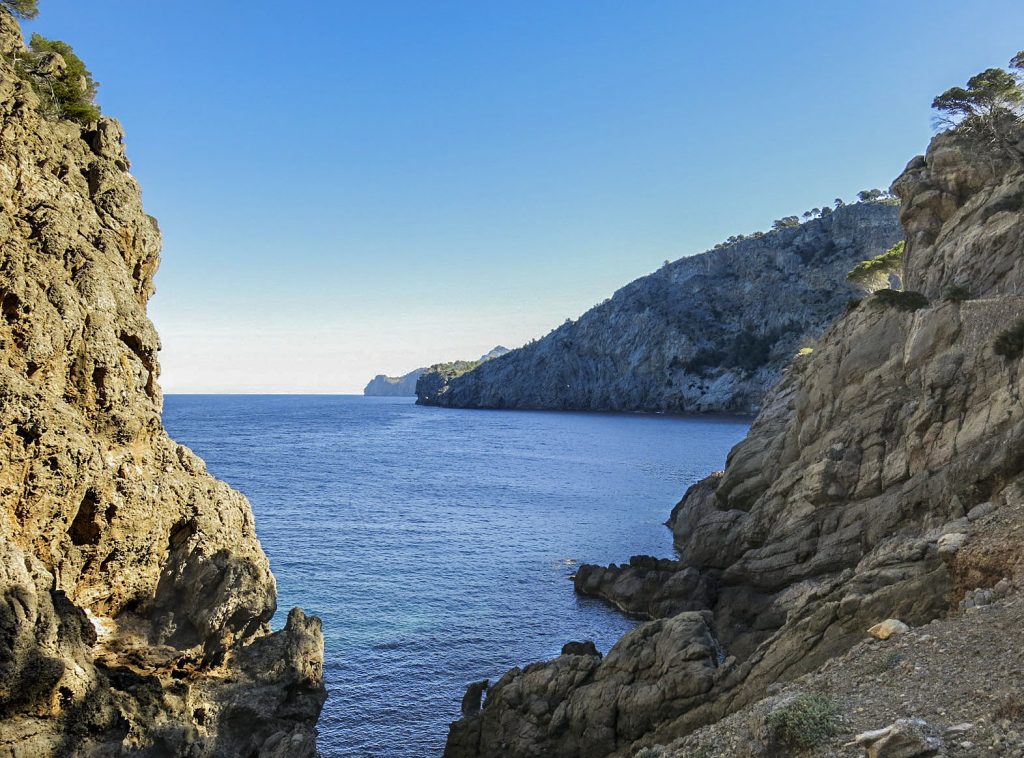
4. Sa Foradada and Son Marroig, Mallorca, Spain
On the coast road between Valldemossa and Deià, the Ma-10 passes Son Marroig, a manor once owned by the Archduke Ludwig Salvator of Austria, who spent much of his life in the Serra de Tramuntana. Below it, a rocky peninsula called Sa Foradada pokes into the sea, pierced by a large natural hole. The coast faces north-west, so between spring and early autumn the sun goes down over open water to the right of the headland.
The classic view is from the terraces at Son Marroig, looking down on the peninsula. The Archduke’s path continues down to the headland itself, a steep walk on a rough track, and the climb back is harder than the descent; ask at Son Marroig about access before setting off. Parking is limited at sunset and the Ma-10 is narrow and twisting, so drive back slowly or stay in Deià.
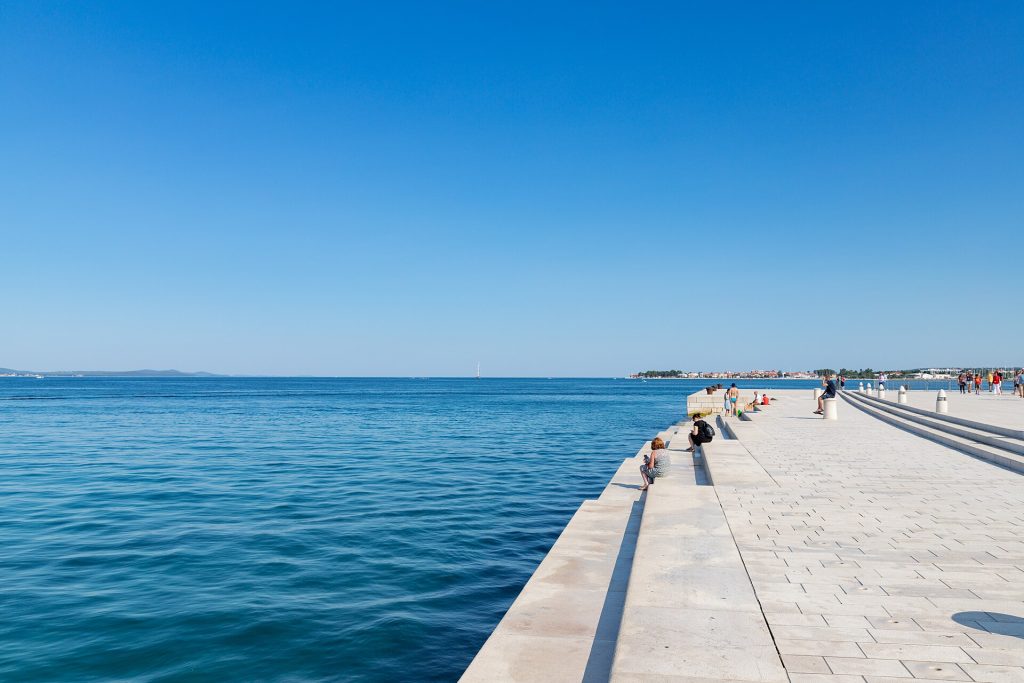
5. The waterfront at Zadar, Croatia
Zadar’s sunset reputation rests on a line often attributed to Alfred Hitchcock, calling it the most beautiful in the world. The setting earns it: the old town sits on a peninsula, and its western tip looks straight out over the channel to the islands of Ugljan and Pašman.
Go to the end of the promenade at the tip of the peninsula, where marble steps lead down to the water. Built into them is the Sea Organ, opened in 2005, a set of 35 pipes under the steps that play chords as the waves push air through them. Sit on the steps for the sunset itself, then turn round after dark for the Greeting to the Sun, a large circle of solar-powered glass panels set in the pavement that lights up in changing patterns.
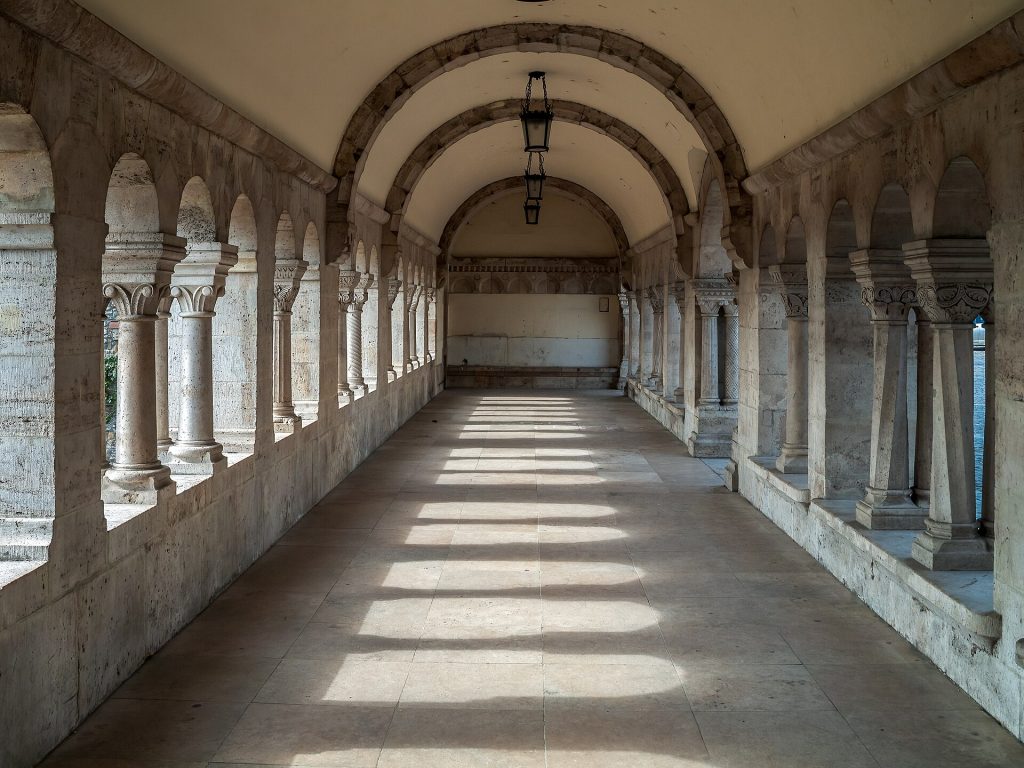
6. Fisherman’s Bastion, Budapest, Hungary
The Fisherman’s Bastion is a neo-Romanesque terrace of white turrets and arcades on Castle Hill, next to Matthias Church. It faces east over the Danube, which means the sun sets behind you. That is the point: the last direct light falls on the Parliament building across the river and on the rooftops of Pest, and then the bridges and the riverfront light up during the blue hour.
The lower terraces are free and open at all hours. The upper turrets are ticketed during the day but free outside ticket office hours, so an evening visit often costs nothing; check current times. Walk up from the Buda end of the Chain Bridge, or take the funicular to Castle Hill.
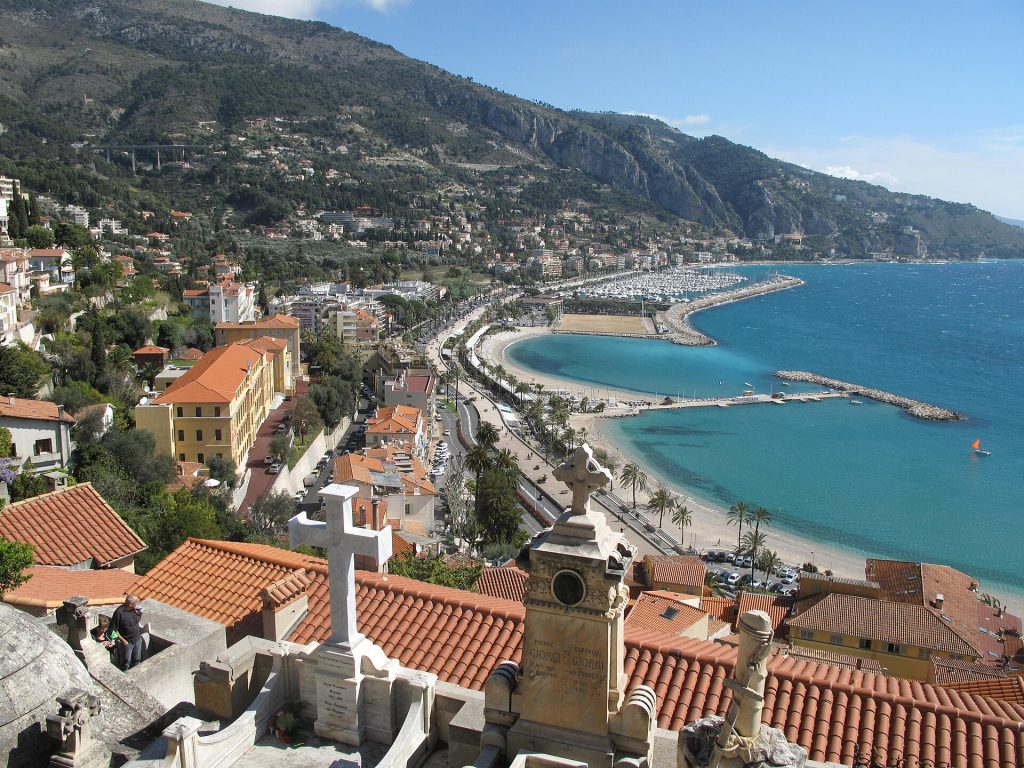
7. Menton harbour, Côte d’Azur, France
Menton is the last town on the French Riviera before the Italian border, and its old town climbs a hill in tiers of ochre, orange and pink houses topped by the bell tower of the Basilica of Saint-Michel. The facades glow in the last hour of light.
The spot to stand is the end of the Quai Impératrice Eugénie, the long harbour jetty by the Plage des Sablettes, looking back towards the old town. Climb the stairs of the Rampes Saint-Michel to the church square first, then walk out along the quay as the light goes. The mild winter climate makes this one of the better choices for a sunset outside the main season, when the sun drops early behind the hills to the west.
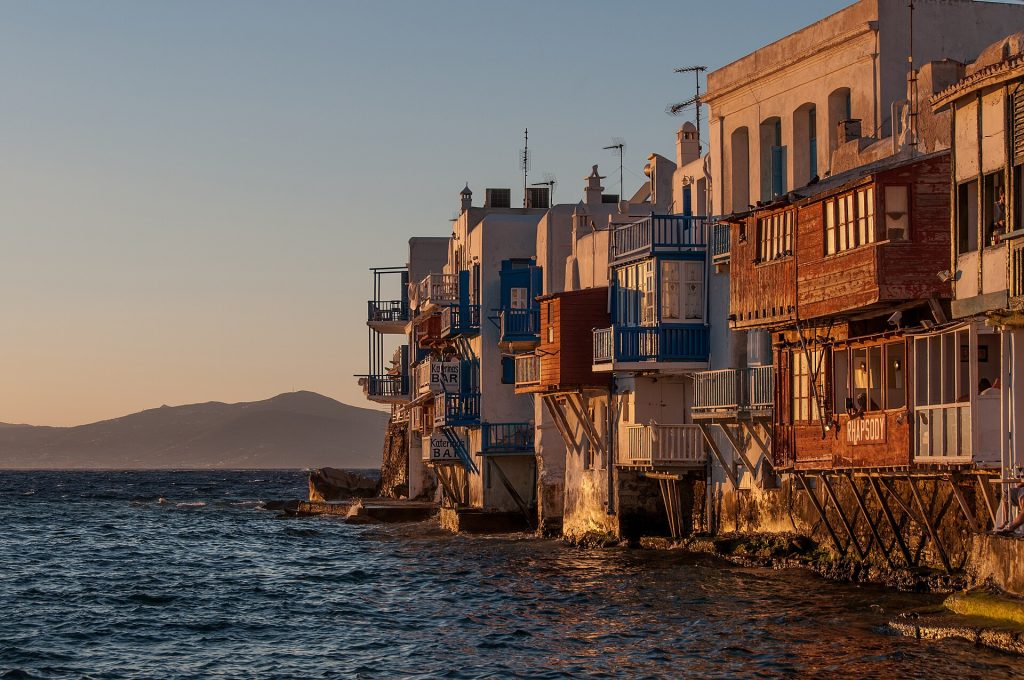
8. Little Venice and Kato Mili, Mykonos, Greece
Little Venice, called Alefkandra locally, is a row of old captains’ houses in Mykonos Town built right on the water, with wooden balconies hanging over the waves. It faces west, so the sun sets over the sea in front of it.
You can take a table at the water’s edge in Little Venice, which means high prices and booking ahead in peak season, or walk a few minutes south and up to Kato Mili, the row of old windmills on a low ridge, where you look down on Little Venice with the sea and the sunset behind it. In July and August the meltemi wind can be strong, so bring a layer.
The famous ones, in brief
- Oia, Santorini: the best-known sunset in Europe, seen from the castle ruins at the tip of the village. It is extremely crowded in season; Imerovigli has a similar caldera view with more space.
- Cabo de São Vicente, Portugal: the south-western tip of mainland Portugal near Sagres, with a lighthouse on high cliffs. Expect company in the car park and a strong wind.
- Jardim do Morro, Porto: the garden by the upper deck of the Dom Luís I Bridge in Vila Nova de Gaia, looking across the Douro to the Ribeira. Arrive an hour early in summer, or climb to the Serra do Pilar terrace above it.
- Guadix, Andalucía: the badlands around the town turn red and pink at dusk. The Mirador del Fin del Mundo, near Beas de Guadix in the Granada Geopark, is a short but steep walk; confirm the trailhead before you go.
- Corralejo dunes, Fuerteventura: the dune field of the natural park, with views to the island of Lobos and Lanzarote, is at its best in low evening light.
- Kirkjufell, Iceland: the cone-shaped mountain and its small waterfall on the Snæfellsnes peninsula, best in the long, low evening light of summer, when the sun barely sets in June.
How to plan a sunset
The sun does not set due west all year. In summer it goes down well to the north of west, and in winter well to the south, so a view that lines up perfectly in June can miss the sea entirely in December. A free sun-position app, or a compass and the date, will show you where it will go down before you commit to a spot.
The best colour often comes 10 to 20 minutes after the sun has gone, especially with some high cloud, so do not pack up the moment it disappears. A completely clear sky gives a clean but simple sunset, total cloud usually gives nothing, and autumn evenings tend to be clearer than hazy midsummer ones.
- Timing: look up the exact sunset time for the date, then arrive 45 to 60 minutes earlier in summer.
- Getting back: on cliffs, headlands and mountain roads, plan the return in daylight or carry a proper light.
- Crowds: weekdays and the shoulder months of May, June and September are calmer at every spot on this list.
Plan your trip
- Athens: tickets and tours on Tiqets · activities on Klook
- Sardinia: tickets and tours on Tiqets · activities on Klook
- Lisbon: tickets and tours on Tiqets · activities on Klook
- Arriving by plane: pre-book an airport transfer with Welcome Pickups
- Road trip: compare car hire on Localrent
- Mobile data: get a travel eSIM from Airalo
Some of these are affiliate links: if you book through them we may earn a small commission, at no extra cost to you.
Planning a bigger trip? See our guide to the 25 best places to visit in Europe, from city breaks to fjords.
Keep exploring
- Most Picturesque Places in Slovenia: 10 Quieter Natural Spots
- Best Places in Spain for a Holiday: Which Coast or Island Suits You
- The Best Mediterranean Vacation Spots: 12 Places Worth the Trip
Frequently asked questions
Where is the best sunset in Europe?
Oia on Santorini is the most famous, but it is also the most crowded. For a sunset over the sea with fewer people, the Zadar waterfront, the walls of Alghero and Sa Foradada on Mallorca are better choices; for a city view, Lycabettus Hill in Athens is hard to beat.
What is the best month for sunsets in Europe?
In southern Europe, May, June and September combine long, warm evenings with smaller crowds than July and August. Autumn often brings clearer air and more colourful skies.
How early should I arrive for sunset?
At popular spots in summer, aim for 45 minutes to an hour before sunset to get a good place on the wall or steps. Then stay for 20 minutes after the sun has gone, when the sky is often at its most colourful.
Photos: Jakub Hałun, CC BY 4.0, via Wikimedia Commons; János Korom Dr. >17 Million views from Wien, Austria, CC BY-SA 2.0, via Wikimedia Commons; Alexkom000, CC BY 4.0, via Wikimedia Commons; Vicenç Salvador Torres Guerola, CC BY-SA 3.0, via Wikimedia Commons; dronepicr, CC BY 2.0, via Wikimedia Commons; Ermell, CC BY-SA 4.0, via Wikimedia Commons; Tangopaso, Public domain, via Wikimedia Commons; Roberto Faccenda, CC BY-SA 2.0, via Wikimedia Commons.