Romania’s Christmas markets have changed a lot in the past fifteen years. Sibiu opened the first Western-style market in 2007, and today almost every large city fills its main square with wooden huts, a tall tree and a Ferris wheel from mid-November. Craiova was voted Europe’s best Christmas market for 2026 in the European Best Destinations poll, with a record 142,687 votes. Prices are well below Vienna or Munich, and the queues are shorter too.
This guide gives the 2026 dates that cities and organisers have already announced for Sibiu, Craiova, Cluj-Napoca, Brașov, Timișoara and Bucharest. Each market has its own section, and a five-day route links the three Transylvanian markets by train or car. Where a detail has not been published yet, we say so instead of guessing. For more Christmas trips, see our guides to Vienna’s Christmas markets and Strasbourg.
- Season: from 13 November 2026 (Sibiu and Craiova) to 7 January 2027 (Timișoara). Most markets run into early January.
- Entry: free at every market in this guide. Rides and the ice rinks charge separately.
- Best for: medieval squares at a low price, mulled wine with Romanian food, and families.
- When to go: weekdays in late November or the first half of December. Snow is more likely in Transylvania than in Bucharest or Craiova.
- How long: 4–6 days to see Brașov, Sibiu and Cluj, plus one of Bucharest or Craiova.
- Getting there: international flights to Bucharest, Cluj-Napoca, Sibiu, Timișoara and Craiova. Trains and buses connect the cities.
Romania’s Christmas markets at a glance (2026)
| City | Where | 2026 dates |
|---|---|---|
| Sibiu | Piața Mare (Grand Square) | 13 Nov 2026 – 3 Jan 2027 |
| Craiova | Old town centre | 13 Nov 2026 – 3 Jan 2027 |
| Cluj-Napoca | Piața Unirii | 20 Nov 2026 – 1 Jan 2027 |
| Brașov | Piața Sfatului (Council Square) | 27 Nov 2026 – 3 Jan 2027 |
| Bucharest | Piața Constituției | 27 Nov – 27 Dec 2026 |
| Timișoara | Piața Victoriei, Piața Libertății, Piața Sf. Gheorghe, Piața Unirii and Parcul Central | 29 Nov 2026 – 7 Jan 2027 |
Dates come from the official organisers and from the Romanian press, as listed at the end of this guide. Opening hours have only been published for Sibiu so far. Check each city’s page before you travel.
1. Sibiu: the classic
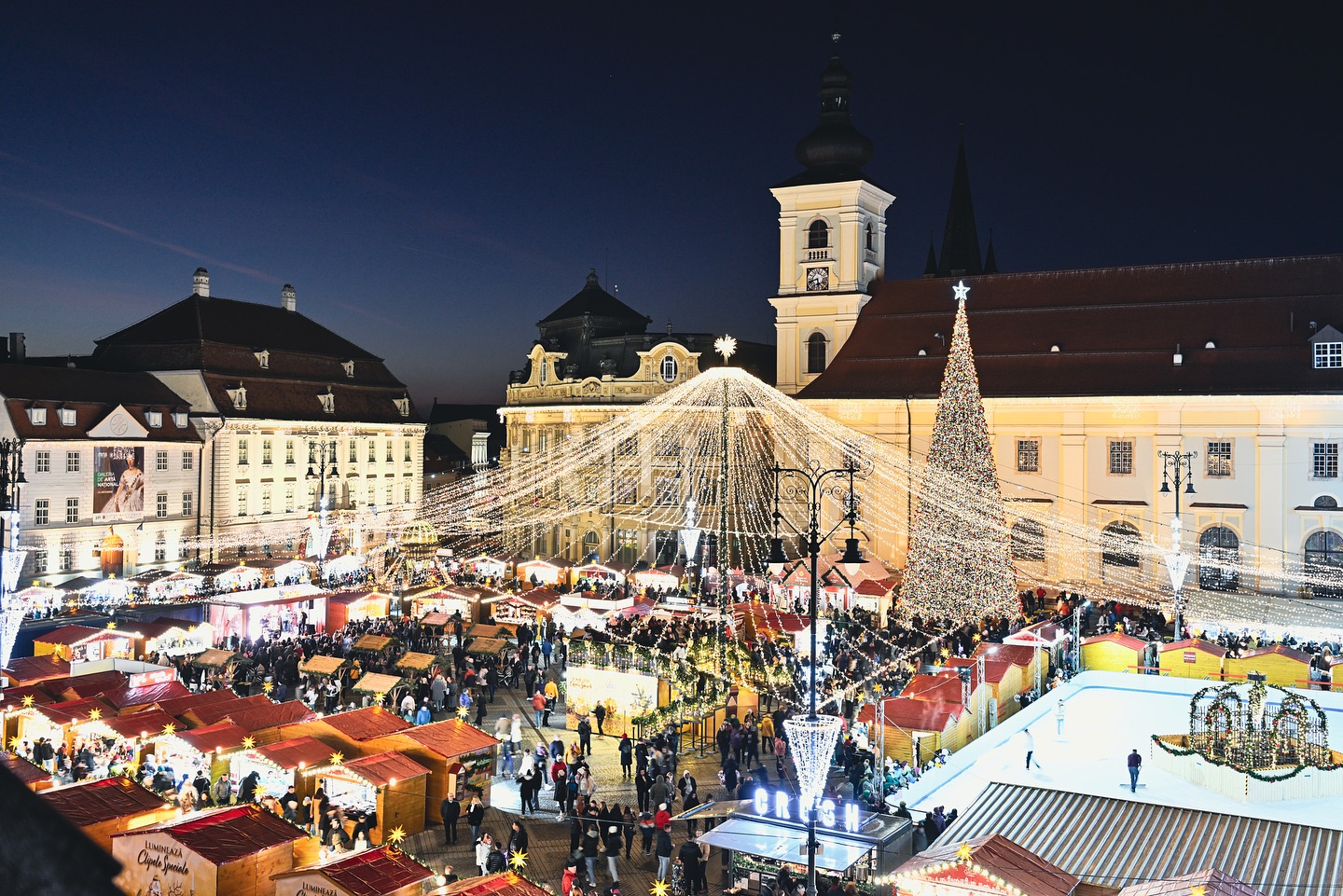
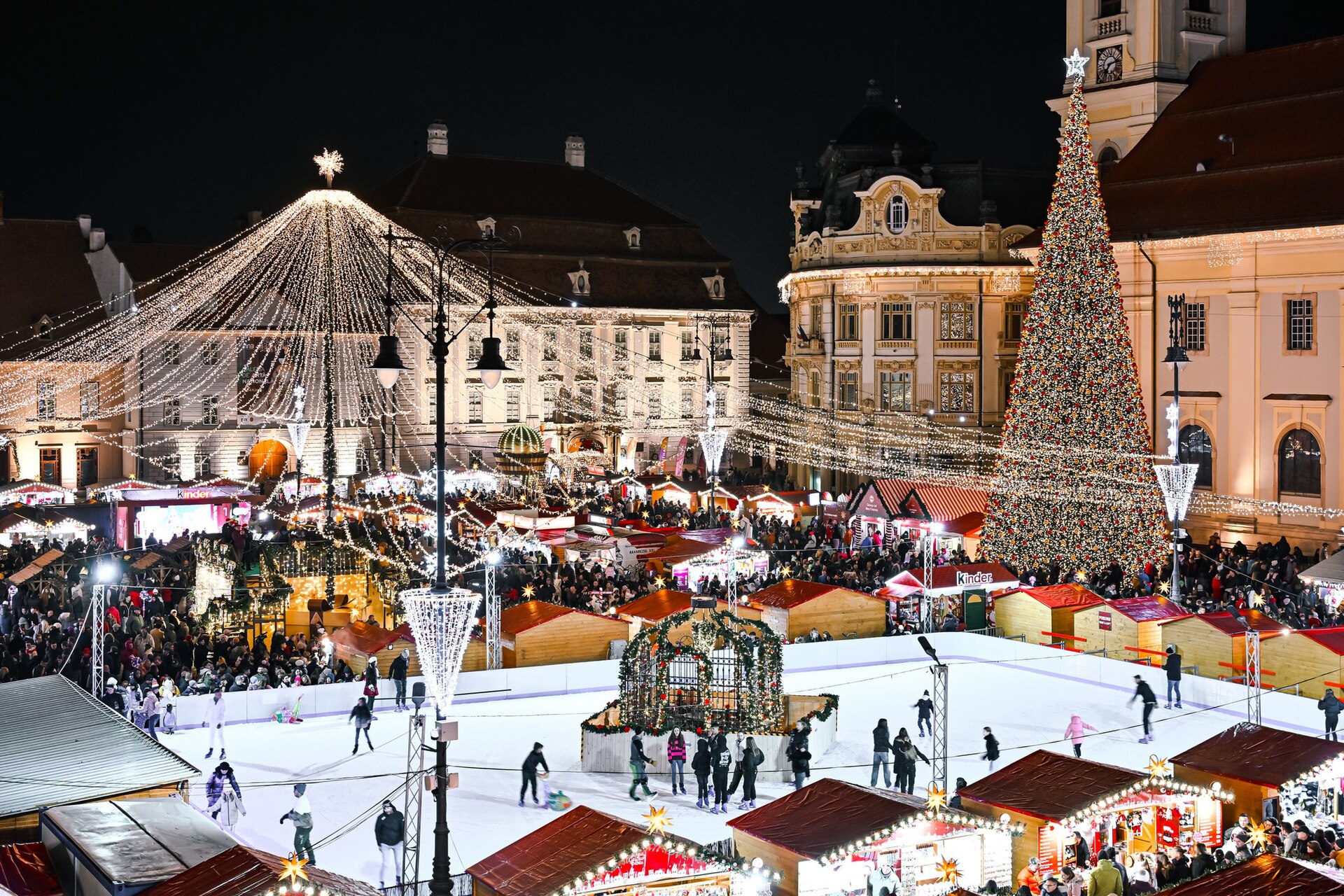
Sibiu’s market fills Piața Mare, a large square lined with pastel Saxon houses and the Council Tower. Several of the roofs have small dormer windows that locals call “the eyes of the city”. The 2026 market runs from 13 November 2026 to 3 January 2027. Official hours are 11:00–22:00 Monday to Friday and 10:00–22:00 at weekends, and entry is free. More than 120 exhibitors from across Romania sell carved wood, ceramics, wool, honey, cheese and sausages. Around them stand a carousel, Santa’s house and a 600 m² ice rink with skate hire.
The panoramic wheel is about 22 m tall and costs 30 lei a ride, about €6. The organisers also sell a 99-lei “Golden Ticket” for one day of unlimited rides on the wheel, carousel, mini-train and Enchanted Elevator, and part of the money goes to charity. Go up at dusk: from the top you see the square, the Lutheran cathedral and, on clear days, the snow on the Făgăraș Mountains. Afterwards, walk across the Bridge of Lies to Piața Mică. It is a quieter square, with cafés in the old guild houses.
2. Craiova: Europe’s best market for 2026
Few foreign visitors knew Craiova until its market began winning the European Best Destinations vote. It came second two years in a row, then won the 2026 title with 142,687 votes, and 55% of them came from outside Romania. The market spreads over more than 280,000 m² of the old centre, linking squares and streets with millions of lights, a giant tree and themed zones. For 2026 the city announced a 13 November 2026 to 3 January 2027 run with free entry. City hall says the tree will be a little taller than last year, with an interactive mini-train circling it. The organisers have also promoted “Tărâmul Elfilor” (Elf Land) for the opening, though it is not yet clear whether this is the overall theme or one area.
Craiova suits families and anyone who likes big light shows. Visit on a weekday evening, because weekends draw coach tours from all over the country. The city has its own airport, and trains from Bucharest take around three hours.
3. Brașov: the mountain setting
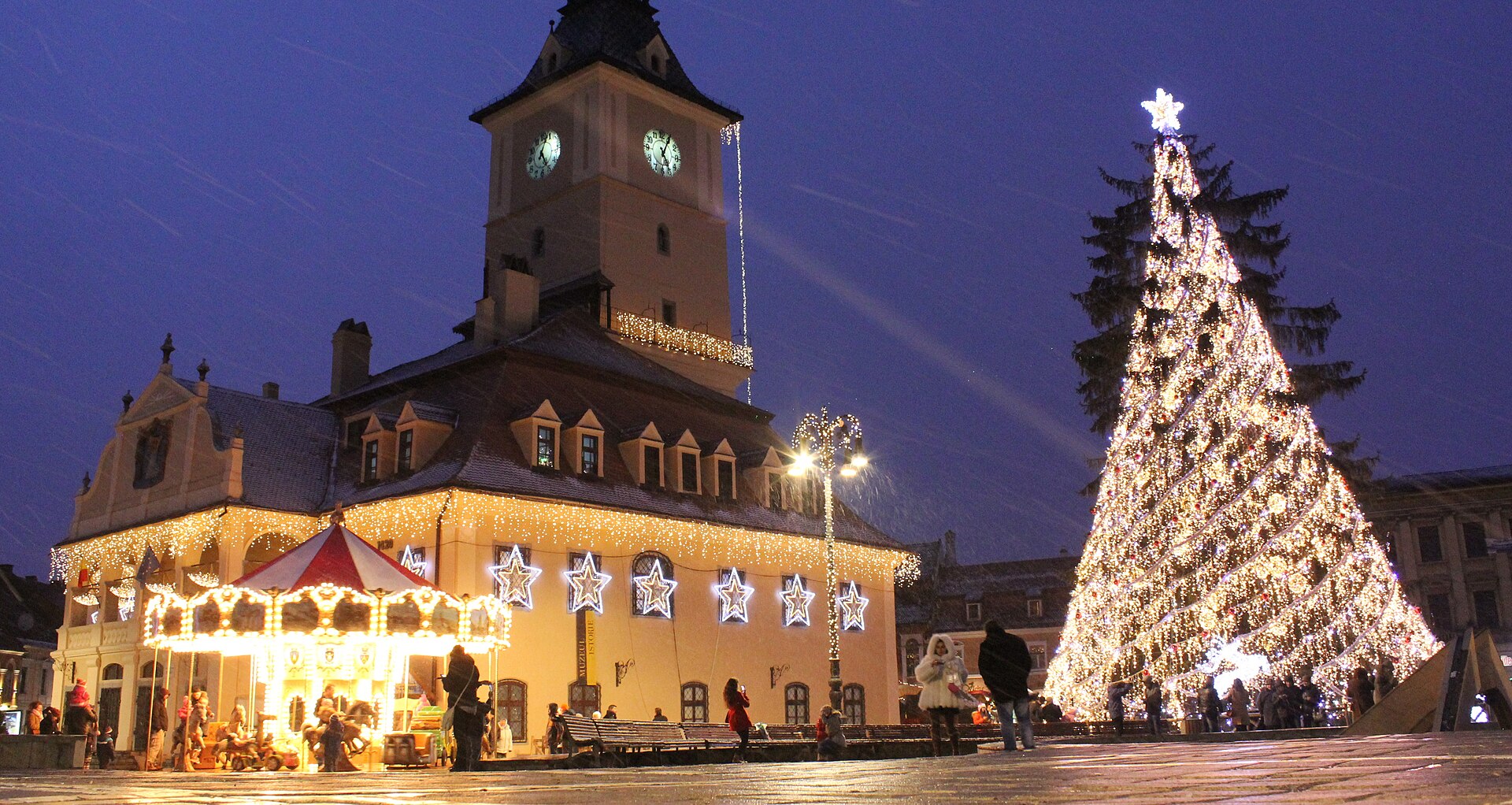
Brașov’s market fills Piața Sfatului, the medieval square around the old Council House, with Mount Tâmpa and its Hollywood-style sign rising behind it. The 2026 dates are 27 November 2026 to 3 January 2027. Hours and the concert programme had not been published when we checked, so look at the city’s site before you go. The huts sell Transylvanian crafts, kürtőskalács (chimney cake) and mulled wine, and there are usually concerts on a stage next to the tree.
Brașov makes a good base. The Black Church and Strada Sforii, one of the narrowest streets in Europe, are a few minutes’ walk from the market. Bran Castle and Râșnov fortress are short day trips by car or bus. With a bit of luck there is snow on Tâmpa. Trains from Bucharest Gara de Nord take roughly two and a half to three hours, and Brașov-Ghimbav Airport has a growing number of international routes.
4. Cluj-Napoca: the student city
Cluj’s main market sets up in Piața Unirii, in front of St Michael’s Church and the statue of Matthias Corvinus. It runs from 20 November 2026 to 1 January 2027, and this year’s concept focuses on local and sustainable products. A separate winter fair is planned from 27 December 2026 to 15 February 2027. That makes Cluj one of the few Romanian cities where you can still find stalls after the holidays.
Cluj is a university city, so the evenings are lively. After the market there are wine bars, craft breweries and third-wave cafés within a few streets of the square. The international airport is about 20 minutes from the centre by bus or taxi, and many low-cost routes fly there from the UK, Germany, Italy and Spain.
5. Bucharest: the capital’s big square
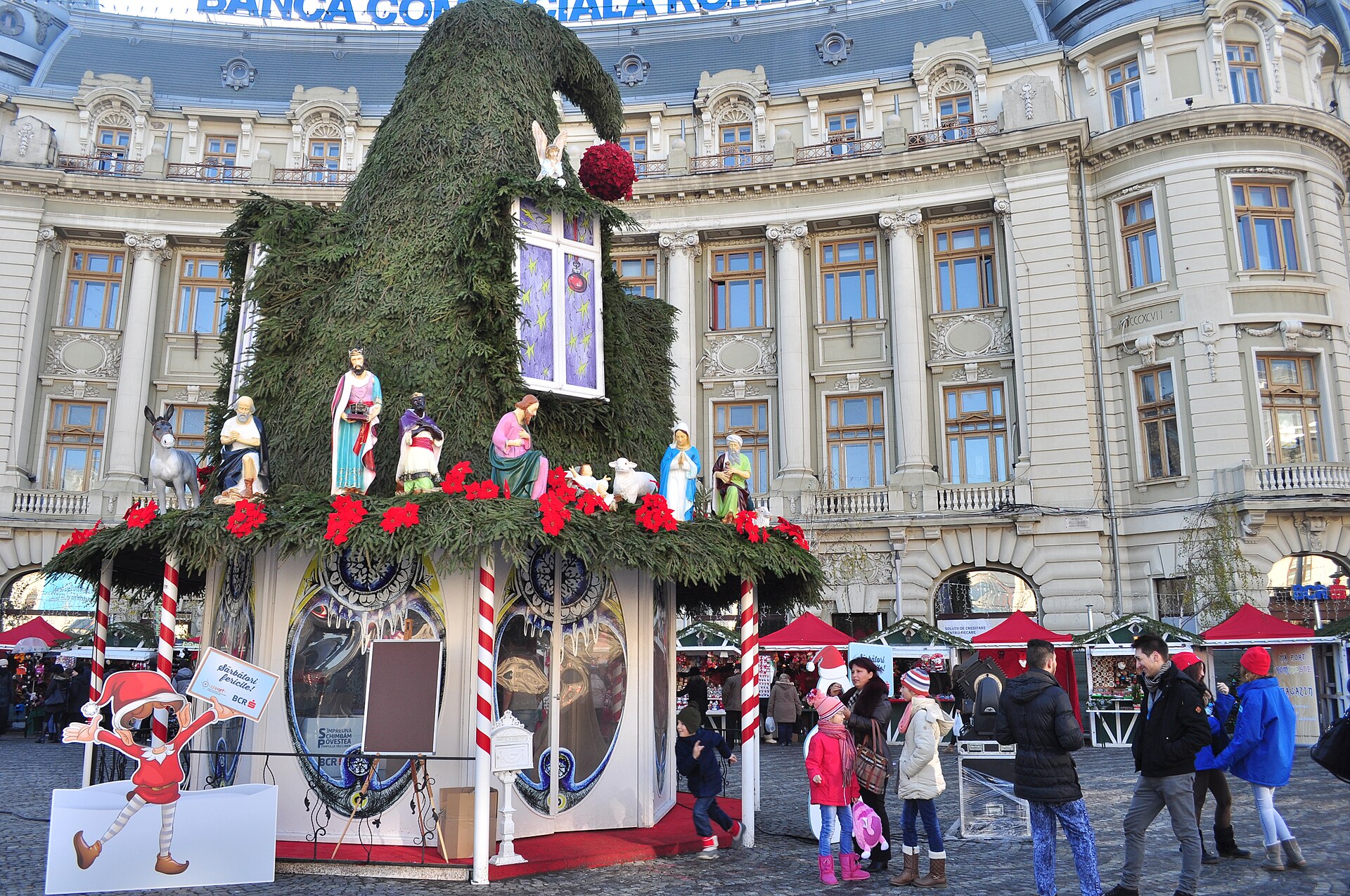
The capital’s main market opens in Piața Constituției, facing the vast Palace of the Parliament, on 27 November 2026 and runs until 27 December. Entry is free. The opening night is also when the city switches on its festive lights, about six million of them across the main boulevards and squares. They stay on until after St John’s Day in January. The market has huts selling crafts and Romanian food, a panoramic wheel, a carousel, Santa’s house, a big tree and evening concerts. The organiser, ARCUB, publishes the full programme on its website.
Bucharest closes earlier than the Transylvanian markets, so plan it for the start of a trip. The lights on Calea Victoriei and in the old town are worth an evening walk on their own.
6. Timișoara: five squares in the west
Timișoara holds its 19th Christmas market from 29 November 2026 to 7 January 2027, so it is the last of the big markets to close. Instead of one large square it uses several: Piața Victoriei between the Opera and the Orthodox Cathedral, Piața Libertății, Piața Sfântul Gheorghe, Piața Unirii with its Baroque cathedral, and Parcul Central. The artistic programme will be announced closer to opening. Timișoara is close to the Hungarian and Serbian borders, so it fits into a wider Central European trip. It has its own international airport.
What to eat and drink
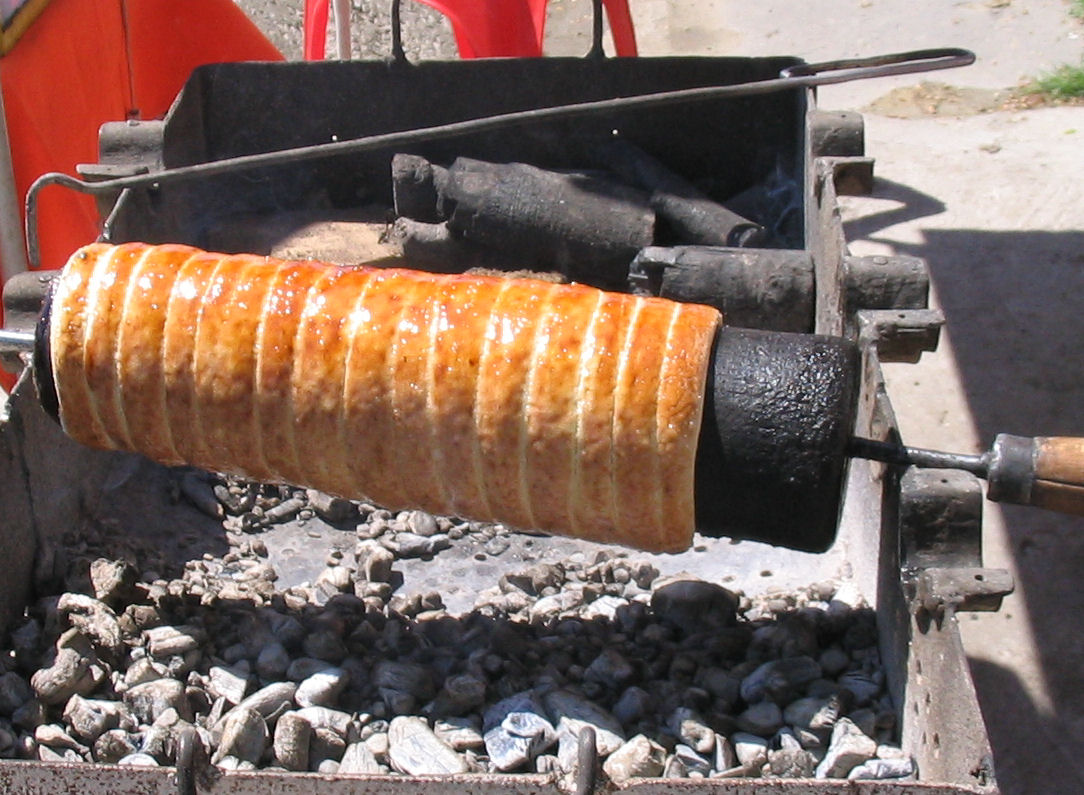
Romanian market food is hearty and cheap by Western European standards. Look for sarmale (cabbage rolls with minced meat, served with polenta and sour cream), cârnați (grilled sausages), mici (skinless grilled minced-meat rolls) and bulz (polenta baked with cheese). For something sweet there is cozonac, a swirled sweet bread with walnuts or cocoa, and in Transylvania the Hungarian and Saxon kürtőskalács, a chimney cake rolled in sugar, cinnamon or walnuts and baked over coals. Mulled wine is vin fiert. You will also see țuică fiartă, hot plum brandy, a strong local favourite. Most stalls take cards, but carry a few lei in cash for small stands and rides.
A suggested five-day route
Day 1 – Bucharest. Fly into Bucharest. Walk Calea Victoriei and the old town under the lights, then visit the Piața Constituției market in the evening.
Day 2 – Brașov. Morning train to Brașov, about 2.5–3 hours. Walk the old town, ride the cable car up Tâmpa if the weather is clear, and spend the evening at Piața Sfatului.
Day 3 – Bran and Râșnov. A half-day trip to Bran Castle and Râșnov fortress, back in Brașov for dinner.
Day 4 – Sibiu. Bus or car to Sibiu, about 2.5 hours by road. Ride the wheel at dusk and walk Piața Mică and the Bridge of Lies.
Day 5 – Sibiu and out. Fly home from Sibiu, or continue to Cluj-Napoca, about 3 hours by road, for one more market.
If you want Craiova, go from Bucharest. It is around three hours by train and works as a day trip or an overnight stop. Timișoara is a separate trip, or the last stop on a route across Hungary.
Practical tips
Currency: Romania uses the leu (RON), not the euro. Card payment is common, but use an ATM from a bank rather than a stand-alone cash machine. Weather: December days in Transylvania are often around freezing and can drop well below it at night, so bring warm boots and layers. Crowds: Friday and Saturday evenings are busiest everywhere, and Craiova and Sibiu draw coach tours. Driving: mountain roads can be icy. Winter tyres are required by law in Romania when roads are covered in snow or ice. Trains: book CFR tickets online ahead of time for weekend journeys in December.
Plan your trip to Romania
- Sibiu: tickets and tours on Tiqets · activities on Klook
- Brașov: tickets and tours on Tiqets · activities on Klook
- Bucharest: tickets and tours on Tiqets · activities on Klook
- Arriving by plane: pre-book an airport transfer with Welcome Pickups
- Road trip: compare car hire on Localrent
- Mobile data: get a travel eSIM from Airalo
Some of these are affiliate links: if you book through them we may earn a small commission, at no extra cost to you.
Frequently asked questions
When do the Christmas markets in Romania open in 2026?
Sibiu and Craiova open first, on 13 November 2026. Cluj-Napoca follows on 20 November, Brașov and Bucharest on 27 November, and Timișoara on 29 November. Most stay open until early January 2027. The exception is Bucharest’s Piața Constituției market, which closes on 27 December 2026.
Which is the best Christmas market in Romania?
Craiova won the 2026 European Best Destinations vote for best Christmas market in Europe and is the largest, at more than 280,000 m². For atmosphere and architecture, Sibiu’s Piața Mare is the classic choice, and Brașov has the best mountain setting. Many visitors combine Brașov and Sibiu in one trip.
Are Romanian Christmas markets free to enter?
Yes. Entry is free at all the markets in this guide. You pay only for food, drink, souvenirs and attractions. In Sibiu, for example, the panoramic wheel costs 30 lei, about €6, and the carousel and mini-train cost 20 lei each.
Is Romania worth visiting in December?
Yes, especially if you like Christmas markets without Western European crowds or prices. Transylvania often has snow, the medieval old towns are lit up, and food and drink are cheaper than in Germany or Austria. Days are short and cold, so plan indoor stops and dress warmly.
How do you get between Romania’s Christmas market cities?
Trains link Bucharest with Brașov, about 2.5–3 hours, and with Craiova, about 3 hours. Between Brașov, Sibiu and Cluj-Napoca, buses or a hire car are usually faster than the train. Sibiu, Cluj-Napoca, Craiova, Timișoara and Bucharest all have international airports, so you can fly in and out of different cities.
Photos: Andreidragan, CC BY-SA 4.0, via Wikimedia Commons; Andreidragan, CC BY-SA 4.0, via Wikimedia Commons; Rachel Titiriga, CC BY 2.0, via Wikimedia Commons; Joe Mabel, CC BY-SA 2.0, via Wikimedia Commons; Markolaci (Hungarian Wikipedia), CC BY-SA 3.0, via Wikimedia Commons
Planning a bigger trip? See our guide to the 25 best places to visit in Europe, from city breaks to fjords.