Updated · Facts and prices checked against official sources
Vienna doesn’t do subtle. The Habsburgs ruled from here for more than six centuries and spent the money accordingly, so the city’s landmarks come in one size: big. That makes them easy to find and hard to choose between. The list below is the shortlist I’d give a friend with three or four days: the twelve sights that actually shape a first visit, what each one is like once you’re inside, and the small bits of practical knowledge that save you queues and money.
Prices and hours are for 2026 and they do move, so check the official site the week you go.
Vienna landmarks at a glance
- If you only have one day: St. Stephen’s Cathedral, a walk through the Hofburg, the Kunsthistorisches Museum and an evening at the Opera (standing room counts).
- Best free sights: Schönbrunn’s gardens, the Hofburg courtyards, the Rathaus and its park, the outside of the Hundertwasserhaus, the Naschmarkt.
- Getting around: almost everything here sits on or near the Ringstrasse. Trams 1 and 2 cover most of it, and the U-Bahn gets you to Schönbrunn (U4) and the Prater (U1, U2) in minutes.
- Worth knowing: many museums close on Mondays outside summer. Plan the Monday around churches, markets and Schönbrunn.
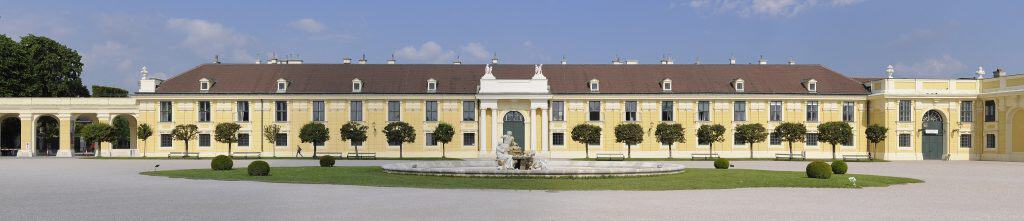
1. Schönbrunn Palace
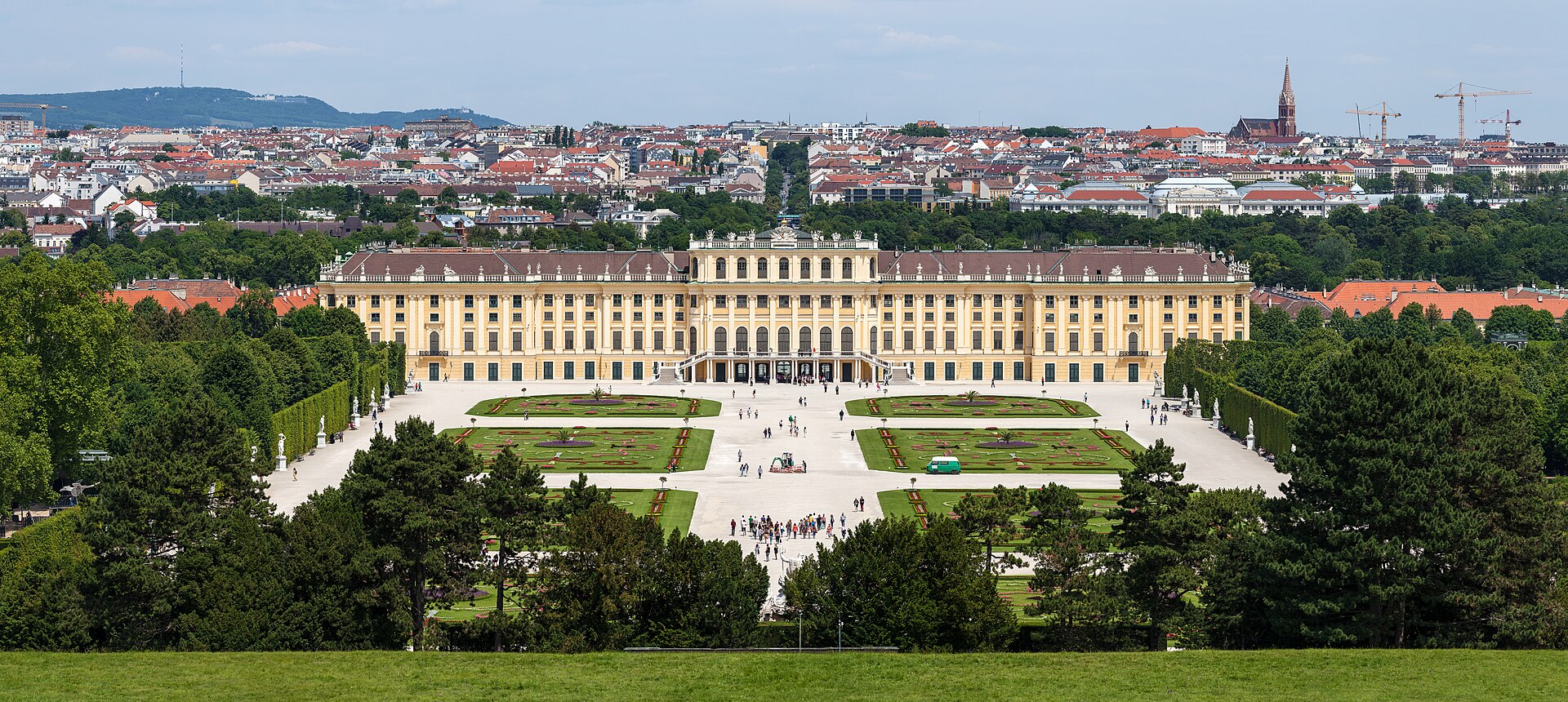
The Habsburg summer palace has 1,441 rooms and has been a UNESCO World Heritage Site since 1996. Most visitors see about 40 of those rooms on the Grand Tour, which in 2026 costs around €42 with an audio guide. It’s polished and crowded and, honestly, the rooms blur together after a while. Time slots sell out in summer, so book ahead.
The part I’d never skip is free: the gardens. They open early (6:30 a.m. in summer), and if you walk straight up the hill to the Gloriette before the tour buses arrive, you get the whole palace and half of Vienna laid out below you. The zoo at the edge of the park, founded in 1752, is the oldest still operating anywhere.
Tip: take the U4 to Schönbrunn or Hietzing and arrive when the gates open. Do the gardens first and the palace second, not the other way round.
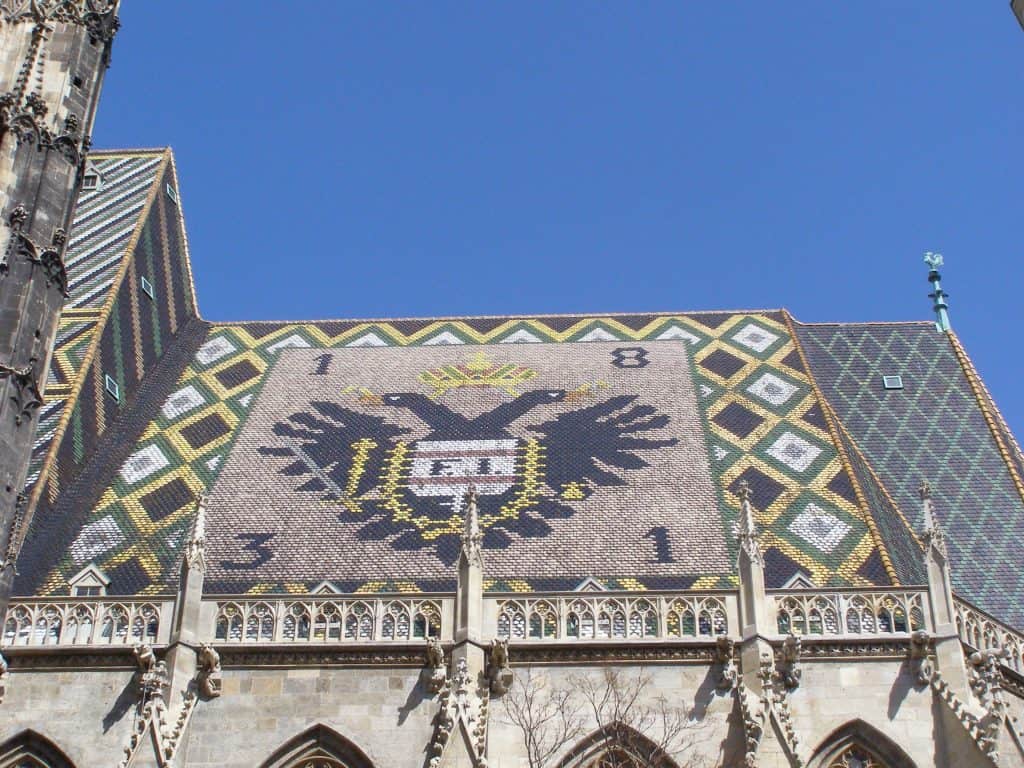
2. St. Stephen’s Cathedral (Stephansdom)
Every walk through the old town ends up at Stephansplatz sooner or later. The Gothic cathedral is free to enter (the nave beyond the rear section requires a ticket), and the patterned roof, best seen from the north tower, is the image that ends up on half the postcards in the city.
You have two towers to choose from. The south tower means 343 steps up a tight spiral staircase to a lookout over the old town. The north tower has a lift and holds the Pummerin, the cathedral’s great bell, recast in 1951 after the original crashed down in the 1945 fire. If you want everything (audio guide, both towers, the catacombs and the cathedral museum), the all-inclusive ticket costs €25.
Tip: the catacombs tour runs roughly hourly and is far more atmospheric than the main nave. The cathedral desk takes cash only, so book online if you’d rather pay by card.
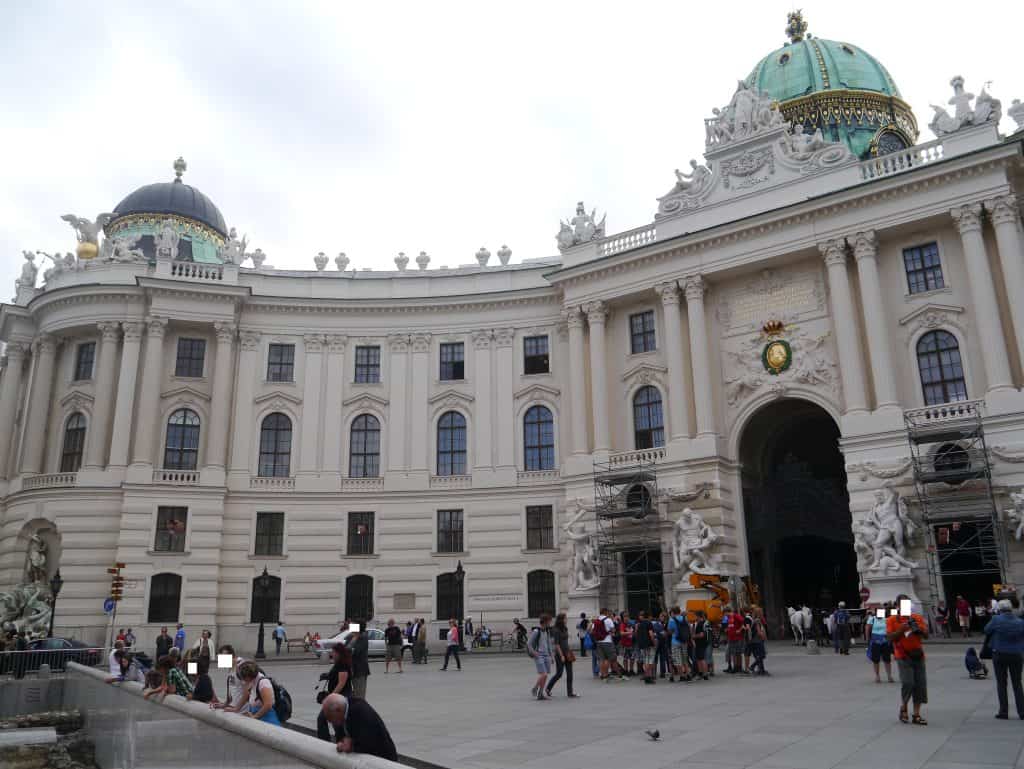
3. The Hofburg
This was the Habsburgs’ winter residence and the centre of their empire, and it still houses the office of Austria’s federal president. It’s less a building than a small district of palaces, courtyards and museums. Walking through it, from Michaelerplatz across the courtyards to Heldenplatz, costs nothing and is one of the best free things to do in Vienna.
The ticketed highlight is the combined Imperial Apartments and Sisi Museum (€20 in 2026), devoted to Empress Elisabeth, whose story is half history and half myth. The Imperial Treasury, with the crown of the Holy Roman Empire, is a separate ticket and, to my mind, the better museum. Note that the Silver Collection has been closed for renovation since 2023.
Tip: the Spanish Riding School is also inside the Hofburg. Watching the morning exercise is much cheaper than a full performance and you still get the Lipizzaner horses and the white riding hall.
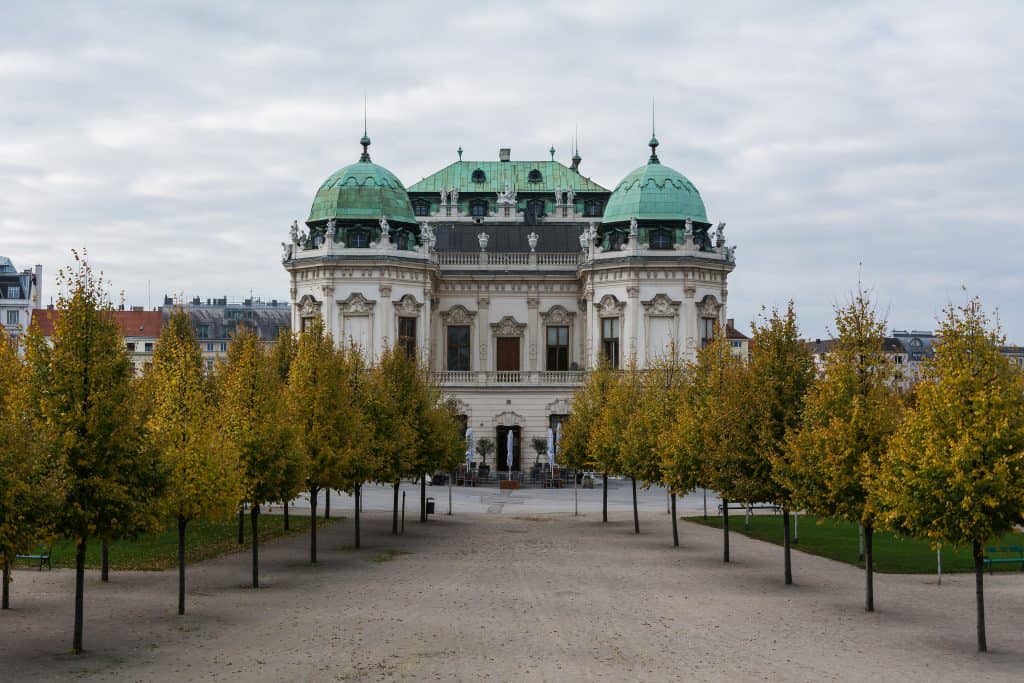
4. The Belvedere
Two baroque palaces built for Prince Eugene of Savoy face each other across a terraced garden. The Upper Belvedere is where most people go, because it holds Gustav Klimt’s The Kiss, hung on the first floor in a room of his work. Entry was €23 in 2026, and booking online secures a time slot.
The painting really is worth seeing in person. It’s larger than people expect and covered in actual gold leaf. Go at opening time or late in the afternoon. In the middle of the day the room is several rows deep in phones.
Tip: the gardens between the two palaces are free, and the walk down from the Upper to the Lower Belvedere gives you a classic view back towards the city centre.
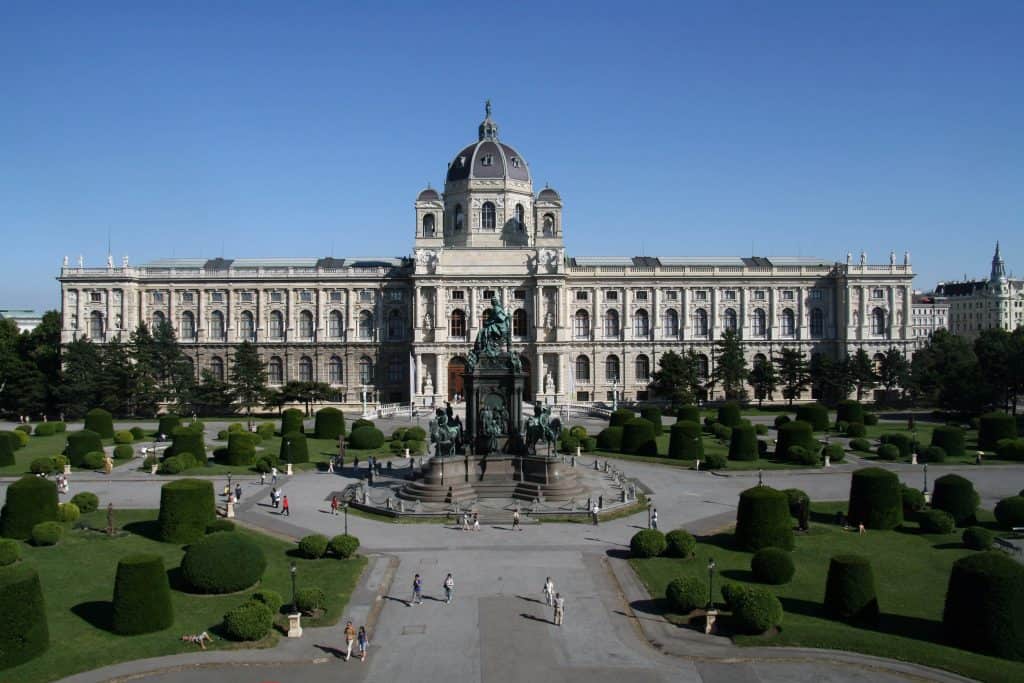
5. Kunsthistorisches Museum
If you see one art museum in Vienna, make it this one. The building is as much an attraction as the collection: marble, gilding and a café under the central dome that is one of the most beautiful places to have a coffee in Europe. Upstairs, Room X holds twelve paintings by Pieter Bruegel the Elder, including Hunters in the Snow and The Tower of Babel. It is the finest Bruegel room anywhere.
Tickets cost €22 online in 2026, and visitors under 19 go free. From September to May the museum is closed on Mondays; it stays open until 9 p.m. on Thursdays all year, which is the calmest time to visit.
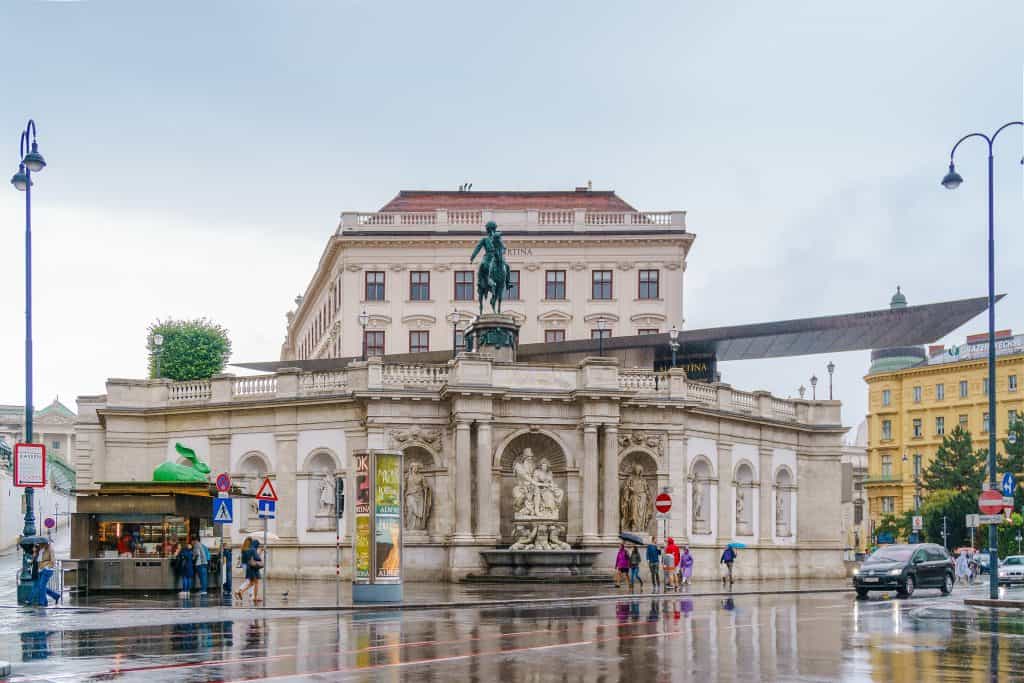
6. The Albertina
Built onto the last section of the old city walls, the Albertina combines Habsburg state rooms with one of the world’s great collections of prints and drawings. The permanent collection runs from Monet to Picasso, and the temporary shows are usually excellent. Dürer’s famous Young Hare belongs to the Albertina, but it is so fragile that it’s only displayed occasionally.
Tip: the terrace outside the entrance overlooks the Opera and is a good free photo spot even if you skip the museum.
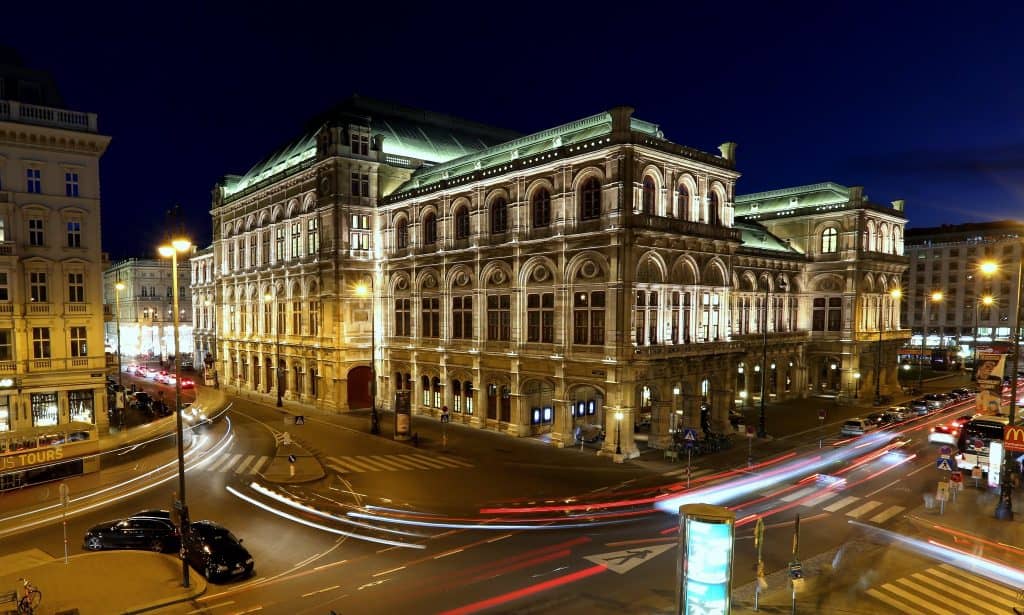
7. Vienna State Opera (Staatsoper)
The Staatsoper opened in 1869 and puts on a different production almost every night of the season, which runs from September to June. Seats can cost hundreds of euros. Standing room costs a few euros, and the experience is still very good: standing places go on sale from 10 a.m. the day before each performance, online or at the box office.
If opera isn’t your thing, take a guided tour of the building in the daytime. In spring and early autumn, some performances are also shown live on a big screen outside the building, free for anyone passing.
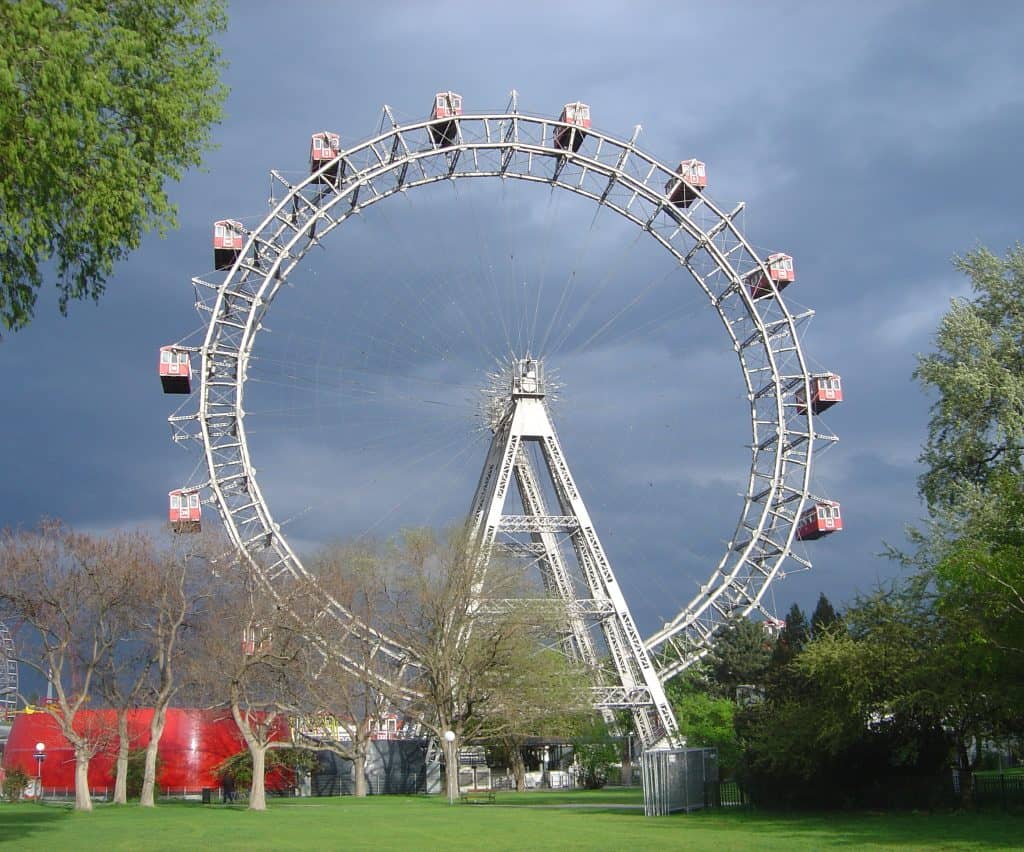
8. Prater and the Giant Ferris Wheel
The Prater is two things: a huge green park that was once imperial hunting ground, and an old-fashioned amusement park at its edge. The landmark is the Wiener Riesenrad, the Giant Ferris Wheel, built in 1897 and 64.75 metres tall. Film fans know it from The Third Man. A ride costs €14.50 and the wheel runs until late in the evening, which is the best time to go.
The amusement park itself has no entrance fee; you pay per ride. Behind it, the Hauptallee runs for more than four kilometres through the trees and is where the Viennese go running, cycling and walking off Sunday lunch.
9. Rathaus (City Hall)
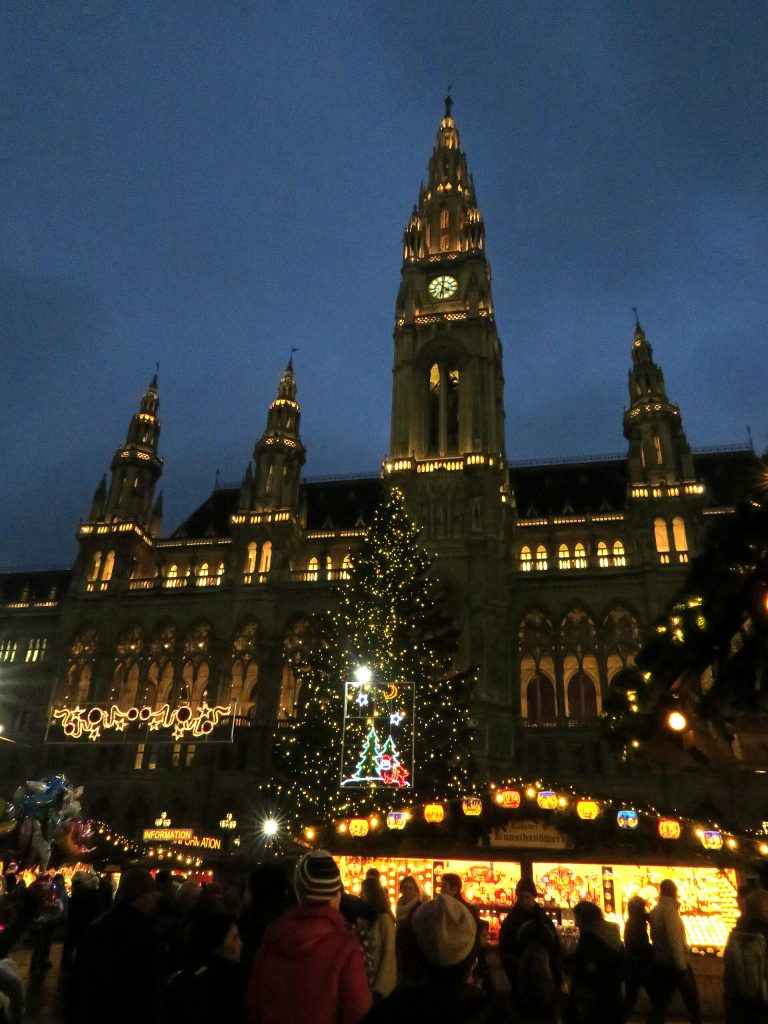
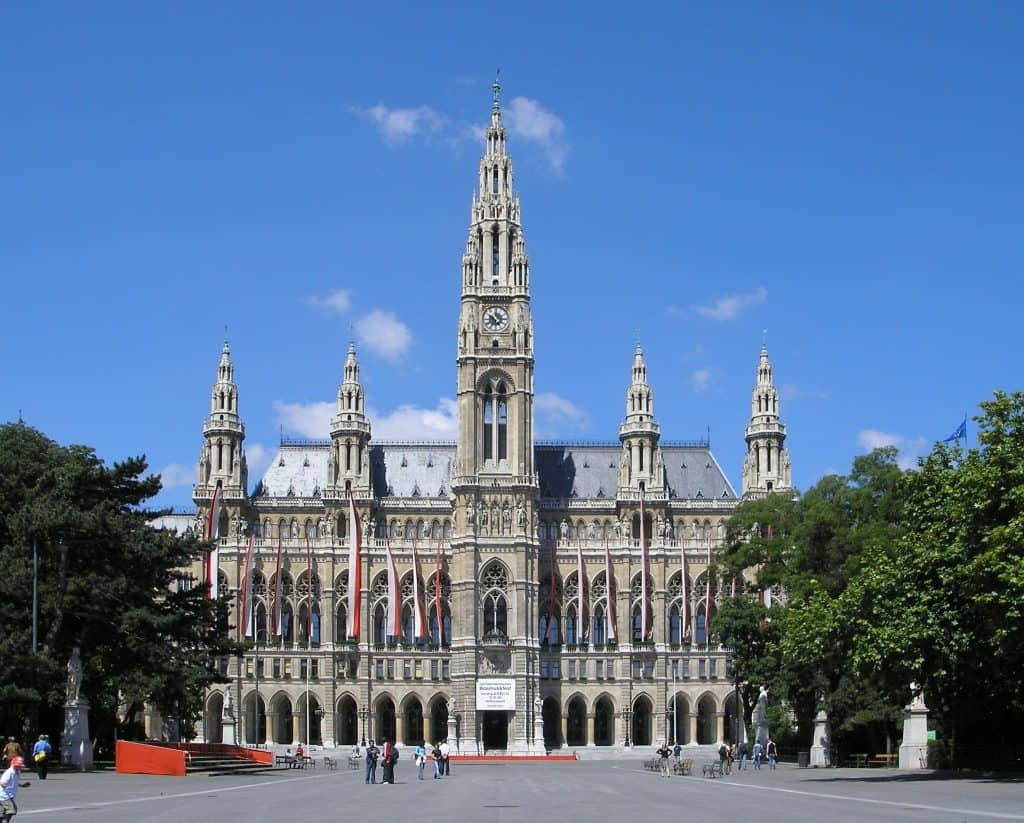
The neo-Gothic City Hall on the Ring was completed in 1883 and looks more like a cathedral than an office building. You’ll probably see it because of what happens in the square in front: the city’s biggest Christmas market from mid-November, an ice rink in winter, and a free open-air film and music festival on summer evenings.
10. Karlskirche
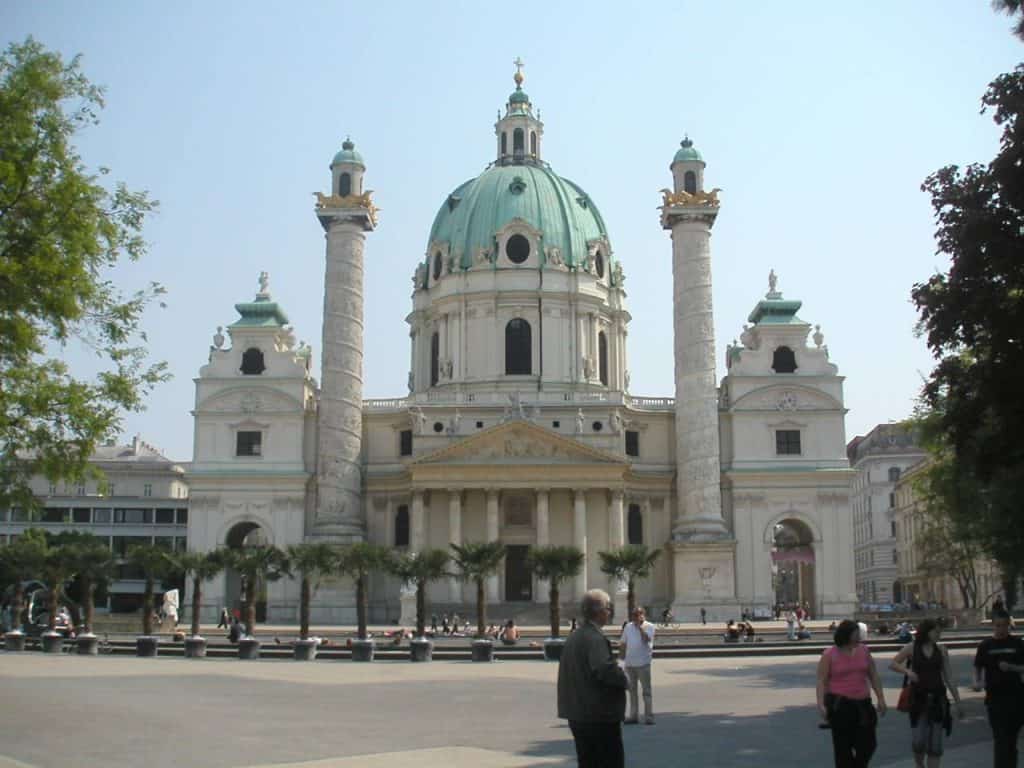
Emperor Charles VI promised to build this church during the plague of 1713, and it was finished in 1737. It’s a strange and wonderful mix: a Roman-style portico, a huge green dome and two columns modelled on Trajan’s Column in Rome. Stand on the far side of the pond in Resselpark to see the whole thing reflected in the water.
11. Hundertwasserhaus
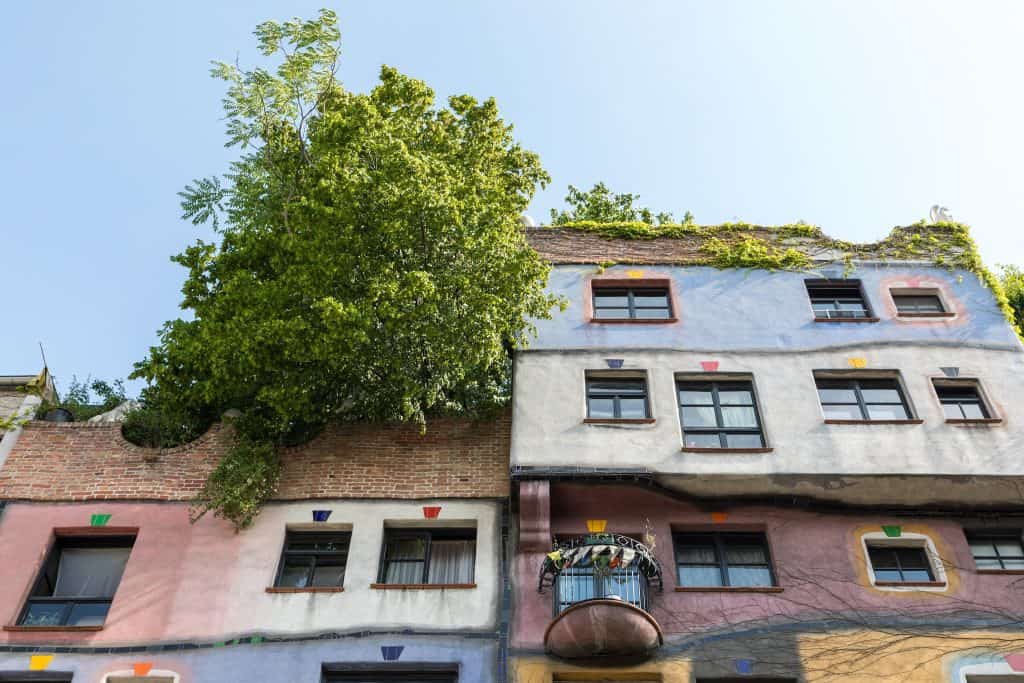
Friedensreich Hundertwasser hated straight lines, and this council housing block, completed in the mid-1980s, is his manifesto: wavy floors, mismatched windows and trees growing out of the balconies. It’s a residential building, so you can’t go inside, but you can look at it from the corner of Kegelgasse and Löwengasse. Across the street, the Hundertwasser Village is a small shopping arcade in the same style.
Tip: combine it with the Kunst Haus Wien, the Hundertwasser museum a few minutes’ walk away.
12. Naschmarkt
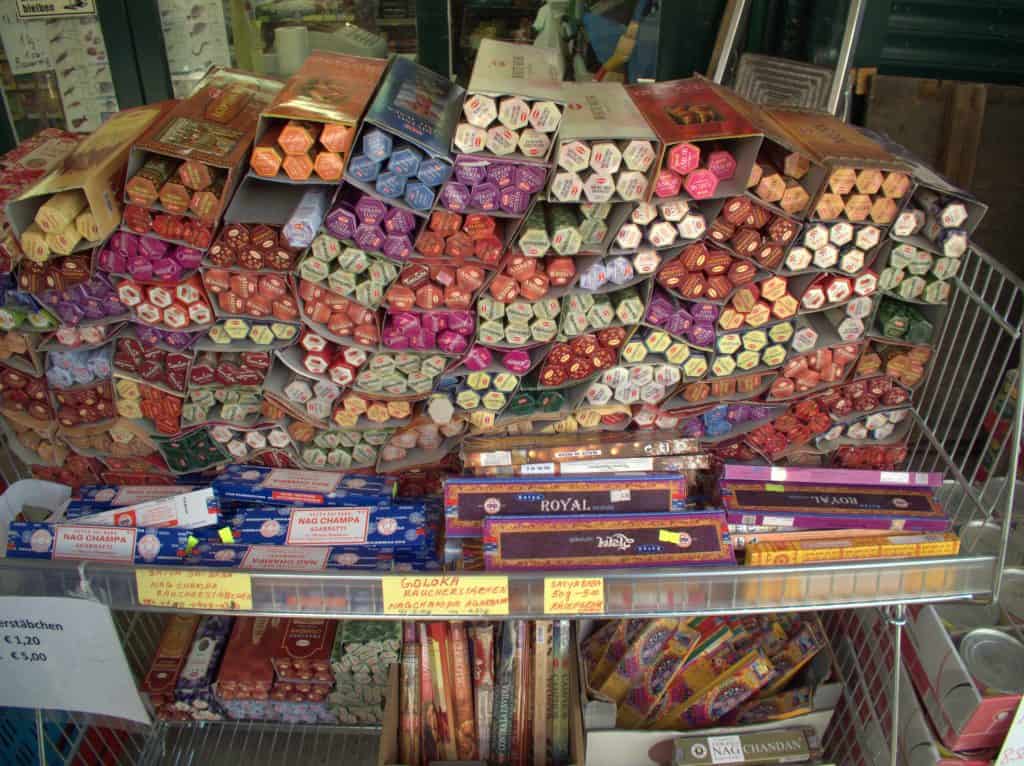
Vienna’s best-known market stretches for about one and a half kilometres along the Wienzeile, with stalls for spices, cheese, olives and pickles mixed with small restaurants. Come hungry and graze rather than sitting down at the first place you see. On Saturdays a flea market sets up at the Kettenbrückengasse end from early morning until early afternoon, and that’s the most fun day to come. Most food stalls are closed on Sundays.
How to fit it all in
Three days is the comfortable minimum. A sensible split:
- Day 1, the old town: St. Stephen’s in the morning, then the Hofburg and the Albertina, with the Opera in the evening.
- Day 2, palaces and art: Schönbrunn early, then the Kunsthistorisches Museum in the afternoon (or Thursday evening).
- Day 3, around the edges: the Belvedere, the Karlskirche and the Naschmarkt, finishing at the Prater as the lights come on.
If you plan to visit several paid sights, compare the Vienna City Card (transport plus discounts) with the Vienna Pass (entry included). The Pass only pays off if you’re doing three or four big tickets a day.
Plan your trip to Vienna
- Where to stay: tickets and tours on Tiqets · activities on Klook
- Tours and tickets: tickets and tours on Tiqets · activities on Klook
- Arriving by plane: pre-book an airport transfer with Welcome Pickups
- Road trip: compare car hire on Localrent
- Mobile data: get a travel eSIM from Airalo
Some of these are affiliate links: if you book through them we may earn a small commission, at no extra cost to you.
Frequently asked questions
What is the most famous landmark in Vienna?
St. Stephen’s Cathedral is the symbol of the city, while Schönbrunn Palace is its most visited sight. Most visitors see both.
Which Vienna landmarks are free?
The gardens of Schönbrunn and the Belvedere, the Hofburg courtyards, the main part of St. Stephen’s Cathedral, the Rathaus square, the outside of the Hundertwasserhaus and the Naschmarkt cost nothing.
How many days do you need in Vienna?
Three days covers the main landmarks at a relaxed pace. With two days, choose one palace (Schönbrunn or the Belvedere) and one museum.
Planning a bigger trip? See our guide to the 25 best places to visit in Europe, from city breaks to fjords.
Photos: Plamen Agov (MrPanyGoff), CC BY-SA 3.0, via Wikimedia Commons; Andrzej Otrębski, CC BY-SA 3.0, via Wikimedia Commons; Zairon, CC BY-SA 3.0, via Wikimedia Commons; Isiwal, CC BY-SA 4.0, via Wikimedia Commons; Manfred Werner - Tsui, CC BY-SA 3.0, via Wikimedia Commons; Radler59, CC BY-SA 4.0, via Wikimedia Commons; Thaler Tamas, CC BY-SA 4.0, via Wikimedia Commons; David Monniaux, CC BY-SA 3.0, via Wikimedia Commons; Gryffindor, CC BY 2.5, via Wikimedia Commons; Abubiju, CC BY-SA 3.0, via Wikimedia Commons; Dietmar Rabich, CC BY-SA 4.0, via Wikimedia Commons; DALIBRI, CC BY-SA 3.0, via Wikimedia Commons.