Updated
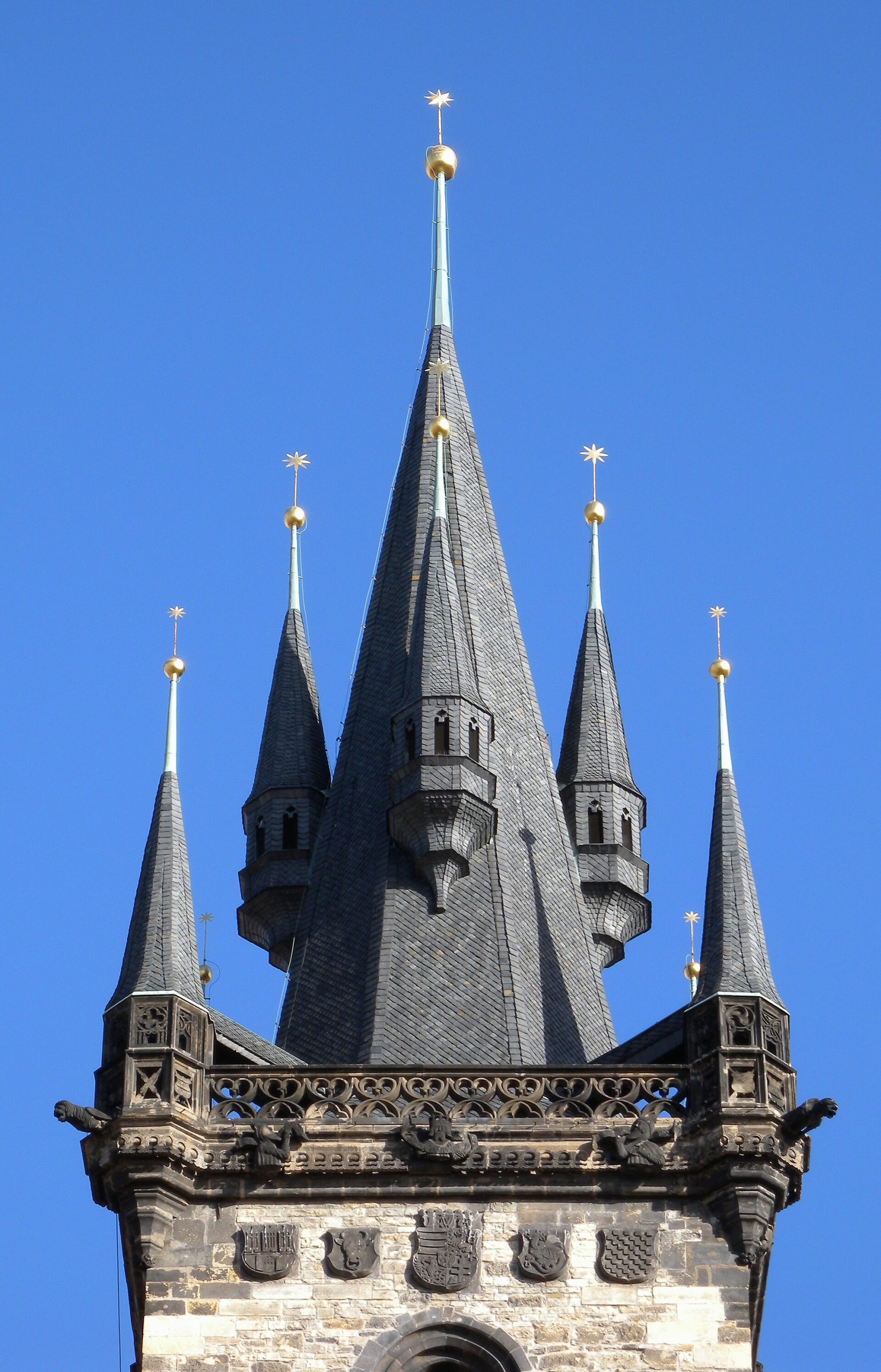
Prague has been called the city of a hundred spires since the 19th century, and the number was always an undercount. Estimates of the towers, steeples and turrets in the historic centre run from about 500 upwards. The point is less the count than the skyline: Gothic gate towers, baroque domes and the dark twin points of the Týn Church, all visible from almost every hill and bridge.
This guide uses that skyline as a way into the city. It covers the core sights, which towers you can climb and where to stand for the classic views. The historic centre has been a UNESCO World Heritage Site since 1992, and almost everything here is within walking distance of the river.
Prague’s spires at a glance
- Best for: architecture, viewpoints and a first or second visit to the city.
- How long: three days covers the sights below at a sensible pace; two is tight.
- Towers you can climb: the Old Town Hall, the Old Town Bridge Tower, the Powder Tower, the St Vitus south tower and the Petřín Lookout Tower.
- When to go: April to June and September to October; early mornings all year for the bridge and squares.
- Getting around: on foot in the centre, with trams for the castle hill, Vyšehrad and Letná.
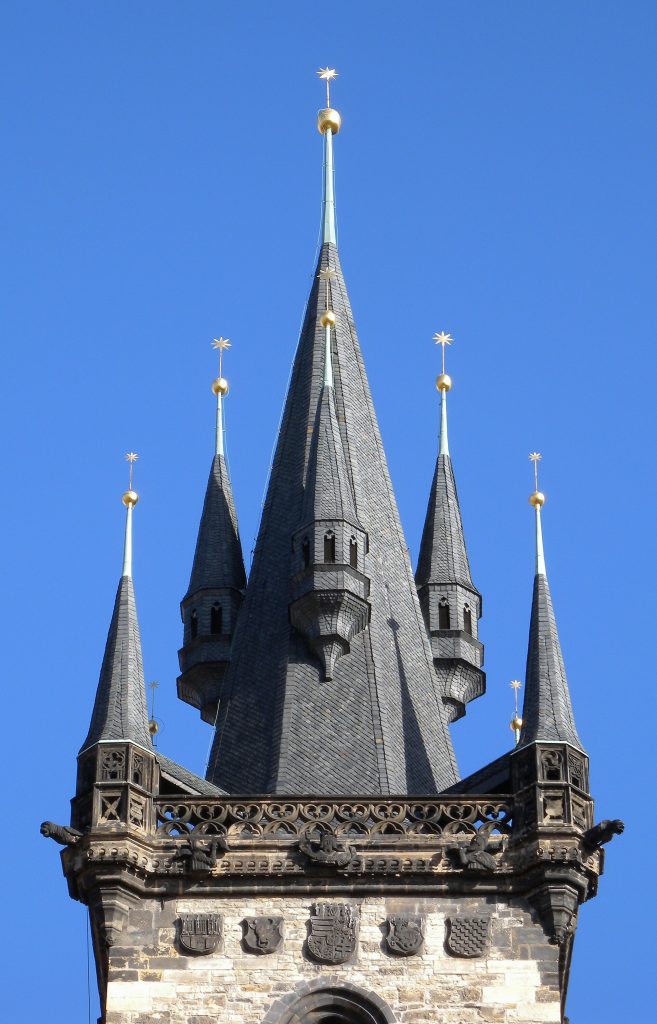
Old Town Square: Týn Church and the Town Hall tower
Old Town Square is where most visitors meet the spires for the first time, and the Church of Our Lady before Týn sets the tone. Its two towers rise to about 80 metres, each ringed with small pinnacles. The church was built from the mid-14th century and is set back behind a row of houses, so you reach it through a narrow arcade off the square. Inside, the astronomer Tycho Brahe is buried near a pillar on the south side.
Across the square, the Old Town Hall tower is the easiest climb in the city. It stands around 70 metres high and dates from the 14th century, and two lifts take you most of the way to the gallery, which makes it the only medieval tower in Prague that is fully accessible by wheelchair. From the narrow outer walkway the Týn spires look close enough to touch, and the castle sits on the far side of the river.
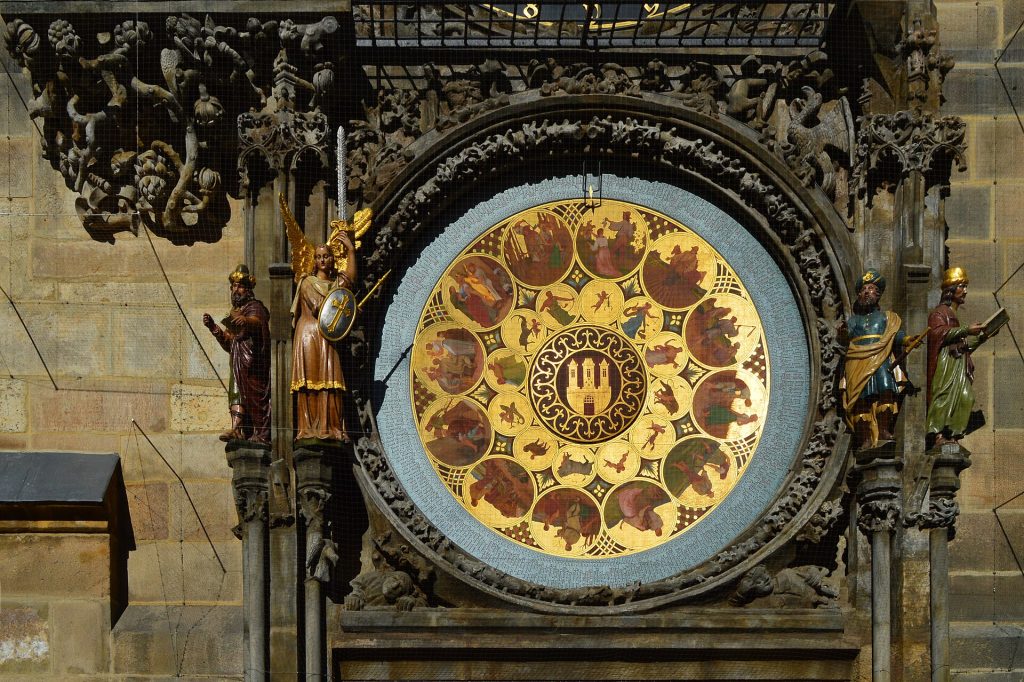
The Astronomical Clock, honestly
The orloj on the Old Town Hall’s south wall is one of the oldest astronomical clocks in the world, with its earliest mechanism dating from 1410, and it is usually described as the oldest still working. Its dials show the positions of the sun and moon, the zodiac and old Bohemian time.
The hourly show is a different matter. On the hour during the day, the skeleton of Death pulls a bell rope, two small windows open and the twelve Apostles slide past, then a cockerel crows and it is over in well under a minute. Watch it once, ideally from the side of the crowd rather than the middle, where pickpockets work.
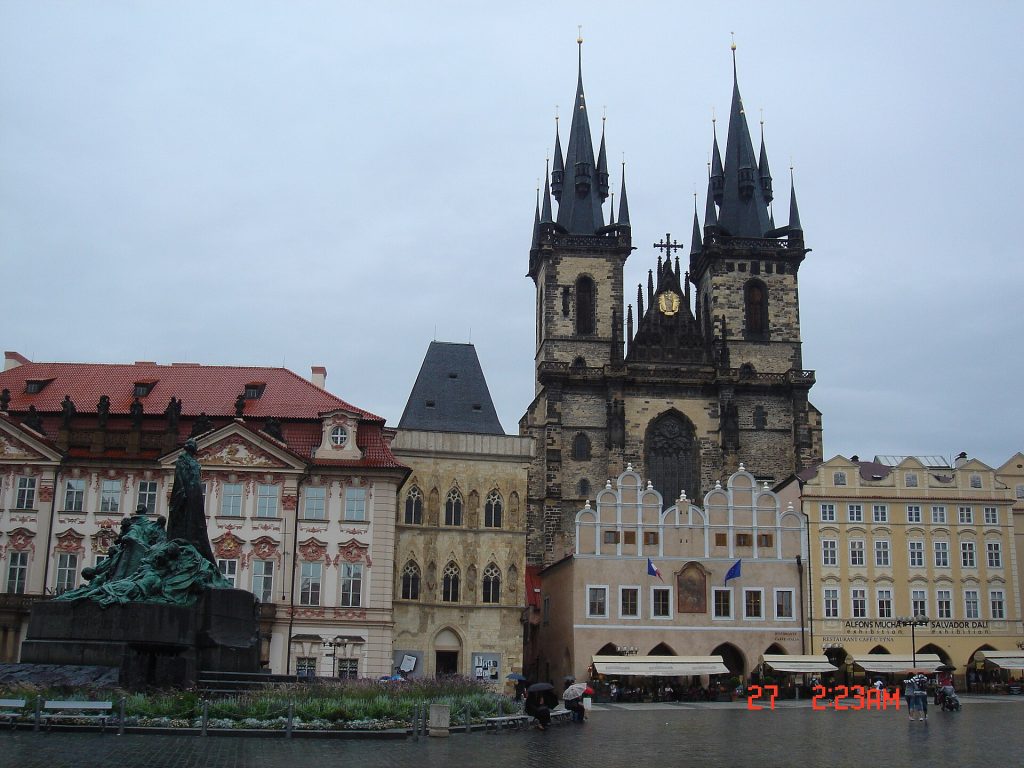
Kinský Palace and the National Gallery
On the east side of the square, next to the Týn Church, Kinský Palace is the building with the pink and white stucco front and statues along the roofline. It was built between 1755 and 1765 and is among the finest Rococo façades in Prague. The National Gallery Prague has managed it since 1949 and uses it as one of its exhibition venues. What is on show changes, so check the gallery’s programme before you go.
Step back to the middle of the square for the best view of the façade: the plain Gothic House at the Stone Bell next door, also a gallery space, makes a neat contrast.
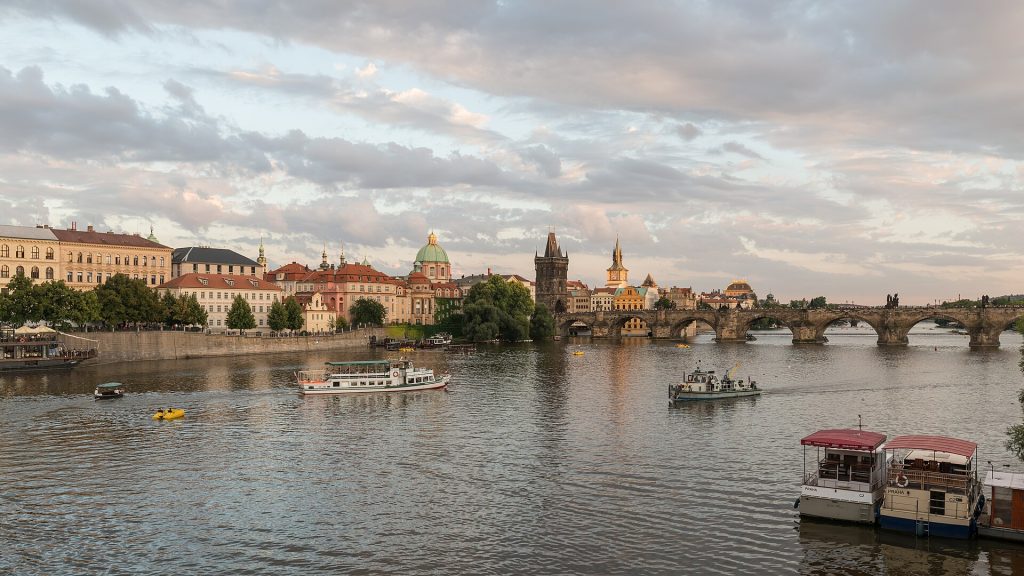
Charles Bridge at first light
Charles Bridge was begun in 1357 under Charles IV and finished in the early 15th century, about 516 metres of stone across the Vltava between two Gothic gate towers. By mid-morning it is solid with people. Come at sunrise instead and you share it with a handful of photographers and the odd jogger. The statues along the parapets are mostly copies; the best way to see the bridge is as a whole, from the Novotného lávka terrace on the Old Town side or from the Kampa embankment. For the bridge in the small hours, see our guide to Europe after midnight.
Climb the Old Town Bridge Tower, designed by Peter Parler’s workshop for Charles IV, for the most famous view in the city: straight down the bridge to the Lesser Town and the castle. The stair is steep and there is no lift.
Prague Castle and St Vitus: which ticket
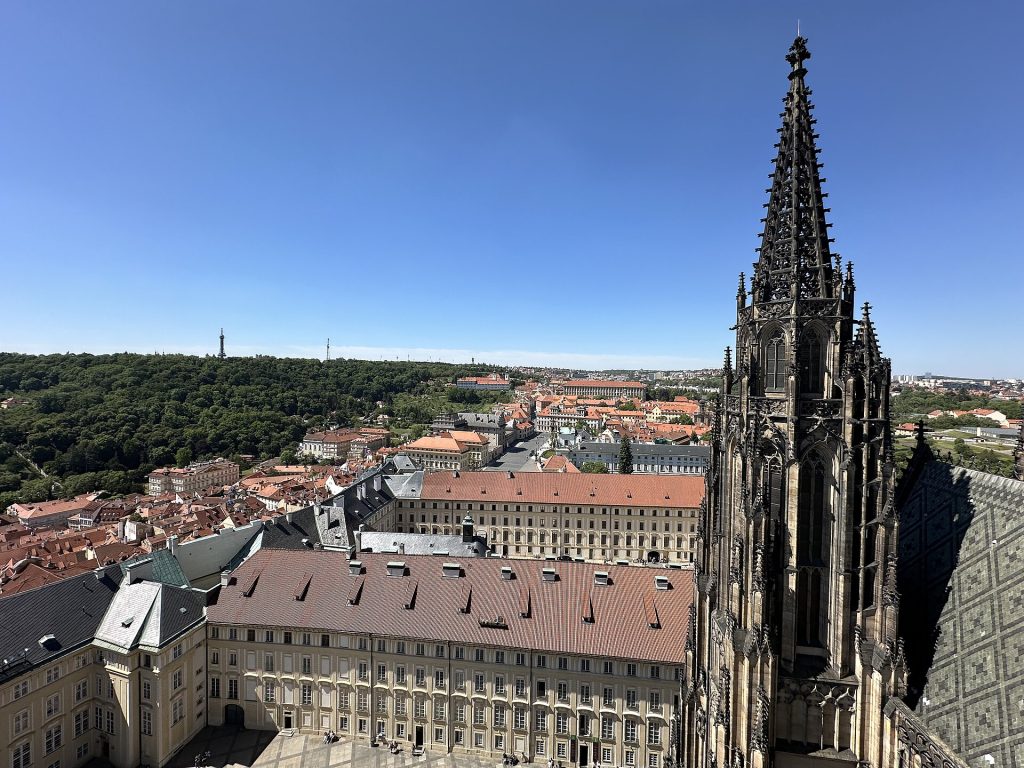
The castle courtyards are free to walk through, and at the heart of them St Vitus Cathedral rises to the tallest spire on the skyline. Begun in 1344 and not finished until 1929, it is the building you see from every viewpoint in this guide. A small part of the nave can usually be seen from just inside the west door without a ticket.
For more, you need a circuit ticket from the castle’s official ticket offices or website. The main circuit has typically covered St Vitus, the Old Royal Palace with its vaulted Vladislav Hall, the Romanesque Basilica of St George and Golden Lane. Circuit names and contents change, so check before buying. The Great South Tower of the cathedral is ticketed separately. It is close to 100 metres tall, with roughly 287 steps up a tight spiral to a gallery that looks down on the castle roofs and across the whole city. Arrive at opening time: security checks at the gates build queues by late morning.
Malá Strana and Petřín Hill
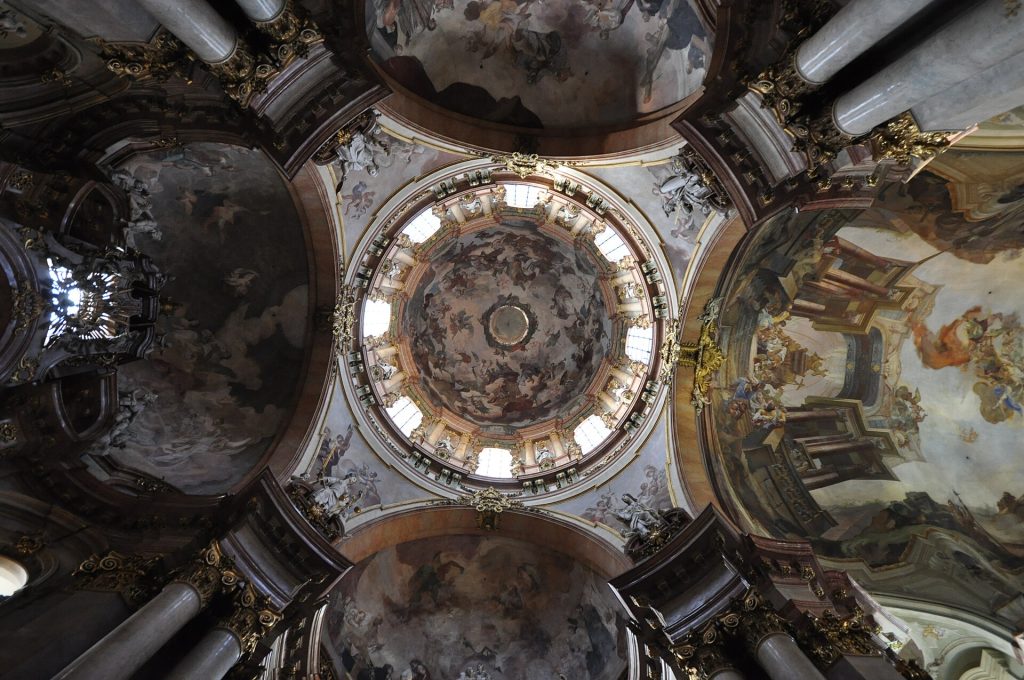
Below the castle, Malá Strana (the Lesser Town) is the most complete baroque quarter in Prague. The green copper dome of St Nicholas Church and its separate bell tower dominate the district, and the bell tower can be climbed for a view over the Lesser Town roofs; there is no lift. Walk down Nerudova street, where many houses still carry signs from before street numbers.
Petřín Hill rises behind Malá Strana, a wooded park with orchards. At the top, the Petřín Lookout Tower was built in 1891, inspired by the Eiffel Tower, and its upper platform is the highest viewpoint in the centre. The funicular from Újezd reopened in 2026 after a long reconstruction; check that it is running, or walk up through the trees in about half an hour.
Vyšehrad and Josefov
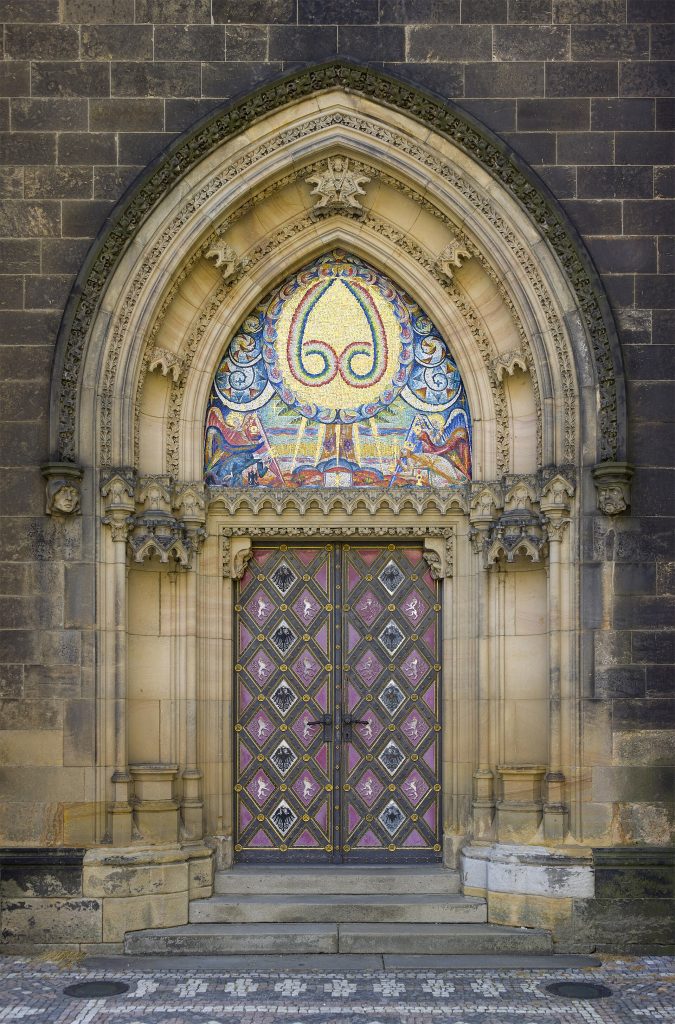
Two quarters add depth to a longer stay, and we cover them more fully in other guides. Vyšehrad, the fortress hill south of the New Town, has the neo-Gothic twin spires of the Basilica of Saints Peter and Paul, Dvořák’s grave and ramparts with a long view downriver to the castle. Take metro line C to Vyšehrad.
Josefov, the old Jewish Town just north of Old Town Square, is a different kind of visit. The Jewish Museum in Prague runs the Maisel, Pinkas, Klausen and Spanish synagogues and the Old Jewish Cemetery on one combined ticket, while the Old-New Synagogue, completed around 1270 and still in use, is managed by the Jewish community and may need its own ticket. All sites close on Saturdays and Jewish holidays.
Letná: the beer garden view
Letná is the plateau on the north bank, opposite the Old Town, and its eastern end holds a large seasonal beer garden under chestnut trees. Collect a beer from the kiosk, find a place on the railing above the river, and the bridges of the Vltava stack up one behind another, with the Old Town spires behind them. It usually opens from spring into autumn, weather permitting, and fills up after work on warm evenings.
A short walk west, the giant metronome stands on the plinth that once carried a huge monument to Stalin, demolished in 1962. From the Old Town, cross the Čech Bridge and climb the steps, or take a tram to Letenské náměstí.
The best spire viewpoints
- Old Town Bridge Tower: the classic line of Charles Bridge leading to the castle and St Vitus.
- Powder Tower: the late Gothic gate at the end of Celetná street, about 65 metres high, with a gallery at 44 metres reached by 186 steps. It looks along Celetná to the Týn spires.
- Old Town Hall tower: the best view of the square itself and the easiest climb, thanks to the lifts.
- Petřín Lookout Tower: the widest panorama, with the castle at eye level and the Old Town spread across the river.
- Letná: free, open at all hours and best around sunset, when the bridges catch the light.
- Vyšehrad ramparts: a quieter, lower view up the river towards the castle.
What to eat between climbs
Czech cooking is built for walking days. Look for svíčková, marinated beef in a creamy root vegetable sauce with bread dumplings, or roast pork with dumplings and sauerkraut. Pub snacks such as nakládaný hermelín, soft cheese marinated in oil and peppers, go well with a freshly tapped Czech lager.
Skip the trdelník chimney cakes, a recent import. As a rule, menus on Old Town Square and the Royal Route cost more for less; walk two or three streets away, or eat in Malá Strana’s back lanes, Vinohrady or near Letná.
Practical tips
- Order of the day: bridge at sunrise, castle at opening, Old Town in the afternoon and a viewpoint at sunset.
- Tower climbs: only the Old Town Hall has lifts to the top; the others are steep, narrow stairs. Check current opening times, which change by season.
- Tickets: buy castle and Jewish Museum tickets online to skip the ticket desk queue.
- Getting up the hill: tram 22 climbs to the castle, so you can walk downhill afterwards.
- Money: the currency is the Czech koruna; cards are taken almost everywhere, and street exchange booths are best avoided.
Plan your trip to Prague
- Tickets and tours in Prague: tickets and tours on Tiqets · activities on Klook
- Arriving by plane: pre-book an airport transfer with Welcome Pickups
- Road trip: compare car hire on Localrent
- Mobile data: get a travel eSIM from Airalo
Some of these are affiliate links: if you book through them we may earn a small commission, at no extra cost to you.
Planning a bigger trip? See our guide to the 25 best places to visit in Europe, from city breaks to fjords.
Keep exploring
- Immersing in Prague’s Culture: Music, Theatre, Beer and Traditions
- 7 Castles Near Prague Worth a Day Trip (and Prague Castle Itself)
- How to Avoid Looking Like a Tourist in Prague: Local Etiquette Tips
Frequently asked questions
Why is Prague called the city of a hundred spires?
The nickname dates from the early 19th century, when writers and scholars counted the towers of the city; the mathematician Bernard Bolzano is often credited with a count. Modern estimates run to several hundred.
Which tower in Prague has the best view?
For the classic postcard view, the Old Town Bridge Tower, looking along Charles Bridge to the castle. For the widest panorama, the Petřín Lookout Tower. For an easy climb with a lift, the Old Town Hall tower.
Is the Prague Astronomical Clock show worth seeing?
Once, briefly. The moving figures last less than a minute and the crowd is large. The clock face itself is the real attraction, and the Old Town Hall tower climb above it is better value than waiting for the hour.
Photos: Godot13, CC BY-SA 4.0, via Wikimedia Commons; Scotch Mist, CC BY-SA 4.0, via Wikimedia Commons; Jagandrk, CC BY-SA 3.0, via Wikimedia Commons; DXR, CC BY-SA 4.0, via Wikimedia Commons; Punteador, CC BY-SA 4.0, via Wikimedia Commons; Jorge Láscar from Australia, CC BY 2.0, via Wikimedia Commons.