Updated
Across Europe, hundreds of railway lines closed in the second half of the 20th century as cars and lorries took their traffic. Many have since been cleared and reopened as rail trails: car-free paths that keep the gentle gradients, tunnels and viaducts the engineers built.
Here are ten of the best abandoned railway lines you can follow today, all official, open routes. One rule matters more than any other: only walk on lines formally converted to paths. Track that looks disused may still be live or private property.
European rail trails at a glance
- Best for: easy cycling and walking with almost no hills, families, and riders who want long days without traffic.
- When to go: spring and autumn for Spain and Portugal; May to September for Ireland, Britain, the Ardennes and the Alps.
- What to bring: bike lights or a torch for tunnels, water, and a puncture kit on the gravel trails.
- Getting there: many trails start at or near a working station, and bike hire is usual at the busy ends.
- Safety: stay on signed, open sections only; never walk along a working or fenced-off line.
1. Vía Verde de la Sierra, Andalucía
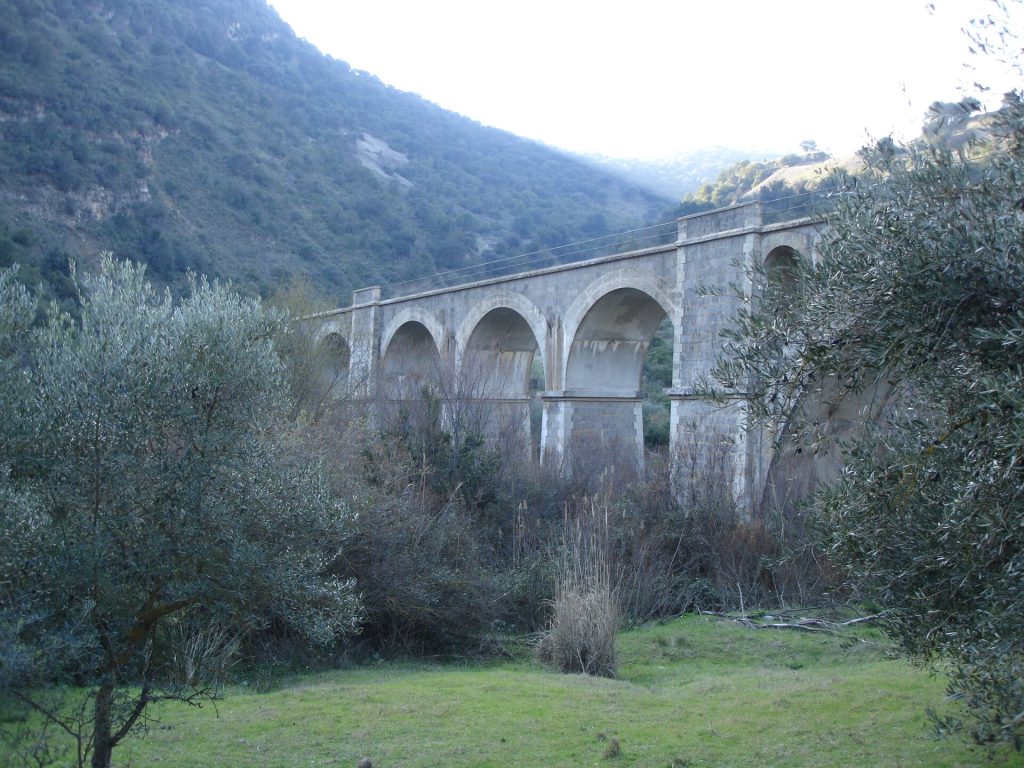
Spain has turned more of its old track into paths than almost anywhere in Europe. Its Vías Verdes programme, coordinated by the Spanish Railways Foundation since 1993, now counts around 3,600 kilometres of converted line. The Vía Verde de la Sierra is the one most people start with, and its story is unusual: the railway was built in the early 20th century but no train ever ran on it.
The trail runs for about 36 kilometres between Olvera, a white town crowned by a castle and church, and Puerto Serrano, crossing from Cádiz province into Seville province and back. Expect around 30 tunnels and several high viaducts. The highlight is the Peñón de Zaframagón, a limestone crag that is one of Andalucía’s most important breeding sites for griffon vultures; the old station nearby has an interpretation centre. The longest tunnel, the Túnel del Castillo, runs for almost a kilometre, so bring a light.
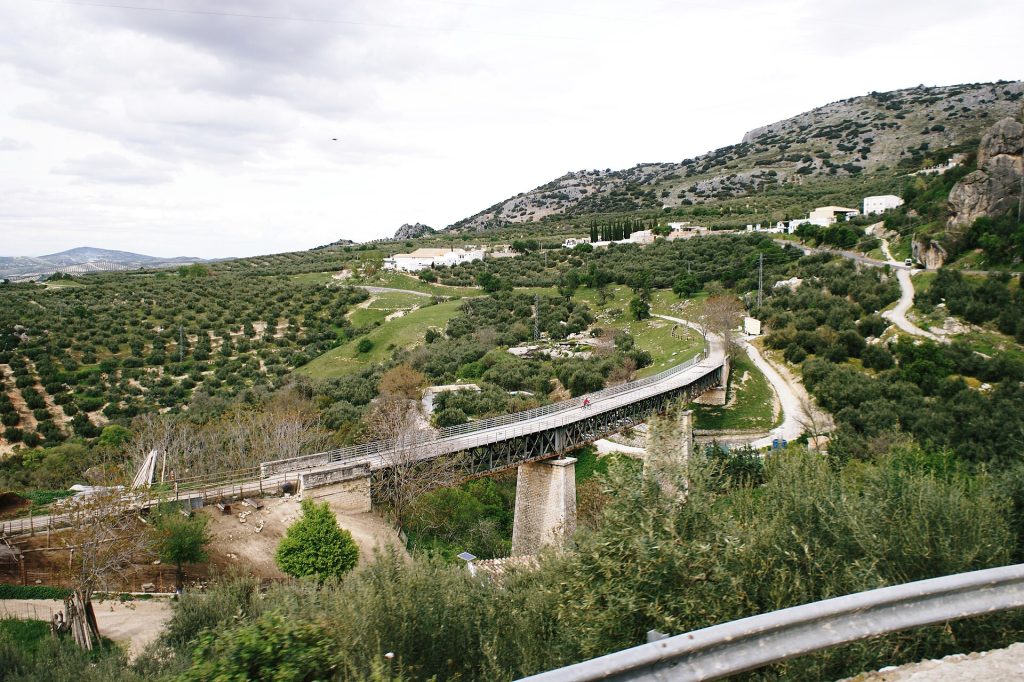
2. Vía Verde del Aceite, Jaén
The “olive oil greenway” leaves the city of Jaén and heads west through what seems like an endless sea of olive trees. The Jaén section is about 55 kilometres long, and its signature is a run of nine viaducts, iron lattice structures made in France for the old line, some of them high above dry river beds.
At the provincial border the route continues as the Vía Verde de la Subbética through Córdoba province, and together the two make about 112 kilometres of trail. Most cyclists take two days, stopping in towns such as Martos or Alcaudete. Services between towns are thin, and the summer heat is fierce, so spring and autumn are best.
3. Waterford Greenway, Ireland
Ireland‘s longest greenway follows the old line between Waterford city and the harbour town of Dungarvan, a distance of about 46 kilometres. It opened in full in 2017. The engineering is the attraction: 11 bridges, three viaducts and a tunnel of about 400 metres, with the Comeragh Mountains inland.
Kilmacthomas, with its arched viaduct, is the usual halfway stop. Several bike hire firms in Waterford, Kilmacthomas and Dungarvan run return shuttles, so you can ride one way. Ireland’s other famous railway path, the Great Western Greenway between Westport and Achill in County Mayo, is covered in our guide to planning a trip to Ireland.
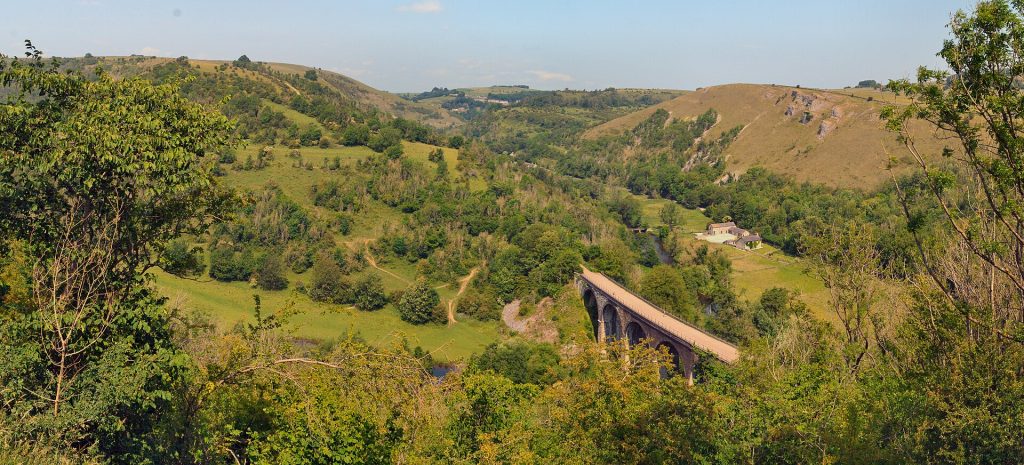
4. Monsal Trail, Peak District
The Monsal Trail follows the old Midland Railway line through the limestone dales of Derbyshire for about 13.7 kilometres, from Wye Dale east of Buxton to Coombs Viaduct near Bakewell. Its tunnels were sealed for years until six reopened in 2011, lit and surfaced, and the trail became one of the best short rides in England.
The classic view is from Monsal Head, looking down on the five arches of Headstone Viaduct striding across the River Wye. Several of the old stations along the line now have cafés or bike hire, and the trail is short enough to ride both ways in a morning. The tunnels are lit during the day, but they can close for maintenance, so check the national park website before a winter visit.
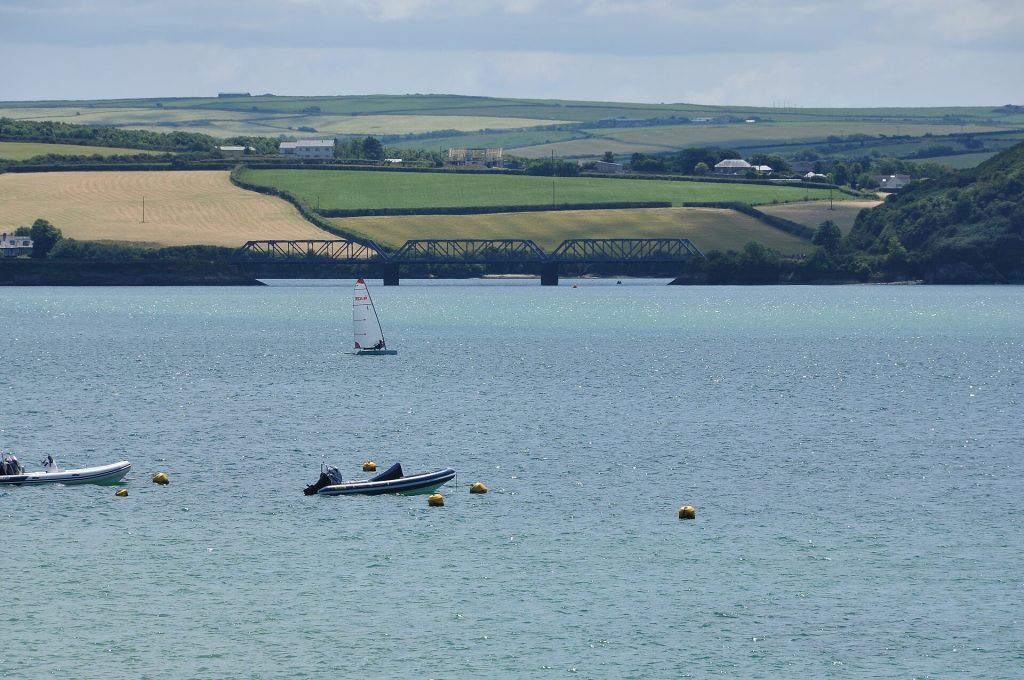
5. Camel Trail, Cornwall
The Camel Trail is about 18 miles long and runs on two former railways: a stretch of the North Cornwall line between Padstow and Wadebridge, and the old Bodmin and Wadebridge Railway inland to Wenfordbridge on the edge of Bodmin Moor. Passenger trains stopped in 1967, and the last china clay freight ran in the early 1980s.
The section most people ride is the 5.5 miles between Wadebridge and Padstow, flat and right beside the estuary, with mudflats, wading birds and the Iron Bridge over Little Petherick Creek. It gets very busy in school holidays; for a quieter day, head inland through the woods towards Wenfordbridge.
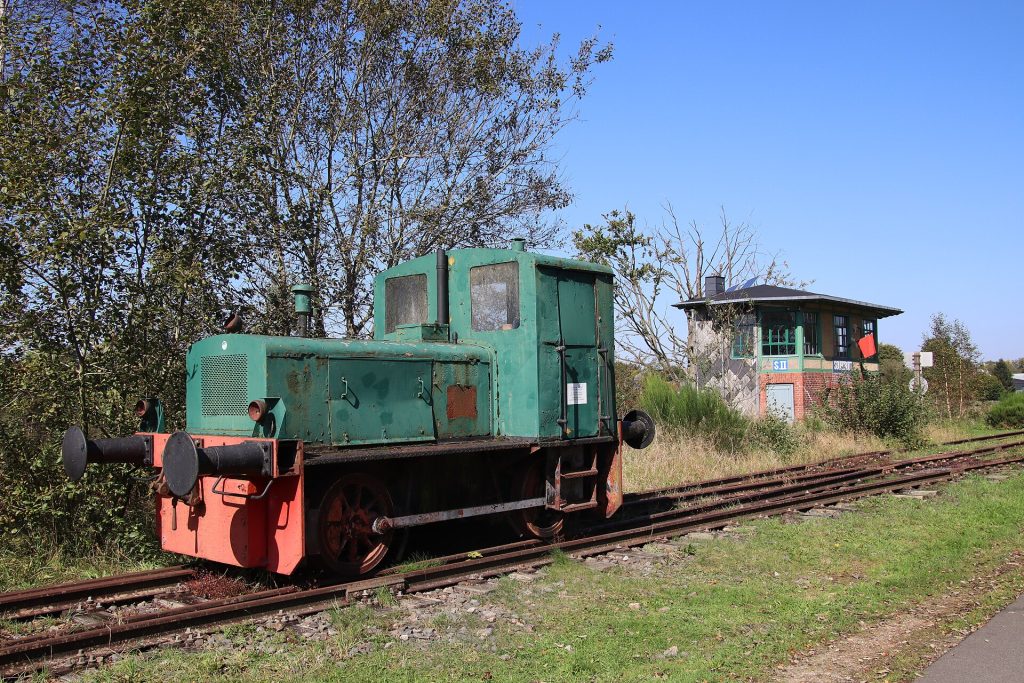
6. Vennbahn, Germany, Belgium and Luxembourg
The Vennbahn was a freight railway that opened in 1889 to carry coal and iron between Aachen and Luxembourg. Its route is now a 125-kilometre path from Aachen to Troisvierges, and it weaves across national borders more than a dozen times along the way.
The surface is asphalt almost throughout and the average gradient is about 2 percent, climbing gently out of Aachen over the edge of the High Fens, an upland plateau of heath and bog. Highlights include the detour to the half-timbered town of Monschau, Lake Bütgenbach and the viaducts of the Our valley. Allow two to three days.
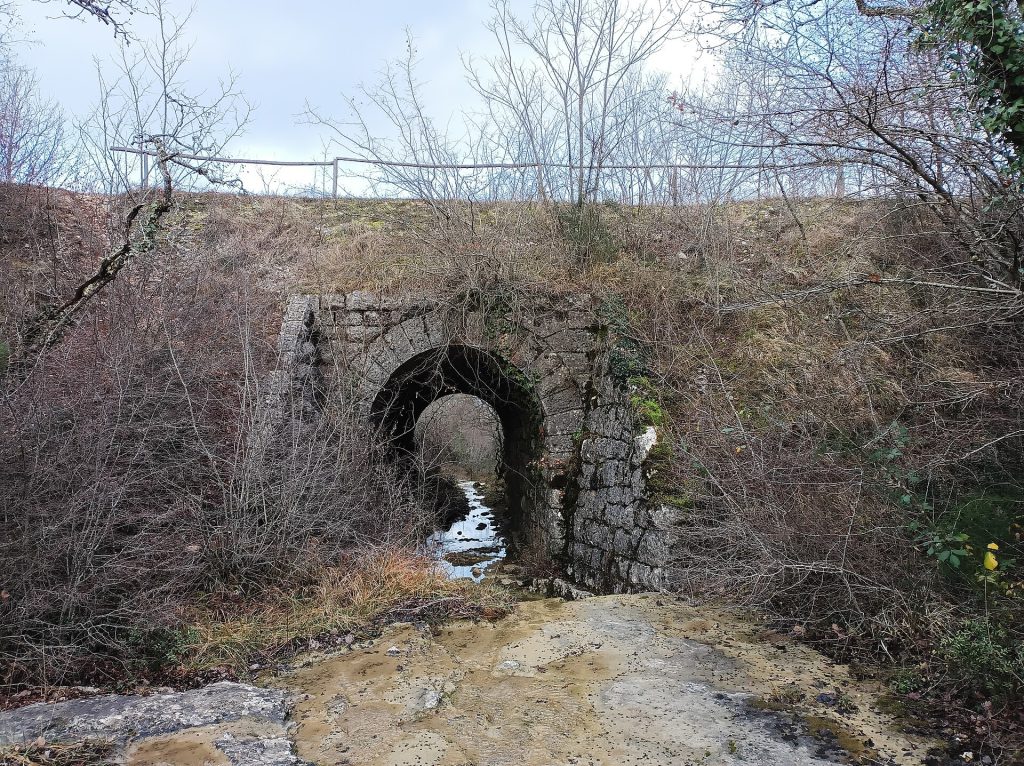
7. Parenzana, Italy, Slovenia and Croatia
The Parenzana was a narrow-gauge railway of about 123 kilometres that linked Trieste with Poreč (Parenzo in Italian) between 1902 and 1935. Since 2002, the centenary of its opening, the route has been restored in stages as a walking and cycling trail through three countries.
The Slovenian coast section passes Izola and Portorož and goes through the Valeta tunnel. The Croatian part is the most scenic: the trail curls around the hill town of Grožnjan, dips through tunnels and over viaducts, and runs below Motovun before reaching the sea at Poreč. Much of it is compacted gravel and some tunnels are unlit, so take a hybrid or gravel bike and lights.
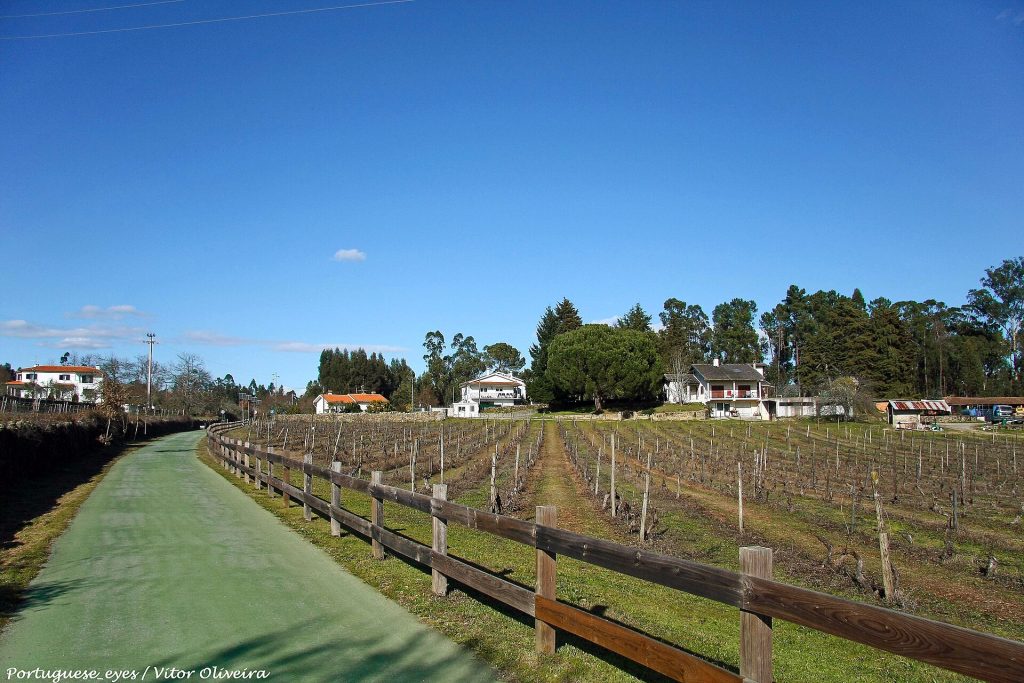
8. Ecopista do Dão and Ecopista do Tâmega, Portugal
Portugal calls its rail trails ecopistas. The Ecopista do Dão follows the metre-gauge Linha do Dão, opened in 1890, for about 49 kilometres between Santa Comba Dão and Viseu, passing through Tondela. It was completed in 2011 and makes a relaxed day ride through wine country.
In the north, the Ecopista do Tâmega uses about 39 kilometres of the old Tâmega valley line from Amarante to Arco de Baúlhe, where trains stopped running in 1990. It follows the river through vineyards and granite villages, and Arco de Baúlhe keeps a small railway museum. Both trails are paved and gentle.
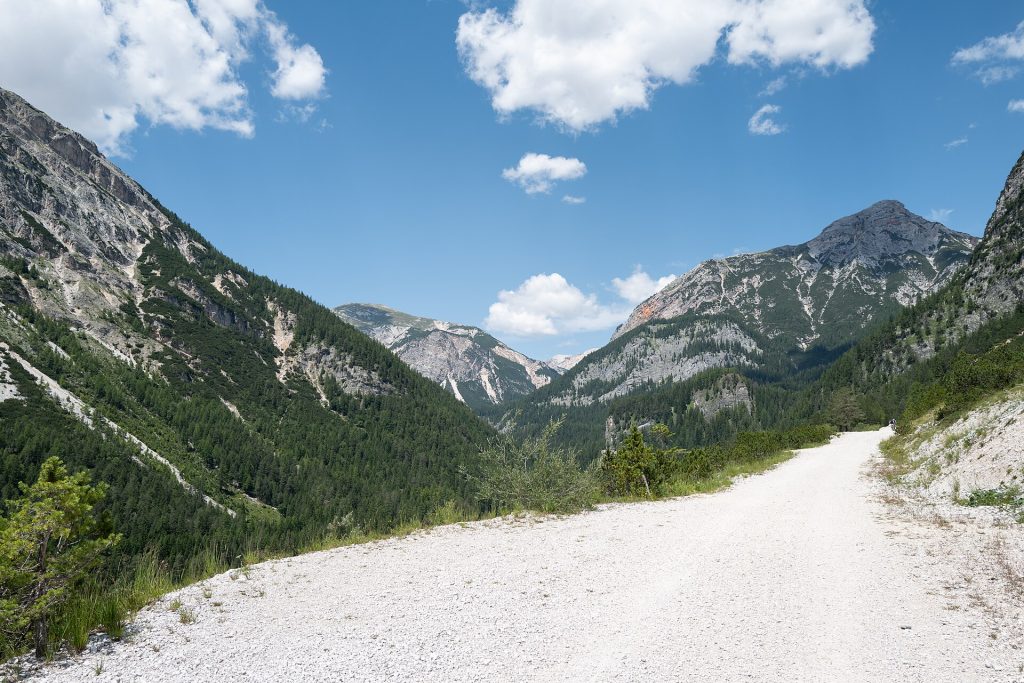
9. Dolomites Cycle Path, Italy
The Dolomites railway linked Calalzo di Cadore with Cortina d’Ampezzo and Dobbiaco from 1921 until it closed in 1964. Its route now carries a cycle path of about 49 kilometres between Calalzo and the Cimabanche pass, continuing on to Dobbiaco in the Puster Valley.
The climb from Calalzo is long but steady, with tunnels, bridges and views of the Tofane and Cristallo peaks. Many riders start at Dobbiaco instead and ride mostly downhill. In winter, stretches of the old line near Cortina and Dobbiaco are used for cross-country skiing, so this is a summer ride.
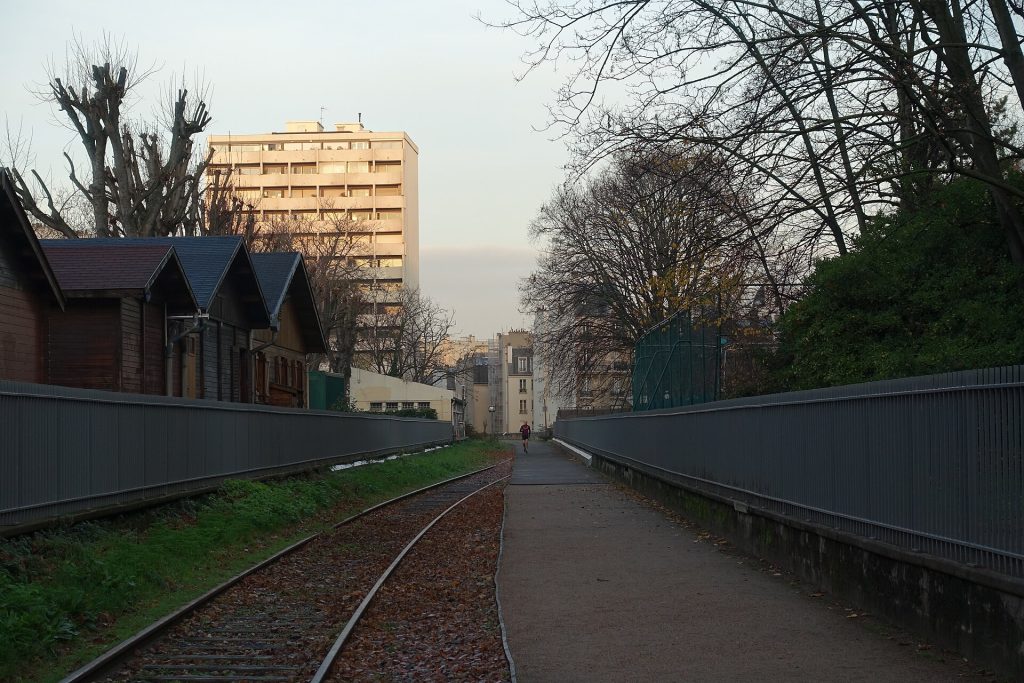
10. Petite Ceinture, Paris
The Petite Ceinture was a 32-kilometre circular railway around the edge of the city, built in the 19th century and long since closed to passengers. Much of it is still fenced off, but the City of Paris has opened sections as walks, and around 12 to 13 kilometres were accessible at last count. The longest continuous stretch is in the 15th arrondissement, about two kilometres between Parc Georges-Brassens and Place Balard; there are other open sections in the 12th, 14th and 16th.
Use the official entrances only and visit during posted opening times: the closed sections remain off limits, and trespassing on them is illegal and unsafe. Paris’s other famous railway walk, the Coulée verte René-Dumont from Bastille, is a raised garden rather than a rail trail.
More railway paths worth knowing
- Nordbahntrasse, Wuppertal: about 22 kilometres across a German industrial city, with lit tunnels and long brick viaducts; one of many Bahntrassenradwege in the Rhineland and Ruhr.
- Via Ardèche, France: a former line through the southern Ardèche, crossing an 1878 viaduct at Vogüé.
Walking old railways safely
Plenty of track that looks overgrown is still in use, and trains on quiet branch lines are hard to hear until they are close. Unconverted bridges and tunnels can also have rotten decking or loose masonry.
- Stick to official trails: signs, a surfaced path and waymarks show a line has been converted. If the rails and sleepers are still in place and there is no signage, keep off.
- Respect closures: tunnels and viaducts can shut for repairs, bat roosts or winter weather.
- Light up: some tunnels are long, cold and unlit, so carry lights even on a sunny day.
- Share the path: ring a bell when passing walkers, and keep dogs on leads near livestock and nesting birds.
Planning a rail trail trip
Most rail trails are linear, so plan the return. Many have bike hire with shuttle drop-offs, and others start at working stations, so you can ride out and take a train back; check the bike rules on regional trains. Spain’s Vías Verdes website and local tourism sites list access points and closures.
Plan your trip
- Ireland: tickets and tours on Tiqets · activities on Klook
- Cornwall: tickets and tours on Tiqets · activities on Klook
- Germany: tickets and tours on Tiqets · activities on Klook
- Arriving by plane: pre-book an airport transfer with Welcome Pickups
- Road trip: compare car hire on Localrent
- Mobile data: get a travel eSIM from Airalo
Some of these are affiliate links: if you book through them we may earn a small commission, at no extra cost to you.
Planning a bigger trip? See our guide to the 25 best places to visit in Europe, from city breaks to fjords.
Keep exploring
Frequently asked questions
What is a rail trail?
A rail trail is a walking and cycling path built on the bed of a disused railway. Because trains need gentle gradients, they are usually flat or climb very gradually. They are called greenways in Ireland, vías verdes in Spain and ecopistas in Portugal.
Is it legal to walk on abandoned railway lines?
Only where the line has been officially converted to a path or opened to the public. Elsewhere, old track usually still belongs to the railway or a private owner, may be used occasionally, and walking on it can be trespass. It is also dangerous, so keep to signed trails.
Which European rail trail is best for beginners?
The Monsal Trail and the Wadebridge to Padstow stretch of the Camel Trail are short, flat and well served with bike hire and cafés. For a longer first trip, the Waterford Greenway or the Vía Verde de la Sierra make a good full day.
Photos: El Pantera, CC BY-SA 4.0, via Wikimedia Commons; Hugh Llewelyn, CC BY-SA 2.0, via Wikimedia Commons; AndyScott, CC0, via Wikimedia Commons; Nilfanion, CC BY-SA 4.0, via Wikimedia Commons; Zinneke, CC BY-SA 4.0, via Wikimedia Commons; APneunzehn74, CC0, via Wikimedia Commons; Vitor Oliveira from Torres Vedras, PORTUGAL, CC BY-SA 2.0, via Wikimedia Commons; Giorgio Galeotti, CC BY-SA 4.0, via Wikimedia Commons; Guilhem Vellut from Paris, France, CC BY 2.0, via Wikimedia Commons.