Updated
Luxembourg is about 80 km from top to bottom, yet it fits in a fortified capital on a sandstone cliff, a strip of Moselle wine villages, a forest of eroded rock formations, Ardennes castles and an old steelworks turned university quarter. Because buses, trams and second-class trains are free for everyone, you can see most of it from a single base without a car.
This guide works through the country region by region: the capital first, then the Moselle in the south east, the Mullerthal and Echternach in the east, the Ardennes north, and the old iron and steel country in the south.
Luxembourg at a glance
- Best for: fortress history, easy walking, wine villages and castles, on a long weekend or a slow week.
- How long: two days for the capital, four or five to add the Moselle, Mullerthal and the north.
- When to go: May to September for hiking and the lake; September and October for the grape harvest.
- Getting there: the tram has served Luxembourg Airport since 2025, with buses as well; direct trains run from Brussels, Metz, Trier and Paris.
- Getting around: free buses, trams and second-class trains nationwide since 2020.
- Languages: Luxembourgish, French and German are official, and English is widely spoken.
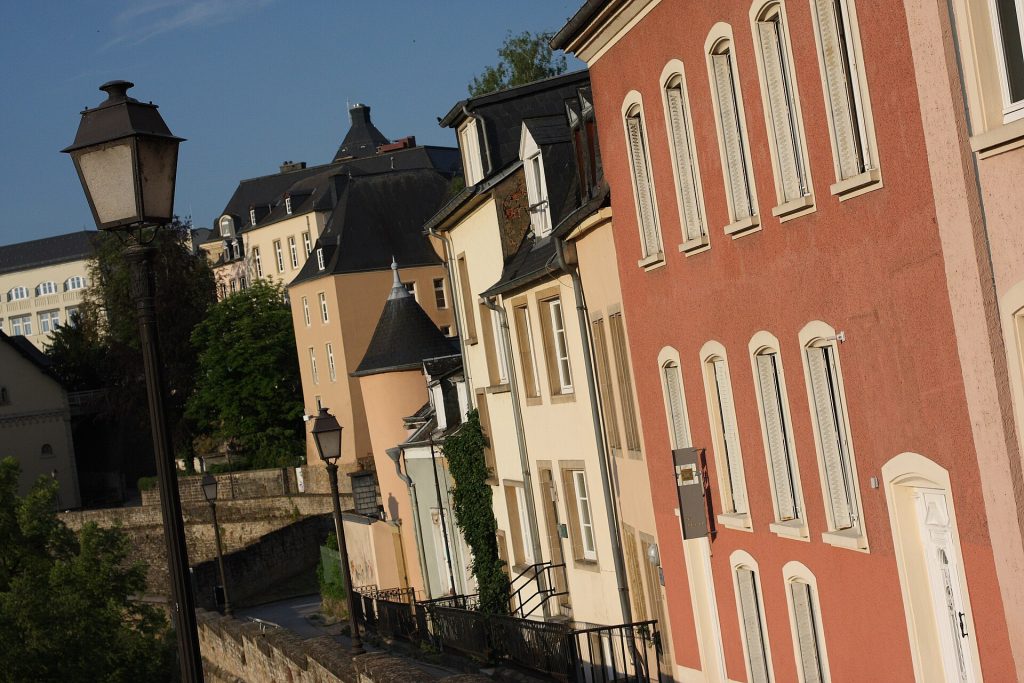
Luxembourg City: the Ville Haute and the Bock
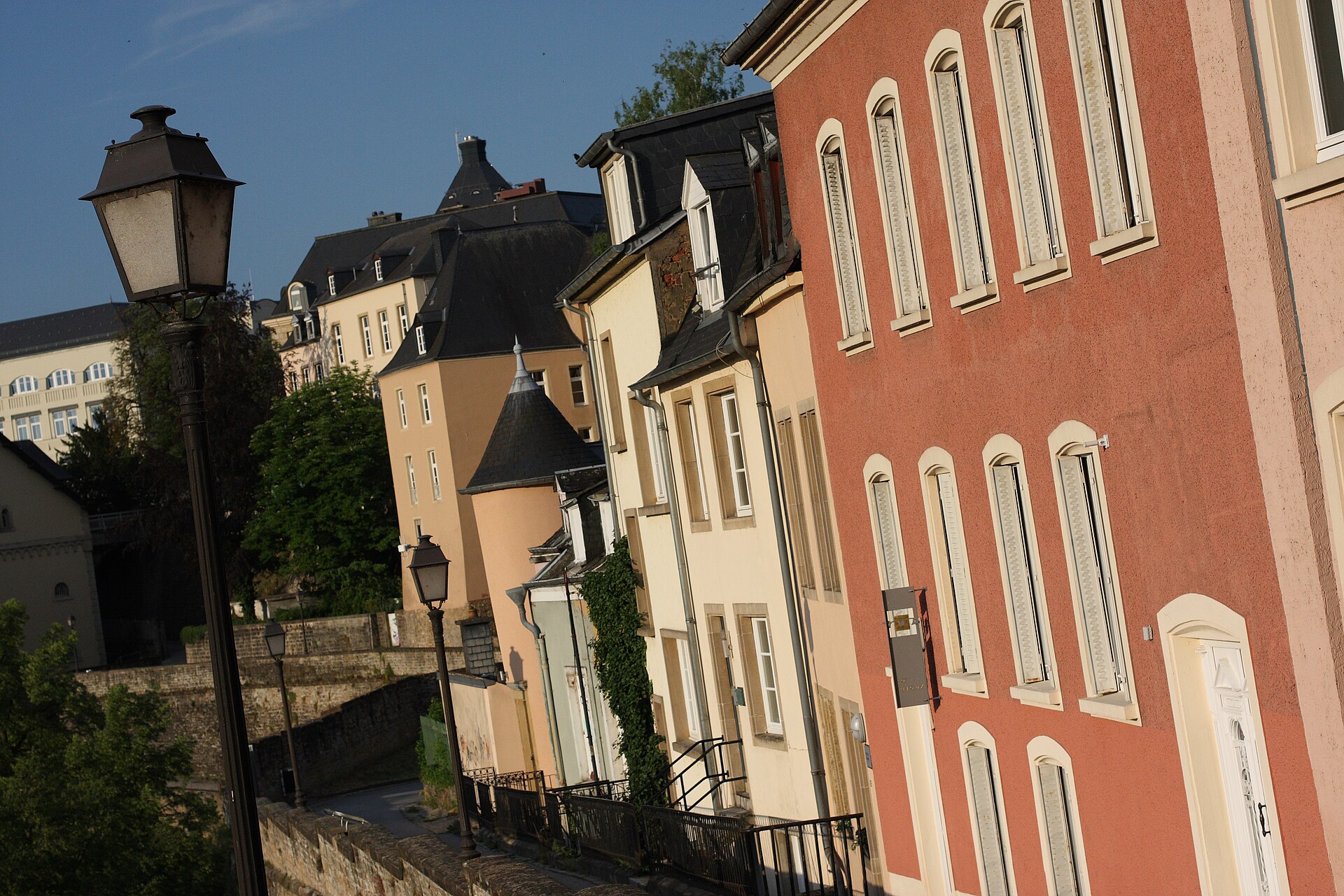
The capital grew from a castle that Count Siegfried built on the Bock promontory in 963, and over the following centuries Burgundian, Spanish, French, Austrian and Prussian engineers turned it into one of the strongest fortresses in Europe. Most of the works were dismantled after 1867, but enough remains for the old quarters and fortifications to have been listed as a UNESCO World Heritage Site in 1994.
Start in the Ville Haute, the compact upper town around Place Guillaume II, the Grand Ducal Palace and Notre-Dame Cathedral. Walk east to the Chemin de la Corniche, a promenade along the old ramparts with the roofs of the Grund directly below and the Alzette curling round the rock. At its northern end, the Bock Casemates are galleries and gun chambers cut into the cliff; they open seasonally, so check current times. Allow half a day for the Ville Haute, the Corniche and the casemates together.
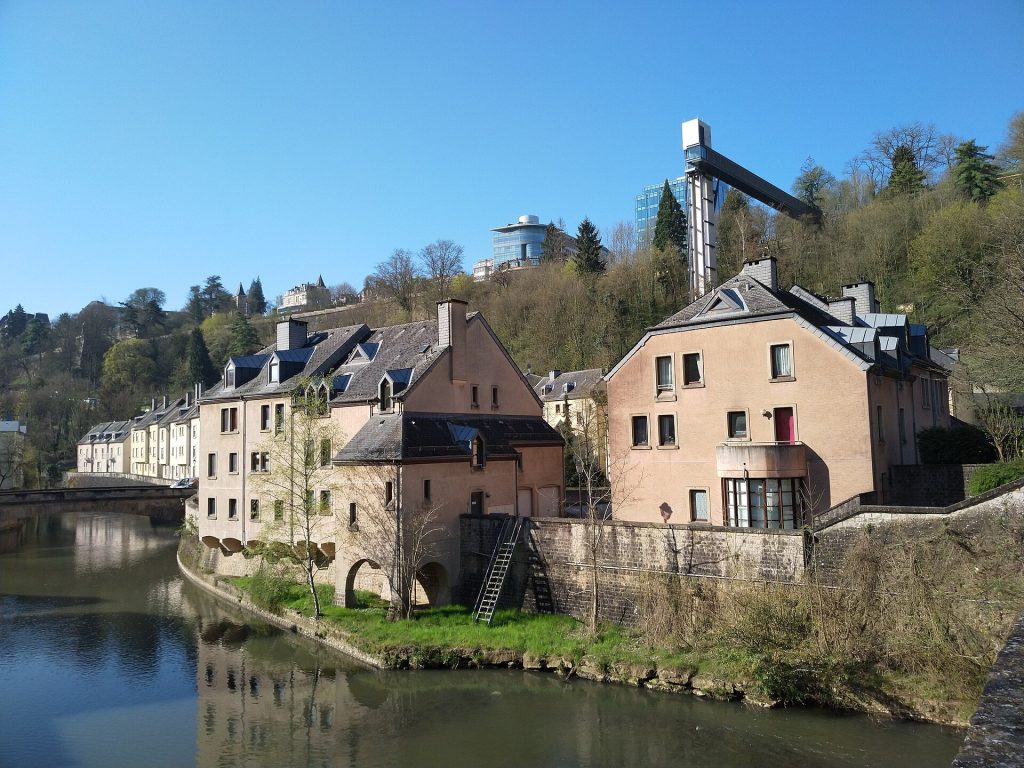
The Grund, the glass lift and Kirchberg
The city sits on several levels, and the public lifts are part of the fun. A lift cut through the rock links the Plateau du Saint-Esprit with the Grund, a riverside quarter of stone houses, an old abbey, footbridges and bars along the Alzette. On the north side of the old town, the Pfaffenthal panoramic lift, opened in 2016, drops in a glass cabin from the Pescatore park to the Pfaffenthal valley, with wide views on the way down.
From the bottom, walk to the Pfaffenthal-Kirchberg station, where a funicular opened in 2017 climbs to the Kirchberg plateau. Kirchberg is the modern face of the city: European institutions, banks and the white Philharmonie concert hall, which opened in 2005. Fort Thüngen, an 18th-century fort known locally as the Dräi Eechelen for the three acorns on its towers, holds a museum of the fortress, and Mudam, the modern art museum designed by I. M. Pei, sits inside the old walls. The tram links Kirchberg with the centre, the main station and the airport.
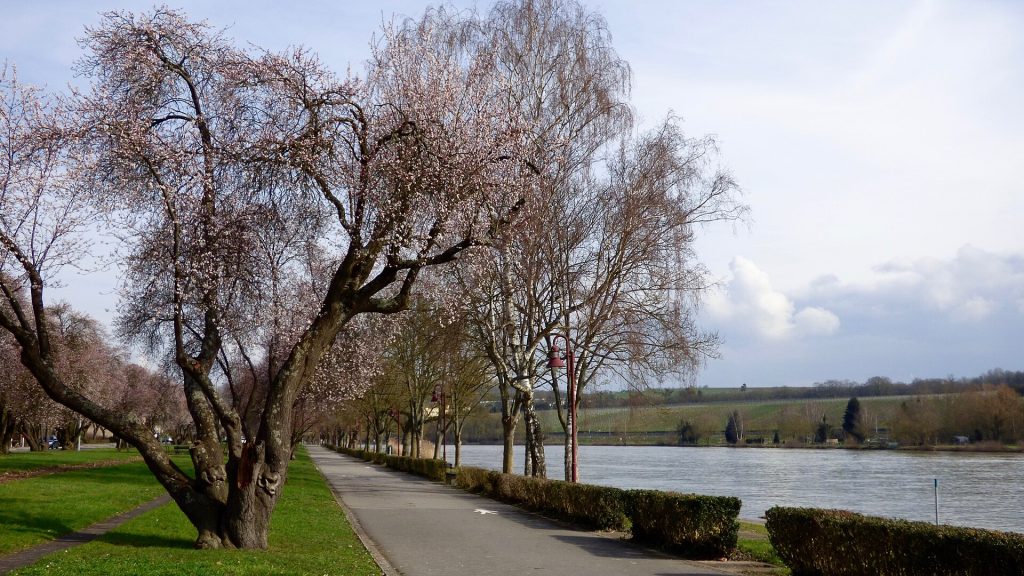
The Moselle wine villages
The Moselle forms Luxembourg’s border with Germany for about 40 km, and the slopes on the Luxembourg bank are covered in vines. The wines are mostly white: Riesling, Pinot Gris, Auxerrois and Rivaner, plus the sparkling Crémant de Luxembourg. Many cellars run tastings; book ahead at weekends.
Remich is the busiest town, with a long riverside promenade and, in season, passenger boats on the river. Further north, Wormeldange is known for its Riesling and the steep Koeppchen vineyard above the village, and a waymarked wine path runs through the vines between villages along this stretch. At the southern tip, Schengen is where France, Germany and Luxembourg meet. The Schengen Agreement was signed here on 14 June 1985 aboard a passenger boat moored on the river. The European Museum Schengen, renovated and reopened in 2025, explains how open borders came about, and the original boat, now renamed Prinzessin Marie-Astrid Europa, is moored beside it as part of the museum. Allow a full day for two or three villages.
The Mullerthal Trail
The Mullerthal region around Echternach is often called Luxembourg’s Little Switzerland: no Alps, but deep wooded valleys, fern-filled ravines and towers of sandstone split into narrow passages. The Mullerthal Trail covers about 112 km in three linked loops, each waymarked and long enough for two or three days on foot, plus several shorter extra tours.
Route 2 is usually considered the most scenic, passing the Schiessentümpel, a small cascade under a stone footbridge, and the rock corridors around Berdorf. Near Beaufort, also in the region, the ruins of a medieval castle stand beside a later Renaissance one. Paths are rocky, wet and slippery after rain, so wear walking boots.
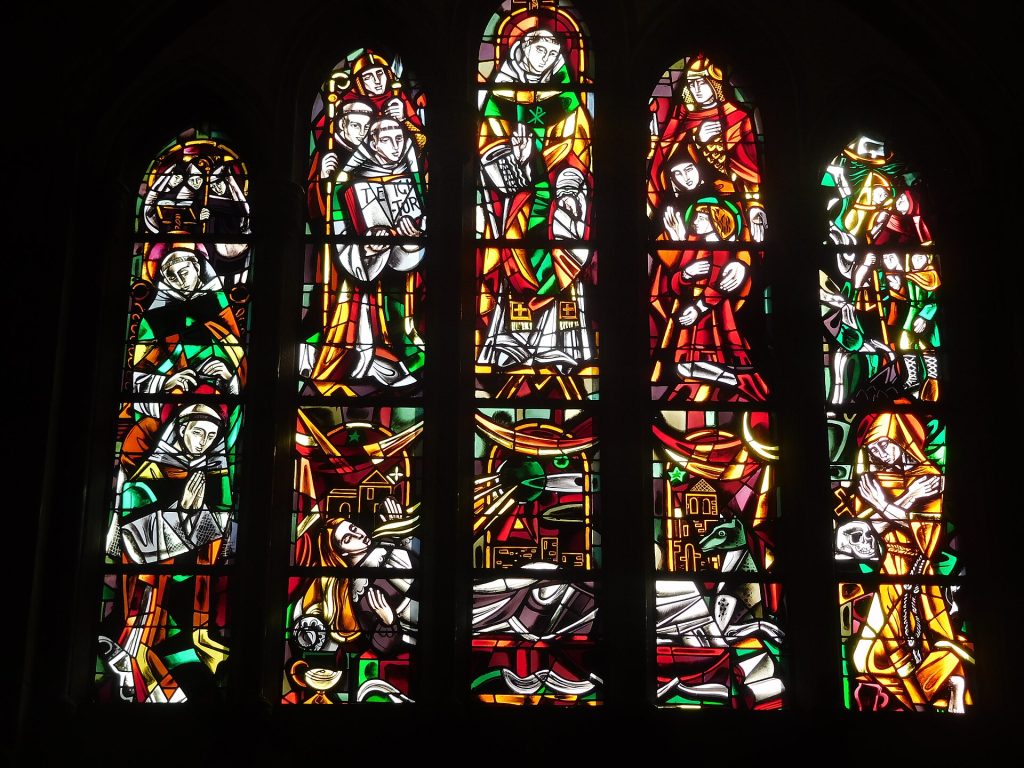
Echternach
Echternach, on the Sûre opposite Germany, is the gateway to the Mullerthal and worth a few hours on its own. Saint Willibrord, an Anglo-Saxon missionary, founded an abbey here in 698, and his tomb lies in the crypt of the basilica, rebuilt after damage in the Second World War. The baroque abbey buildings and the old market square make a pleasant circuit.
Every Whit Tuesday, the town holds its dancing procession, in which thousands of pilgrims move through the streets in rows, linked by handkerchiefs and hopping to a repeated tune, before reaching Willibrord’s tomb. It was added to UNESCO’s list of Intangible Cultural Heritage in 2010. Rooms fill up for that week, so book early if you plan to watch. On other days, the lake on the edge of town has an easy walking loop.
Vianden
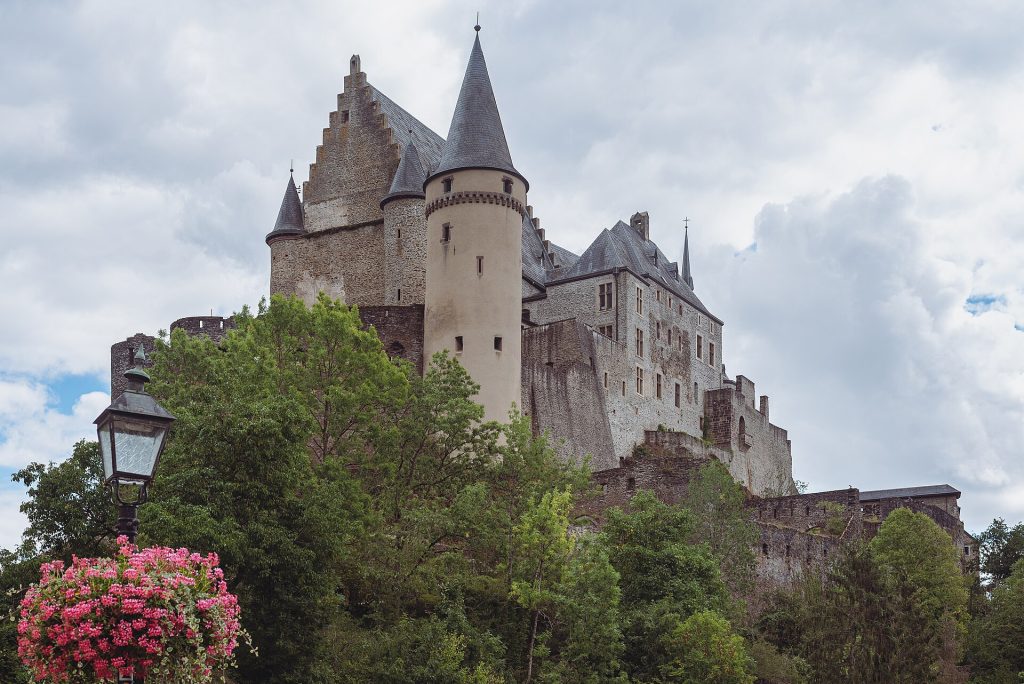
Vianden Castle rises on a ridge above the Our, the river that marks the German border, and is one of the largest fortified castles in the region. It was built between the 11th and 14th centuries on earlier foundations, fell into ruin in the 19th century, and was restored after it passed to the state in 1977.
The town below is a single street of slate roofs dropping to the river. Victor Hugo spent several months here in 1871, and the house where he stayed is now a small museum. For the classic view of the castle, take the seasonal chairlift up the opposite slope, or walk up through the woods. From the capital, take the train to Ettelbruck and a bus onward.
Clervaux and The Family of Man
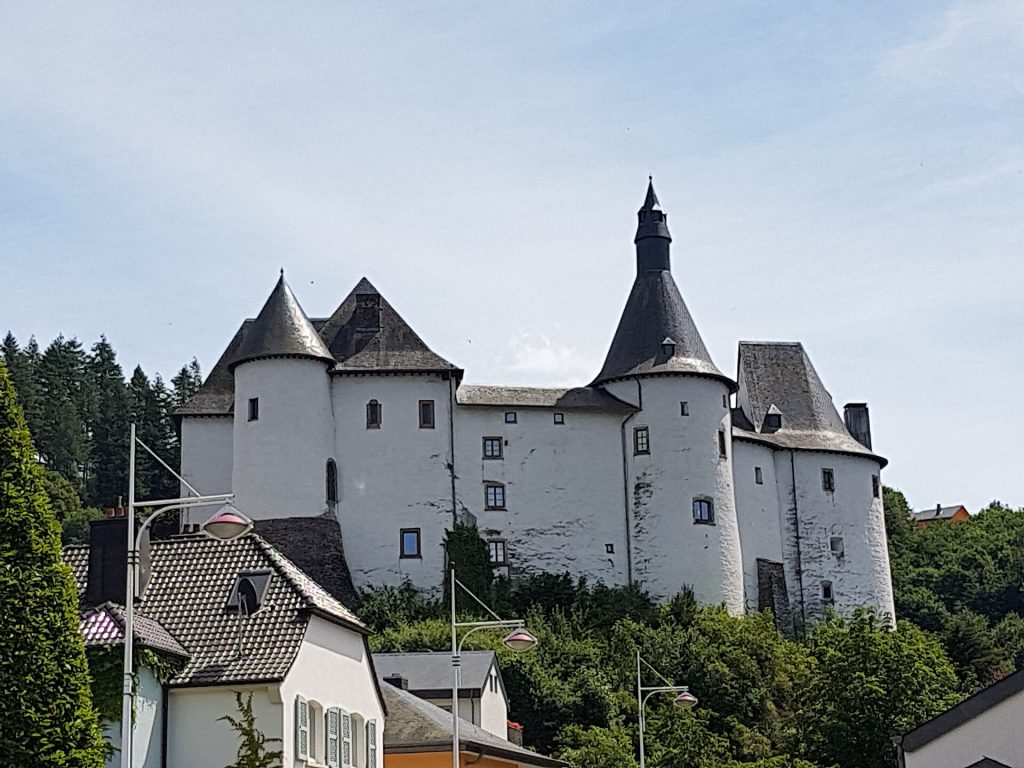
Clervaux sits in a tight valley in the far north, about an hour by train from the capital. Its castle holds The Family of Man, the exhibition of 503 photographs by 273 photographers from 68 countries put together by Edward Steichen, who was born in Luxembourg, for the Museum of Modern Art in New York in 1955. After touring the world, the collection was installed in Clervaux in 1994 and is on UNESCO’s Memory of the World register. It closes for part of the winter, so check the season.
Above the town, the Benedictine abbey of Saint Maurice can be reached on a short woodland walk. Clervaux is also a good base for the Éislek hiking trails.
The Upper Sûre lake
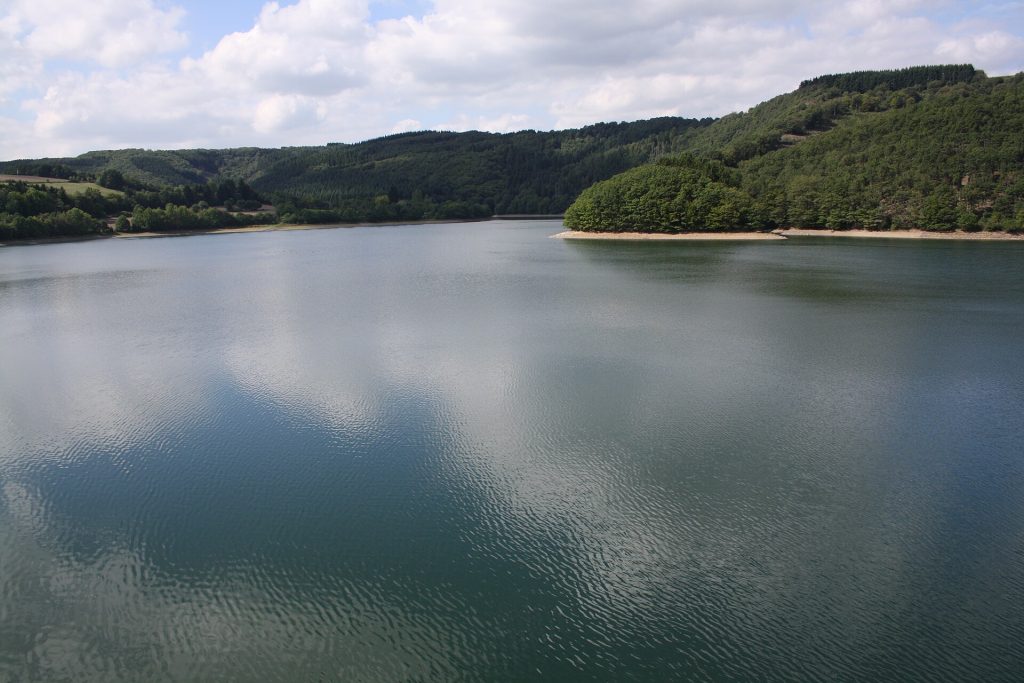
West of Vianden, a dam at Esch-sur-Sûre holds back the Upper Sûre, the country’s largest body of water and the source of much of its drinking water. In summer, people swim at designated beaches such as Lultzhausen, hire kayaks and paddleboards, and walk the forested shoreline. Check for temporary swimming bans before you go, as algae can close the water in hot spells. The village of Esch-sur-Sûre itself, wrapped in a loop of the river below a ruined castle, is worth a short stop.
Esch-sur-Alzette and the Belval blast furnaces
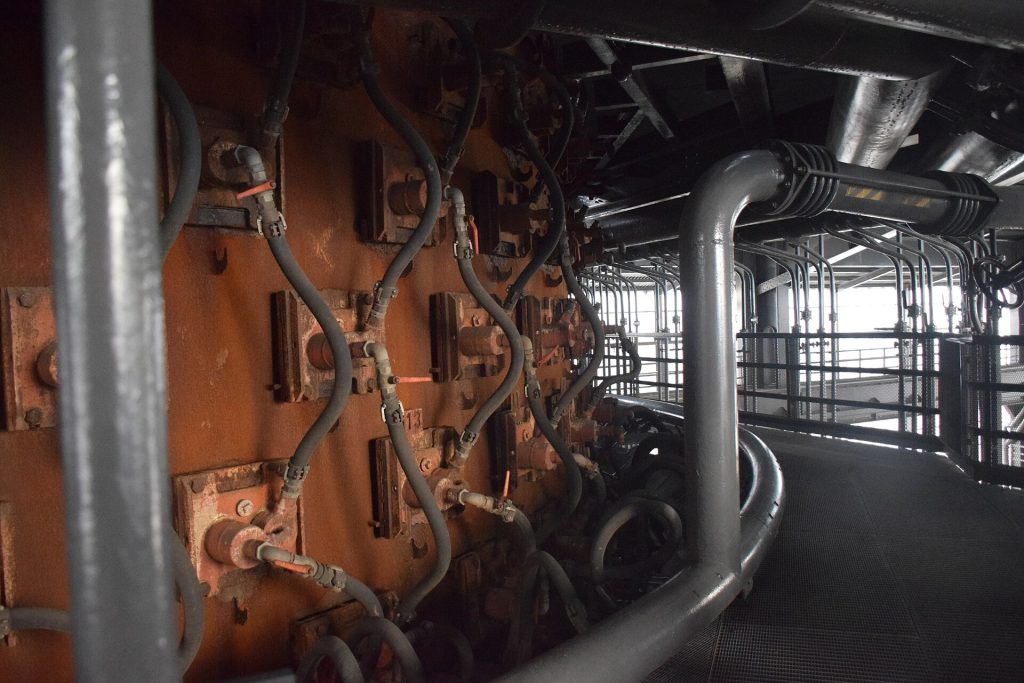
The south of the country, called the Minett after its iron ore, built Luxembourg’s wealth in the 19th and 20th centuries. Esch-sur-Alzette, the second city, was a European Capital of Culture in 2022, and its former steelworks at Belval has become a new district of university buildings, offices and concert venues around two preserved blast furnaces.
Furnace A is open to visitors, with stairs and a lift up to a platform about 40 metres high, where you can look over the old works and the new town. Guided tours explain how the furnace worked; access can close in bad weather. Belval has its own station, about half an hour by train from the capital.
Getting around and where to stay
Public transport has been free since March 2020 on buses, trams and second-class trains across the country. You need a ticket only for first class and for journeys that cross the border. Trains run north to Ettelbruck and Clervaux and south to Esch and Belval; buses cover the Moselle, Echternach and the Mullerthal. Services in rural areas thin out in the evening and on Sundays, so check the last bus back.
Luxembourg City is the easiest base, with the most hotels and every rail line. Hotels there are expensive, especially midweek when business travel peaks; weekends can be cheaper. For hiking, stay in Echternach or one of the Mullerthal villages, and for the north, Vianden or Clervaux. A car helps for small wine estates and the lake.
When to go and practical tips
- Spring and summer: the best months for walking the Mullerthal and swimming in the Upper Sûre.
- Autumn: harvest time on the Moselle, with wine festivals in the villages; check current dates locally.
- Winter: Christmas markets in the capital, but several sights, including the casemates, Vianden chairlift and Clervaux exhibition, close or reduce hours.
- Money: Luxembourg is one of the most expensive countries in Europe for hotels and eating out; free transport offsets some of it.
- Shoes: the capital is all slopes and steps, and the trails are rocky; bring footwear with grip.
Plan your trip to Luxembourg
- Tickets and tours in Luxembourg: tickets and tours on Tiqets · activities on Klook
- Arriving by plane: pre-book an airport transfer with Welcome Pickups
- Road trip: compare car hire on Localrent
- Mobile data: get a travel eSIM from Airalo
Some of these are affiliate links: if you book through them we may earn a small commission, at no extra cost to you.
Planning a bigger trip? See our guide to the 25 best places to visit in Europe, from city breaks to fjords.
Keep exploring
- Things to Do in Palermo: A Practical Guide to Sicily’s Capital
- 9 Stunning European Capitals You Probably Overlook
Frequently asked questions
Is public transport in Luxembourg really free?
Yes. Since 2020, buses, trams and second-class trains within Luxembourg have been free for residents and visitors alike, with no ticket or pass needed. First class and cross-border journeys still need a ticket.
How many days do you need in Luxembourg?
Two days cover the capital. Four or five days let you add a day in the Moselle, a day walking the Mullerthal with time in Echternach, and a day for Vianden or Clervaux.
Can you visit Luxembourg as a day trip?
You can see the old town and casemates of the capital in a day from Trier or Metz, which are about an hour away by train. The rest of the country deserves at least one overnight stay.
Photos: yeowatzup, CC BY 2.0, via Wikimedia Commons; Paul Braun, CC BY 4.0, via Wikimedia Commons; Denise Hastert, CC BY-SA 4.0, via Wikimedia Commons; Grentidez, CC BY-SA 4.0, via Wikimedia Commons; Flocci Nivis, CC BY 4.0, via Wikimedia Commons; Rikki Mitterer, CC BY-SA 4.0, via Wikimedia Commons; Martin D., CC BY 3.0, via Wikimedia Commons; Zinneke, CC BY-SA 3.0, via Wikimedia Commons.