Ohrid sits on the north-eastern shore of Lake Ohrid, one of the oldest lakes in the world, which UNESCO says has existed continuously for about two to three million years. The old town climbs a hill above the water, with Byzantine churches, a medieval fortress and wooden houses, and the whole area is a UNESCO World Heritage Site for both its nature and its culture. It is North Macedonia’s best-known destination, and still good value compared with the Adriatic coast.
This guide covers what to see in Ohrid town, the best trips around the lake, when to go, how to get there from Skopje, Tirana and Sofia, and practical tips on money and crowds. Where opening times and fees change by season, it tells you to check locally rather than relying on old figures.
- Best for: Lakeside walks, Byzantine churches and frescoes, swimming in clear water, and a slower pace on a Balkans trip.
- When to go: June and September for warm water without peak crowds; July and August are busiest, with the Ohrid Summer Festival.
- How long: Two nights for the town and a boat trip; three or four to add St Naum, Galičica and a beach day.
- Money: Macedonian denar (MKD). Cards work in most hotels and restaurants; carry cash for boats, small sights and markets.
- Getting there: Buses from Skopje take about three hours; Ohrid also has its own airport, St Paul the Apostle, with seasonal flights.
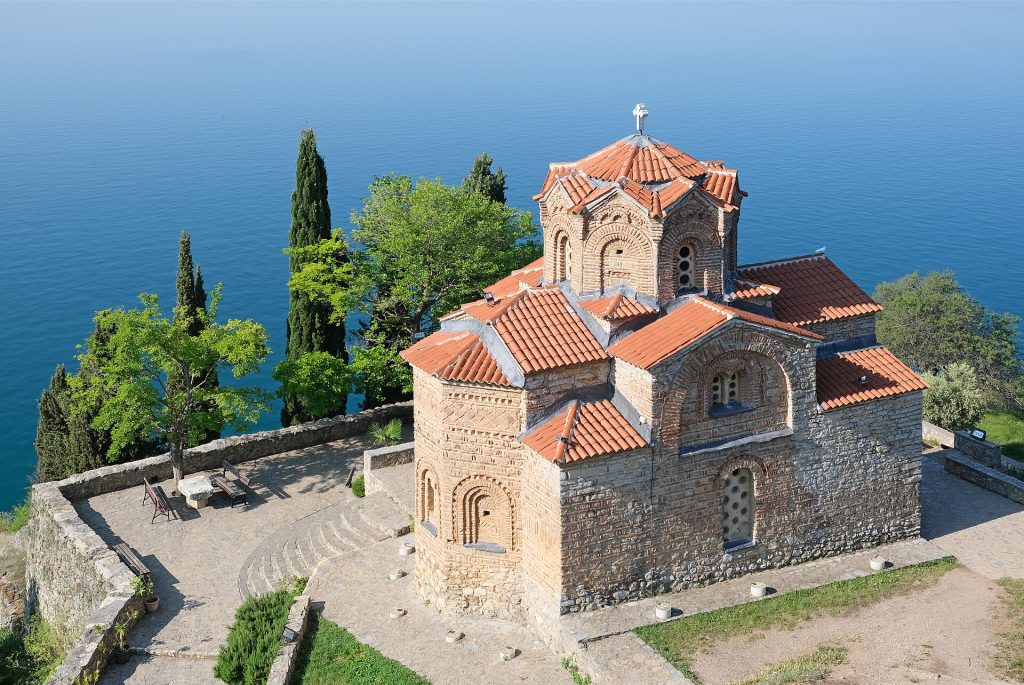
1. Church of St John at Kaneo
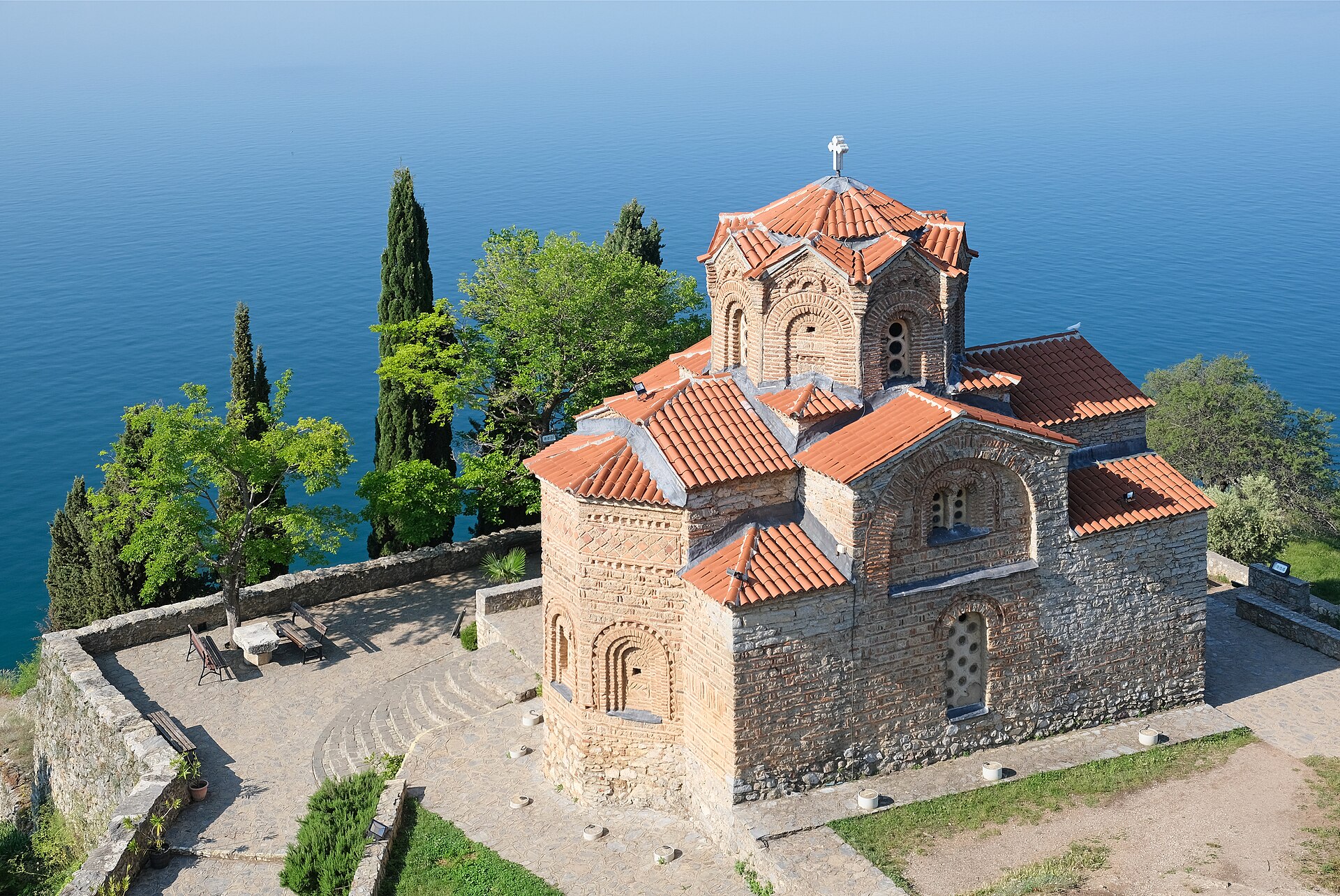
The small Church of St John the Theologian at Kaneo stands on a rocky point above the lake and is the image most people know Ohrid by. It dates from the 13th century and has frescoes inside, though the view from outside is the reason most visitors come. Reach it on foot from the old town along the lakeside boardwalk and a short path, or climb down from the fortress and Plaošnik. Go early in the morning or around sunset, when the light is softer and the tour groups have gone. A small fee is charged to enter the church itself. Below the church, a pebbly cove is popular for swimming in summer.
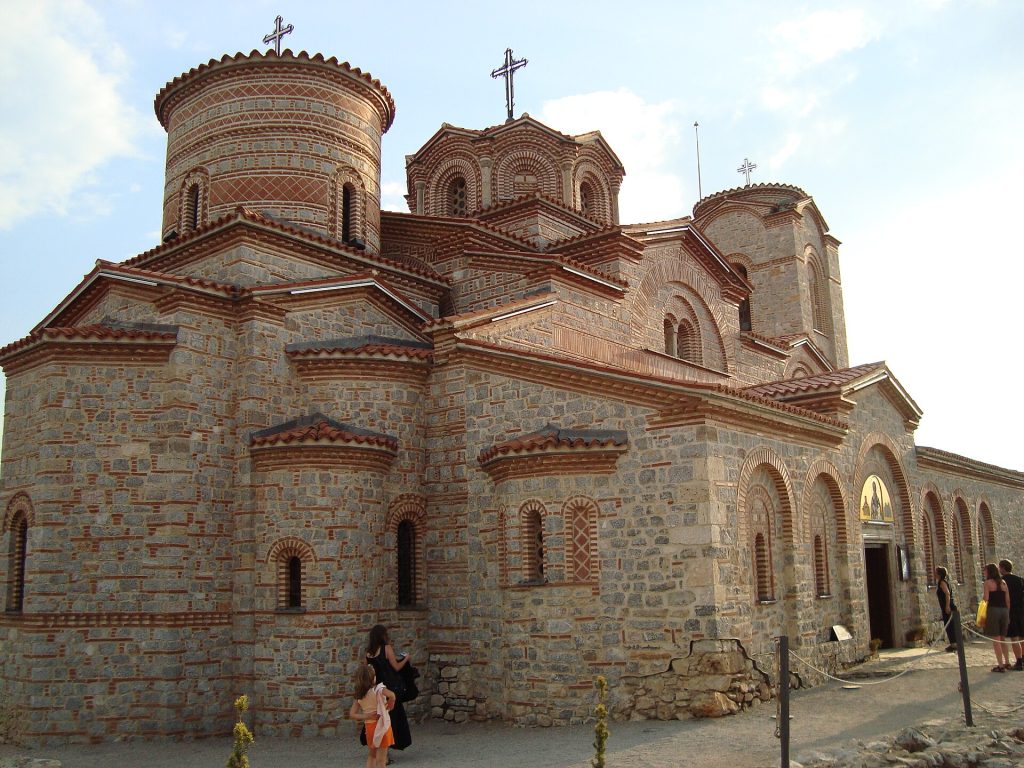
2. Plaošnik and the Church of St Clement and Panteleimon
On the hill above Kaneo, Plaošnik is the site where St Clement of Ohrid founded a monastery in the late 9th century, one of the first centres of Slavic literacy. UNESCO notes that Ohrid is home to the oldest Slav monastery, dedicated to St Panteleimon. The present church is a reconstruction, finished in 2002 on the original foundations, and around it you can see excavated early Christian basilicas with floor mosaics. It is a short, pleasant walk through pine trees between here, the fortress and Kaneo, so plan to see all three together.
3. Samuel’s Fortress
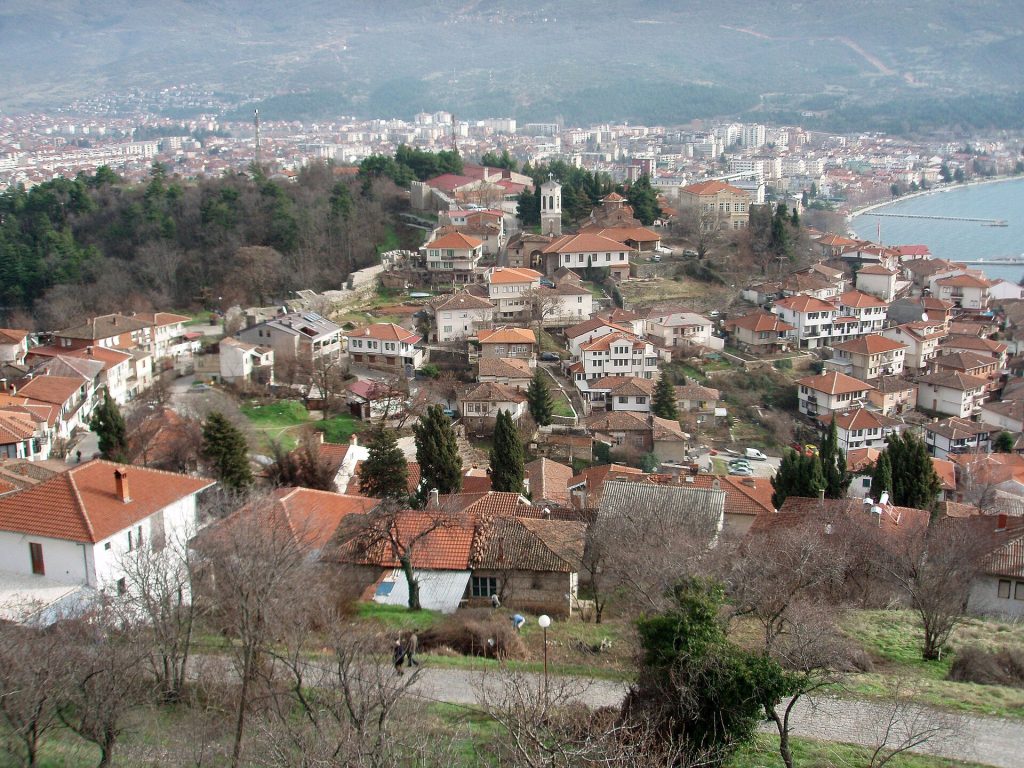
The walls of Samuel’s Fortress crown the top of the old town and give the widest views over the lake, the town and the mountains towards Albania. The fortress is named after Tsar Samuel, who ruled from Ohrid at the end of the 10th century. Inside is mostly an open grassy enclosure, so the walk along the ramparts is the main attraction. There is a small entrance fee, paid in denars, and opening hours are shorter outside summer, with some sources reporting a Monday closure; check on arrival. Bring water and a hat in summer, as there is little shade.
4. Church of St Sophia and the old town
St Sophia, built in the 11th century, is one of the most important medieval churches in the region and has some of its finest frescoes. In summer its courtyard hosts concerts of the Ohrid Summer Festival. From here, wander the old town’s lanes: the Ancient Theatre, a Hellenistic theatre still used for performances, the Church of the Holy Mother of God Perivleptos with its frescoes and icon gallery, and the house-museums of the old Ohrid families. UNESCO notes the town holds more than 800 Byzantine-style icons. Many small churches charge a modest fee, and modest dress is expected inside.
5. Boat trip to St Naum
The Monastery of St Naum, near the southern tip of the lake and close to the Albanian border, is the most popular day trip from Ohrid. The monastery church sits on a terrace above the lake, with peacocks wandering the grounds, and below it the springs that feed the lake can be explored by rowing boat through clear, cold water. In summer, tourist boats leave from Ohrid’s harbour (ask at the harbour for that day’s departure and return times); local buses and taxis run along the shore road all year, and the drive is about 30 km. Combine it with a stop at the Bay of Bones on the way.
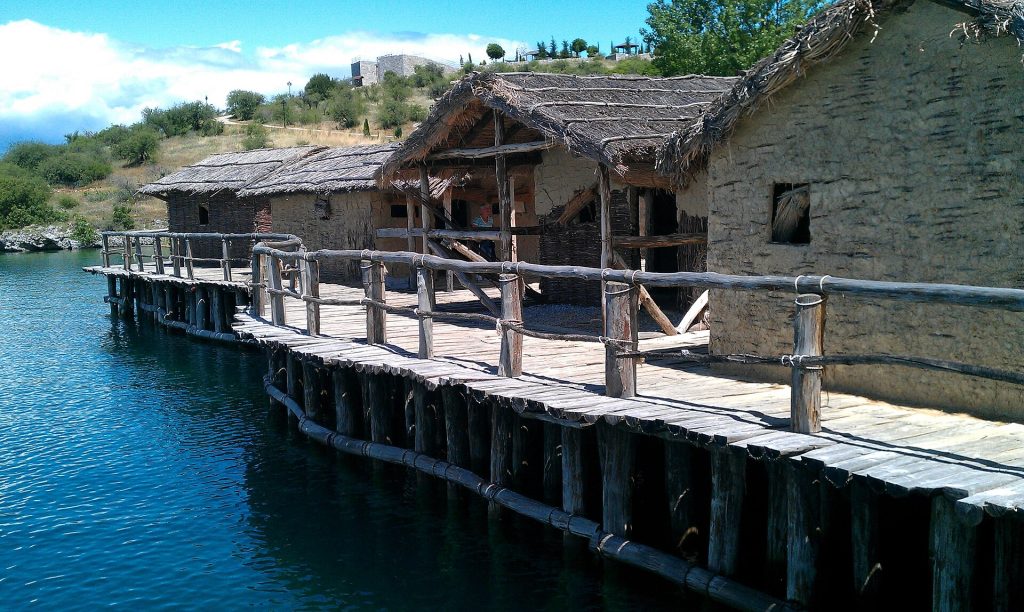
6. Bay of Bones (Gradište)
The Bay of Bones, on the lake shore south of Ohrid near Peštani, is a reconstruction of a prehistoric settlement built on wooden piles over the water, based on underwater finds of thousands of wooden posts. A small museum displays objects from the excavation. It takes about an hour, and it is easy to combine with St Naum by bus, car or boat. Divers can arrange underwater visits to the original site with local dive centres.
7. Galičica National Park
Galičica is the mountain ridge between Lake Ohrid and Lake Prespa, protected as a national park. The road over the pass, between Trpejca and Prespa, has viewpoints where you can see both lakes at once, and marked trails lead to the summits. It is best by car or with a local tour, as public transport does not cross the pass. In summer the area around Trpejca and Ljubaništa has some of the lake’s best beaches, with quieter water than the town.
What to eat and drink
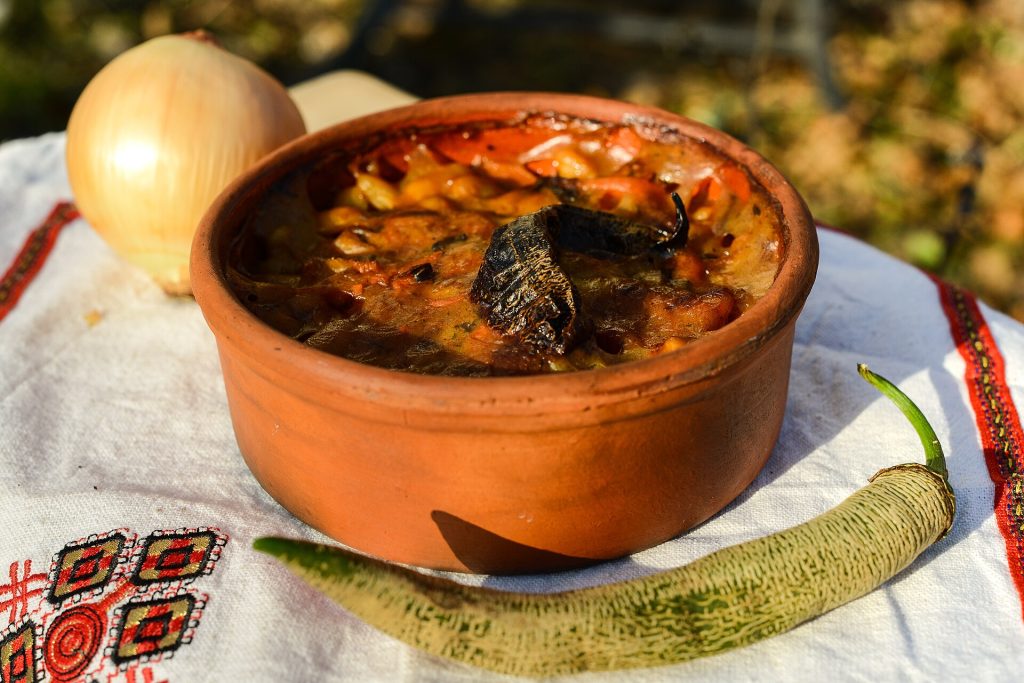
Lake fish is the speciality. The Ohrid trout is protected and should not be sold; restaurants serve other lake fish such as belvica and carp, or farmed trout. Try tavče gravče, baked beans in a clay dish and the national dish, and šopska salad with grated white cheese. Pastrmajlija, a boat-shaped bread with meat, is common across the country. North Macedonia has a long wine tradition; Vranec is the main local red grape, and many restaurants serve it by the glass. For dessert, look for baklava in the old bazaar near the town centre.
Getting there and around
Buses from Skopje to Ohrid take about three hours, with several departures a day run by Galeb and other companies. From Tirana in Albania, buses take roughly two and a half to three hours, and there are links from Struga and Bitola. Ohrid’s St Paul the Apostle Airport has seasonal flights. In town, everything is walkable; taxis are cheap for trips along the shore. Hiring a car is the easiest way to see Galičica, Prespa and the southern shore in one day. For more of the country, see our best towns in North Macedonia and Skopje Old Bazaar guide.
A suggested three-day plan
Day 1: start at Samuel’s Fortress in the morning, walk down through Plaošnik to Kaneo, then St Sophia and the Ancient Theatre, and finish with sunset over the lake. Day 2: boat or bus to St Naum, with a stop at the Bay of Bones, and a swim if the season allows. Day 3: drive over Galičica to the viewpoints and Lake Prespa, or spend a lazy day on the beaches at Trpejca. With an extra day, cross into Albania to Pogradec on the southern shore.
Where to stay
The old town is the most atmospheric base: guesthouses in traditional houses on the hill, many with lake views, and everything within walking distance. The trade-off is steep lanes and steps, and limited car access, so travel light or ask your host about luggage. The flatter area around the harbour and the main pedestrian street, Sveti Kliment Ohridski, is better if you want restaurants and buses close by. Along the shore south of town, towards Lagadin and Peštani, hotels have their own beaches and parking, and suit drivers or families staying for a week. Struga, about 15 km away at the lake’s northern outlet, is quieter and cheaper, with frequent buses and taxis to Ohrid.
Practical tips
July and August are crowded and prices rise, especially at weekends when visitors arrive from Skopje. Book accommodation in the old town early for summer, and expect steps and steep lanes. Many churches close for lunch or early in the evening outside summer. North Macedonia is not in the EU or Schengen, so check entry rules if you are crossing from Albania, Greece or Bulgaria. Tap water is generally drinkable in town. If you are combining Ohrid with Albania, see our Albania travel guide.
Plan your trip to Ohrid
- Tickets and tours in Ohrid: tickets and tours on Tiqets · activities on Klook
- Tickets and tours in Skopje: tickets and tours on Tiqets · activities on Klook
- Arriving by plane: pre-book an airport transfer with Welcome Pickups
- Mobile data: get a travel eSIM from Airalo
Some of these are affiliate links: if you book through them we may earn a small commission, at no extra cost to you.
Frequently asked questions
How many days do you need in Ohrid?
Two nights is enough for the old town, the fortress, Kaneo and a boat trip. Three or four nights let you add St Naum, the Bay of Bones and Galičica National Park at a relaxed pace, or simply enjoy a beach day. Ohrid works well as a slow stop in the middle of a Balkans route.
Can you swim in Lake Ohrid?
Yes. The water is clear and swimming is popular from June to September, when it is warmest. There are small beaches and bathing platforms near the old town, including below Kaneo, and quieter beaches further south around Trpejca and Ljubaništa. The water is colder near St Naum, where the springs enter the lake.
How do you get from Skopje to Ohrid?
By bus, which takes about three hours, with several departures a day run by Galeb and other companies. By car the journey is similar. Ohrid also has its own airport with seasonal flights. Check timetables a day ahead, as departures can change between seasons.
Is Ohrid expensive?
Ohrid is good value by European standards, especially outside July and August. Meals, local buses and entrance fees are inexpensive, and accommodation costs less than on the Croatian or Montenegrin coast. Prices rise in high summer and on weekends, so book ahead for that period.
When is the Ohrid Summer Festival?
The festival takes place every summer, usually from mid-July to late August, with concerts, theatre and dance in venues such as the Ancient Theatre and the Church of St Sophia. Check the official festival programme for 2026 dates and tickets before you plan your trip around it.
Photos: kallerna, CC BY-SA 4.0, via Wikimedia Commons; Nikolče Stojanoski, CC BY-SA 3.0, via Wikimedia Commons; Cplakidas, CC BY-SA 3.0, via Wikimedia Commons; A. Kerim ŞENGEL, CC BY 3.0, via Wikimedia Commons; Oliver Manev, CC BY-SA 4.0, via Wikimedia Commons.
Planning a bigger trip? See our guide to the 25 best places to visit in Europe, from city breaks to fjords.