Updated
Valldemossa sits in a high valley of the Serra de Tramuntana, about 20 km north of Palma, and it is the easiest of Mallorca’s mountain villages to reach from the capital. Honey-coloured stone houses with green shutters climb the slopes around a former Carthusian monastery, terraces of olives and almonds fall away below, and the sea is only a few kilometres off behind the ridge.
Its fame rests largely on one winter. In 1838 and 1839 the composer Frédéric Chopin and the writer George Sand rented rooms in the old monastery, and visitors have followed ever since. This guide covers the Charterhouse, the village streets, what to eat, the coast road towards Deià, the best walks and the practical details for a day trip or a longer stay.
- Best for: a morning of history and village wandering, combined with a mountain walk or a drive along the coast road.
- When to go: April to June and September to October for walking weather. In summer, arrive early or late to avoid the midday tour coaches.
- Getting there: around 30 minutes by car from Palma on the Ma-1110, or on TIB bus line 203.
- Time needed: three to four hours for the village and the Charterhouse; a full day if you add a hike, Miramar or Deià.
- Don’t miss: Chopin’s cell in the Charterhouse, and a coca de patata from one of the village bakeries.
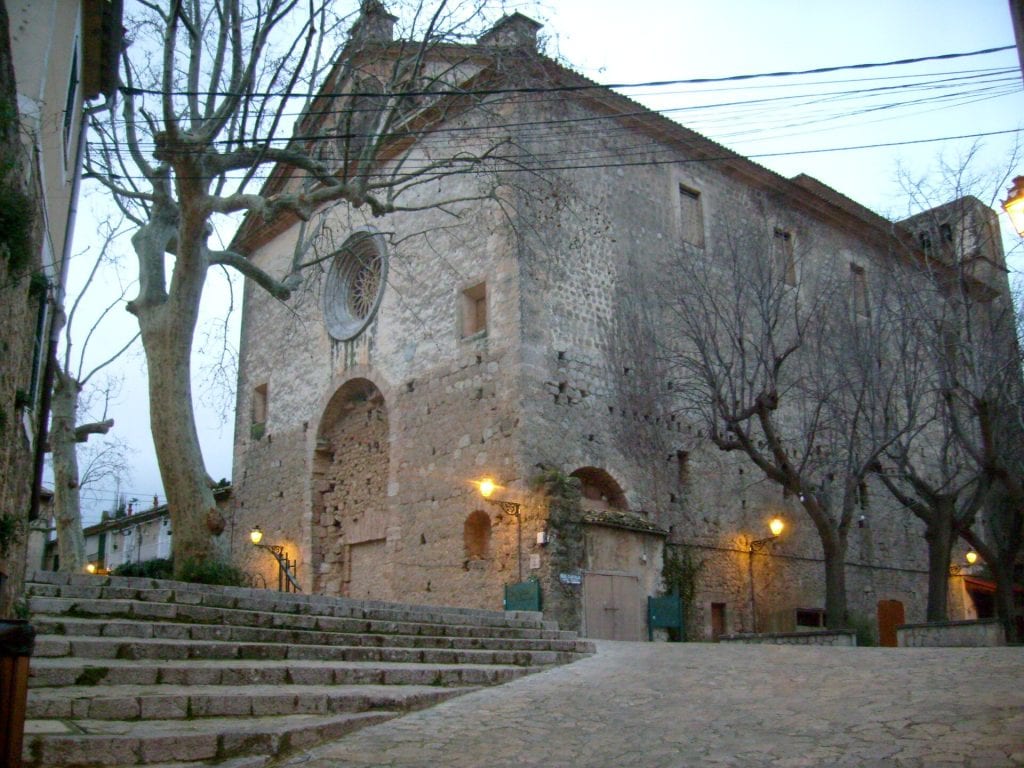
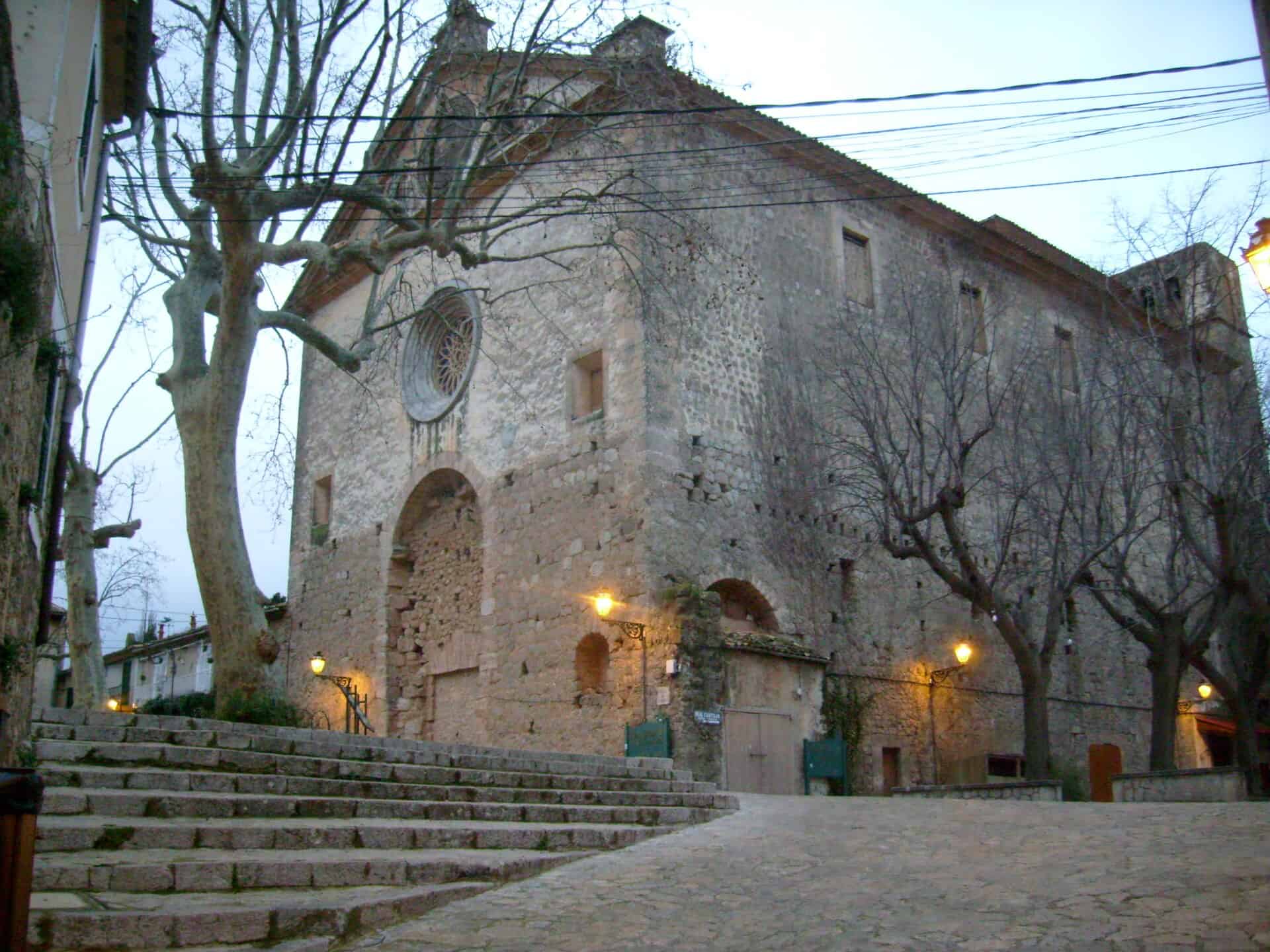
The Royal Charterhouse (Real Cartoixa)
The Charterhouse began life as a royal residence. King James II of Majorca had a palace built here for his son Sancho, more than 400 m above sea level, and in 1399 King Martin of Aragon handed the estate to Carthusian monks. They stayed for more than four centuries, until 1835, when Spain’s Mendizábal confiscations forced religious orders out and the monastery passed into private hands. The empty cells were then rented to visitors.
That is how Chopin, Sand and her two children came to spend the winter of 1838 to 1839 here. The weather was wet, Chopin was unwell, and the locals were wary of the unconventional household, all of which Sand later described in her book A Winter in Majorca. Even so, Chopin completed his Preludes, Op. 28, during the stay.
A visit takes in the neoclassical church, begun in 1751, the cloister, the old monks’ pharmacy with its rows of ceramic jars, and Chopin’s cell, now a small museum with his Pleyel upright piano, letters, manuscripts and portraits. Allow at least an hour. Tickets are sold at the entrance; check current opening times before you go, especially in winter.
Walking the old village
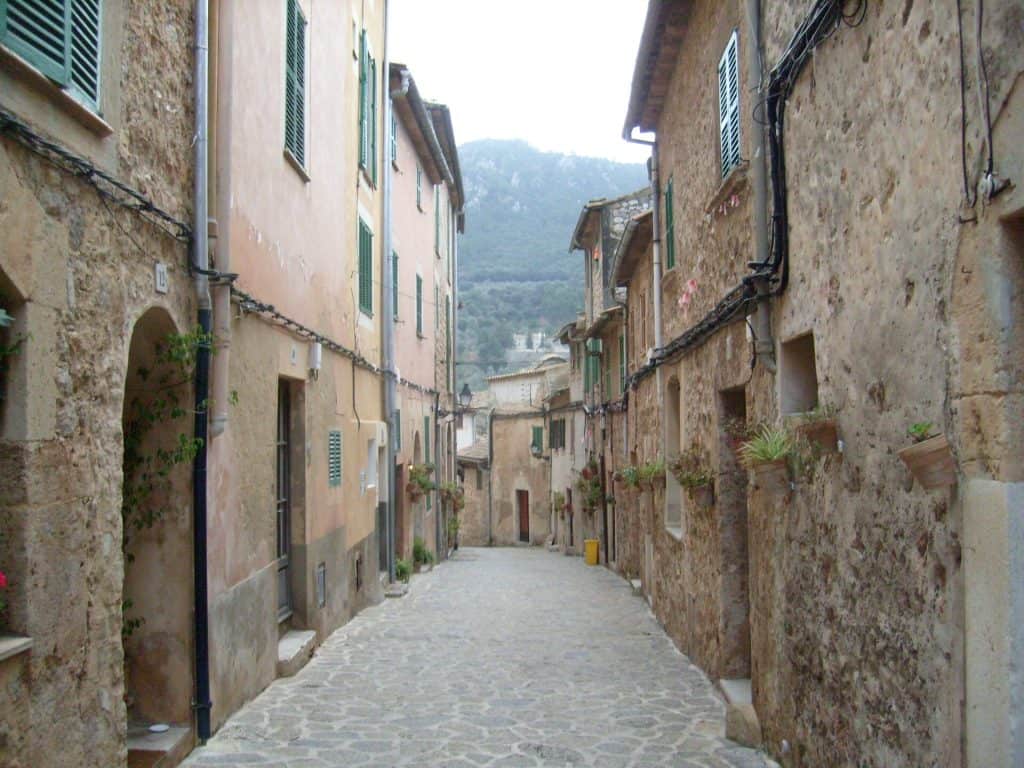
Valldemossa is small enough to explore without a map. From the Charterhouse, wander downhill through the lanes behind it: stone steps, potted geraniums on every ledge, and glimpses of the terraced valley between the houses. The streets are steep and paved with cobbles, so wear shoes with some grip.
The parish church of Sant Bartomeu, with a statue of Santa Catalina Thomàs beside it, is a short walk from the Charterhouse. Beyond the last houses, look back for the classic view of the village: the monastery’s bell tower rising above tiled roofs, with the Tramuntana ridge behind.
Santa Catalina Thomàs and the painted tiles
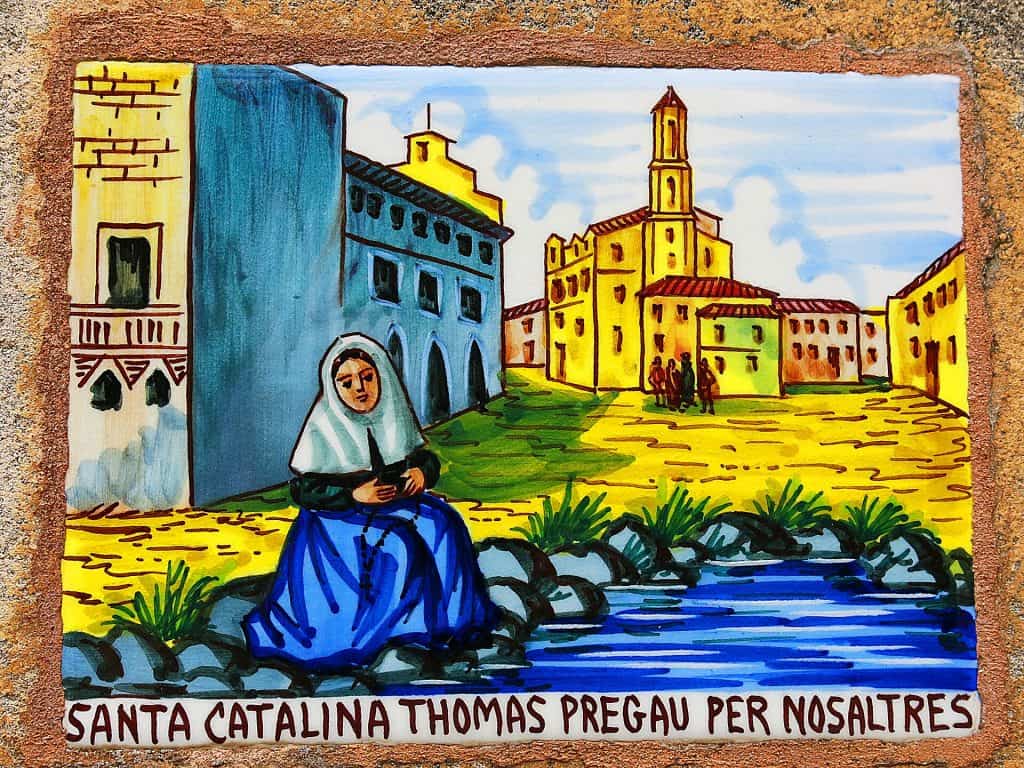
Valldemossa’s other famous resident is Catalina Thomàs, born here in 1531. She became a nun in Palma, died there in 1574, was beatified in 1792 and canonised in 1930. She remains Mallorca’s best-loved saint, and the village is proud of her.
You will notice painted ceramic tiles beside almost every front door, each showing the saint with a short prayer asking for her protection over the household. Spotting the different designs is a pleasant way to slow down. The house where she is said to have been born is now a small shrine, a few minutes on foot from the parish church.
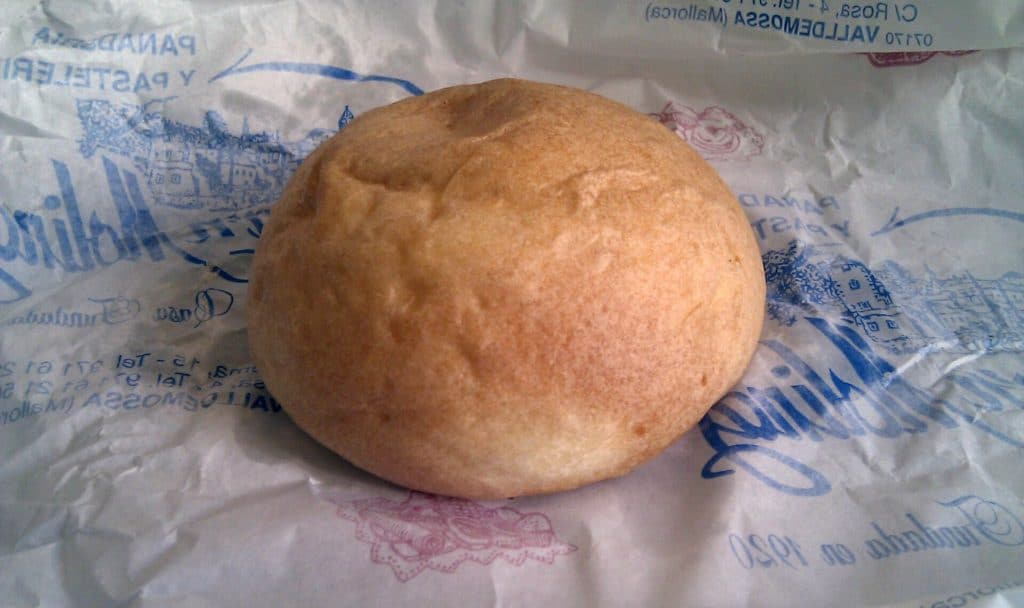
What to eat: coca de patata
The local speciality is the coca de patata, a soft, round, sweet bun made with potato in the dough and dusted with icing sugar. It is light rather than rich, and the classic way to eat one is mid-morning with a coffee or hot chocolate, or in summer with a scoop of almond ice cream. Several bakeries and cafés along the main street sell them, and you will see people carrying paper bags of them back to their cars.
For lunch, the cafés and restaurants around the centre serve Mallorcan staples such as pa amb oli (bread rubbed with tomato and olive oil, topped with cheese or cured ham), tumbet (layered fried vegetables) and frit mallorquí. Prices are higher than in Palma, as you would expect in a village this popular.
The coast road: Miramar, Son Marroig and Deià
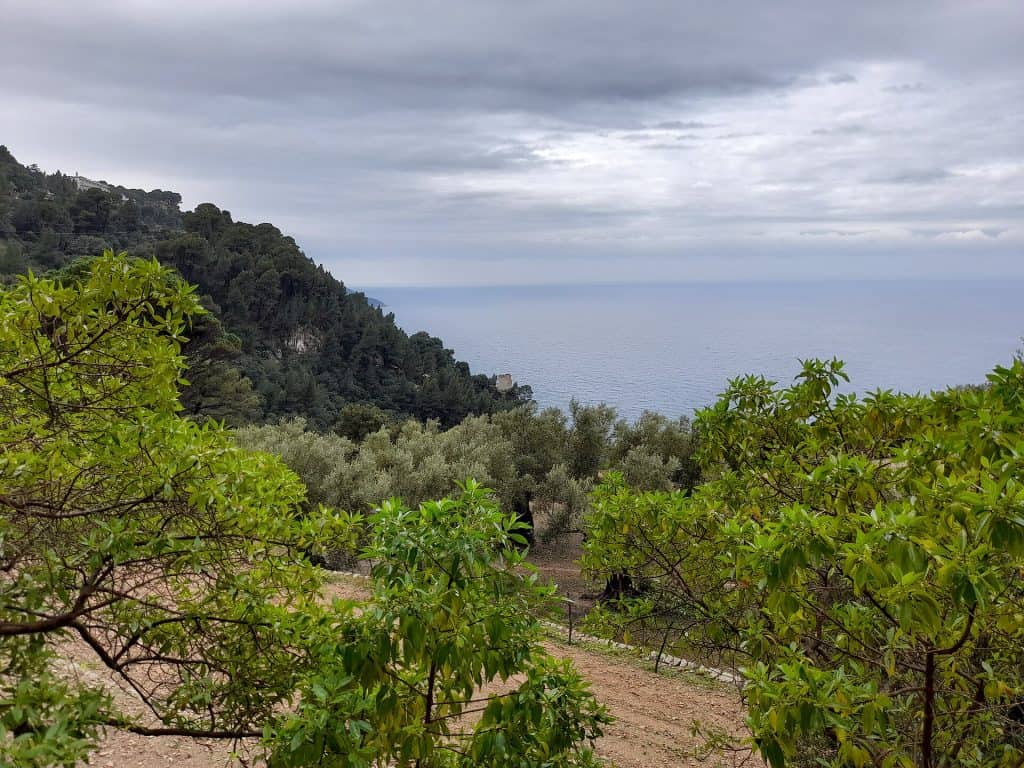
From Valldemossa the Ma-10 runs north-east along the cliffs towards Deià and Sóller, one of the finest drives on the island. The first stop is Miramar, at kilometre 67.5. The philosopher Ramon Llull founded a missionary school here in 1276 to teach Arabic and theology. Six centuries later Archduke Ludwig Salvator of Austria, who spent much of his life in Mallorca and did a great deal to promote this coast, bought the estate in 1872. Today it is a small museum with remains of the old cloister, exhibits about the Archduke and garden paths leading to sea-view lookouts.
A little further on, Son Marroig was another of the Archduke’s properties, with views down to Sa Foradada, a rocky headland pierced by a large hole. The road then reaches Deià, a hillside village of stone houses where the poet Robert Graves lived for much of his life. Combining Valldemossa, Miramar and Deià makes an easy and very satisfying day.
Port de Valldemossa
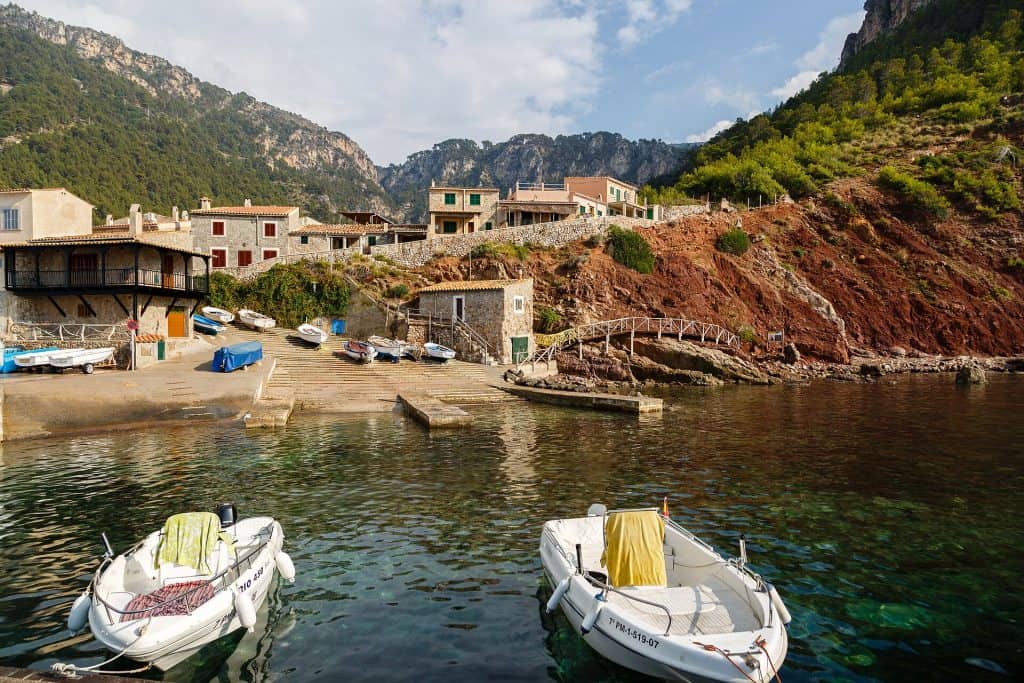
The village has its own tiny harbour on the coast below. A narrow road with tight hairpin bends drops from the Ma-10 to a pebble cove with a slipway, a handful of houses and a place to eat. It is not a beach for a long swim day, but it is a quiet spot for a late lunch or for watching the sun drop behind the cliffs.
The road is single-track in places and parking at the bottom is very limited, so go outside peak hours and drive slowly. It is not suitable for large vehicles.
Walks from Valldemossa
The Serra de Tramuntana, a UNESCO World Heritage cultural landscape since 2011, is criss-crossed with old mule tracks, charcoal burners’ paths and dry-stone terraces. Two routes start right in the village.
Camí de s’Arxiduc (the Archduke’s Path)
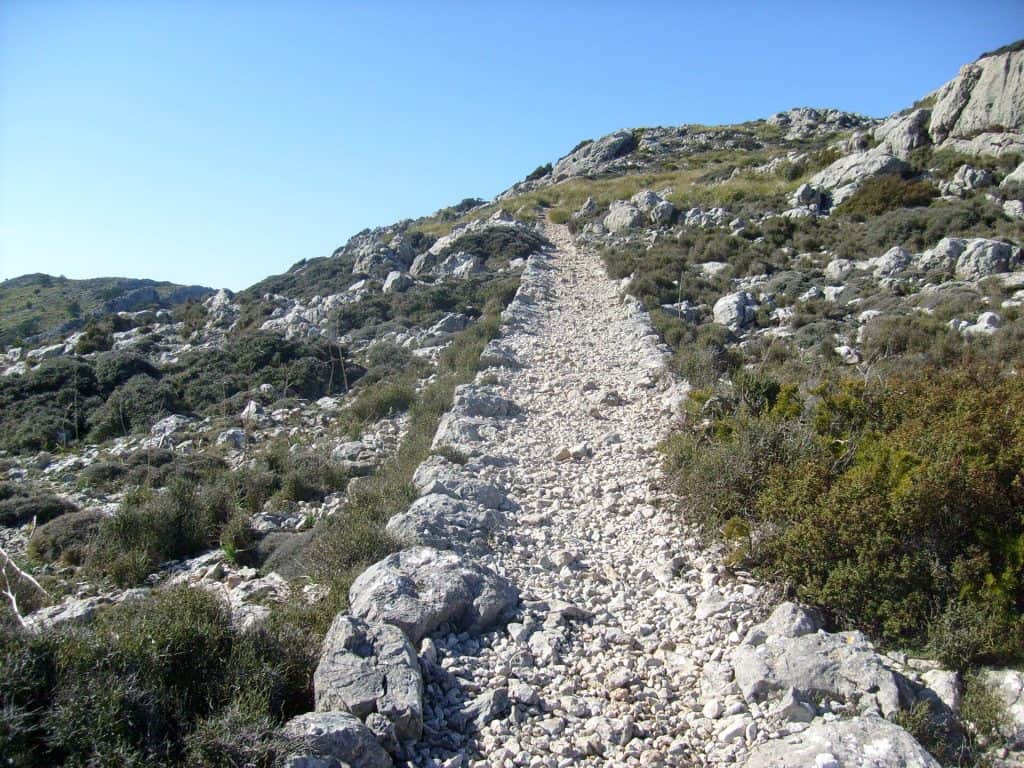
Archduke Ludwig Salvator had this bridle path built along the ridge above the village in the 19th century so he could ride along the cliff tops and admire the view. The loop from Valldemossa climbs steeply onto a high plateau, then follows the edge with huge views over the coast. The walk along the top takes about two hours, and a detour to the summit of the Teix adds roughly an hour more. It is a demanding route for experienced walkers; consider a local guide if you are unsure.
Valldemossa to Deià on the GR221
This linear walk is part of the GR221, the long-distance path across the Tramuntana. It covers around 11 km and takes about five hours, climbing through holm oak woods and past old charcoal-burning platforms before joining the Archduke’s Path and descending to Deià. Take the 203 bus back.
On either route, carry plenty of water, a map and layers. Mountain weather changes quickly, and in July and August the heat makes long walks uncomfortable from late morning.
A simple half-day route
- Arrive by 9.30 and park at one of the car parks on the edge of the village.
- Visit the Charterhouse first, before the tour groups arrive.
- Walk down through the lanes to the church of Sant Bartomeu and the birthplace shrine of Santa Catalina Thomàs.
- Stop for coffee and a coca de patata.
- In the afternoon, drive the coast road to Miramar and Deià, or head down to Port de Valldemossa for a late lunch.
Festivals and the Sunday market
A weekly market fills the square by the Charterhouse on Sunday mornings, with produce, crafts and local sweets. The biggest celebration of the year is the Festa de la Beata on 28 July, honouring Santa Catalina Thomàs, when a decorated float carries a girl playing the young saint through the streets, accompanied by music and carriages trimmed with flowers. The village also hosts an annual International Chopin Festival; check dates and programmes in advance.
Getting there and parking
By car: the Ma-1110 climbs from Palma to Valldemossa in around 30 minutes. Paid car parks sit on the edge of the village and fill up by late morning in summer.
By bus: TIB line 203 links Palma with Valldemossa, Deià, Sóller and Port de Sóller, which makes a car-free day along the coast possible. Buses can be busy in high season, so check the current timetable and allow extra time.
By tour: many coach and minibus tours from Palma and the resorts combine Valldemossa with Sóller. They are convenient but tend to arrive at the busiest time of day.
When to go and practical tips
- Spring and autumn are ideal: mild temperatures, green terraces and good walking.
- Summer is hot and crowded between about 10.00 and 16.00. Early mornings and evenings are much calmer.
- Winter is quiet and often cool and damp at this altitude, and some cafés and restaurants close for part of the season.
- Bring comfortable shoes; the lanes are steep and the cobbles can be slippery after rain.
Where to stay
Staying overnight in Valldemossa means seeing the village after the day visitors leave, when the streets go quiet and the light turns gold on the stone. The choice is small, mostly boutique hotels, guesthouses and rural fincas in the surrounding valley, so book ahead for spring and summer. Palma, 30 minutes away, has far more choice and works well as a base if you plan to visit several villages. Deià and Sóller are good alternatives on the same bus line.
Plan your trip to Mallorca
- Tickets and tours in Mallorca: tickets and tours on Tiqets · activities on Klook
- Arriving by plane: pre-book an airport transfer with Welcome Pickups
- Road trip: compare car hire on Localrent
- Mobile data: get a travel eSIM from Airalo
Some of these are affiliate links: if you book through them we may earn a small commission, at no extra cost to you.
Planning a bigger trip? See our guide to the 25 best places to visit in Europe, from city breaks to fjords.
Keep exploring
- Palma de Mallorca City Guide: Old Town, Castle, Markets and Sea
- The Best Beaches in Mallorca: 10 Beaches and Coves to Visit
Frequently asked questions
Is Valldemossa worth visiting?
Yes. It combines a genuinely interesting monastery, a well-kept historic village and easy access to some of Mallorca’s best mountain walking and coastal scenery. Go early or late in summer to enjoy it without the crowds.
How long do you need in Valldemossa?
Three to four hours is enough for the Charterhouse, the village and a coffee stop. Plan a full day if you want to hike or continue along the coast to Miramar and Deià.
Can you get from Valldemossa to Deià and Sóller by bus?
Yes. TIB line 203 runs between Palma, Valldemossa, Deià, Sóller and Port de Sóller. Check the latest timetable before travelling, as frequencies vary by season.
Photos: Sarang, Public domain, via Wikimedia Commons; Enric, CC BY-SA 4.0, via Wikimedia Commons; Maziacs, Public domain, via Wikimedia Commons; Akiramifune, CC BY-SA 4.0, via Wikimedia Commons; Otto Domes, CC BY-SA 4.0, via Wikimedia Commons.