Europe in December splits into three very different trips. In Austria, Germany, France and the Czech Republic, the Christmas markets are in full swing, with mulled wine, carols and lit-up old towns from late November until Christmas Eve or beyond. Further north, Finnish Lapland and Arctic Norway offer snow, husky trails and the northern lights in near-permanent darkness. And on the Atlantic islands and the southern Mediterranean, you can still eat lunch outside in 17–23°C sunshine.
This guide picks the best places to visit in Europe in December across all three, with average December temperatures, why each place is worth it, and confirmed 2026 dates for the big markets where the organisers have published them. It finishes with a sample one-week itinerary for Europe in December and answers to the questions people most often ask before booking.
- Best for Christmas markets: Vienna, Nuremberg, Strasbourg, Prague, Salzburg, Budapest.
- Best for snow and northern lights: Rovaniemi (Finnish Lapland) and Tromsø (Arctic Norway).
- Best for winter sun: Tenerife, Madeira, Seville and Malta.
- When to go: The first three weeks of December, when almost every market is open and flights are cheaper than over Christmas and New Year.
- How long: A long weekend per city, or one week combining two or three market cities by train.
- Daylight: about 8 hours in Vienna or Prague around 21 December, about 2 hours in Rovaniemi, none in Tromsø, about 10 hours in Tenerife.
1. Vienna, Austria
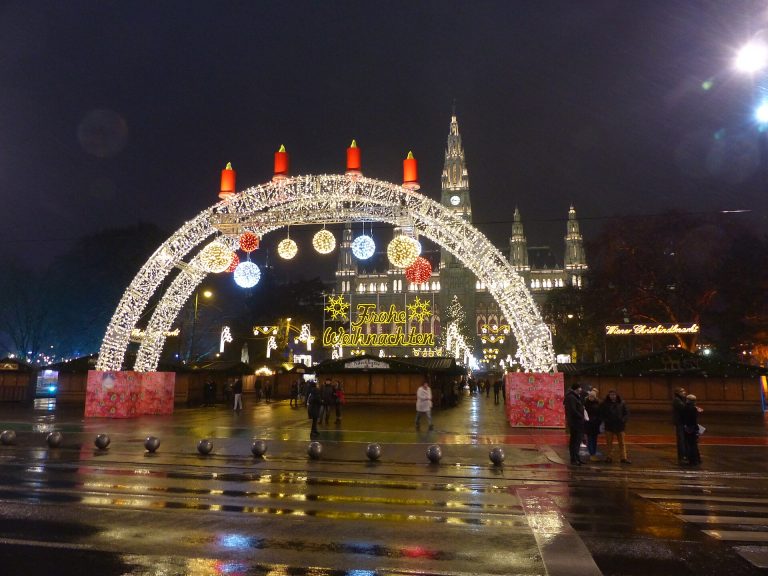
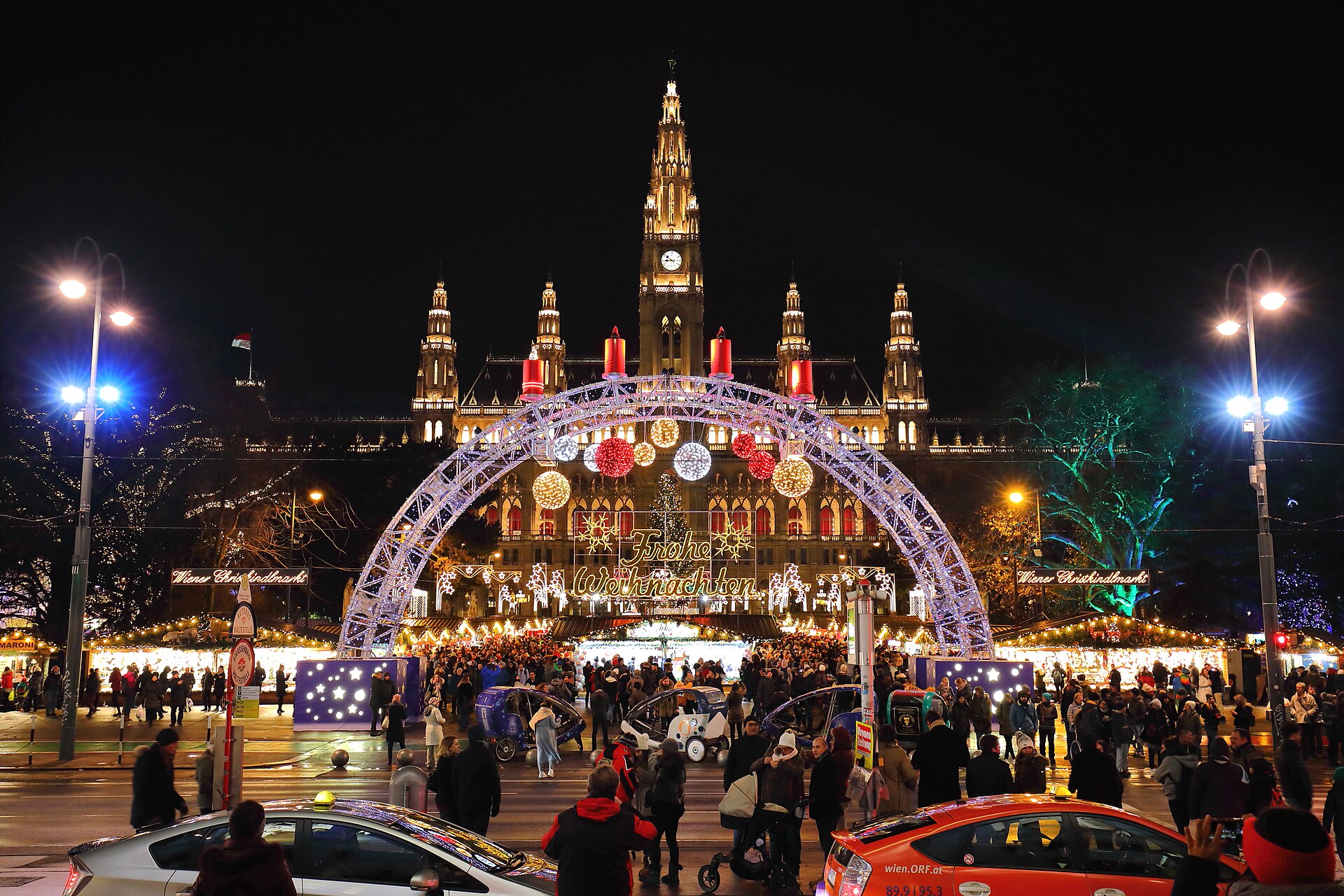
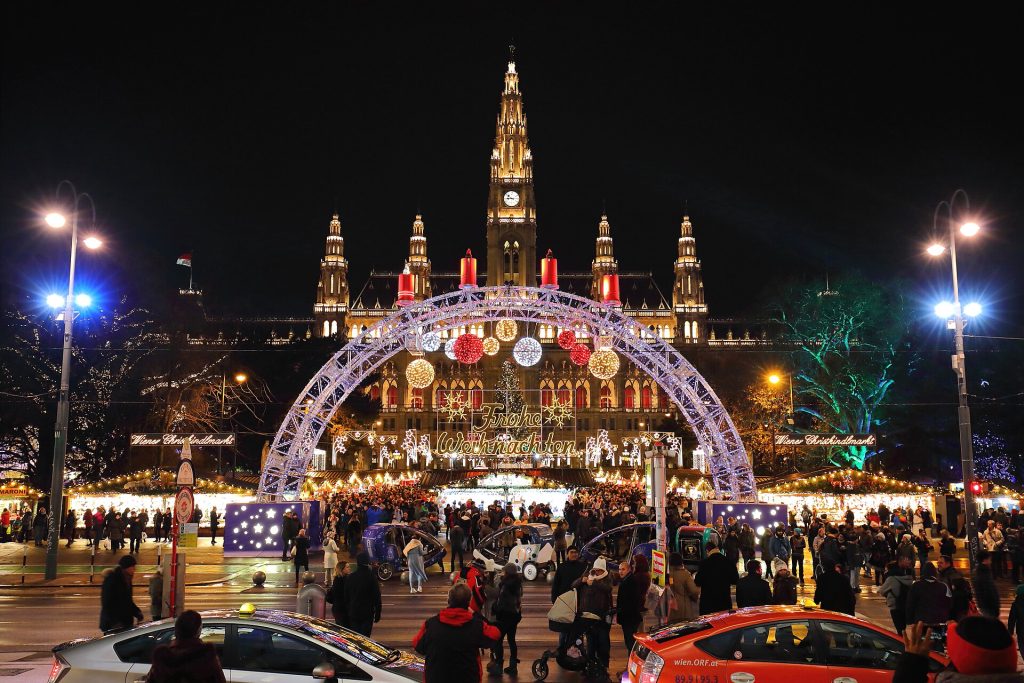
Vienna has arguably the most varied Christmas season in Europe. The Wiener Christkindlmarkt on Rathausplatz runs from 13 November to 26 December 2026, daily 10:00–22:00 (until 18:30 on 24 December). The market at Schönbrunn Palace opens earliest and closes latest, from 6 November 2026 to 6 January 2027. Spittelberg and Am Hof run from 13 November to 23 December, and the K&K market at the Belvedere from 20 November to 31 December.
Average December weather: around 4°C by day and close to 0°C at night. Snow is possible but not guaranteed. Combine market evenings with daytime museums – the Kunsthistorisches Museum, the Hofburg and Belvedere are warm refuges – and with coffee houses, which are part of the city’s culture. Most markets are on the U-Bahn: Rathaus (U2) for Rathausplatz and Schönbrunn (U4) for the palace. Our full Vienna Christmas markets guide has opening hours for every market and what to eat.
2. Nuremberg, Germany
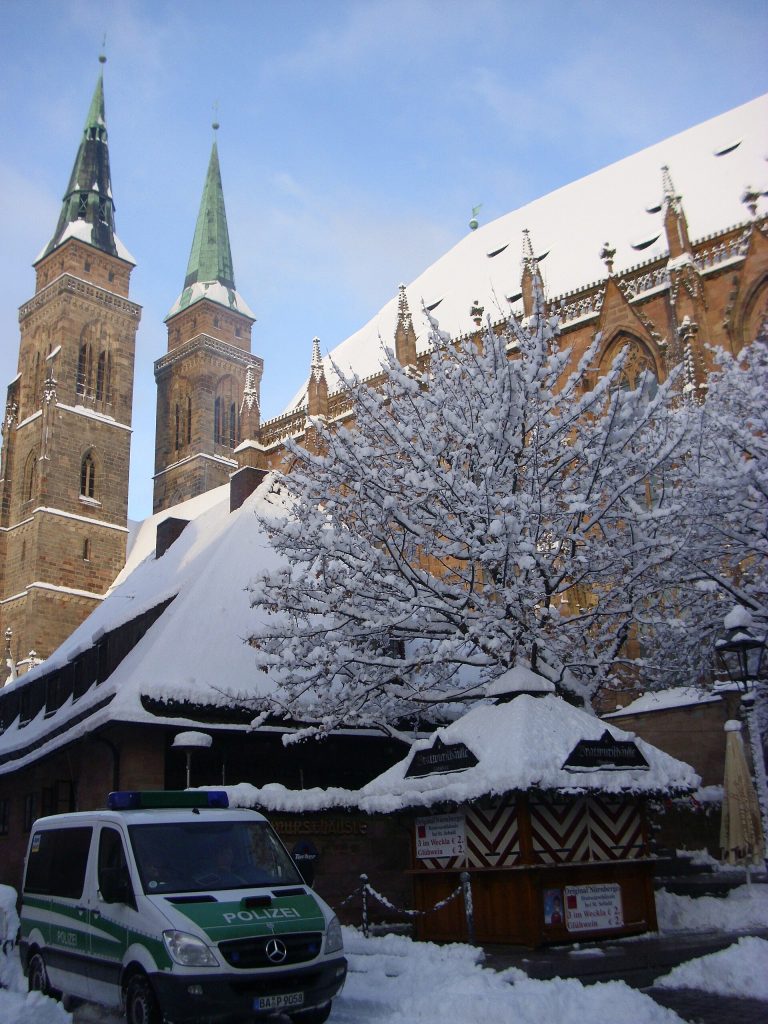
Nuremberg’s Christkindlesmarkt is Germany’s most famous Christmas market and one of the oldest. In 2026 it runs from Friday 27 November to Thursday 24 December on the Hauptmarkt, the main market square. Our guide to Germany’s Christmas markets covers eleven more. The ceremonial opening, when the Christkind reads the prologue from the balcony of the Church of Our Lady, is on 27 November at 17:30. Hours are 10:00–21:00 (10:00–22:00 on opening day and 10:00–14:00 on Christmas Eve), according to the city’s official information.
About 180 stalls with red-and-white striped roofs sell traditional crafts, Nuremberg Lebkuchen (gingerbread) and fruit bread, while the Rostbratwurst – small grilled sausages served three in a roll – is the classic snack. The square is framed by the Frauenkirche, the Schöner Brunnen fountain and St Sebaldus Church. Average December weather is roughly 4°C by day and just below freezing at night. Weekend evenings are very crowded, so visit on a weekday morning for browsing.
3. Strasbourg, France
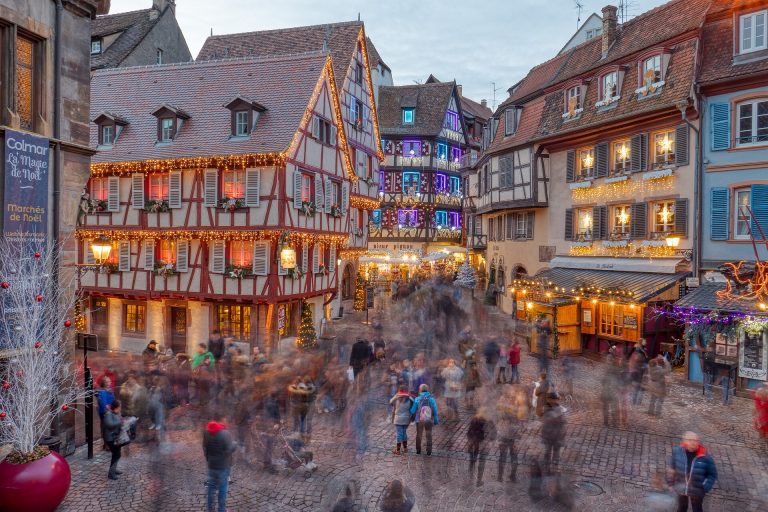
Strasbourg calls itself the “Capital of Christmas”, and its Christkindelsmärik has been held since 1570. The markets spread across the island-shaped old town, from Place Broglie to the square in front of the cathedral, with a giant decorated tree on Place Kléber. The market usually opens in the last week of November and runs to 24 December, with a short reopening after Christmas; in 2025 it opened on 26 November. The city had not published the full 2026 programme on its official site when this guide was written, so check noel.strasbourg.eu before you book.
Expect average December temperatures of around 6°C by day and close to 0°C at night. Alsace food is the draw: bredele biscuits, pain d’épices, flammekueche and vin chaud made with Alsace white or red wine. Security checks at the entrances to the Grande Île are routine in December, so allow extra time. For squares, food and tips, see our Strasbourg Christmas market guide.
4. Prague, Czech Republic
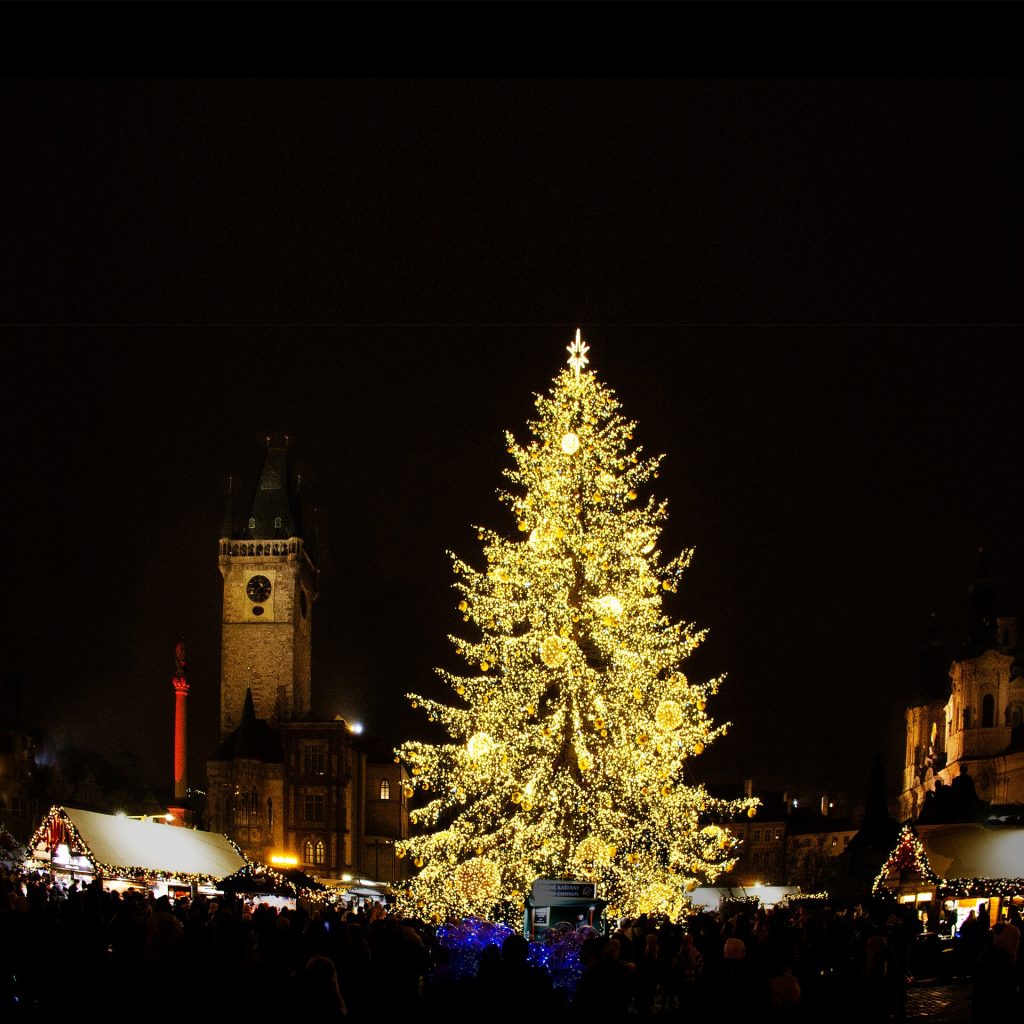
Prague’s markets are set against Gothic and baroque architecture, which makes them some of the most photogenic in Europe. According to the national tourist board, the Old Town Square and Wenceslas Square markets run from 28 November 2026 to 6 January 2027. Smaller neighbourhood markets open earlier: Peace Square (náměstí Míru) in Vinohrady from 20 November, Republic Square from 25 November and Tyl Square from 26 November, all until 24 December 2026.
The Old Town Square market has the city’s main Christmas tree, which comes from a different Czech region each year. Try trdelník only if you like sweet pastry – it is a tourist snack rather than a Czech tradition – and look instead for grilled sausages, hot mead and svařák (mulled wine). December averages around 3°C by day and a few degrees below freezing at night. The Peace Square market is quieter and more local than the Old Town.
5. Salzburg, Austria
Salzburg’s Christkindlmarkt fills the Domplatz and Residenzplatz beneath the cathedral and the fortress. According to the official tourism board, the 2026 market runs from 19 November 2026 to 1 January 2027. Regular hours are Monday to Thursday 10:00–20:30, Friday 10:00–21:00, Saturday 9:00–21:00 and Sunday 9:00–20:30. On 24 December it closes at 15:00, and on 25 and 26 December it opens 11:00–18:00.
The city is compact enough to explore on foot in a day. Add the Christmas and Advent concerts, the Hellbrunn Advent market south of the centre, and a ride up to the Hohensalzburg Fortress for views over snowy rooftops. December averages around 4°C by day and about -2°C at night, and the surrounding Alps are often snow-covered. Salzburg pairs easily with Vienna by train, which is why it features in the itinerary below.
6. Budapest, Hungary
Budapest has two headline markets: the Advent fair in front of St Stephen’s Basilica and the long-running market on Vörösmarty Square. Both usually open in mid-November and run until around New Year; the organisers had not confirmed 2026 dates at the time of writing, so check before you go.
December averages are about 4–5°C by day and just below freezing at night. The city’s thermal baths are the reason Budapest stands out: sitting in the outdoor pools of the Széchenyi Baths while steam rises into cold air is one of the best winter experiences in Europe. Hungarian market food – kürtőskalács (chimney cake), lángos and stuffed cabbage – is more filling than in Austria or Germany, so arrive hungry.
7. Rovaniemi, Finland
Rovaniemi, on the Arctic Circle in Finnish Lapland, is Europe’s most reliable bet for a white Christmas. December averages around -5°C by day and -11°C at night, and on 21 December the sun is up for only about two hours. Families come for Santa Claus Village, which sits on the Arctic Circle line north of the town and is open all year, along with reindeer and husky farms in the surrounding forest.
Adults come for the northern lights, snowmobile safaris and the Arktikum science centre, which explains Arctic nature and culture. Book activities and accommodation well ahead for December, the busiest month of the year. You need proper winter clothing: thermal base layers, insulated boots and mittens. Many safari operators lend thermal overalls and boots as part of a tour.
8. Tromsø, Norway
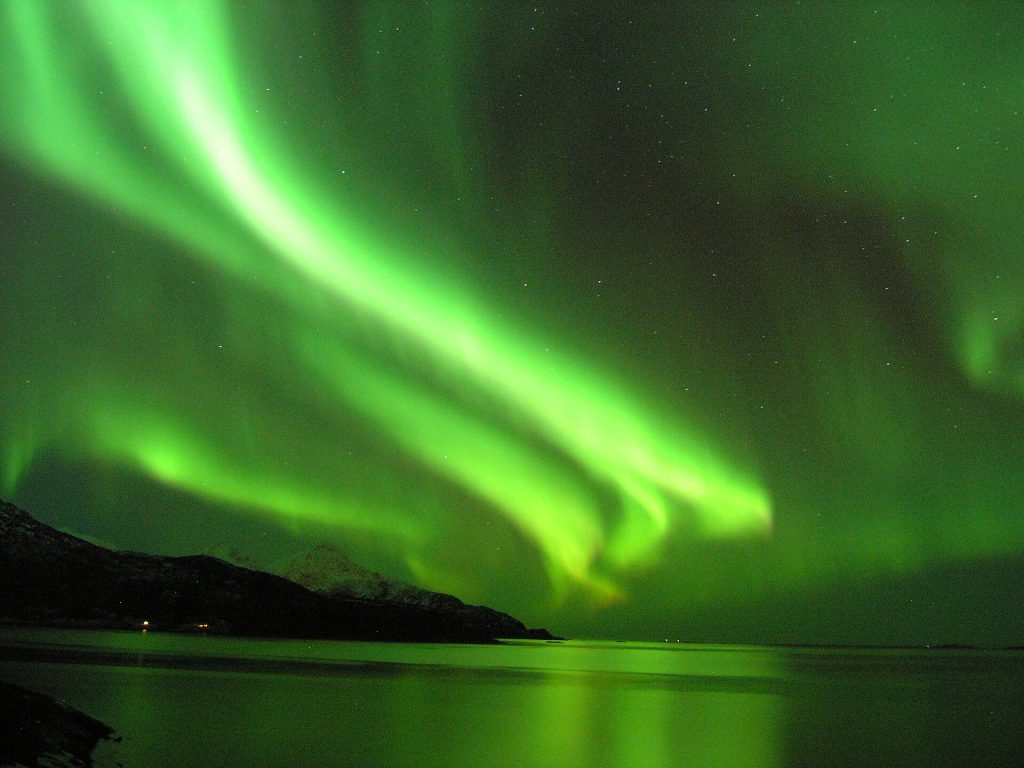
Tromsø sits about 350 km north of the Arctic Circle, so in December the sun does not rise at all. This is the polar night, which runs from late November to mid-January. That sounds bleak, but around midday the sky glows blue and pink for several hours, and the long darkness gives you plenty of chances to see the northern lights when skies are clear.
Coastal air keeps Tromsø milder than inland Lapland: December averages about -1°C by day and -5°C at night, with frequent snow. Whale-watching tours, dog sledding and Sami cultural experiences are popular, and the Arctic Cathedral holds concerts through the season. Aurora sightings depend on clear skies and solar activity, so allow at least three nights and choose a tour company that will drive inland to find gaps in the clouds.
9. Tenerife, Canary Islands
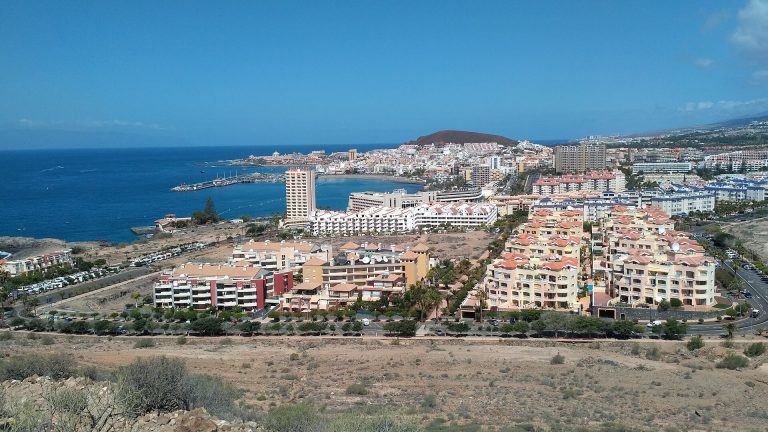
Tenerife is the warmest place to spend December in Europe. The national weather service AEMET’s long-term averages for Tenerife Sur airport give 22.8°C by day and 16.5°C at night in December, with only 3.5 rain days and about 195 hours of sunshine. The sea is around 21°C. The north of the island is cloudier and wetter, so choose Los Cristianos, Playa de las Américas or Costa Adeje if sunshine is the priority.
Mount Teide adds a winter twist: the summit is often capped with snow, so you can go from a beach to a snowy volcano in a morning. Spanish Christmas traditions continue here, from nativity scenes (belenes) to the Three Kings’ processions on 5 January. Read our guide to the best places to visit in Europe for more year-round ideas.
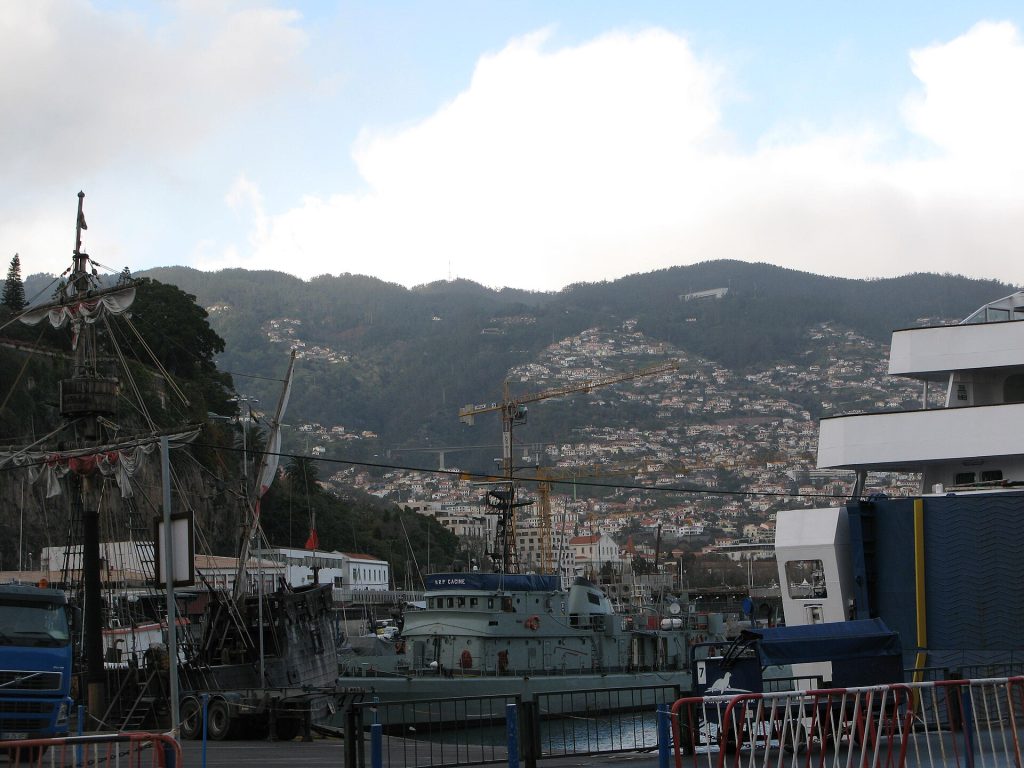
10. Madeira, Portugal
Madeira combines mild weather with one of Europe’s best-known New Year’s Eve fireworks displays over Funchal’s bay. IPMA, Portugal’s weather service, gives Funchal a December average of 21.0°C by day and 15.5°C at night, and the sea is around 19.5–20°C. December is one of the wetter months, though, with about 95 mm of rain over eight or nine days.
From early December, Funchal’s centre is decorated with Christmas lights, and local markets sell festive food such as bolo de mel (honey cake). Daytime is ideal for levada walks along the island’s irrigation channels, the botanic garden and the cable car to Monte. Accommodation books up fast for New Year, so reserve early if you want to see the fireworks.
11. Seville, Spain
Seville is a winter-sun city break rather than a beach trip. AEMET’s averages for Seville airport give 16.6°C by day and 7.3°C at night in December, with around 154 hours of sunshine, though December is also one of the wettest months with about 7.5 rain days. Daylight on 21 December is about 9 hours 35 minutes, more than an hour longer than in central Europe.
December is ideal for sightseeing without summer heat: the Real Alcázar, the cathedral and Giralda, the Plaza de España and the Triana district are all comfortable on foot. Spanish Christmas in Seville centres on nativity scenes (belenes) displayed in churches and public buildings, plus street lights across the centre. Bring a warm coat for evenings. Málaga, on the coast, is slightly warmer (AEMET averages of 17.5°C by day and 8.9°C at night).
12. Malta
Malta is mild, compact and English-speaking, which makes it an easy December break. Valletta averages about 17°C by day and 11°C at night in December, and Malta International Airport’s Met Office gives a December sea norm of about 18.3°C. Expect some rain and windy days: December has about ten rain days on average.
Malta has a strong nativity-scene (presepju) tradition, and churches across the islands are decorated for Christmas. Valletta’s St John’s Co-Cathedral, the Upper Barrakka Gardens and the ferry across the Grand Harbour to the Three Cities are year-round highlights, and Gozo’s quiet villages are easy to reach by ferry. Short days mean it is worth starting early.
One week in Europe in December: a sample itinerary
This route links three of the best Christmas-market cities by direct train and works well between 28 November and 23 December 2026, when all the markets below are open.
Days 1–2: Prague. Arrive and spend your first evening at the Old Town Square market. On day 2, walk across Charles Bridge to the castle in the morning, then explore the quieter Peace Square market in Vinohrady in the evening.
Days 3–5: Vienna. Take the train to Vienna. Spend the evening at Rathausplatz, then use day 4 for the Hofburg, a coffee house and the Spittelberg market, and day 5 for Schönbrunn Palace and its market, finishing at the Belvedere.
Days 6–7: Salzburg. Take the train west to Salzburg. Visit the Christkindlmarkt on Domplatz and Residenzplatz, ride up to the fortress, and, if time allows, take a half-day trip into the snowy Salzkammergut before flying home from Salzburg or Munich.
Winter-sun alternative: Fly to Tenerife for four nights on the south coast, with a day trip up Mount Teide, then spend three nights in Seville or Madeira for a city or walking break.
Practical tips for Europe in December
Book central accommodation early for market weekends, especially in Strasbourg, Nuremberg and Vienna. Weekday mornings are the quietest time to browse. Most markets charge a small refundable deposit on the mug for mulled wine; keep it as a souvenir or return it to get the deposit back. Many markets close or shorten their hours on 24 December, and some shut completely after Christmas, so check dates if your trip falls between Christmas and New Year. In the Arctic, plan around daylight: book activities that use the few hours of twilight around midday. For winter sun, pack layers – even in Seville and Malta, evenings feel cold.
Plan your trip
- Vienna: tickets and tours on Tiqets · activities on Klook
- Prague: tickets and tours on Tiqets · activities on Klook
- Tromsø: tickets and tours on Tiqets · activities on Klook
- Madeira: tickets and tours on Tiqets · activities on Klook
- Arriving by plane: pre-book an airport transfer with Welcome Pickups
- Mobile data: get a travel eSIM from Airalo
Some of these are affiliate links: if you book through them we may earn a small commission, at no extra cost to you.
Frequently asked questions
Where is the best place in Europe to go in December?
It depends on what you want. For Christmas markets, Vienna, Nuremberg, Strasbourg and Prague are the classic choices. For snow and northern lights, Rovaniemi and Tromsø are the most reliable. For warm weather, Tenerife is the warmest option, with average December highs of about 23°C in the south, followed by Madeira at about 21°C.
When do the Christmas markets open in 2026?
Vienna’s Rathausplatz market opens on 13 November 2026, and Schönbrunn on 6 November. Salzburg opens on 19 November, Nuremberg on 27 November, and Prague’s Old Town Square market on 28 November. Strasbourg and Budapest usually open in the second half of November, but check their official sites for 2026 dates. Most markets close on or just before 24 December.
Is one week enough for Europe in December?
One week is enough for two or three cities if you stay within one region and travel by train, for example Prague, Vienna and Salzburg. Short days limit how much you can see, so avoid trying to cover more than three bases. For a mixed trip, combine four nights of winter sun with three in a market city.
Where is warm in Europe in December?
The Canary Islands are the warmest, with December highs of about 22–23°C at the south coast weather stations. Madeira averages about 21°C. Cyprus, Malta, Málaga, Seville and the Algarve reach 16–19°C by day but cool to 7–11°C at night. Expect some rain in all of them, as December is one of the wetter months.
Can you see the northern lights in December?
Yes. December is a good month because nights are longest. In Tromsø the sun does not rise at all from late November to mid-January, and in Rovaniemi it is up for only about two hours on 21 December. Sightings depend on clear skies and solar activity, so plan at least three nights.
Photos: Bwag, CC BY-SA 4.0, via Wikimedia Commons; Aarp65, CC BY-SA 3.0, via Wikimedia Commons; House of Larl, CC BY 4.0, via Wikimedia Commons; Gunnar Hildonen, CC BY-SA 2.0, via Wikimedia Commons; Claudio Vosti, CC BY-SA 2.0, via Wikimedia Commons.
Planning a bigger trip? See our guide to the 25 best places to visit in Europe, from city breaks to fjords.