Updated
Some cities treat the beach as a day trip. In others it is simply part of the week: people swim before work, eat lunch on the sand and take the tram home in wet shorts. This guide is about the second kind, European cities where a proper beach sits inside the city limits or a short ride away on ordinary public transport, with no car, transfer or resort hotel needed.
The ten below run from the Atlantic to the Black Sea and cover very different water: warm Mediterranean bays, a reef-sheltered Canary Islands beach that works in winter, and cool northern shores with short but lively summers. Each entry says how to get there from the centre and what kind of beach to expect.
European city beaches at a glance
- Best for winter sun: Las Palmas de Gran Canaria, where the sea is swimmable all year for most people.
- Best by metro or tram: Copenhagen, Athens, The Hague and Gdańsk.
- Best by suburban train: Lisbon to Carcavelos, and Gdańsk to Sopot.
- Warmest water: Athens, Cagliari, Marseille and Varna, usually from late June to September.
- Shortest season: the North Sea and Baltic beaches, realistically July and August for swimming.
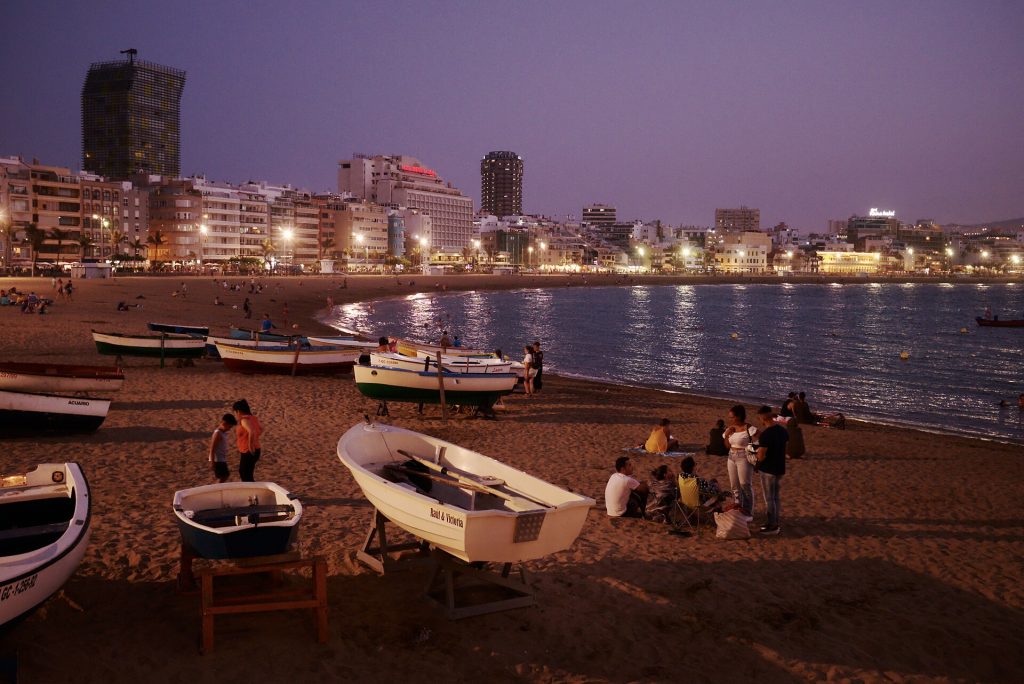
1. Las Palmas de Gran Canaria: Las Canteras
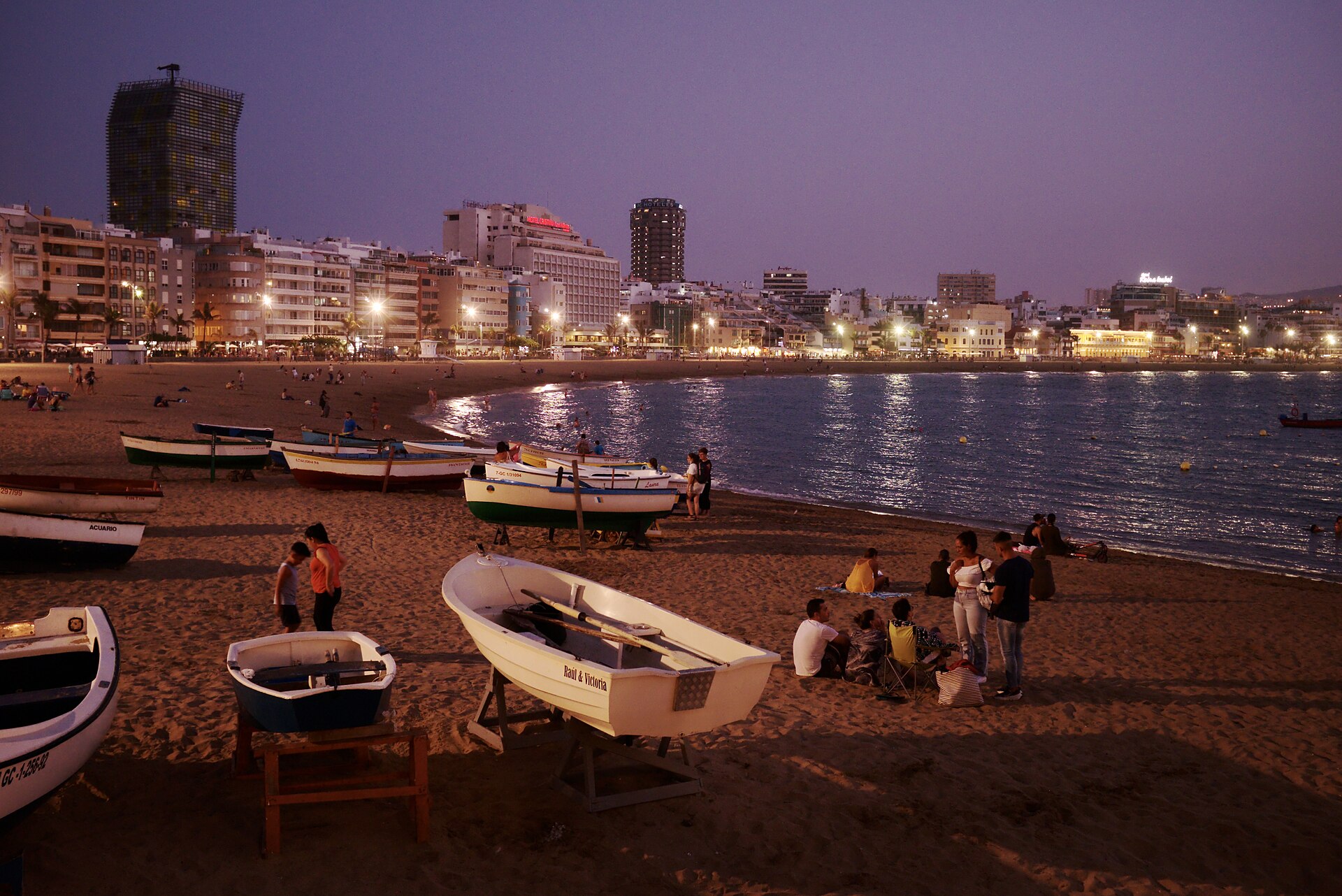
Las Canteras is the reason many people choose Las Palmas over the island’s southern resorts. The beach runs for roughly 3 km along the city’s western shore behind a flat promenade busy from early morning until late evening.
What makes it special is La Barra, a natural sandstone reef that runs parallel to the shore a short swim out. It breaks the Atlantic swell, so the central and northern sections are usually calm and good for snorkelling at low tide. The southern end, known as La Cícer, gets the waves and the surf schools. City buses link Las Canteras with the old quarter of Vegueta in around 20 to 30 minutes, depending on traffic.
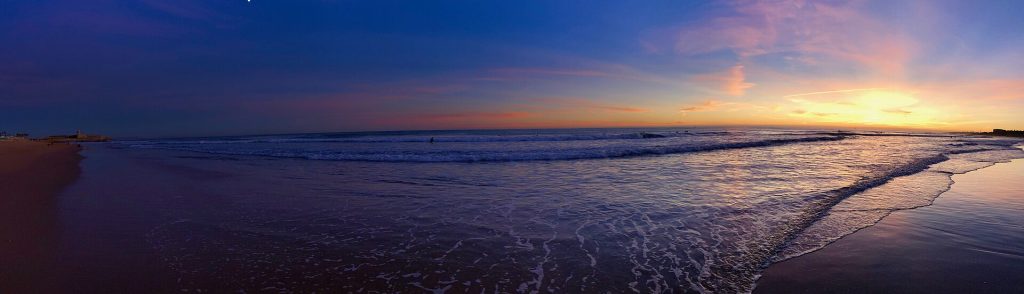
2. Lisbon: Carcavelos on the Cascais line
Lisbon has no beach in the city centre, but the Cascais suburban line makes up for it. Trains leave Cais do Sodré station frequently and follow the Tagus estuary to the open Atlantic. Carcavelos is about 25 minutes out, and the beach is roughly a ten-minute walk downhill from the station.
It is a wide, sandy beach, among the largest on the line, with the Fort of São Julião da Barra at its western end. Waves are often good for beginner surfing, and several schools rent boards on the sand. The water is Atlantic, so cooler than the Mediterranean even in August. Stay on the train for Estoril and Cascais, or take a bus across the river to Costa da Caparica.
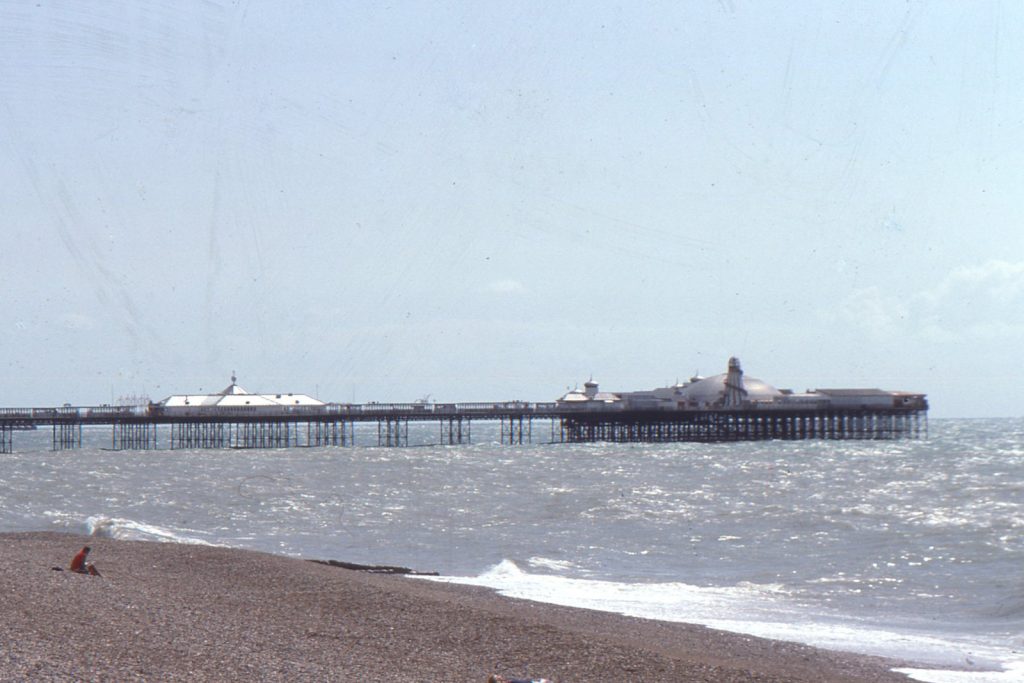
3. Brighton and Hove
Brighton is about an hour by train from London, and from the station it is an easy walk downhill on Queen’s Road and West Street to the sea. The beach is pebble rather than sand, and the Channel is bracing for most of the year, but on a warm day the seafront is one of the liveliest in Britain.
Brighton Palace Pier, officially opened in 1899, has the arcades and rides. To the west stand the rusted remains of the West Pier, which closed in 1975 and was wrecked by fires in 2003. Keep walking west into Hove for a calmer promenade lined with rows of painted beach huts and lawns.
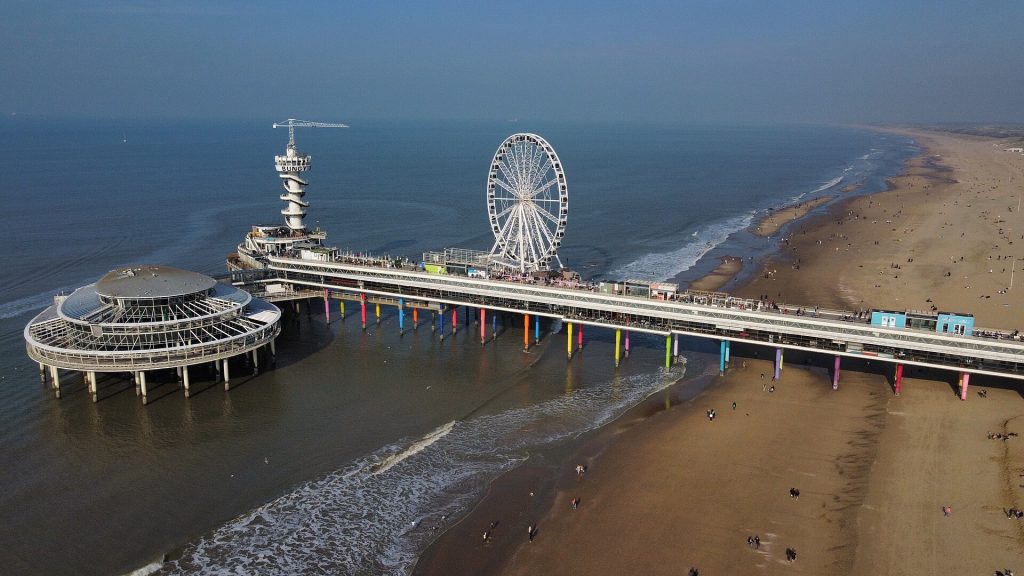
4. The Hague: Scheveningen
The Hague is one of the few European seats of government with a North Sea beach on its doorstep. Trams 1 and 9 run from the city to the Kurhaus stop at Scheveningen in roughly 20 to 30 minutes, leaving you a few steps from the boulevard and the pier opposite the grand old Kurhaus hotel.
The sand is wide and flat, and in summer the beach fills with seasonal pavilions serving food and drinks. Walk south towards the harbour for fish restaurants, or north to the Noorderstrand, where the dunes start and the crowds thin. The water is cold, swimming is best kept to lifeguarded zones, and the season is short.
5. Copenhagen: Amager Strandpark
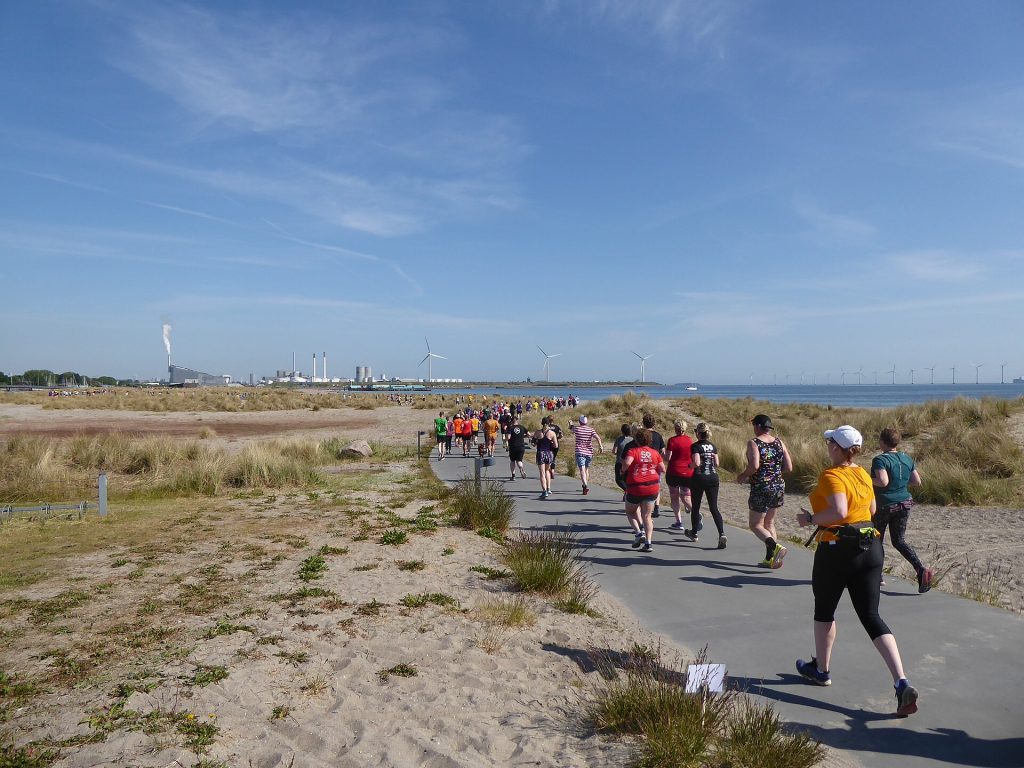
Copenhagen is better known for swimming in its harbour, at sites such as Islands Brygge, but the city also has a real sandy beach. Amager Strandpark lies on the Øresund coast, served by three stations on the M2 metro line: Øresund, Amager Strand and Femøren.
The beach park dates from 1934 and was rebuilt in 2004 and 2005, when an artificial island about 2 km long was added. A shallow lagoon, crossed by bridges, separates it from the original shoreline, which makes the inner side popular with families. In total there are more than 4 km of beach, with views of the Øresund Bridge and the Swedish coast on clear days.
6. Gdańsk and Sopot
Gdańsk’s old town sits on the river Motława, a few kilometres inland, but its beaches are easy to reach. Tram 3 runs to Brzeźno, a former spa district with a long sandy beach and a short wooden pier that is free to walk.
For a bigger day out, take the SKM suburban train to Sopot. From the station it is a 10 to 15 minute walk down the pedestrian Monte Cassino street to the pier, which at about 511 m is often described as the longest wooden pier in Europe. A small fee is usually charged for it in summer. Fine sand runs either side, and the Baltic is cool, so July and August are the months to swim.
7. Marseille: the Prado beaches
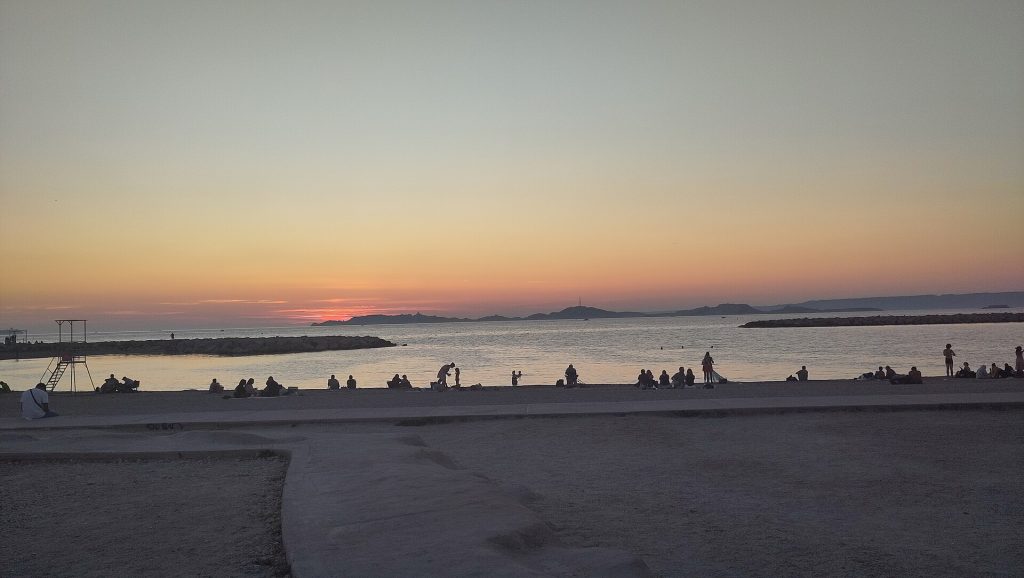
Marseille’s main beaches are a piece of urban engineering. The Plages du Prado were created in the late 1970s on land built up from rock dug out for the city’s metro, and today they form a long stretch of small beaches and lawns south of the Old Port.
Buses 83 and 19 run along the coast to the Prado, with the 83 following the Corniche from the Vieux-Port. The Escale Borély section has restaurants and lifeguarded areas in summer. Closer to town, the small sandy Plage des Catalans is within walking distance of the Old Port, and the rocky coves of the Calanques National Park begin further south.
8. Cagliari: Poetto
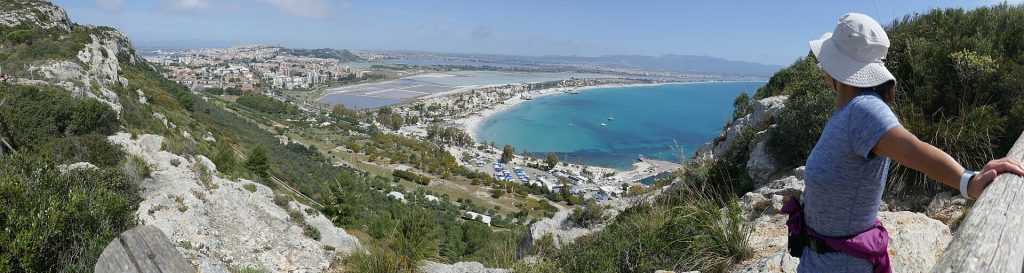
Sardinia’s capital has one of the longest city beaches in Italy. Poetto runs for around 8 km east from the Sella del Diavolo, or Devil’s Saddle, a green headland that marks its western end next to the small harbour of Marina Piccola.
CTM city buses run from the centre, including from Piazza Matteotti, and take around 20 minutes; check current line numbers before you go. The sand is pale, the water shallow and clear, and a cycle path follows the beach. Behind it lie the Molentargius salt pans, a nature park where flamingos are often easy to see.
9. Athens: the Riviera by tram
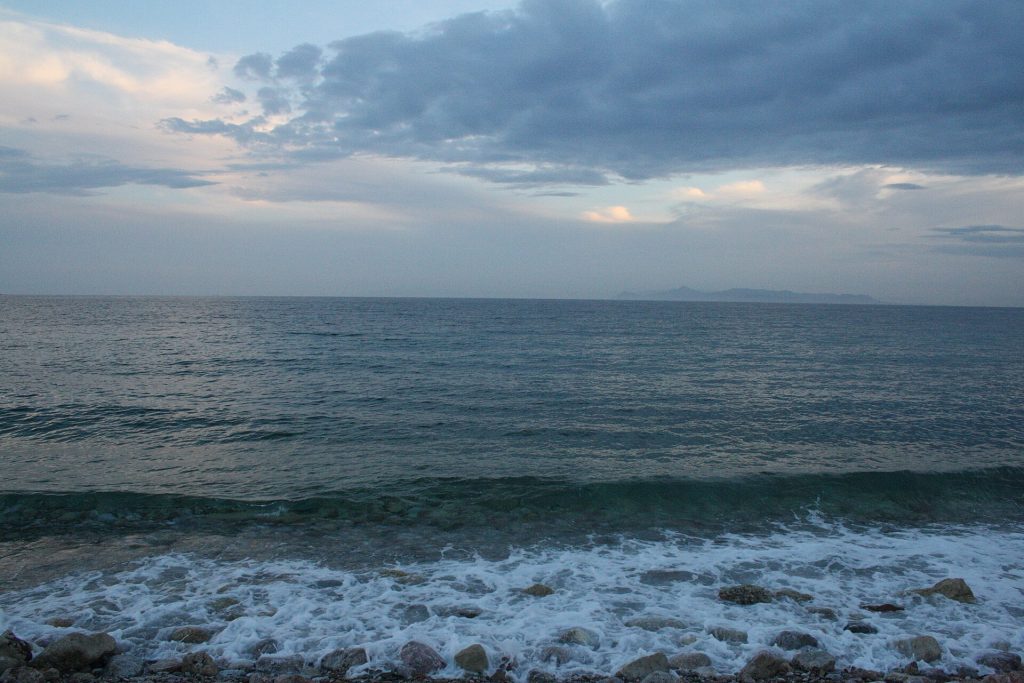
Many visitors spend days at the Acropolis without realising Athens has beaches. The city tram runs from Syntagma down to the Saronic Gulf and then follows the coast south through Palaio Faliro, Alimos and Glyfada to Voula. The full ride takes roughly an hour, and routes have changed in recent years, so check the current line before setting off.
Edem, the closest beach to the centre, is a free, sandy strip with its own tram stop. Further south, the municipal beaches at Alimos, Glyfada and Voula mix free public sections with organised stretches where you pay for loungers. Buses from Voula continue to the rocky coves and the thermal lake at Vouliagmeni.
10. Varna: the Sea Garden and Central Beach
Bulgaria’s third city is a working port with a long seafront park, the Sea Garden, laid out above the shore. The Central Beach lies just below its main entrance, a sandy strip of around 500 m with lifeguards, loungers and a free zone.
Old sea baths along the shore have been turned into bars and restaurants, and further beaches continue north beyond the Central Beach. In town, the Roman Baths and the Archaeological Museum, home to finds from the Varna Necropolis, among the oldest worked gold yet found, give the beach days some balance. The Black Sea is usually warm enough for swimming from June to September.
More city beaches, in brief
- San Sebastián: the shell-shaped bay of La Concha for swimming, Zurriola across the river for surfing.
- Cádiz: La Caleta between two forts in the old town, or the long Playa de la Victoria to the south.
- Málaga: La Malagueta is a short walk from the old town and the port.
- Valencia: Las Arenas and Malvarrosa, reached by tram or bus from the centre.
- Barcelona: Barceloneta is the famous one; Bogatell, a little further north, is usually calmer.
- Alicante: Postiguet sits right below Santa Bárbara Castle, a few minutes from the old town.
- Nice: a pebble beach along the whole Promenade des Anglais, with public and private sections.
- Split: sandy Bačvice, ten minutes on foot from Diocletian’s Palace.
- Trieste: the Barcola seafront, where locals swim off the stone promenade.
Planning a beach day in a city
Public transport is the easy part: almost all of these beaches are on a regular metro, tram, bus or suburban train line, and a day ticket is often cheaper than two singles.
- Water temperature: the Mediterranean and Black Sea are usually warmest in August and September, the North Sea and Baltic rarely warm, and the Canaries mild all year.
- Safety: swim in lifeguarded areas where you can and follow the flags, especially on Atlantic and North Sea beaches with rip currents.
- Valuables: city beaches attract pickpockets. Bring only what you need and do not leave phones on the towel while you swim.
- Water quality: it is checked regularly in the EU; look for posted results or Blue Flag signs, and avoid swimming after heavy rain near city outfalls.
Plan your trip
- Gran Canaria: tickets and tours on Tiqets · activities on Klook
- Lisbon: tickets and tours on Tiqets · activities on Klook
- Copenhagen: tickets and tours on Tiqets · activities on Klook
- Arriving by plane: pre-book an airport transfer with Welcome Pickups
- Road trip: compare car hire on Localrent
- Mobile data: get a travel eSIM from Airalo
Some of these are affiliate links: if you book through them we may earn a small commission, at no extra cost to you.
Planning a bigger trip? See our guide to the 25 best places to visit in Europe, from city breaks to fjords.
Keep exploring
- Where to Go in Europe Month by Month: 12 Places for 12 Months
- 10 European Landscapes Worth a Whole Trip
- 7 Lesser-Known Towns in Central and Eastern Europe Worth the Trip
Frequently asked questions
Which European cities have a beach in the city?
Las Palmas, Cagliari, Varna, Brighton, Barcelona, Valencia, Alicante, Málaga, San Sebastián and Nice all have beaches within walking distance of the centre or a short local bus ride away. Copenhagen, The Hague, Athens, Gdańsk and Marseille have city beaches reached by metro, tram or city bus.
Which European city beach is warm enough to swim in winter?
Las Canteras in Las Palmas de Gran Canaria is the most reliable choice, with mild air and sea temperatures that many swimmers find comfortable year-round. On the mainland, the Mediterranean is usually too cool for most people from December to April.
Can you reach Lisbon’s beaches by train?
Yes. The Cascais line from Cais do Sodré stops at a string of beaches along the estuary and the Atlantic coast, including Carcavelos after about 25 minutes, then Estoril and Cascais.
Photos: Nicolas Vigier, CC0, via Wikimedia Commons; Sonse, CC BY 2.0, via Wikimedia Commons; Christopher Hilton, CC BY-SA 2.0, via Wikimedia Commons; Vincent van Zeijst, CC BY-SA 4.0, via Wikimedia Commons; R. Henrik Nilsson, CC BY-SA 4.0, via Wikimedia Commons; Exilexi, CC BY-SA 4.0, via Wikimedia Commons; Phil Venditti, CC BY 2.0, via Wikimedia Commons; Azerifactory, CC BY-SA 4.0, via Wikimedia Commons.