Updated · Facts and prices checked against official sources
Some of the most beautiful places in Europe aren’t single sights but whole landscapes: valleys of cypress trees, mountains rising straight out of the sea, terraces of vines that took centuries to build. You don’t tick these off in an hour. You drive, walk or sit through them, ideally in the right season and the right light.
These ten European landscapes are worth a whole trip. For each one, there’s when to go, where to base yourself, and the walk or drive that shows it at its best.
European landscapes at a glance
- Best for driving: Val d’Orcia, the Douro Valley and the Scottish Highlands.
- Best for hiking: Lofoten, the Lauterbrunnen valley, Picos de Europa and Saxon Switzerland.
- Best in summer: Lofoten (midnight sun), the Faroe Islands and the lavender of Valensole.
- Best in autumn: the Douro during the grape harvest and Val d’Orcia in October light.
1. Val d’Orcia, Tuscany (Italy)
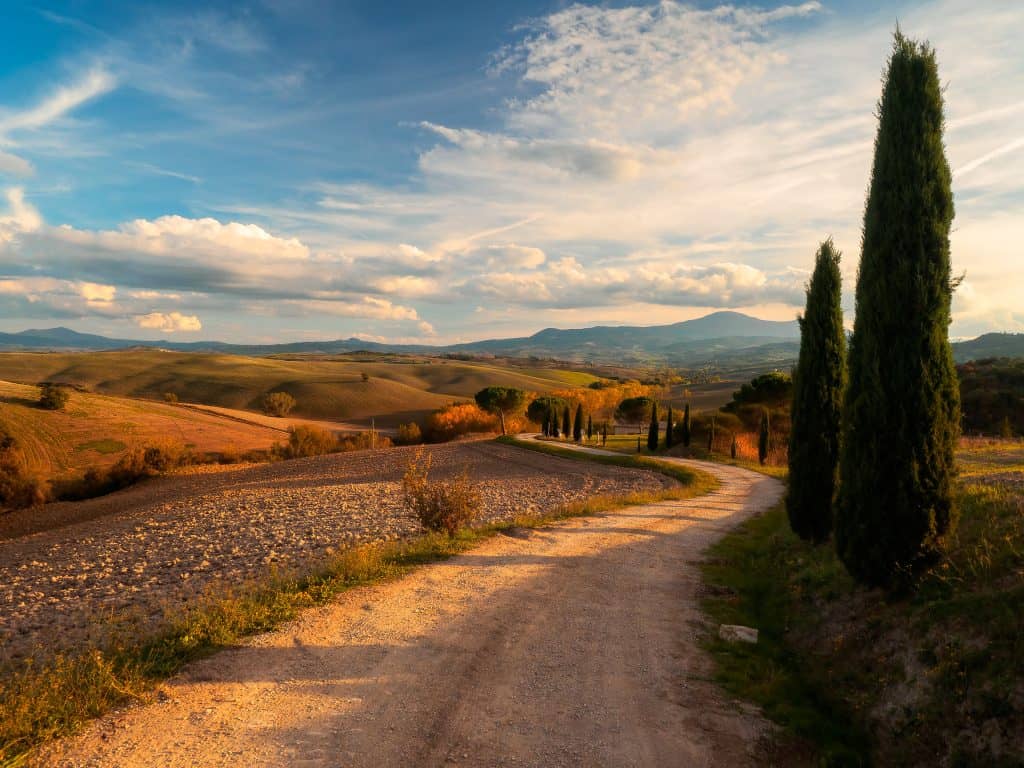
This is the Tuscany of postcards: rolling hills, lines of cypress trees, lone farmhouses and wheat fields that turn from green to gold over the summer. The landscape was shaped by Renaissance landowners as a model of good government and was listed by UNESCO in 2004. Pienza, Montalcino (home of Brunello wine) and the hot-spring village square of Bagno Vignoni are the bases.
When to go: May for green fields and poppies, October for harvest colours and soft light.

2. Lofoten Islands (Norway)
Above the Arctic Circle, the Lofoten Islands are a chain of jagged peaks that drop straight into the sea, with red fishing cabins (rorbuer) and white beaches below. Racks of drying stockfish line the harbours, a trade that goes back about a thousand years. From late May to mid-July the sun doesn’t set at all; from September to March you have a good chance of seeing the northern lights.
Don’t miss: the villages of Reine and Hamnøy, and the hike to Kvalvika beach.
3. Glen Coe and the Scottish Highlands (United Kingdom)
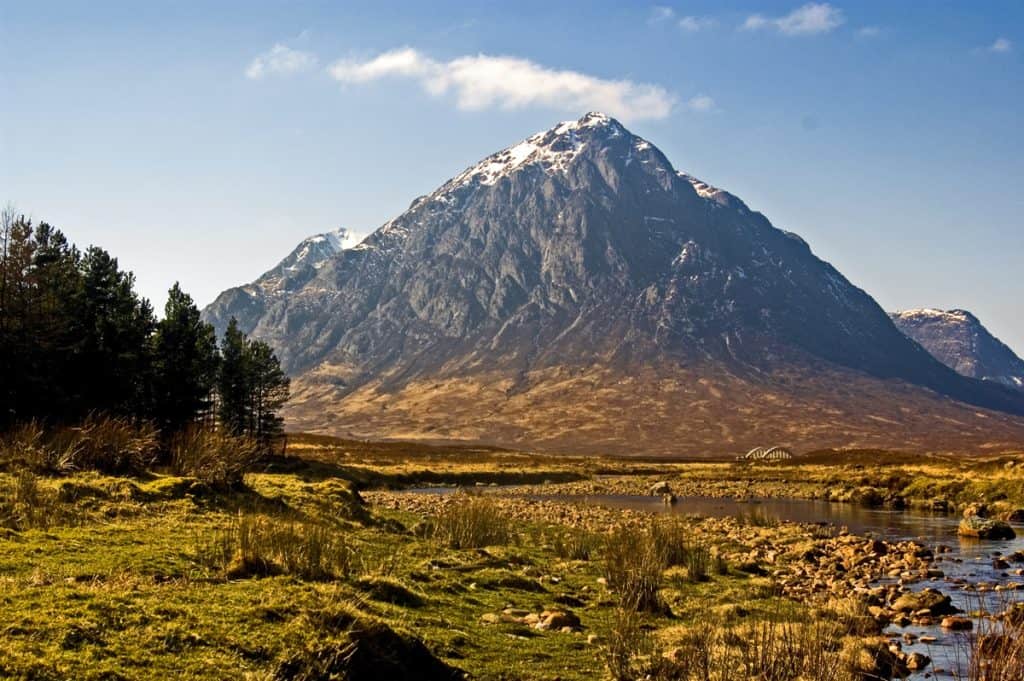
The road through Glen Coe crosses Rannoch Moor and then drops into a valley between some of Scotland’s most dramatic mountains, including the pyramid of Buachaille Etive Mòr and the Three Sisters. The glen has a dark history: in 1692, soldiers massacred members of the MacDonald clan who had given them shelter. Today it’s a base for hiking, climbing and simply driving slowly.
When to go: May to September for long days; bring midge repellent from June to August.

4. Lauterbrunnen Valley (Switzerland)
A U-shaped valley carved by glaciers in the Bernese Oberland, with sheer rock walls and dozens of waterfalls pouring over the edge. The Staubbach Falls drop almost 300 metres right next to the village, and the Trümmelbach Falls thunder through the inside of the mountain. Car-free villages up on the cliffs, Wengen and Mürren, look across at the Eiger, Mönch and Jungfrau.
When to go: June to September for hiking; the valley is also a ski base in winter.

5. Douro Valley (Portugal)
East of Porto, the Douro river winds between steep slopes carved into thousands of stone terraces for port wine grapes. The Douro was one of the first wine regions in the world to have official boundaries, in 1756, and has been on the UNESCO list since 2001. Pinhão and Peso da Régua are the bases for quinta visits, river cruises and the scenic train line along the water.
When to go: late September and early October for the grape harvest, when the vines turn red and gold.
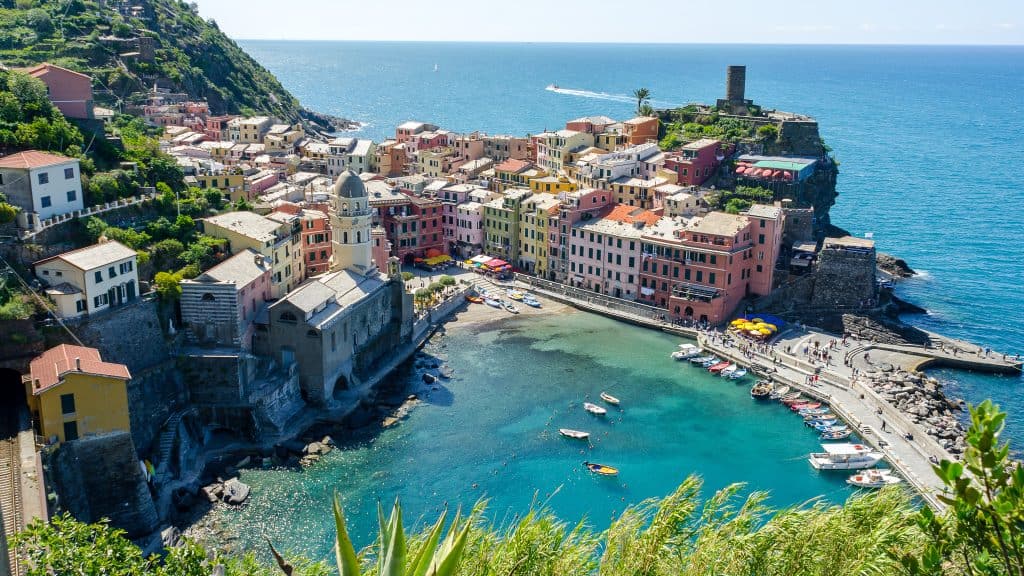
6. Cinque Terre (Italy)
Five colourful fishing villages, Monterosso, Vernazza, Corniglia, Manarola and Riomaggiore, cling to the cliffs of the Ligurian coast, linked by footpaths, a train line and terraced vineyards held up by thousands of kilometres of dry-stone walls. The famous Via dell’Amore path between Riomaggiore and Manarola reopened in 2024 after years of closure.
When to go: April to June or September to October. In summer, trains and paths are packed. Many coastal trails require a Cinque Terre Card.
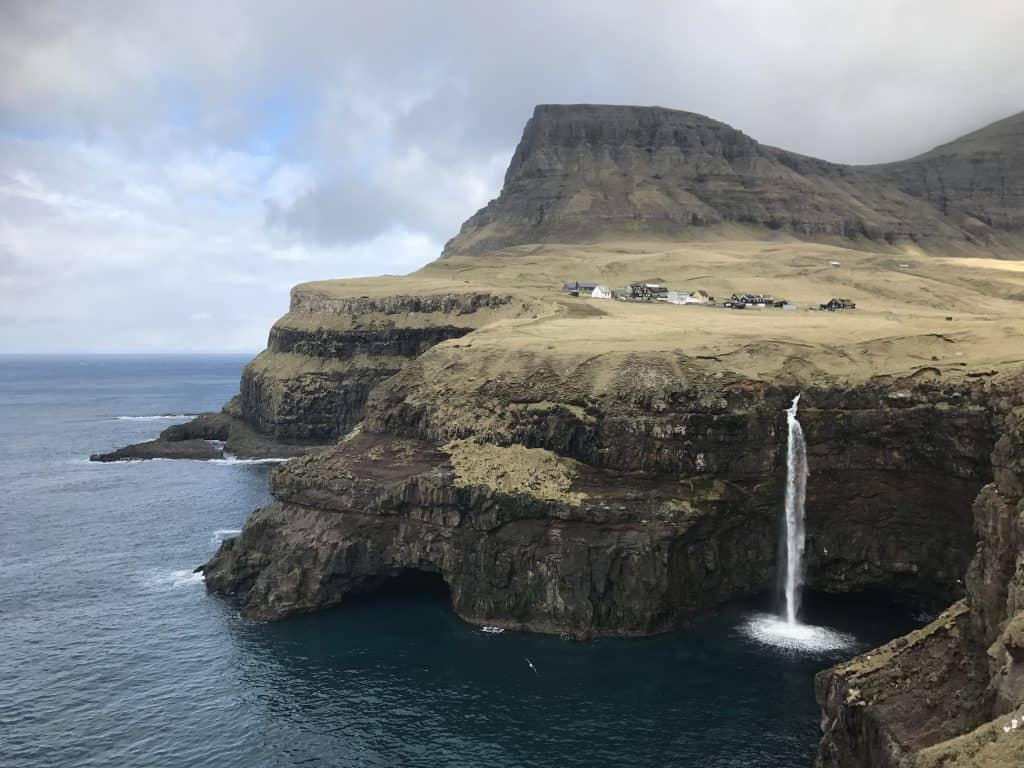
7. Faroe Islands
Eighteen islands of grass, cliffs and fog in the North Atlantic, halfway between Scotland and Iceland. The Faroes are a self-governing part of the Kingdom of Denmark, with their own language and very few trees. The best-known views are the Múlafossur waterfall dropping into the ocean at Gásadalur and Lake Sørvágsvatn, which seems to hang above the sea.
When to go: June to August. Some hiking trails cross private farmland and charge a fee, so check before you set out.
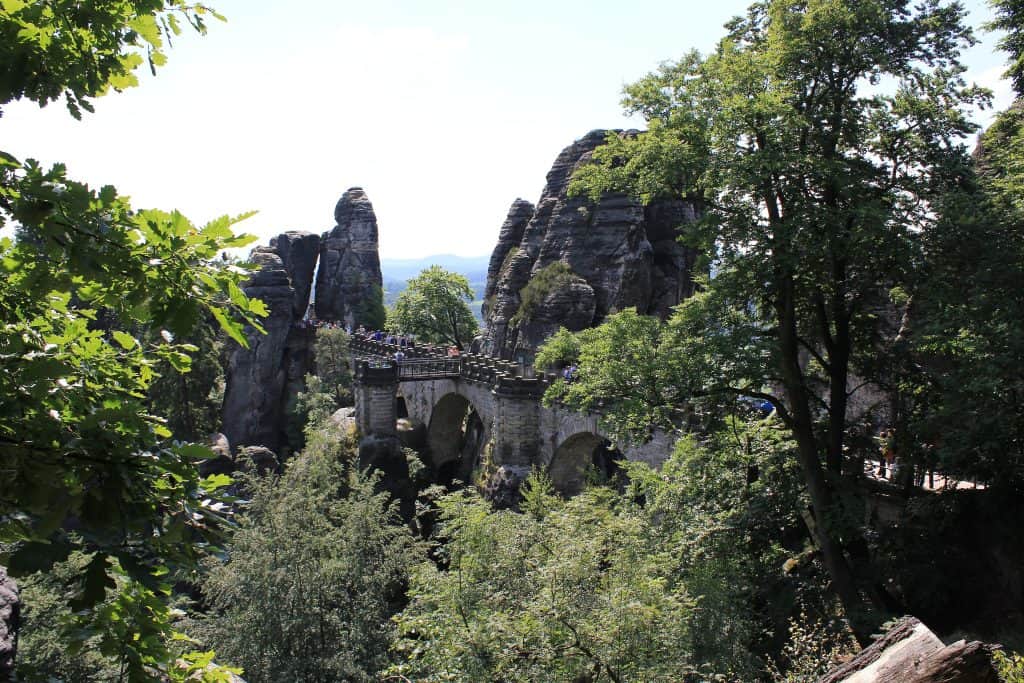
8. Saxon Switzerland (Germany)
Southeast of Dresden, the Elbe river cuts through a maze of sandstone towers, gorges and tablelands. The Bastei, a stone bridge built in 1851 between the rock towers, has been a tourist attraction for nearly 200 years. The 116-km Malerweg, or Painters’ Way, follows the routes that inspired Romantic painters such as Caspar David Friedrich.
When to go: spring and autumn. It’s an easy day trip from Dresden by S-Bahn.

9. Picos de Europa (Spain)
A short drive from the Atlantic coast, the Picos de Europa are a range of jagged limestone peaks that became Spain’s first national park in 1918. The classic walk is the Ruta del Cares, a path cut into the side of a deep gorge. The Fuente Dé cable car lifts you about 750 metres up the cliff in a few minutes, and the glacial lakes of Covadonga sit above the shrine of the same name.
When to go: June to October. Combine it with the coast of Asturias or Cantabria.
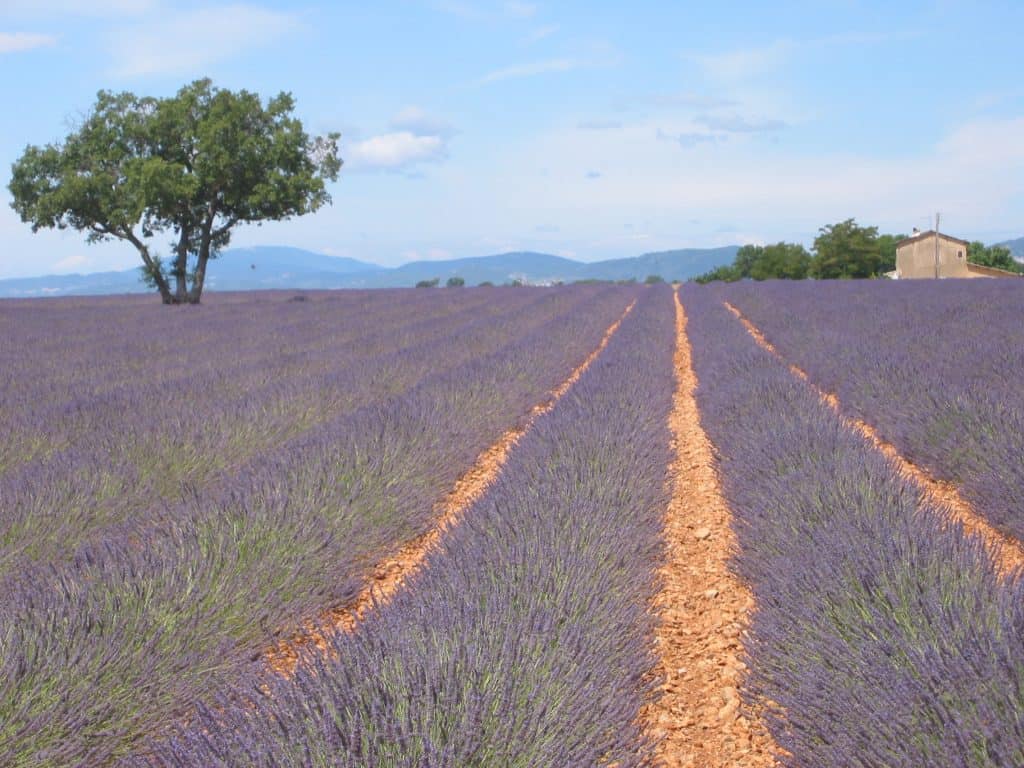
10. Valensole Plateau, Provence (France)
For a few weeks each summer, the Valensole plateau in Haute-Provence turns purple with lavender, with rows of flowers running to the horizon and fields of sunflowers in between. Small towns such as Valensole and Riez sell lavender honey and essential oils, and the Verdon Gorge is a short drive away.
When to go: late June to mid-July, before the harvest starts. Go early morning or at sunset, and stay on the edges of the fields: they’re working farms.
Planning tips
- Rent a car for Val d’Orcia, the Douro, the Highlands, Lofoten and the Faroes. Public transport is limited.
- Book early for Lofoten and the Faroes in summer, and for Valensole during lavender season.
- Stay at least two nights in each place, so you get the evening and early-morning light.
Plan your trip
- Tuscany: tickets and tours on Tiqets · activities on Klook
- Lofoten: tickets and tours on Tiqets · activities on Klook
- Scottish Highlands: tickets and tours on Tiqets · activities on Klook
- Arriving by plane: pre-book an airport transfer with Welcome Pickups
- Road trip: compare car hire on Localrent
- Mobile data: get a travel eSIM from Airalo
Some of these are affiliate links: if you book through them we may earn a small commission, at no extra cost to you.
Planning a bigger trip? See our guide to the 25 best places to visit in Europe, from city breaks to fjords.
Keep exploring
- 12 Natural Wonders of Europe Worth the Trip, from Plitvice to Mount Etna.
- Wild Europe: 10 Places to See Wildlife and Real Wilderness: the best national parks for wildlife.
- Glamping in Europe: 10 of the Best Places to Go, for a night in the landscape.
Frequently asked questions
What is the most beautiful landscape in Europe?
It depends on what you like. For mountains and sea, Lofoten is hard to beat; for a gentle, human-made landscape, Val d’Orcia in Tuscany is the classic.
Where can you see the midnight sun in Europe?
North of the Arctic Circle, in places like Lofoten in Norway, northern Sweden and Finland, from roughly late May to mid-July.
When is lavender season in Provence?
The lavender usually blooms from late June to mid-July, before it is harvested.
Photos: Fabrizio Lunardi, CC0, via Wikimedia Commons; Keihuli, CC BY-SA 3.0, via Wikimedia Commons; jtweedie1976, CC BY 2.0, via Wikimedia Commons; Kevin Hadley, CC BY-SA 3.0, via Wikimedia Commons; peuplier, CC BY 2.0, via Wikimedia Commons; Luca Casartelli, CC BY-SA 2.0, via Wikimedia Commons; Drega05, CC BY-SA 4.0, via Wikimedia Commons; Kora27, CC BY-SA 4.0, via Wikimedia Commons; JCNazza, CC BY 3.0, via Wikimedia Commons; Jddmano, CC BY-SA 3.0, via Wikimedia Commons.