Updated
Plenty of European villages are sold as “the place that inspired” a famous fairy tale or animated film, and most of those claims fall apart on a second look. The places genuinely tied to fairy tales are less obvious: the towns where the Brothers Grimm were born, grew up and collected their stories, a few castles and market towns that tradition has attached to particular tales, and one Loire château linked to Charles Perrault.
This guide follows that real thread, mostly along the German Fairy Tale Route in Hesse and Lower Saxony, with detours to Bavaria and the Loire. Each stop says plainly whether the link is documented history or a local claim.
Fairy-tale places at a glance
- Documented Grimm sites: Hanau (birthplace), Steinau an der Straße (childhood home) and Kassel (where most tales were collected).
- Local traditions: Sababurg (Sleeping Beauty), Trendelburg (Rapunzel), Alsfeld (Red Riding Hood), Lohr am Main (Snow White).
- A legend with a date: Hamelin and the Pied Piper.
- Outside Germany: Château d’Ussé, traditionally linked to Perrault’s Sleeping Beauty.
- When to go: May to September for open-air plays; December for Christmas markets.
1. Hanau: where the Grimms were born
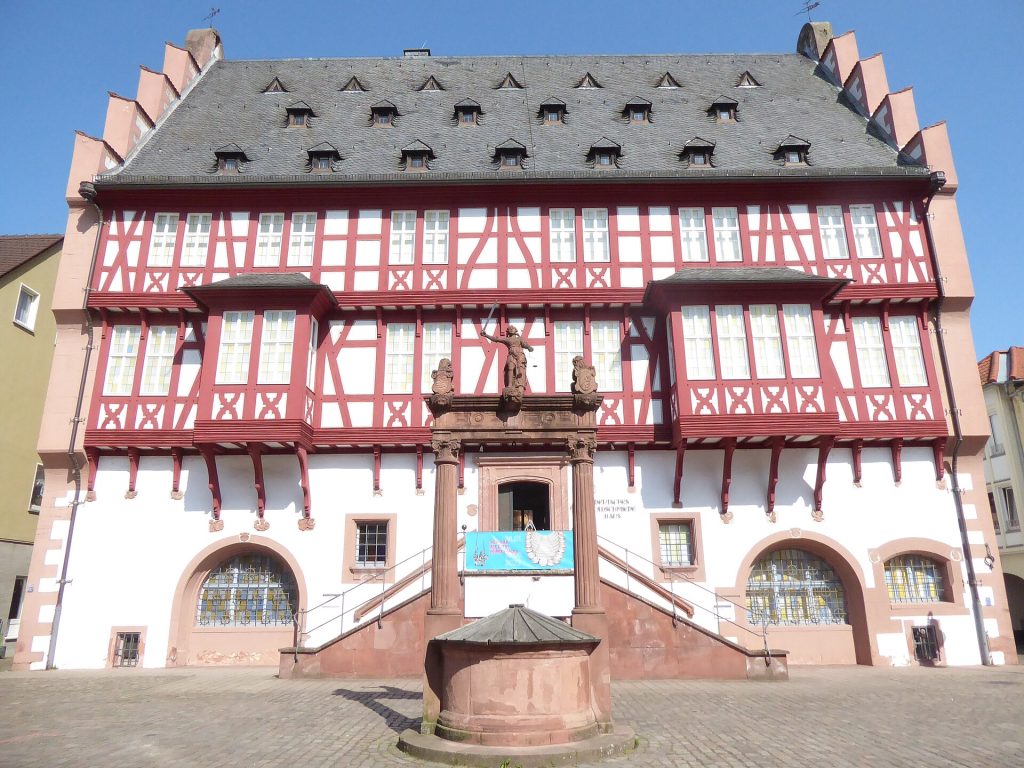
Jacob Grimm was born in Hanau in 1785 and Wilhelm in 1786, and the city is the official start of the German Fairy Tale Route, a themed road of about 600 km north to Bremen. Towns between the Main and the North Sea set it up in 1975 to share in the Grimms’ fame, so treat it as a tourism route built on real biography.
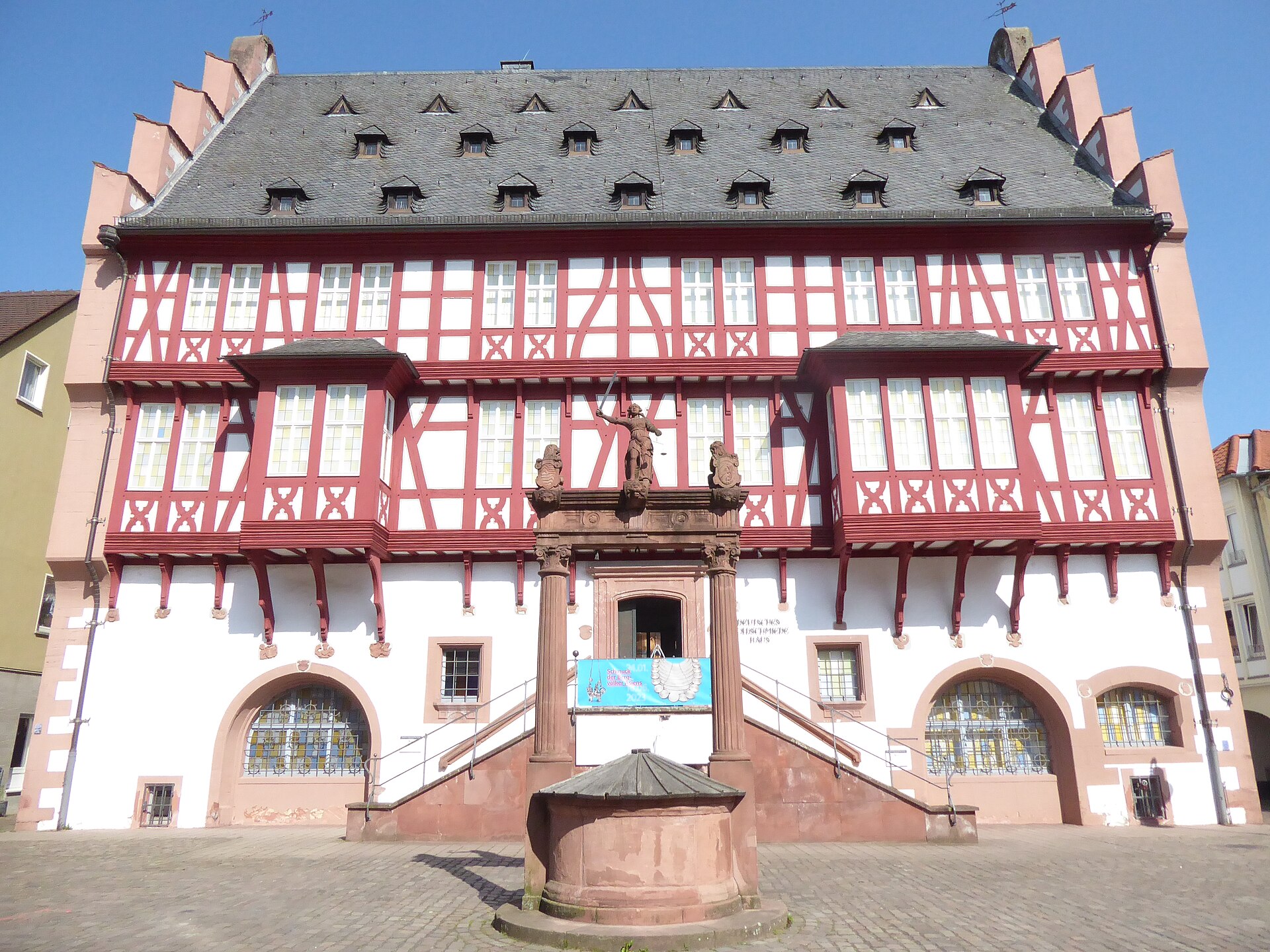
Hanau was heavily bombed in 1945 and much of the centre is rebuilt, so come for the story more than the streetscape. The Brothers Grimm National Monument stands on the market square, and the half-timbered old town hall nearby now houses the Deutsches Goldschmiedehaus, a museum of gold and silversmithing. In summer the Brüder Grimm Festspiele usually stage open-air fairy-tale theatre in the park of Schloss Philippsruhe.
2. Steinau an der Straße: the childhood home
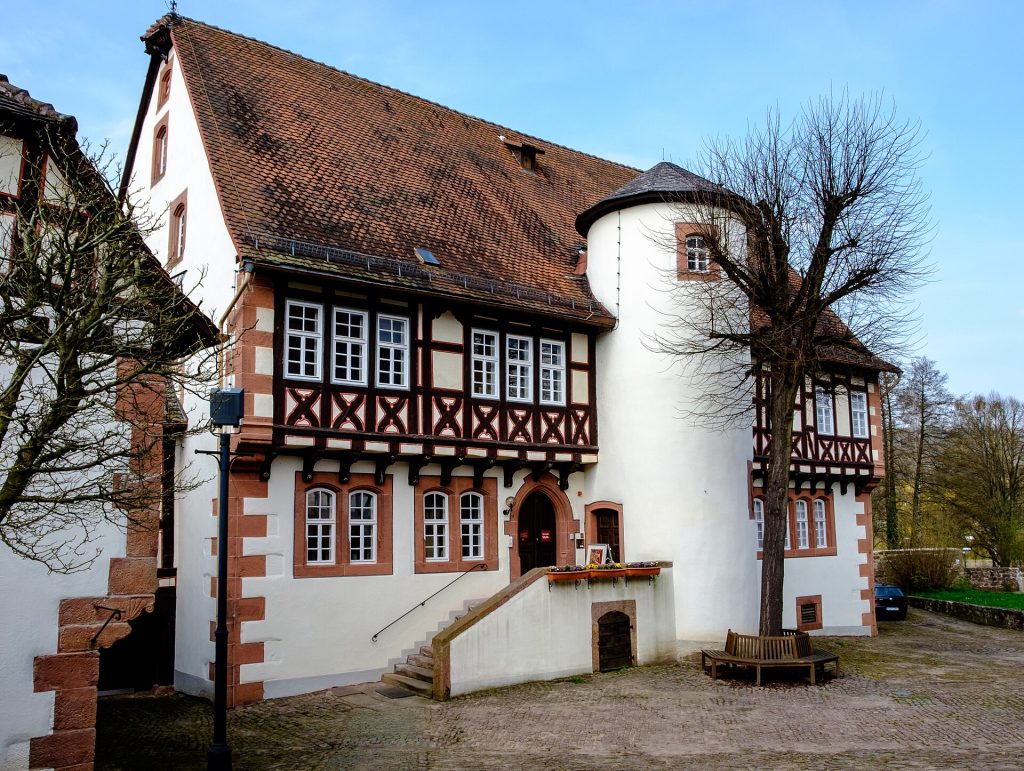
If you visit one Grimm site, make it this small town in the Kinzig valley. The family moved here in 1791, when the brothers’ father became district magistrate, and lived in the Amtshaus, a Renaissance building with offices upstairs and family rooms below. After the father died in January 1796 they had to leave, and in 1798 Jacob and Wilhelm were sent to school in Kassel.
Since 1998 the Amtshaus has been the Brüder Grimm-Haus, a museum about the family and the tales. The turreted Schloss Steinau stands next door, and the compact old town takes an hour to walk. Steinau is on the railway between Frankfurt and Fulda, an easy day out.
3. Kassel: Grimmwelt and the storytellers
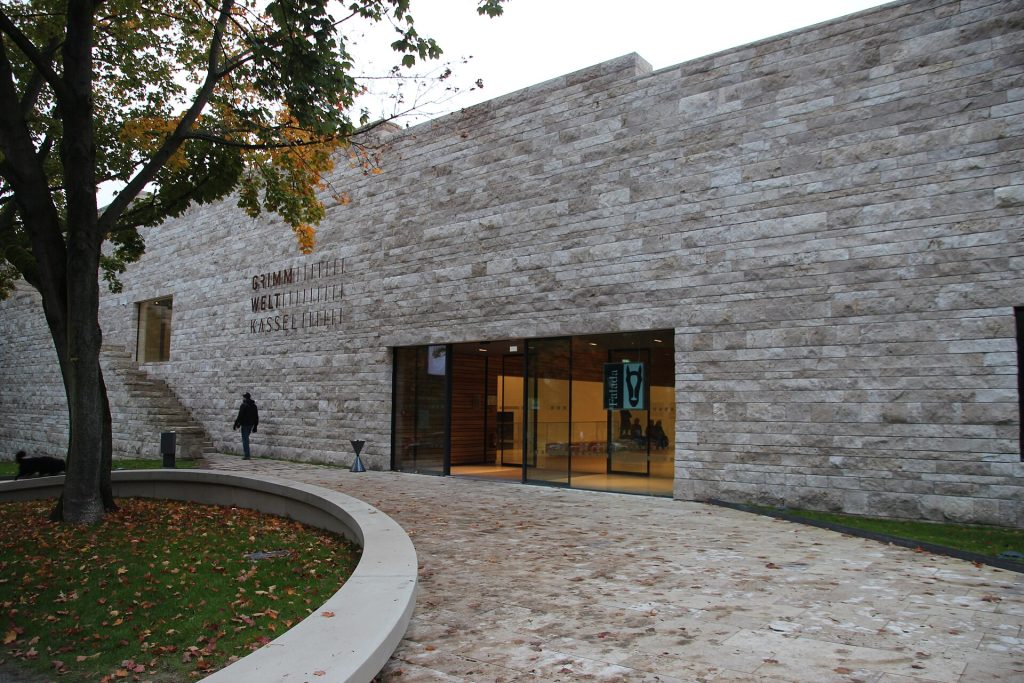
Kassel is where the tales were actually gathered. The brothers worked here for years as librarians and stayed until 1829, and the first volume of the Kinder- und Hausmärchen (Children’s and Household Tales) appeared in 1812. Many stories came from local tellers, above all Dorothea Viehmann of Niederzwehren, now a district of Kassel, who supplied around 40 tales.
Grimmwelt, opened in 2015 on the Weinberg hill near the centre, covers the brothers’ work on language as well as the tales. Its collection includes their own annotated copies of the Kinder- und Hausmärchen, inscribed on UNESCO’s Memory of the World register in 2005. The stepped roof doubles as a viewing terrace. Kassel-Wilhelmshöhe has fast ICE trains, which makes the city a good base for the northern half of the route.
4. Alsfeld and the Schwalm: Red Riding Hood country
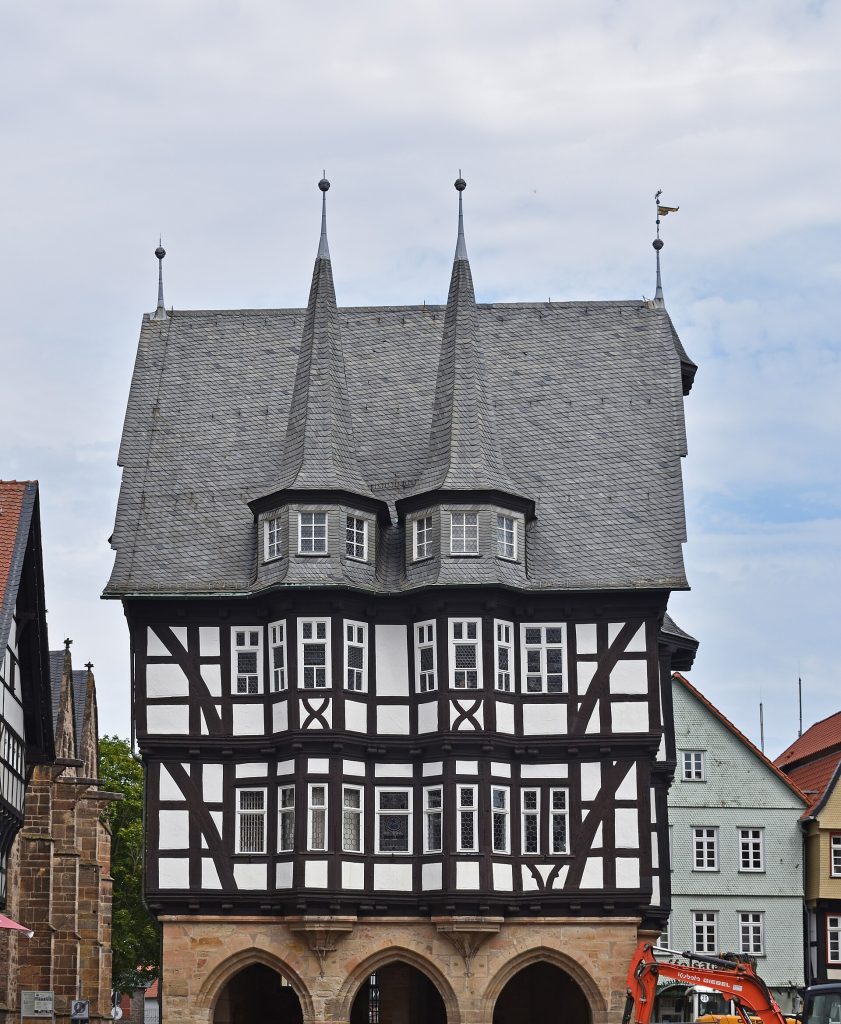
Alsfeld has one of the best half-timbered market squares in Hesse, anchored by a town hall built around 1512 to 1516. The Märchenhaus, a house from 1628, has rooms set out with scenes from Grimm tales.
The Little Red Riding Hood link comes from the neighbouring Schwalm, whose traditional women’s costume includes a small red cap. Locals say it shaped the image of the girl in the tale. That is a long-standing local tradition rather than something the Grimms recorded, but the region has embraced it, and Alsfeld usually holds a Red Riding Hood week in summer; check current dates.
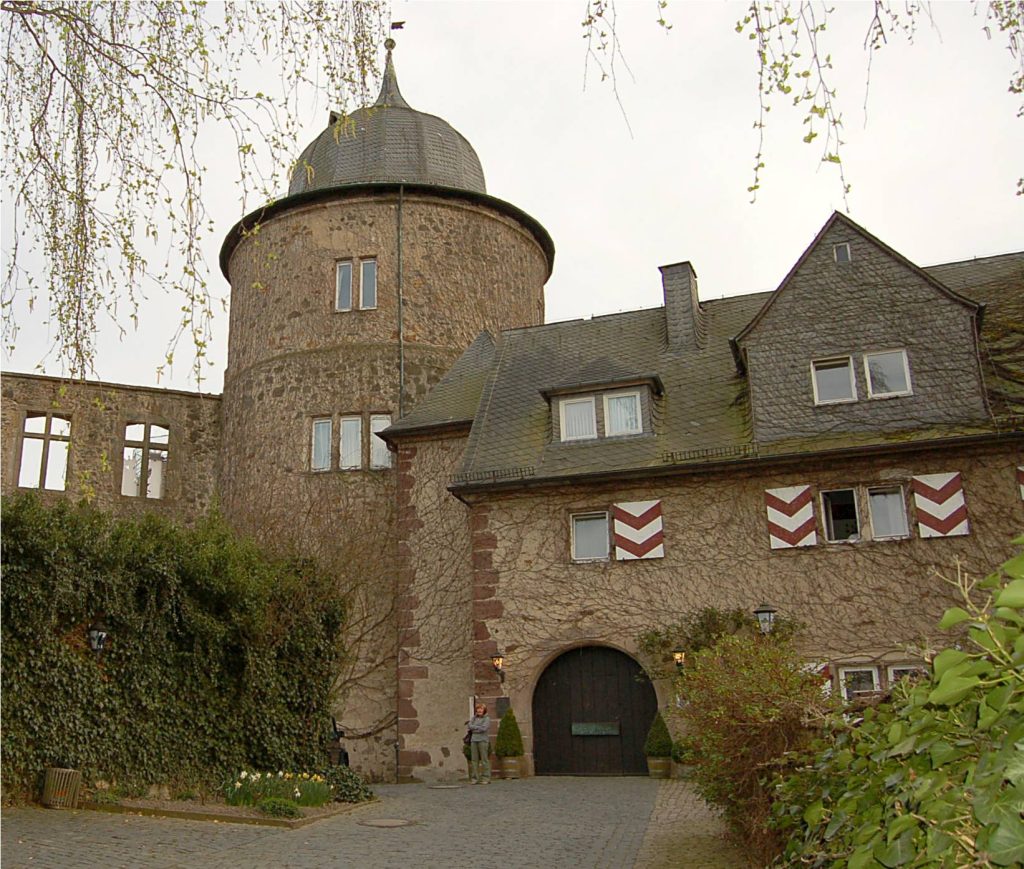
5. Sababurg: the “Sleeping Beauty castle”
Sababurg is a 14th-century castle, later a hunting lodge of the Landgraves of Hesse, standing alone in the Reinhardswald north of Kassel. Its towers over the trees fit the briar-ringed castle of Dornröschen so well that it has been marketed as the Dornröschenschloss for decades. There is no evidence the Grimms had it in mind.
The castle hotel and restaurant closed in 2018 for restoration, and the state of Hesse has announced plans for a new hotel building, so check what is open before driving out. The Tierpark Sababurg, an old hunting enclosure turned wildlife park, sits just below and suits children well.
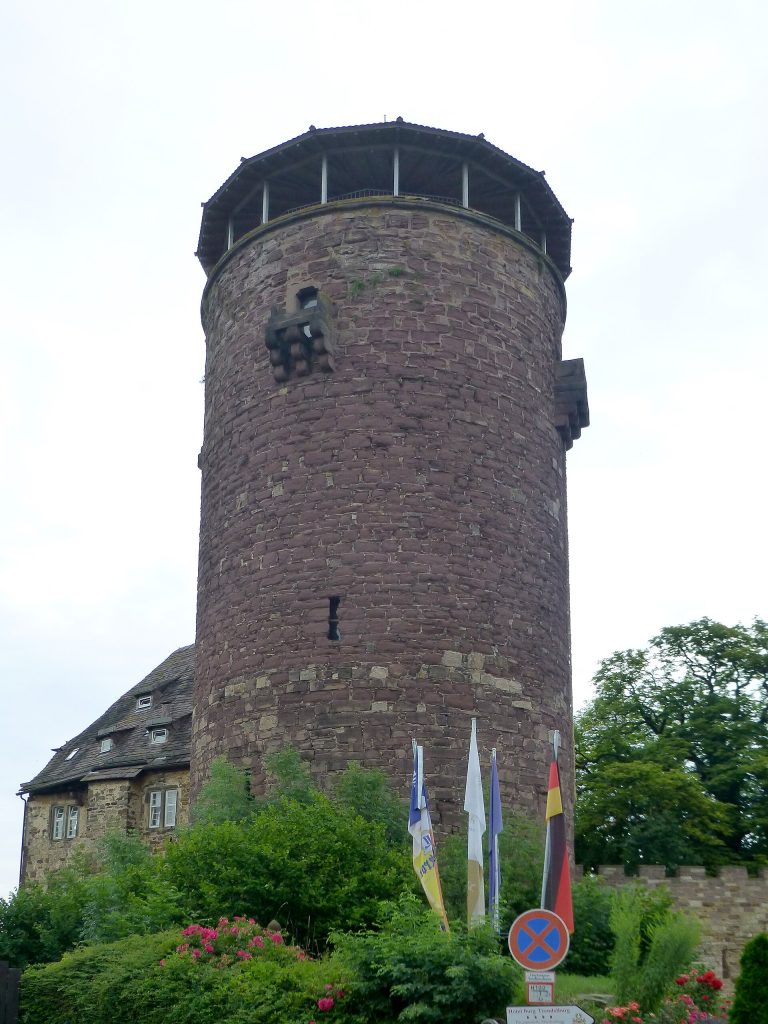
6. Trendelburg: Rapunzel’s tower
A short drive north of Sababurg, Trendelburg is built around a medieval castle on a rock above the Diemel valley. Its tall round keep is presented locally as Rapunzel’s tower. Again, the link is a modern association; the Grimm version of the tale itself drew on an earlier literary source.
The castle is run as a hotel, so check access for day visitors in advance. Sababurg and Trendelburg combine well in one day by car from Kassel.
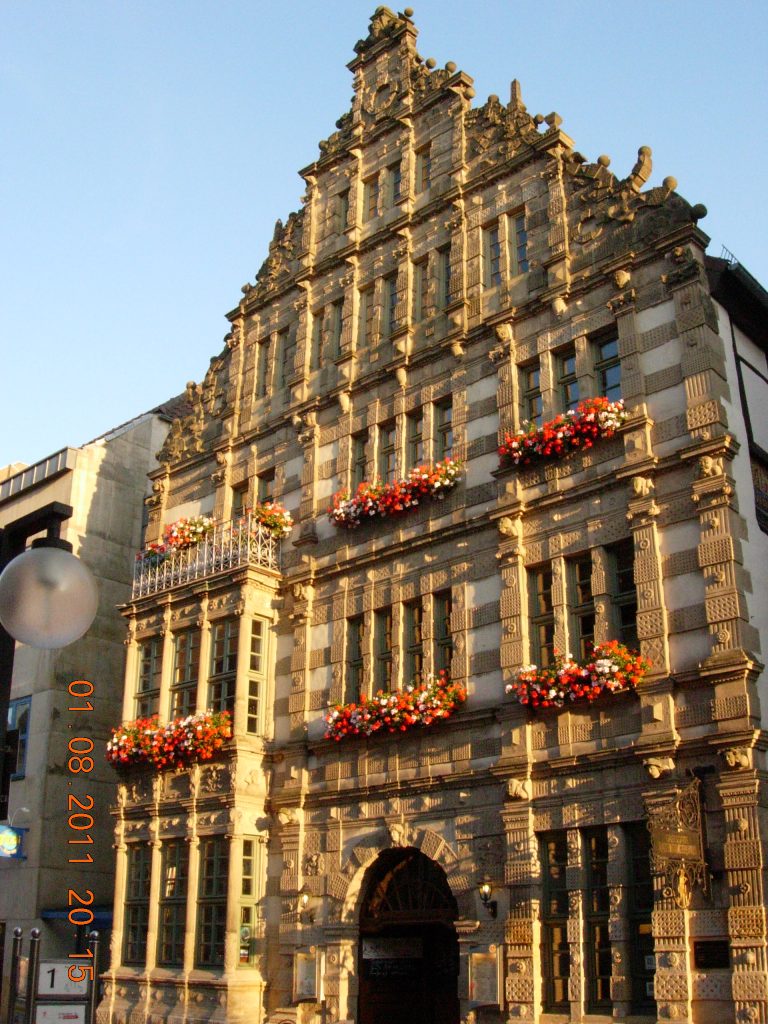
7. Hamelin: the Pied Piper
Hamelin (Hameln) on the Weser has the strongest historical footing of any place here. An inscription on the Rattenfängerhaus (Pied Piper’s House), built in 1602 to 1603, records that on 26 June 1284 a piper in multicoloured clothes led 130 children out of the town, never to be seen again. Historians still debate the cause, from emigration east to disease, but most accept a real event underlies it. The rats came later.
The old town is a showcase of Weser Renaissance architecture centred on the Hochzeitshaus (Wedding House). On Sundays from mid-May to mid-September a free open-air Pied Piper play usually runs on its terrace around midday. Beside the Pied Piper’s House, the Bungelosenstraße is the lane the children are said to have taken; by tradition no music is played there. Hamelin is under an hour from Hanover by S-Bahn.
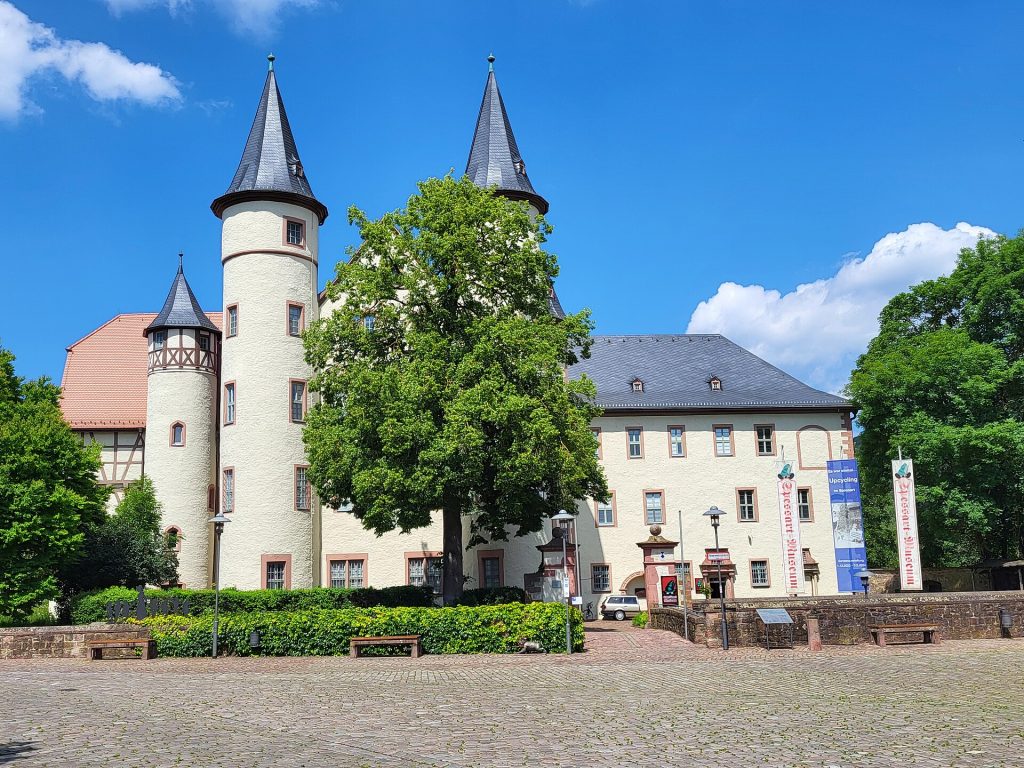
8. Lohr am Main: a local Snow White claim
Lohr, a small Bavarian town between Würzburg and Aschaffenburg, presents itself as Snow White’s home. The case was made in 1986 by a local pharmacist, Karlheinz Bartels, who argued that the girl was based on Maria Sophia von Erthal, born in Lohr in 1725. In his reading the talking mirror came from the town’s mirror works and the dwarfs were miners in the Spessart hills.
It is an entertaining theory but a local claim, not one folklorists accept; versions of the tale were told across Europe. The mirror sits in the Spessartmuseum inside Lohr castle, alongside good displays on glassmaking and forest life.
9. Château d’Ussé, Loire Valley
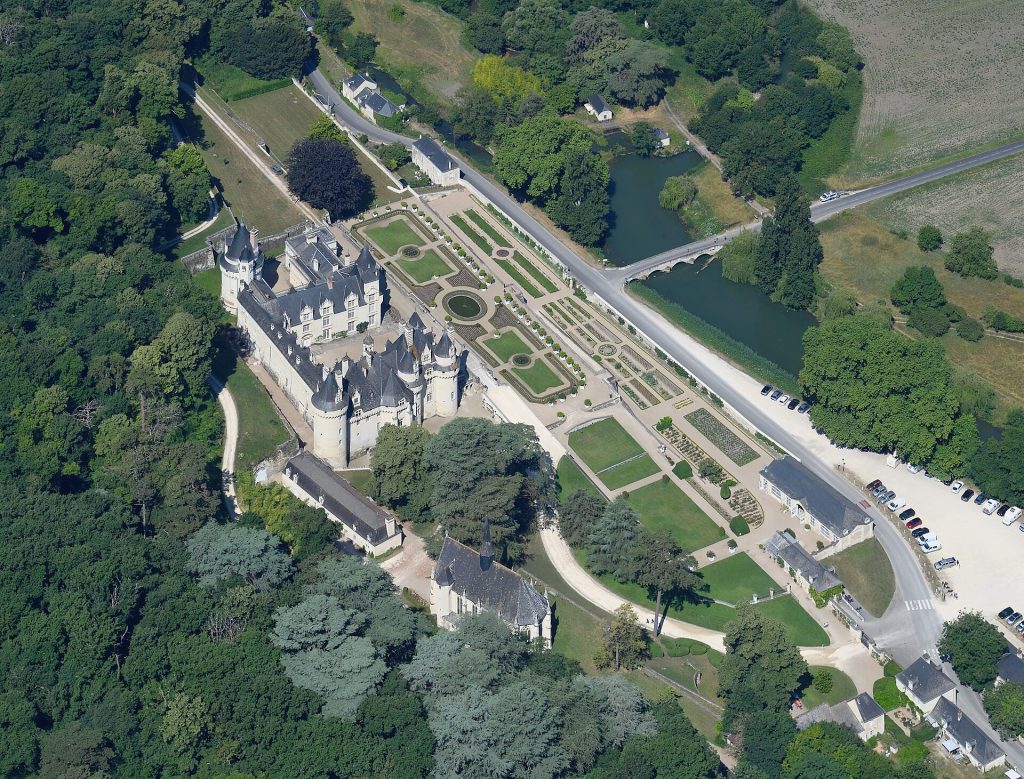
Charles Perrault published La Belle au bois dormant in 1697. Tradition holds that he stayed at Ussé and that its turrets shaped the castle in his story; that is local lore rather than documented fact, but few buildings suit the role better. The château stands above the Indre at the edge of the Chinon forest, still lived in by its owning family.
It is open to visitors for much of the year, and one tower holds wax-figure tableaux of the Sleeping Beauty story. The terraced gardens are traditionally attributed to André Le Nôtre. Ussé is under an hour by car from Tours and pairs well with Azay-le-Rideau and Chinon.
More fairy-tale stops
- Marburg: the brothers studied law at the university here.
- Bremen: the end of the route, though in the Grimm tale the four animals never actually reach the city.
- Odense, Denmark: Hans Christian Andersen’s birthplace, with a museum devoted to his stories.
- Norway: Asbjørnsen and Moe’s Norske folkeeventyr, first published in 1841, gave the country its trolls and its own fairy-tale canon.
The “inspired” villages that are mostly myth
Several famous names owe their fairy-tale reputation to fan theories. Hallstatt in Austria is widely described as the model for the kingdom in Frozen, but Disney has never confirmed it and the film draws clearly on Norway. Colmar is often called the village in Beauty and the Beast, and Rothenburg ob der Tauber the model for Pinocchio; we could not trace either claim to a reliable source. Český Krumlov and Giethoorn have no specific fairy-tale link at all. All are worth visiting on their own terms.
Planning a fairy-tale route
The German trip splits in two. Hanau, Steinau and Alsfeld are easy by train from Frankfurt. Kassel, Sababurg, Trendelburg and Hamelin work best with a car based in Kassel, though Hamelin is simple by rail from Hanover. Allow four to five days for both. Lohr is a half-day from Würzburg, and Ussé belongs to a Loire château trip.
- Best season: May to September, when plays, festivals and most castle visits run.
- Winter: Christmas markets in Hanau, Kassel and Hamelin, though some sights shorten hours.
- With children: the Märchenhaus, Grimmwelt, the Tierpark Sababurg and the Hamelin play.
Plan your trip to Loire Valley
- Tickets and tours in Loire Valley: tickets and tours on Tiqets · activities on Klook
- Arriving by plane: pre-book an airport transfer with Welcome Pickups
- Road trip: compare car hire on Localrent
- Mobile data: get a travel eSIM from Airalo
Some of these are affiliate links: if you book through them we may earn a small commission, at no extra cost to you.
Planning a bigger trip? See our guide to the 25 best places to visit in Europe, from city breaks to fjords.
Keep exploring
- Surreal Landscapes in Europe: 8 Strange Places Off the Usual Feed
- Wild Europe: 10 Places to See Wildlife and Real Wilderness
- What To Do On A One Week Trip To Spain: Two Realistic Routes
Frequently asked questions
Which village inspired the Brothers Grimm?
No single village did. The Grimms collected tales from storytellers, mostly around Kassel, rather than setting them in real places. The towns most closely tied to them are Hanau, Steinau an der Straße and Kassel.
Is Hallstatt really the village from Frozen?
Disney has not confirmed it. The link spread online, while the film’s setting draws mainly on Norway. Hallstatt is still worth seeing, ideally early or late in the day.
How long is the German Fairy Tale Route?
About 600 km from Hanau to Bremen, with side branches adding more. Most visitors pick one section and spend three to five days on it.
Photos: Rhetos, CC0, via Wikimedia Commons; Alexander Hoernigk, CC BY 3.0, via Wikimedia Commons; XenonX3, CC0, via Wikimedia Commons; Ymblanter, CC BY-SA 4.0, via Wikimedia Commons; Benutzer-ID 85797, Public domain, via Wikimedia Commons; Muck, CC BY-SA 4.0, via Wikimedia Commons; Bush6984, CC BY-SA 4.0, via Wikimedia Commons; Benreis, CC BY-SA 4.0, via Wikimedia Commons; Carsten Steger, CC BY-SA 4.0, via Wikimedia Commons.