Updated · Facts and prices checked against official sources
Everyone knows Lake Como, Lake Bled and Hallstatt, and in summer so do the crowds. Europe also has hundreds of lakes that are just as beautiful and far quieter, tucked into national parks, high mountain valleys and the forests of the north. These ten are our favourite lesser-known lakes in Europe, chosen for their scenery, swimming or walks, and for being calm enough to enjoy.
Europe’s hidden lakes at a glance
- Best for swimming: Lake Bohinj, Lac de Sainte-Croix and Lake Saimaa.
- Best for hiking: Lago di Sorapis, Llyn y Fan Fach and the Laghi di Fusine.
- Most dramatic setting: the Königssee, between sheer mountain walls.
- Most unusual: Lake Sfânta Ana, Romania’s only volcanic crater lake.
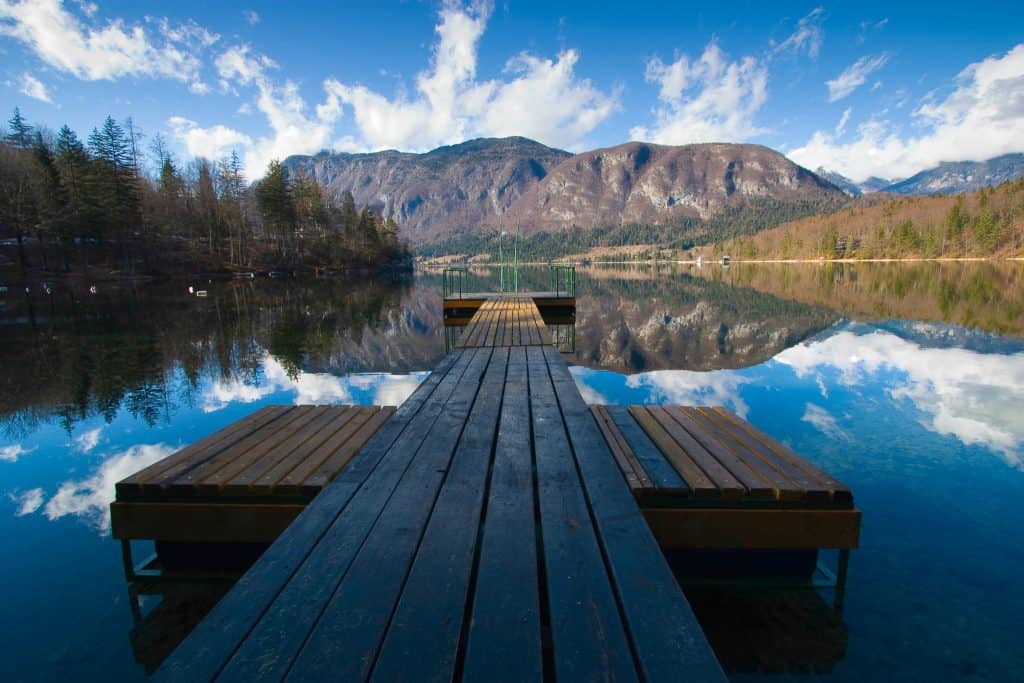
1. Lake Bohinj, Slovenia
Just 30 minutes from busy Bled, Lake Bohinj is Slovenia’s largest permanent lake, about 4 km long and surrounded by the peaks of Triglav National Park. The water is cold, clear and clean enough to swim in, and no motorboats are allowed. Walk around the lake, hike up to the Savica waterfall, or take the cable car up Vogel for a view over the whole valley.

2. Lac de Sainte-Croix, France
This turquoise reservoir in Provence was created in the 1970s when the Verdon river was dammed, and it has some of the most striking water in France. Rent a pedal boat or kayak and paddle into the mouth of the Verdon Gorge, or swim from the beaches near Bauduen and Les Salles-sur-Verdon. In early summer, the lavender fields of the Valensole plateau are just to the west.

3. Lake Saimaa, Finland
Finland’s largest lake is less a single lake than a maze of water, pine forest and some 14,000 islands. It’s home to the Saimaa ringed seal, one of the world’s rarest seals, which lives only here. Spend a few days in a lakeside cottage with a wood-fired sauna, paddle between the islands and jump into the lake after the sauna, which is the Finnish way.

4. Laghi di Fusine, Italy
In the far north-east corner of Italy, close to the borders with Slovenia and Austria, two small lakes lie in a forest below the north face of Mount Mangart. The water shifts from green to deep blue, and an easy path circles each lake. They’re quietest early in the morning, and in winter the area becomes a cross-country skiing spot.

5. Lago di Sorapis, Italy
This milky turquoise lake sits below the Sorapiss massif in the Dolomites near Cortina d’Ampezzo, and you can only reach it on foot. The trail from Passo Tre Croci takes about two hours each way, with a few exposed sections with cables, so wear proper shoes. Its popularity has grown fast, so go early or on a weekday.

6. Königssee, Germany
In Bavaria’s Berchtesgaden National Park, the Königssee is squeezed between steep mountain walls. Quiet electric boats have taken visitors across the lake for more than a century. Partway across, the boatman plays a trumpet to show off the echo, and the boat stops at St. Bartholomä, a little church with red onion domes on a peninsula. Continue to the far end for a short walk to the smaller Obersee.

7. Llyn y Fan Fach, Wales
In the western part of Bannau Brycheiniog (the Brecon Beacons), this glacial lake sits beneath a sweep of red sandstone cliffs. According to legend, a fairy woman rose from its waters to marry a local farmer, and her sons became the famous physicians of Myddfai. A track leads up to the lake from the car park below, and you can continue along the ridge above the cliffs.

8. Loch Awe, Scotland
Overshadowed by Loch Lomond and Loch Ness, Loch Awe is the longest freshwater loch in Scotland, winding for about 40 km through Argyll. At its northern end, the ruins of Kilchurn Castle stand on a spit of land with mountains behind, one of the most photogenic castle views in the Highlands. Fishing, kayaking and quiet single-track roads along the shore make it a great slow escape.

9. Wolfgangsee, Austria
Hallstatt gets the crowds, but the Salzkammergut has dozens of lakes, and the Wolfgangsee is one of the loveliest. The villages of St. Wolfgang, St. Gilgen and Strobl sit on its shores, and the Schafberg rack railway, running since 1893, climbs to a summit with views over a string of lakes. The water is warm enough for swimming in summer.

10. Lake Sfânta Ana, Romania
In the Harghita region of Transylvania, Lake Sfânta Ana fills the crater of an extinct volcano and is the only volcanic crater lake in Romania. It’s fed almost entirely by rain and snow and surrounded by beech and spruce forest. Swimming isn’t allowed, to protect the water, but a path circles the lake, and the Mohoș peat bog in a neighbouring crater can be visited on a boardwalk. Brown bears live in the area, so follow local guidance.
Tips for visiting Europe’s lakes
- Go early: mornings are calmer, cooler and better for photos, especially at popular hiking lakes.
- Check swimming rules: some lakes are protected and swimming is banned or limited.
- Respect the water: choose a biodegradable sunscreen and never use soap in lakes or rivers.
- Bring layers: mountain lakes can be cold, even in summer.
Plan your trip
- Slovenia: tickets and tours on Tiqets · activities on Klook
- France: tickets and tours on Tiqets · activities on Klook
- Finland: tickets and tours on Tiqets · activities on Klook
- Arriving by plane: pre-book an airport transfer with Welcome Pickups
- Road trip: compare car hire on Localrent
- Mobile data: get a travel eSIM from Airalo
Some of these are affiliate links: if you book through them we may earn a small commission, at no extra cost to you.
Planning a bigger trip? See our guide to the 25 best places to visit in Europe, from city breaks to fjords.
Keep exploring
- 12 Natural Wonders of Europe Worth the Trip, including Plitvice.
- Wild Europe: 10 Places to See Wildlife and Real Wilderness: national parks for wildlife and wilderness.
- 10 European landscapes worth a whole trip.
Frequently asked questions
What is the most beautiful lake in Europe?
Lake Bled, Lake Como and the Plitvice Lakes are the most famous. For a quieter alternative, Lake Bohinj and the Königssee are just as beautiful.
Which European lakes are good for swimming?
Lake Bohinj, Lac de Sainte-Croix, Lake Saimaa and the Wolfgangsee all have clean water and good swimming spots in summer.
When is the best time to visit lakes in Europe?
June to September for swimming and hiking. Autumn brings colour and fewer visitors, but some mountain trails close with the first snow.
Photos: AraskipaP, CC BY-SA 4.0, via Wikimedia Commons; Nir Dremer, CC BY 2.0, via Wikimedia Commons; Smtunli, Svein-Magne Tunli - My photo gallery, CC BY-SA 3.0, via Wikimedia Commons; Freiermensch, CC BY-SA 2.5, via Wikimedia Commons; Dreamy Pixel, CC BY 4.0, via Wikimedia Commons; Bual.sukhjot1, CC BY-SA 4.0, via Wikimedia Commons; Gareth James, CC BY-SA 2.0, via Wikimedia Commons; sylvia duckworth, CC BY-SA 2.0, via Wikimedia Commons; Pimlico27, CC BY-SA 4.0, via Wikimedia Commons; Csanády, public domain, via Wikimedia Commons.