
Updated
Seeing the northern lights in Europe comes down to three things: being far enough north, having a dark sky and getting a clear night. Northern Norway, Lapland and Iceland all sit under the auroral oval, the ring around the magnetic pole where the lights appear most often. Darkness depends on the calendar and the moon, and clear skies on the weather, so the best trips build in several nights.
This guide covers the most reliable places to go, then when to travel, how to read an aurora forecast, what the solar cycle means and how to take a decent photo.
- Best for reliability: Tromsø, Alta, Abisko and northern Finnish Lapland, all well north of the Arctic Circle.
- When to go: roughly September to March, with darkness returning in late August and fading by mid-April.
- How long: plan at least three or four nights to give the weather a fair chance.
- What matters most: clear skies and darkness first, geomagnetic activity second.
- Bring: proper winter layers, a head torch with a red light setting and a small tripod.

1. Tromsø, Norway
Tromsø is the easiest starting point, with direct flights from several European cities and dozens of operators running evening aurora trips by minibus, boat and dog sled. It lies at almost 70°N, deep inside the auroral zone, and Visit Tromsø says the lights can be seen from late August to early April whenever the sky is dark and clear enough.
The coast is often cloudy, and the advantage of a guided chase is that drivers will head inland towards Finland or Sweden to find a gap in the clouds. From late November to mid-January the sun stays below the horizon. Popular tours sell out, so book ahead.

2. Lofoten Islands, Norway
Lofoten produces many of the classic aurora photographs, with jagged peaks and pale beaches lit green from above. The islands sit north of the Arctic Circle, and the season runs from roughly late September to early April. Beaches on Vestvågøy such as Haukland and Uttakleiv are favourite spots, and both are close enough to be combined in one evening.
The trade-off is the weather: the mild Atlantic climate brings frequent cloud and rain. Hire a car, stay between Leknes and Svolvær, and get away from the lights of the larger villages.
3. Alta and Finnmark, Norway
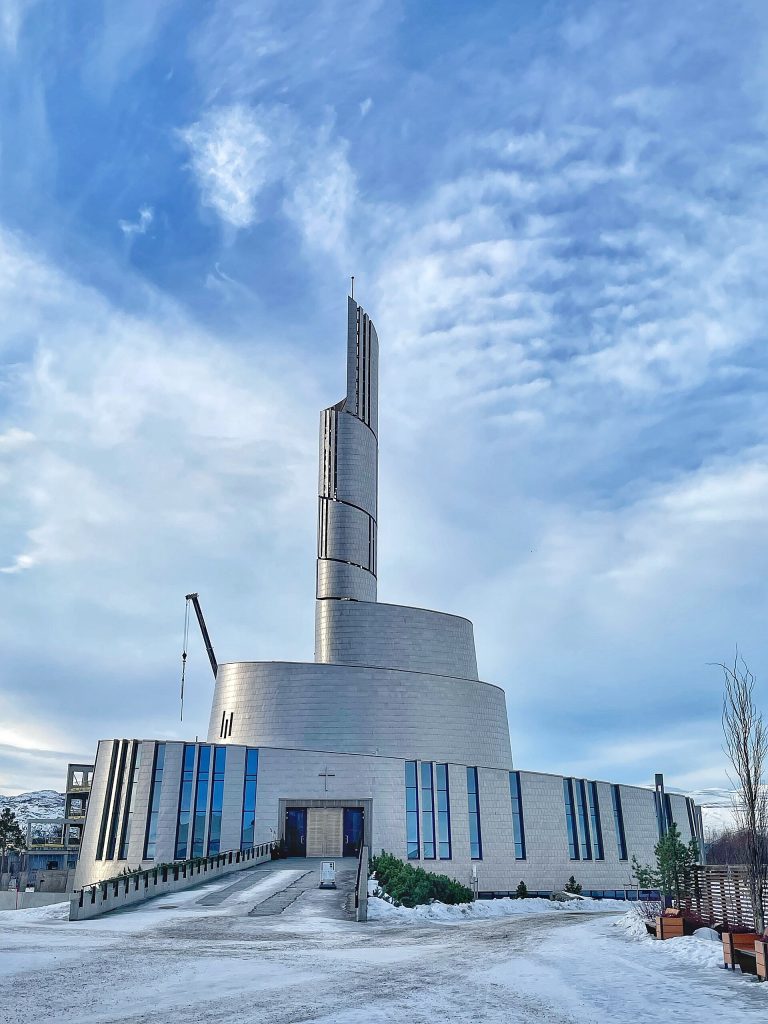
Alta calls itself the City of the Northern Lights, and it has a real claim to the title. In 1899 the physicist Kristian Birkeland helped set up the world’s first permanent aurora observatory on Haldde mountain above the town, and one of the earliest photographs of the aurora was taken at Bossekop in 1892. The striking Northern Lights Cathedral, consecrated in 2013, has an exhibition on the aurora in its basement.
Alta sits a little inland at the head of its fjord, which tends to give it more stable winter weather than the outer coast. It is quieter than Tromsø, and from here you can drive on to Kautokeino and Karasjok on the Finnmark plateau, known for cold, clear nights.
4. Abisko and Kiruna, Swedish Lapland
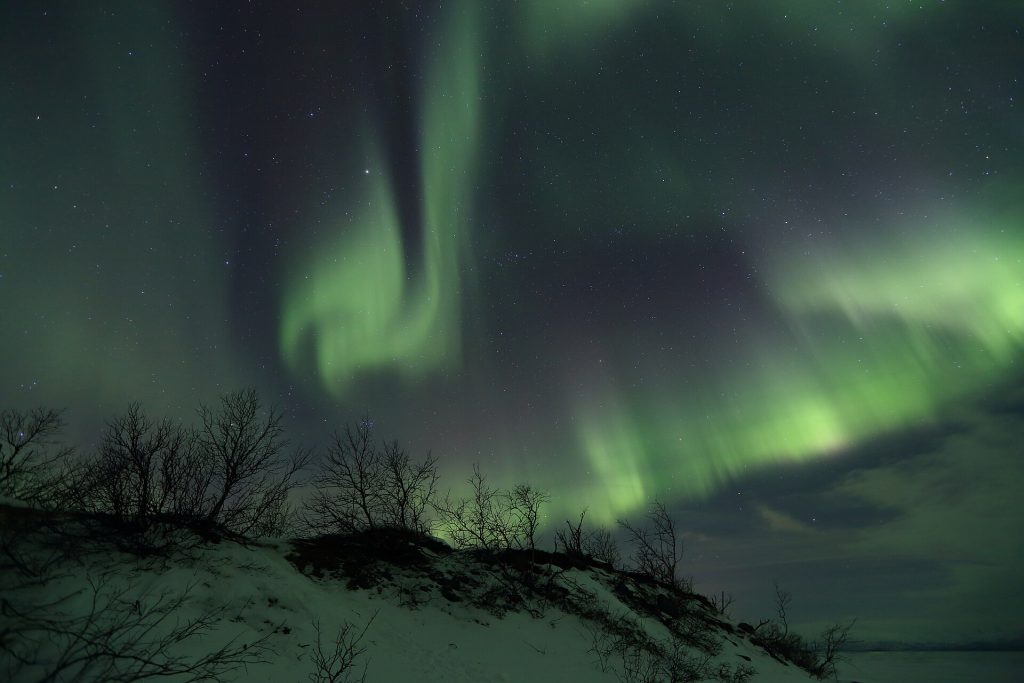
Abisko is a small village and national park on the shore of Lake Torneträsk, around 200 kilometres north of the Arctic Circle. It is known for the “blue hole”, a local pattern in which the surrounding mountains and the long lake often leave a patch of clear sky over Abisko while the rest of the region is overcast. It is a reputation rather than a promise.
The Aurora Sky Station sits on Mount Nuolja at around 900 metres and is reached by chairlift. The Swedish Tourist Association, which runs it, says the lights can appear from late August to April, with the best chances from mid-November to mid-March. Book ahead and dress for wind.
Kiruna, about an hour’s drive east, is Sweden’s northernmost town and has the nearest airport. The Icehotel is in nearby Jukkasjärvi, and the overnight train from Stockholm stops at both Kiruna and Abisko.
5. Inari and Saariselkä, Finnish Lapland
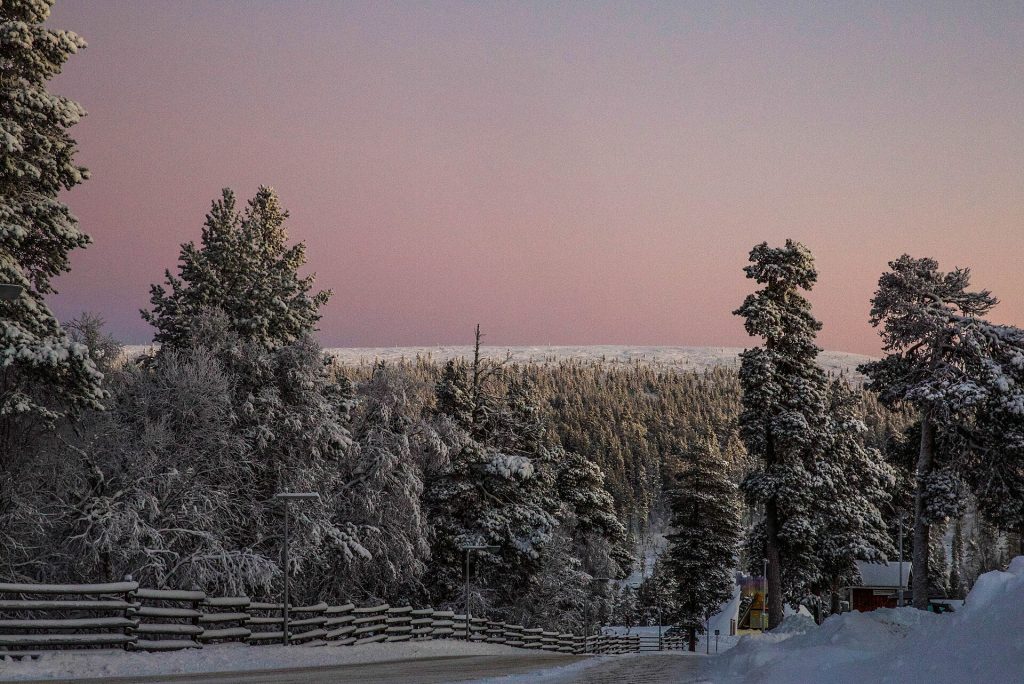
Finnish Lapland’s advantage is inland weather and very little light pollution. According to the Finnish Meteorological Institute, auroras appear on around three in four dark, clear nights at Kilpisjärvi in the far north-west, and on roughly half of them in central Lapland around Saariselkä, Levi and Ylläs. The institute also notes that, taking the weather into account, March and early April are the best time in northern Finland.
Saariselkä, a small fell resort about 30 kilometres from Ivalo airport, is the easiest base in the far north, with glass-roofed cabins and plenty of guided outings. Inari, on the shore of Finland’s third-largest lake, is the centre of Sami culture in Finland and is quieter still. Rovaniemi has the best flight links and sits right by the Arctic Circle, so auroras are possible but less frequent than further north; our separate Rovaniemi guide covers it in detail.
6. Iceland
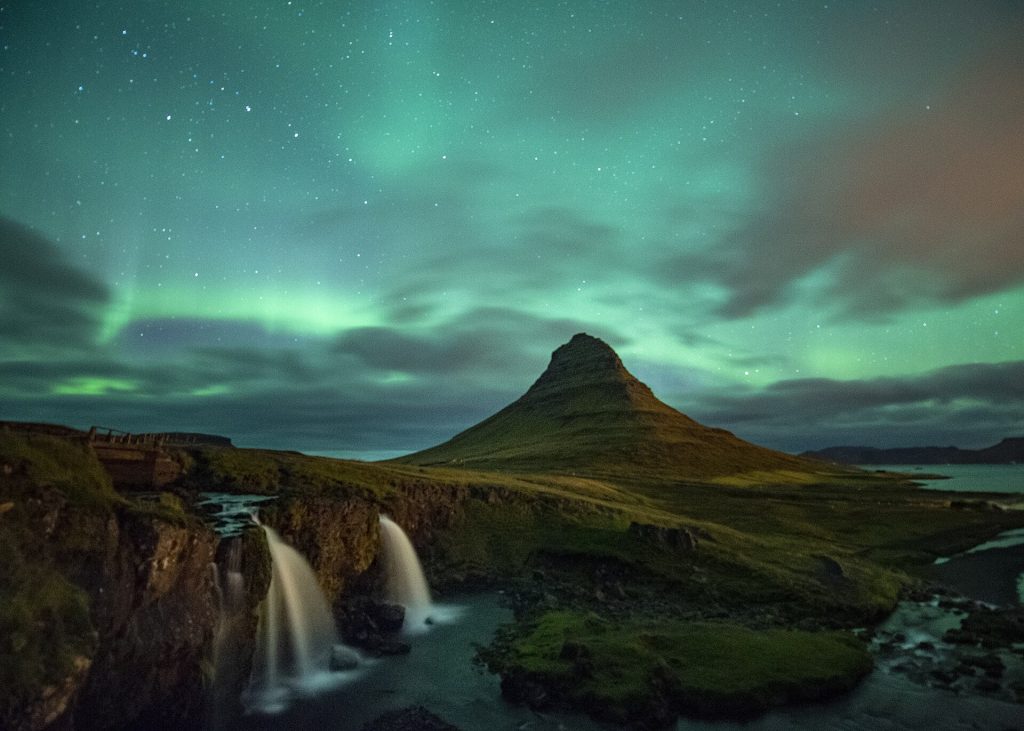
Iceland lies at around 64 to 66°N, right under the auroral oval, and has enough darkness for the lights from roughly September to mid-April. Its attraction is the mix of aurora nights with glaciers, waterfalls and hot springs by day.
Reykjavík is too bright, but a short drive out of the city brings dark sky, and Þingvellir National Park is a popular target. The Icelandic Met Office publishes an aurora forecast with a cloud cover map, which is the single most useful tool for choosing where to drive.
7. Faroe Islands
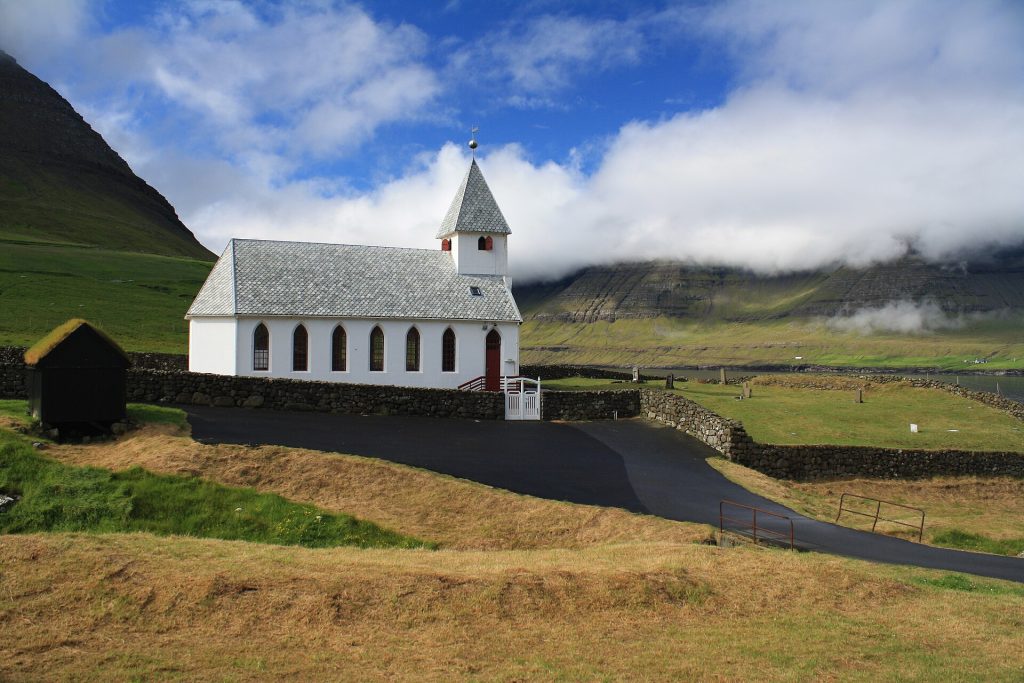
The Faroes are a less obvious choice, further south than northern Norway but still far enough north for regular displays when activity is moderate or strong. The official tourism board points to remote northern spots such as Viðareiði on Viðoy, and local guides suggest November to February for the longest nights. Atlantic cloud can sit over the islands for days, so treat the aurora as a bonus rather than the sole reason to go.
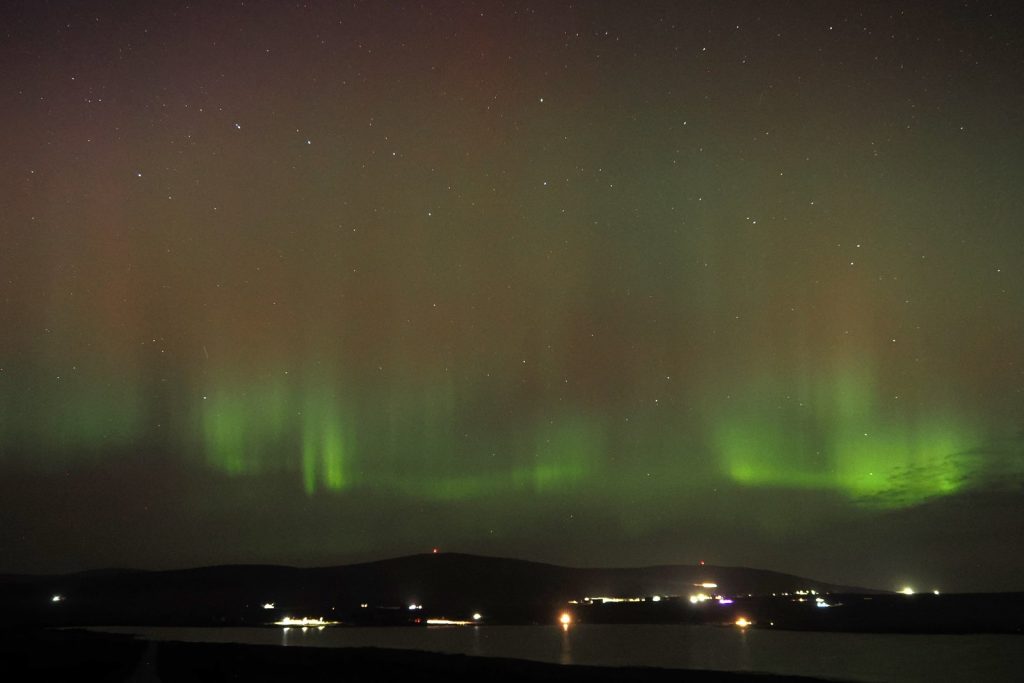
8. Northern Scotland
Scotland is the most accessible option for many travellers from the UK, but it sits south of the auroral oval, so you need stronger geomagnetic activity and a clear northern horizon. In Shetland, the nearest part of Scotland to the Arctic Circle, locals call the lights the “Mirrie Dancers”. Orkney’s dark skies and low light pollution help, and VisitScotland notes that Caithness and the North Coast 500 suit last-minute trips because you can drive there without a ferry. Sign up for AuroraWatch UK alerts and be ready to go out at short notice.
When to go to see the northern lights in Europe
The aurora happens all year, but you can only see it when the sky is properly dark. In northern Scandinavia that rules out the summer months of midnight sun, so the practical season runs from about September to March, with late August and early April at the edges. Midwinter brings the longest nights but also the coldest weather; September and October, or February and March, offer long nights with more daylight.
Geomagnetic activity is also higher on average around the March and September equinoxes, linked to how the Earth’s tilt lines up with the solar wind. It nudges the odds rather than guaranteeing anything.
Plan around the moon too. A full moon washes out faint displays. The week either side of the new moon is the best time for dark skies and photographs.
The solar cycle
The Sun goes through a cycle of roughly 11 years. In October 2024, NASA, NOAA and the international Solar Cycle Prediction Panel announced that the Sun had reached the solar maximum period of Solar Cycle 25. Activity declines gradually, and strong geomagnetic storms can still occur for several years after the peak, so the coming winters remain a good time to go.
How aurora forecasts work
Most apps and websites show the Kp index, a scale from 0 to 9 based on three-hourly readings from magnetometers around the world. A higher number means a stronger geomagnetic storm, which pushes the aurora further south. Under the auroral oval in Tromsø, Abisko or northern Lapland, even modest readings can produce visible lights. In Scotland or the Faroes you generally need a higher number.
Kp is only a rough guide. Many services also show Bz, the direction of the solar wind’s magnetic field; a negative value is good news. Above all, check the cloud cover forecast. A clear sky with a low Kp often beats a cloudy one with a high Kp. Use national weather services and hourly cloud maps rather than daily summaries.
Photography basics
- Use a tripod: exposures of several seconds are needed, so keep the camera or phone completely still.
- Camera settings: manual focus set to infinity, the widest aperture your lens allows, ISO around 1600 to 3200 and exposures of roughly 2 to 15 seconds, shorter when the lights are moving fast.
- Phones: recent phones handle the aurora well in night mode. Turn off the flash and rest the phone on something solid.
- Batteries: cold drains them, so keep spares warm.
Practical tips for an aurora trip
- Stay flexible: pick a base with roads in several directions, or a tour that chases clear skies.
- Dress properly: thermal base layers, a warm insulated jacket, insulated boots, mittens over thin gloves and a hat. Many tours lend thermal suits.
- Be patient: displays often come in bursts, with quiet spells in between. Activity is commonly highest in the hours around midnight, but it can start earlier.
- Let your eyes adjust: avoid white light and phone screens for 15 to 20 minutes. Faint aurora can look grey to the eye and greener on camera.
- Drive with care: roads are icy and reindeer wander onto them.
Plan your trip
- Norway: tickets and tours on Tiqets · activities on Klook
- Lofoten: tickets and tours on Tiqets · activities on Klook
- Lapland: tickets and tours on Tiqets · activities on Klook
- Arriving by plane: pre-book an airport transfer with Welcome Pickups
- Road trip: compare car hire on Localrent
- Mobile data: get a travel eSIM from Airalo
Some of these are affiliate links: if you book through them we may earn a small commission, at no extra cost to you.
Planning a bigger trip? See our guide to the 25 best places to visit in Europe, from city breaks to fjords.
Keep exploring
- Ghost Villages of Northern Italy: 7 Abandoned Places Worth the Trip
- 10 Best Places to Visit in Northern Germany: Hanseatic Towns and Coast
- Exploring Finland in Winter: Lapland, Northern Lights and Saunas
Frequently asked questions
What is the best month to see the northern lights in Europe?
There is no single best month. September to March is the main season, and February and March often combine long nights with more settled weather in Lapland. Avoid May to July, when it never gets fully dark in the far north.
Where is the most reliable place to see the northern lights in Europe?
Northern Norway, Swedish Lapland and northern Finnish Lapland sit directly under the auroral oval. Abisko and inland Lapland are often clearer than the Norwegian coast.
Can you see the northern lights in Europe without a tour?
Yes. In places such as Abisko, Saariselkä or rural Iceland, you can often watch from your accommodation. A tour helps most in cloudy coastal areas, where a guide knows where to drive for clear sky.
Photos: Arctic light - Frank Olsen, CC BY-SA 3.0, via Wikimedia Commons; Christoph Strässler, CC BY-SA 2.0, via Wikimedia Commons; YosemiteYamper, CC BY-SA 4.0, via Wikimedia Commons; Pavel.shyshkouski, CC BY-SA 4.0, via Wikimedia Commons; Ninara from Helsinki, Finland, CC BY 2.0, via Wikimedia Commons; vaidyanathan, CC BY-SA 4.0, via Wikimedia Commons; Dreizung, CC BY 3.0, via Wikimedia Commons; Mike Pennington, CC BY-SA 2.0, via Wikimedia Commons.