Updated
Most lists of Europe’s medieval cities name the same handful of places, and many of the names on them are really small towns that empty out after the last tour bus. This guide takes a different line. Every place below is a proper working city with an everyday life of its own, and every one has kept a medieval core that you can walk for a day without running out of streets.
All of them see far fewer visitors than Prague, Bruges or Dubrovnik. Most are UNESCO World Heritage Sites and most sit on a good rail line, so two or three can be linked in one holiday.
Medieval cities at a glance
- How long: one full day in each city, two if you want evenings and a museum or two.
- When to go: April to June and September to October for walking weather; Rhodes and Avignon get very hot in July and August.
- Getting there: all but Rhodes are on mainline railways; Rhodes has an airport and ferry links to Piraeus and the other Dodecanese islands.
- Footwear: cobbles, steps and steep lanes everywhere, so wear flat shoes with a decent grip.
1. Regensburg, Germany
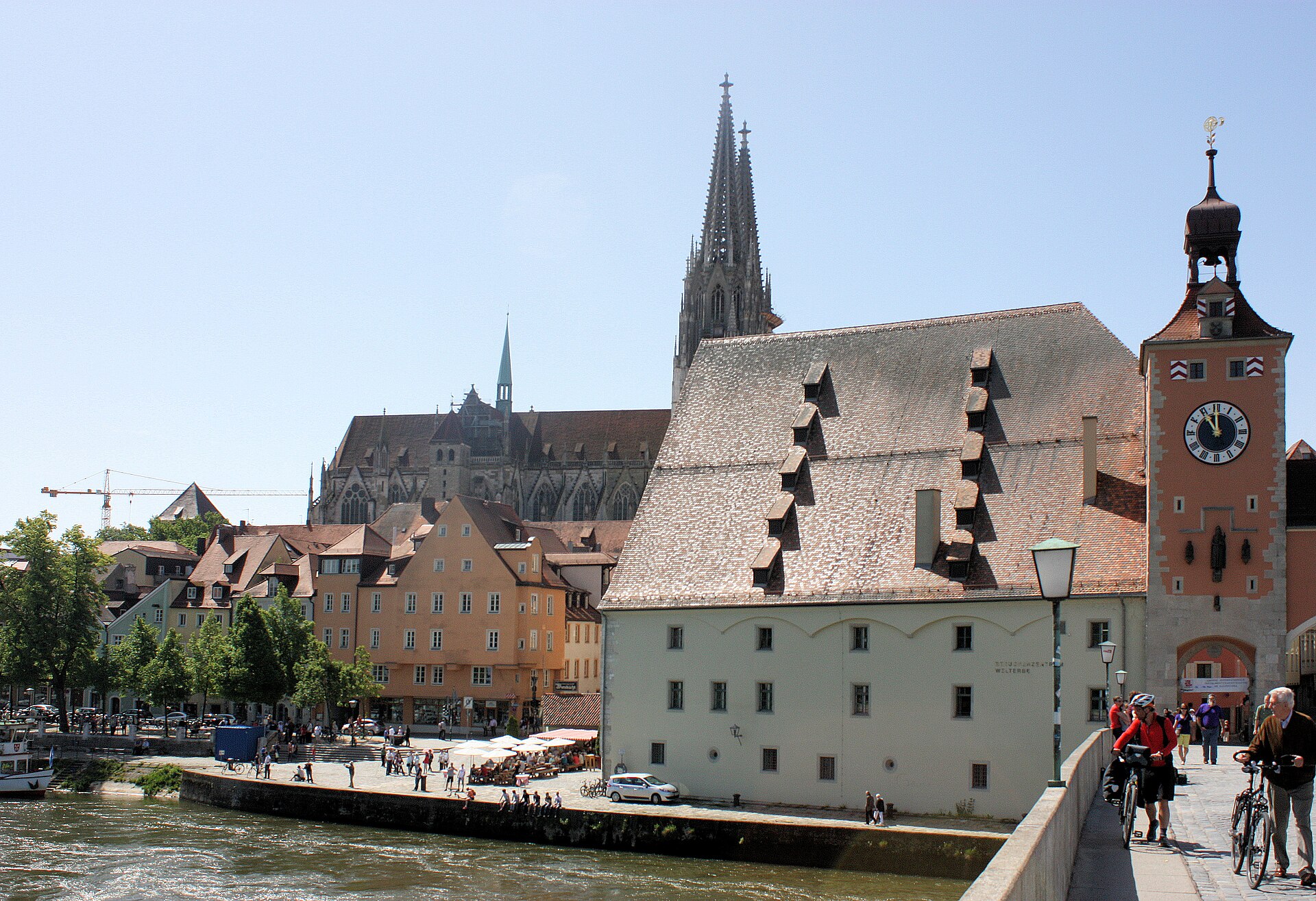
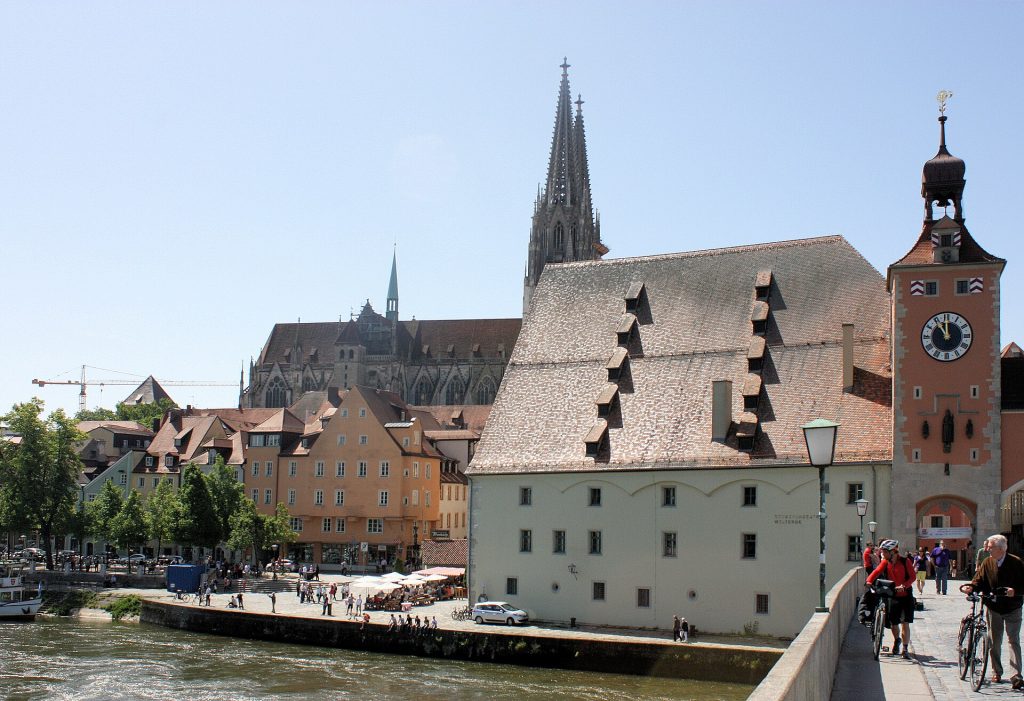
Regensburg is often described as the only large medieval city in Germany to have survived in its original form, and that is the main reason UNESCO inscribed the Old Town with Stadtamhof in 2006. The city escaped serious bomb damage in the Second World War, so its merchant houses and Gothic churches are originals, not post-war copies.
Start at the Stone Bridge, built between 1135 and 1146 and for centuries the only crossing of the Danube here. Then walk into the old town for the patrician towers: rich merchant families built tall house-towers in imitation of Italian cities, and a good number still stand, among them the Goldener Turm on Wahlenstraße. The cathedral of St Peter is the finest Gothic church in Bavaria, although its twin openwork spires were only completed in the 1860s. Near it, look for the surviving stones of the Porta Praetoria, a gate of the Roman legionary fortress that came before the city.
2. Toruń, Poland
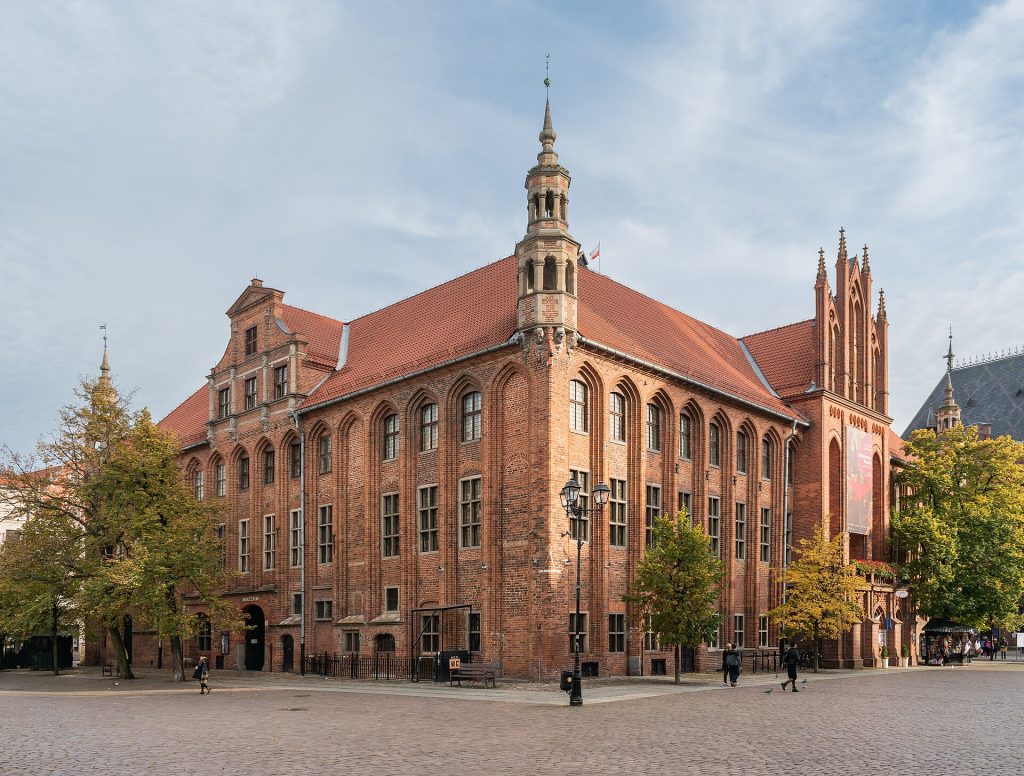
Toruń sits on the Vistula roughly midway between Warsaw and Gdańsk, and it is the best place in Europe to see the red-brick Gothic of the Baltic trading world on a city scale. Founded by the Teutonic Knights in the 13th century and later a member of the Hanseatic League, it came through the Second World War with little damage. The Medieval Town of Toruń was added to the UNESCO list in 1997, covering the Old Town, the New Town and the ruins of the Teutonic castle.
The Old Town Hall fills most of the Market Square, a vast brick block with a tower you can climb for views over the rooftops and the river. Nicolaus Copernicus was born in Toruń in 1473, and the Gothic merchant house associated with his family is now a museum. Look also for the Leaning Tower, a 13th-century section of the town walls, and the great brick church of St John. Toruń is also famous for its gingerbread, sold all over the old centre.
3. Erfurt, Germany
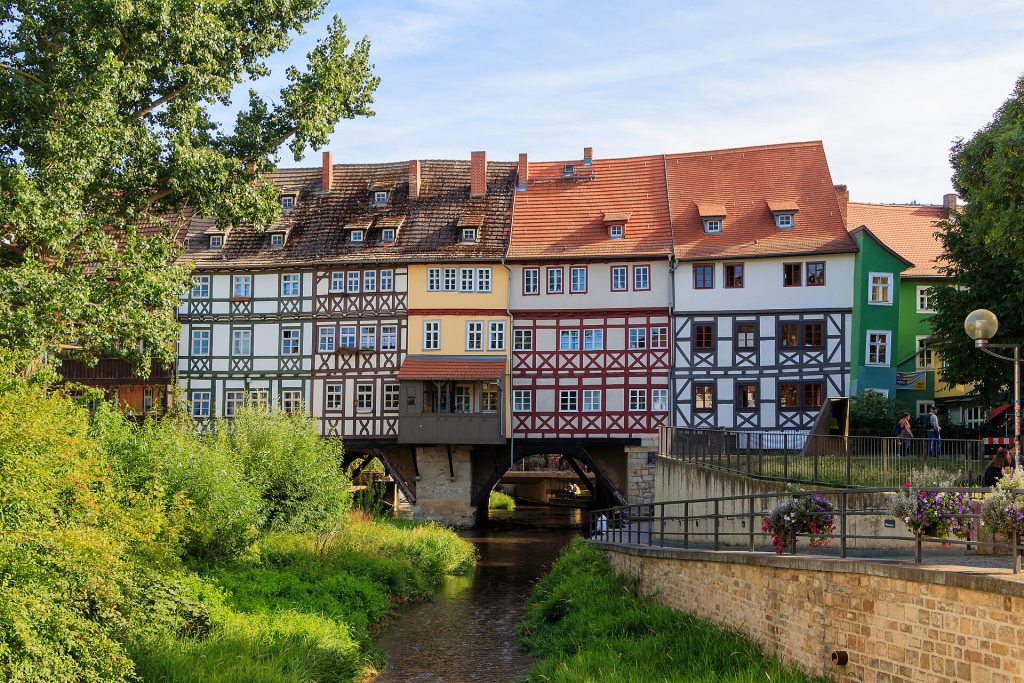
The capital of Thuringia is one of the largest well-preserved medieval centres in Germany, and also one of the least crowded. Its best-known sight is the Krämerbrücke, a bridge over the River Gera first built in stone in 1325, lined on both sides with half-timbered houses that people still live in, with small shops on the ground floors. From the street you barely notice the bridge; the riverbank shows it properly.
On the Domberg, a broad flight of steps climbs to the cathedral and the Severikirche, two Gothic churches standing side by side above Domplatz. Erfurt also has one of the oldest surviving synagogue buildings in Europe, with parts dating from around 1100. It now displays the Erfurt Treasure, a hoard of medieval coins and jewellery, and is the core of the Jewish-Medieval Heritage of Erfurt, inscribed by UNESCO in 2023. Martin Luther studied here and became a monk at the Augustinian monastery.
4. Avignon, France
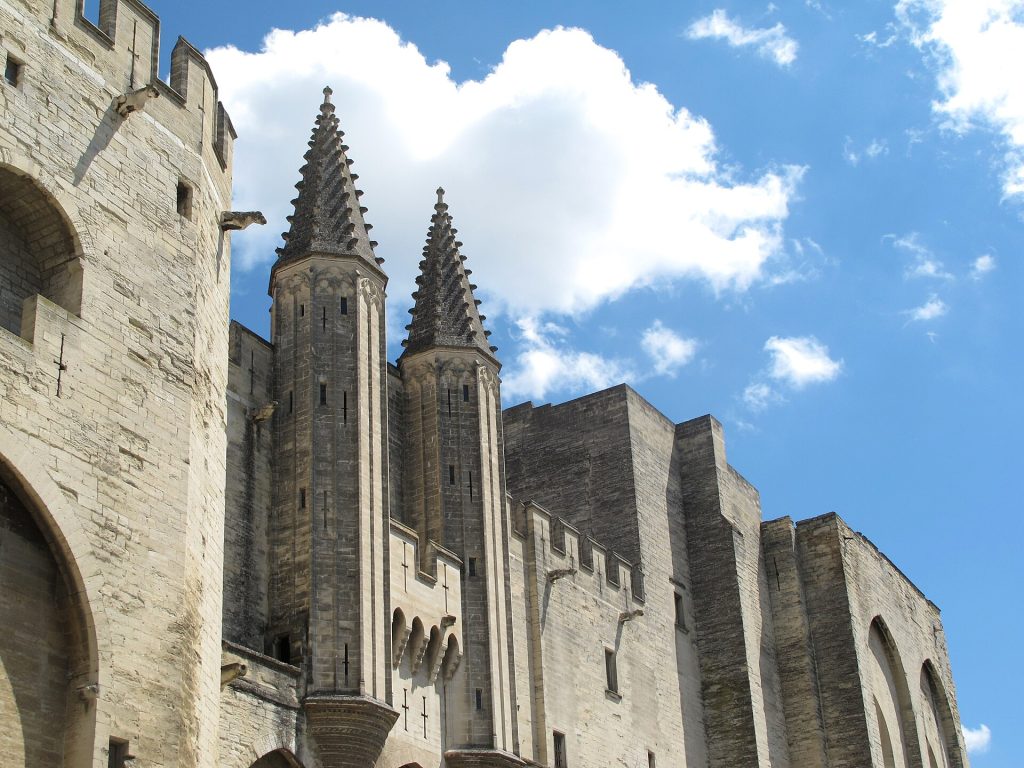
For most of the 14th century, from 1309 to 1377, Avignon was the seat of the popes, and the city they left behind is one of the most complete medieval ensembles in France. The Palais des Papes, raised in the decades after the 1330s, is regularly described as the largest Gothic palace in Europe. UNESCO listed the historic centre in 1995, together with the cathedral, the Petit Palais and the bridge.
That bridge, the Pont Saint-Bénézet of the children’s song, now stops halfway across the Rhône: only four of its arches survive, the rest lost to floods. The ramparts, built in the second half of the 14th century, still run for around 4.3 km around the old centre and are among the most complete city walls in France. Climb to the Rocher des Doms garden beside the cathedral for the view over the river.
5. Perugia, Italy
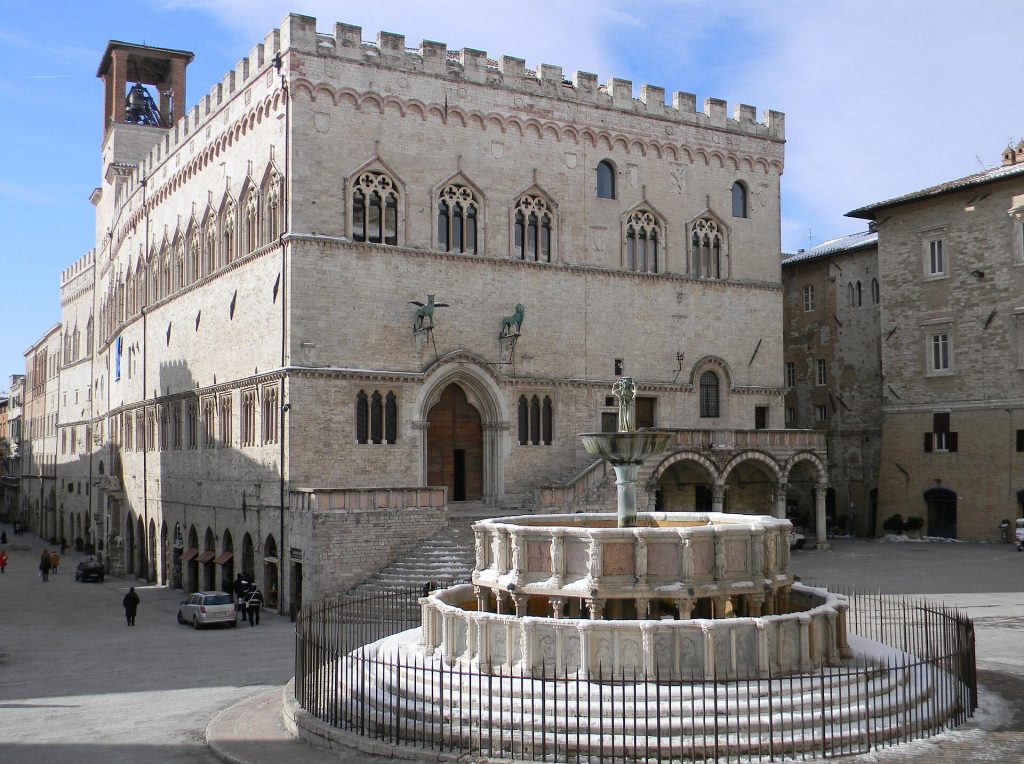
The Umbrian capital crowns a hill above the Tiber valley and is a lively university city. Its medieval heart is Piazza IV Novembre, where the Fontana Maggiore, carved by Nicola and Giovanni Pisano in 1277 to 1278, stands between the cathedral and the Palazzo dei Priori. The palazzo, the city’s Gothic town hall, now holds the Galleria Nazionale dell’Umbria, and its frescoed Sala dei Notari can usually be visited.
Perugia’s history runs deeper than the Middle Ages. The Arco Etrusco, a city gate from the 3rd century BC, is one of the best-preserved Etruscan gates in Italy. The Rocca Paolina, a papal fortress of the 1540s, was built straight over a medieval quarter, and you can walk through its buried streets for free on the escalators that carry people up from the lower town. Assisi is close by for a second day.
6. Bergamo Città Alta, Italy
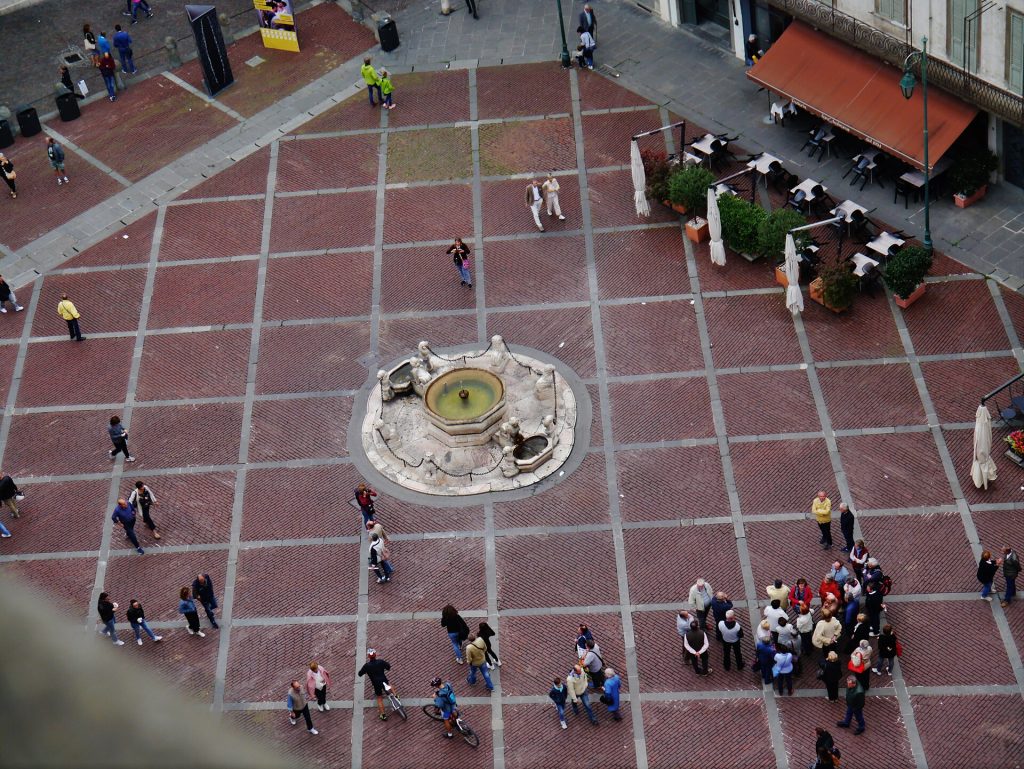
Bergamo is two cities. The lower town is modern and busy; the upper town, Città Alta, sits on a hill behind walls and keeps its medieval street plan almost untouched. A funicular has climbed between the two since 1887, and the ride takes only a few minutes. The walls themselves are Venetian, built in the 16th century, and are listed by UNESCO as part of the Venetian Works of Defence, inscribed in 2017. The circuit is around 6 km.
Inside, Piazza Vecchia is one of the most handsome squares in northern Italy, framed by the medieval Palazzo della Ragione and the Campanone, the civic bell tower. Every evening at 10 pm the big bell still rings 100 times, a custom from the days when it signalled the closing of the city gates. Behind the palazzo, the Romanesque church of Santa Maria Maggiore stands next to the Colleoni Chapel, an ornate marble chapel of the late 15th century. Orio al Serio airport is close by, so Bergamo makes an easy first or last night in Italy.
7. Guimarães, Portugal
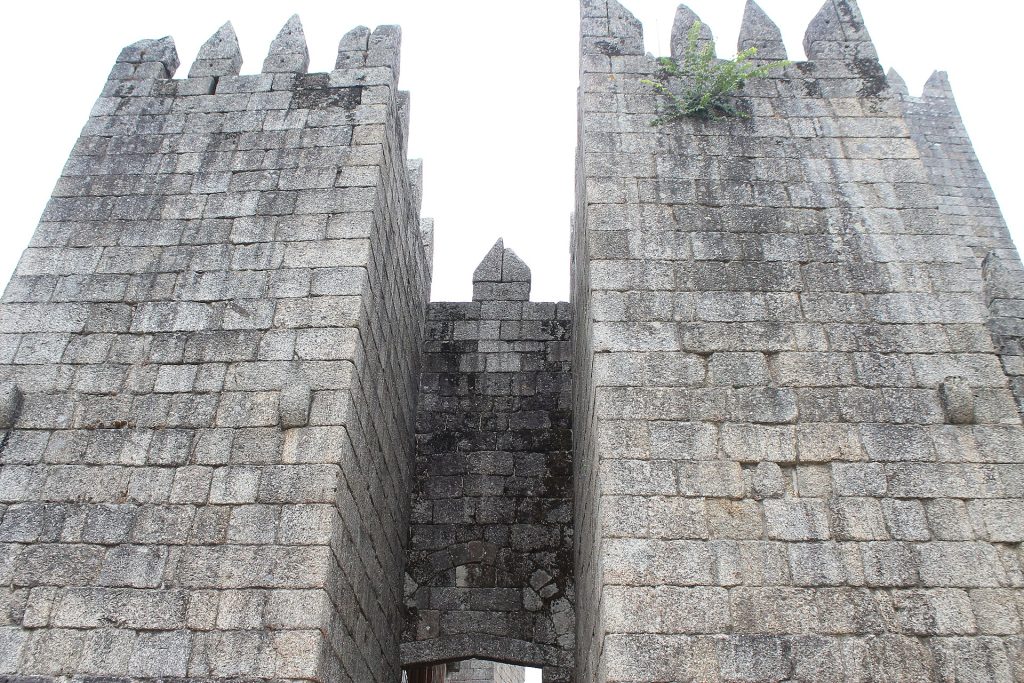
Portuguese schoolchildren learn that the country began in Guimarães. The first king, Afonso Henriques, is closely tied to the city, and a section of the old walls carries the words “Aqui nasceu Portugal”, meaning Portugal was born here. The castle on the hill above the centre has its origins in the 10th century, and the Palace of the Dukes of Braganza, begun in the 15th century, stands just below it. UNESCO inscribed the historic centre in 2001 and extended the site in 2023 to take in the old tanning quarter, the Zona de Couros.
The joy of Guimarães is the walk between the castle and the squares. Rua de Santa Maria runs down past granite houses with wooden balconies to Largo da Oliveira, where a small Gothic shrine, the Padrão do Salado, stands in front of the church of Nossa Senhora da Oliveira. The adjoining Praça de São Tiago is ringed by cafés.
8. Rhodes Old Town, Greece
The Old Town of Rhodes is often described as one of the largest inhabited medieval towns in Europe and a world away from the island’s beach resorts. The Knights Hospitaller ruled here from 1309 until the Ottoman siege of 1522, and they surrounded the city with a circuit of walls about 4 km long, with towers, bastions and a deep dry moat. UNESCO inscribed the Medieval City of Rhodes in 1988.
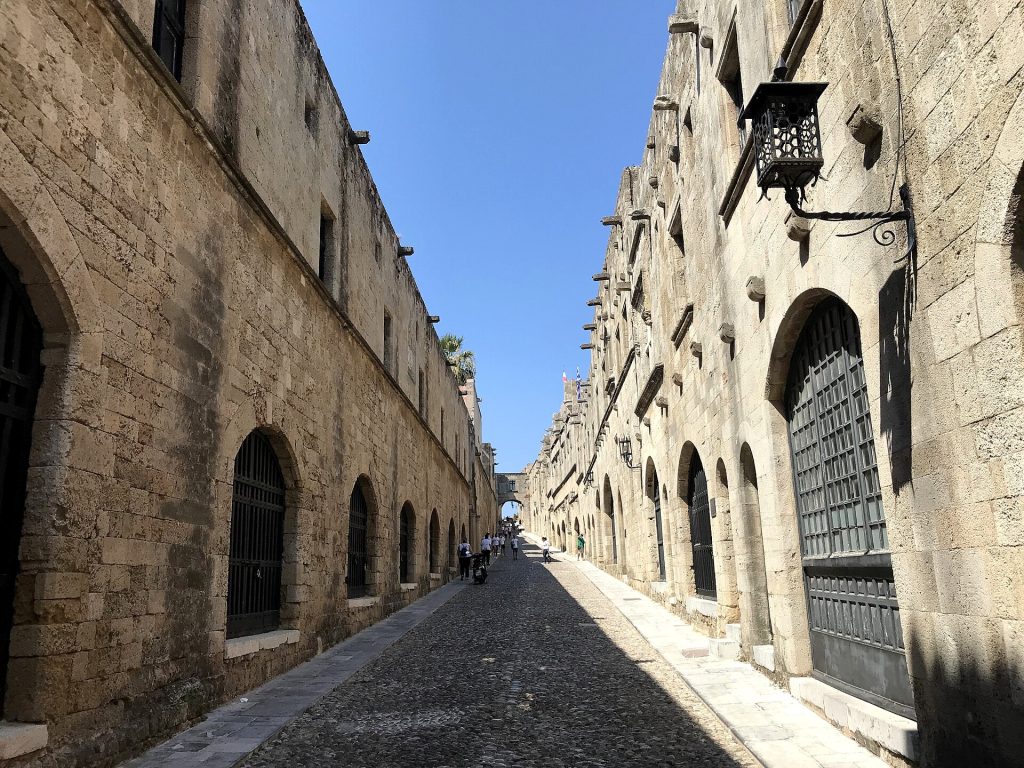
The Street of the Knights climbs from the old hospital, now the archaeological museum, to the Palace of the Grand Master. It is lined with the inns of the Order’s different nations, marked with coats of arms. The palace itself was heavily reconstructed in the 1930s during the Italian period, so treat it as a careful reconstruction rather than an untouched original. The Ottoman centuries added minarets, fountains and the Mosque of Suleiman. Walk the dry moat to see the fortifications properly.
The famous names: Prague, Tallinn and Carcassonne
We cover the famous names elsewhere. Tallinn, Dubrovnik and Carcassonne appear in our guide to Europe’s fortress cities; Rothenburg, Český Krumlov and Sighișoara in our medieval towns list; and Prague, Kraków, Siena and Bruges in several city guides. The eight above also make quieter partners for them: Regensburg is an easy add-on to Munich or Prague, Toruń to Gdańsk, and Perugia to Florence.
Practical tips
- Rail links: Regensburg is about an hour and a half from Munich by train; Erfurt is a stop on the fast ICE line between Berlin and Munich; Guimarães has regular trains from Porto; Avignon has TGV services from Paris and Marseille; Bergamo is about an hour from Milan.
- Stay inside the walls: the old centres are at their best early in the morning and after the day visitors leave, so book a room in or near the historic core.
- Cars: most of these centres have restricted traffic zones, and Italian ones fine drivers who enter by mistake. Park outside and walk.
- Festivals: Avignon in July and Perugia during Umbria Jazz, usually in July, are lively but expensive; check current dates before booking.
Plan your trip
- Germany: tickets and tours on Tiqets · activities on Klook
- Poland: tickets and tours on Tiqets · activities on Klook
- France: tickets and tours on Tiqets · activities on Klook
- Arriving by plane: pre-book an airport transfer with Welcome Pickups
- Road trip: compare car hire on Localrent
- Mobile data: get a travel eSIM from Airalo
Some of these are affiliate links: if you book through them we may earn a small commission, at no extra cost to you.
Planning a bigger trip? See our guide to the 25 best places to visit in Europe, from city breaks to fjords.
Keep exploring
- 7 Remote European Villages Where Long Winters Preserved the Past
- Gotland Guide: Visby, Viking Picture Stones, Churches and Raukar
- Europe’s Microstates and Their Medieval Origins: A History Guide
Frequently asked questions
What is the best-preserved medieval city in Europe?
There is no single answer, as it depends on how you count small towns. Among real cities, Regensburg, Toruń and Erfurt are strong candidates because they kept large medieval centres through the 20th century with little rebuilding. Tallinn and Carcassonne are the usual picks for walls.
Which medieval cities in Europe are least crowded?
Toruń, Erfurt and Guimarães see far fewer international visitors than the big names, even in summer. Regensburg, Perugia and Bergamo are busier but rarely overwhelmed.
Can you combine several of these cities?
Yes. Regensburg and Erfurt pair well with a German rail trip, Perugia and Bergamo with northern and central Italy, and Toruń with Gdańsk or Warsaw. Avignon fits a Provence itinerary, while Rhodes is best combined with other Dodecanese islands by ferry.
Photos: Dguendel, CC BY 3.0, via Wikimedia Commons; Krzysztof Golik, CC BY-SA 4.0, via Wikimedia Commons; H. Zell, CC BY-SA 3.0, via Wikimedia Commons; Acediscovery, CC BY 4.0, via Wikimedia Commons; Bibopg79, CC BY-SA 3.0, via Wikimedia Commons; Zairon, CC BY-SA 4.0, via Wikimedia Commons; John Samuel, CC BY-SA 4.0, via Wikimedia Commons; Dudva, CC BY-SA 4.0, via Wikimedia Commons.